
Student Life
‘If not me, then who?’: George Abaraonye’s return to Oxford

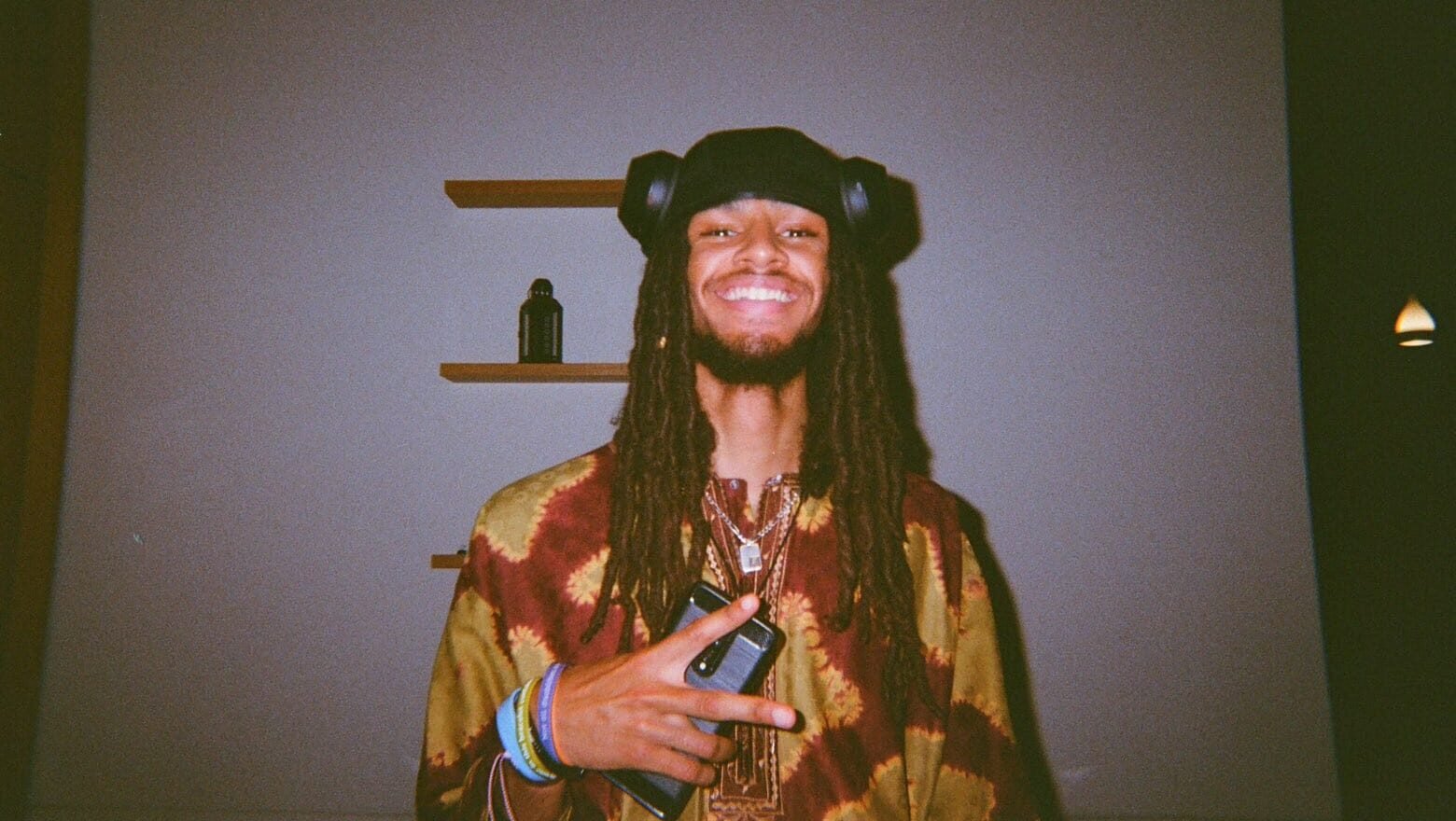
The jubilance in George Abaraonye’s demeanour matched my memory of our first encounter, coincidentally placed at the location where his university career may be defined: the Oxford Union. I first met the student – who has subsequently become a polarising figure among the politically conservative and a victim of online racial persecution approximately a year prior – at the Oxford African and Caribbean Society (ACS) meeting, Say It With Your Chest. Leading the event as then-Vice President, Abaraonye moderated the society’s annual debate meeting, posing questions on the legitimacy of Conservative leader Kemi Badenoch and offering his views on topics such as the definition of Black excellence. Ironically, he would occupy the hot seat months later for his political views, but in a much different capacity. Abaraonye’s ideology in the Oxford Union would instead make him the subject of intense, highly publicised scrutiny. Celebrating the shooting of right-wing podcaster Charlie Kirk in an internal WhatsApp group chat and on social media immediately upon the release of the news, the then-President-Elect of the Oxford Union would be ousted.
“I’m doing great, Maddie. I’m doing great. I’ve had a nice little summer, a nice little bit of time. Just relaxed. I’m doing good. How are things in New York?” Abaraonye said, appearing on our call in a New York Knicks T-shirt, seemingly fitting for a conversation organised from my Brooklyn bedroom. My icebreaker, “How are you?”, carried the expectation of unpacking much more than sentiments of a courteous greeting. The year Abaraonye experienced was an aberration from the routine of the typical rusticated Oxford student, to say the least. Much had happened since the controversy that ignited a media storm of right-wing publications, his widely reported removal as President-Elect of Oxford Union, and scathing tweets regarding his race, sixth-form grades, and clothing.
Now, preparing to complete his Oxford degree amidst the one-year anniversary of Charlie Kirk’s death and racialised hostility towards Black academics in Britain, Abaraonye’s reflection on the past year appeared quite light. “I’m coming back to Oxford, and I’m excited. Oxford is ultimately a means to an end. It’s not the end in itself.” After a summer of reflection working for a film company in Cairo, Egypt, the weight of the controversy no longer appeared insurmountable. “Being in Egypt and not quite having that freedom, or having to know people in a certain district in order to go there, really made me appreciate why I grew up with the freedoms I had growing up. And it helped put things into perspective. It made Oxford feel very small in a sense. There’s so much more going on in the world, and it helped me reorient what was important.”
Yet, this was the tranquillity Abaraonye was trained to adopt. After losing the vote of no-confidence among members and alumni of the Oxford Union, he remained in Oxford as a rusticated student for the next few months, hounded by the press and unprotected by any authoritative figures, Abaraonye tells me. Reduced to a mere member of the public rather than a matriculated University College student, Abaraonye immediately received clarification on where he stood with his college. “On Monday, October 19th, after my no-confidence vote, is when I had my panic attack… I had a really, really bad panic attack in Oxford. I remember being taken to college by two people, both in my college, and we spent the day at the University. I spoke to the senior chaplain and porters, and they set me up in a room with the agreement and understanding that I would vacate by Friday. They let me stay for a couple days, and then the porters kicked me out around 11am that Friday, like, on the door… They said, ‘You’re not allowed to come back to college because you’re a safety risk.’ I get it, but it felt very much like done and dusted. You’re not my problem anymore.”
Abaraonye faced boundaries that barred him from his familiar student life. “I had received an email from the senior tutor reminding me once my temporary accommodation had run its course, I would not be able to reside in college or access college facilities without prior written permission. I was also told no extension to temporary accommodation would be granted, and no subsequent request for college accommodation would be considered while I was rusticated, and that if for whatever reason I did not vacate college premises, it would become a disciplinary matter.”
Friday morning, after being escorted from his college, Abaraonye received a final message from the senior chaplain: an email wishing luck and permission to “reach out” if needed. Apart from the Master of University College, Baroness Amos, Abaraonye said he was offered little mental health support. “At the time, the email from the senior chaplain felt a little harsh and, to some degree, did compound a feeling of not having any safe or neutral spaces during that scary time. In hindsight, I do understand where the college is coming from with a safeguarding duty… I am grateful for being allowed to stay onsite. It felt like I wasn’t too welcome back, especially with the whole news saga, but again I do understand why.”
Still, Abaraonye recalls that the loneliness caused by Oxford administrators remained with him. “There wasn’t much of a connection there, or if I wanted to, I could not really go to them and say, ‘I’m really struggling with this, I need help.’ There was no support, for example, of how to navigate the press or the press scrutiny or the news cycles or anything like that, which was arguably the most difficult thing… I was quite lucky that I have friends and people that, you know, could help me write statements… but Oxford provided nothing.”
In a final return to his London home after spending the remaining months of Michaelmas as a rusticated student in Oxford, his ultimate retreat was rest and he spent most of his days asleep. Abaraonye grew accustomed to the many stares by Londoners on public transport and being cold-approached by strangers of both political spectrums: “I remember a couple times being approached on trains, for example, and people, complete strangers, come up to me and ask: ‘Are you the Oxford Union guy?’ I remember being in the pub once with my cousins, and someone asked me to take a picture with us. I had some people come up to me and ask, ‘Why did you say it?’”
In context, the celebration of the death of a media figure who had expressed racial insensitivities such as “Happening all the time in urban America, prowling Blacks go around for fun to go target white people, that’s a fact. It’s happening more and more” is illuminated by Abaraonye’s past record as a self-described pro-Black activist. Born in London, Abaraonye attended a multicultural state academy with a majority of economically disadvantaged students who received free school meals, himself included. Starting as a transportation advocate at 14, speaking out about road safety and bike protections, his social activism soon followed. At 17, as deputy head boy, he and his fellow schoolmates organised a workshop on microaggressions, guiding school teachers on how to spot any racial bias they may hold. Further, as a sixth-form student, Abaraonye helped draft anti-racism guidelines for his school, supporting the creation of a complaint system that let students hold teachers accountable.
Past activism aside, Abaraonye admonishingly reflects on his reaction to Charlie Kirk’s death. “Was my reaction time appropriate? No. Probably not. I should have taken a touch, guys. It didn’t need to be that quick and that public… It’s not to say that I hated free speech or I even hated Charlie Kirk or that I wanted to see this happen.”
Yet, as Charlie Kirk memes occupy social media timelines, and viral skits by comedians such as Druski poke fun at the lack of emotions displayed by Kirk’s widow, Erika Kirk, Abaraonye sees a racialised double standard in how he was treated. “I also think it would have looked very different if I wasn’t a Black person who’s debated Charlie Kirk. It feels disingenuous how strong the reaction was before, and now we have none of this energy for the general public who make the same jokes. I wouldn’t call myself a martyr, but I do think people will look back in a couple years and think: ‘Did we have to pop off on him like that?’ I don’t know, man. Maybe not.”
While his personal feelings towards the Kirk family are not rooted in spite, he directs contentious feelings to the institution from which he was removed: the Oxford Union. The Oxford Union’s vote of no-confidence sparked controversy. Grievances were raised regarding the Union’s poll, including the ballot-counting process, admission of proxy votes, and accusations of intimidation. Abaraonye maintained he lost because of a “compromised” poll due to alumni participation rather than student engagement. Community assertions of a “racist witch hunt” would support Abaraonye, yet to no avail, as a presidential successor was subsequently elected.
“I still have a modicum of respect for the Oxford Union… but the Union is not doing anything productive right now, at least in my opinion.” The Oxford Union, considered one of the world’s most prestigious student societies and an institution with its own Wikipedia section on ‘Allegations of institutional racism’, is, according to Abaraonye, an organisation steeped in anti-Black sentiment. “Being Black, especially in the Oxford Union, places you in a box. You can’t display yourself with truly radical ideas or even have the luxury of really making a mistake. Or you’re punished, and you’re punished tenfold.” As the debating society has attracted much attention and protests due to the invitations of right-wing figures such as Tommy Robinson and Laurence Fox, Abaraonye argues that the Union’s attempt at division is not only internal but external. “The Union seems more concerned in attracting attention by that division than by actually addressing issues with a level of attention needed to have a productive conversation… You will not catch me there during Hilary term. I’ll tell you that.”
So, what is next for George Abaraonye as he prepares to begin his final year? Well, for one, his activism continues. Recently penning a piece on the death of Cambridge Professor Jason Arday, who was alleged by self-identified race realist Nathan Cofnas to be a career fraud, Abaraonye found similarities between himself and Professor Arday were too great to ignore. Aside from the likeness of wearing locs and studying or working within elite UK universities, both Black scholars were ridiculed by right-leaning news articles, largely receiving racist comments from British audiences regarding their academic achievement in the slot of diversity, equity, and inclusion. “It was traumatising having to watch Professor Arday go through that this year. And it really motivated me. I feel like I should have perhaps said more when I was going through what I did. I feel like I should have said more now, when Professor Arday was going through what he did. The next time this happens, because I know it will happen again, I hope that I’ll be able to stand up and actually say something,” Abaraonye reflects. “Now, in the context of Professor Arday, I understand things could have gone very differently, and my story could have ended very differently.”
As Black figures at England’s most prestigious institutions continue to face accusations of incompetence – The Spectator declared the Black principal of Cambridge’s Homerton College “not fit” to lead – Abaraonye asks institutions to protect the vulnerable from media scrutiny. “For us, as horrible, horrifying, and disgusting as the incident with Professor Arday is… I actually don’t think anything would have been different if the Professor Arday incident had happened after the Kirk controversy. We’re yet to see any institutional change come as a result. We have barely seen so much as an apology from Cambridge or the Vice-Chancellor at Cambridge for how she handled the Professor Arday’s situation, calling him an aberration, which is wholly inappropriate given not only was an inquiry still open, but so many of the kind of allegations against Professor Arday being completely falsified or untrue. Because we’re so underrepresented, these spaces also don’t accommodate us, so we aren’t given adequate support in terms of counselling. I’ve now seen a professor die at Cambridge, and these are clearly, for as much as we hold them up, these great institutions. They’re clearly not safe spaces. Otherwise, people wouldn’t be dying or… people wouldn’t be dying as often as they are.”
Unsurprisingly, Abaraonye’s concerns about Oxford as an institution heightened his reservations about returning this October. Although he may attend a few Oxford events, interacting with tutors after his controversy raises anxiety, particularly as a report revealed that academics from the University of Oxford have signed the letter defending Cofnas in his investigation of Professor Arday. “Even though it’s not my tutors [who signed the petition], that’s the academic environment. I’m coming back into a level of complicity with what was essentially a murder, murder by the media. I can imagine, especially for a student of colour, if they’re coming back and their tutor is on that list, it must be a really uncomfortable situation to be around someone who not only is in a position of power in regards to you, but then also has clearly come out in support of someone who would happily see a member of our community die.”
More positively, Abaraonye said he has begun to receive more communication and support from the University: “My college Disability Advisory Services representative recently reached out to me, offering support and anything that I need coming back, which was nice. And my personal tutor also reached out to me in regards to the academic transition and coming back into university. So I had some contact with the University. And to be fair, in the last couple of months, in the summertime, I’ve not really needed much support from the University.”
Acknowledging that his return to Oxford may be sensationalised by students and professors alike, he said that “it feels very much like a spectacle, as if you’re engaging with me as a concept, as an idea. It feels less like you’re a person in Oxford sometimes”. Abaraonye does not plan to let his past controversy hinder his enjoyment of his final year of university, nor spoil his future professional ambitions. “If I was going to do anything, being a mayor would be a dream. That would be amazing. But, I think for me, it’s not necessarily about the office. I want to improve people’s lives. I want to improve my community’s lives. I don’t get the privilege of living a comfortable life, going home and taking that £110k a year by the time I’m 24 because that’s done through the oppression and institutionalised harm of millions. Whatever I do, it’ll be rooted in a lot of blackness. It’ll be rooted in a lot of good people doing good things, and I feel like that’s where I wanna be… If not me, then who?”
Asked if he has any regrets, Abaraonye offers advice instead. “Stay firm in your convictions. You’re not a bad person. You made this mistake. Sure. But don’t let them paint you out as this person that you’re not, and don’t let yourself fall into this idea that you won’t go and do something with your life because you absolutely will.”
In response, the Oxford Union told Cherwell: “Since 1823, the Oxford Union has upheld the principle of free speech through the exchange and debate of a wide range of ideas and opinions, presented by a diverse range of speakers – some inspiring, others controversial. We acknowledge that certain speakers may hold views that are regarded by some as unacceptable but nonetheless believe that it is more important to debate an issue in full rather than shy away from a difficult subject or to silence certain voices.
“Like any other member of the Oxford Union Society, Mr Abaraonye is entitled to voice his opinions. The Society maintains a variety of fora for its members to do this, including weekly meetings of the Consultative Committee open to all, public questions of officers at the Society’s public debates, and termly elections. We look forward to Mr Abaraonye’s contributions.”
In response, University College told Cherwell: “At the time of this incident, Mr Abaraonye did not have accommodation in College. This was because he had already withdrawn from his studies for a year, at his own request, and therefore was not living as a student in Oxford. Mr Abaraonye subsequently requested and was given temporary accommodation in College on an agreed short-term basis. He vacated this temporary accommodation on the date which he had agreed. The College is committed to providing appropriate welfare support to its students, including both those who are on course and those who have suspended their studies.”
The University of Oxford was contacted for comment.
Student Life
‘We have to end the complicity of Western countries with Israel’: Peter Beinart on Purim, Palestine, and the importance of changing your mind
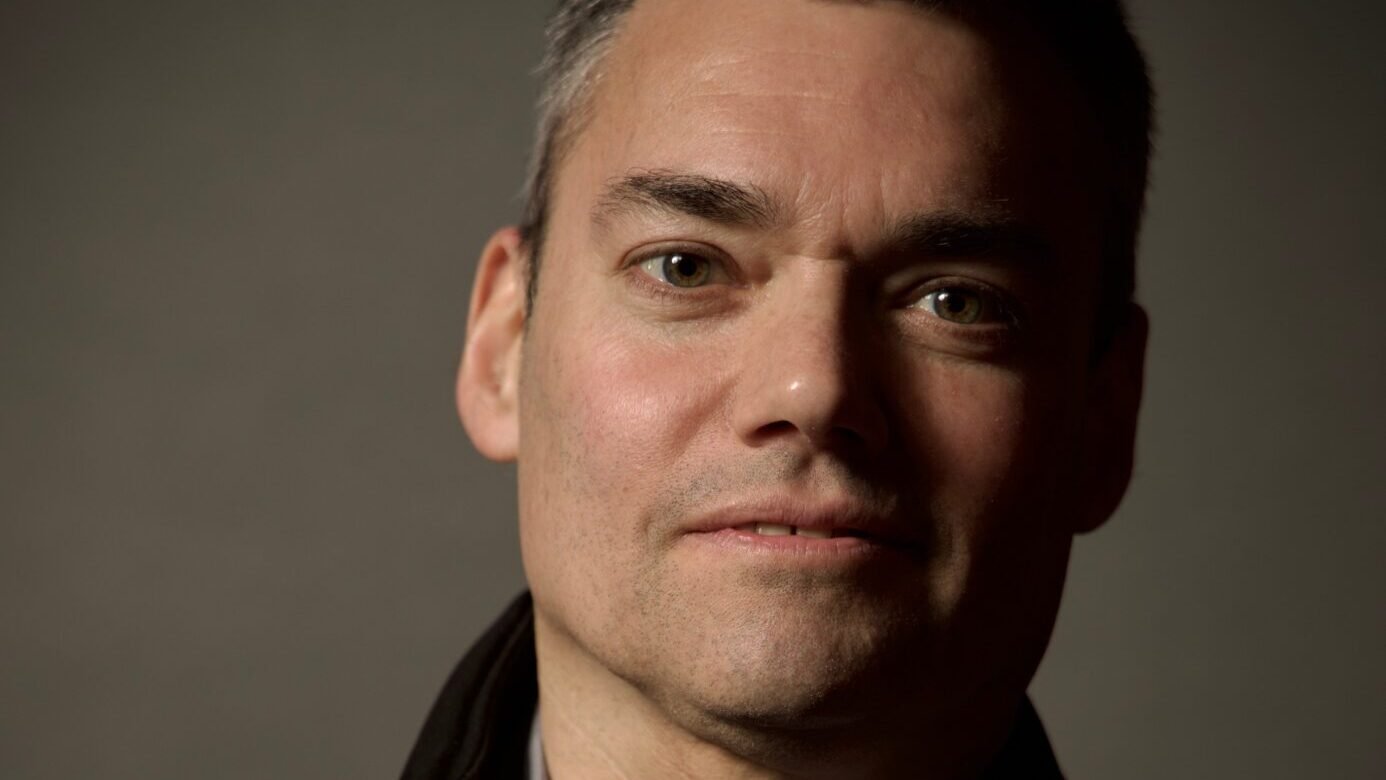
Peter Beinart knows the importance of admitting when you’re wrong. A professor of journalism and political science at City University of New York, a New York Times columnist, and Editor-at-Large of Jewish Currents, he has spent the last three decades as a leading liberal voice in the United States. But, unlike other pundits who pin their flags to the mast in order to pay the bills, Beinart’s writing is characterised by subtlety, self-reflection, and a remarkable political transformation.
Nowhere is this more evident than in his latest book, Being Jewish After the Destruction of Gaza: A Reckoning (2025). In this slim volume, Beinart, a once outspoken advocate for Israel, makes an incisive intervention into the debate within his own community as to how to respond to the violence that the Israel Defense Forces (IDF) have unleashed on Gaza. To Beinart’s mind, the killing of more than 70,000 Palestinians by the IDF necessitates deep reflection as to how “Jewish texts, history, and language” have been appropriated to justify “genocide and apartheid” in Palestine.
“The argument of the book”, he tells me over the phone, “is that there are a series of interlocking stories about what it means to be Jewish that are very powerful in many Jewish communities around the world – particularly the United States – which situate Jews as the world’s permanent, righteous victim; and also centre the relationship with the state of Israel as the ultimate test of Jewish loyalty and identity”. Beinart, who observes Modern Orthodox Judaism, argues that such narratives overlook the clear warnings within Jewish texts about how his people, as no different from any other, have a capacity to do harm.
He gives the example of how the Purim story, which is typically celebrated as the heroic survival of Jewish people in ancient Persia from a plot to exterminate them, ends with the roles reversed and the would-be killers slaughtered. The issue, Beinart tells me, is that ignorance of these theological portents creates a notion that it is impossible for Jewish people to be the perpetrators of oppression. This belief prevents supporters of Israel, whatever their faith or ethnicity, “from reckoning with some very, very painful proof about what Israel has done to the Palestinians”.
Beinart has lived a life that makes him uniquely attuned to these warnings. Born in Cambridge, Massachusetts, his parents were Jewish immigrants from Apartheid South Africa, a state whose system of racial oppression Beinart likens to Israel’s treatment of Palestinians. He completed his undergraduate studies at Yale, before coming to the University of Oxford as a Rhodes Scholar to undertake an MPhil in International Relations.
When I ask Beinart about his time in Oxford, he hesitates for a moment. He begins to list the positives: the friendships he made, the merits of the tutorial system, the freedom to procrastinate making career decisions for two years. But, after some reassurance that he’s not obliged to say nice things about the University, he speaks more candidly: “Oxford was never a place where I felt as comfortable as I did at Yale in the US. There were ways in which its particular version of Englishness was hard to penetrate for me as an American, maybe as a Jewish American.”
Yale in the early 1990s, he describes, “was an institution where public expressions of Jewish identity were very normal and routine”. Oxford, in contrast, felt different: “There was more of a sense that identity questions were private affairs and that in public you didn’t need to be waving those flags.” He clarifies that he doesn’t think it was antisemitism he was experiencing, citing instead the differing cultural attitudes towards religion on either side of the Atlantic. Nonetheless, during his time at the University he always felt somewhat “an outsider”.
Beinart returned to the United States after graduating from Oxford, beginning as a managing editor at The New Republic magazine. When I ask him how he settled on journalism for a career, he tells me that he left education because he didn’t think he had “the patient temperament to be a good academic”. “I think I’ve always been a bit more dilettantish in the sense that I like to read and engage in academic ideas, but I think that I’m better at translating those ideas for a broad audience than actually producing those ideas by doing the first-hand scholarship.”
Beinart quickly emerged as a stand-out talent, becoming editor of The New Republic in 1999 at only 28 years old, a post he would hold until 2006. It was during his editorship that the magazine supported the 2003 invasion of Iraq. Whilst an editorial the following year expressed “regret” that the “rationale for war” had “collapsed”, Beinart continued to advocate for American interventionism in his first book, The Good Fight: Why Liberals – and Only Liberals – Can Win the War on Terror and Make America Great Again.
By the time he published his second in 2010, however, Beinart’s views had changed dramatically. The Icarus Syndrome: A History of American Hubris was his attempt to reckon with how he had got his stance on Iraq so wrong, and demonstrated his new conviction to oppose US military adventurism. He also began to rethink his opinions on Israel, writing in 2012 The Crisis of Zionism, in which he called for an end to Israel’s occupation of the West Bank. Eight years later, he went further, penning a piece in the progressive Jewish Currents magazine in which he declared that the “two state solution is dead” and called for a single state where Israelis and Palestinians would be equal citizens – a clear rejection of the main tenets of Zionism.
I ask whether his earlier reckoning with his support for the war on terror helped stimulate his reassessment of Zionism. He entertains this idea: “I think I’ve in tandem had to reconsider the ways in which I bought into mythologies about an American exceptionalism, and a Jewish exceptionalism, which I think led me to overlook the harsh realities about the role America has played in the world – and also the way in which Israel was created and the way in which it sustains itself.”
But, Beinart clarifies, the real driving force behind his shift in thinking was his personal interactions with Palestinians. “I think going to the West Bank for the first time roughly 25 years ago was the beginning of a transformation.” Beinart says that encountering the realities of occupation and the humanity of Palestinians in the face of it unravelled the narratives about Israel that he had been raised on, like “peeling away an onion”.
In Being Jewish After the Destruction of Gaza, he recalls one particularly pivotal moment. Walking through a market in the West Bank city of Hebron, he and his 12-year-old son were briefly left alone by their Palestinian companion. Instinctively, Beinart started to fear for their safety, only for their friend to reappear with a Bar Mitzvah present for Beinart’s son. Beinart writes of that day that the true gift their friend gave his son “was helping a young Jew grow up without racism”. He tells me that only through “engaging with Palestinians, listening to Palestinians” can we begin “to chip away at the dehumanisation… which is pervasive in the West”.
For Beinart, such experiences led to a “growing sense that the position I was arguing for – a Jewish state and a Palestinian state alongside one another – was becoming more and more hollow, less connected to reality”. But it also exposed what he sees as fundamental flaws in the “two-state paradigm”. He argues that a two-state solution “can’t really reckon” with the right of Palestinian refugees to return to their homeland and “it can’t really reckon with the desire of Palestinian citizens of Israel to be treated as equal citizens”.
The solution, then, has to be one state between the River Jordan and the Mediterranean Sea in which all are equal citizens, and which power is shared within a democratic system. To Beinart, this would benefit Palestinians and Israelis alike: “When you have two populations living alongside one another their safety is intertwined. And so a system of violent oppression of one group is not actually the best guarantee of safety for the other group, because that system ultimately produces violence that endangers everybody.” What is required is a “system of representation where people of different backgrounds all have a nonviolent mechanism of having the state answer their concerns. A process of politics, anchored in equality under the law, while it can be messy and dysfunctional, is actually much safer for everybody”.
So, what is the likelihood of this goal being realised? On the one hand, Beinart observes that, when it comes to Israel, in many Western states “there’s been a massive change in public opinion” in the last three years. He attributes much of this to social media, “which has allowed Palestinians and their supporters a voice that they have not traditionally had because they were largely locked out of the mainstream media… It’s given them what Edward Said famously called ‘permission to narrate’”.
Beinart also points out that, for liberal supporters of Israel, particularly in America, “Israel has to justify itself in liberal terms as a liberal-democratic project – the Netanyahu era has just made that much, much harder. It used to be that people would claim that Israel wanted to create a Palestinian state but the Palestinians wouldn’t accept one. Netanyahu basically destroyed that line of argument. The effort to translate Israel’s frankly very racist political debate into a more palatable American debate has become almost impossible after more than ten years of Netanyahu – and the magnitude of what Israel has done in Gaza and the magnitude of what Israel is doing in the West Bank”.
But Beinart is under no illusions about just how far off an end to occupation and the creation of a just peace are. Whilst public opinion might be shifting, he points out that the policies of Western states towards Israel, by and large, are not. Within Israel itself, Beinart tells me, very little reflection about the immeasurable suffering the state has inflicted on Palestinians has occurred. While there are fierce debates about the personality of Benjamin Netenhayu, about the role of religion in the state, and about what kind of country Israel should be for Israelis, “there’s not really that much of a debate about how Israel should treat Palestinians, or the debate is within a very narrow framework.
“No one is really operating from the principle that Palestinians have a right to be free, and almost nobody is really saying that there should be a sovereign Palestinian state. Even if Netanyahu is defeated, I don’t think you’re going to see anything more than a cosmetic shift.”
So what can be done to bring about change? “We have to end the complicity of Western countries with Israel”, Beinart argues. He identifies ending the supply of weapons from the United States and the EU’s trade agreement with Israel as the top priorities. “It wouldn’t make sense to expect anything to change absent of that because, in supremacist political systems, whether it’s the United States under Jim Crow, [Apartheid] South Africa, or Northern Ireland, people who benefit from these supremacist systems, their plan A will always be to continue them. They are only willing to think of a plan B or C or D when the resistance, internal and external, becomes so strong that the system starts to break down, that it no longer works for them.
“Until we have this kind of resistance – which I hope is nonviolent, ethical in nature, and offers a vision of mutual liberation – I don’t think you’re going to see powerful forces in Israel be willing to seriously consider an alternative to supremacist politics.”
And, more locally, what can Oxford students do? He says that students should “find a balance between different kinds of virtues”. The first is curiosity about the rationale behind opposing views. He says that students should ask: ‘What life experiences have led you to these views?’ “That’s a question that unfortunately people very rarely ask of Palestinians, but I think that’s also a question that pro-Palestine activists sometimes don’t ask enough of Jews who support Israel – ‘What’s the family experience that you had that made you so convinced that a Jewish state is necessary for safety?’ Those stories might not convince you that those views are right but they give you a greater degree of empathy for where people are coming from.”
The second, however, is a steadfastness in standing up for your beliefs. Beinart describes opposing Israel’s military occupation of the West Bank and Gaza and its statewide discrimination against Palestinians as “one of the great moral challenges of our time” and insists that “people should try to rise to that challenge by fighting for justice. It’s important, at a certain point, to be able to say clearly that there are grave injustices taking place and to speak out against them”. For Beinart, empathy and an unequivocal commitment to justice can, and must, go together.
Beinart’s principled, high-profile stance on Palestine has placed him in the firing line of scathing criticism, the most vociferous of which accuses him of “abandoning” his own community. When asked about this, he is remarkably unfazed: “You know, I’ve been doing this for long enough that angry responses and condemnations… don’t particularly bother me.” But he is also candid about the personal cost, admitting that he has lost “some relationships that were very important to me. I feel a sense of sadness, because some of those were relationships that were very important to my kids”. Nonetheless, he will not indulge in self-pity: “A whole new set of relationships have opened up that are also very precious to me in a different way with people with whom I share an ethical perspective. So there’s loss, but also gain.”
Beinart’s faith is what sustains him through all of this. In a life defined by evolution, it has been his one constant; the anchor keeping him tethered through personal and political sea-changes. Speaking with him, it is also clear that it underpins his progressive politics. But Beinart has the prescience to avoid making the same mistake as those he criticises in Being Jewish After the Destruction of Gaza: he refuses to argue that being an observant Jew compels one to subscribe to a specific political ideology. “I think it would be very silly to say that the essence of Judaism is progressive or liberal or anything like that. It’s a tradition that is ancient and vast and speaks in many, many different voices, just as Christianity and Islam do.
“I have to be honest in saying that I take within Judaism certain traditions, and those are the ones that are more powerful to me.” He recognises that, just as “in the 19th century there were devout Christian slave holders and devout Christian abolitionists”, Jewish people can hold diametrically opposing views, without one being a truer believer than the other. Judaism is complex and pluralistic, he tells me, pointing out that extremist Israeli ministers such as Ben Gvir and Bezalel Smotrich “read the same texts, they also get up and put tefillin on in the morning like I do, but they emphasise different strains”.
As for his interpretation of Judaism, it epitomises the outlook of the present-day Peter Beinart; a man whose commitment to equality supersedes everything else. “To me, my starting point, my meta-principle, is that the Torah begins with universal human beings who are of no ethnicity, religion, race, or nation, who are created equal in the image of God. Everything flows from there.”
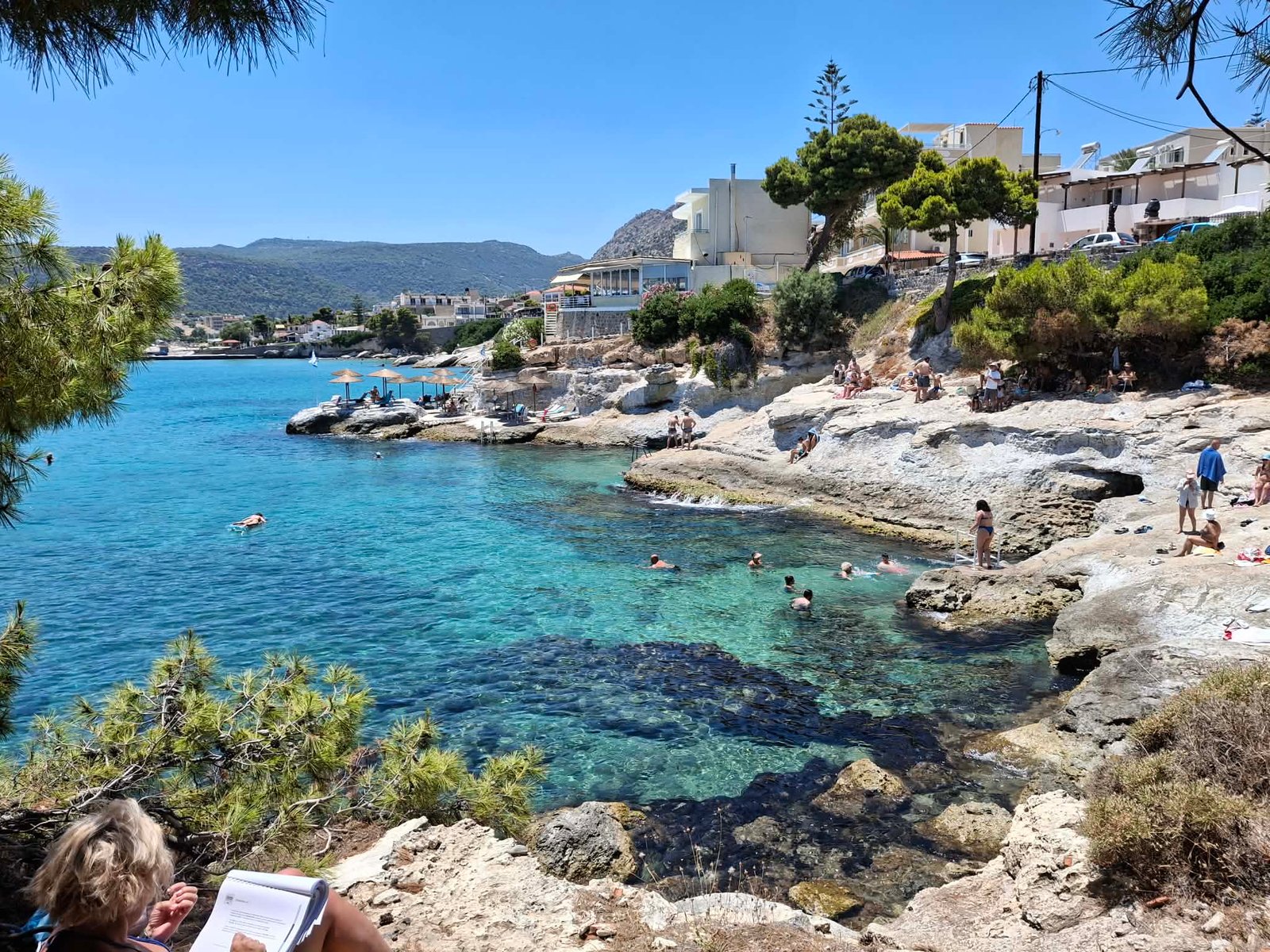
Reconnecting with reading is something many people tend to do on a summer holiday, and statistics suggest it is one of the only times the majority of adults read throughout the year. WalesOnline reports that 25% of its 5,000 respondents only ever read whilst away on holiday. Perhaps more interestingly, it reports that, whilst 29% of people would be too embarrassed to be seen reading romance in their day-to-day life, 17% change their mind when they are away on holiday. Although it feels like a societal issue that people would be too self-conscious to read romance in public (perhaps because it is a genre enjoyed by more women than men), this speaks to how much further from their regular selves people feel whilst on holiday.
It seems that many people find summer holidays to be a time in which they can disconnect from their real lives and read things they would usually feel too self-conscious to. This same study reveals that over half of adults wish they read more, implying that not everyone manages to crack open a book whilst on holiday. The study reports that the average number of books read on holiday is 2.3, but it does not say how widely the results ranged. Given that over half of people wish they read more, it is quite possible that, rather than a lot of people reading two or three books each, many read none at all and others read copious amounts.
I personally find this to be the case. Every summer holiday, reading for pleasure is something I either nostalgically reconnect with or grow ever more distant from and feel guilty whilst doing so. I will spend a week either reading a similarly obscene number of novels to what I consistently read as a child, or not once broaching the first page, and pre-holiday it is impossible for me to predict which will occur. For more self-aware readers, perhaps this is not such a surprising phenomenon, but I find each time I am surprised either by the large amount of my to-be-read list I’ve suddenly ticked off, or by the fact that the most words I consumed were on a restaurant menu.
You might assume that, since this article is in the Books section of Cherwell, I am about to try to convince you that you should have spent your summer reigniting your childhood passion for reading. It is not an uncommon pipeline for someone who is nerd enough to get into the University of Oxford to have greatly enjoyed reading as a child, only to arrive here and have reading become their entire life. This, for many, leads not necessarily to falling out of love with reading, but perhaps to a reading fatigue that makes us increasingly reluctant to spend our precious free time with our nose in a book.
I know many people who at least somewhat mourn the more casual relationship they had with reading as a child. One thing that categorically never encourages a reignition of a love for casual reading, however, is guilt. At no point has a nostalgic childhood hobby been happily rediscovered through guilt. I also think that, for many people, guilt is a feeling associated specifically with reading for fun. It’s almost like many people who grew up with a love of reading also developed a need for academic achievement to such an extent that this would be carried into adulthood hobbies.
The Oxford English Dictionary defines a hobby as “an activity or interest pursued regularly in one’s leisure time for pleasure”. Unfortunately, when it comes to reading, many people seem to forget the final two words of this definition. So, ultimately, guilt seems to be almost exclusively applied to reading as a hobby, in a way that is damaging to our enjoyment of it. Reading seems to be the one hobby that causes people to forget what the purpose of a hobby actually is: pleasure. If you’re no longer wanting to read for pleasure, that’s not something that should be forced. I’ve watched people obsess over reaching arbitrary reading goals in a way that prevents their hobby from matching its definition.
In my opinion, as long as you’ve replaced it with other hobbies rather than an alarming screen time, falling out of love with reading is not something to be ashamed of, and it shouldn’t be a hobby forced out of some misplaced sense of guilt. The pause doesn’t have to be permanent, and perhaps not forcing it will allow it to come back naturally (as well as leaving a part of our lives in which reading comprises alarming amounts of our time).
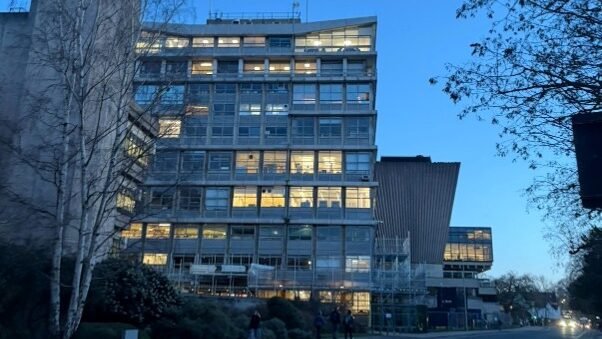
The “growth corridor” connecting Oxford and Cambridge is falling behind its global rivals despite its world-leading research output, a new report has warned.
A recent report by a public consultancy and industry leaders found that the region produces more scientific publications per resident than any other global innovation cluster, but lacks the infrastructure, talent retention, and transport links needed to turn its research strengths into economic growth. According to the report, Oxford-Cambridge “does not yet have the scale or depth of a top-tier cluster”. It warned that Britain is “competing in a global innovation race that is only accelerating”, adding that “we cannot lose focus or slow down now”.
The Oxford-Cambridge region has become a major focus of the government’s growth agenda after former Chancellor Rachel Reeves announced plans to “unleash the potential” of the region as part of the government’s ambition to create ‘Europe’s Silicon Valley’”.
The report argues the government needs to “go further and faster”, warning that “if OxCam moves too slowly, more of the firms and talent nurtured in the UK will move abroad”. The report describes addressing these constraints as “one of the clearest routes to long-term national renewal and economic security”.
One of the five constraints identified as holding back the Growth Corridor is talent retention. Around two-thirds of unicorn companies founded by Oxford and Cambridge alumni are not headquartered locally, while one in five has left the UK. Infrastructure was also identified as a significant barrier to growth, with industrial electricity costing over 60% more in Oxford-Cambridge than in Paris and Boston.
The region also suffers from poor connectivity between its two university cities. Travelling between Oxford and Cambridge by public transport currently takes three and a half hours, despite 45 minutes being considered to be an easily commutable distance, according to the report.
East West Rail, which is intended to connect Oxford and Cambridge by train for the first time in decades, has faced repeated delays. The first part of the route, connecting Oxford and Milton Keynes, was due to open by the end of December 2025. However, the route has only been used for training runs and freight services, and in August, operator Chiltern Railways could not provide a date for the route opening.
The government announced over £500 million in investment last October as part of its commitment to the Oxford-Cambridge growth corridor, which it said would unlock new private sector investment. They estimated that developing the Growth Corridor could add £78 billion to the UK economy by 2035.
A spokesperson for the Ministry of Housing, Communities and Local Government told Cherwell that the growth corridor “has huge economic potential for our nation’s growth prospects”.
“We’re unlocking this potential by exploring plans to go further than ever to create growth in the area, so we can boost the economy and put more money in people’s pockets,” they added.


‘If not me, then who?’: George Abaraonye’s return to Oxford

‘We have to end the complicity of Western countries with Israel’: Peter Beinart on Purim, Palestine, and the importance of changing your mind

Cameron Brannagan ‘lucky’ despite ‘perfect’ Oxford United strike
-
 Oxford united FC3 weeks ago
Chris Gunter steps away Wales role to focus on Oxford United
-
 Oxford united FC4 weeks ago
Oxford United transfer chief explains EFL embargo and contract dilemma
-

 Oxford University3 weeks ago
New to the Oxford English Dictionary this September
-
 Student Life3 weeks ago
Oxford falls to lowest ever spot in The Times UK University Guide 2027
-

 Student Life2 weeks ago
Oxford partnership allows OpenAI to use rare Bodleian texts to train ChatGPT
-
 Oxford Events3 weeks ago
Four days of equestrian spectacle at 2026 Blenheim Palace International Horse Trials
-

 Oxford united FC2 weeks ago
Northern Ireland fans laud Oxford United defender Ciaron Brown
-
 Traffic & Transport1 week ago
How poor public transport policy is putting the brake on cities | Road transport