
Student Life
Oxford-Cambridge “Growth corridor” falls behind global competition


The “growth corridor” connecting Oxford and Cambridge is falling behind its global rivals despite its world-leading research output, a new report has warned.
A recent report by a public consultancy and industry leaders found that the region produces more scientific publications per resident than any other global innovation cluster, but lacks the infrastructure, talent retention, and transport links needed to turn its research strengths into economic growth. According to the report, Oxford-Cambridge “does not yet have the scale or depth of a top-tier cluster”. It warned that Britain is “competing in a global innovation race that is only accelerating”, adding that “we cannot lose focus or slow down now”.
The Oxford-Cambridge region has become a major focus of the government’s growth agenda after former Chancellor Rachel Reeves announced plans to “unleash the potential” of the region as part of the government’s ambition to create ‘Europe’s Silicon Valley’”.
The report argues the government needs to “go further and faster”, warning that “if OxCam moves too slowly, more of the firms and talent nurtured in the UK will move abroad”. The report describes addressing these constraints as “one of the clearest routes to long-term national renewal and economic security”.
One of the five constraints identified as holding back the Growth Corridor is talent retention. Around two-thirds of unicorn companies founded by Oxford and Cambridge alumni are not headquartered locally, while one in five has left the UK. Infrastructure was also identified as a significant barrier to growth, with industrial electricity costing over 60% more in Oxford-Cambridge than in Paris and Boston.
The region also suffers from poor connectivity between its two university cities. Travelling between Oxford and Cambridge by public transport currently takes three and a half hours, despite 45 minutes being considered to be an easily commutable distance, according to the report.
East West Rail, which is intended to connect Oxford and Cambridge by train for the first time in decades, has faced repeated delays. The first part of the route, connecting Oxford and Milton Keynes, was due to open by the end of December 2025. However, the route has only been used for training runs and freight services, and in August, operator Chiltern Railways could not provide a date for the route opening.
The government announced over £500 million in investment last October as part of its commitment to the Oxford-Cambridge growth corridor, which it said would unlock new private sector investment. They estimated that developing the Growth Corridor could add £78 billion to the UK economy by 2035.
A spokesperson for the Ministry of Housing, Communities and Local Government told Cherwell that the growth corridor “has huge economic potential for our nation’s growth prospects”.
“We’re unlocking this potential by exploring plans to go further than ever to create growth in the area, so we can boost the economy and put more money in people’s pockets,” they added.
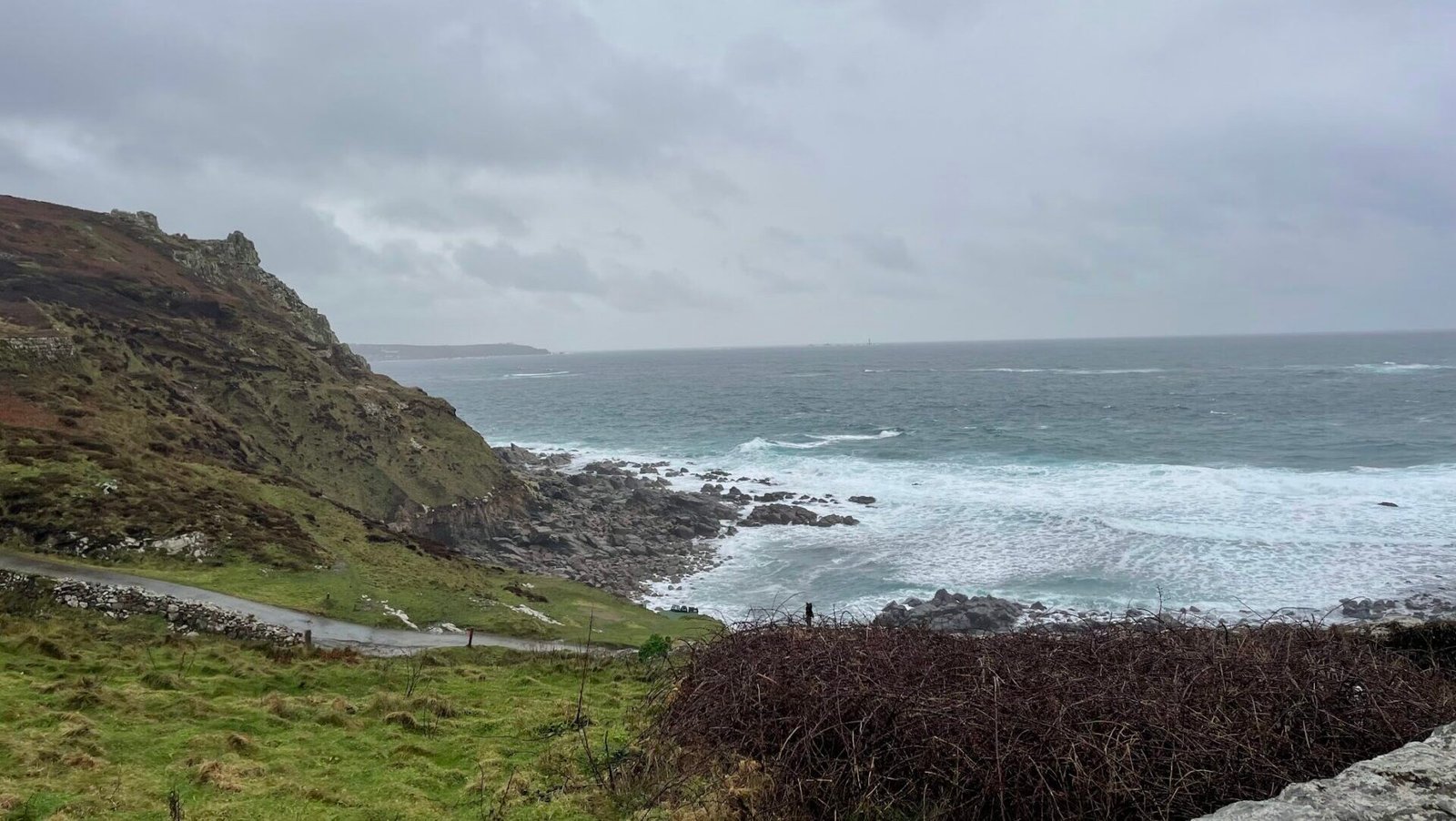
“A Cornish childhood ends with the lights of Oxford.” I first read these words when I was lounging on a chair at Christ Church, surrounded by the dark wood-panelled walls of the room I had called home for the past year. It had been written by a proud Cornishman called A.L. Rowse, long before I had been born. The book was given to me by my wholeheartedly and unapologetically Cornish grandparents over a year ago, and had been silently waiting on my shelf to be read ever since. The afternoon on which I put the book at ease was a rare one: I had no impending essays, no readings to slog through, and no translations to hand in. I could count on only one hand the number of times I’ve found myself in such a situation at university, so I decided to seize this golden opportunity and read A Cornishman at Oxford.
A Cornishman at Oxford is an autobiographical memoir written by A.L. Rowse that details the dramatic change in the life of a working-class Cornishman when he begins his studies at Oxford in 1921. Cornish folk are few and far between at Oxford. As a Cornishman myself (albeit half Cornish), I can vouch for how little people know of our nation – aside from a vague awareness of St Ives or some other holiday town. Few people are familiar with St Piran (Cornwall’s patron saint), our folklore-rich stargazy pie, and traditional Cornish carols. Many are also quick to dismiss Cornish identity as trivial, without understanding that Cornwall was independent from England for centuries and had its own Celtic language (Kernewek), spoken as late as the 19th century. The fact that I grew up being told I was half Cornish and half English should tell you how seriously some consider the cultural divide to be, even to this day. This made reading the experiences of a fellow Cornishman during the 1920s all the more captivating.
Some may question why such a book would be important enough for me to feel obliged to write an article about it – after all, Cornwall is just another part of the UK. But this book is more than a commentary on Cornishness and studying at Oxford: it’s about fitting in, standing out, and overcoming the challenges therein. Rowse stuck out like a sore thumb amongst his peers, not only for his brazen Cornishness, but also on account of his working-class, state-educated background, and his homosexuality. Because of this, he dealt with a lot of insecurity surrounding his own intelligence compared with that of his fellow students, as well as a deep dissatisfaction regarding the conservatism that was rife in Oxford. It is for these reasons that I find his story not only comforting, but also hugely inspiring. Rowse was among the very first to prove that those from disadvantaged backgrounds belong at Oxford. He even became the first person from a working-class background to be awarded a fellowship at All Souls College. As a result, his achievements simultaneously marked a turning point in academia and acted as testimony to the fact that Oxford is open to all, no matter their background.
There is no doubt that Rowse and I share a host of similar experiences. From the Cornish clotted cream and scones sent from the homeland (jam first, obviously), to a similar disdain for the theatrics of the Oxford Union, much is the same. It seems that even our predecessors enjoyed a ‘Trinifree’ lifestyle in the summer, with Rowse at one point commenting: “Oh, dear: work and the summer term at Oxford are rather incompatible.” Coincidentally, Rowse, just like myself, attended Christ Church. His descriptions of Mercury Fountain, Tom Quad, and the Meadows are seemingly evergreen. It’s apparent that, despite obvious changes over the past 100 years, the enchanting charm of Oxford has remained much the same. Rowse’s writing transports me back to the wonderment of my first year, and the amazement that he felt upon first discovering the city truly resonates with me. Our part of the world is more rugged, less ornate, and far quieter, making the shift to the Oxford lifestyle a significant one.
Among the pleasing similarities between our lives, reminders of our differences are peppered throughout. Though it seems odd to say, given the luxuries we all experience as students here, Oxonians of the past enjoyed comforts that we do not. Larger rooms, constant tea parties, and regular drinks with dons were frequent occurrences for students in the 1920s. However, the contrast in our lives surrounding technology really struck a chord with me. The common doomscroll-induced guilt of the modern student simply wasn’t a feature of Rowse’s life, and the more I read about his personal pursuits, the more I began to envy the lifestyle he described. The Oxford Rowse presented seemed more close-knit, more passionate, and more creative. I realised that many of the same hours our predecessors whiled away with poetry, politics, and personal development, I now spend vacantly looking at my phone. Many of us are passively aware of the addictiveness of this element of modern life, but reflecting on this comparison is what really urged me to contemplate how I spend my own time. Though I’m far from perfect, after reading Rowse’s work I’m now more likely to favour a book over my phone – I’ve even started to learn bits of Cornish in an attempt to reconnect with my roots.
Rowse, like me, came from a state school, and I find the way in which he navigated relationships with those from other backgrounds both familiar and reassuring. When reading about Rowse’s return to Cornwall during the vacations and talks of his visits to local landmarks that I know all too well, I was left with a strong sense of nostalgia. Whilst I’ve come to feel at home at Oxford, it’s impossible to keep homesickness at bay forever. Though I’m sure others experience it more intensely, I’d be lying if I said I haven’t felt like a fish out of water more than a few times at Oxford, both on account of my state comprehensive background and my ‘country-bumpkin’ mentality. Due to this, it can be all too easy to push reminders of home to the back of my mind: views of old Cornish engine houses that my ancestors worked in, trips to the beach with my family, and the stories of miners and other Cornish folk that make up the history of our nation. But after reading this book, I was reminded of what I leave behind when I come here. Thanks to Rowse and his century-old writing, Cornwall no longer seems so far away from Oxford, and I feel a little bit more in the right place.

When looking back on abuse cases that have plagued the church, some of the most common questions centre around whether there were early warning signs, whether something was missed, and most importantly, whether we can prevent this from happening in the future. The answer to each is wrapped up in a simple, yet difficult proposition: we need to start encouraging and listening to those who speak up and stop blindly trusting those in power.
A few months before Father Damian Howard, my former Senior Chaplain at the Oxford University Catholic Chaplaincy (OUCC), was removed under obscure circumstances, later revealed to be due to a sexual abuse complaint, I filed a non-sexual complaint against him. I had recently gone to Damian for spiritual support, explaining that I was struggling with my faith. In response, he spent the better part of an hour mocking me, belittling me, and – just for good measure – rolling his eyes at me. While I came away from the conversation upset, it was not until I spoke with family, friends, and an academic dean that I realised his responses and behaviour, given his position, were inappropriate. At the suggestion of my dean, I opted, hesitantly, to file a complaint.
At the time – late January of last year – the safeguarding officer of the chaplaincy community was, in fact, Damian. While I now realise this was a failure to properly safeguard the community, I thought little of it then, and simply opted to file a complaint with the Jesuits in Britain’s safeguarding officer, Julie Ashby-Ellis. Julie had previously worked as the safeguarding officer under Damian’s provincialate, as he was the prior leader of the Jesuit organisation in Britain; however, considering the asininity of reporting Damian to himself, she was my closest hope of ensuring any impartiality.
Ruled as a ministerial complaint – and not safeguarding – by Julie, a designation meaning that my complaint, according to her judgement, did not meet the criteria of abuse, my complaint landed in the hands of the current British Provincial and organisation’s leader, Father Peter Gallagher. In response to my complaint, the provincial immediately prohibited Damian from having any further contact with me, a response that inadvertently prohibited me from worshipping at or taking part in the chaplaincy community for over six months, while Damian carried on with his life as usual. He also reprimanded Damian, assigned him to be retrained and “closely watched,” and finally promised me that this sort of behaviour would never happen again, a promise that sadly ended up broken in late July – within the span of six short months.
Only after the alleged abuse became public, months after the initial abuse allegations, did I find out what led to that promise being broken, while I was gone from the chaplaincy. The Jesuit Provincial, with some prodding from me, informed me he had assigned Damian to speak once a week with two Jesuits from Campion Hall and once a month with a Jesuit psychotherapist, during which Damian simply told them that he was overworked and overtired. He did not disclose to them the conduct later alleged by another student about him, including allegations that Damian encouraged the student to remove clothing and get into bed with him, a fact I only later found out after media-publicised reports of the alleged sexual abuse and institutional cover-up this past February. And while the provincial-appointed training was focused on “inappropriate language and underlying negative attitudes”, there was no actual supervision, like a safeguarding officer or trained professional, to keep an eye on Damian and to ensure he was improving, in the aftermath of my complaint, as the provincial opted not to inform the two safeguarding representatives underneath Damian at the chaplaincy of my complaint. To the Jesuits, whatever Damian said was sacrosanct.
While the provincial later expressed deep shame for the inadequate supervision of Damian at the chaplaincy for those six months, this was not the first time I came away from an interaction feeling that Damian’s truth was greater than mine. And in the months since, I have firmly come to believe that the key to stopping abuse in the church might be found in examining the why.
Power and status, in the Catholic Church, are construed as markers of integrity and character. Priests are placed on a pedestal, separated from the rest of the Catholic population and are believed to be good by virtue of their position, not by virtue of their character. This erroneous conflation of power with goodness results in a church that trusts only her priests as mouthpieces. This proxy additionally, and adversely, causes anyone who speaks up to learn that silence, and the obedience and deference to power needed to achieve that silence, might as well be the church’s cardinal virtues.
Unquestionably, this culture was evident in the provincial’s blind trust of Damian for six months, but that alone does not even scratch the surface. There was the time I confided in a fellow Catholic about my experiences with Damian. He insinuated that I was lying, since Damian was the former provincial of the British Jesuits, and as a priest in good standing, simply could not have done anything I claimed. And there was the time I sought advice from another Oxford Catholic chaplain, months after Damian’s removal, over whether to file a second complaint about a comment he said that was likely sexualizing – “If you had a partner, you’d be spending a lot more time with your partner than with God, right?” The chaplain dismissed me, believing that Damian was a good person who just said a bad thing. Or, the one that hurt the most was the social isolation I felt after being shunned by a number of students who linked my return to the chaplaincy to Damian’s disappearance. Moments like these, sadly, worked to make me doubt my own perception and silence my own voice, all the while the conduct another student would later describe as abuse was happening right under the nose of the Oxford Catholic community.
While the culture of the Catholic Church hammers in the virtues of obedience, silence, and blind deference to those in power, a darker reality is haunting: those in power are aware of this. To illustrate, for months, Damian became a master of duplicity, pretending to become a better person under provincial-appointed supervision, all the while allegedly engaging in abusive conduct with a student behind closed doors. No one questioned Damian; everyone was blindly trusting him. The culture was working exactly as it was supposed to, and all he had to do was take advantage of it.
In the months after media reports of Damian’s sexual abuse allegations surfaced, I felt uncontrollably angry, due to the widespread belief that the abuse came out of left field. That was never the truth. I, for one, should know. I kept trying to speak up. It is just that the Catholic community fostered an environment in which my voice never mattered, and by virtue of his position alone, my priest’s did. While it has been said a thousand times over, hopefully, this will be the last: the key to preventing abuse in the Catholic Church must be to make sure that this never happens again.
In response, Jesuits in Britain told Cherwell: “The Jesuits in Britain take concerns raised with us seriously.
The written complaint from Ms Poindexter concerned a pastoral interaction with Fr Damian Howard SJ. She described feeling that her concerns had been minimised and dismissed, and that she felt invalidated by the response she received. It did not allege that Fr Howard had mocked her. We did not receive an allegation of abuse.
The complaint was received by our Safeguarding and Professional Conduct Coordinator and assessed in accordance with our policies and procedures. It was then dealt with directly by the Provincial Superior, Fr Peter Gallagher SJ. As the major superior and head of the Jesuits in Britain, the Provincial has responsibility for the leadership, governance and oversight of the Province and its members. His direct involvement reflected the seriousness with which the complaint was taken.
Fr Howard was called to account for the way he had responded and apologised for the hurt caused. Fr Gallagher also apologised to Ms Poindexter on behalf of the Jesuits and maintained communication with her about the concerns she had raised. Action was taken with Fr Howard, including training focused on better pastoral approaches, language and underlying attitudes. There was also ongoing follow-up and oversight of Fr Howard. It would therefore be inaccurate to suggest that there was no follow-up or oversight following the complaint.
The Jesuits in Britain recognise that Ms Poindexter experienced the response to her concerns as unsympathetic and dismissive, and we are sorry for the experience she had.
Our Safeguarding and Professional Conduct Coordinator, Julie Ashby-Ellis, provides a clear point of contact for anyone wishing to raise a concern. She is responsible for receiving and assessing concerns, advising on the appropriate response and overseeing matters in accordance with our policies and procedures. Her role includes ensuring that concerns are followed up appropriately and that those who come forward are listened to, treated with respect and taken seriously.
The complaint made by Ms Poindexter was not related to the decision in August 2025 to ask Fr Damian Howard SJ to step down from his role as Senior Chaplain at the Oxford University Catholic Chaplaincy. That decision followed a complaint received in July 2025 and an internal investigation which found that professional misconduct had occurred. The investigation did not find evidence of abuse in relation to that matter. We commissioned an independent review by the Catholic Safeguarding Standards Agency and will publish the findings of that review in due course.”
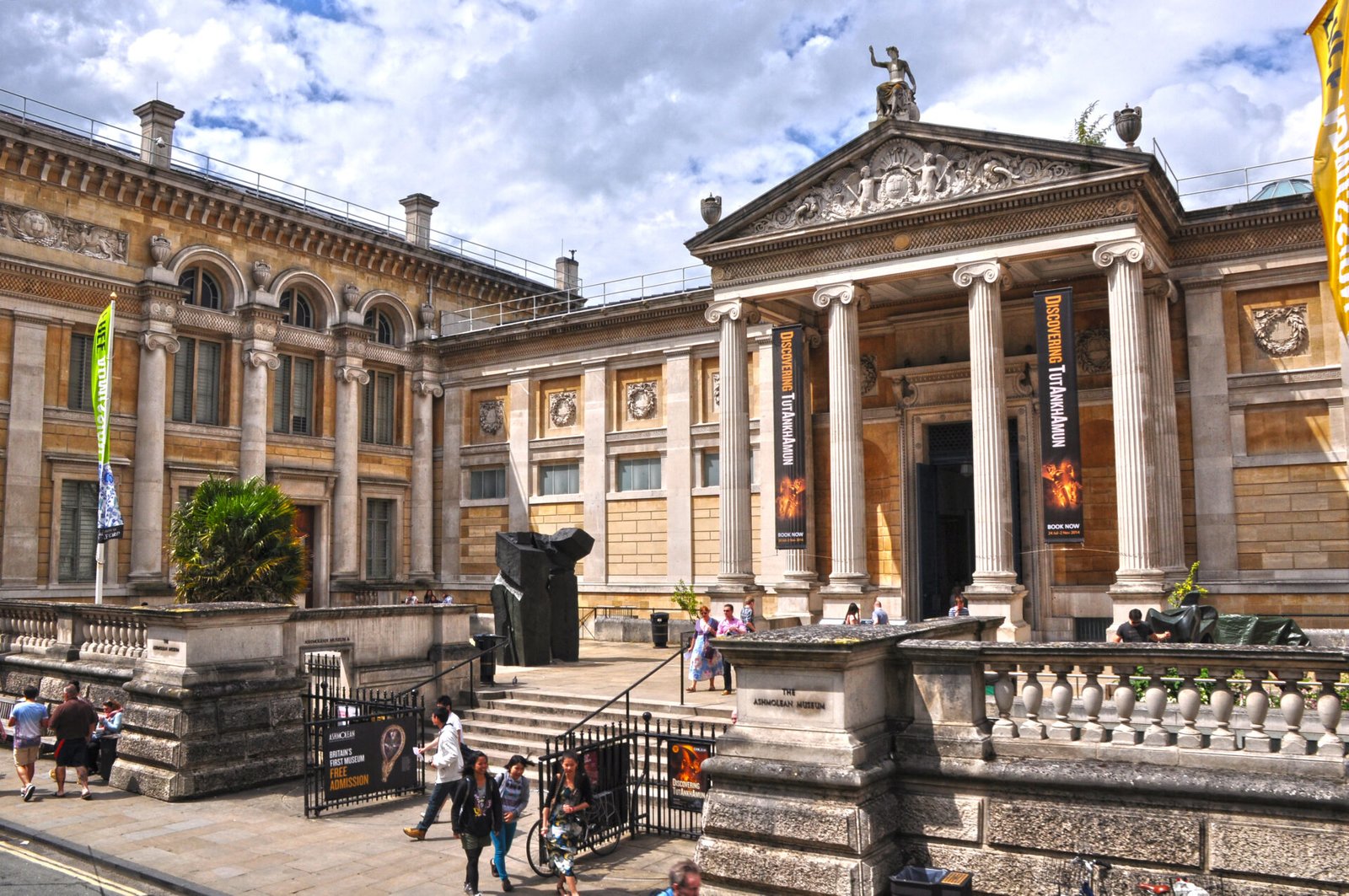
When I returned to Oxford this term, just as England teased us with the sixth heat-wave of the year, I found myself at a loose end. With the deadline for two vacation essays still far in the distance, the sun lit up the sign for Soma Surovi Jannat’s Ashmolean Now exhibition, Climate Culture Care. I went in to see it (rather grateful for the museum’s air conditioning, if nothing else), and I was directed to the basement level.
From the first few lines of her introduction, the importance of Surovi’s exhibition is clear. Her work is groundbreaking: “The first solo presentation of any Bangladesh-based artist in a UK museum.” Looking at the list of her exhibition’s supporters (including The Patrons of the Ashmolean Museum, British Council Bangladesh, Samdani Art Foundation, Charles Wallace Bangladesh Trust and Gallery Espace, New Delhi), the weight of this presentation should not be underestimated. Her work is tucked between the bustling cafe and gift shop.
Like the other viewers who came in behind me, I was first struck by Surovi’s “ephemeral work”, She Carries the River in Her Skin. A single piece, the work bends around the corner and spans almost the length of the back wall. Drawn directly onto the wall in March, when the exhibition opened, the white plaster is a mighty canvas, but the black skeletal shape that arches over it does not overwhelm the space. Surovi seems to trust you to come closer to see the intricate details of her strokes. I do, as do the others. We find the figures wrapped around each other, hands that become trees, then scissors which slice through a single flower. The different parts of the wider body are all kept in individual, connected ovals. They start to feel like eyes watching us, a gaze which I am forced to drop, while it remains unblinking.
The wall text beside it is a sobering description: “Surovi examines the impact of climate change on women and children.” The words explain that this work is focused on the social challenges that women face after losing their husbands to tiger attacks in Bangladesh. She also draws attention to the health risks posed to those who find their home in the Sundarbans (the world’s largest mangrove forest). They have reduced access to clean water: “A basic human right that remains unfulfilled for many.” Her artwork is beautifully detailed, but perhaps does require the accompanying commentary to be properly appreciated. The final line especially really resonated with me: “While the work has been carefully documented, it will be erased at the end of this exhibition.”
I find that sense of erasure – the art’s self-proclaimed ephemeral nature – more compelling than the physical work itself. I think of the plants, the houses, the people, the lives that were just as uniquely intricate and detailed, then so brutally erased by the unforgiving violence of wildfires and storms. The eyes keep watching me.
I turn to take in the wall opposite, and find another impressively expansive artwork. Between the Sea and the Sky, Who Holds the Ground? is a scroll nearly 10m long. Unlike the black-and-white wall piece behind it, this artwork is an archival ink-on-paper work with acrylic colour, gold and silver leaf. This time, I read the description first: “Surovi’s work reflects the strength of ordinary people facing migration challenges, depicting a long scene of climate refugees, including both animals and humans.” As suggested, I follow it from right to left, appreciating the representation of shifting ecosystems and “cosmic transformations” caused by climate change. Again, I am not sure it would be as impactful if the meaning was not explained beside it.
Then, about halfway through, I am suddenly stopped by a ceramic hand mounted above the scroll. It was not mentioned in the description. I think it is one of the “Ashmolean inspirations” scattered throughout the exhibit, historical artefacts that influenced Surovi in her creation of the exhibition. The raised red hand is held upright, as if urging us to stop, but it has lost its thumb and forefinger. It is one of the most striking images in the basement room. It feels like the past is reaching out and begging us to change, desperate for us to stop the destructive consequences of climate change. But then I, like everyone else, move past this warning. We leave it behind as the reality of those consequences continues on the scroll.
In the middle of the room, a few smaller artworks are organised on free-standing displays. They are circular and part of a series which “delves into the emotions of animals, and the feelings of being trapped in the human world”. Looking around, they are not getting as much attention as the bigger pieces, but as I weave in and out of them, something suddenly catches my eye. An air purifier sits at the end of the room, wafting cool air through the displays. I am quickly beside it, enjoying the breeze it allows.
From my cold haven, I cannot help but mark the uncomfortable irony of this exhibition. Surovi’s works warn us of the pressing danger of climate change, and the museum must plug in units to cool the room down. She constructs works whose gaze you cannot look away from, and the exhibition is fitted underground at level minus one. It takes a committed viewer – who doesn’t mind the occasional shriek of an excited child in the cafe – to find it.
Eventually, I climb back up to the ground floor of the Ashmolean. I am quickly blinded by the light of the unseasonably hot September day flooding in through the main doors. Climate Culture Care is an important reminder that between the beer gardens and picnics, our world is being destroyed. Walking home, I find it is not so much the individual works that stay with me, but that final sentence: “It will be erased at the end of this exhibition.”
What else is being lost, as the world above us gets warmer?
This free exhibition ends in November, and I would suggest that if you have time, stop by the Ashmolean to visit it. Before it is erased.



-

 Oxford united FC3 weeks ago
Chris Gunter steps away Wales role to focus on Oxford United
-

 Oxford united FC4 weeks ago
Oxford United transfer chief explains EFL embargo and contract dilemma
-

 Student Life3 weeks ago
Oxford falls to lowest ever spot in The Times UK University Guide 2027
-

 Oxford University3 weeks ago
New to the Oxford English Dictionary this September
-

 Student Life2 weeks ago
Oxford partnership allows OpenAI to use rare Bodleian texts to train ChatGPT
-

 Oxford Events3 weeks ago
Four days of equestrian spectacle at 2026 Blenheim Palace International Horse Trials
-

 Oxford united FC4 weeks ago
Aaron Ramsey gives Luka Lynch update after Oxford United absence
-

 Oxford united FC2 weeks ago
Northern Ireland fans laud Oxford United defender Ciaron Brown