
Student Life
Oxford falls to lowest ever spot in The Times UK University Guide 2027

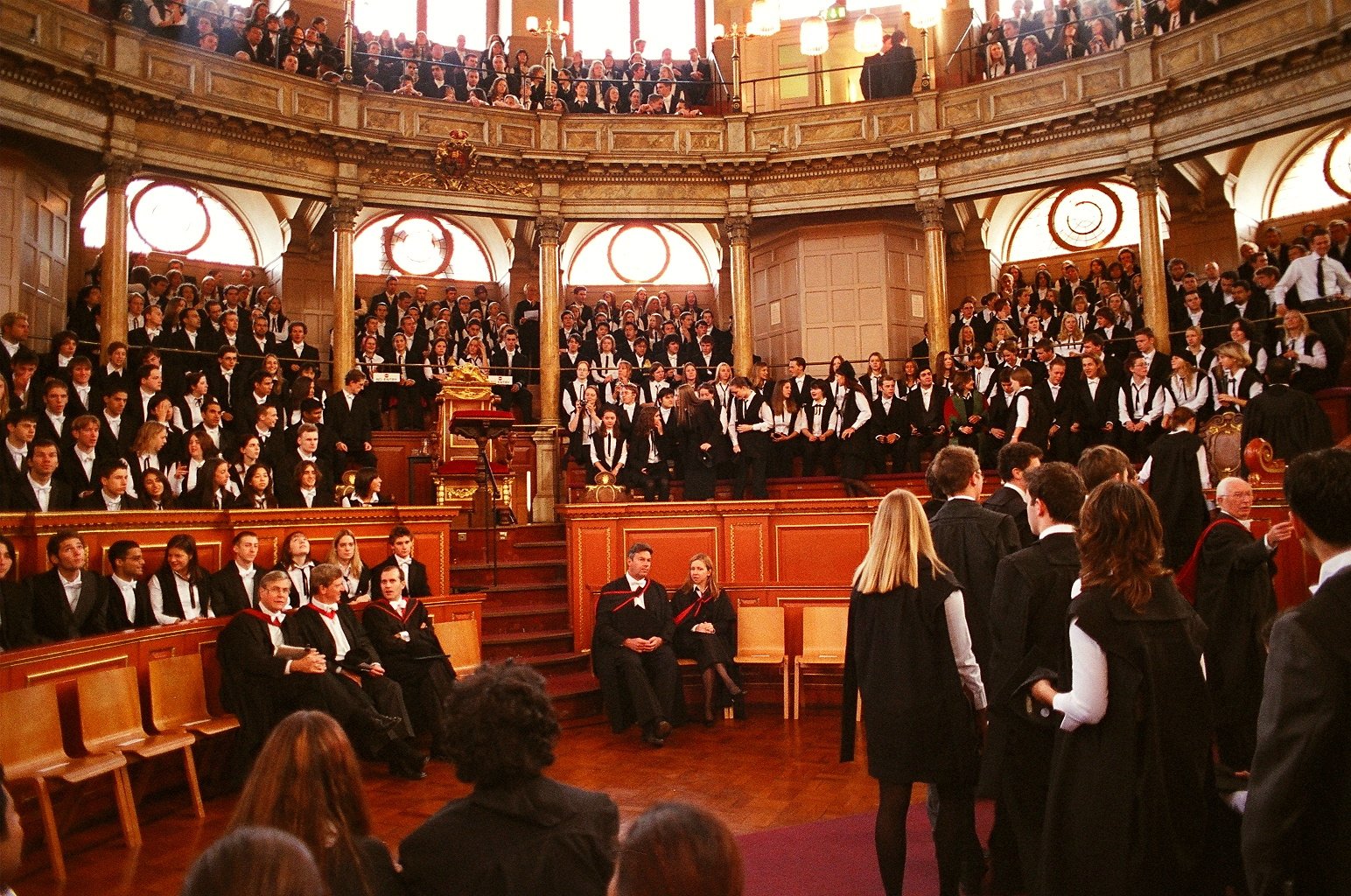
The University of Oxford has placed fifth in The Times’s 2027 UK university rankings, falling from joint fourth with the University of Cambridge last year. This marks Oxford’s lowest ranking in the guide’s 33-year history and only the second time the University has not been in the top three.
For the third year running, the University of St Andrews and the London School of Economics (LSE) topped the ranking, achieving first and second place respectively. Imperial College London has risen from sixth place to third in the most recent ranking, marking the first time that Imperial has overtaken Oxford or Cambridge. Imperial College London is also named University of the Year 2027 by the paper.
Helen Davies, editor of The Times and The Sunday Times Good University Guide, said that this year saw “an emphasis on preparing students for future careers. Universities have tailored their campuses to suit hands-on learning… But, for this next generation of students and the higher education sector at large, this is a challenging time with institutions struggling with their own finances, and the toughest graduate jobs market in more than a decade.
There are hard questions to ask: can I afford it? What will I get from a degree? Is it worth it?”
Since the National Student Survey, which informs this ranking, was conducted earlier this year, universities across the country have announced budget cuts to humanities divisions. Severe financial cuts at the University of Exeter, which placed 16th in this year’s chart, caused controversy within the university and national media.
A printed, supplementary guide containing “An analysis of the rising cost of higher education and its long-term value” and “Is Oxbridge losing its prestige?” will be published with The Sunday Times on 20th September.
Despite ranking poorly in The Times’s national survey, Oxford topped the paper’s league table of all southeastern universities (not including London). The Times also named Oxford runner-up for University of the Year for Scholarships and Bursaries 2027, behind Manchester Metropolitan University.
The annual guide produced by The Times ranks universities based on factors including academic achievement and employment prospects. Based on each category, universities receive a total score that informs the overall ranking.
In The Guardian’s UK rankings, Oxford retained its top spot, ranking first since 2025. Within the same survey, St Andrews dropped from second to fourth place while Cambridge gained a spot from third to second. Different metrics used by papers are understood to produce differing rankings.
The Times Higher Education’s World Rankings 2027 will be published on 30th September.
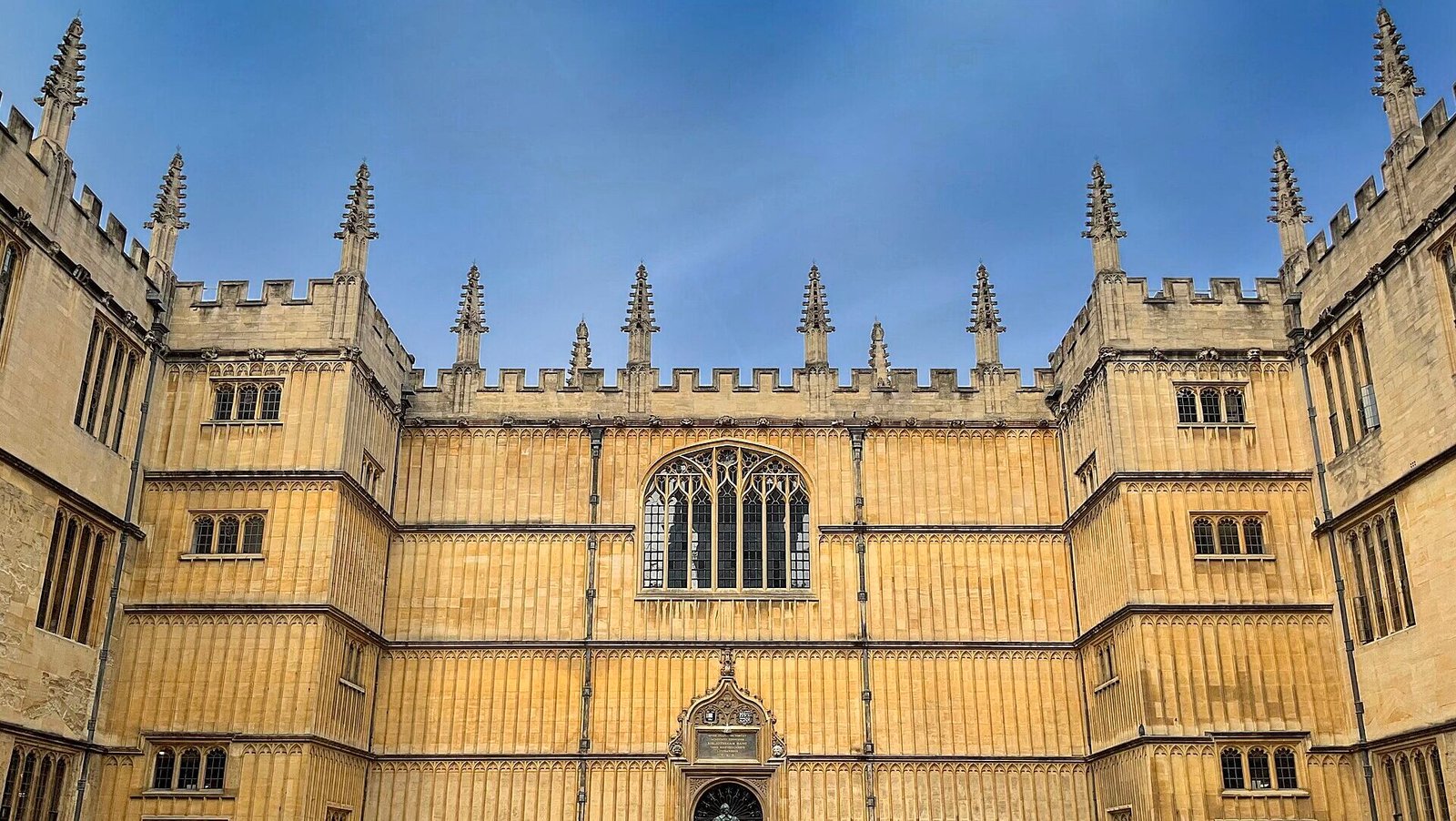
A pilot scheme, launched in 2025, allows OpenAI to use obscure materials from the Bodleian Library to train its models, documents seen by Cherwell show.
The University of Oxford announced its partnership with OpenAI, the company behind ChatGPT, last March. A key part of the ongoing collaboration, which includes access to new ChatGPT models for researchers and ChatGPT Edu for students, is the digitisation of texts from the Bodleian Libraries using OpenAI’s software. When announcing the partnership OpenAI said that it would make “centuries old knowledge searchable by scholars worldwide”.
However, neither party’s announcement mentioned that the digitised material would be used to train OpenAI’s models. AI companies need large volumes of human created data to train models to recognise patterns in language and ‘learn’ by processing large amounts of data to produce sentences and perform tasks.
Whilst websites become increasingly saturated with AI-generated language, developers require human-made data to train Large Language Models (LLMs), such as ChatGPT. Consequently, competing companies are turning to physical documents and book collections. Anthropic, a leading AI company behind the chatbot Claude, has spent tens of millions on ‘destructive scanning,’ a technique which slices the spines of books to make scanning easier.
Minutes from a meeting between the library and OpenAI in 2024 show that “populat[ing] the OpenAI training set with knowledge that uses under-represented data on the open web” is a key aim of the partnership between the Bodleian and OpenAI.
Data privacy, particularly for storage and later use in AI training, was a key concern when signing the University’s wider agreement with OpenAI. An internal audit report on AI said: “When staff or students use personal ChatGPT accounts for University work, they may unintentionally expose sensitive information […] This creates both legal and reputational risk, particularly if data is retained for model training or exposed to third parties.”
According to internal documents obtained by The Guardian and seen by Cherwell, the digitised texts cover only out-of-copyright material and the Bodleian retains the rights to the scans with the intention to publish them online, making them widely available to students, researchers, and the general public.
The project is digitising over 3,500 dissertations from 1498-1884, which the University said “demonstrates how the Bodleian is using AI to imagine a library for the future.” Meetings discussing further texts for digitisation proposed the personal archive of Nobel prize winning scientist Dorothy Hodgkin for inclusion in the Bodleian’s digital archive.
Similar deals have been made with US universities, including the University of Michigan, MIT, Caltech, and Boston Public Library, under an OpenAI consortium called NextGenAI. Oxford is the only UK university included in the initiative.
According to its website, NextGenAI brings together 15 institutions who are “dedicated to using AI to accelerate research breakthroughs and transform education”. Launched in March last year, the partnership involves $50 million in research grants and compute funding. It aims to empower AI fluency and strengthen connections between academia and industry. It is not clear whether all these deals include giving OpenAI training data.
The Digital Head of Boston Public Library, Jessica Chapel, has defended NextGenAI: “OpenAI had this interest in massive amounts of training data. We have an interesting in massive amounts of digital objects. So this is kind of just a case that things are aligning.”
Documents seen by Cherwell show that staff raised multiple “reputational concerns” surrounding Oxford’s partnership with OpenAI. Academics have previously voiced concerns about the kind of language, particularly racially outdated terms, included within the specific data.
A spokesperson from the University of Oxford said: “The Bodleian libraries also retain the rights to make the digitised material available themselves, and the library will begin to publish these materials openly online in the next few months, as we do with inputs from other digitisation partnerships. The project will in fact allow the Bodleian to make the material more accessible to a wider number of people, who might otherwise have found it difficult to access.”
After the project’s announcement last year, Bodley’s Librarian, Richard Ovenden, said: “My view is that libraries cannot ignore AI, and must engage seriously with the industry. We are testing the use of the technology in workflow design, in data exchange, and in testing automated processes against human processes. We will share the output of our project when it is complete.”
A diasporic fight that surged with UN-approved ambitions saw optimism dwindle early this month. Jamaican government officials have elevated their call for reparations with a petition to Buckingham Palace. Amidst the anticipation of a response, Prime Minister Andy Burnham has rejected the proceedings, asserting: “The UK does not and will not pay reparations.” A remedy for the government’s refusal of reparations could be found within one of the world’s leading institutions: the University of Oxford.
Although positive discrimination is legally prohibited in the UK, Oxford contextualises each application regarding one’s personal background. The University reviews achievements relative to educational environment and socioeconomic background, a step towards fiscal equity for economically disadvantaged applicants. Indirectly addressing the fact that fewer than 10% of students enrolled in a UK university are Black, Oxford provides a pathway programme, Target Oxbridge, for Black African, Caribbean, and mixed-race students to receive mentoring and application guidance. Discounting Oxford’s programmatic aid for marginalised groups is nonsensical, but to solely believe that justice is ever satisfied is impractical. Oxford, as the top-producing institution of future prime ministers, can establish a precedent for the policymakers of today and embed reparative justice initiatives.
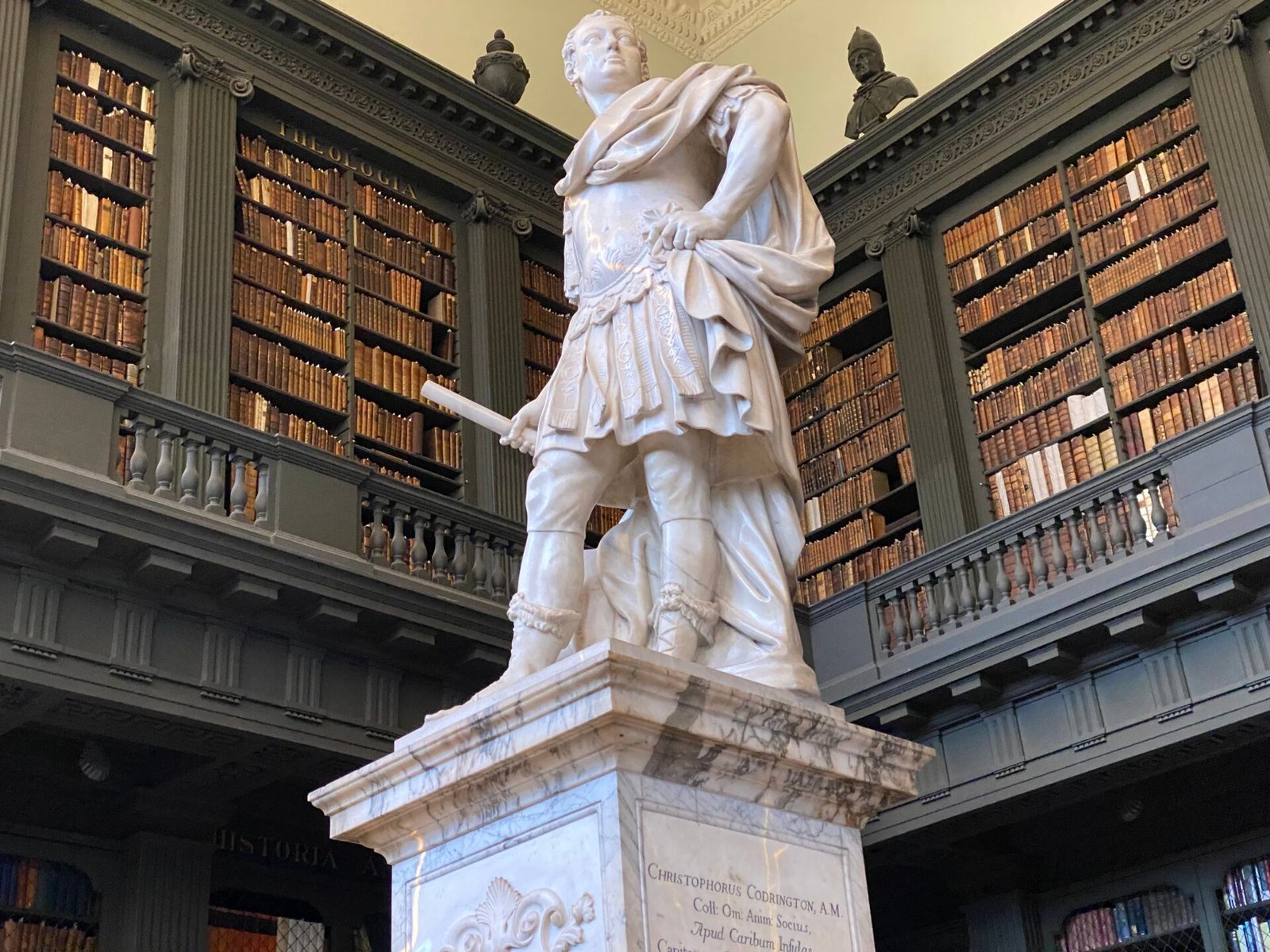
For starters, one Oxford college already employs reparative justice. All Souls College provides a graduate scholarship to address its alumnus Christopher Codrington’s slave-holding past. Codrington, who profited from several hundred enslaved persons in Antigua and Barbados, left £10,000 (several million in today’s currency) to All Souls College. Aside from removing Codrington’s name from the College library and etching the names of enslaved labourers on Codrington’s statue, the College allocates a fully funded scholarship for graduate students who are nationals of a Caribbean country and identify as Black or mixed Black. On top of this, All Souls offers financial support to Oxford’s Black Academic Futures programme, distributing around a million pounds over the past decade to support UK Black and mixed Black graduate students.
All Souls College’s initiative to confront an inhumane history must be implemented across collegiate beneficiaries of the transatlantic slave trade. Undergraduate inclusion in reparational programming is vital, because a decade has lapsed since Labour MP David Lammy accused Oxford of “social apartheid” due to 10 out of 32 colleges not awarding a place to a Black British pupil with A-levels. The University’s most recent statistics, between 2021 and 2025, state that the undergraduate proportion identifying as Black and Minority Ethnic (BME) increased from 24.6% to 30.0%, although without any extrapolation of data for solely Black students. Independent reporting revealed a more specific picture: only 3.3% of undergraduate admissions in 2024 were of Black African or Black Caribbean heritage.
Aside from the juxtaposition of a 3.3% Black undergraduate student body existing at an institution that benefited from millions of enslaved Africans, the demand for systemically implemented reparations is pressing given recent events. Attention to the University has heightened following the death of Black Cambridge Professor Jason Arday. Arday, who faced allegations of plagiarism in his doctoral thesis by self-proclaimed race realist Nathan Cofnas, was hounded by the British press for weeks until his sudden death. The inspection of the treatment of Black scholars within prestigious spaces continued with reports that 17 Oxford academics have signed an online statement “opposing punishment of Nathan Cofnas for whistleblowing”, despite the hereditarianism espoused by Cofnas. Most recently, The Nation published an opinion piece by a Black alumna not only arguing that Oxford has long been shaped by racism, but also insisting that Oxford’s “tendency to undermine the suffering of Black people led to Jason Arday’s demise.”
To help relieve the racial tension surrounding Oxford, colleges with beneficiary ties to African enslavement, such as Balliol College, Christ Church, Exeter College, and Oriel College, should follow the scholarship model designed by All Souls College and create their own endowment-funded scholarships at both the undergraduate and graduate level. Further, following the mounting anti-immigrant sentiment amplified by Reform UK – including Nigel Farage’s proposal to deny visas to countries seeking reparations, such as Jamaica – Oxford can counter right-wing opposition through investment in the Caribbean. Building on Target Oxbridge, Oxford can replicate a preparatory scheme for Black students based in Caribbean government-funded schools. Because enslavement extended beyond fiscal disadvantage to intergenerational psychological harm, Oxford must supply funding by employing mental health professionals to support newly arrived Black Oxford students. Amongst discussion about protections of Black academics in elite institutions, and the almost-ritualistic encounters of racism marginalised students experience in predominantly white spaces, one thing is clear: accessible mental health help from the University is imperative. Counsellors funded by college endowments and trained to address imposter syndrome and racial prejudice would not replace institutional reparations, but supplement them, addressing the psychological harm that material reparations of a scholarship alone cannot repair.
While Caribbean leaders return to the drawing board to rectify the inhumanity their ancestors endured, the feasibility of reparations appears bleak but not impossible. The largest obstacle is the absence of accountability required to believe reparations are owed at all. The lack of action can be attributed to the belief that slavery was never technically illegal or legal in the UK; British constituents largely oppose redressing Britain’s involvement in one of humanity’s greatest atrocities. Despite the ambiguity found within Somerset v. Stewart that technically (but not immediately, nor unanimously) abolished England’s practice of slavery, the potential price of restorative justice should also not stand as a pinpoint of prevention. Until 2015, UK taxpayers paid the government’s loan to compensate slaveholding families for their loss of “property” (enslaved Africans) after emancipation. As part of the Slave Compensation Act 1837, white enslavers received £20 million, equivalent to approximately £17 billion. Historical evidence crystallises the possibility that the UK government can take on a loan in the interest of a population – albeit the question is which population.
Regardless, amidst prime ministers rejecting responsibility and refusing to issue reparations, now is the time for Oxford to serve as the globally leading institution it is so prestigiously upheld to be. The University, with an acquired wealth obtained from benefactors and alumni, who’ve capitalised from the tragedy W E B Du Bois declared “the cause of all sorrow”, has an opportunity to initiate a route to national reparations. Oxford must succeed where Westminster has failed: reparatory justice for Caribbean descendants of enslaved Africans.
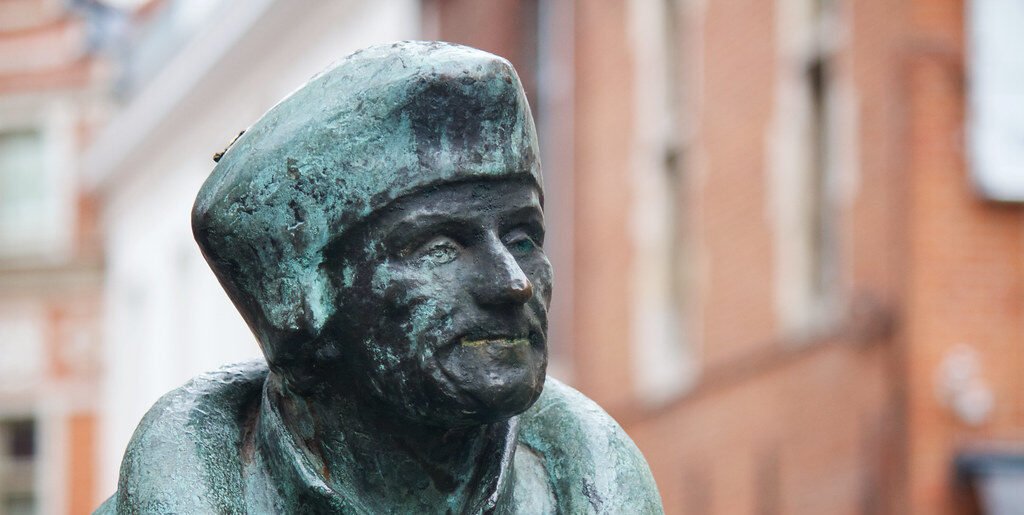
Erasmus had a content problem.
By 1525, Europe’s most famous humanist was being pirated, misquoted and buried beneath unreliable editions. “Is there anywhere on earth exempt from these swarms of new books?” he demanded in the preface to his 1508 Adagia. Print had made ideas wonderfully democratic. Unfortunately, it had done the same for bad ideas, plagiarism and errors. Mangled editions of Erasmus’s own letters travelled under his name faster than he could disown them. “The sheer multitude of books creates a glut”, he complained.
His quarrel was not really with Johannes Gutenberg’s printing press. It was with what happened once Gutenberg’s innovation met the market: printers, chasing speed and profit, flooded the Republic of Letters with texts of wildly varying quality. The problem was no longer access to information, but how to judge an abundance of it.
Five centuries later, the glut has acquired a familiar interface. Open a search engine and ‘Ask Gemini’ hovers nearby; Google search results arrive pre-digested into an ‘AI Overview’; Microsoft Copilot offers to summarise your email before you have to suffer the inconvenience of reading it. More telling is how hard it is to say no. Google says AI Overviews “can’t be turned off”, directing users to its separate ‘Web’ filter, while the more committed refusenik can append ‘-AI’ to a query, or the ‘udm=14’ URL parameter. What began as an experiment is now the default. Opting out is the specialist manoeuvre.
The appeal is obvious. Once a neatly sourced AI Overview can answer your most obscure question in seconds, the old ritual of opening six blue links and piecing together an answer yourself begins to feel wilfully inefficient. But that convenience is also the temptation: implicit in each click is the invitation – you needn’t read this yourself. Erasmus’s “swarms” of books still sat on shelves one could choose not to visit; AI now stands between us and the shelf, offering to read it first. James Marriott’s newly published The New Dark Ages calls this wider retreat from cognitive effort the “Great Simplification”: leisure reading declines; attention fractures; even television plots repeat themselves for viewers presumed to be checking WhatsApp. AI pushes the argument further: we are outsourcing not only our attention, but the first act of interpretation itself.
Erasmus offers a less gloomy sequel to information overload. Faced with his own glut, he did not read less; he learned to read more carefully. His 1516 Novum Instrumentum, produced by comparing Greek New Testament manuscripts against one another, became a landmark of textual criticism. The abundance of unreliable print generated new methods for tracing provenance and separating the authentic from the plausible. The technology that made error cheaper also made discernment more valuable. Renaissance Europe had, in effect, invented the fact-checker. What if AI produces the same counter-swing?
Photography offers a useful precedent. When Louis Daguerre unveiled his process in 1839, painting lost its monopoly on one of its oldest jobs: faithfully fixing a face, landscape, or moment. Accurate representation suddenly had a mechanical competitor – and worse, a progressively cheap one. Painters did not respond by trying to ‘out-photograph’ the camera. At the famous 1874 exhibition that critic Louis Leroy mockingly christened as ‘Impressionist’, Monet, Renoir and Degas made conspicuous what the camera could not. Through subjective brushwork and improbable colour, they rendered what was felt rather than what could be reproduced mechanically. Monet’s 1890-91 Haystacks series, 25 canvases of the same subject, painted across different hours, seasons and weather, makes the point. The brushwork makes no attempt to hide their creator’s human touch. Where the photograph seemed to efface the labour of representation, the Impressionist canvas flaunted it.
History often appears to be a constant pendulum. Romanticism answered Industrialisation’s cultural flattening with Wordsworth’s “spontaneous overflow of powerful feelings”. An excess of Romanticism, in turn, provoked Realism, the return to ordinary life and close observation. Culture develops an appetite for whatever the previous age has made scarce.
AI has renewed the old scarcity of trust. It counterfeits the appearance of knowledge almost frictionlessly, at a scale and fluency that Erasmus’s Europe could not have imagined. A citation can be hallucinated in seconds but, once exposed, the suspicion it leaves lasts much longer. Trust in a brand or source takes years to accumulate and one search bar to puncture.
But accuracy cannot be the whole story. Humans are perfectly capable of getting things wrong, yet we still seem to prefer human work even when the work itself is identical. In a 2023 experiment, researchers showed participants the same AI-generated artworks, labelled either “Human-created” or “AI-created”. The human label alone made people like and value them more. Perceived effort and the sense that there was a story behind the work helped explain why. Art itself is defined, to a degree, by its context. We value not only the finished object but the person we imagine behind it. Artificiality therefore unsettles something beyond accuracy; the inefficient things, such as handwriting, marginalia, drafts, print newspapers and visible edits, consequently acquire a peculiar new luxury. As with Monet, proof of labour becomes proof of life.
Advertising may be the clearest place to watch this mechanism operate in real time, precisely because brands are attentive to shifting audience values. Commercial director Ash Xu noticed brands increasingly spotlighting the creative process itself, hiring her not just to shoot the advert but to shoot a companion film documenting how it was made. Similarly, at New York Comic Con in 2025, DC president and publisher Jim Lee pledged that the company would not support AI-generated storytelling or artwork: “not now, not ever.” Vince Gilligan’s Apple TV series Pluribus puts “This show was made by humans” in its end credits. Heineken answered the rise of AI companionship with its “Real Friends Aren’t Artificial” campaign, turning the AI wearable into an argument for the considerably older ritual of having a beer with a mate.
Crucially, this new premium on human provenance is acquiring market value. Gartner predicts that by 2027, 20% of brands will deliberately position themselves by the absence of AI in their businesses and products. The prediction rests partly on mistrust: 72% of consumers Gartner surveyed believed AI-generated content could spread false or misleading information, prompting Senior Principal Researcher Emily Weiss to foresee an “acoustic” turn towards brands perceived as less “impersonal and homogenous”. Mirroring the rise in ‘organic’ labelling for food produce, once production becomes cheap and abundant, knowing who made something, and how, becomes as valuable as the product itself. Provenance shifts from footnote to selling point, as Gutenberg’s flood of print raised the value of scholars who could tell the authentic text from the corrupted one.
Employment gives this human premium rather higher stakes. Stanford researchers have found no economy-wide AI jobs apocalypse, but something more selective: among 22-25-year-olds in highly AI-exposed occupations (software development and customer service among them) employment is now 19% below that of peers in less-AI-exposed industries. Stanford says the gap is driven largely by reduced hiring rather than redundancies, and concentrated where AI automates human tasks rather than complementing them. It is widening fast, increasing from 15% when Stanford first documented it in July 2025 to 19% by June 2026. The familiar anxiety that AI might take our jobs is beginning, at least at the bottom of some career ladders, to acquire numbers.
Yet the counter-movement is visible too. PwC’s analysis of more than a billion job adverts finds AI-exposed junior roles seven times more likely to demand traditionally senior skills such as leadership and strategic thinking; as routine work becomes automatable, judgment and creativity become more valuable. The appetite for the human, then, need not be sentimental. When a machine can supply competent output, proving what remains distinctively yours acquires economic value. AI may be squeezing the bottom of the career ladder while raising the price of the qualities hardest to automate.
Admittedly, there is something suspiciously convenient about all this optimism. Pendulums do not always swing back because sometimes the new technology simply wins. Nobody mounted a revival of horse-drawn travel once the car arrived, and letter-writing has quietly become a niche hobby for the sentimental few. AI may behave the same way in some fields: routine writing and translation could simply disappear into automation, while elsewhere the glut grows without ever producing its glorious counter-swing.
There is also a difference in what, exactly, is being displaced. The car mechanised physical locomotion and email made correspondence considerably faster. AI arrives on more intimate grounds, replacing cognitive and creative labour, the very activities Western culture has spent centuries treating as markers of selfhood, authorship, and intelligence. Threats to identity provoke a different register of anxiety than threats to convenience. And the compressed timeline sharpens the unease: adoption that once unfolded over generations now happens between software updates.
And even where a genuine ‘renaissance’ does occur, it’s worth asking who gets to have it. We remember Monet, but not Ernest Meissonier, once the darling of the Salon, nor the hundreds who failed, or could not afford, to make the same turn. Erasmus’s philology was a pursuit for an educated few in a mostly illiterate Europe. If ‘verified human content’ becomes a premium option, the ‘renaissance’ risks being less a cultural rebirth than a luxury good: a small, well-lit room of authenticity for those who can afford to escape an ocean of automated content that everyone else remains submerged in.
None of this scepticism cancels hope; it just means the pendulum requires some pushing. Discernment seems more useful than resistance. With the recent addition of AI-generated prompts in ChatGPT, where even your own requests are being automated, it becomes increasingly pivotal to notice which habits we surrender to it. Thinking has always involved a certain amount of wasted time: the bad first argument, the paragraph abandoned after an hour of muddled sentences. The polished thought usually owes something to the half-formed, incoherent one that came before it. Friction is not always inefficiency; sometimes it is where judgment is made.
So, read a print newspaper some mornings. Not from nostalgia or because print possesses some inherent virtue, but for the minor inconvenience or small pleasure of deciding what you think before a chatbot decides what deserves your attention. Get to the source before the algorithm digests it. Let a thought remain awkward, unfinished, even wrong, before it is optimised or gently flattered into agreement.
This is an AI age. Whether we will get a renaissance is harder to know: retrospect supplies the capital R. The people living through the last one had no such luxury. They had a glut of new information, unreliable technology and rather a lot of reading to do.
So do we.



-

 Oxford united FC6 days ago
Chris Gunter steps away Wales role to focus on Oxford United
-

 Oxford News3 weeks ago
UK private school’s ‘outstanding’ headteacher is to retire
-

 Oxford Events3 weeks ago
Oxford Open Doors: nine properties to explore without booking
-

 Oxford united FC2 weeks ago
Oxford United transfer chief explains EFL embargo and contract dilemma
-

 Oxford News3 weeks ago
Salon Privé at Blenheim Palace 2026 – day one revs up
-

 Oxford united FC3 weeks ago
Leicester City confirm ‘serious’ injury before Oxford United clash
-
Oxford News4 weeks ago
Thames Valley Police detective in court over strangulation
-

 Oxford united FC4 weeks ago
LIVE: Huddersfield Town vs Oxford United – Deadline Day football in League One