
Student Life
‘We have to end the complicity of Western countries with Israel’: Peter Beinart on Purim, Palestine, and the importance of changing your mind

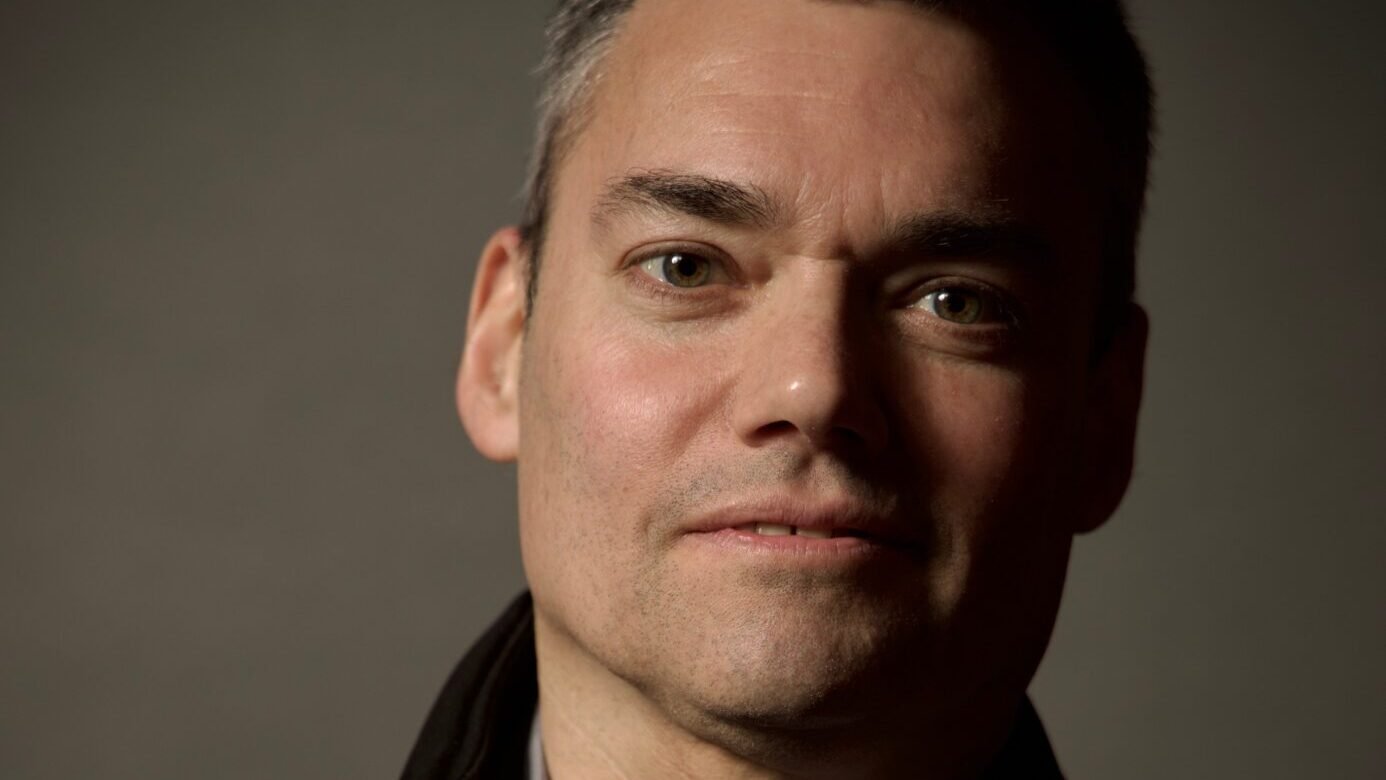
Peter Beinart knows the importance of admitting when you’re wrong. A professor of journalism and political science at City University of New York, a New York Times columnist, and Editor-at-Large of Jewish Currents, he has spent the last three decades as a leading liberal voice in the United States. But, unlike other pundits who pin their flags to the mast in order to pay the bills, Beinart’s writing is characterised by subtlety, self-reflection, and a remarkable political transformation.
Nowhere is this more evident than in his latest book, Being Jewish After the Destruction of Gaza: A Reckoning (2025). In this slim volume, Beinart, a once outspoken advocate for Israel, makes an incisive intervention into the debate within his own community as to how to respond to the violence that the Israel Defense Forces (IDF) have unleashed on Gaza. To Beinart’s mind, the killing of more than 70,000 Palestinians by the IDF necessitates deep reflection as to how “Jewish texts, history, and language” have been appropriated to justify “genocide and apartheid” in Palestine.
“The argument of the book”, he tells me over the phone, “is that there are a series of interlocking stories about what it means to be Jewish that are very powerful in many Jewish communities around the world – particularly the United States – which situate Jews as the world’s permanent, righteous victim; and also centre the relationship with the state of Israel as the ultimate test of Jewish loyalty and identity”. Beinart, who observes Modern Orthodox Judaism, argues that such narratives overlook the clear warnings within Jewish texts about how his people, as no different from any other, have a capacity to do harm.
He gives the example of how the Purim story, which is typically celebrated as the heroic survival of Jewish people in ancient Persia from a plot to exterminate them, ends with the roles reversed and the would-be killers slaughtered. The issue, Beinart tells me, is that ignorance of these theological portents creates a notion that it is impossible for Jewish people to be the perpetrators of oppression. This belief prevents supporters of Israel, whatever their faith or ethnicity, “from reckoning with some very, very painful proof about what Israel has done to the Palestinians”.
Beinart has lived a life that makes him uniquely attuned to these warnings. Born in Cambridge, Massachusetts, his parents were Jewish immigrants from Apartheid South Africa, a state whose system of racial oppression Beinart likens to Israel’s treatment of Palestinians. He completed his undergraduate studies at Yale, before coming to the University of Oxford as a Rhodes Scholar to undertake an MPhil in International Relations.
When I ask Beinart about his time in Oxford, he hesitates for a moment. He begins to list the positives: the friendships he made, the merits of the tutorial system, the freedom to procrastinate making career decisions for two years. But, after some reassurance that he’s not obliged to say nice things about the University, he speaks more candidly: “Oxford was never a place where I felt as comfortable as I did at Yale in the US. There were ways in which its particular version of Englishness was hard to penetrate for me as an American, maybe as a Jewish American.”
Yale in the early 1990s, he describes, “was an institution where public expressions of Jewish identity were very normal and routine”. Oxford, in contrast, felt different: “There was more of a sense that identity questions were private affairs and that in public you didn’t need to be waving those flags.” He clarifies that he doesn’t think it was antisemitism he was experiencing, citing instead the differing cultural attitudes towards religion on either side of the Atlantic. Nonetheless, during his time at the University he always felt somewhat “an outsider”.
Beinart returned to the United States after graduating from Oxford, beginning as a managing editor at The New Republic magazine. When I ask him how he settled on journalism for a career, he tells me that he left education because he didn’t think he had “the patient temperament to be a good academic”. “I think I’ve always been a bit more dilettantish in the sense that I like to read and engage in academic ideas, but I think that I’m better at translating those ideas for a broad audience than actually producing those ideas by doing the first-hand scholarship.”
Beinart quickly emerged as a stand-out talent, becoming editor of The New Republic in 1999 at only 28 years old, a post he would hold until 2006. It was during his editorship that the magazine supported the 2003 invasion of Iraq. Whilst an editorial the following year expressed “regret” that the “rationale for war” had “collapsed”, Beinart continued to advocate for American interventionism in his first book, The Good Fight: Why Liberals – and Only Liberals – Can Win the War on Terror and Make America Great Again.
By the time he published his second in 2010, however, Beinart’s views had changed dramatically. The Icarus Syndrome: A History of American Hubris was his attempt to reckon with how he had got his stance on Iraq so wrong, and demonstrated his new conviction to oppose US military adventurism. He also began to rethink his opinions on Israel, writing in 2012 The Crisis of Zionism, in which he called for an end to Israel’s occupation of the West Bank. Eight years later, he went further, penning a piece in the progressive Jewish Currents magazine in which he declared that the “two state solution is dead” and called for a single state where Israelis and Palestinians would be equal citizens – a clear rejection of the main tenets of Zionism.
I ask whether his earlier reckoning with his support for the war on terror helped stimulate his reassessment of Zionism. He entertains this idea: “I think I’ve in tandem had to reconsider the ways in which I bought into mythologies about an American exceptionalism, and a Jewish exceptionalism, which I think led me to overlook the harsh realities about the role America has played in the world – and also the way in which Israel was created and the way in which it sustains itself.”
But, Beinart clarifies, the real driving force behind his shift in thinking was his personal interactions with Palestinians. “I think going to the West Bank for the first time roughly 25 years ago was the beginning of a transformation.” Beinart says that encountering the realities of occupation and the humanity of Palestinians in the face of it unravelled the narratives about Israel that he had been raised on, like “peeling away an onion”.
In Being Jewish After the Destruction of Gaza, he recalls one particularly pivotal moment. Walking through a market in the West Bank city of Hebron, he and his 12-year-old son were briefly left alone by their Palestinian companion. Instinctively, Beinart started to fear for their safety, only for their friend to reappear with a Bar Mitzvah present for Beinart’s son. Beinart writes of that day that the true gift their friend gave his son “was helping a young Jew grow up without racism”. He tells me that only through “engaging with Palestinians, listening to Palestinians” can we begin “to chip away at the dehumanisation… which is pervasive in the West”.
For Beinart, such experiences led to a “growing sense that the position I was arguing for – a Jewish state and a Palestinian state alongside one another – was becoming more and more hollow, less connected to reality”. But it also exposed what he sees as fundamental flaws in the “two-state paradigm”. He argues that a two-state solution “can’t really reckon” with the right of Palestinian refugees to return to their homeland and “it can’t really reckon with the desire of Palestinian citizens of Israel to be treated as equal citizens”.
The solution, then, has to be one state between the River Jordan and the Mediterranean Sea in which all are equal citizens, and which power is shared within a democratic system. To Beinart, this would benefit Palestinians and Israelis alike: “When you have two populations living alongside one another their safety is intertwined. And so a system of violent oppression of one group is not actually the best guarantee of safety for the other group, because that system ultimately produces violence that endangers everybody.” What is required is a “system of representation where people of different backgrounds all have a nonviolent mechanism of having the state answer their concerns. A process of politics, anchored in equality under the law, while it can be messy and dysfunctional, is actually much safer for everybody”.
So, what is the likelihood of this goal being realised? On the one hand, Beinart observes that, when it comes to Israel, in many Western states “there’s been a massive change in public opinion” in the last three years. He attributes much of this to social media, “which has allowed Palestinians and their supporters a voice that they have not traditionally had because they were largely locked out of the mainstream media… It’s given them what Edward Said famously called ‘permission to narrate’”.
Beinart also points out that, for liberal supporters of Israel, particularly in America, “Israel has to justify itself in liberal terms as a liberal-democratic project – the Netanyahu era has just made that much, much harder. It used to be that people would claim that Israel wanted to create a Palestinian state but the Palestinians wouldn’t accept one. Netanyahu basically destroyed that line of argument. The effort to translate Israel’s frankly very racist political debate into a more palatable American debate has become almost impossible after more than ten years of Netanyahu – and the magnitude of what Israel has done in Gaza and the magnitude of what Israel is doing in the West Bank”.
But Beinart is under no illusions about just how far off an end to occupation and the creation of a just peace are. Whilst public opinion might be shifting, he points out that the policies of Western states towards Israel, by and large, are not. Within Israel itself, Beinart tells me, very little reflection about the immeasurable suffering the state has inflicted on Palestinians has occurred. While there are fierce debates about the personality of Benjamin Netenhayu, about the role of religion in the state, and about what kind of country Israel should be for Israelis, “there’s not really that much of a debate about how Israel should treat Palestinians, or the debate is within a very narrow framework.
“No one is really operating from the principle that Palestinians have a right to be free, and almost nobody is really saying that there should be a sovereign Palestinian state. Even if Netanyahu is defeated, I don’t think you’re going to see anything more than a cosmetic shift.”
So what can be done to bring about change? “We have to end the complicity of Western countries with Israel”, Beinart argues. He identifies ending the supply of weapons from the United States and the EU’s trade agreement with Israel as the top priorities. “It wouldn’t make sense to expect anything to change absent of that because, in supremacist political systems, whether it’s the United States under Jim Crow, [Apartheid] South Africa, or Northern Ireland, people who benefit from these supremacist systems, their plan A will always be to continue them. They are only willing to think of a plan B or C or D when the resistance, internal and external, becomes so strong that the system starts to break down, that it no longer works for them.
“Until we have this kind of resistance – which I hope is nonviolent, ethical in nature, and offers a vision of mutual liberation – I don’t think you’re going to see powerful forces in Israel be willing to seriously consider an alternative to supremacist politics.”
And, more locally, what can Oxford students do? He says that students should “find a balance between different kinds of virtues”. The first is curiosity about the rationale behind opposing views. He says that students should ask: ‘What life experiences have led you to these views?’ “That’s a question that unfortunately people very rarely ask of Palestinians, but I think that’s also a question that pro-Palestine activists sometimes don’t ask enough of Jews who support Israel – ‘What’s the family experience that you had that made you so convinced that a Jewish state is necessary for safety?’ Those stories might not convince you that those views are right but they give you a greater degree of empathy for where people are coming from.”
The second, however, is a steadfastness in standing up for your beliefs. Beinart describes opposing Israel’s military occupation of the West Bank and Gaza and its statewide discrimination against Palestinians as “one of the great moral challenges of our time” and insists that “people should try to rise to that challenge by fighting for justice. It’s important, at a certain point, to be able to say clearly that there are grave injustices taking place and to speak out against them”. For Beinart, empathy and an unequivocal commitment to justice can, and must, go together.
Beinart’s principled, high-profile stance on Palestine has placed him in the firing line of scathing criticism, the most vociferous of which accuses him of “abandoning” his own community. When asked about this, he is remarkably unfazed: “You know, I’ve been doing this for long enough that angry responses and condemnations… don’t particularly bother me.” But he is also candid about the personal cost, admitting that he has lost “some relationships that were very important to me. I feel a sense of sadness, because some of those were relationships that were very important to my kids”. Nonetheless, he will not indulge in self-pity: “A whole new set of relationships have opened up that are also very precious to me in a different way with people with whom I share an ethical perspective. So there’s loss, but also gain.”
Beinart’s faith is what sustains him through all of this. In a life defined by evolution, it has been his one constant; the anchor keeping him tethered through personal and political sea-changes. Speaking with him, it is also clear that it underpins his progressive politics. But Beinart has the prescience to avoid making the same mistake as those he criticises in Being Jewish After the Destruction of Gaza: he refuses to argue that being an observant Jew compels one to subscribe to a specific political ideology. “I think it would be very silly to say that the essence of Judaism is progressive or liberal or anything like that. It’s a tradition that is ancient and vast and speaks in many, many different voices, just as Christianity and Islam do.
“I have to be honest in saying that I take within Judaism certain traditions, and those are the ones that are more powerful to me.” He recognises that, just as “in the 19th century there were devout Christian slave holders and devout Christian abolitionists”, Jewish people can hold diametrically opposing views, without one being a truer believer than the other. Judaism is complex and pluralistic, he tells me, pointing out that extremist Israeli ministers such as Ben Gvir and Bezalel Smotrich “read the same texts, they also get up and put tefillin on in the morning like I do, but they emphasise different strains”.
As for his interpretation of Judaism, it epitomises the outlook of the present-day Peter Beinart; a man whose commitment to equality supersedes everything else. “To me, my starting point, my meta-principle, is that the Torah begins with universal human beings who are of no ethnicity, religion, race, or nation, who are created equal in the image of God. Everything flows from there.”
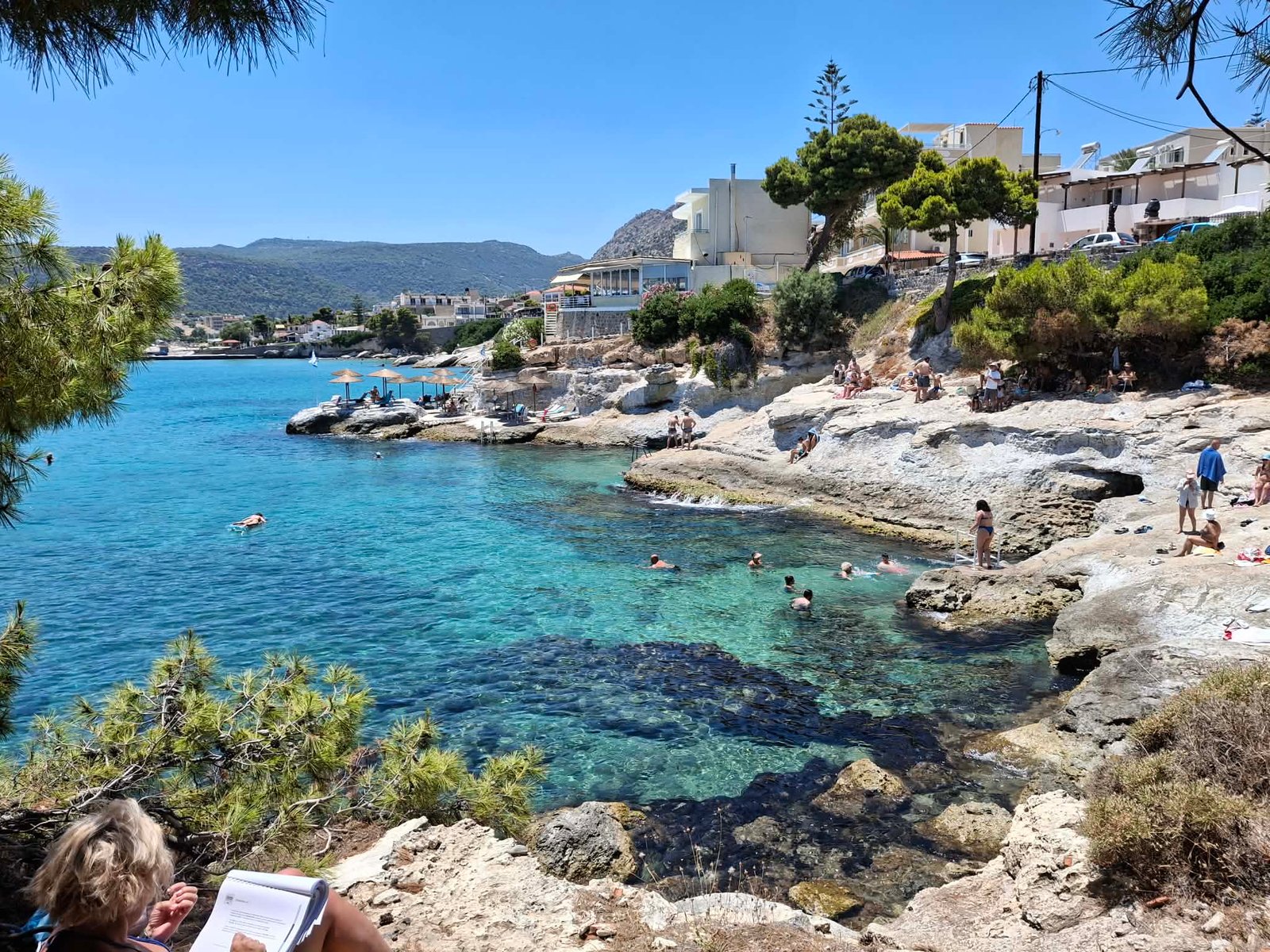
Reconnecting with reading is something many people tend to do on a summer holiday, and statistics suggest it is one of the only times the majority of adults read throughout the year. WalesOnline reports that 25% of its 5,000 respondents only ever read whilst away on holiday. Perhaps more interestingly, it reports that, whilst 29% of people would be too embarrassed to be seen reading romance in their day-to-day life, 17% change their mind when they are away on holiday. Although it feels like a societal issue that people would be too self-conscious to read romance in public (perhaps because it is a genre enjoyed by more women than men), this speaks to how much further from their regular selves people feel whilst on holiday.
It seems that many people find summer holidays to be a time in which they can disconnect from their real lives and read things they would usually feel too self-conscious to. This same study reveals that over half of adults wish they read more, implying that not everyone manages to crack open a book whilst on holiday. The study reports that the average number of books read on holiday is 2.3, but it does not say how widely the results ranged. Given that over half of people wish they read more, it is quite possible that, rather than a lot of people reading two or three books each, many read none at all and others read copious amounts.
I personally find this to be the case. Every summer holiday, reading for pleasure is something I either nostalgically reconnect with or grow ever more distant from and feel guilty whilst doing so. I will spend a week either reading a similarly obscene number of novels to what I consistently read as a child, or not once broaching the first page, and pre-holiday it is impossible for me to predict which will occur. For more self-aware readers, perhaps this is not such a surprising phenomenon, but I find each time I am surprised either by the large amount of my to-be-read list I’ve suddenly ticked off, or by the fact that the most words I consumed were on a restaurant menu.
You might assume that, since this article is in the Books section of Cherwell, I am about to try to convince you that you should have spent your summer reigniting your childhood passion for reading. It is not an uncommon pipeline for someone who is nerd enough to get into the University of Oxford to have greatly enjoyed reading as a child, only to arrive here and have reading become their entire life. This, for many, leads not necessarily to falling out of love with reading, but perhaps to a reading fatigue that makes us increasingly reluctant to spend our precious free time with our nose in a book.
I know many people who at least somewhat mourn the more casual relationship they had with reading as a child. One thing that categorically never encourages a reignition of a love for casual reading, however, is guilt. At no point has a nostalgic childhood hobby been happily rediscovered through guilt. I also think that, for many people, guilt is a feeling associated specifically with reading for fun. It’s almost like many people who grew up with a love of reading also developed a need for academic achievement to such an extent that this would be carried into adulthood hobbies.
The Oxford English Dictionary defines a hobby as “an activity or interest pursued regularly in one’s leisure time for pleasure”. Unfortunately, when it comes to reading, many people seem to forget the final two words of this definition. So, ultimately, guilt seems to be almost exclusively applied to reading as a hobby, in a way that is damaging to our enjoyment of it. Reading seems to be the one hobby that causes people to forget what the purpose of a hobby actually is: pleasure. If you’re no longer wanting to read for pleasure, that’s not something that should be forced. I’ve watched people obsess over reaching arbitrary reading goals in a way that prevents their hobby from matching its definition.
In my opinion, as long as you’ve replaced it with other hobbies rather than an alarming screen time, falling out of love with reading is not something to be ashamed of, and it shouldn’t be a hobby forced out of some misplaced sense of guilt. The pause doesn’t have to be permanent, and perhaps not forcing it will allow it to come back naturally (as well as leaving a part of our lives in which reading comprises alarming amounts of our time).

The “growth corridor” connecting Oxford and Cambridge is falling behind its global rivals despite its world-leading research output, a new report has warned.
A recent report by a public consultancy and industry leaders found that the region produces more scientific publications per resident than any other global innovation cluster, but lacks the infrastructure, talent retention, and transport links needed to turn its research strengths into economic growth. According to the report, Oxford-Cambridge “does not yet have the scale or depth of a top-tier cluster”. It warned that Britain is “competing in a global innovation race that is only accelerating”, adding that “we cannot lose focus or slow down now”.
The Oxford-Cambridge region has become a major focus of the government’s growth agenda after former Chancellor Rachel Reeves announced plans to “unleash the potential” of the region as part of the government’s ambition to create ‘Europe’s Silicon Valley’”.
The report argues the government needs to “go further and faster”, warning that “if OxCam moves too slowly, more of the firms and talent nurtured in the UK will move abroad”. The report describes addressing these constraints as “one of the clearest routes to long-term national renewal and economic security”.
One of the five constraints identified as holding back the Growth Corridor is talent retention. Around two-thirds of unicorn companies founded by Oxford and Cambridge alumni are not headquartered locally, while one in five has left the UK. Infrastructure was also identified as a significant barrier to growth, with industrial electricity costing over 60% more in Oxford-Cambridge than in Paris and Boston.
The region also suffers from poor connectivity between its two university cities. Travelling between Oxford and Cambridge by public transport currently takes three and a half hours, despite 45 minutes being considered to be an easily commutable distance, according to the report.
East West Rail, which is intended to connect Oxford and Cambridge by train for the first time in decades, has faced repeated delays. The first part of the route, connecting Oxford and Milton Keynes, was due to open by the end of December 2025. However, the route has only been used for training runs and freight services, and in August, operator Chiltern Railways could not provide a date for the route opening.
The government announced over £500 million in investment last October as part of its commitment to the Oxford-Cambridge growth corridor, which it said would unlock new private sector investment. They estimated that developing the Growth Corridor could add £78 billion to the UK economy by 2035.
A spokesperson for the Ministry of Housing, Communities and Local Government told Cherwell that the growth corridor “has huge economic potential for our nation’s growth prospects”.
“We’re unlocking this potential by exploring plans to go further than ever to create growth in the area, so we can boost the economy and put more money in people’s pockets,” they added.

“A Cornish childhood ends with the lights of Oxford.” I first read these words when I was lounging on a chair at Christ Church, surrounded by the dark wood-panelled walls of the room I had called home for the past year. It had been written by a proud Cornishman called A.L. Rowse, long before I had been born. The book was given to me by my wholeheartedly and unapologetically Cornish grandparents over a year ago, and had been silently waiting on my shelf to be read ever since. The afternoon on which I put the book at ease was a rare one: I had no impending essays, no readings to slog through, and no translations to hand in. I could count on only one hand the number of times I’ve found myself in such a situation at university, so I decided to seize this golden opportunity and read A Cornishman at Oxford.
A Cornishman at Oxford is an autobiographical memoir written by A.L. Rowse that details the dramatic change in the life of a working-class Cornishman when he begins his studies at Oxford in 1921. Cornish folk are few and far between at Oxford. As a Cornishman myself (albeit half Cornish), I can vouch for how little people know of our nation – aside from a vague awareness of St Ives or some other holiday town. Few people are familiar with St Piran (Cornwall’s patron saint), our folklore-rich stargazy pie, and traditional Cornish carols. Many are also quick to dismiss Cornish identity as trivial, without understanding that Cornwall was independent from England for centuries and had its own Celtic language (Kernewek), spoken as late as the 19th century. The fact that I grew up being told I was half Cornish and half English should tell you how seriously some consider the cultural divide to be, even to this day. This made reading the experiences of a fellow Cornishman during the 1920s all the more captivating.
Some may question why such a book would be important enough for me to feel obliged to write an article about it – after all, Cornwall is just another part of the UK. But this book is more than a commentary on Cornishness and studying at Oxford: it’s about fitting in, standing out, and overcoming the challenges therein. Rowse stuck out like a sore thumb amongst his peers, not only for his brazen Cornishness, but also on account of his working-class, state-educated background, and his homosexuality. Because of this, he dealt with a lot of insecurity surrounding his own intelligence compared with that of his fellow students, as well as a deep dissatisfaction regarding the conservatism that was rife in Oxford. It is for these reasons that I find his story not only comforting, but also hugely inspiring. Rowse was among the very first to prove that those from disadvantaged backgrounds belong at Oxford. He even became the first person from a working-class background to be awarded a fellowship at All Souls College. As a result, his achievements simultaneously marked a turning point in academia and acted as testimony to the fact that Oxford is open to all, no matter their background.
There is no doubt that Rowse and I share a host of similar experiences. From the Cornish clotted cream and scones sent from the homeland (jam first, obviously), to a similar disdain for the theatrics of the Oxford Union, much is the same. It seems that even our predecessors enjoyed a ‘Trinifree’ lifestyle in the summer, with Rowse at one point commenting: “Oh, dear: work and the summer term at Oxford are rather incompatible.” Coincidentally, Rowse, just like myself, attended Christ Church. His descriptions of Mercury Fountain, Tom Quad, and the Meadows are seemingly evergreen. It’s apparent that, despite obvious changes over the past 100 years, the enchanting charm of Oxford has remained much the same. Rowse’s writing transports me back to the wonderment of my first year, and the amazement that he felt upon first discovering the city truly resonates with me. Our part of the world is more rugged, less ornate, and far quieter, making the shift to the Oxford lifestyle a significant one.
Among the pleasing similarities between our lives, reminders of our differences are peppered throughout. Though it seems odd to say, given the luxuries we all experience as students here, Oxonians of the past enjoyed comforts that we do not. Larger rooms, constant tea parties, and regular drinks with dons were frequent occurrences for students in the 1920s. However, the contrast in our lives surrounding technology really struck a chord with me. The common doomscroll-induced guilt of the modern student simply wasn’t a feature of Rowse’s life, and the more I read about his personal pursuits, the more I began to envy the lifestyle he described. The Oxford Rowse presented seemed more close-knit, more passionate, and more creative. I realised that many of the same hours our predecessors whiled away with poetry, politics, and personal development, I now spend vacantly looking at my phone. Many of us are passively aware of the addictiveness of this element of modern life, but reflecting on this comparison is what really urged me to contemplate how I spend my own time. Though I’m far from perfect, after reading Rowse’s work I’m now more likely to favour a book over my phone – I’ve even started to learn bits of Cornish in an attempt to reconnect with my roots.
Rowse, like me, came from a state school, and I find the way in which he navigated relationships with those from other backgrounds both familiar and reassuring. When reading about Rowse’s return to Cornwall during the vacations and talks of his visits to local landmarks that I know all too well, I was left with a strong sense of nostalgia. Whilst I’ve come to feel at home at Oxford, it’s impossible to keep homesickness at bay forever. Though I’m sure others experience it more intensely, I’d be lying if I said I haven’t felt like a fish out of water more than a few times at Oxford, both on account of my state comprehensive background and my ‘country-bumpkin’ mentality. Due to this, it can be all too easy to push reminders of home to the back of my mind: views of old Cornish engine houses that my ancestors worked in, trips to the beach with my family, and the stories of miners and other Cornish folk that make up the history of our nation. But after reading this book, I was reminded of what I leave behind when I come here. Thanks to Rowse and his century-old writing, Cornwall no longer seems so far away from Oxford, and I feel a little bit more in the right place.


‘We have to end the complicity of Western countries with Israel’: Peter Beinart on Purim, Palestine, and the importance of changing your mind

Cameron Brannagan ‘lucky’ despite ‘perfect’ Oxford United strike

Seasonal reads: On childhood hobbies, growing up, and guilt
-

 Oxford united FC3 weeks ago
Chris Gunter steps away Wales role to focus on Oxford United
-

 Oxford united FC4 weeks ago
Oxford United transfer chief explains EFL embargo and contract dilemma
-

 Oxford University3 weeks ago
New to the Oxford English Dictionary this September
-

 Student Life3 weeks ago
Oxford falls to lowest ever spot in The Times UK University Guide 2027
-

 Student Life2 weeks ago
Oxford partnership allows OpenAI to use rare Bodleian texts to train ChatGPT
-

 Oxford Events3 weeks ago
Four days of equestrian spectacle at 2026 Blenheim Palace International Horse Trials
-
 Traffic & Transport1 week ago
How poor public transport policy is putting the brake on cities | Road transport
-

 Oxford united FC2 weeks ago
Northern Ireland fans laud Oxford United defender Ciaron Brown