
Student Life
Rhodes scholarships cut amid financial difficulties

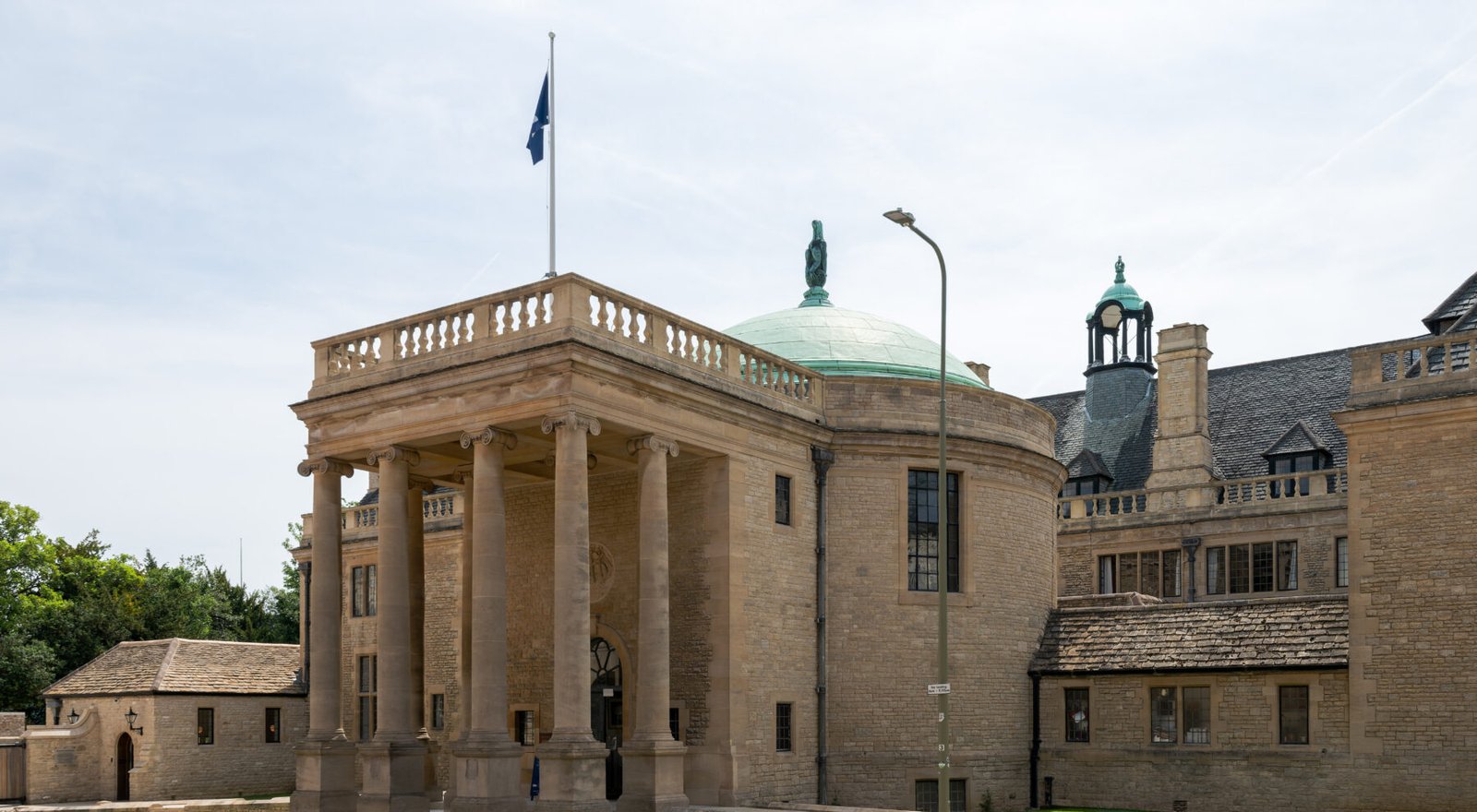
The Rhodes Trust has restricted funding for professional degrees, introduced tighter limits on doctoral study, and reduced spending on events for scholars at Oxford amid financial difficulties.
Scholars pursuing a Master of Public Policy, Master of Business Administration, or Master of Financial Economics will now be limited to one year of funding, preventing them from combining any of these qualifications with another degree. Rhodes recipients wishing to pursue a DPhil also face restrictions.
Under conditions of tenure published in September, scholars are formally discouraged from undertaking courses of study longer than two years. If a scholar wishes to pursue doctoral studies after selection as a Rhodes Scholar, they must secure additional approval from the Rhodes Academic Review Board and prepare an alternative two-year course of study.
Places on the route combining a one-year master’s with a DPhil are described as “very restricted” in the conditions of tenure. In general, doctoral study is described as “non-standard” and limited to students for whom “undertaking the DPhil at Oxford at this stage of their academic and professional journey is a necessary next step towards achieving their long-term aspirations”.
Previous conditions allowed scholars to undertake professional degrees as part of a two-year programme with another academic master’s degree, and contained no restrictions on direct DPhil entry.
The changes extend to social life at Rhodes House. In conversation with Cherwell, numerous new scholars have noted considerably fewer induction events. Cherwell understands that alcohol will also no longer be provided at House events.
“It’s a stressful situation”, explained one Rhodes Scholar who is planning on doing a DPhil next year. “There’s a lot of uncertainty.” Another scholar said that it was “disappointing” to see that the Trust had ended the Global Constituency, which provided opportunities for students from countries not previously eligible for the scholarship.
The measures narrow the academic options available through one of Oxford’s oldest scholarships. Established under the will of Cecil Rhodes in 1902, the Rhodes Scholarship is one of the most prestigious scholarship programmes in the world. Currently, it awards scholarships at Oxford to over 100 students each year. Previous Rhodes Scholars include former US president Bill Clinton, astronomer Edwin Hubble, and singer Kris Kristofferson. The scholarship has been subject to much scrutiny in recent years due to Rhodes’s colonial legacy.
The restrictions come amid pressure on the Trust’s finances. Its report for the year to June 2025 recorded £27.7 million in scholarship expenditure, with an average annual cost of approximately £85,000 per scholar once overheads were allocated. It identified cost inflation, including university fees, stipends, and staffing, and outlined the trustees’ intention to reduce withdrawals from the endowment. Rising overseas student fees are a particularly significant drain on the Trust’s finances. A 2025 Cherwell investigation revealed that international student fees had risen by 37% from 2022, with fees on some courses rising by over 60%.
The financial pressures follow the £38 million redevelopment of Rhodes House, which was completed in 2023. The Trust reports approximately £800,000 in annual interest on a bond issued to finance the building project, alongside income from commercial events and accommodation that contributes towards operating costs.
Investment returns have also fallen short of the Trust’s goals. Most of its endowment is managed by Oxford University Endowment Management (OUem), which returned 3.6% in the year to June 2025, far short of its goal of inflation plus 5%. OUem has consistently missed this goal in the short and medium term.
The latest restrictions follow the suspension of the Global Scholarships in April 2026. This programme provided a route for applicants ineligible to apply through existing geographical constituencies, including those from many African countries. The Trust’s public notice attributed the suspension to “shifting strategic priorities”.
Rhodes is not the only international scholarship programme to cut back recently. In August, the Jardine Foundation announced the end of its scholarship programme for undergraduate students from Southeast Asian countries to study at Oxbridge after 44 years, focusing instead on regional institutions.
In a statement to Cherwell, the Trust said that it is “in a solid financial position”. At the same time, it said that “the University of Oxford has dramatically increased international postgraduate course costs in recent years, and costs are expected to continue rising”, which “will inevitably affect some future options”. It states that previously approved study plans will be honoured.
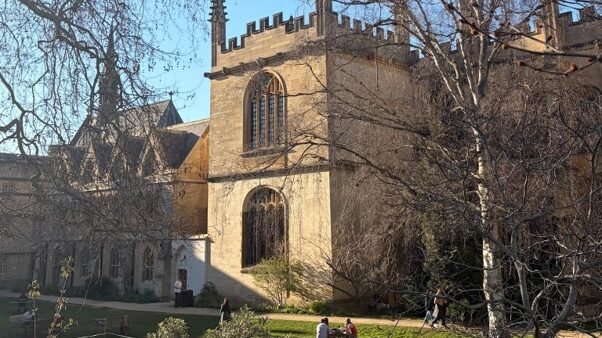
Cherwell District Council will decide next month whether to grant permission for a controversial £900 million data centre development funded by Exeter College.
The development, named EXOq, is located next to Oxford Parkway station in Kidlington and aims to be a “home for global research innovation and education”, with a particular focus on AI and quantum computing. The plans include a large data centre to provide computing infrastructure, alongside an innovation hub aiming to bring together researchers, government institutes, and investors.
The plans also include a conference centre, 180-room hotel, and a further education college that focuses on “equipping the young people today with the skills to be the workforce of tomorrow, working in and supporting newly emerging technologies linked to EXOq”. Construction would begin in 2028 with an expected completion in 2040.
Exeter College finance and estates bursar, Nicholas Badman, told Cherwell: “EXOq is a once-in-a-generation opportunity for Oxford and the region. Exeter College is uniquely placed to deliver the sovereign High-Performance Compute infrastructure the country, and the Oxford ecosystem, needs to compete in quantum computing and AI.”
The University of Oxford’s Vice Chancellor, Irene Tracey, said that “fundamentally, EXOq fits very well with the university’s needs and it has my full backing”.
Exeter’s plans come alongside a government drive to grow the UK’s compute infrastructure. The government’s 2025 UK Compute Roadmap forecasts that the UK will need three times as much data centre capacity by 2030 to keep pace with AI developments.
The plans also tie in with the government’s ambitions for the Oxford-Cambridge growth corridor, which it has dubbed “Europe’s Silicon Valley”. An economic impact assessment produced in support of the application suggests that the gross value added could reach £1.4 billion and create 7,000 jobs total, of which at least 4,600 would be in the local area.
Local residents have criticised the planned development. Kidlington Councillor and Leader of the Green Party on Cherwell District Council, Ian Middleton, has publicly objected to the proposal, while more than 35 local residents submitted statements opposing the plans during public consultation. One resident urged the council to “be courageous and stop letting the colleges dominate the whole area” while another labelled the development “huge, unwanted, and unnecessary”.
Local campaign groups, such as the Oxfordshire branch of the Campaign to Protect Rural England, have raised environmental concerns including the development’s impact on the green belt separating Oxford from Kidlington and a nearby ancient woodland. One objecting group, Wolvercote Neighbourhood Forum, explicitly references noise problems caused by data centres in the US in a letter opposing the site.
In response to queries about the project’s environmental impact, Badman told Cherwell: “The College understands local concerns and is committed to making EXOq an exemplar of sustainable data centre design.” Badman noted that the plans include on-site solar power and would reuse waste heat from the data centre through a low-carbon heat network serving both EXOq and the surrounding area. He added that the College is exploring off-site renewable energy and working with electricity generators and is “committed to ensuring EXOq’s demands will not conflict with local energy needs”.
The most significant local challenge to the project surrounds the provision of golf courses. In 2025, the 118-year-old North Oxford Golf Course, owned by Merton College, Exeter College, and the University of Oxford, closed to make way for a housing project. Greenway, a group set up by former members of the club, told Cherwell that “the college gave assurances that Frieze Farm [the land upon which EXOq would be built] could be used if necessary as a replacement for the golf course”. Such a use is suggested in the Cherwell District Council Local Plan 2031.
Regarding the potential golf course, EXOq states that “evidence submitted to the Local Plan highlighted that the popularity of golf is declining nationally, and there is insufficient demand locally to justify the EXOq site as a replacement course”. In a statement to Cherwell, Greenway have labelled these statements inaccurate.
A decision is expected at the start of next month after the council’s independent golf need report is complete. The report will be the third golf need survey attached to the application, after Exeter and Greenway submitted their own competing surveys.
CW: rape.
This week, Cornell University has made headlines as prosecutors reopened an investigation into the alleged rape of a student at the Ivy League in 2024. The case is characterised by extreme violence and the university’s apathy towards the anonymous Jane Doe. When victims are ignored, and perpetrators’ punishment is to write an essay, what can we learn from those who use art as protest on campus?
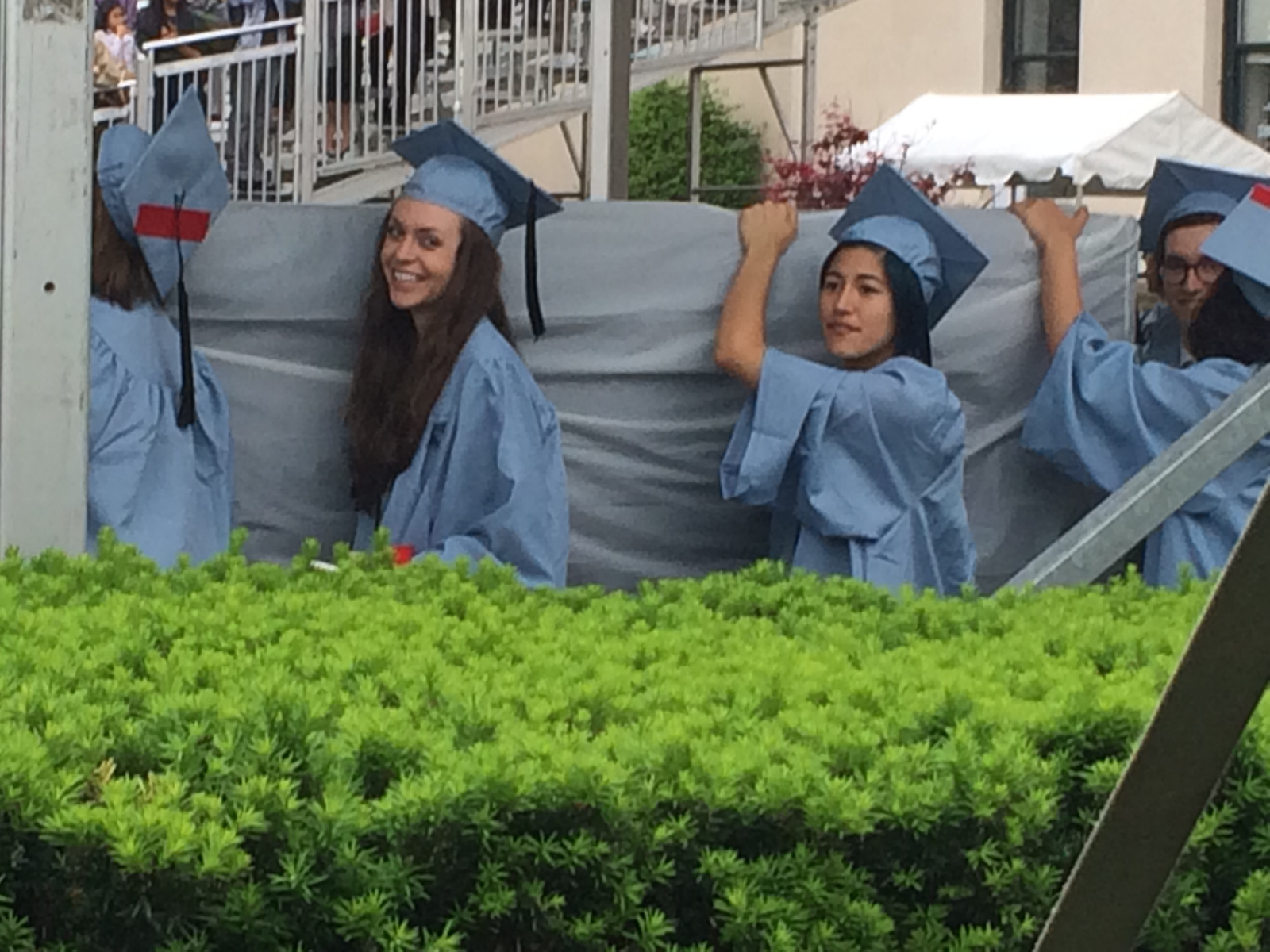
In 2015, Columbia University student Emma Sulkowicz carried her dorm room mattress across her graduation stage. She had been carrying it for months: every day the university failed to expel the man she accused of anally raping her. Having reported the assault to the university in April of 2013, Columbia found her attacker, Paul Nungesser, “not responsible” for his alleged crimes. She filed a report with the New York City Police Department to no avail.
In response, the visual arts student embarked on a performance art piece entitled Mattress Performance (Carry That Weight), as her senior thesis. Starting in September 2014, Sulkowicz carried a 23kg, dark blue, extra-long twin mattress, identical to the one on which she was raped, with her constantly while on campus. Dubbed by Sulkowicz to Columbia Spectator as an “endurance art piece”, she described the mattress as “the perfect size for me to just be able to carry it enough that I can continue with my day, but also heavy enough so that I have to continually struggle with it”.
Her performance was intended to travel by “word of mouth”. Having written the rules of engagement for lugging the heavy mattress around the walls of her studio space, she left the rest of her performance unexplained: a student walking around campus with a blue rectangle of springs and plastic.
On the steps of university buildings, at coffee shops, covered in a sheet matching the shade of Sulkowicz’s graduation gown, the mattress is always there. The mattress’ out-of-placeness is off-putting, interrupting a space of efficiency, learning, and practicality. It is cumbersome, attention-grabbing, and unsettling. It’s a weight not only to those who carry it, but a disruption to the lives of those around it. Its presence speaks to an absence of accountability and justice in the space it inhabits. Notably, under Sulkowicz’s regulations, the mattress was not allowed to be removed from the university campus, even when she was elsewhere. The burden of truth and violence was made big, blue, and bold. It’s difficult to move and impossible to ignore. In a piece written for TIME, Sulkowicz accused Columbia of being “more concerned about their public image than keeping people safe”. When the words of victims have limited consequence and perpetrators fail to be held accountable, art speaks in a tongue that cannot be twisted.
Protest is often remembered through its material objects. We picture the hourglass of Extinction Rebellion, the peace sign of the anti-Vietnam War movement, the crouching panther of the Black Panther Party. The visual memorabilia and graphic art of protest leave a lasting cultural and personal impression. In an interview with Tate, artist Jeremy Deller recalls the impact the protest art of the 2017 Women’s March had on him: “It was kind of the first time you saw… those body parts being drawn or in public being displayed, those sort of reproductive organs.” Really, women’s reproductive systems have been displayed on museum walls with varying accuracy for centuries. Think only of Gustave Courbet’s 1866 L’Origine du monde: it’s all the ‘taboo’ bits and nothing else. Possibly, it is the presence of these taboo bits paraded so pointedly, with overt political sentiment behind them, as well as the real-life person holding the placard, that makes protest art, at least to Deller, so remarkable. It discards any question of whether art should be political and forces it to be so. It gives the aesthetic political purpose; it upsets how we understand, use, and display art. In Sulkowicz’s case, it makes the mundane, purpose-driven object an aesthetic anomaly that first surprises, and then frightens.
Sulkowicz’s performance art protest draws on the visual interruption caused by something being in the wrong place, detaching the signifier from the sign. The spatial anachronism of mattress-in-library, or mattress-in-cafeteria, creates an unsettling instance of a stubborn, physically cumbersome dedication to truth-telling. The mattress is impossible to ignore; so is the silent system of gender-based violence that permeates university culture. Sulkowicz makes the location of violence mobile, unavoidable, and universal. While the weight of assault can be carried by anyone anywhere, the mattress is a reminder that the perpetrators of such violence are just as present.
The tool of oppression deployed by universities like Cornell and Columbia is language in the form of excuses and essays. Language is fortified to protect the guilty and complicit from the consequences of their actions. Art, at this moment, confuses the schemes of language. It evades clear distinction, forces itself to be acknowledged, and upsets the campus’ playhouse of power and punishment.
‘When he created Earth and these lands upon it, when he divided people into believers and infidels, the crescent moon and the cross, the good Allah made us all different except for one thing. We die easily without seeking reasons; the reasons come on their own. And He sits on His celestial throne and is surprised by how little we cherish life while we have it, and how many tears we shed once it’s gone.’
Hiding in the woods, the narrator of Jergović’s eighth story ponders the push and pull of religion in Bosnia. His is one of the trickier voices in Inshallah, Madonna, Inshallah. Obsessed with the sins of a lightning-struck Hodža, the disappearance of a young refugee from the town’s memory, he resolves to be the saviour. He answers the call of God, who is “testing us just as an old grandfather tests his coffee with the tip of his tongue to see if it’s hot”. As he falls asleep in the cold, his mind is fragmented with fantasies of sin and punishment. The details of “the Charred Mosque minaret” slip away; he remembers that “the Hodža was bald and smooth-faced”, but he cannot remember why. When he sneaks back into the town, forgetting the stories he has told himself and the crimes he is supposedly avenging, our narrator commits a confused final act of violence. Jergović, through translators Ellen Elias-Bursać and Mirza Purić, delivers: “We both heard the same thing, and by that, on judgement day we will be judged as men – the woosh of the paddle like the woosh of the wind that brings the snow and the winter.”
Whilst the delusion of Alkatmer’s narrator is perhaps more complex than some other voices in this collection, the understatedness of his story and the winding, folkloric tone are definitive of Inshallah, Madonna, Inshallah. Every story is characterised by the universal intimacy of the voice of a stranger telling you strange tales around a fire. Sometimes there is magic explicitly at play, like the talking bird of ‘Zulum’. Sometimes, with the freedom of unreliable narrators and prophetic dreams, reality in Jergović’s stories bends only slightly; such is the case in “Tespih” and “Misir”.
As he describes it, Inshallah, Madonna, Inshallah is the author’s attempt to capture “the unusual documentary spirit of Bosnian and Dalmatian lyrical songs.” Every short story begins with a note describing the “lyrical song” (or songs) that inspired it, thus each is framed explicitly by the culture and history in which Jergović writes. The natural, and surely intended, product of this form is the sharp focus, every time, no matter the length or style of the story, on the people of Bosnia and Herzegovina. The book stands as a record of Jergović’s people, a collection of mythical voices that can speak to God, to Allah, to birds, and dead brothers.
The balance of folklore and monotheistic religion is a fine one, but Jergović seems well practised at spinning plates. One does not detract from the other: the presence of everyday myth lives alongside the honest faith of his characters. Nor does Jergović shy from the conflict between Christianity and Islam. The suffering of religious war is present, as are its justifications, its heroes and its victims. The form of a short story collection is, in this way, ideally suited for Jergović’s project, which does itself seem to extend a little beyond “lyrical songs”. Or rather, as I would believe myself, Jergović’s valuation of the music extends far beyond that first experience of hearing them. The crises of life, death, love, and faith are all within the bounds of “lyrical songs”,
It is fitting, then, that such a diverse chorus of voices is published in English by the independent publishing house Archipelago Books. Founded in 2003 by Jill Schoolman, the small team specialises in translated fiction “from the margins”. It publishes around 15 to 16 books a year, exclusively translations into English. In a 2018 interview for Publishers Weekly, the translator Bill Johnston describes working with Jill and her team. “It’s an unusual, collaborative dialogical approach,” he says, “and I find it very conducive to doing good work”. At the risk of understatement, it seems this same process has been successful for Elias-Bursać and Mirza Purić: Inshallah, Madonna, Inshallah is some pretty “good work”.
Unique writing can come from all kinds of directions, but I don’t think it is a coincidence that Jergović’s writing is coming into English through an independent publishing house, one known for its “dialogic collaborative approach,” the same one that has published his work in English three times before. You might say the same for Mathias Énard and Fitzcarraldo, or the 2026 International Booker winner Yáng Shuāng-zǐ and & Other Stories. Independent publishing houses are taking risks that larger organisations cannot, and as readers we stand to benefit enormously from this.
I’ll finish with this bit of advice. Contrary to popular belief, not everything goes in one ear and out the other. Some stuff gets kept, and it would be nice if it was interesting. It would be nice if it was the kind of voice you hadn’t heard before. So keep an ear out because Inshallah, Madonna, Inshallah is coming out on 13th October.



-

 Oxford united FC2 weeks ago
Chris Gunter steps away Wales role to focus on Oxford United
-

 Oxford united FC4 weeks ago
Former Oxford United boss Matt Bloomfield drops Wycombe manager hint
-

 Oxford united FC3 weeks ago
Oxford United transfer chief explains EFL embargo and contract dilemma
-
 Student Life3 weeks ago
Oxford falls to lowest ever spot in The Times UK University Guide 2027
-

 Oxford University2 weeks ago
New to the Oxford English Dictionary this September
-

 Oxford united FC3 weeks ago
Aaron Ramsey gives Luka Lynch update after Oxford United absence
-
 Student Life3 weeks ago
Protest held outside Town Hall over sale of Council-owned building to St Peter’s
-

 Oxford Events3 weeks ago
Stage Watch: Pinocchio, Peppa Pig, Affluenza, Dirty Dancing, & Ballet Shoes