
Student Life
Diverse voices: ‘Inshallah, Madonna, Inshallah’ by Miljenko Jergović

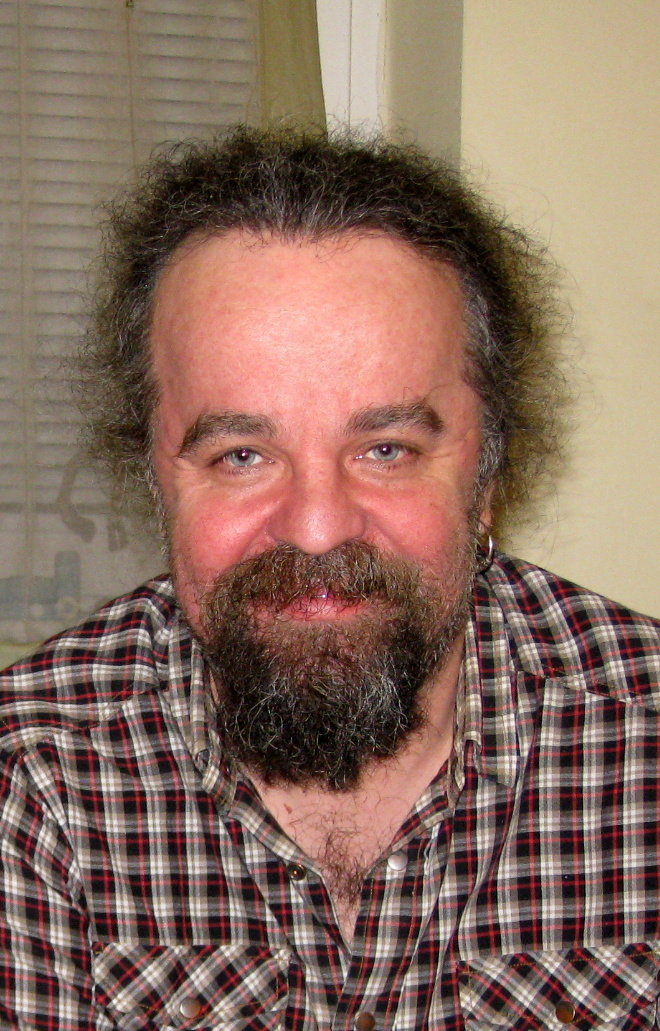
‘When he created Earth and these lands upon it, when he divided people into believers and infidels, the crescent moon and the cross, the good Allah made us all different except for one thing. We die easily without seeking reasons; the reasons come on their own. And He sits on His celestial throne and is surprised by how little we cherish life while we have it, and how many tears we shed once it’s gone.’
Hiding in the woods, the narrator of Jergović’s eighth story ponders the push and pull of religion in Bosnia. His is one of the trickier voices in Inshallah, Madonna, Inshallah. Obsessed with the sins of a lightning-struck Hodža, the disappearance of a young refugee from the town’s memory, he resolves to be the saviour. He answers the call of God, who is “testing us just as an old grandfather tests his coffee with the tip of his tongue to see if it’s hot”. As he falls asleep in the cold, his mind is fragmented with fantasies of sin and punishment. The details of “the Charred Mosque minaret” slip away; he remembers that “the Hodža was bald and smooth-faced”, but he cannot remember why. When he sneaks back into the town, forgetting the stories he has told himself and the crimes he is supposedly avenging, our narrator commits a confused final act of violence. Jergović, through translators Ellen Elias-Bursać and Mirza Purić, delivers: “We both heard the same thing, and by that, on judgement day we will be judged as men – the woosh of the paddle like the woosh of the wind that brings the snow and the winter.”
Whilst the delusion of Alkatmer’s narrator is perhaps more complex than some other voices in this collection, the understatedness of his story and the winding, folkloric tone are definitive of Inshallah, Madonna, Inshallah. Every story is characterised by the universal intimacy of the voice of a stranger telling you strange tales around a fire. Sometimes there is magic explicitly at play, like the talking bird of ‘Zulum’. Sometimes, with the freedom of unreliable narrators and prophetic dreams, reality in Jergović’s stories bends only slightly; such is the case in “Tespih” and “Misir”.
As he describes it, Inshallah, Madonna, Inshallah is the author’s attempt to capture “the unusual documentary spirit of Bosnian and Dalmatian lyrical songs.” Every short story begins with a note describing the “lyrical song” (or songs) that inspired it, thus each is framed explicitly by the culture and history in which Jergović writes. The natural, and surely intended, product of this form is the sharp focus, every time, no matter the length or style of the story, on the people of Bosnia and Herzegovina. The book stands as a record of Jergović’s people, a collection of mythical voices that can speak to God, to Allah, to birds, and dead brothers.
The balance of folklore and monotheistic religion is a fine one, but Jergović seems well practised at spinning plates. One does not detract from the other: the presence of everyday myth lives alongside the honest faith of his characters. Nor does Jergović shy from the conflict between Christianity and Islam. The suffering of religious war is present, as are its justifications, its heroes and its victims. The form of a short story collection is, in this way, ideally suited for Jergović’s project, which does itself seem to extend a little beyond “lyrical songs”. Or rather, as I would believe myself, Jergović’s valuation of the music extends far beyond that first experience of hearing them. The crises of life, death, love, and faith are all within the bounds of “lyrical songs”,
It is fitting, then, that such a diverse chorus of voices is published in English by the independent publishing house Archipelago Books. Founded in 2003 by Jill Schoolman, the small team specialises in translated fiction “from the margins”. It publishes around 15 to 16 books a year, exclusively translations into English. In a 2018 interview for Publishers Weekly, the translator Bill Johnston describes working with Jill and her team. “It’s an unusual, collaborative dialogical approach,” he says, “and I find it very conducive to doing good work”. At the risk of understatement, it seems this same process has been successful for Elias-Bursać and Mirza Purić: Inshallah, Madonna, Inshallah is some pretty “good work”.
Unique writing can come from all kinds of directions, but I don’t think it is a coincidence that Jergović’s writing is coming into English through an independent publishing house, one known for its “dialogic collaborative approach,” the same one that has published his work in English three times before. You might say the same for Mathias Énard and Fitzcarraldo, or the 2026 International Booker winner Yáng Shuāng-zǐ and & Other Stories. Independent publishing houses are taking risks that larger organisations cannot, and as readers we stand to benefit enormously from this.
I’ll finish with this bit of advice. Contrary to popular belief, not everything goes in one ear and out the other. Some stuff gets kept, and it would be nice if it was interesting. It would be nice if it was the kind of voice you hadn’t heard before. So keep an ear out because Inshallah, Madonna, Inshallah is coming out on 13th October.
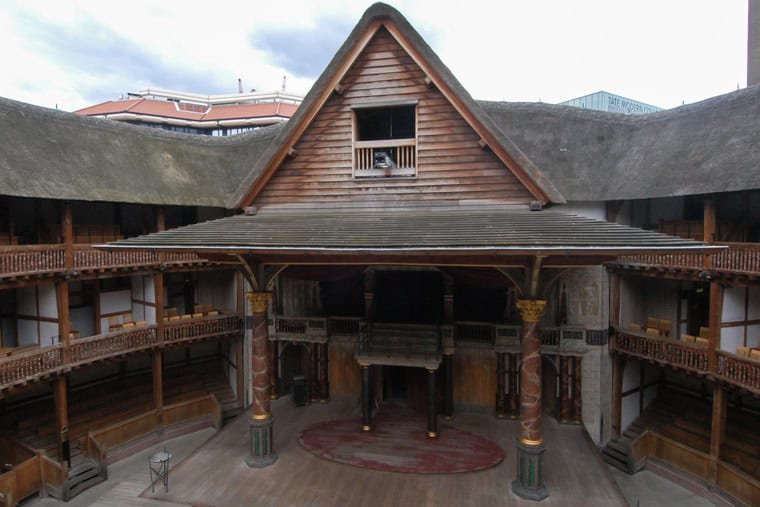
I always cry at the depiction of death in plays. Considering that, during my first year at Oxford – the first time I engaged seriously with theatre – the listings almost seemed pointed for someone as weepy about grief as I am. From the beautiful, slow reflections of Tidal Theatre’s Launa to the raucous yet still moving titles like Blackstar Productions’ Teen Spirit and Greyjoy, I had some sort of physiological reaction to all of them. Whether it’s a mild sniffle or full-blown tears, I always end up feeling a bit ridiculous about the whole ordeal when it’s over. I mean, it’s not real, is it? Why do I waste my grief on things that haven’t happened, that will never happen?
That question – why I feel sadness for fictional grief – is at the heart of the ‘paradox of fiction’, a philosophical dilemma that asks how we feel anything at all for things we know don’t exist. It could be that, caught in the moment, I am so immersed in the play that I treat it as real. But that fails to explain how one of the most gut-wrenching portrayals of grief in theatrical history – Mother Courage’s silent scream upon seeing the corpse of her son in Mother Courage and Her Children – takes place in the context of a Brechtian production that deliberately distances the audience. The perceived ‘realness’ may not matter to our emotional reaction, but it raises the question of how fiction on the stage crosses boundaries to generate effects in the real world of the theatre stalls.
Theatre has many unique devices up its sleeve that make it, in my opinion, superior to every other art form in the domain of audience manipulation. Namely, theatre is rife with ritualistic elements: the surreal stiffness of monologues and of stage blocking, the very practice of dressing up to sit silently in a dark room. Of course, one could argue that these are also features of certain films, but film lacks theatre’s trump card: the sense of immediacy between actor and audience. As the influential Polish director Jerzy Grotowski put it: “Theatre cannot exist without the actor-spectator relationship of perceptual, direct, ‘live communion’.”
In a sense, the actor, inhabiting the ghostly space between unreality as a character and immediacy as a body for the audience member, can use it to be possessed by the emotions it would be impermissible for many of us to feel in real life. When watching theatrical portrayals of grief, we mourn through the actors as much as we mourn with them. We need not necessarily mourn the same thing they do on stage. But even if all the play gives us is catharsis, a reflection the narrative gives us of the ‘real’, I think what is important is that it offers a socially valid space, separate from everyday life, for doing so.
Grieving rituals exist around the world, with ‘professional mourning’ mentioned everywhere from ancient Egyptian records to the Bible. In the deserts of Rajasthan, India, Rudalis – lower-caste women hired as professional mourners in a declining tradition – still carry out the function of wailing and singing at funerals where it would be improper for the upper-caste relatives of the deceased to showcase such emotion. Professional theatre is unique in that it often offers release to the actor as well, whereas the tears of many marginalised mourners throughout history saw no such catharsis.
All of this may help explain why theatre can drive us to tears, but why do we seek out such experiences? Are audiences, voyeurs as they are, the strange ones for going to watch someone whose pain they share for two hours and an intermission, before forgetting it? Or is it the writer, the actors, and the director who work on ensuring their art creates a sense of bereavement in the audience? I believe that Joan Didion holds the answer in her firm indictment of the audience: why we are in the stalls and what we are postponing through it. The starting lines of Didion’s play adaptation of a famously harrowing account of grief following her husband’s and daughter’s deaths, her memoir, The Year of Magical Thinking, declare: “And it will happen to you.”
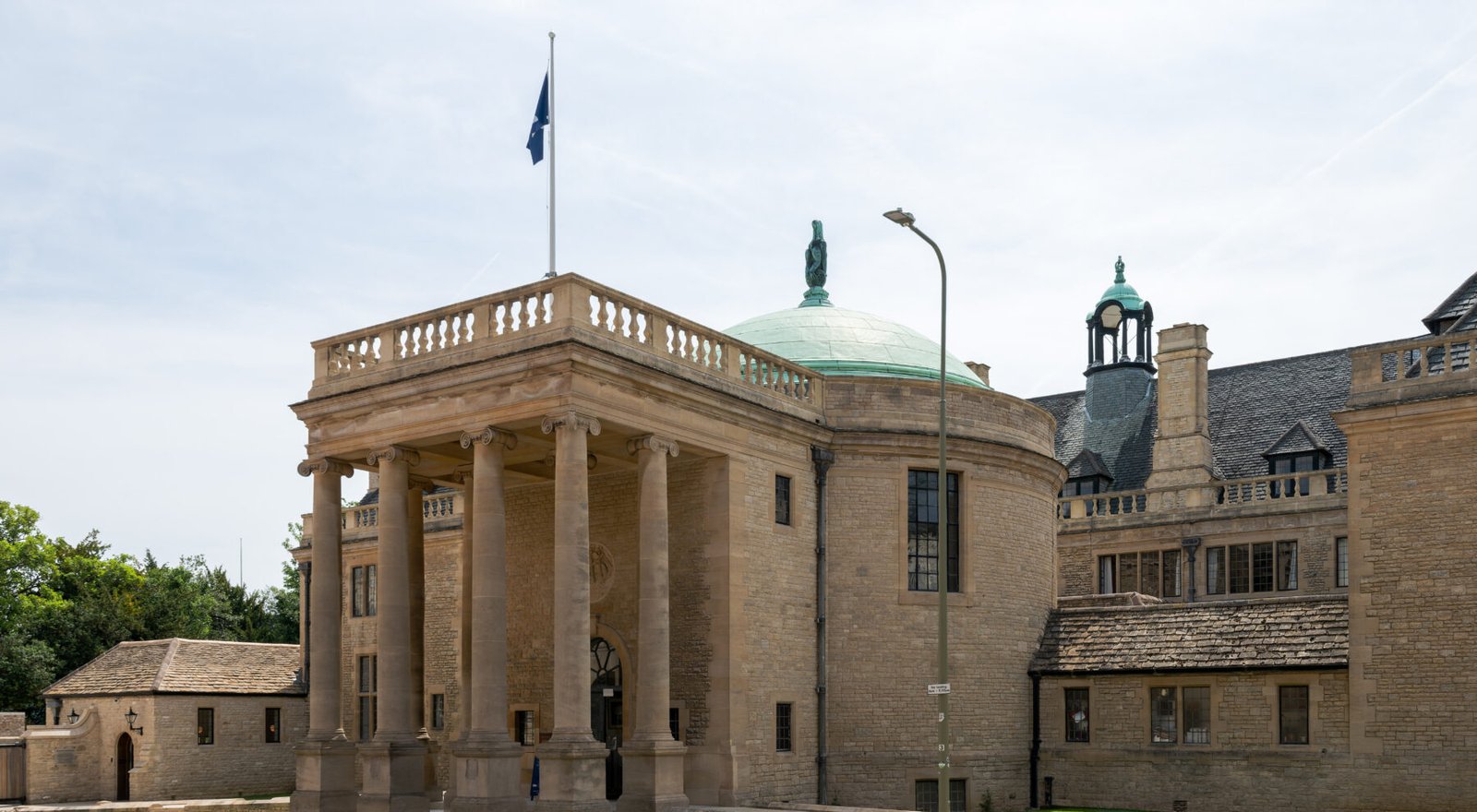
The Rhodes Trust has restricted funding for professional degrees, introduced tighter limits on doctoral study, and reduced spending on events for scholars at Oxford amid financial difficulties.
Scholars pursuing a Master of Public Policy, Master of Business Administration, or Master of Financial Economics will now be limited to one year of funding, preventing them from combining any of these qualifications with another degree. Rhodes recipients wishing to pursue a DPhil also face restrictions.
Under conditions of tenure published in September, scholars are formally discouraged from undertaking courses of study longer than two years. If a scholar wishes to pursue doctoral studies after selection as a Rhodes Scholar, they must secure additional approval from the Rhodes Academic Review Board and prepare an alternative two-year course of study.
Places on the route combining a one-year master’s with a DPhil are described as “very restricted” in the conditions of tenure. In general, doctoral study is described as “non-standard” and limited to students for whom “undertaking the DPhil at Oxford at this stage of their academic and professional journey is a necessary next step towards achieving their long-term aspirations”.
Previous conditions allowed scholars to undertake professional degrees as part of a two-year programme with another academic master’s degree, and contained no restrictions on direct DPhil entry.
The changes extend to social life at Rhodes House. In conversation with Cherwell, numerous new scholars have noted considerably fewer induction events. Cherwell understands that alcohol will also no longer be provided at House events.
“It’s a stressful situation”, explained one Rhodes Scholar who is planning on doing a DPhil next year. “There’s a lot of uncertainty.” Another scholar said that it was “disappointing” to see that the Trust had ended the Global Constituency, which provided opportunities for students from countries not previously eligible for the scholarship.
The measures narrow the academic options available through one of Oxford’s oldest scholarships. Established under the will of Cecil Rhodes in 1902, the Rhodes Scholarship is one of the most prestigious scholarship programmes in the world. Currently, it awards scholarships at Oxford to over 100 students each year. Previous Rhodes Scholars include former US president Bill Clinton, astronomer Edwin Hubble, and singer Kris Kristofferson. The scholarship has been subject to much scrutiny in recent years due to Rhodes’s colonial legacy.
The restrictions come amid pressure on the Trust’s finances. Its report for the year to June 2025 recorded £27.7 million in scholarship expenditure, with an average annual cost of approximately £85,000 per scholar once overheads were allocated. It identified cost inflation, including university fees, stipends, and staffing, and outlined the trustees’ intention to reduce withdrawals from the endowment. Rising overseas student fees are a particularly significant drain on the Trust’s finances. A 2025 Cherwell investigation revealed that international student fees had risen by 37% from 2022, with fees on some courses rising by over 60%.
The financial pressures follow the £38 million redevelopment of Rhodes House, which was completed in 2023. The Trust reports approximately £800,000 in annual interest on a bond issued to finance the building project, alongside income from commercial events and accommodation that contributes towards operating costs.
Investment returns have also fallen short of the Trust’s goals. Most of its endowment is managed by Oxford University Endowment Management (OUem), which returned 3.6% in the year to June 2025, far short of its goal of inflation plus 5%. OUem has consistently missed this goal in the short and medium term.
The latest restrictions follow the suspension of the Global Scholarships in April 2026. This programme provided a route for applicants ineligible to apply through existing geographical constituencies, including those from many African countries. The Trust’s public notice attributed the suspension to “shifting strategic priorities”.
Rhodes is not the only international scholarship programme to cut back recently. In August, the Jardine Foundation announced the end of its scholarship programme for undergraduate students from Southeast Asian countries to study at Oxbridge after 44 years, focusing instead on regional institutions.
In a statement to Cherwell, the Trust said that it is “in a solid financial position”. At the same time, it said that “the University of Oxford has dramatically increased international postgraduate course costs in recent years, and costs are expected to continue rising”, which “will inevitably affect some future options”. It states that previously approved study plans will be honoured.
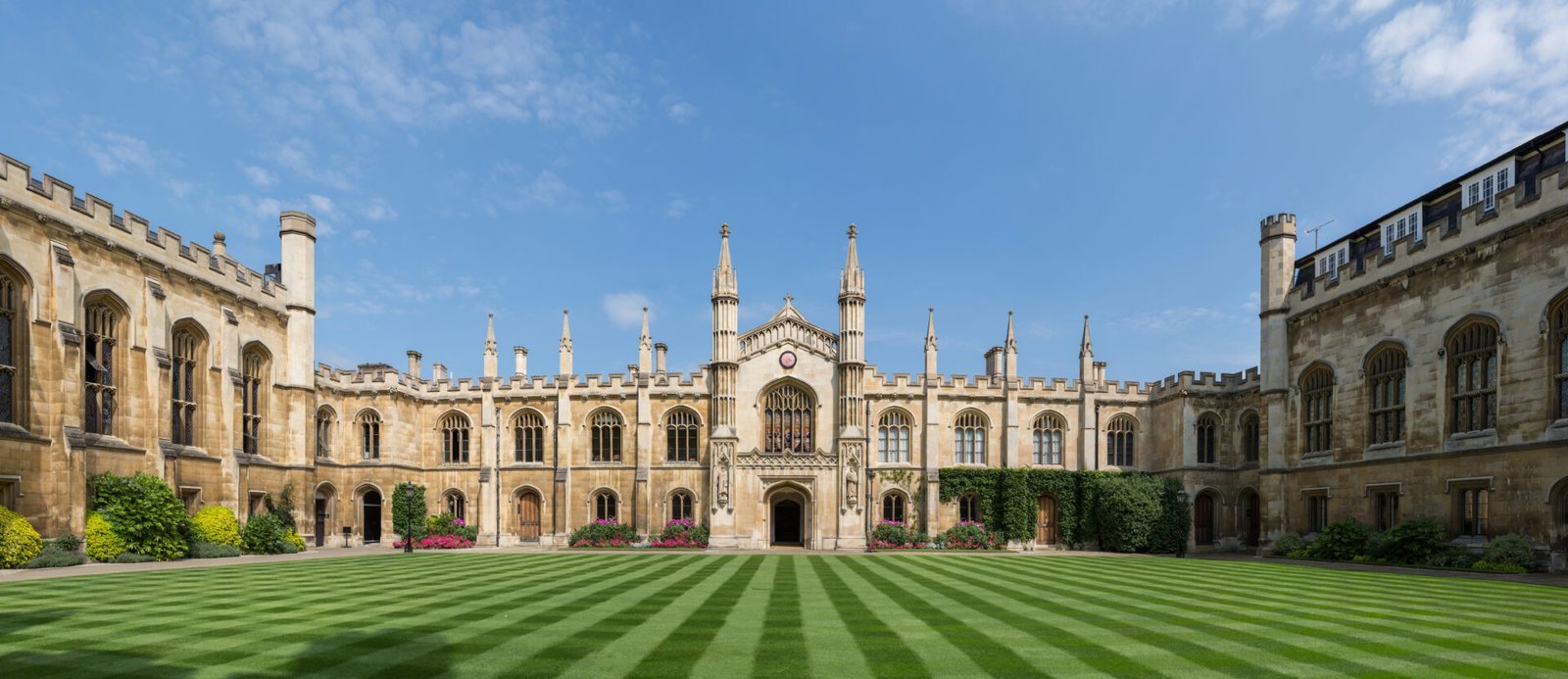
Oxford students hate C*mbridge. Or at least, we’re supposed to. We call them Tabs, occasionally ‘shoe’ them, and inherit a rivalry as soon as we matriculate. There’s only one problem: most of the time, nobody seems particularly bothered.
The Varsity matches between Oxford and C*mbridge began with men’s cricket in 1827, followed by the first men’s Boat Race in 1829. Today, Varsity takes place across 50 sports and involves thousands of students.
And yet, 200 years later, the rivalry rarely escapes the sporting world. Sure, we shout “shoe the Tabs” during the Boat Race and teams feel similar disdain when facing ‘the other place’ on the water, pitch, court, or track. But, aside from particular Varsity matches, the so-called hate seems a bit…lacklustre.
Oxford beat C*mbridge 110 times last year and has recorded more wins than the Tabs in Varsity competitions for the past six years. Did you know? More importantly, did you care? We have two centuries of competition and two institutions obsessed with tradition. It should be impossible to manufacture a better rivalry.
And yet much of it happens unnoticed.
Contrast this with American university rivalries. Harvard and Yale are perhaps the closest equivalents. Their American football match is simply “The Game”, and the rivalry stays with students throughout their lives.
And of course, that rivalry is tame compared to the heavy hitters.
Duke students tent (camp outside the stadium) for weeks to win tickets to the game against the University of North Carolina at Chapel Hill. And it’s not just for the ultra sports fans; some years “more than 2/5 of the student body [have] attempt[ed] to earn a spot” tenting at the most difficult level. The Michigan – Ohio State rivalry presents another classic rivalry, where, during “hate week”, the Ohio State community crosses out every single “M” on campus with red tape.
Of course, these rivalries are a peculiarly American phenomenon and would feel forced here. But Britons do not lack tribal thinking.
Think about football derbies. North London. Merseyside. Manchester. Fans invest emotional significance in beating one particular club that massively exceeds the objective significance of the result. There are uglier manifestations, but there is also wonderfully pointless taunting.
Rivalry operates through agreed irrationality. In 2024, some Tottenham fans even hoped they would lose to Manchester City to prevent Arsenal from winning the league. We don’t need to import the American capacity for hatred. Britons have perfectly good hatred at home.
This is especially crucial at Oxford. For much of everyday life, Oxford isn’t one community. It’s dozens of colleges. We eat separately, live separately, and often socialise separately. It begs the question: what exactly is an Oxford student?
The collegiate structure is wonderful at producing college identity. It is considerably less good at producing Oxford identity. What exactly defines us? The University administration? The Rad Cam? A seal containing a Latin motto?
It can be difficult to work out what a PPEist at Somerville, a Philosophy and French student at Hertford, and a Classicist at Merton have in common. Fortunately, C*mbridge provides an answer: none of them are Tabs.
Oxford does not necessarily need more spirit. It needs something around which spirit can crystallise. That’s where C*mbridge comes in.
An ‘us’ becomes much easier to define once there is a ‘them’, and C*mbridge makes an unusually convenient ‘them’. It’s a collegiate university built around small-group teaching, formals, gowns, eight-week terms, and an impenetrable vocabulary – only with supervisions instead of tutorials, Easter instead of Trinity, and enough minor alterations to maintain the pretence of originality. A good rival, after all, must be similar enough that beating them matters and different enough that you can pretend it proves something. C*mbridge fills this role perfectly.
More importantly, there is a liberation in caring so much about something that matters so little. Oxford life offers no shortage of consequential competition: exams, internships, jobs. Hating C*mbridge offers the opposite. There is no rational reason why any of us should care. That’s exactly why we should.
Of course, the rivalry plainly isn’t dead. Rugby matches feature heckling, chants, and a crowd united around shoeing the Tabs. The Boat Race turns London into a sea of dark blue and light blue shirts. The rivalry, however, should not require a fixture.
We should hate C*mbridge more comprehensively. Stop calling it C*mbridge: it is ‘the other place’. Call its students Tabs without really knowing why. Their shade is not light blue; it is an unfortunate failure to commit to a proper colour. Treat every league table on which Oxford finishes higher as vindication and the rest as methodologically suspect. When a friend announces that they are visiting, offer your condolences. In short, be petty.
Perhaps, then, we should be grateful for C*mbridge. Every good protagonist needs an antagonist. They give our insults somewhere to land, and dozens of colleges something to agree upon. They can even make Oxford feel like one university.
That is a valuable public service. Obviously, we should never tell them. Instead, regard light blue with suspicion. Be partisan. Whenever you compare us to them, come to the completely dispassionate conclusion that Oxford is better. And if you happen to meet a Tab, be perfectly pleasant. They made a rough decision when they were 18. We’ve all been there.
C*mbridge has spent eight centuries giving Oxford somebody to hate. It would be rude not to take them up on their offer.



-

 Oxford united FC2 weeks ago
Chris Gunter steps away Wales role to focus on Oxford United
-

 Oxford united FC3 weeks ago
Oxford United transfer chief explains EFL embargo and contract dilemma
-

 Oxford united FC4 weeks ago
Former Oxford United boss Matt Bloomfield drops Wycombe manager hint
-
 Student Life3 weeks ago
Oxford falls to lowest ever spot in The Times UK University Guide 2027
-

 Oxford University2 weeks ago
New to the Oxford English Dictionary this September
-

 Oxford united FC3 weeks ago
Aaron Ramsey gives Luka Lynch update after Oxford United absence
-

 Student Life3 weeks ago
Protest held outside Town Hall over sale of Council-owned building to St Peter’s
-
 Student Life2 weeks ago
Oxford partnership allows OpenAI to use rare Bodleian texts to train ChatGPT