
Student Life
The life and death of a library


I hereby undertake not to remove from the Library, or to mark, deface or injure in any way, any volume, document, or other object belonging to it or in its custody; not to bring into the Library or kindle therein any fire or flame, and not to smoke in the Library; and I promise to obey all rules of the Library.
I feel slightly like a fraud when I confess that I never swore Bodley’s above oath, displayed on the entrance desk to Duke Humfrey’s Library. That isn’t to say that I would ever act against it. In fact, I am fond of a Bodleian study session and very precious about every book I handle, whether the meticulously kept copies on my own shelves or the stacks of already graffitied loans scattered across my room. How, though, does the perception of an Oxford student align with how libraries are experienced more broadly? Certain images come to my mind: cool evenings watching the sun slip away through the windows of the Rad Cam, or reorganising the children’s shelves in the silence of my local library, watched by an eerily smiling Humpty Dumpty mural, or (ever the history enthusiast) the halls of the Library of Alexandria in the depths of my reimagining. These images, lived and imagined, constitute my experience of libraries. Yet how we understand the relevance of these social and academic institutions inevitably varies across the spheres of time, age, class, and position.
Returning to Duke Humfrey’s Library and the Bodleian Oath, it is the premise that counts. It is one of Oxford’s irreverent traditions that sets the tourists in fits of excited whispers. Despite this apparent archaism, Bodley’s oath, of which this is the most recent abbreviated form, does speak to Oxford’s deep bibliothecal tradition. This history of libraries can be difficult to trace; the spaces used by students today are perhaps best understood as the result of a longer process of change: the gradual peeling of a chrysalis is perhaps a more apt description than an instantaneous founding.
It is in no small part on account of these traditions that Oxford University’s libraries maintain their allure today. Merton College’s library is thought to date back to 1276, though I doubt that students today would be too pleased if they found themselves waiting for the ceremonial opening of a large, locked crate to access the texts they need for their essay, as the college’s earliest readers were obliged to. The architect of Magdalen College’s Old Library was tasked with ensuring it had windows superior to those of All Souls’, and links to grandeur don’t stop there. The monarchy is entrenched in the history of the University’s libraries – All Souls’ Library was co-founded by Henry VI. Charles I was prevented from loaning a book from the Bodleian in 1645. If this says nothing else, it is surely that the rules of the Bodleian do not bend even for the monarchy, let alone you with your takeaway coffee cup.
These traditions and trivia contribute significantly to the sustained value placed on these institutions today, with their claims to be the oldest library in continuous use globally, the second largest library in Britain, and the first library to ever stand their books vertically on their shelves. Yet alongside this pattern of growth and prosperity, they have also been vulnerable to fluctuations of funding and interest.
These occasional troughs in popularity have, however, enabled their ultimate flourishing. The Duke Humfrey’s Library stood at a point of complete disrepair after 1550, when its books were all removed and taken to be burnt by the Dean of Christ Church in an effort to eradicate Catholicism from England, until Thomas Bodley intervened. Bodley’s refurbished and restocked library opened in 1602. After this, its developments only continued, becoming a legal deposit library in 1610, and physically expanding until 1637 in a project which included the construction of the quad known today.
The All Souls College Library also floundered at points in its history, though due to a lack of space, rather than a lack of books. Its expansion was funded by Christopher Codrington, a sum notoriously associated with his pursuits in sugar plantations worked by slaves in Antigua and Barbados. In 2020, the library was renamed in an effort to address his legacy, but his statue (now notably with cracks projected on it) remains a central feature among the shelves.
These histories have each marked moments of imminent threat and near loss of the library; however, despite these difficulties, and the moral and political complexities of their redevelopments, Oxford’s university libraries continue to thrive.
In fact, physical reader visits to the Bodleian Libraries have been returning to their pre-pandemic levels at a reasonable pace, cited as having reached 2.2 million in 2024/2025, surpassing the overall visits in 2018/2019. College libraries are even more frequented, used by 29.4% of students. Moreover, only 3% of the respondents asserted that they never use a physical library in the Bodleian’s 2025 Reader Survey. Evidently, the University’s libraries are immensely successful.
It is evident that this success has been a foundational factor in the success of the University and its creative and scholarly output, as a spokesperson for the Bodleian told Cherwell that the libraries’ collections “have been instrumental in attracting scholars and major scholarly projects (such as the Oxford English Dictionary), shaping disciplines (such as Oriental studies) and the intellectual development of individuals (eg JRR Tolkien). Without the Bodleian there would be no William Morris and the Kelmscott Press, the Lord of the Rings, or the Rubaiyaat of Omar Khayyam”.
On a much more quotidian level, many users cite libraries as their most productive place of work and, once I have finally found a seat, (the Rad Cam at 11am during exam season is not for the weak) I would agree. My room is too plagued with the promise of snacks and sleep, neither of which is especially conducive to efficiency. The academic motivation, provided by the library, has a variety of roots. Many find it a strong social effect. When your neighbour is sifting through pages of scrawled equations, watching the clouds shuffle past the window becomes a much less viable pastime. Together, ease of access to resources, the sense of obligation that comes from being surrounded by others doing the same, and the pervasive sense of academic tradition, craft a persuasive incentive.
These high reader numbers are proving remarkably persistent, even as the tendency to use online resources grows. For many students, then, access to a convenient and comfortable study space is the largest draw to visiting university libraries, even across the broader spectrum of subjects, with libraries accommodating varying needs in relation to accessing physical texts.
The shift from the chest of books at Merton College in the 13th century to the uses of our libraries in Oxford today has certainly been a metamorphosis; the libraries of the University are clearly continuing their life cycle, though in a different format. I, for one, am glad that my books are no longer chained to the desk, as they were in many of Oxford’s earliest libraries. Yet I do persist with a certain sense of nostalgia, ever willing to journey far out of my way to obtain the physical copy of the book I need from the Humanities Library, despite the tantalising presence of the SOLO link. Perhaps it is a needless pursuit, but there is something comforting in the connection, in borrowing from the library and, if nothing else, it aids in lowering my screen time.
Yet as the libraries of the University continue to thrive, the broader national picture appears bleaker. The UK is losing public libraries at a rate of approximately 40 per year. While 97% of Oxford students and researchers can attest to the physical use of a library, across the general British population, only 30% of adults claim to have visited one in the past year.
This disparity may be easily dismissed as a reflection of differing needs, as most of the general population are not likely to spend the majority of their week preoccupied with their imminently due tutorial essay. While this might explain the smaller percentage of those users requiring the space for study (only 19%), this still leaves a notably small number of people using their local public libraries for other purposes. The main focuses of users centre around borrowing printed media, bringing children to do the same, or accessing wi-fi and printing facilities. These services offer essential access to literature and other forms of artistic and informative consumption, alongside the tools and space to enjoy them.
Given that approximately one in ten children in the UK do not own a book (rising to one in six for those living in relative socio-economic deprivation), it is evident that libraries are, for many readers, the crux in enabling reading to many that would not otherwise have access to it. The uses of public libraries, therefore, outside the relatively narrow confines of an Oxford student’s perspective, have an essential breadth of impact, despite the proportionally smaller number of visitors.
While the University’s libraries’ social and welfare events are generally enjoyable, they attract the attention of only 32% of respondents, mostly (by a significant margin) on an occasional basis. However, for many across the country, libraries provide essential support beyond the confines of media. Many local libraries offer welfare initiatives, literacy programmes, and a warm place for those who lack access to one. A spokesperson for the Oxfordshire County Council referenced the public libraries of the city as “safe, trusted and warm spaces; community hubs where thousands of conversations and transactions occur daily”, making them more than just a resource, but also a social hub, which is comprised of these elements, but exists crucially as a focal point for community interaction. This breadth of uses has warranted a general augmentation in the percentage of the population using their local libraries, with visits increasing by 71% between 2021/2022 and 2022/2023, particularly as financial and social crises deepen.
The role of public libraries is, therefore, an essential one, despite the fact that their uses differ so substantially. Yet, while the Bodleian Libraries’ funding amounted to £57,337,771 in the academic year 2022/2023, public library funding is declining – by 24% between 2020/2021 and 2021/2022 alone, amounting to a funding cut of £232 million since 2010. Furthermore, public libraries in deprived areas, where they are in some respects most essential, are four times more likely to be closed due to insufficient resources. A spokesperson for the Bodleian told Cherwell that: “The Bodleian has been fortunate as a major research library to have a broad range of funding sources, from the University funding, national research funding, philanthropy, commercial income, and its endowments. This has enabled it to survive the general and specific funding pressures facing libraries.” However, not every library has such opportunities, and public libraries, as the spokesperson notes, are therefore much more susceptible to the dangers of funding cuts. This can only beg the question: when did the persistence of knowledge and community become a question of survival?
This disparity in resources, which separates Britain’s local libraries from the well-funded and traditionally rooted libraries of the University, is reflected by the mixed experiences of students as to whether they study at their local library during the vac. Having visited my local library once to find that all the chairs had been removed, I must admit that I perpetuate this pattern. I study in University libraries daily, but never outside of the city. The university and college libraries of Oxford have an inherent convenience, boundless resources, a constant atmosphere of focus, and – usually – a seat for me. Not all students make this choice, however, although the general trend indicates greater use while away at university. It could be argued that this is in part due to the aesthetic and traditional values of Oxford’s libraries, or their convenience (there is no better place than a college library to resolve an essay crisis at 4am), but this ultimately comes as a cumulative result of these factors.
Born from an accumulation of developments and sustained by another myriad of conveniences and attractions, there is no single formula to guarantee the endurance of a library. However, with some having been maintained for upwards of seven centuries, it is evident that the libraries of the University, and many of those across the country, possess the undeniable elements for survival.
History’s most famous library, in Alexandria, is principally known for its demise – not, however, as the result of the one infamous burning. It did not undergo the pivotal revivals seen in the University’s libraries, nor did it maintain the sustained resistance of those continuing to face challenges across the UK today. Instead, what remained sunk into disrepair, damaged by centuries of fires, sackings, and social changes that led ultimately to the loss of one of the greatest early academic institutions, and countless voices of the past. Whatever the ultimate cause of Alexandria’s loss, we must learn, in Bodley’s words, that we should never “kindle therein any fire or flame.” Nor can we sit by and permit any other library to burn.
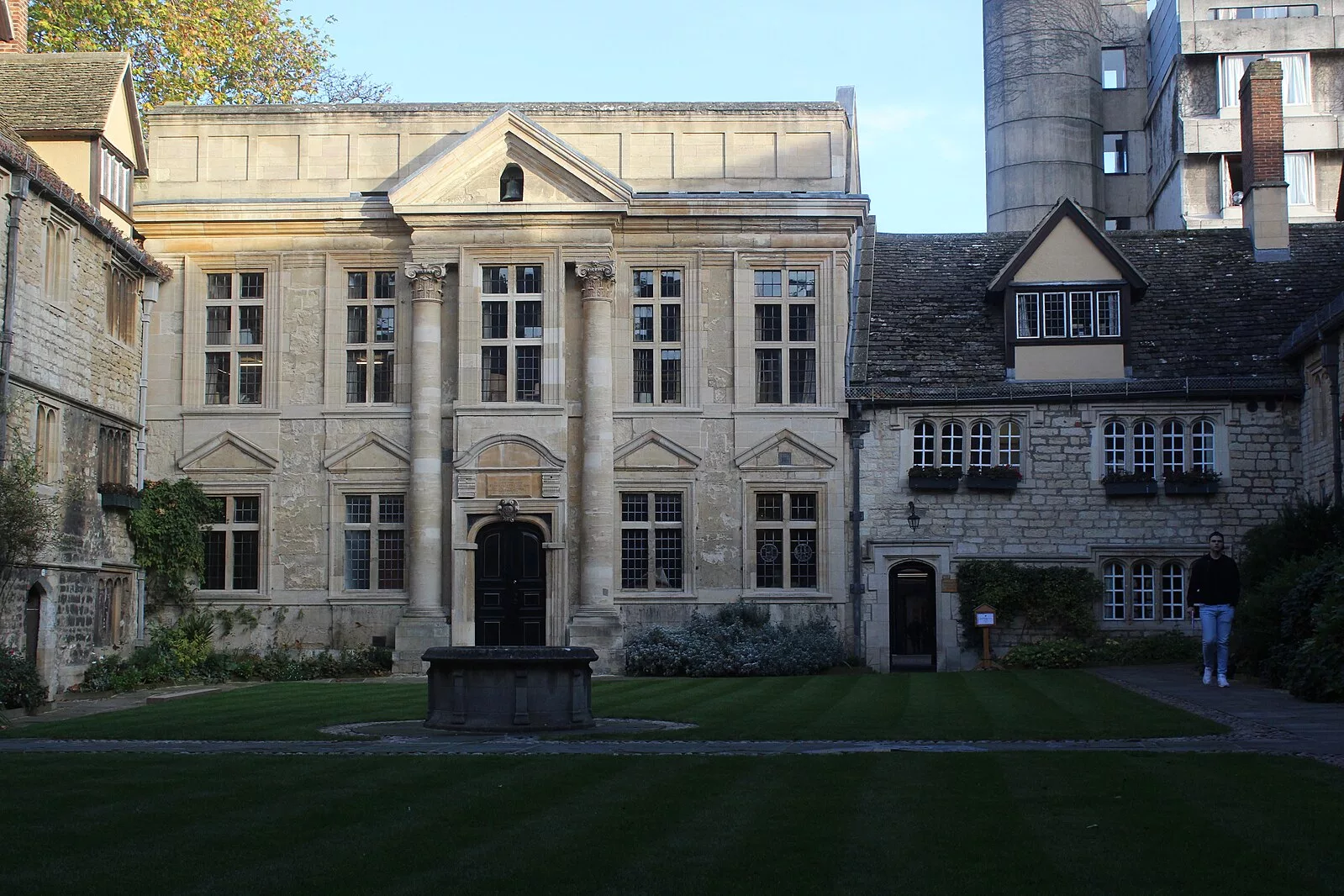
St Edmund Hall has opened new, sustainability-focused accommodation in Norham Gardens, one of Oxford’s most affluent neighbourhoods.
The College describes the buildings, which took three years to construct, as an “exemplar” of sustainability. Designed by architects Wright & Wright LLP, they are certified with a Passivhaus standard, widely regarded as the industry benchmark for energy efficiency, and were built using “sustainably sourced and low-embodied carbon materials”. According to a press release on the Teddy Hall website, the buildings will use 70% less energy than the typical modern building.
It contains 127 en-suite study rooms, split across three new buildings: Willis House, Ashton House, and Elliott House, on the nearly 50-year-old Norham St Edmund site. The buildings, which back onto University Parks, are powered at least in part by solar panels and are heated by air-source heat pumps.
The rooms include heated towel racks, big double beds, and dimmable lights. Despite the luxury, the College kept the nightly rate in line with the rest of its Norham housing. The College told Cherwell that it “recognises the need to keep rents as low as possible” and that its accommodation costs are “below the median of all Oxford colleges”. By that standard, tenants are expected to pay around £30 a night.
Rooms on the site will be reserved for Teddy Hall returning undergraduates. They will not be available to postgraduates and, by extension, not be offered through the Oxford University Collegiate Accommodation System, now in its second year of opening college rooms to students from other colleges. The accommodation will allow Teddy Hall to accommodate all undergraduates for their whole degree.
The development’s outdoor spaces are boasted as climate-resilient and biodiverse, with landscaped gardens and lawns. For budding geographers and biologists, the most intriguing feature may be an ecology pond.
Chancellor William Hague said in a press release: “Norham St Edmund is a world-leading blueprint for future student accommodation projects and sustainable building design, both in Oxford and beyond. I look forward to seeing it serve a thriving college community for generations to come.
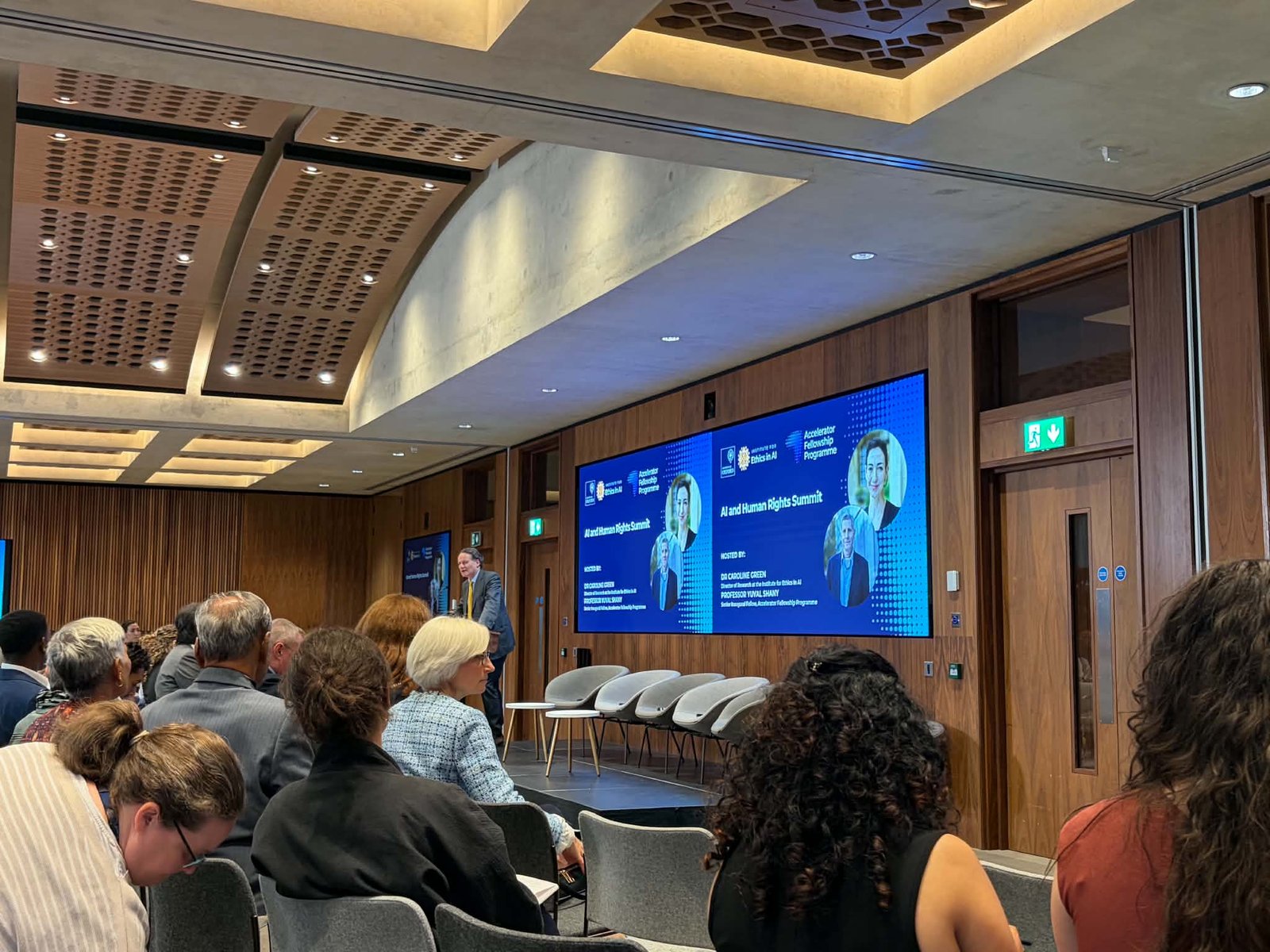
Human rights experts called for stronger legal protections against the risks posed by artificial intelligence (AI) at an Oxford AI and Human Rights Summit, with speakers arguing that human rights standards must be embedded into AI governance and technology.
The summit was hosted at the newly redeveloped Rhodes House in Oxford and organised by the Institute for Ethics in AI. It built upon Professor Yuval Shany’s consultation on a white paper, published in 2025, on the need for and feasibility of an international AI Bill of Human Rights, which proposes ways to adapt existing human rights standards so as to better address some of the unique challenges posed by AI systems and their uses.
An opening video address from the United Nations High Commissioner for Human Rights Volker Türk outlined how AI policy can keep pace with a fast-developing technology. He said that “great power demands responsibility on the same scale, and when the two don’t match, we have a problem”. Corporate control, he explained, means that AI policy stretches beyond existing national borders. He continued to praise this summit for bringing together leaders and representatives at the forefront of the discussion.
Speakers called on the UK government to establish legislation, recalling Labour’s manifesto commitment to an AI Bill of Human Rights. The panellists broadly agreed on the importance of human rights, but appeared less aligned on what enforcement should look like in practice.
In an exclusive interview, Michael O’Flaherty, the Council of Europe’s Commissioner for Human Rights, told Cherwell that political short-termism Continued on pg. 2 risks undermining efforts to address the long-term consequences of AI. “We are infected across our societies with shorttermist responses to the great issue of our societies and politics,” he said, adding that electoral cycles make it difficult for politicians “to think beyond the next election”.
O’Flaherty also noted that younger generations no longer take the international human rights system for granted. “There is no longer an assumption that the human rights system is safe, that it will survive,” he told Cherwell. He argued that political leaders increasingly treat human rights selectively, saying: “Increasingly, leaders are treating human rights, if they are respected at all, as an a la carte buffet. We take those rights because they serve our goal. We’ll ignore others because they get in the way.
The summit also heard concerns about the effects of AI-generated misinformation on communities that may have limited access to, or awareness of, the technology itself. An audience question asked human rights experts to consider the impacts of AI on populations, such as those in India, who might be unaware of its existence. The focus on the impact of AI on populations in developing countries more vulnerable to the power of big tech was a key theme of the summit.
Eileen Carter from the South African Human Rights Commission warned that underrepresentation of African languages in large language models could exacerbate existing inequalities. She also raised concerns about the effects of misinformation and deepfakes on elections, referring to more than 360 deaths associated with unrest and the amplification of narratives.
The third panel, which offered a civil society perspective on promoting human rights in AI systems, offered some hope. Across all speakers, the potential for AI to transform the beliefs that underpin human rights, including the rights to water, education, and an interpreter, was debated. When asked about AI’s potential to unravel and alter the definition of human rights, such as what is included in the ‘right to education’ O’Flaherty told Cherwell: “The damage that can be done by AI has hit more dramatically and more visibly than perhaps any other sector within education through the phenomenon of cognitive loss, of cognitive transfer. We’re only beginning to realise the extent to which we have allowed education to be fundamentally undermined for an entire generation.
“It’s time to seize that now and engage it. I’m not sure that the classic understanding of the human right to education is particularly well-framed for this extraordinary development.”
In a discussion on different countries’ regulatory approach to AI, Suresh Venkatasubramanian, professor at Brown University and former AI advisor to US President Joe Biden, argued that AI systems should not be treated as inevitable developments beyond human control. “We continue, I think, to talk about AI as a thing that emerged out of nowhere that we just have to deal with,” he said. “We forget that these aren’t coming from an alien planet and they were built by entities that choose to build them in a certain way.” He called for pressure on technology companies to make different choices about how AI systems are developed.
Questions of accountability also emerged during discussions about AI’s potential to improve access to justice. Research presented by Philippa Webb said that only 10% of people who have access to a lawyer can get one while there are thousands of bookings for an interpreter in a court covering 150 languages. However, this progress is not cemented as “general-purpose chatbots hallucinate 58% of the time on a legal task”. The use of AI in moderating legal proceedings raised fundamental questions about humanity and authority. Thompson Chengeta from Liverpool John Moores University said that “human rights is the last line of defence so when we say we want a human rights based governance… human rights is not an idea, it is an obligation. There is a gap that can only be recovered by a legally binding instrument”.
The event culminated in a panel offering an industry perspective. Co-host Dr Caroline Emmer De Albuquerque Green questioned representatives from Meta, Google, Microsoft, and OpenAI. Michael Karimian, who works in digital diplomacy at Microsoft, discussed the role of private sectors in engaging with AI, defining corporate responsibility as something which “provides transparency and identified risks”.
All companies supported having formal programmes to ensure that they have an AI policy in place. Within their own companies, they suggested protective measures such as specialised training to ensure that policies, such as whistleblowing, are understood. Alexandria Walden from Google described how consultations with stakeholders could be used to identify when the product breached users’ boundaries. These assessments, according to OpenAI’s spokesperson, “feedback into tangible technical input” and “benchmark it”.
Fundamentally, understanding the rationale behind human rights is imperative, though lacking. Alexandria Walden from Google said: “Whether or not they understand human rights, they care enough to infuse it in their company… we might not always get it right, but it is something we care about.”
Where former panels discussed controls to ensure human rights are considered in the development and implementation of AI products, this panel focused on mitigation. A spokesperson from Google pointed out that technology is inevitably going to move faster, so multiple tools are needed. Companies, OpenAI’s representative noted, still encounter issues such as discrimination and free speech. Consequently, they regard this as an additional policy which companies have a structured model to deal with, but newer companies, and newer industries, haven’t learnt it yet.
In her concluding remarks, Green called for policy makers to “make the abstract actionable” at both governmental and corporate levels. She argued that, by framing the issues posed by AI as human rights issues, we gain a “foundation” for recognising AI’s many societal impacts.

Ugandan participants in a clinical safety study received an Oxford developed Ebola vaccine this week.
Researchers vaccinated the first participants on 6th October in Masaka, Uganda. The phase follows the launch of a first-in-human Phase I trial in the UK evaluating the same vaccine candidate.
They received the vaccine as part of an evaluation of the safety and efficacy of a ChAdOx-based Bundibugyo Ebola vaccine candidate developed by the Oxford Vaccine Group (OVG) and the Pandemic Sciences Institute at the University of Oxford.
Development for this vaccine began in May this year in response to the ongoing Ebola outbreak in the Democratic Republic of the Congo (DRC). The research, led by OVG’s Professor Teresa Lambe and Professor Simon Drysdale, is funded by the Coalition for Epidemic Preparedness Innovations (CEPI). No licenced vaccine for the Bundibugyo strain of Ebola virus currently exists.
In a statement to Cherwell, OVG said its involvement includes collaborating with the Ugandan research team to support “the study’s scientific design, clinical trial coordination, safety oversight, and evaluation of vaccine safety and immunogenicity”. The Phase I clinical trial addresses a rare strain of Ebola virus affecting communities in the DRC since May. The phase is a collaboration between the Medical Research Council/ Uganda Virus Research Institute and the London School of Hygiene and Tropical Medicine (LSHTM).
Dr Nicole Lurie, CEPI’s Executive Director for Emergency Preparedness and Response, told Cherwell: “It [the Bundibugyo outbreak] remains the fastest-growing and second-largest Ebola outbreak ever recorded – and we currently remain without a licensed vaccine or treatment.” The Bundibugyo Ebola epidemic in the DRC has surpassed 8,600 cases, with almost half of infections proving fatal.
The outbreak was declared a Public Health Emergency of International Concern (PHEIC) by the World Health Organisation (WHO) in May.
OVG told Cherwell: “For more than a decade, the University of Oxford has performed many clinical trials of candidate viral-vectored vaccines. Some of the most promising vaccines used a modified chimpanzee adenovirus, a harmless version of a common cold virus. The Oxford-AstraZeneca (ChAdOx1) COVID-19 vaccine was approved for emergency use in the UK in December 2020 and was estimated to have saved six million lives during 2021 alone, and over 3 billion doses were used worldwide.” The adenovirus vector vaccine technology trialled in this study was successfully used worldwide as part of the Oxford-AstraZeneca COVID-19 vaccine.
More funding is necessary to ensure the development and approval of the Ebola vaccine. Lurie told Cherwell: “Without sufficient additional funding, we are at risk of not being able to develop these promising vaccine candidates… CEPI urgently needs US$128M now to keep our Bundibugyo emergency R&D response moving. Without it, we are putting the DRC, and the world, at tremendous risk.”



-

 Oxford united FC4 weeks ago
Chris Gunter steps away Wales role to focus on Oxford United
-

 Oxford University3 weeks ago
New to the Oxford English Dictionary this September
-

 Oxford united FC1 week ago
LIVE: Exeter City vs Oxford United – Jersey Mike's Trophy group stage
-

 Student Life3 weeks ago
Oxford partnership allows OpenAI to use rare Bodleian texts to train ChatGPT
-

 Traffic & Transport2 weeks ago
How poor public transport policy is putting the brake on cities | Road transport
-

 Traffic & Transport2 weeks ago
Why should I have to pay more for buses if I don’t use a smartphone? | Bus fares
-

 Oxford united FC3 weeks ago
Northern Ireland fans laud Oxford United defender Ciaron Brown
-

 Oxford united FC1 week ago
Oxford United lose to Exeter City on penalties in Jersey Mike’s Trophy