
Student Life
The Art of Personalised Jewellery: Why Engraved Bracelets Are the Ultimate Keepsake

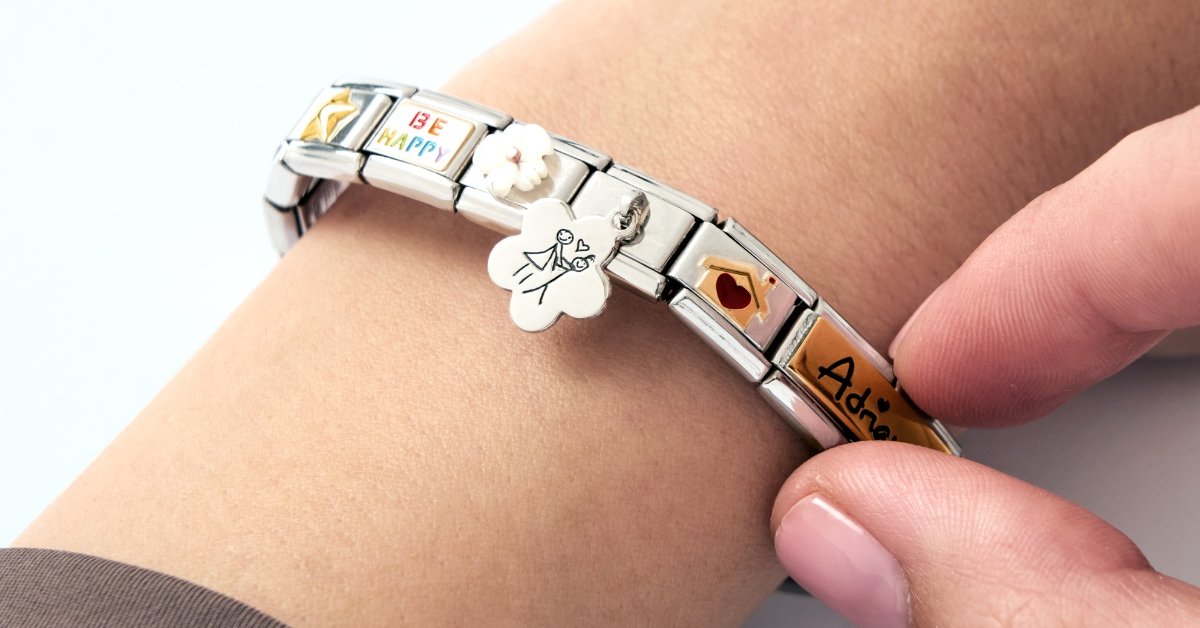
The shift towards bespoke accessories isn’t just a passing fad. It represents a deeper psychological need to ground our experiences in something tangible. Whether it is a date that changed your life, a coordinate of a favourite place, or a simple “I love you” in a loved one’s handwriting, these small details transform a piece of metal into a storied heirloom.
The History and Evolution of Engraving
Engraving is one of the oldest decorative techniques in human history. From ancient civilisations carving symbols into stone and bone to the intricate signet rings of the Renaissance, the act of marking an object has always been about identity and authority.
In the Victorian era, “mourning jewellery” often featured engraved initials or dates to commemorate lost loved ones. Fast forward to the mid-20th century, and ID bracelets became a staple for soldiers and eventually a high-fashion statement for icons like James Dean and Elvis Presley. Today, modern technology has refined this ancient craft, allowing for laser precision that can recreate even the most delicate scripts and symbols on various precious metals.
Why Choose Engraved Bracelets?
When looking for a gift or a personal treat, engraved bracelets offer several layers of value that off-the-shelf items simply cannot match:
- Unmatched Sentimentality: Unlike a standard gold chain, a personalised bracelet carries a specific message. It serves as a permanent reminder of a milestone – a graduation, a promotion, or the birth of a child.
- Versatile Gifting: Finding the “perfect” gift is notoriously difficult. Personalisation solves this problem by making the item inherently relevant to the recipient. It shows forethought and effort.
- Timeless Style: While charms and beads go in and out of fashion, a sleek, engraved bar or plate remains classic. It fits seamlessly into a professional wardrobe while remaining intimate enough for evening wear.
For those looking to create a truly bespoke piece, the options are nearly limitless. Leading Italian jewellery house Nomination offers an exceptional service where you can transform your ideas into reality. By visiting their dedicated page for engraved bracelets, you can explore how hand-drawn sketches or specific text can be etched onto high-quality stainless steel and gold links.
Creative Ideas for Your Next Piece
If you are struggling with what to engrave, consider these popular and meaningful categories:
- Coordinates: The longitude and latitude of your birthplace, the location of your wedding, or a favourite travel destination.
- Roman Numerals: A sophisticated way to display a significant year or date (e.g., XII.V.MMXXIV).
- Initials and Monograms: A subtle nod to identity that never goes out of style.
- Motivational Quotes: A short mantra like “Breathe,” “Fearless,” or “Keep Going” to serve as a daily reminder on your wrist.
- Handwriting: Modern laser engraving can now replicate the exact handwriting of a person from a photograph or a letter, making the piece deeply personal.
Materials and Durability
When selecting a bracelet for engraving, the material choice is paramount. Since the engraving involves removing or marking the surface of the metal, you want a material that won’t flake or wear down easily.
- Gold and Silver: These are traditional choices that are soft enough for deep engraving but require regular cleaning.
- Stainless Steel: This is often the preferred choice for modern personalised jewellery. It is incredibly durable, hypoallergenic, and provides a crisp, high-contrast finish for engravings. It doesn’t tarnish, ensuring the message remains legible for decades.
How to Style Personalised Wristwear
The beauty of an engraved piece is its ability to “play well” with others. For a contemporary UK look, consider “stacking” your personalised bracelet with a watch or a simple tennis bracelet.
If your engraved piece is a bold cuff, let it stand alone as a statement. If it is a delicate link or a modular component, surround it with textures – perhaps a leather wrap or a beaded strand – to create a curated, bohemian aesthetic that still highlights the central, personal message.
In a world that feels increasingly automated, an engraved bracelet is a rebel’s choice. It is a refusal to be generic. Whether you are celebrating your own journey or honouring someone else’s, the addition of a personal inscription ensures that your jewellery is more than just an ornament – it is a piece of your history.
CW: Sexual violence, assault, rape.
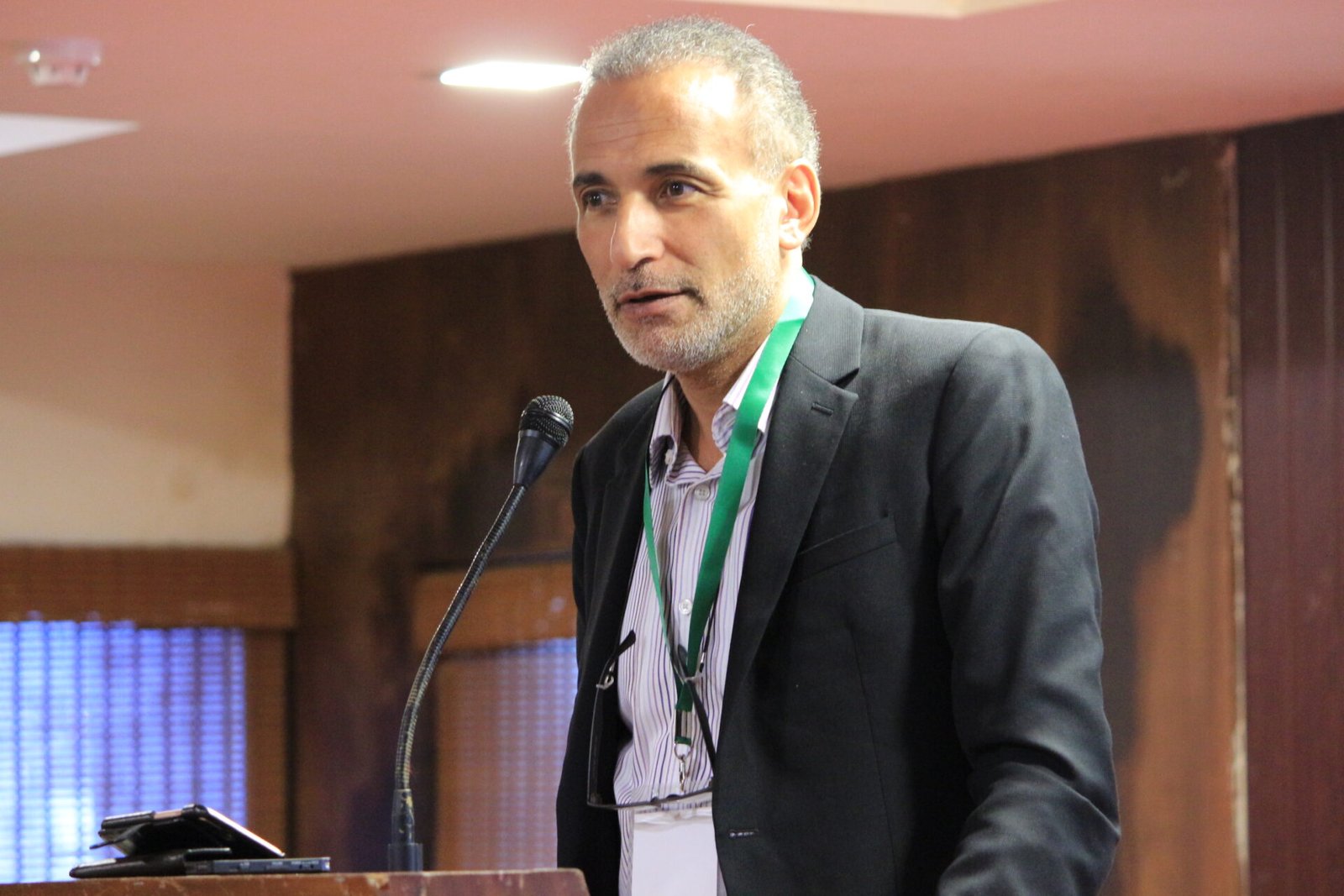
The prominent Oxford academic and Islamic scholar Tariq Ramadan has been sentenced by a Paris criminal court to an 18-year jail term for rape offences committed between 2009 and 2016. Ramadan was convicted of the rape of three women, two years after he was imprisoned for a separate rape offence in Switzerland.
Ramadan was employed by the University of Oxford as Professor of Contemporary Islamic Studies at St Antony’s College. During his tenure, in October 2017, he was accused by two women of rape, sexual assault, violence, and harassment at the height of the Me Too movement. Ramadan continued to teach until November, when he took an agreed leave of absence from Oxford. At the time, the University said that the leave “allows Professor Ramadan to address the extremely serious allegations made against him”, but “implies no presumption or acceptance of guilt”.
In January 2018, he was detained by French police and taken into custody, where he was formally charged with two counts of rape. Following this, further accusations against him emerged, with more women coming forward with claims that he had made unwanted sexual advances towards them, including allegations of violence and psychological abuse.
As a result, he was formally charged in 2020 with the rape of two more women in France and faced a further charge of rape in Switzerland. Ramadan has consistently denied the charges against him, claiming that they are politically motivated as part of a smear campaign.
Ramadan officially left his position at the University of Oxford in 2021. A spokesperson for the University told Cherwell: “Professor Ramadan left the employment of the University of Oxford in June 2021 by mutual agreement on the basis of early retirement on grounds of ill-health.”
In 2023, Yann Le Mercier was convicted of cyberharassing Ramadan and another individual because of the ongoing court proceedings. At the time, he received the heaviest prison sentence for a cyberbullying case. Ramadan currently has 2.4 million followers on Facebook.
Ramadan was tried by a Swiss appeals court in 2024 over an incident in Geneva in 2008. He was convicted of rape and sexual coercion and sentenced to three years’ imprisonment, overturning a previous acquittal. His subsequent appeal against the sentence was rejected.
Ramadan failed to appear in court in Paris this month. His lawyers attributed his absence to his hospitalisation in Switzerland on account of multiple sclerosis, “violating a conditional release order that required him to remain in France”, as Le Monde reports. Prior to the trial, however, a court-ordered medical assessment had confirmed his fitness to plead.
He was convicted in absentia for the rape of three women and sentenced to 18 years’ imprisonment. Following the verdict, the court issued an arrest warrant and imposed a permanent ban from French territory, coming into effect upon completion of the sentence. The judgment is not final and is expected to be appealed.
This case comes amid broader concerns about the University of Oxford’s handling of sexual misconduct and assault allegations. These concerns have been further intensified by controversy surrounding another professor who was not suspended despite facing allegations of rape.
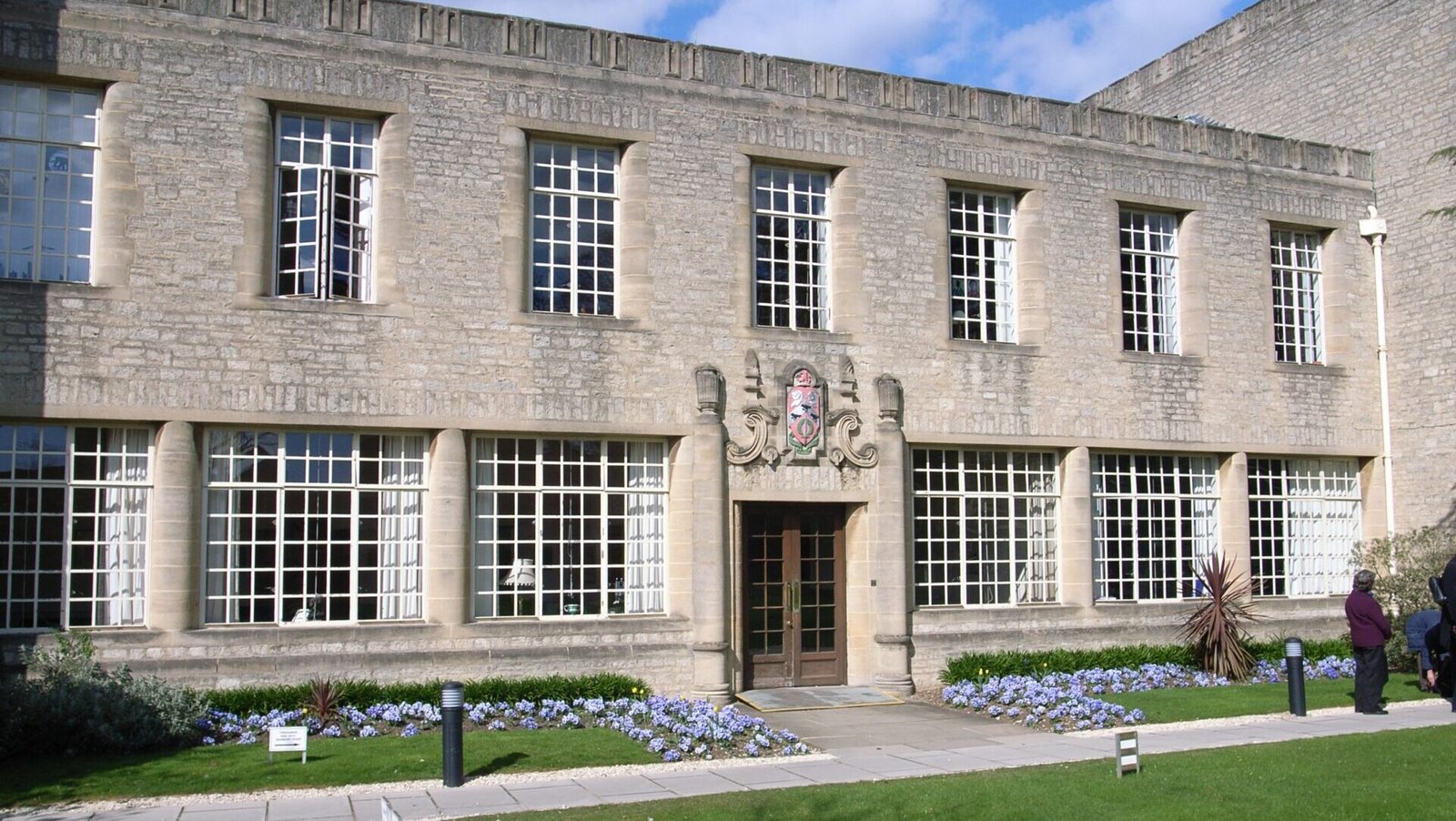
St Anne’s College has recently launched the Jane Schulz-Hood Travel and Research Scholarship Fund in memory of alumna Jane E. Hood. The initiative will provide travel and research grants to support students undertaking field work for projects that advance understanding of ecology, the environment, society, global health, and equity issues.
By providing financial assistance for research and travel, it intends to support students to meaningfully contribute to fields that were important to Jane, where they might otherwise be limited by financial barriers. According to St Anne’s, the fund aligns with its mission to help students “understand the world and change it for the better”.
Established by Jane’s family, the scholarship honours both her achievements and her commitment to education. After graduating from Oxford with a BA in Geography, she built a distinguished career as a lawyer in London. Jane passed away in September 2019 at the age of 49, after a battle with cancer.
Her husband Christian said: “For her, education was always a top priority. This included learning as much as possible about other cultures.
“Not surprisingly, Jane loved travelling. She was always very respectful towards others and cherished being in nature. She therefore was interested in the environment and supported initiatives that look after wildlife, water and education.”
Christian added: “Through this fund, we hope that, by providing financial support for research and travel, students at St Anne’s will be able to explore areas that were important to Jane. This will be a wonderful opportunity to give back and to have a legacy for Jane.
St Anne’s told Cherwell that the College “expects to award the grants annually, with the intention that they’ll begin being offered as soon as the fund is fully established”, within the 2026-27 academic year.
“We are thrilled that this Scholarship Fund will become a living legacy for Jane’s generosity of spirit, love of education and deep respect for people and the planet. We look forward to seeing the impact it will have on the next generation of St Anne’s students.”
During my first week in Oxford, I stumbled upon a Scottish third year in the college bar. This was startling; I’d only come across one or two students from north of Newcastle so far, and none of them any older or wiser than I was. I quickly took advantage of the opportunity to ask what societies I should join at the Freshers’ fair the following day.
“Anything but CalSoc”, he said, referring to Oxford’s Caledonian Society. “They’re not actually Scottish. Closest they get is owning an estate up there.”
This was a sweeping and, I thought, probably inaccurate claim, but in those first few days—homesick, lonely, having my own accent parroted back at me during pre-drinks – I didn’t struggle to believe it. While I’d hoped vaguely that I might eventually be proven wrong, I found very little evidence to the contrary. Those I met who were eager for a ticket might not have been royalty, but they were invariably English, and drawn to the ball’s structure and glamour. Tickets were pricey, and seemed to come on the condition of technical ‘training sessions’. The society’s website provided a list of dances to be learned; I only recognised two. One night in Hilary, I saw a throng of kilts and tartan sashes clustered outside the Town Hall, but as I passed, I heard only the same clipped Southern accents I’d become used to in tutorials. I started to hate-watch the dance videos on their Instagram. All of this cemented in me a vehement – and, I always felt, slightly unfair – distaste for CalSoc. What was ostensibly a familiar cultural practice seemed to me somehow violated, alien. I felt worlds away from the dances of my teenage years, where I would often wake up with mysterious injuries from an over-violent Strip the Willow. Why was something ostensibly so familiar, so ‘Scottish’, so unrecognisable?
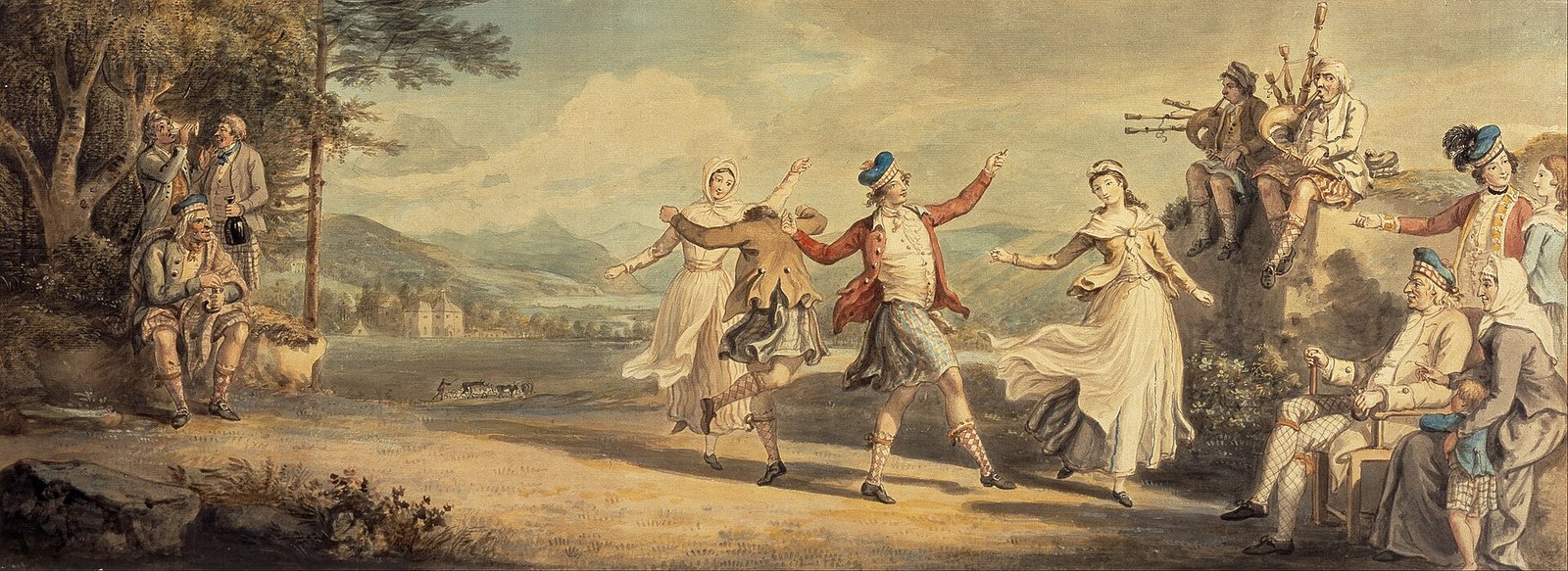
I was interested to read Nancy Robson’s recent article on reeling practice for the CalSoc ball – a fresh perspective on what has always been, for me, a very one-sided debate. Yet I was also somewhat disconcerted. The picture that emerged was of a strange fusion between English courtly balls à la Bridgerton and some kind of vaguely Scottish aesthetic (Robson makes a passing reference to ‘Braveheart’; the CalSoc website, more egregiously, to ‘ancient druidic roots’). This is a difficult one to square. The histories of ‘ceilidh’ and ‘reeling’ are intertwined, and equally culturally suspect. In his thoughtful essay on the subject, Greg Ritchie notes that both are the result of a 19th century ‘rediscovery’—and appropriation—of Highland culture, differing only in the use they make of a ‘Scottish identity’.
But this difference is still important. Caledonian Societies remain the preserve of the South, and of the Scottish elite, while ceilidh dancing is, for better or worse, part of Scotland’s shared social history. It’s taught in every school, and is the central feature of most weddings. I used to organise ceilidhs as community fundraisers. Reeling may not entirely pretend to be a ceilidh, but it does not exist in some kind of cultural vacuum. When we dress up in tartan, and (in the words of the CalSoc website), ‘party as only the Scottish can’, what kind of mythology are we appealing to? Why is CalSoc so English?
The answer comes in part from its connection to the glamorous ‘reeling circuit’: mainly based in London, this is a season of black and white-tie balls held in royal venues and private member’s clubs. But it’s also to do with the way Scottishness features in the English cultural imagination. As Robson’s article demonstrates, the practices are easily tangled up – and in England, ceilidh rarely comes out on top. She contrasts the formality of CalSoc rehearsals with her previous experience of ceilidh: in a stuffy basement, she found that ceilidh meant ‘descending into a hellish, slightly pagan underworld’. Here, as in reeling societies across the country, ceilidh and reeling are set up as sibling practices – equal in their Scottishness, diverging only in the etiquette they demand. But reeling tends to feel rather out of step with modern-day Scotland. It’s telling, perhaps, that it remains the preserve of lairds and Londoners; yet more telling is its insistence on propriety. The CalSoc website is strict on both dress (‘shorter dresses, jumpsuits, and skirts are not acceptable’) and training (mathematical dance diagrams are provided).While claiming to bring ‘Scotland to the South’, this codification of reeling misses what makes ceilidh so appealing – its inclusivity. CalSoc co-opts, only to gatekeep.
You absolutely should feel like you’re descending into the pits of hell. It will be very sweaty and you will probably be knocked over. It doesn’t matter if you don’t know the steps: someone else will lead the way. Ideally you should wake up with bruises. You don’t have to be dressed up, you don’t have to be drunk, and you absolutely do not have to be Scottish. What’s important is that it’s an inclusive and open practice. Ceilidhs have featured in my life since childhood, and still the moment I’ve felt closest to the tradition was in fact in Oxford. My friends and I held an impromptu ceilidh in our living room: there was absolutely no space and no one knew what they were doing. Yet the genuine attempt to engage, the joy and lack of pomp (and black tie) was what made it so special. I don’t disagree with the enthusiasm the CalSoc committee seem to demonstrate; ceilidh dancing is a wonderful practice which can absolutely improve your life. But you don’t need a dance card, training sessions, or an £80 ticket to do so.



-

 Crime & Safety2 weeks ago
Oxford: ‘Next generation’ LimeBikes in city from today
-

 Jobs & Careers2 weeks ago
Why Join Oxford | Oxford University Jobs
-

 Jobs & Careers2 weeks ago
Explore our Careers
-

 Student Life2 weeks ago
The independent cinema battling Oriel College to stay open
-

 Oxford Events2 weeks ago
Michelin Guide Oxfordshire Restaurants – The Oxford Magazine
-

 Oxford Events2 weeks ago
Oxford News and Events, What’s on in Oxford, Exhibitions
-

 Jobs & Careers2 weeks ago
Internal Job Board for University vacancies
-

 Crime & Safety2 weeks ago
Crash partially blocks A40 and causes severe Oxfordshire traffic