
Oxford University
Oxford tops QS World University Rankings in four subjects, named overall top for Humanities

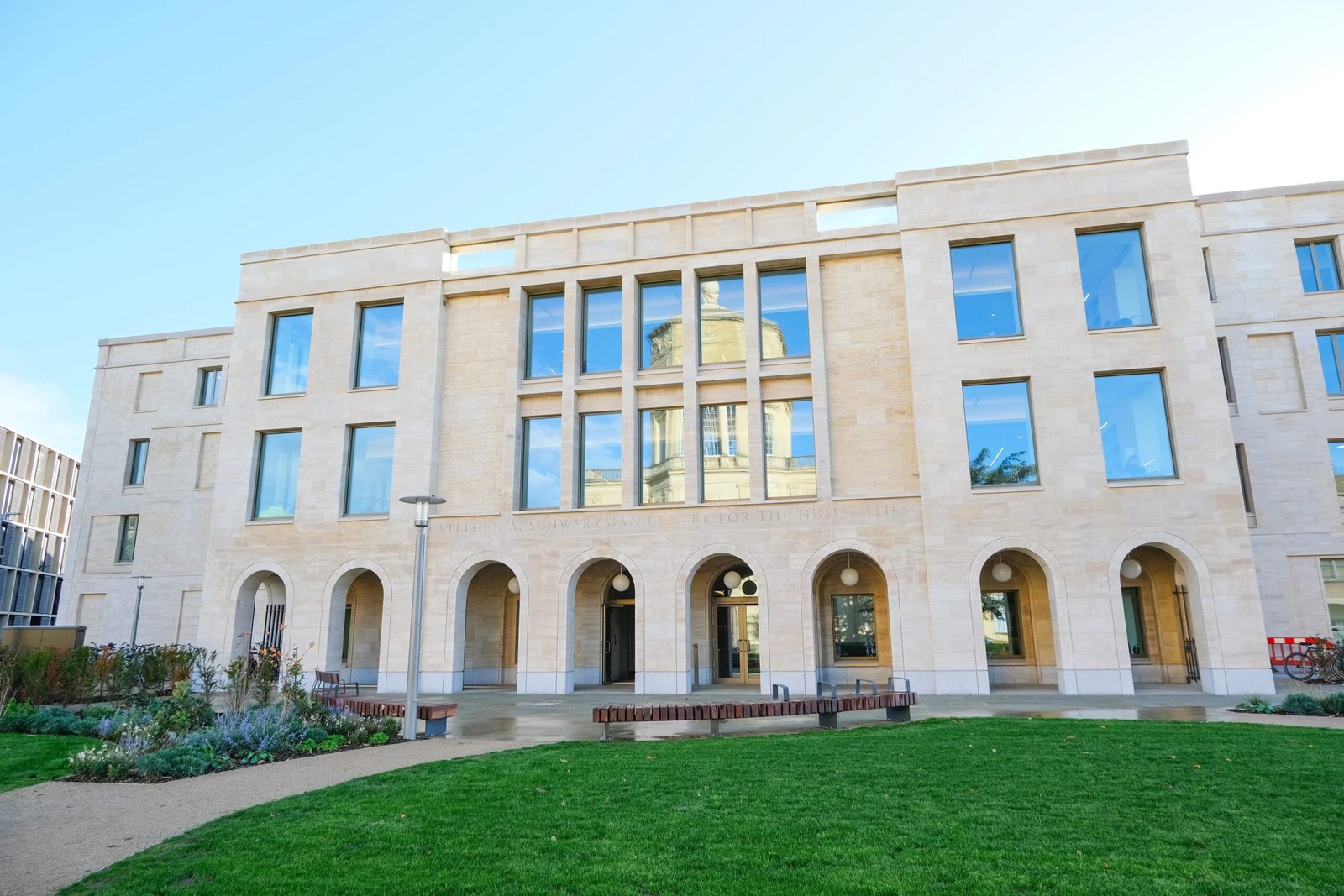
This makes it the UK university with the most courses ranked top in the world; the University was also ranked first in the world overall in the arts and humanities subject area, and came in the top three in four of the five broad subject areas ranked.
Oxford’s Vice-Chancellor, Professor Irene Tracey FRS, said: ‘Oxford’s strength is based on the breadth and depth of our scholarship, and these latest QS subject rankings are a powerful affirmation of that enduring commitment to support all disciplines. To see four of our subjects – Anatomy and Physiology, Anthropology, Geography, and Modern Languages – ranked first in the world is a remarkable achievement, and one that reflects the dedication of our academic community.
‘That we are the UK university with the most subjects ranked top globally speaks not only to excellence, but to the collaborative, curiosity-driven culture that underpins our fundamental and translational work.
‘I am particularly delighted that Oxford has also been recognised as number one in the world for Arts and Humanities overall. At a moment when we are launching our new centre for the Humanities alongside an ambitious Arts and Cultural Programme, this is both a timely endorsement and a reminder of the vital role that the humanities play in helping us understand ourselves, our societies, and our shared future. As a university, we honour our intellectual heritage while continually renewing it – ensuring that our teaching and research serve the world with insight, creativity, and purpose.’
Professor Dan Grimley, Head of the Humanities Division at the University of Oxford, said: ‘I am delighted that the strength of the teaching and research across our humanities subjects has been recognised by the latest QS World University Rankings. The achievement of colleagues in our Faculty of Medieval and Modern Languages to demonstrate excellence against a challenging backdrop of the decline of language teaching in schools is particularly impressive.
‘Outstanding research and expertise from the humanities is critical to tackling the major challenges of the 21st century. We also hear from our graduates and their employers that the skills they learned studying the humanities give them an advantage in navigating professional careers which are being impacted by AI in new and uncertain ways.’
Oxford’s School of Geography and the Environment (SoGE) ranked number one for the 16th consecutive year out of 251 institutions featured. Professor Giles Wiggs, Head of the School of Geography and the Environment, said: ‘Topping the QS World Rankings for Geography for an incredible 16th successive year is a remarkable achievement by everybody at the School of Geography and the Environment. Yet again, the ranking reflects the talent and dedication of our community of academic, research and professional services staff and is testament to the enduring global reach and reputation of our collaborative and multi-disciplinary science and teaching. I am extremely proud to be a part of that community.’
The Department of Physiology, Anatomy and Genetics is placed number one for seven consecutive years, top of over 200 universities included in this year’s rankings. Head of Department Professor David Paterson said: ‘This is a terrific achievement for my colleagues and all members of the department who have made this possible. As I finish my 10-year term as Head of Department at the end of the academic year it is pleasing to see we have made this top spot for 9 out of the last 10 years. I am very proud to have been a part of this journey.’
The School of Anthropology returns to the number one spot for the 4th time in 5 years; this year 202 other institutions were compared. Head of the School of Anthropology and Museum Ethnography Professor Clare Harris said: ‘I am delighted that the School of Anthropology and Museum Ethnography has returned to the top spot in the QS World University rankings for Anthropology this year. This success is testimony to the excellent work of our academics, researchers, professional services staff, students and the entire school community. Congratulations to all!’
Modern Languages topped the subject ranking for the first time since 2022 this year, having been ranked second each of the last three years. 352 other universities were ranked in the subject. Head of the Faculty of Medieval and Modern Languages Professor Philip Rothwell said: ‘Modern Languages is delighted to achieve first place in this year’s QS World Rankings, and to be an integral part of the Humanities Division that also ranks first. Our placement reflects our strong research culture, global engagement as a faculty, and the outstanding educational experience and employability of our students. It is also testament to the unwavering commitment of our faculty members and staff to a broad discipline that brings together multiple ways of seeing and being in the world, and of understanding our shared humanity in its rich diversity.’
The 2026 edition of the QS World University Rankings by Subject features 55 individual subjects across five broad subject areas. This 2026 rankings provide comparative analysis on the performance of more than 1700 universities from across the globe.
Earlier this year, the University of Oxford ranked first in the world in the Times Higher Education (THE) Subject Rankings for Medicine and Computer Science. Oxford leads in Medicine for the 15th consecutive year and in Computer Science for the eighth.

Chair of the Global Prize Committee and Professor of International History and Politics at the Geneva Graduate Institute
“This year’s pool of submissions was remarkably strong. A large number of manuscripts made genuine contributions to their respective fields and were worthy of serious consideration. The judging process was accordingly tough and energizing. I, for one, learned an enormous deal about themes as diverse as Caribbean environments, Vietnamese cities, and Latin American rivers.
“The ECR First Book Prize is invaluable. It doesn’t just recognize excellent books, but helps launch them.”
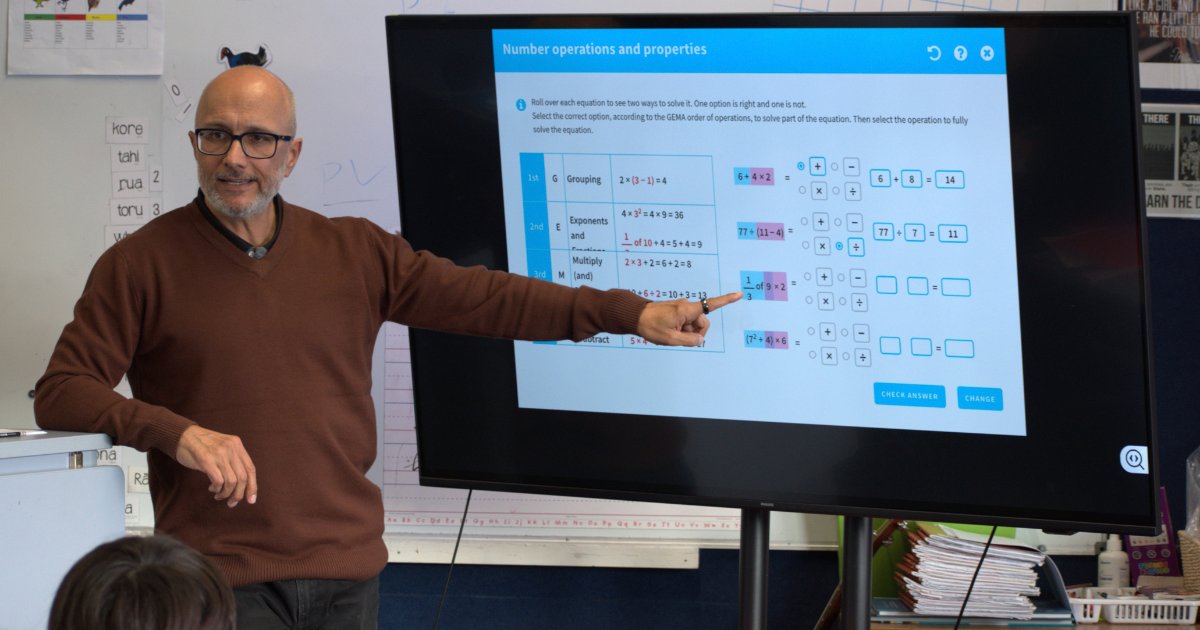
Rhea Realo, Head of Digital Product at OUP ANZ, said:
“Oxford Digital brings together proven education research, recognized accessibility standards, and ongoing feedback from teachers. Being named a finalist on the global stage is a strong endorsement of the practical, inclusive learning experience we’ve worked with educators to create.”
The Oxford English Dictionary (OED) is a historical dictionary, containing over 500,000 entries and 3.5 million quotations to capture over 1,000 years of English.
Every quarter, we update the OED by revising versions of existing entries as well as defining new words and senses. These updates subtly broaden our understanding of the English language and its use around the world.
10 highlights from this quarter’s update
1. We added more than 400 new words, phrases, and senses to the OED this quarter, including hot yoga, fantabulosa, will-they-won’t-they, and auto-reply.
2. By happy coincidence this update lands just before International Coffee Day (1 October). Coffee drinks new to the OED include Café Cubano, café con leche, cafezinho, and cold brew.
3. This release sees additions from across the world, including contributions from East Africa, Caribbean, Bermuda, New Zealand, Wales, and the Isle of Man. Learn more from Executive Editor, Danica Salazar.
4. From shadeesh to hamma, we welcome several Bermudian English additions, as part of a valuable new collaboration with the Bermuda Spelling Bee. This is an annual spelling competition for 9- to 13-year-olds designed to foster a love of language and learning among young Bermudians.
5. Several new words for supernatural creatures appear in this update. From Welsh folklore we have a bwbach, from Caribbean folklore a jablesse, and we also have the Trinbagonian addition of douen.
6. An important feature of the OED’s New Words team’s work is its Monitor Lexicography (MonLex) programme. This is our way of monitoring, collecting, and prioritizing contemporary language for inclusion in the OED, looking at sources including trending words on language corpora, social media, material generated by our reading programmes, and suggestions made by colleagues on our own internal database. Every other quarter we gather the items collected and assess them for inclusion, prioritizing so that we include the most relevant and important.
Some new words added this quarter from our MonLex programme include: the social media sense of timeline, the sense of slammed meaning very busy or overcome with work, the chiefly North American English word bothsidesism, and lastly, overnight oats.
7. Craig Leyland, Executive Editor, notes the welcome of two reference related words – thesaural and mountweazel. The latter is defined as ‘an invented or fake entry in a reference work (esp. a dictionary or an encyclopedia), a database, etc., typically used by the publisher to identify plagiarism that constitutes an infringement of copyright’. Does the OED contain any mountweazels? We can’t say, of course. You can read more from Craig about both here.
8. More than 700 entries have been revised as part of this update, including ‘gym’ and ‘kanaka’ words. Read more in this commentary from Andrew Ball, OED Editor.
9. The words newly revised this quarter show an especially rich variety of etymologies. In the month that the Bayeux Tapestry goes on view in London, it is fitting that we have a healthy crop of Middle English borrowings from French, or more specifically Anglo-Norman (i.e. French as used in medieval Britain), including doubt, equity, fantasy, and garner. Read more from Philip Durkin, OED Deputy Chief Editor.
10. And finally, being asked about ‘scone’ usually raises a groan for pronunciation editors, but it was good to have the opportunity to provide the ‘skoon’ pronunciation appropriate for the Stone of Scone in this update. Hear more from Catherine Sangster, OED Pronunciation Editor.
Explore the update in more depth here.


Oxford United player ratings in bizarre Mansfield Town draw

Number of cloned number plates on UK roads at record high, data shows | Transport

LIVE: Mansfield Town 1-1 Oxford United – Two red cards as U's down to nine men
-

 Oxford united FC4 weeks ago
Chris Gunter steps away Wales role to focus on Oxford United
-
 Oxford University3 weeks ago
New to the Oxford English Dictionary this September
-

 Traffic & Transport2 weeks ago
How poor public transport policy is putting the brake on cities | Road transport
-
 Student Life3 weeks ago
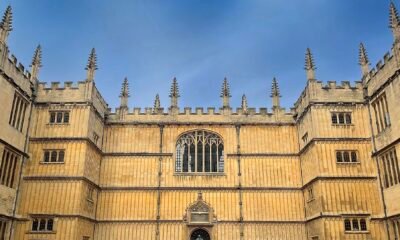
Oxford partnership allows OpenAI to use rare Bodleian texts to train ChatGPT
-

 Traffic & Transport2 weeks ago
Why should I have to pay more for buses if I don’t use a smartphone? | Bus fares
-

 Oxford united FC1 week ago
LIVE: Exeter City vs Oxford United – Jersey Mike's Trophy group stage
-

 Oxford united FC2 weeks ago
Northern Ireland fans laud Oxford United defender Ciaron Brown
-

 Oxford Events3 weeks ago
Four days of equestrian spectacle at 2026 Blenheim Palace International Horse Trials