Oxford University
Launching the Oxford Test of English Learner Corpora competition


We have launched a new Oxford Test of English Learner Corpora (OTELC) research competition, designed to support emerging researchers and showcase innovative academic work using learner data from the Oxford Test of English.
The competition is open to students currently studying for a Master’s degree in Linguistics, Corpus Linguistics, or Language Assessment. Entrants will be asked to submit a research proposal outlining their project and clearly explaining how the OTELC will be used as primary data to support their methodological approach and research objectives. A reference letter from an academic supervisor or course leader will also be required.
The OTELC is a collection of written and spoken texts produced by test takers who sit the Speaking and Writing modules of the Oxford Test of English. These responses are transcribed, structured, linked with metadata (such as first language, age, gender, CEFR level), and are annotated for error types.
Developed as monitor corpora, the OTELC is designed to grow as new test taker responses are added. It provides authentic samples of learner language, offering insights into how learners of English produce written and spoken texts and the linguistic features they use.
As a rich linguistic resource, the OTELC enables research across applied linguistics, language assessment, and English language teaching, giving researchers opportunities to examine patterns in learner performance, explore the challenges faced by test takers, and generate findings that can inform pedagogy and assessment research.

Anthony Green
Research Director, English Assessment
“The Oxford Test of English Learner Corpora competition represents an exciting step in opening up our rich learner data to the next generation of researchers. By supporting postgraduate students, we’re not only encouraging innovative academic work but also strengthening the bridge between assessment research and real-world classroom impact.“
Call for proposals opened on 15 February 2026, with the deadline for proposals and reference letter submission falling on 31 May 2026. We will announce shortlisted project proposals in July.
From the submissions received, the strongest applications will be selected for the next stage. The overall winner will receive an iPad Air and will have their research published as part of our Oxford English Assessment research collection, giving valuable visibility to their work within the English language teaching and language assessment community.
You can read more details on the competition, eligibility criteria, and submission guidance here, and find out more about the Oxford Test of English here.


The Max Planck Encyclopedia of Public International Law has reached its goal for renewals and will continue to publish on a Subscribe to Open model, through to at least March 2027.
The Max Planck Encyclopedia of Public International Law is the leading resource in the field, containing peer-reviewed articles on every aspect of international law—a discipline which provides a common legal framework for the whole world.
By converting this comprehensive, analytical resource to an open access, Subscribe to Open model, we have made it possible for students, scholars, practitioners, and governments worldwide to access this content freely without financial barriers.
Subscribe to Open in practice
The Max Planck Encyclopedia of Public International Law is OUP’s first experiment with the Subscribe to Open model – a model typically applied to journals rather than books. Thanks to the support of our institutional and library customers, this valuable content is freely accessible to all for a second year.
As a result of the Subscribe to Open model, usage of the encyclopaedia has increased substantially from 2024 to 2025:
- An increase in usage by 1,291%
- An increase in usage from low- and middle-income countries by 556%
- Access from users in 235 different territories around the world, an increase from 199, including all 196 United Nations member states.
Professor Anne Peters, Director at the Max Planck Institute for Comparative Public Law and International Law, Heidelberg, and General Editor of the Max Planck Encyclopedia of Public International Law, said:
“We are delighted to have this opportunity to participate in a pioneering open access project, particularly in view of the foundational role played by the Max Planck Society in launching the move towards open scholarship. Open access can contribute to epistemic justice and pluralism—and what we call “encyclopaedic knowledge” should not only be distributed freely, but also be built up from a globally diverse set of standpoints.”
Rhodri Jackson, Director of Open Access Publishing and Strategy, shared:
“Innovation in open access models is in line with our mission: not only to publish excellent research and scholarship but to make it available worldwide. We are committed to learning from all our initiatives—successful and less successful—and to sharing our results transparently. The first year of Subscribe to Open for the Max Planck Encyclopedia of Public International Law has been a great success and we’re excited to see what happens in year two.”
While we have reached our goal for renewals this year, we still need to reach our renewal goals annually to keep this resource open access. By renewing your subscription, you help to ensure that this valuable resource remains open and accessible to all, year after year.”
Find more information, including about renewals, here.

Professor Yuval Shany. Image credit Ian Wallman.
On January 21, 2026, Anthropic published its ‘New Constitution’ for Claude – a series of Large Language Models (LLMs) that perform general-purpose generative AI functions. The Constitution – an 84-page document – is presented as a ‘foundational document that both expresses and shapes who Claude is’. It also enumerates actions that Claude should refrain from undertaking (‘hard constraints’), and identifies considerations the system should weigh when deciding whether to perform certain actions.
A few weeks after the Constitution was published, Anthropic faced two real–world situations in which its normative outer-boundaries were tested: Its showdown with the US Department of War (DoW), regarding legal limits on the utilization of Claude; and its actual use for targeting by the US military in the war in Iran.
These developments highlight the importance of introducing strong human rights safeguards into the Constitution.
No place for human rights?
According to the Constitution, Claude should conform to four sets of values, applied in the following hierarchical order: Safety, ethics, compliance with Anthropic guidelines and helpfulness. Put differently, Claude should strive to assist users, unless instructed by Anthropic not to do so, or if it deems the request to be unethical or unsafe.
The Constitution also introduces a number of ‘hard constraints’ – specific no–go areas, which should never be attempted, including attempting ‘to kill or disempower the vast majority of humanity or the human species as a whole’ or assist ‘any individual or group with an attempt to seize unprecedented and illegitimate degrees of absolute societal, military, or economic control’.
While some ethical standards enumerated in the Constitution overlap with human rights – e.g., privacy, protection from harm, rule of law, equal treatment, the right to access information and political freedom – the document does not explicitly mention the term ‘human rights’. This is in contrast to the 2023 version of the constitution which referred to the UN Universal Declaration of Human Rights.
This means that many important human rights protections that could be relevant to the operation of Claude – for example, the right to liberty, freedom of religion and the right to intellectual property – have not been clearly integrated into the Constitution.
Anthropic vs the US Department of War
Shortly after the promulgation of the Constitution, Anthropic was mentioned in the news in two dramatic contexts – both underscoring the importance of developing effective normative backstops.
First, on 4 March 2026, the Department of War designated Anthropic a supply–chain risk due to its refusal to allow the Department to use Claude for mass domestic surveillance purposes and for operating lethal autonomous weapon systems. Instead, the DoW signed a contract with OpenAI for the provision of substitute AI systems.
As Dr. Brianna Rosen from the Blavatnik School of Government explained, the insistence of the DoW on being able to use AI systems for ‘any lawful use’ left in place a governance gap, since US law (and, in fact, also international law) does not clearly ban, under all circumstances, mass surveillance or the use of autonomous weapon systems.
Delineating the permissible scope of such extraordinary capabilities through contractual negotiations between the U.S. government and Anthropic (or OpenAI) appears to provide weaker human rights guarantees than embedding universally accepted protections directly in the AI system itself, through a Constitution or a comparable normative framework. This is especially so given the difficulties of monitoring and enforcing state compliance in sensitive domains such as national security.
Dr. Rosen is also right to point out that the negotiating position of Anthropic on mass surveillance, which focuses on domestic surveillance only, may already fall short of international human rights standards in the field, which capture foreign surveillance too.
Secondly, it has been widely reported that Claude systems, still in use by the US military, have been employed in the war in Iran for target selection purposes. It has also been speculated – albeit without hard evidence – that the use of AI systems may have contributed to one high-profile operational mistake (the targeting of an Iranian school) by reason of reliance on out-of-date maps of the attacked area.
Here again, questions arise as to whether the Constitution, as currently drafted, contains appropriate safeguards against reliance on AI systems in contexts involving lethal consequences.
Arguably, a more human rights-oriented approach would include within the system’s constitutional norms an explicit requirement that any use of the AI system in armed conflict comply with the basic principles of international humanitarian law (which give effect also to human rights principles), including flagging precautionary obligations such as real–time target verification before attacks are recommended.
In this policy space, reliance on AI systems may not only result in operational mistakes; it might also perpetuate accountability gaps (enabling humans to blame outcomes on the AI). In such cases, embedding human rights ‘by design’ within the AI system’s constitution which governs its operation could offer a much more effective level of protection against violations of basic individual rights.
Read an expanded edition of this article (co-written with Dr. Noa Mor, Prof. Renana Keydar and Prof. Omri Abend) via the Institute for Ethics in AI blog.
Oxford University
Oxford tops QS World University Rankings in four subjects, named overall top for Humanities
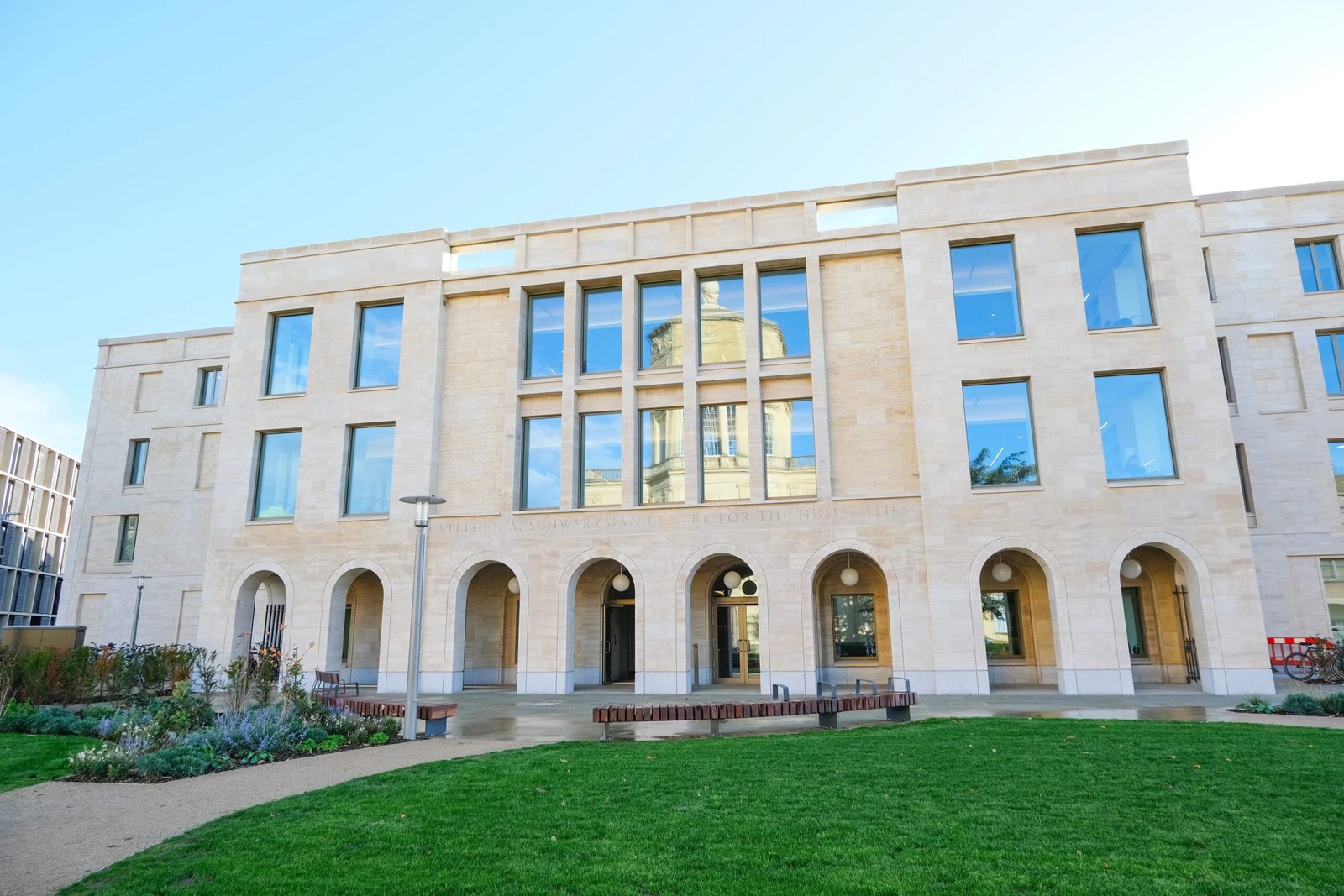
This makes it the UK university with the most courses ranked top in the world; the University was also ranked first in the world overall in the arts and humanities subject area, and came in the top three in four of the five broad subject areas ranked.
Oxford’s Vice-Chancellor, Professor Irene Tracey FRS, said: ‘Oxford’s strength is based on the breadth and depth of our scholarship, and these latest QS subject rankings are a powerful affirmation of that enduring commitment to support all disciplines. To see four of our subjects – Anatomy and Physiology, Anthropology, Geography, and Modern Languages – ranked first in the world is a remarkable achievement, and one that reflects the dedication of our academic community.
‘That we are the UK university with the most subjects ranked top globally speaks not only to excellence, but to the collaborative, curiosity-driven culture that underpins our fundamental and translational work.
‘I am particularly delighted that Oxford has also been recognised as number one in the world for Arts and Humanities overall. At a moment when we are launching our new centre for the Humanities alongside an ambitious Arts and Cultural Programme, this is both a timely endorsement and a reminder of the vital role that the humanities play in helping us understand ourselves, our societies, and our shared future. As a university, we honour our intellectual heritage while continually renewing it – ensuring that our teaching and research serve the world with insight, creativity, and purpose.’
Professor Dan Grimley, Head of the Humanities Division at the University of Oxford, said: ‘I am delighted that the strength of the teaching and research across our humanities subjects has been recognised by the latest QS World University Rankings. The achievement of colleagues in our Faculty of Medieval and Modern Languages to demonstrate excellence against a challenging backdrop of the decline of language teaching in schools is particularly impressive.
‘Outstanding research and expertise from the humanities is critical to tackling the major challenges of the 21st century. We also hear from our graduates and their employers that the skills they learned studying the humanities give them an advantage in navigating professional careers which are being impacted by AI in new and uncertain ways.’
Oxford’s School of Geography and the Environment (SoGE) ranked number one for the 16th consecutive year out of 251 institutions featured. Professor Giles Wiggs, Head of the School of Geography and the Environment, said: ‘Topping the QS World Rankings for Geography for an incredible 16th successive year is a remarkable achievement by everybody at the School of Geography and the Environment. Yet again, the ranking reflects the talent and dedication of our community of academic, research and professional services staff and is testament to the enduring global reach and reputation of our collaborative and multi-disciplinary science and teaching. I am extremely proud to be a part of that community.’
The Department of Physiology, Anatomy and Genetics is placed number one for seven consecutive years, top of over 200 universities included in this year’s rankings. Head of Department Professor David Paterson said: ‘This is a terrific achievement for my colleagues and all members of the department who have made this possible. As I finish my 10-year term as Head of Department at the end of the academic year it is pleasing to see we have made this top spot for 9 out of the last 10 years. I am very proud to have been a part of this journey.’
The School of Anthropology returns to the number one spot for the 4th time in 5 years; this year 202 other institutions were compared. Head of the School of Anthropology and Museum Ethnography Professor Clare Harris said: ‘I am delighted that the School of Anthropology and Museum Ethnography has returned to the top spot in the QS World University rankings for Anthropology this year. This success is testimony to the excellent work of our academics, researchers, professional services staff, students and the entire school community. Congratulations to all!’
Modern Languages topped the subject ranking for the first time since 2022 this year, having been ranked second each of the last three years. 352 other universities were ranked in the subject. Head of the Faculty of Medieval and Modern Languages Professor Philip Rothwell said: ‘Modern Languages is delighted to achieve first place in this year’s QS World Rankings, and to be an integral part of the Humanities Division that also ranks first. Our placement reflects our strong research culture, global engagement as a faculty, and the outstanding educational experience and employability of our students. It is also testament to the unwavering commitment of our faculty members and staff to a broad discipline that brings together multiple ways of seeing and being in the world, and of understanding our shared humanity in its rich diversity.’
The 2026 edition of the QS World University Rankings by Subject features 55 individual subjects across five broad subject areas. This 2026 rankings provide comparative analysis on the performance of more than 1700 universities from across the globe.
Earlier this year, the University of Oxford ranked first in the world in the Times Higher Education (THE) Subject Rankings for Medicine and Computer Science. Oxford leads in Medicine for the 15th consecutive year and in Computer Science for the eighth.



-

 Crime & Safety2 weeks ago
Oxford: ‘Next generation’ LimeBikes in city from today
-
 Jobs & Careers2 weeks ago
Why Join Oxford | Oxford University Jobs
-

 Jobs & Careers2 weeks ago
Explore our Careers
-

 Student Life2 weeks ago
The independent cinema battling Oriel College to stay open
-

 Oxford Events2 weeks ago
Michelin Guide Oxfordshire Restaurants – The Oxford Magazine
-

 Oxford Events2 weeks ago
Oxford News and Events, What’s on in Oxford, Exhibitions
-

 Jobs & Careers2 weeks ago
Internal Job Board for University vacancies
-

 Crime & Safety2 weeks ago
Crash partially blocks A40 and causes severe Oxfordshire traffic