
Student Life
‘Cecil Rhodes would probably turn in his grave’: Kumi Naidoo on fossil fuels, Amnesty International, and fighting Apartheid

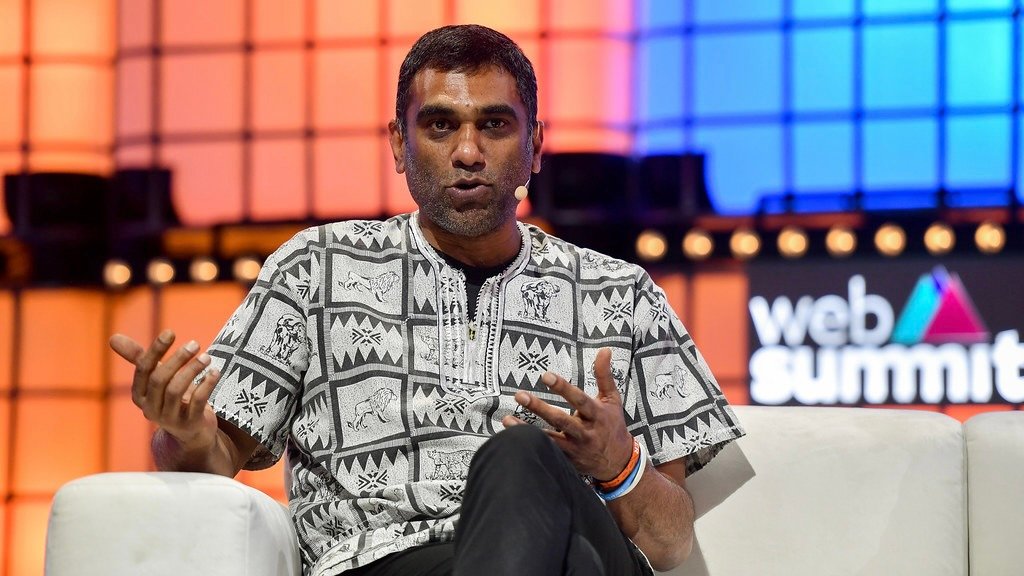
When former Rhodes scholar Kumi Naidoo reflects on his years fighting the Apartheid regime in South Africa, the first thing that comes to mind is not the peril he faced or the discrimination he suffered, but the friendships he made in the process.
“The relationships you build up in that moment of major repression and trauma… sustain you”, he tells me. “Those of us who struggled gave up so much. But I always say to people: what we gain in terms of friendship, solidarity, a life of purpose, a life of meaning, all of these things are invaluable.” It’s a remarkable thing to say about a period of his life when he was wanted by the government.
Born in Durban in 1965, Naidoo was 15 years old when he first became a threat to the South African state after he began organising boycotts against the Apartheid system. A national student uprising had swept through the townships, driven by something simple and infuriating: the inequality in education. “One of the first slogans I heard as a 15-year-old was: ‘You pay our teachers peanuts, no wonder they give us monkey education.’”
The South African government, controlled by the white supremacist National Party during the Apartheid era, allocated vastly more to the education of white children than Black children. Teachers in the townships were underpaid and under-resourced. When students at his school in Durban stood up to say so, the state’s response was immediate and predictable. “Those of us who led the protests were expelled from school. In some funny way, that turned out to be a good thing because we were mainly being fed rote learning, memorising things. When we got expelled, we had to teach ourselves. Some progressive teachers came and helped us stay on top of our coursework.”
His mother had died by suicide that same year, as recounted in raw detail in his memoir Letters to My Mother: The Making of a Troublemaker. He had become politically aware before she died, he says, but her absence changed everything. Most of his friends who had been involved in the uprising were pulled back by their parents once things calmed down. He wasn’t. “In my case, I didn’t have the same family constraints. My mom was not there anymore to exercise caution. My relationship with my dad became strained after my mom passed. So I was able to do whatever I wanted to do. I didn’t have any restrictions on my time, on my movement, which, of course, all my friends had.”
He is quick to add that both parents had laid the groundwork for Naidoo’s activism, even if neither of them was explicitly political. His father was the informal auditor of half the community organisations in Durban, including Hindu associations, Muslim associations, and Christian churches. The headquarters for the local football and cricket associations was their home. Whenever young Kumi asked why Black children couldn’t use the same beaches or fairground rides as white children, the answer was always the same.
“Our parents would always say: ‘Oh no, no, you mustn’t ask questions like that. If you ask questions like that, you’ll end up in prison with Nelson Mandela.’” He laughs. “But I believe very strongly that my brother and I would not have contributed anything substantial to the liberation struggle were it not for the values our parents taught us.”
His mother, in particular, had given him something that transcended politics. “She said, the only religion you need is to see God in the eyes of every human being that you meet… Look for the weaknesses in yourself and the strengths in others, because maybe you can do something about the weakness in yourself, but you might not be able to do something about others.” He has carried that his entire life: “Now, as a holder of that wisdom, I take it and translate it to: ‘See God in every living thing, whether it be human beings or nature.’”
A few weeks after his mother’s death, a family friend sat him down. “My boy, I don’t know how you ever recover from something like this. But one thing I do know: however bad you’re feeling, however traumatised you’re feeling, there are people in our country, in our continent, and around the world who are in a much worse situation than you are. I would urge you not to feel sorry for yourself. Think about all that you have, and try to live your life with purpose, and work for the dignity of everybody.” The advice was transformative: “That’s basically how I’ve tried to live my life”, Naidoo says simply.
From the age of 15 to 18, while keeping on top of his coursework, Naidoo was on the run. He co-founded Helping Hands Youth Association, his local residents’ association, and then he joined Nelson Mandela’s underground movement. He recalls how all-consuming this work became: “Your life became almost full-time activism. And then you did what little you could to just make sure you passed your exams and got into the next year.”
In December 1986, the army came to his home, looking for Naidoo. He happened to be away in Cape Town at the time – being interviewed, of all things, for a Rhodes Scholarship at Oxford University. He called home after learning he had made the shortlist. What his family told him stopped him cold. “They said: ‘Don’t come back home. The army was here last night.’” Despite being a wanted man, Naidoo was determined to continue his education. He recalls that there were police on every entrance to campus, so he disguised himself as a businessman and was driven onto campus by a white professor at whose house he had been hiding. “And so, I wrote my four exams at a sort of quote-unquote secret venue on campus.”
The Rhodes scholarship was Naidoo’s ticket out of the peril he now found himself in. At the interview, he was the only Black candidate among twelve finalists. When the only Black woman on the panel asked why so few applied, he had a direct answer: the application process itself was built for privilege. You needed a car. You needed money for petrol. You needed to travel to individual meetings with each of the nine panel members. “If you came from a working-class background, that was not something you could take for granted.”
Naidoo questioned whether it was right to take money from the endowment of Cecil John Rhodes, one of the architects of the very system that had forced him to leave South Africa. “I discussed it with my friends and comrades, and we landed on the point that, if I were to get the scholarship, Cecil John Rhodes would probably turn in his grave. And we were not going to lose any sleep from creating him discomfort.” He encourages Black students from poor backgrounds to apply to this day. “We should feel no embarrassment to access a scholarship that was the result of the exploitation of the people of southern Africa, especially if you’re going to use those skills for advancing the interests of the people, rather than just for the advancement of your self-interest.”
Arriving at Oxford to undertake a PhD in Political Sociology was a complete culture shock. The level of political consciousness was not what Naidoo had hoped it would be: “What I found difficult was the level of privilege at Oxford, and the kinds of assumptions that came with it.” But the hardest thing was the separation from his home. “My body was in Oxford. But my heart and soul were still in South Africa because my friends were being thrown in prison, being murdered. All the time while I was in Oxford.”
There is one story he tells that captures the dissonance perfectly. In South Africa, International Workers’ Day on 1st May is a significant, serious occasion: a day to remember the struggle of the working class. When he arrived at Oxford and heard students talking excitedly about May Day, he thought he had found his people.“I thought: ‘Oh, there’s hope, everybody’s concerned about the workers.’” A grin. “Only to discover that May Day was a unique Oxford festival. A pagan festival.”
Naidoo left Oxford before finishing his PhD in 1990, when the African National Congress (ANC) was unbanned, and negotiations about the end of Apartheid began. “Coming back was very easy. I was desperate to be back home to help. Especially after Mandela was released and all the liberation movements were legalised. There was a big kind of excitement: ‘Hey, let’s go home and contribute.’”
In 1994, when the first universal suffrage elections were held, Naidoo found himself thrust into the role of Director of Training for the Independent Electoral Commission, responsible for preparing thousands of electoral staff nationwide. “I’d never run a massive national election before. Neither had I even voted in an election. And suddenly I end up as director for training.”
The challenges were immense. Ballot papers didn’t reach remote rural areas on time. Results were delayed. There was public contestation about the count. At points, Naidoo was the person on television explaining the delays. But it was also joyous: “It was special being part of a very important historic process. To see the long lines, the patience that people had to go and vote. After almost two decades of struggle, to see democracy finally be born in South Africa, that was quite a special experience.”
He returned to Oxford in 1995 to finish the DPhil he had started in 1987. He is cheerfully unashamed about the timeline: “My biggest academic achievement: I took the longest to ever complete a PhD at Oxford. I started in 1987 and graduated in 2000.” He pauses, laughing. “Most people, if it takes that long, they give up.”
After Apartheid came to an end with the victory of the ANC in the 1994 elections, Naidoo would eventually find himself engaged in a new struggle: climate justice. He had spent a decade leading CIVICUS, a global alliance of civil society organisations, when Greenpeace came calling. His first instinct was to redirect them. “I basically said to them: ‘Hey, I know some good environmentalists.’”
When they persisted and asked him to meet, he agreed reluctantly. Then his daughter found out. “She said: ‘Dad, I won’t talk to you if you don’t seriously consider this Greenpeace position. Because Greenpeace is fighting for my future, and you need to do much more on climate change.’” He smiles. “I always attribute my embracing of environmental justice to the encouragement I got from my daughter.”
He brought to Greenpeace a critique that has come to define the rest of his career: “One of the biggest mistakes we made was that Western environmentalism framed climate change as an environmental issue, whereas climate change is a result of our economic system, our energy system, our food system, our transport system. To treat any of these issues in three different silos is exactly wrong.
“If you are a person of colour in the global North, most likely you’re living near a polluting facility. If you are white, you’re probably not facing the same challenges to air quality. Not only does linking these issues not dilute the environmental message, it actually makes climate justice much more real, pertinent, and brings it home to ordinary people. If you talk about climate only in degrees and parts per million, and you don’t connect it to air quality, to jobs, to local community, you will never move the large numbers of people you need to move.”
In June 2011, he spent four days in a Greenlandic prison after occupying a Gazprom oil platform in the Arctic. The drilling resumed soon after. He does not pretend otherwise. “Social change rarely happens in a straight line. Most actions do not achieve their immediate objective overnight. The anti-Apartheid struggle certainly did not.” What matters, he says, is cumulative pressure. “Sometimes the impact of an action is not measured in days or weeks but in whether it helps move society closer to a tipping point for change.”
The road has been bumpy. In 2015, he resigned from Greenpeace, a year after it emerged that a staffer had lost £3 million in donor funds on the foreign exchange market. His tenure as Secretary-General of Amnesty International was short-lived: he resigned, citing ill-health in 2019, not long after allegations of a toxic workplace culture, highlighted by a researcher’s suicide, led staff to petition for his removal. He speaks about both with the same equanimity he brings to everything. “When I was headhunted for both the Amnesty International and Greenpeace leadership roles, one of the key reasons I was approached was the recognition that both institutions were structurally racist and did not reflect the realities of the world as it actually is. A key part of my mandate was therefore to help rebalance power within these organisations.”
Transformation, he notes, creates losers as well as winners. “When institutions begin to shift power from Global North to Global South, some people inevitably lose privileged positions, influence, and status.” He does not say this unkindly. “But it becomes deeply problematic when organisations like Greenpeace and Amnesty call on the world to act urgently and justly, while failing to look anything like the 88% of the world’s population that lives in the Global South.”
So, is there a difference between being a great activist and being a great organisational leader? “They are definitely not the same thing. Activism often rewards disruption, urgency, moral clarity, challenging institutions from the outside. Organisational leadership requires patience, coalition-building, administration, compromise, sustaining complex systems over time. Some people are exceptional activists but not effective institutional leaders. Others are strong managers but struggle to inspire movements. I tried throughout my life to bridge those worlds, sometimes successfully and sometimes imperfectly. Ultimately, others will judge how well I did.”
He has also engaged with the World Economic Forum in Davos while publicly criticising it, a contradiction some find hard to swallow. He doesn’t. “I believe we must be able to engage critically without becoming captured. My criticism of Davos has always been that too many powerful actors speak about justice and sustainability while continuing to benefit from systems that produce inequality and ecological destruction. But refusing to enter those spaces at all can also become a form of self-isolation. If we only speak to people who already agree with us, we limit our ability to influence outcomes.”
His current focus is the Fossil Fuel Non-Proliferation Treaty, which he now leads as President of the initiative. The logic, he says, is simple: “Imagine one day you’re rushing off to school, and when you come back, you notice there’s water seeping out of the bathroom. You open the door and realise you left the tap on. What do you do first? Do you turn off the tap, or do you start mopping the floor?” He lets that sit. “For 30 years, we’ve been mopping the floor. 86% of what drives climate change is our dependency on oil, coal, and gas. Unless we address the root cause, which is fossil fuels, we’re not actually addressing the climate struggle at all.”
The model is the 1997 landmine ban treaty: a coalition of ambitious countries negotiates outside the UN system, brings it to the General Assembly, and forces a vote. “By the time that happens, there will be very few countries putting up their hands saying: ‘Oh yes, we want fossil fuels, just as nobody put up their hands saying we want landmines.’”
He is not naive about the opposition. “The lobbying capability of the fossil fuel industry is not to be underestimated at all. They’ve got marketing and communications resources on a scale that you can only dream about.” But the public understanding has shifted, and that, he believes, is harder to reverse than a lobbying victory. “I don’t think it’s going to be as easy for them as they might be thinking because more and more people understand that the root cause of climate change is our dependence on oil and gas.”
Naidoo is 61 now. A member of the University of Oxford’s Equality and Diversity Unit and an honorary fellow of Magdalen College, he remains very much a part of the city that provided him sanctuary from the repression of Apartheid. The boy who dressed as a businessman to sit his university exams while the police searched for him has lived, by any measure, several full lives. The professor who drove him through those campus gates is part of a long chain of people who took a risk for him, and for whom he has, in turn, taken risks. “It’s much better to try and fail”, he says, repeating one of his mother’s wisdoms, “than to fail to try”.
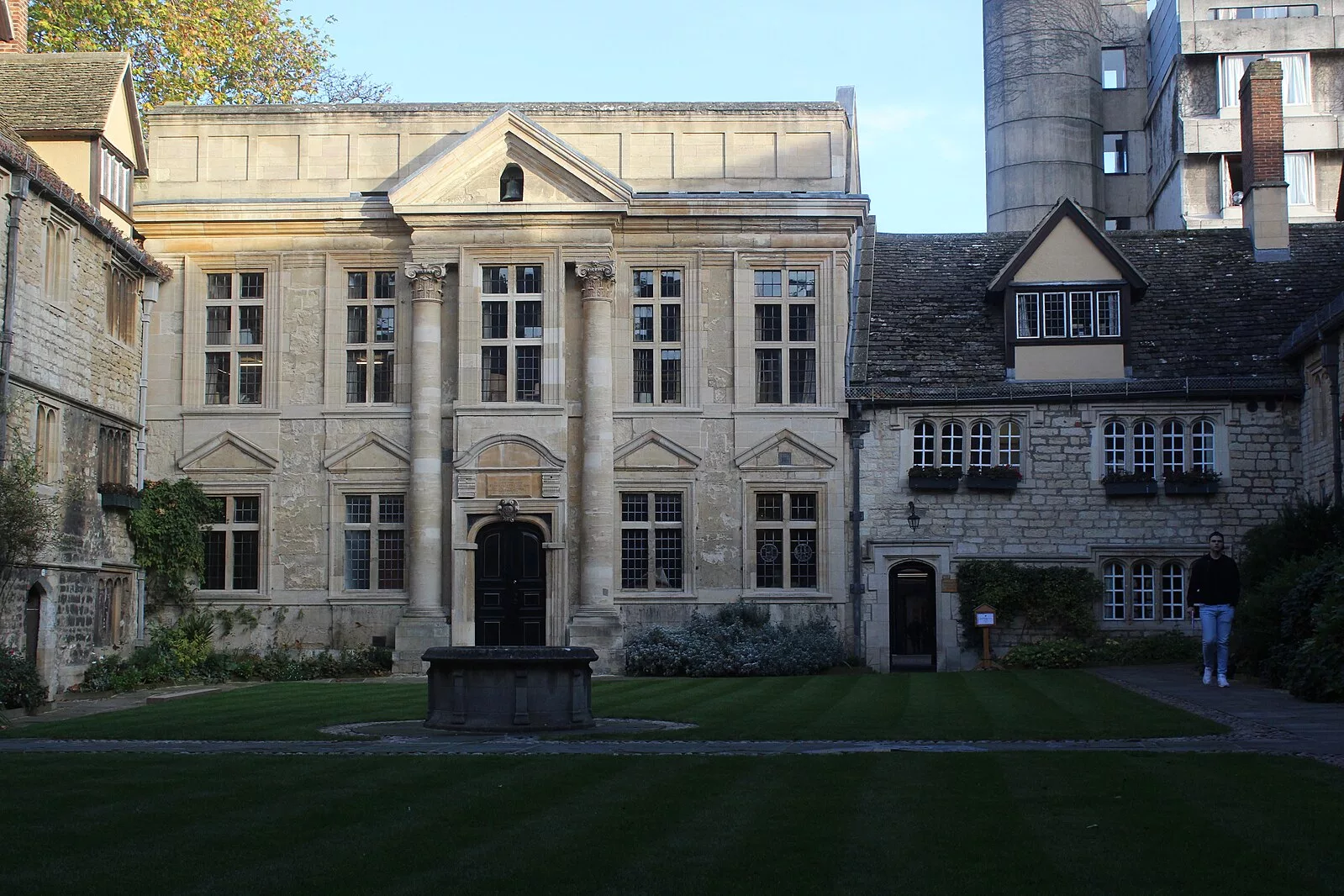
St Edmund Hall has opened new, sustainability-focused accommodation in Norham Gardens, one of Oxford’s most affluent neighbourhoods.
The College describes the buildings, which took three years to construct, as an “exemplar” of sustainability. Designed by architects Wright & Wright LLP, they are certified with a Passivhaus standard, widely regarded as the industry benchmark for energy efficiency, and were built using “sustainably sourced and low-embodied carbon materials”. According to a press release on the Teddy Hall website, the buildings will use 70% less energy than the typical modern building.
It contains 127 en-suite study rooms, split across three new buildings: Willis House, Ashton House, and Elliott House, on the nearly 50-year-old Norham St Edmund site. The buildings, which back onto University Parks, are powered at least in part by solar panels and are heated by air-source heat pumps.
The rooms include heated towel racks, big double beds, and dimmable lights. Despite the luxury, the College kept the nightly rate in line with the rest of its Norham housing. The College told Cherwell that it “recognises the need to keep rents as low as possible” and that its accommodation costs are “below the median of all Oxford colleges”. By that standard, tenants are expected to pay around £30 a night.
Rooms on the site will be reserved for Teddy Hall returning undergraduates. They will not be available to postgraduates and, by extension, not be offered through the Oxford University Collegiate Accommodation System, now in its second year of opening college rooms to students from other colleges. The accommodation will allow Teddy Hall to accommodate all undergraduates for their whole degree.
The development’s outdoor spaces are boasted as climate-resilient and biodiverse, with landscaped gardens and lawns. For budding geographers and biologists, the most intriguing feature may be an ecology pond.
Chancellor William Hague said in a press release: “Norham St Edmund is a world-leading blueprint for future student accommodation projects and sustainable building design, both in Oxford and beyond. I look forward to seeing it serve a thriving college community for generations to come.
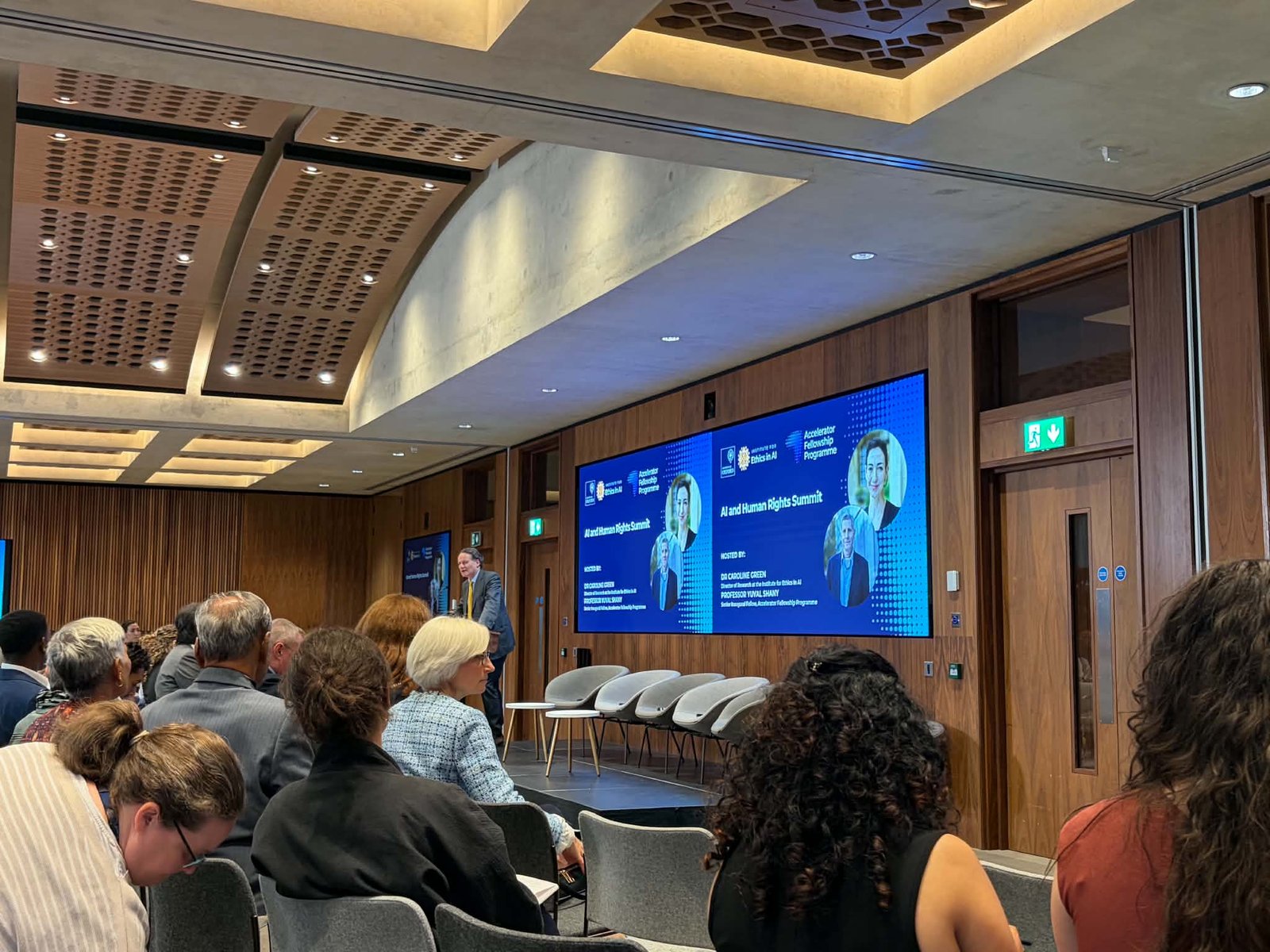
Human rights experts called for stronger legal protections against the risks posed by artificial intelligence (AI) at an Oxford AI and Human Rights Summit, with speakers arguing that human rights standards must be embedded into AI governance and technology.
The summit was hosted at the newly redeveloped Rhodes House in Oxford and organised by the Institute for Ethics in AI. It built upon Professor Yuval Shany’s consultation on a white paper, published in 2025, on the need for and feasibility of an international AI Bill of Human Rights, which proposes ways to adapt existing human rights standards so as to better address some of the unique challenges posed by AI systems and their uses.
An opening video address from the United Nations High Commissioner for Human Rights Volker Türk outlined how AI policy can keep pace with a fast-developing technology. He said that “great power demands responsibility on the same scale, and when the two don’t match, we have a problem”. Corporate control, he explained, means that AI policy stretches beyond existing national borders. He continued to praise this summit for bringing together leaders and representatives at the forefront of the discussion.
Speakers called on the UK government to establish legislation, recalling Labour’s manifesto commitment to an AI Bill of Human Rights. The panellists broadly agreed on the importance of human rights, but appeared less aligned on what enforcement should look like in practice.
In an exclusive interview, Michael O’Flaherty, the Council of Europe’s Commissioner for Human Rights, told Cherwell that political short-termism Continued on pg. 2 risks undermining efforts to address the long-term consequences of AI. “We are infected across our societies with shorttermist responses to the great issue of our societies and politics,” he said, adding that electoral cycles make it difficult for politicians “to think beyond the next election”.
O’Flaherty also noted that younger generations no longer take the international human rights system for granted. “There is no longer an assumption that the human rights system is safe, that it will survive,” he told Cherwell. He argued that political leaders increasingly treat human rights selectively, saying: “Increasingly, leaders are treating human rights, if they are respected at all, as an a la carte buffet. We take those rights because they serve our goal. We’ll ignore others because they get in the way.
The summit also heard concerns about the effects of AI-generated misinformation on communities that may have limited access to, or awareness of, the technology itself. An audience question asked human rights experts to consider the impacts of AI on populations, such as those in India, who might be unaware of its existence. The focus on the impact of AI on populations in developing countries more vulnerable to the power of big tech was a key theme of the summit.
Eileen Carter from the South African Human Rights Commission warned that underrepresentation of African languages in large language models could exacerbate existing inequalities. She also raised concerns about the effects of misinformation and deepfakes on elections, referring to more than 360 deaths associated with unrest and the amplification of narratives.
The third panel, which offered a civil society perspective on promoting human rights in AI systems, offered some hope. Across all speakers, the potential for AI to transform the beliefs that underpin human rights, including the rights to water, education, and an interpreter, was debated. When asked about AI’s potential to unravel and alter the definition of human rights, such as what is included in the ‘right to education’ O’Flaherty told Cherwell: “The damage that can be done by AI has hit more dramatically and more visibly than perhaps any other sector within education through the phenomenon of cognitive loss, of cognitive transfer. We’re only beginning to realise the extent to which we have allowed education to be fundamentally undermined for an entire generation.
“It’s time to seize that now and engage it. I’m not sure that the classic understanding of the human right to education is particularly well-framed for this extraordinary development.”
In a discussion on different countries’ regulatory approach to AI, Suresh Venkatasubramanian, professor at Brown University and former AI advisor to US President Joe Biden, argued that AI systems should not be treated as inevitable developments beyond human control. “We continue, I think, to talk about AI as a thing that emerged out of nowhere that we just have to deal with,” he said. “We forget that these aren’t coming from an alien planet and they were built by entities that choose to build them in a certain way.” He called for pressure on technology companies to make different choices about how AI systems are developed.
Questions of accountability also emerged during discussions about AI’s potential to improve access to justice. Research presented by Philippa Webb said that only 10% of people who have access to a lawyer can get one while there are thousands of bookings for an interpreter in a court covering 150 languages. However, this progress is not cemented as “general-purpose chatbots hallucinate 58% of the time on a legal task”. The use of AI in moderating legal proceedings raised fundamental questions about humanity and authority. Thompson Chengeta from Liverpool John Moores University said that “human rights is the last line of defence so when we say we want a human rights based governance… human rights is not an idea, it is an obligation. There is a gap that can only be recovered by a legally binding instrument”.
The event culminated in a panel offering an industry perspective. Co-host Dr Caroline Emmer De Albuquerque Green questioned representatives from Meta, Google, Microsoft, and OpenAI. Michael Karimian, who works in digital diplomacy at Microsoft, discussed the role of private sectors in engaging with AI, defining corporate responsibility as something which “provides transparency and identified risks”.
All companies supported having formal programmes to ensure that they have an AI policy in place. Within their own companies, they suggested protective measures such as specialised training to ensure that policies, such as whistleblowing, are understood. Alexandria Walden from Google described how consultations with stakeholders could be used to identify when the product breached users’ boundaries. These assessments, according to OpenAI’s spokesperson, “feedback into tangible technical input” and “benchmark it”.
Fundamentally, understanding the rationale behind human rights is imperative, though lacking. Alexandria Walden from Google said: “Whether or not they understand human rights, they care enough to infuse it in their company… we might not always get it right, but it is something we care about.”
Where former panels discussed controls to ensure human rights are considered in the development and implementation of AI products, this panel focused on mitigation. A spokesperson from Google pointed out that technology is inevitably going to move faster, so multiple tools are needed. Companies, OpenAI’s representative noted, still encounter issues such as discrimination and free speech. Consequently, they regard this as an additional policy which companies have a structured model to deal with, but newer companies, and newer industries, haven’t learnt it yet.
In her concluding remarks, Green called for policy makers to “make the abstract actionable” at both governmental and corporate levels. She argued that, by framing the issues posed by AI as human rights issues, we gain a “foundation” for recognising AI’s many societal impacts.
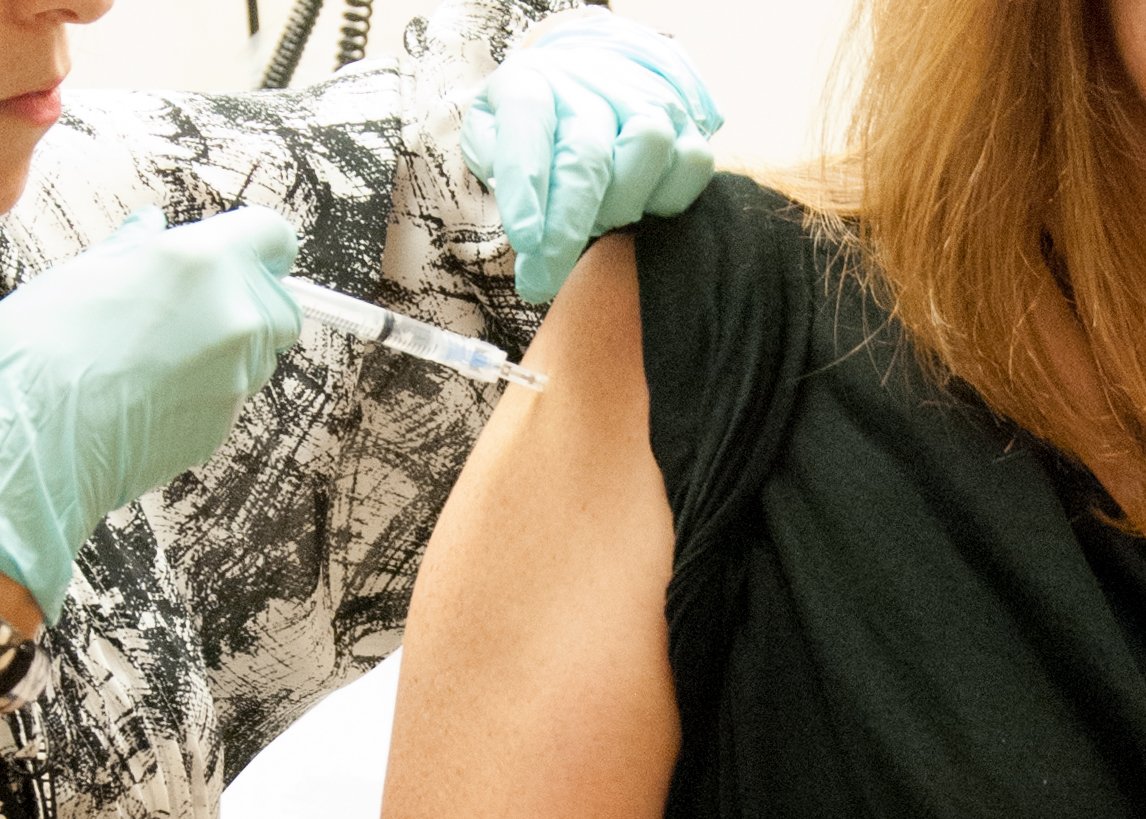
Ugandan participants in a clinical safety study received an Oxford developed Ebola vaccine this week.
Researchers vaccinated the first participants on 6th October in Masaka, Uganda. The phase follows the launch of a first-in-human Phase I trial in the UK evaluating the same vaccine candidate.
They received the vaccine as part of an evaluation of the safety and efficacy of a ChAdOx-based Bundibugyo Ebola vaccine candidate developed by the Oxford Vaccine Group (OVG) and the Pandemic Sciences Institute at the University of Oxford.
Development for this vaccine began in May this year in response to the ongoing Ebola outbreak in the Democratic Republic of the Congo (DRC). The research, led by OVG’s Professor Teresa Lambe and Professor Simon Drysdale, is funded by the Coalition for Epidemic Preparedness Innovations (CEPI). No licenced vaccine for the Bundibugyo strain of Ebola virus currently exists.
In a statement to Cherwell, OVG said its involvement includes collaborating with the Ugandan research team to support “the study’s scientific design, clinical trial coordination, safety oversight, and evaluation of vaccine safety and immunogenicity”. The Phase I clinical trial addresses a rare strain of Ebola virus affecting communities in the DRC since May. The phase is a collaboration between the Medical Research Council/ Uganda Virus Research Institute and the London School of Hygiene and Tropical Medicine (LSHTM).
Dr Nicole Lurie, CEPI’s Executive Director for Emergency Preparedness and Response, told Cherwell: “It [the Bundibugyo outbreak] remains the fastest-growing and second-largest Ebola outbreak ever recorded – and we currently remain without a licensed vaccine or treatment.” The Bundibugyo Ebola epidemic in the DRC has surpassed 8,600 cases, with almost half of infections proving fatal.
The outbreak was declared a Public Health Emergency of International Concern (PHEIC) by the World Health Organisation (WHO) in May.
OVG told Cherwell: “For more than a decade, the University of Oxford has performed many clinical trials of candidate viral-vectored vaccines. Some of the most promising vaccines used a modified chimpanzee adenovirus, a harmless version of a common cold virus. The Oxford-AstraZeneca (ChAdOx1) COVID-19 vaccine was approved for emergency use in the UK in December 2020 and was estimated to have saved six million lives during 2021 alone, and over 3 billion doses were used worldwide.” The adenovirus vector vaccine technology trialled in this study was successfully used worldwide as part of the Oxford-AstraZeneca COVID-19 vaccine.
More funding is necessary to ensure the development and approval of the Ebola vaccine. Lurie told Cherwell: “Without sufficient additional funding, we are at risk of not being able to develop these promising vaccine candidates… CEPI urgently needs US$128M now to keep our Bundibugyo emergency R&D response moving. Without it, we are putting the DRC, and the world, at tremendous risk.”



-
 Oxford united FC4 weeks ago
Chris Gunter steps away Wales role to focus on Oxford United
-

 Oxford University3 weeks ago
New to the Oxford English Dictionary this September
-

 Oxford united FC1 week ago
LIVE: Exeter City vs Oxford United – Jersey Mike's Trophy group stage
-

 Student Life3 weeks ago
Oxford partnership allows OpenAI to use rare Bodleian texts to train ChatGPT
-
 Traffic & Transport2 weeks ago
How poor public transport policy is putting the brake on cities | Road transport
-

 Traffic & Transport2 weeks ago
Why should I have to pay more for buses if I don’t use a smartphone? | Bus fares
-

 Oxford united FC2 weeks ago
Northern Ireland fans laud Oxford United defender Ciaron Brown
-

 Oxford united FC1 week ago
Oxford United lose to Exeter City on penalties in Jersey Mike’s Trophy