
Student Life
The elusive career paths of humanities students: Does the ‘Oxford bubble’ breed employment anxiety?

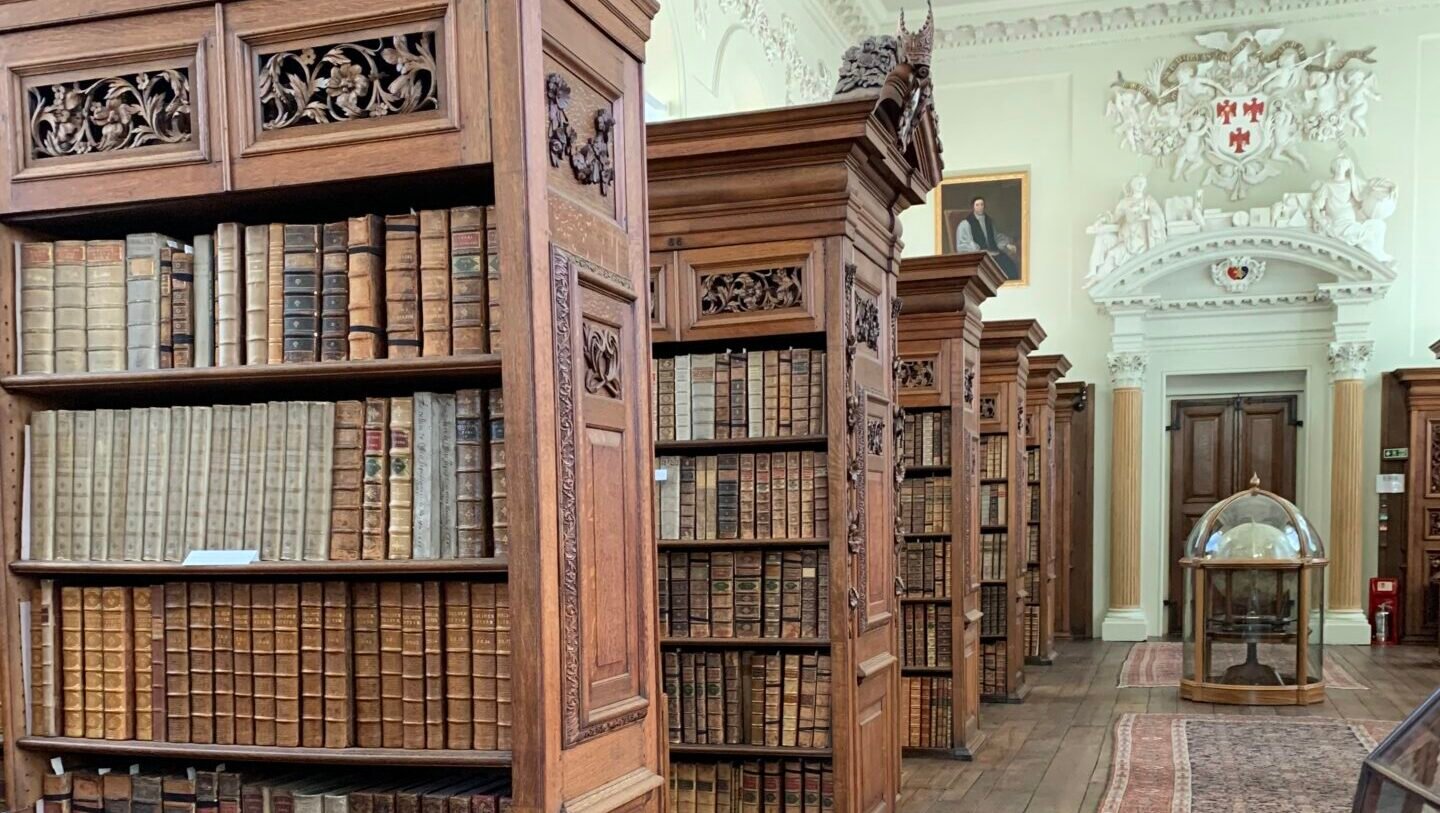
Strong-minded and academically driven undergraduates are certainly not something found lacking at the University of Oxford. The thousands who swarm the streets of this beautiful city of ‘dreaming spires’ bustle about the centre, emitting a hum of excited determination. What exactly these ‘buzzing’ students are determined to achieve can vary. For freshers, it might be making their time here rich with new experiences and people, or maybe it’s the aspiration to achieve a distinction in their Preliminary Examinations. However, for those of us approaching our final year, career-led ambitions have, to a certain degree, overtaken academic concerns at the forefront of our minds.
Although the word ‘finals’ is enough to generate anxiety in even the most level-headed among us – a feeling my flatmate and I commonly refer to as ‘the pit’ – it is also the worry of what lies beyond these fated examinations that can daily plague both our conscious and subconscious minds. The pressure to know where our careers are headed is often amplified by our parents (or grandmothers, in my case!), some of whom might have a more definitive idea about where our degrees will take us. It is true that some come to Oxford with a clear picture of where they would like to be in ten years’ time; however, amid the masses of budding professionals, there are those of us who feel lost regarding what we truly desire to do with the rest of our lives. If you share similar anxieties, it is not inconceivable to perceive yourself ‘falling behind’ in an imagined race set along a preordained linear trajectory.
Surrounded by peers who have already secured placements or appear to know exactly the career path they are about to embark on, it is easy to develop a sense that you are running out of time. This is only amplified by the frequent stories of the dire state of the graduate job market, passed through the grapevine of the recently (and not-so-recently) graduated. We undergraduates often hear horror stories about how long it can take after graduating to find a company willing to interview you, let alone hire you, despite potentially having received a first-class degree from one of the finest universities across the globe. Unfortunately, there does not seem to exist an easily deducible ‘correct’ path one ought to take; one that might prove all the time spent studying intensely, coming home early from a night out to cram, and the sleepless nights spent completing essays has been worthwhile.
I believe a feeling many undergraduates here will resonate with is academic perfectionism that is almost never satiated, at least in the long term. After achieving one goal, the next takes over, and the drive to succeed and prove oneself can become overwhelming, without one really being aware of what it is that matters so greatly about being ‘the best’. It is this compulsion that has troubled me recently. While I am not sure I would go as far as to say that Oxford breeds specific expectations of ‘right’ career progressions for its graduating students, I would be lying if I claimed I didn’t believe a competitive environment such as this can encourage the feeling commonly labelled ‘impostor syndrome’, convincing you that there are such expectations to which one must live up in order to ‘fit in’.
Furthermore, this unsettling feeling can pose an issue for humanities students such as myself. Many humanities degrees do not lead directly into a specific professional field. As someone who studies Theology and Religion, I have often been asked if I intend to pursue a career in the Church but, as an atheist, this path is not one I have been especially tempted by, or would be particularly appropriate for me. The response that follows this answer is usually a variation of: “Well, what else can you do with your degree?” The answer, luckily (or unluckily – depending on how you look at it), for me is “quite a lot actually”. But this also poses a significant problem. Without my degree leading me to a specific career, my choices are rather expansive, which can be quite daunting if you, like myself, chose your subject out of passion, rather than practical use. Thus, the seemingly ‘elusive’ career path of humanities students is one that can provoke an ever-resurfacing anxiety when it becomes the topic of conversation.
Now, as I enter my final year, I am still none the wiser regarding my career aspirations beyond those which most primary school children could identify: reasonably high-paying, relatively enjoyable, and somewhat related to my degree. These criteria would then, hopefully, make my degree, and the approximately £60,000 worth of debt I will have accumulated in my studies, worthwhile (though most ten-year-olds might not include the latter). Perhaps this seems juvenile and obvious, and it is certainly not at all helpful in narrowing down what I want to do. Nevertheless, in writing this, I am aware that, when one doesn’t know exactly where to begin in the search for job prospects, this is not necessarily the worst place to start! After all, in a pool of fresh graduates eager to find employment, I would wager that being open to anything while I find my feet is no bad thing.
I have been working on the assumption that the path I need to take to achieve my ‘dream’ career (whatever that might be) is linear and flat – something that any path towards something worth having rarely is. If my slightly vague, short-term and more generic aspirations have gotten me this far, then I am sure that, in time, they will get me to where I eventually decide I want to be.
I have spent the last year preaching that finally letting go of internal pressure to ‘be the best’ is what actually got me to where I am now, rather than overloading myself with the expectation that I need to meet a certain goal in order to make my degree ‘worthwhile’. It is perhaps time I began to heed my own advice: to let myself enjoy my final year here for the wonderful experience it is, and realise that I have the privilege of time to discover what I would like to pursue a career in, and change my mind again, and again, before I get it right.
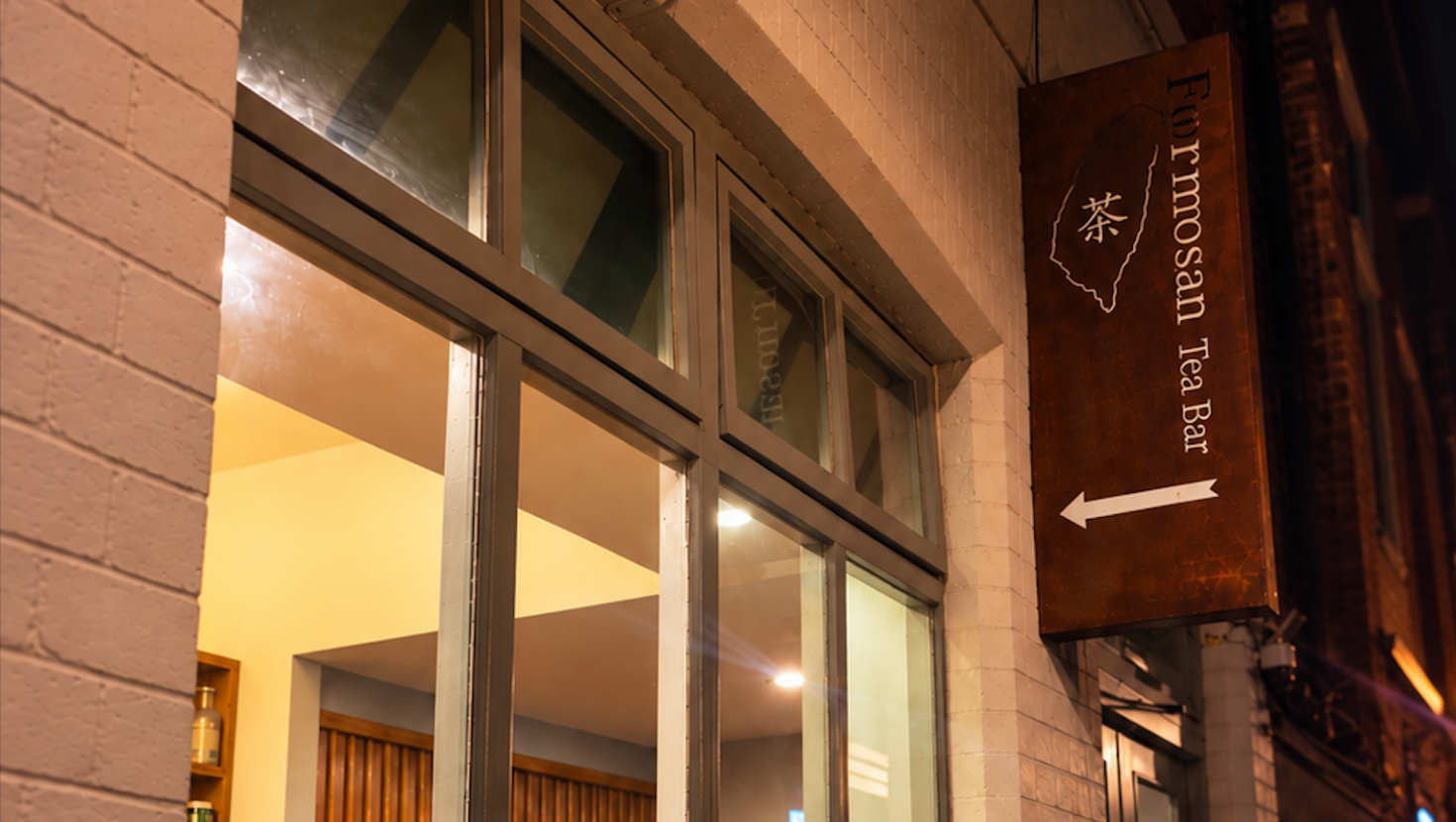
By the end of Michaelmas, darkness had begun to arrive before dinner, and I was still figuring out how to make Oxford feel like a life rather than a place I was passing through. One evening, after a pitiful college dinner, as I stewed over an overdue essay, a friend suggested a board game. It was something we occasionally indulged in at the college café, branding it a gentler form of procrastination, one that rotted the brain a little less. This time, I suggested a change: a trip to Formosan, my favourite tea shop, only a few footsteps from Pembroke. We were greeted by a friendly array of samples, and I confidently ordered for him before we settled into the warmth of the spacious tearoom, set up the board, and, at least temporarily, blissfully ignored every deadline in favour of fierce competition. In the weeks that followed, our trips to Formosan became a ritual and the friendship grew closer. We joked, shared secrets, and made plans. “To be honest, I can see why you quite like it here,” he admitted. It was that transient calm that kept drawing me back.
In an environment as competitive as Oxford, it is easy to measure our lives by achievement, and our sense of who we are can be quickly warped by comparison. I began to measure my first year in strange increments: essays handed in late, friendships I thought I should have made by then, and weeks in which I felt I was somehow doing Oxford incorrectly, gauging progress against an idealised version of the university experience. I could not help feeling constantly behind, thanks in no small part to my notable disorganisation. But the routine of returning to the same spot and ordering the same drink offered an alternative: a quieter measure of who we are, who we were, and who we were becoming.
I had first visited Formosan after a rather dull British Isles lecture, in search of some relief. Back then, it was enough just to sit for a few moments before returning to the college library. But the more I frequented the place, the more my feelings about the year began to evolve alongside it. Formosan became the haven where I met the people with whom I would later celebrate Holi, an important Hindu festival that I was marking away from home for the first time. It was where I battled an essay crunch, where I sat nervously before my first collection, where my friends and I talked to death about the same topics, and where they came to find me when they knew I was having a bad day.
Most significantly, though, Formosan holds the moment when I felt I most belonged: the moment I felt understood and recognised by the community I was only beginning to fit into. On my birthday, my best friend bought me a Formosan voucher. They had recognised that this place mattered to me. Formosan was no longer just a space of nostalgia, but one I could learn and grow in. Its importance lay not only in the space itself, but in the people who had shaped it.
During the hell that was Prelims, I dragged myself out of a three-hour paper and through the heatwave, wearing a pitiful interpretation of subfusc, and feeling thoroughly disheartened by a sorry excuse for an exam. Strolling past The Bear and into Formosan with my best friend, in a moment of calm so complete it felt almost surreal, I could finally appreciate the real progress of the year. Within the enormity of Oxford, its libraries and exams and traditions, a tiny, ordinary café had quietly become a repository for emotional transitions. Sitting still, taking stock of everything we had been through together – the stress, the not fitting in, the birthdays – I could see how much I had changed: Formosan had accidentally become an archive of my year.
In the ‘City of Dreaming Spires’, in which the cityscape feels permanent, it is hard to feel comforted when you, as a student, are not. Making sense of yourself in the few short years you spend moving through a city and institutions that have existed for centuries can be overwhelming. So how do you make a space yours when you know you will eventually, and inevitably, leave it? Perhaps we do it by allowing our lives to accumulate there: each visit adds another version of ourselves to the same space, until somewhere ordinary begins to feel inseparable from who we were.
My comfort in Formosan holds a version of me from first year that I can always revisit, grounding the memories and feelings I cherish within one particular place. I am excited to see what next year brings, and what new memories this institution will come to hold. Even once I leave Oxford, it will be a comfort to have somewhere to return to, somewhere that remembers the complexity of my time here rather than just the highlights. Maybe that is the purpose of our Oxford safe havens and archives: they are not places we keep, but places that preserve a version of us.
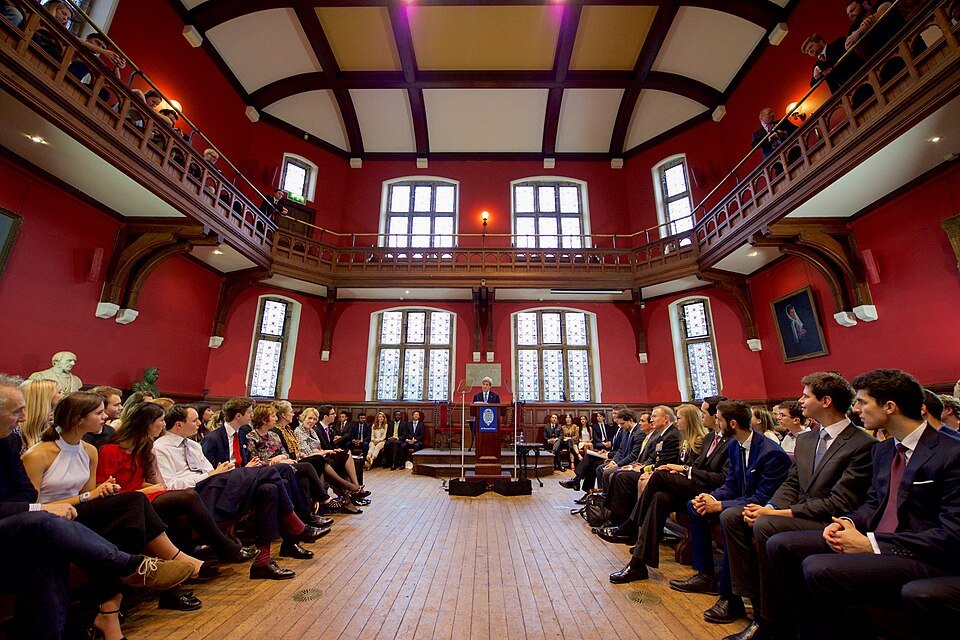
Cherwell can exclusively reveal that actress Rebel Wilson, Anthropic co-founder Jack Clark, Bridgewater Associates CEO Nir Bar Dea, and Binance founder Changpeng Zhao are all set to speak at the Oxford Union this term.
Wilson rose to fame in Bridesmaids and the Pitch Perfect films, and has since made her directorial debut with The Deb. Clark, who is from Brighton, began his career as a journalist for The Register and Bloomberg, and later joined OpenAI as a policy director. In 2021, he co-founded Anthropic, the company behind the chatbot Claude, which is now preparing what could be the largest-ever public offering at $2 trillion. Clark also writes the AI newsletter Import AI.
Bar Dea began in the research department at Bridgewater Associates – the world’s largest hedge fund – before being appointed Deputy CEO in 2021. He has led the transition from the company’s founder, Ray Dalio, who spoke at the Union last year, and has served as CEO since 2022. Zhao, meanwhile, founded Binance, the world’s largest cryptocurrency exchange, and in late 2023 pleaded guilty to failing to maintain an effective anti-money laundering programme. After serving four months in prison, US President Donald Trump pardoned him in 2025.
Cherwell understands that Zhao, the world’s 17th-richest person with a net worth of $114.6 billion, is the wealthiest person ever to speak at the Union.
The Union will also host a debate on the motion “This house believes that the Church of England’s days are numbered.” The proposition will feature religious figures such as the former Archbishop of the Anglican Church of North America, The Most Revd Dr Foley Beach, and the presiding Bishop of the Anglican Network in Europe, The Rt Revd Andy Lines.
They will be joined by solicitor Richard Scorer, who has worked on abuse cases involving religious institutions, and Jayne Ozanne OBE, an evangelical Anglican and LGBTQ+ rights activist.
Opposing the motion are the Bishop of Chester, The Rt Revd Dr Mark Tanner, and the Vicar of St Martin-in-the-Fields, The Revd Dr Sam Wells, alongside director of Church Society Dr Lee Gatiss and sociologist of religion Grace Davie.
Cherwell can also reveal the motion of another Michaelmas debate, which will feature an all-women lineup: “This house believes that the institution of marriage still harms women.” Arguing for the motion are barrister and family law specialist Dr Charlotte Proudman, divorce lawyer Ayesha Vardag, and journalist and Loose Women panellist Jane Moore.
The opposition will include journalists Melanie McDonagh and Dr Joanna Williams, as well as Director of Research and Senior Fellow at the Institute for Family Studies Dr Wendy Wang.
Regarding the Michaelmas term card, the President of the Oxford Union, Gareth Lim, told Cherwell: “Each term, the Oxford Union platforms different ideas from different speakers. The force that platforms those ideas has always been the curiosity of our members. Just like the University, our community of members is becoming increasingly more diverse over time, and with that, so are their interests. People like different things, and there is an increasing number of ideas to hold and things to like. My community and I have aspired to unite those differences in our term card.
“When deciding our motions and inviting our speakers, we have gone in as many different directions as possible. Our debates try to identify the issues that affect the vast majority of our members. The Union is a diverse and international institution, and we are proud of that. But at its core, it exists in the United Kingdom, with a history and traditions tied to the United Kingdom. We want to reflect this in our debates this term. We have chosen topics that are directly relevant to the UK, and some of those topics are UK-specific motions.
“Our individual speakers also represent our effort to platform as many different topics as possible. I am confident that those who enjoy the sciences, technology, or film — or many other topics relevant and important to young people — will all find something that sparks their curiosity at the Society this Michaelmas term. Our primary ambition has always been to curate a term card that has something for everyone. I am very excited to introduce our diverse approach to our diverse community.”
The full Union Michaelmas term card will be released 1st October.
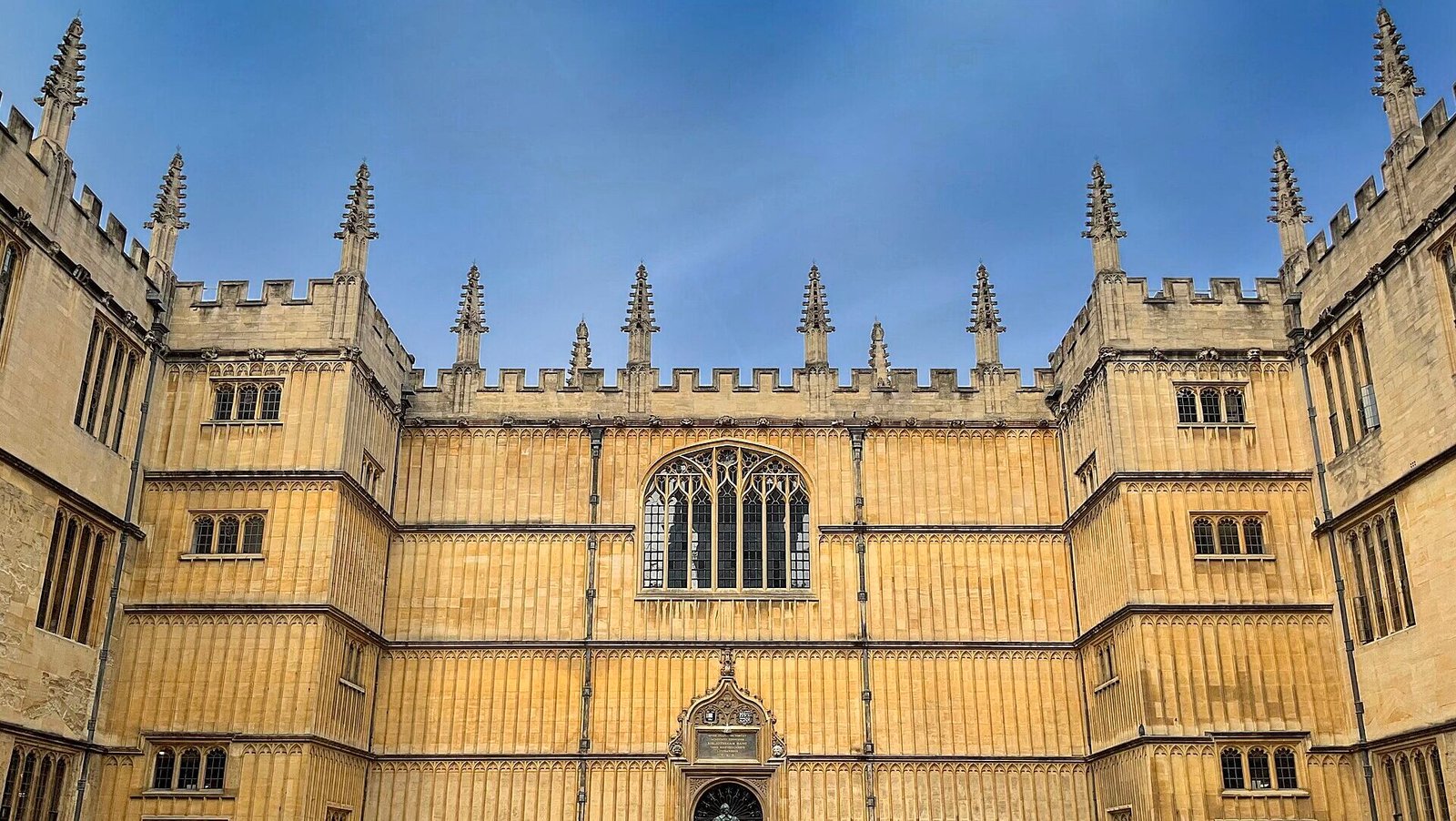
A pilot scheme, launched in 2025, allows OpenAI to use obscure materials from the Bodleian Library to train its models, documents seen by Cherwell show.
The University of Oxford announced its partnership with OpenAI, the company behind ChatGPT, last March. A key part of the ongoing collaboration, which includes access to new ChatGPT models for researchers and ChatGPT Edu for students, is the digitisation of texts from the Bodleian Libraries using OpenAI’s software. When announcing the partnership OpenAI said that it would make “centuries old knowledge searchable by scholars worldwide”.
However, neither party’s announcement mentioned that the digitised material would be used to train OpenAI’s models. AI companies need large volumes of human created data to train models to recognise patterns in language and ‘learn’ by processing large amounts of data to produce sentences and perform tasks.
Whilst websites become increasingly saturated with AI-generated language, developers require human-made data to train Large Language Models (LLMs), such as ChatGPT. Consequently, competing companies are turning to physical documents and book collections. Anthropic, a leading AI company behind the chatbot Claude, has spent tens of millions on ‘destructive scanning,’ a technique which slices the spines of books to make scanning easier.
Minutes from a meeting between the library and OpenAI in 2024 show that “populat[ing] the OpenAI training set with knowledge that uses under-represented data on the open web” is a key aim of the partnership between the Bodleian and OpenAI.
Data privacy, particularly for storage and later use in AI training, was a key concern when signing the University’s wider agreement with OpenAI. An internal audit report on AI said: “When staff or students use personal ChatGPT accounts for University work, they may unintentionally expose sensitive information […] This creates both legal and reputational risk, particularly if data is retained for model training or exposed to third parties.”
According to internal documents obtained by The Guardian and seen by Cherwell, the digitised texts cover only out-of-copyright material and the Bodleian retains the rights to the scans with the intention to publish them online, making them widely available to students, researchers, and the general public.
The project is digitising over 3,500 dissertations from 1498-1884, which the University said “demonstrates how the Bodleian is using AI to imagine a library for the future.” Meetings discussing further texts for digitisation proposed the personal archive of Nobel prize winning scientist Dorothy Hodgkin for inclusion in the Bodleian’s digital archive.
Similar deals have been made with US universities, including the University of Michigan, MIT, Caltech, and Boston Public Library, under an OpenAI consortium called NextGenAI. Oxford is the only UK university included in the initiative.
According to its website, NextGenAI brings together 15 institutions who are “dedicated to using AI to accelerate research breakthroughs and transform education”. Launched in March last year, the partnership involves $50 million in research grants and compute funding. It aims to empower AI fluency and strengthen connections between academia and industry. It is not clear whether all these deals include giving OpenAI training data.
The Digital Head of Boston Public Library, Jessica Chapel, has defended NextGenAI: “OpenAI had this interest in massive amounts of training data. We have an interesting in massive amounts of digital objects. So this is kind of just a case that things are aligning.”
Documents seen by Cherwell show that staff raised multiple “reputational concerns” surrounding Oxford’s partnership with OpenAI. Academics have previously voiced concerns about the kind of language, particularly racially outdated terms, included within the specific data.
A spokesperson from the University of Oxford said: “The Bodleian libraries also retain the rights to make the digitised material available themselves, and the library will begin to publish these materials openly online in the next few months, as we do with inputs from other digitisation partnerships. The project will in fact allow the Bodleian to make the material more accessible to a wider number of people, who might otherwise have found it difficult to access.”
After the project’s announcement last year, Bodley’s Librarian, Richard Ovenden, said: “My view is that libraries cannot ignore AI, and must engage seriously with the industry. We are testing the use of the technology in workflow design, in data exchange, and in testing automated processes against human processes. We will share the output of our project when it is complete.”


The elusive career paths of humanities students: Does the ‘Oxford bubble’ breed employment anxiety?

Coach services could be cut due to record diesel prices, UK operators warn | Transport

‘The violence is off the scale’: staff and passengers at risk as assaults on UK trains soar to record high | Public transport
-

 Oxford united FC2 weeks ago
Chris Gunter steps away Wales role to focus on Oxford United
-

 Oxford united FC3 weeks ago
Oxford United transfer chief explains EFL embargo and contract dilemma
-

 Oxford united FC3 weeks ago
Former Oxford United boss Matt Bloomfield drops Wycombe manager hint
-
 Oxford Events4 weeks ago
Oxford Open Doors: nine properties to explore without booking
-
 Student Life2 weeks ago
Oxford falls to lowest ever spot in The Times UK University Guide 2027
-

 Oxford united FC3 weeks ago
Aaron Ramsey gives Luka Lynch update after Oxford United absence
-

 Student Life3 weeks ago
Protest held outside Town Hall over sale of Council-owned building to St Peter’s
-

 Oxford University2 weeks ago
New to the Oxford English Dictionary this September