
Student Life
An accidental archive: The same seat, the same drink

By the end of Michaelmas, darkness had begun to arrive before dinner, and I was still figuring out how to make Oxford feel like a life rather than a place I was passing through. One evening, after a pitiful college dinner, as I stewed over an overdue essay, a friend suggested a board game. It was something we occasionally indulged in at the college café, branding it a gentler form of procrastination, one that rotted the brain a little less. This time, I suggested a change: a trip to Formosan, my favourite tea shop, only a few footsteps from Pembroke. We were greeted by a friendly array of samples, and I confidently ordered for him before we settled into the warmth of the spacious tearoom, set up the board, and, at least temporarily, blissfully ignored every deadline in favour of fierce competition. In the weeks that followed, our trips to Formosan became a ritual and the friendship grew closer. We joked, shared secrets, and made plans. “To be honest, I can see why you quite like it here,” he admitted. It was that transient calm that kept drawing me back.
In an environment as competitive as Oxford, it is easy to measure our lives by achievement, and our sense of who we are can be quickly warped by comparison. I began to measure my first year in strange increments: essays handed in late, friendships I thought I should have made by then, and weeks in which I felt I was somehow doing Oxford incorrectly, gauging progress against an idealised version of the university experience. I could not help feeling constantly behind, thanks in no small part to my notable disorganisation. But the routine of returning to the same spot and ordering the same drink offered an alternative: a quieter measure of who we are, who we were, and who we were becoming.
I had first visited Formosan after a rather dull British Isles lecture, in search of some relief. Back then, it was enough just to sit for a few moments before returning to the college library. But the more I frequented the place, the more my feelings about the year began to evolve alongside it. Formosan became the haven where I met the people with whom I would later celebrate Holi, an important Hindu festival that I was marking away from home for the first time. It was where I battled an essay crunch, where I sat nervously before my first collection, where my friends and I talked to death about the same topics, and where they came to find me when they knew I was having a bad day.
Most significantly, though, Formosan holds the moment when I felt I most belonged: the moment I felt understood and recognised by the community I was only beginning to fit into. On my birthday, my best friend bought me a Formosan voucher. They had recognised that this place mattered to me. Formosan was no longer just a space of nostalgia, but one I could learn and grow in. Its importance lay not only in the space itself, but in the people who had shaped it.
During the hell that was Prelims, I dragged myself out of a three-hour paper and through the heatwave, wearing a pitiful interpretation of subfusc, and feeling thoroughly disheartened by a sorry excuse for an exam. Strolling past The Bear and into Formosan with my best friend, in a moment of calm so complete it felt almost surreal, I could finally appreciate the real progress of the year. Within the enormity of Oxford, its libraries and exams and traditions, a tiny, ordinary café had quietly become a repository for emotional transitions. Sitting still, taking stock of everything we had been through together – the stress, the not fitting in, the birthdays – I could see how much I had changed: Formosan had accidentally become an archive of my year.
In the ‘City of Dreaming Spires’, in which the cityscape feels permanent, it is hard to feel comforted when you, as a student, are not. Making sense of yourself in the few short years you spend moving through a city and institutions that have existed for centuries can be overwhelming. So how do you make a space yours when you know you will eventually, and inevitably, leave it? Perhaps we do it by allowing our lives to accumulate there: each visit adds another version of ourselves to the same space, until somewhere ordinary begins to feel inseparable from who we were.
My comfort in Formosan holds a version of me from first year that I can always revisit, grounding the memories and feelings I cherish within one particular place. I am excited to see what next year brings, and what new memories this institution will come to hold. Even once I leave Oxford, it will be a comfort to have somewhere to return to, somewhere that remembers the complexity of my time here rather than just the highlights. Maybe that is the purpose of our Oxford safe havens and archives: they are not places we keep, but places that preserve a version of us.
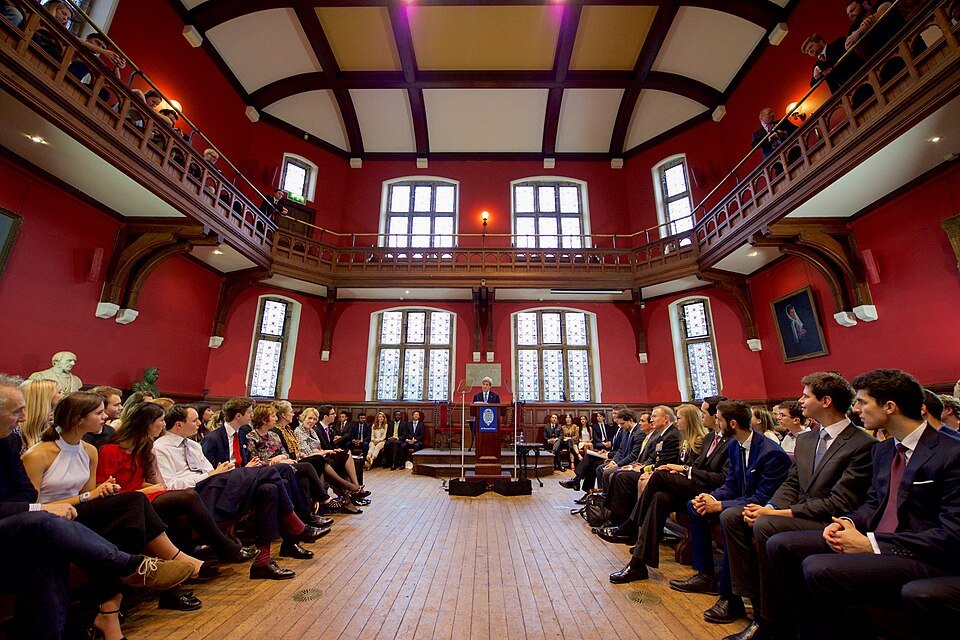
Cherwell can exclusively reveal that actress Rebel Wilson, Anthropic co-founder Jack Clark, Bridgewater Associates CEO Nir Bar Dea, and Binance founder Changpeng Zhao are all set to speak at the Oxford Union this term.
Wilson rose to fame in Bridesmaids and the Pitch Perfect films, and has since made her directorial debut with The Deb. Clark, who is from Brighton, began his career as a journalist for The Register and Bloomberg, and later joined OpenAI as a policy director. In 2021, he co-founded Anthropic, the company behind the chatbot Claude, which is now preparing what could be the largest-ever public offering at $2 trillion. Clark also writes the AI newsletter Import AI.
Bar Dea began in the research department at Bridgewater Associates – the world’s largest hedge fund – before being appointed Deputy CEO in 2021. He has led the transition from the company’s founder, Ray Dalio, who spoke at the Union last year, and has served as CEO since 2022. Zhao, meanwhile, founded Binance, the world’s largest cryptocurrency exchange, and in late 2023 pleaded guilty to failing to maintain an effective anti-money laundering programme. After serving four months in prison, US President Donald Trump pardoned him in 2025.
Cherwell understands that Zhao, the world’s 17th-richest person with a net worth of $114.6 billion, is the wealthiest person ever to speak at the Union.
The Union will also host a debate on the motion “This house believes that the Church of England’s days are numbered.” The proposition will feature religious figures such as the former Archbishop of the Anglican Church of North America, The Most Revd Dr Foley Beach, and the presiding Bishop of the Anglican Network in Europe, The Rt Revd Andy Lines.
They will be joined by solicitor Richard Scorer, who has worked on abuse cases involving religious institutions, and Jayne Ozanne OBE, an evangelical Anglican and LGBTQ+ rights activist.
Opposing the motion are the Bishop of Chester, The Rt Revd Dr Mark Tanner, and the Vicar of St Martin-in-the-Fields, The Revd Dr Sam Wells, alongside director of Church Society Dr Lee Gatiss and sociologist of religion Grace Davie.
Cherwell can also reveal the motion of another Michaelmas debate, which will feature an all-women lineup: “This house believes that the institution of marriage still harms women.” Arguing for the motion are barrister and family law specialist Dr Charlotte Proudman, divorce lawyer Ayesha Vardag, and journalist and Loose Women panellist Jane Moore.
The opposition will include journalists Melanie McDonagh and Dr Joanna Williams, as well as Director of Research and Senior Fellow at the Institute for Family Studies Dr Wendy Wang.
Regarding the Michaelmas term card, the President of the Oxford Union, Gareth Lim, told Cherwell: “Each term, the Oxford Union platforms different ideas from different speakers. The force that platforms those ideas has always been the curiosity of our members. Just like the University, our community of members is becoming increasingly more diverse over time, and with that, so are their interests. People like different things, and there is an increasing number of ideas to hold and things to like. My community and I have aspired to unite those differences in our term card.
“When deciding our motions and inviting our speakers, we have gone in as many different directions as possible. Our debates try to identify the issues that affect the vast majority of our members. The Union is a diverse and international institution, and we are proud of that. But at its core, it exists in the United Kingdom, with a history and traditions tied to the United Kingdom. We want to reflect this in our debates this term. We have chosen topics that are directly relevant to the UK, and some of those topics are UK-specific motions.
“Our individual speakers also represent our effort to platform as many different topics as possible. I am confident that those who enjoy the sciences, technology, or film — or many other topics relevant and important to young people — will all find something that sparks their curiosity at the Society this Michaelmas term. Our primary ambition has always been to curate a term card that has something for everyone. I am very excited to introduce our diverse approach to our diverse community.”
The full Union Michaelmas term card will be released 1st October.
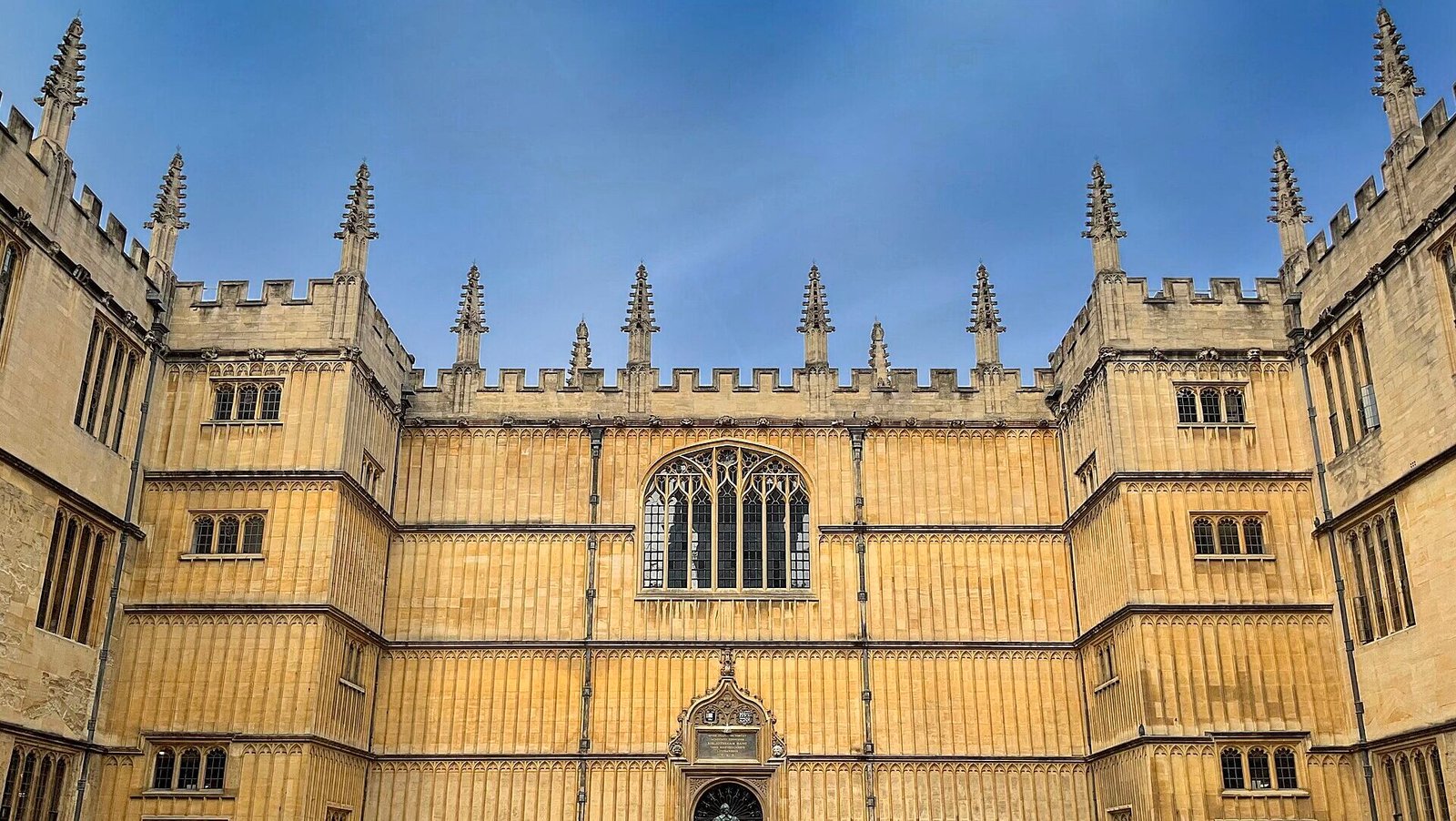
A pilot scheme, launched in 2025, allows OpenAI to use obscure materials from the Bodleian Library to train its models, documents seen by Cherwell show.
The University of Oxford announced its partnership with OpenAI, the company behind ChatGPT, last March. A key part of the ongoing collaboration, which includes access to new ChatGPT models for researchers and ChatGPT Edu for students, is the digitisation of texts from the Bodleian Libraries using OpenAI’s software. When announcing the partnership OpenAI said that it would make “centuries old knowledge searchable by scholars worldwide”.
However, neither party’s announcement mentioned that the digitised material would be used to train OpenAI’s models. AI companies need large volumes of human created data to train models to recognise patterns in language and ‘learn’ by processing large amounts of data to produce sentences and perform tasks.
Whilst websites become increasingly saturated with AI-generated language, developers require human-made data to train Large Language Models (LLMs), such as ChatGPT. Consequently, competing companies are turning to physical documents and book collections. Anthropic, a leading AI company behind the chatbot Claude, has spent tens of millions on ‘destructive scanning,’ a technique which slices the spines of books to make scanning easier.
Minutes from a meeting between the library and OpenAI in 2024 show that “populat[ing] the OpenAI training set with knowledge that uses under-represented data on the open web” is a key aim of the partnership between the Bodleian and OpenAI.
Data privacy, particularly for storage and later use in AI training, was a key concern when signing the University’s wider agreement with OpenAI. An internal audit report on AI said: “When staff or students use personal ChatGPT accounts for University work, they may unintentionally expose sensitive information […] This creates both legal and reputational risk, particularly if data is retained for model training or exposed to third parties.”
According to internal documents obtained by The Guardian and seen by Cherwell, the digitised texts cover only out-of-copyright material and the Bodleian retains the rights to the scans with the intention to publish them online, making them widely available to students, researchers, and the general public.
The project is digitising over 3,500 dissertations from 1498-1884, which the University said “demonstrates how the Bodleian is using AI to imagine a library for the future.” Meetings discussing further texts for digitisation proposed the personal archive of Nobel prize winning scientist Dorothy Hodgkin for inclusion in the Bodleian’s digital archive.
Similar deals have been made with US universities, including the University of Michigan, MIT, Caltech, and Boston Public Library, under an OpenAI consortium called NextGenAI. Oxford is the only UK university included in the initiative.
According to its website, NextGenAI brings together 15 institutions who are “dedicated to using AI to accelerate research breakthroughs and transform education”. Launched in March last year, the partnership involves $50 million in research grants and compute funding. It aims to empower AI fluency and strengthen connections between academia and industry. It is not clear whether all these deals include giving OpenAI training data.
The Digital Head of Boston Public Library, Jessica Chapel, has defended NextGenAI: “OpenAI had this interest in massive amounts of training data. We have an interesting in massive amounts of digital objects. So this is kind of just a case that things are aligning.”
Documents seen by Cherwell show that staff raised multiple “reputational concerns” surrounding Oxford’s partnership with OpenAI. Academics have previously voiced concerns about the kind of language, particularly racially outdated terms, included within the specific data.
A spokesperson from the University of Oxford said: “The Bodleian libraries also retain the rights to make the digitised material available themselves, and the library will begin to publish these materials openly online in the next few months, as we do with inputs from other digitisation partnerships. The project will in fact allow the Bodleian to make the material more accessible to a wider number of people, who might otherwise have found it difficult to access.”
After the project’s announcement last year, Bodley’s Librarian, Richard Ovenden, said: “My view is that libraries cannot ignore AI, and must engage seriously with the industry. We are testing the use of the technology in workflow design, in data exchange, and in testing automated processes against human processes. We will share the output of our project when it is complete.”
A diasporic fight that surged with UN-approved ambitions saw optimism dwindle early this month. Jamaican government officials have elevated their call for reparations with a petition to Buckingham Palace. Amidst the anticipation of a response, Prime Minister Andy Burnham has rejected the proceedings, asserting: “The UK does not and will not pay reparations.” A remedy for the government’s refusal of reparations could be found within one of the world’s leading institutions: the University of Oxford.
Although positive discrimination is legally prohibited in the UK, Oxford contextualises each application regarding one’s personal background. The University reviews achievements relative to educational environment and socioeconomic background, a step towards fiscal equity for economically disadvantaged applicants. Indirectly addressing the fact that fewer than 10% of students enrolled in a UK university are Black, Oxford provides a pathway programme, Target Oxbridge, for Black African, Caribbean, and mixed-race students to receive mentoring and application guidance. Discounting Oxford’s programmatic aid for marginalised groups is nonsensical, but to solely believe that justice is ever satisfied is impractical. Oxford, as the top-producing institution of future prime ministers, can establish a precedent for the policymakers of today and embed reparative justice initiatives.
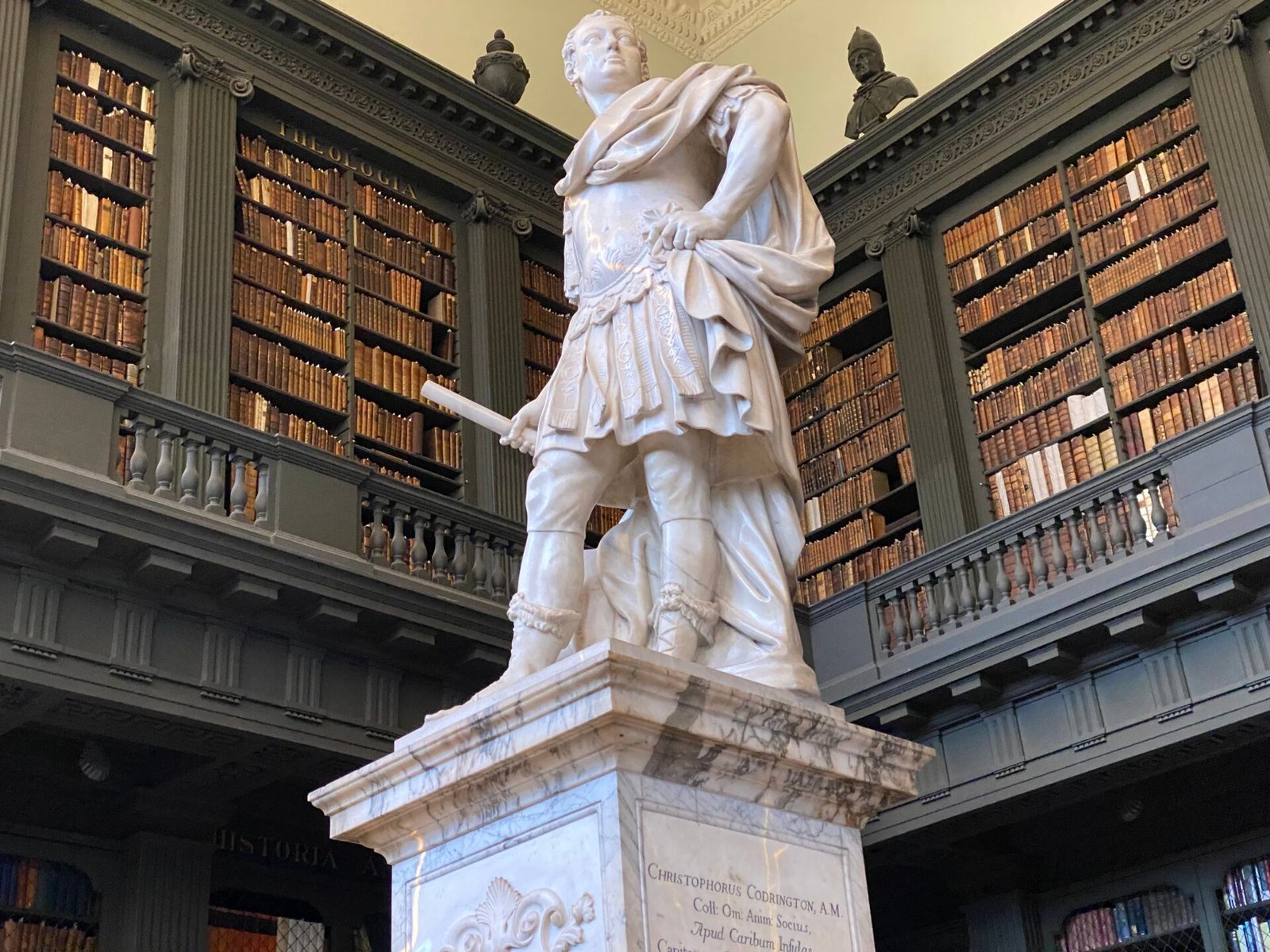
For starters, one Oxford college already employs reparative justice. All Souls College provides a graduate scholarship to address its alumnus Christopher Codrington’s slave-holding past. Codrington, who profited from several hundred enslaved persons in Antigua and Barbados, left £10,000 (several million in today’s currency) to All Souls College. Aside from removing Codrington’s name from the College library and etching the names of enslaved labourers on Codrington’s statue, the College allocates a fully funded scholarship for graduate students who are nationals of a Caribbean country and identify as Black or mixed Black. On top of this, All Souls offers financial support to Oxford’s Black Academic Futures programme, distributing around a million pounds over the past decade to support UK Black and mixed Black graduate students.
All Souls College’s initiative to confront an inhumane history must be implemented across collegiate beneficiaries of the transatlantic slave trade. Undergraduate inclusion in reparational programming is vital, because a decade has lapsed since Labour MP David Lammy accused Oxford of “social apartheid” due to 10 out of 32 colleges not awarding a place to a Black British pupil with A-levels. The University’s most recent statistics, between 2021 and 2025, state that the undergraduate proportion identifying as Black and Minority Ethnic (BME) increased from 24.6% to 30.0%, although without any extrapolation of data for solely Black students. Independent reporting revealed a more specific picture: only 3.3% of undergraduate admissions in 2024 were of Black African or Black Caribbean heritage.
Aside from the juxtaposition of a 3.3% Black undergraduate student body existing at an institution that benefited from millions of enslaved Africans, the demand for systemically implemented reparations is pressing given recent events. Attention to the University has heightened following the death of Black Cambridge Professor Jason Arday. Arday, who faced allegations of plagiarism in his doctoral thesis by self-proclaimed race realist Nathan Cofnas, was hounded by the British press for weeks until his sudden death. The inspection of the treatment of Black scholars within prestigious spaces continued with reports that 17 Oxford academics have signed an online statement “opposing punishment of Nathan Cofnas for whistleblowing”, despite the hereditarianism espoused by Cofnas. Most recently, The Nation published an opinion piece by a Black alumna not only arguing that Oxford has long been shaped by racism, but also insisting that Oxford’s “tendency to undermine the suffering of Black people led to Jason Arday’s demise.”
To help relieve the racial tension surrounding Oxford, colleges with beneficiary ties to African enslavement, such as Balliol College, Christ Church, Exeter College, and Oriel College, should follow the scholarship model designed by All Souls College and create their own endowment-funded scholarships at both the undergraduate and graduate level. Further, following the mounting anti-immigrant sentiment amplified by Reform UK – including Nigel Farage’s proposal to deny visas to countries seeking reparations, such as Jamaica – Oxford can counter right-wing opposition through investment in the Caribbean. Building on Target Oxbridge, Oxford can replicate a preparatory scheme for Black students based in Caribbean government-funded schools. Because enslavement extended beyond fiscal disadvantage to intergenerational psychological harm, Oxford must supply funding by employing mental health professionals to support newly arrived Black Oxford students. Amongst discussion about protections of Black academics in elite institutions, and the almost-ritualistic encounters of racism marginalised students experience in predominantly white spaces, one thing is clear: accessible mental health help from the University is imperative. Counsellors funded by college endowments and trained to address imposter syndrome and racial prejudice would not replace institutional reparations, but supplement them, addressing the psychological harm that material reparations of a scholarship alone cannot repair.
While Caribbean leaders return to the drawing board to rectify the inhumanity their ancestors endured, the feasibility of reparations appears bleak but not impossible. The largest obstacle is the absence of accountability required to believe reparations are owed at all. The lack of action can be attributed to the belief that slavery was never technically illegal or legal in the UK; British constituents largely oppose redressing Britain’s involvement in one of humanity’s greatest atrocities. Despite the ambiguity found within Somerset v. Stewart that technically (but not immediately, nor unanimously) abolished England’s practice of slavery, the potential price of restorative justice should also not stand as a pinpoint of prevention. Until 2015, UK taxpayers paid the government’s loan to compensate slaveholding families for their loss of “property” (enslaved Africans) after emancipation. As part of the Slave Compensation Act 1837, white enslavers received £20 million, equivalent to approximately £17 billion. Historical evidence crystallises the possibility that the UK government can take on a loan in the interest of a population – albeit the question is which population.
Regardless, amidst prime ministers rejecting responsibility and refusing to issue reparations, now is the time for Oxford to serve as the globally leading institution it is so prestigiously upheld to be. The University, with an acquired wealth obtained from benefactors and alumni, who’ve capitalised from the tragedy W E B Du Bois declared “the cause of all sorrow”, has an opportunity to initiate a route to national reparations. Oxford must succeed where Westminster has failed: reparatory justice for Caribbean descendants of enslaved Africans.

An accidental archive: The same seat, the same drink

The expansion of Heathrow would be an expensive disaster for Britain and the world. Burnham needs to block it | George Monbiot

Stage Watch: Cirque du Soleil’s Kurios brings a cabinet of curiosities to London’s Royal Albert Hall
-

 Oxford united FC2 weeks ago
Chris Gunter steps away Wales role to focus on Oxford United
-

 Oxford united FC3 weeks ago
Oxford United transfer chief explains EFL embargo and contract dilemma
-
 Oxford Events4 weeks ago
Oxford Open Doors: nine properties to explore without booking
-

 Oxford united FC3 weeks ago
Former Oxford United boss Matt Bloomfield drops Wycombe manager hint
-
 Student Life2 weeks ago
Oxford falls to lowest ever spot in The Times UK University Guide 2027
-

 Oxford united FC4 weeks ago
Leicester City confirm ‘serious’ injury before Oxford United clash
-

 Student Life4 weeks ago
Oxford academics sign open letter opposing Nathan Cofnas’ suspension
-

 Oxford Events4 weeks ago
The best cocktail bars in Oxford