
Traffic & Transport
UK airlines to be banned from charging parents to sit with children | Airline industry


Airlines will be blocked from charging parents extra to sit with their children on planes, according to government plans.
The new rule would require airlines to seat passengers aged under 14 next to their parents or an accompanying adult free of charge. Passengers will also no longer need to pay to tweak the name on their flight booking if they need to correct a mistake.
It is understood that ministers will try to introduce the changes before the start of next year’s summer holidays. The prime minister, Andy Burnham, has said the rule changes are part of a crackdown on the “little charges that add up” when families plan their holidays.
MPs are in the process of debating a new set of rules for travel companies, as the civil aviation (consumer protection and regulatory reform) bill makes its way through parliament. The proposed law will give ministers flexible power to set out passenger rights and the duties of airlines and airports.
Burnham said: “Charging parents just to sit with their children is a rip-off, plain and simple. And being hit with a hefty fee for a simple spelling mistake on a booking form isn’t right either.
“People are fed up with these little charges that add up, so I’m putting a stop to them. This is what our everyday fixes are all about – giving people room to breathe by tackling the small irritations that catch people out, waste their time and cost them money.”
An arrangement to sit together can currently cost a parent and child up to £104 on a return journey, according to the Department for Transport.
Rory Boland, editor of consumer magazine Which? Travel, said: “It’s clearly unfair to force parents and children as young as three to pay an extra fee just to sit together. Airlines that have separated families are putting profit ahead of passenger peace of mind.”
Earlier this year, Ryanair adjusted its family seating policy after an investigation was launched into the company charging parents to sit with their children on flights. The Irish operator previously required parents travelling with children aged between two and 11 to pay to reserve what was referred to as a mandatory family seat.
Children were then allocated seats next to or near parents free of charge. The fee for a mandatory family seat was typically about £8 each way, the UK Competition and Markets Authority watchdog found.
after newsletter promotion
Under the new policy, parents will still have the option of paying to reserve a seat of their choosing and have their children alongside them free of charge.
The transport secretary, Heidi Alexander, has also announced a crackdown on bad behaviour by passengers on aircraft, with the government, airlines and trade unions working on a new system for sharing information about disruptive passengers.
Airlines logged more than 1,000 serious disruptive passenger incidents in 2025, government figures show, including what it described as a mid-air brawl that caused a flight to be diverted.
Using the new system, airlines could choose to ban persistently disruptive passengers from their aircraft.
Traffic & Transport
How poor public transport policy is putting the brake on cities | Road transport
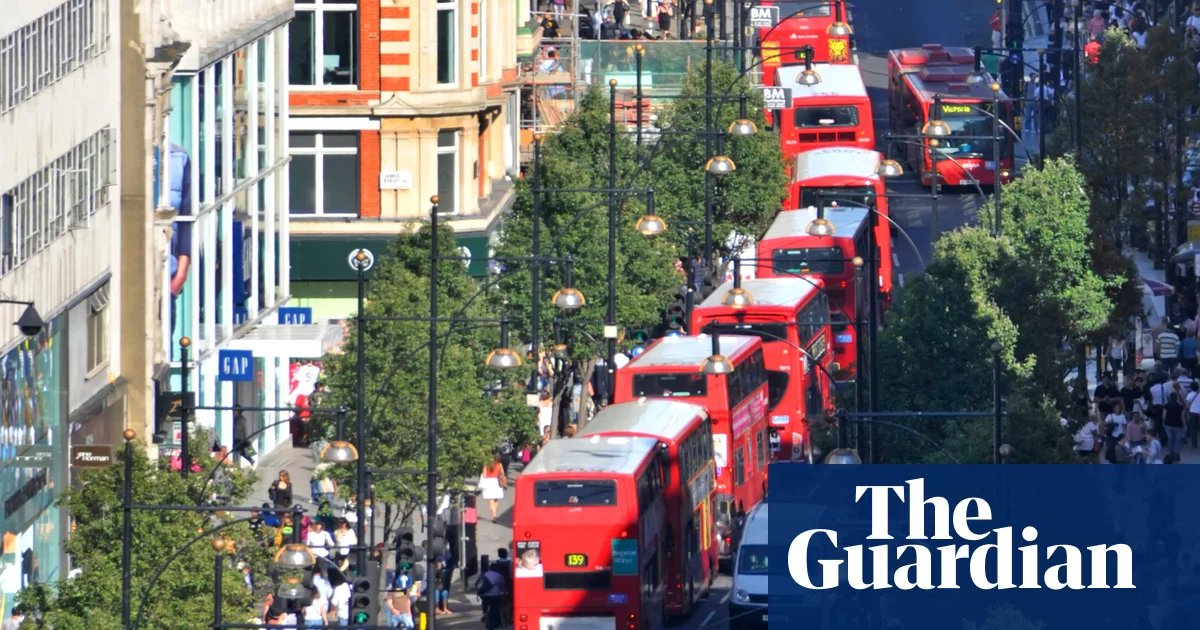
Your analysis of slowing buses in global cities sets out the mechanism exactly, and the remedy follows from it (London buses in decline? Why public transport in global cities is slowing to a crawl – visualised, 23 September).
Transport for London’s own calculation that a 10% fall in speed costs 6% of demand and Imperial College London’s finding of the same decline across 15 cities show what happens to buses as the traffic thickens around them. Retiming the lights will not reverse it, and London is already trying. The phrase to notice in the article is one used by TfL: signals will give more buses priority “where possible”.
There lies the difficulty. On a route running a bus every two minutes, the signals are asked to intervene 30 times an hour in each direction, and the junction cannot recover between calls before the next bus arrives.
Bristol city council’s engineers found precisely this when they reviewed their bus priority: in the most congested parts of the city, priority delivered no journey-time saving at all.
This is a bigger brake on the economy than it looks. What holds a city back is the plain difficulty of getting across it to work, to customers, to the shops. A firm can recruit from a smaller area, a worker can reach fewer jobs, and a high street can be reached by fewer people. Much of the decline of the high street is a decline in how easily people can get to it.
The cure is to carry the same people in fewer vehicles. One tram carries as many people as three or four buses, so it can be given priority junction after junction, and the crossing traffic still gets its turn.
About 30 French cities have put trams through their centres since Nantes started in 1985, and they rebuilt those centres around them. Their central streets are visibly busier for it. Sheffield’s trams share a shopping street with cars and vans, and run to the same timetable in the peak as at midday.
David Andrews
Chair, Light Rail Transit Association; lead author, Bristol Area Bus and Tram Business Case
Your article on London buses in decline highlights poor transport policy in London, which is guided by publicity rather than practicality.
Buses have slowed down as dedicated bus lanes have been largely replaced by a poor choice of cycle lanes. London is an old city with narrow lanes and, with individual cycle transport given priority over mass public transport, it’s no wonder that buses have slowed and become erratic in service.
One only needs to observe the utilisation of cycle lanes that are empty except during the peak hours of 7.30am-9am and 4pm-5pm on weekdays. That is a gross waste of valuable road space that could be used by buses.
Having a dedicated bus lane instead of a cycle lane would speed up buses and make them more reliable. The bus lane could be shared by cycles and during peak times be dedicated to them, while being free for buses rest of the day.
Sadly, politicians rarely look beyond elections, and fail to prioritise buses over bicycles. The authorities have wasted millions on cycle lanes while failing spectacularly to improve mass public transportation.
V Narayanan
London
Traffic & Transport
Bedford rail crash: train sped up after red light warning, say investigators | Rail transport
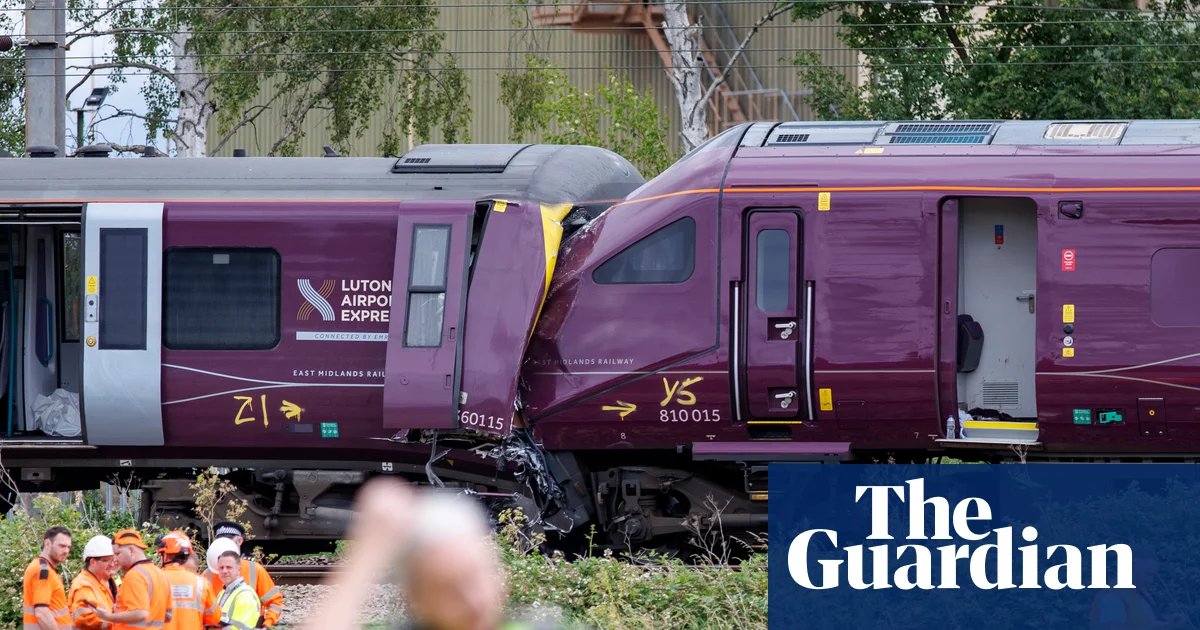
The train that ran into the back of another in the Bedford rail crash sped up after the driver received a warning he had passed a red light, rail investigators have reported.
The driver of the East Midlands train, who died in the crash in June, acknowledged the automatic warning but did not appear to act after passing a danger signal that was rarely ever red.
According to an updated report by the Rail Accident Investigation Branch, the train continued to accelerate before the driver applied the emergency brakes when the stationary train in front came into view.
The train, a southbound Luton airport express from Corby, could not stop in time, and the collision killed the driver, 60-year-old Shaun Burton, who was described by his employers as a “dedicated railway professional”.
Investigators had been seeking to establish if the automatic warning system (AWS) had worked properly, after an initial report found the train had passed a red signal.
The latest interim report published on Thursday concluded that the driver had acknowledged the warning, which had not previously displayed a red light during all of 2026, but continued to accelerate to 76mph. After braking, the train slowed to 49mph before it collided with a stationary Nottingham-London train on the same track.
The first train had stopped after braking when an AWS warning incorrectly sounded after passing a green signal. The train was a new Aurora class 810 model built by Hitachi, brought into service within the past six months on East Midlands Railway.
In a cab with an unfamiliar layout, when no warning signal was expected, the RAIB report said that “neither the driver nor driving instructor recognised this sound as being an AWS warning indication”. Without an acknowledgment in 2.7 seconds, the system applies an emergency brake.
The accident inspectors reported that in the weeks after the crash, another class 810 train had also incorrectly received an AWS warning indication at the same signal on green.
The RAIB said it would continue to seek to understand why the Corby train had passed a red light, and whether its safety systems had been functioning correctly, as well as the reason why the first Nottingham train had come to a halt.
The report said 160 people had also been injured in the crash, which happened at about 5.13pm on 19 June. It was the fourth involving passenger trains on the UK railway since 2020, after more than a decade without any similar serious incident.
Traffic & Transport
Wildlife arrives on time at rewilded chalk grasslands built along HS2 route | HS2
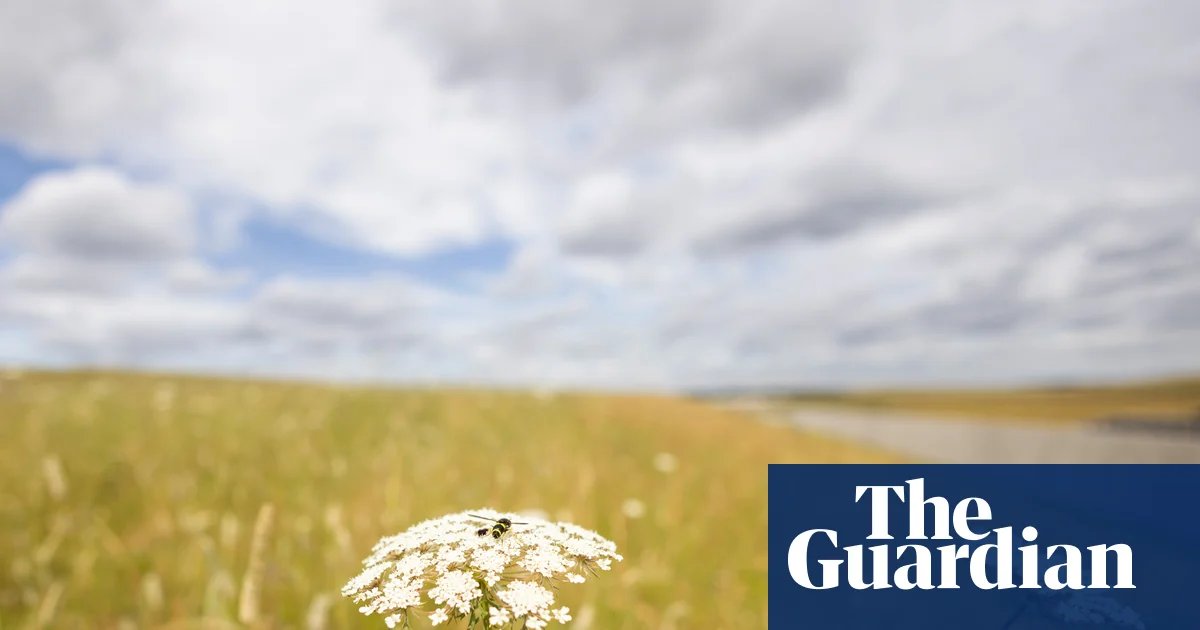
The air is scented with the sweet tang of ladies bedstraw and made musical by skylark and blackcap song. An abundance of marbled white butterflies, small skippers and common blue damselflies dart over the flowering knapweed, yarrow and wild carrot.
That the largest chalk grassland in the Chilterns is full of wildlife may not surprise you. But the fact that it is completely artificial, only four years old and has been built by the much-maligned HS2, may do.
The Western Slopes “rewilding” project is due to open to the public next year on land beside the high-speed railway as it dives under the M25 and into a 10-mile tunnel beneath the Chilterns. The trains may be running late, but the wildlife has already arrived.
A decade ago, this area was a vast wheatfield with precious little biodiversity. Today, as the construction effort winds down, more and more of the 127-hectare site is being turned into wildlife-rich grasslands, wet meadows, ponds and small woods.
It is now one of the largest wildlife habitat creation projects in south-east England, and has already witnessed the arrival of hedgehog clover, which hasn’t been recorded in Hertfordshire since 1878, alongside water voles, lesser emperor dragonflies and pyramidal orchids.
The transformation began when Matt Hobbs, lead ecologist at Jacobs, was invited to take a look at the huge planned HS2 works around the south entrance to the Chilterns tunnel.
“I asked the engineer: ‘What’s coming out of the tunnel?’ When he said ‘chalk’, it was like a lightbulb moment. I thought, I know what I’d like to do with that chalk,” said Hobbs, who has designed and overseen the Western Slopes project for HS2.
Chalk grassland is one of the most wildlife-rich habitats in southern England because a wide range of wildflowers flourish on its thin, nutrient-poor alkaline soils, alongside an array of associated invertebrates, including rare moths and bees.
According to Hobbs, the valley slopes could have been expensively restored to arable land by HS2, as much of the land temporarily taken for the huge construction effort will be. “We saw the opportunity to do something different,” he said. “This project is unique. The whole landscape was predicated on what’s the best thing to do with the earthworks and soils. We’re not moving any soils or material off site. Any concrete waste from this site is crushed and used as aggregate under the grasslands.”
Reusing 10m cubic metres of chalk, topsoil and subsoils from the construction effort in the immediate vicinity of the tunnel mouth has also drastically reduced CO2 emissions, and the construction traffic that dumping it elsewhere would have entailed.
According to HS2’s calculations, the wildlife grasslands here could sequester 7% of the carbon impact of the whole high-speed line’s construction, because grassland is much better at storing carbon than regularly-ploughed arable land, which releases carbon every time it is ploughed.
Over the past four years, all the chalk excavated from the tunnel has been sculpted into rolling “downs” on the land above the Colne Valley, creating varying topsoils and a future mosaic of grassland, scrub, woodland and ponds and wet areas.
It took the ecologists a bit of effort to retrain the digger drivers who were spreading the chalk over the site. Groundworks teams are trained to leave everything beautifully smooth and neat, whereas the ecologists were seeking topographical variation, with dips, hollows and “untidy” rough areas.
The future vision is a “wood pasture” landscape, inspired by rewilding sites such as Knepp in West Sussex, where a mixture of scrub and wildflower glades are grazed by herbivores.
Four cattle-grids have been installed on roads – believed to be the first in Hertfordshire – to enable free-roaming cattle to graze within four separate compartments.
“They were really key to the project. We wanted to have that Knepp rewilding technique where you have cattle that can move anywhere they want within the site – it’s brilliant for soil health, soil carbon and dung beetles,” said Hobbs.
Luke Craner, a senior landscape clerk of works for the HS2 contractor Align, said: “I’m really keen to get livestock grazing sooner rather than later so we can kickstart biological processes. We’ve already got a really good grassy sward establishing. We want natural regeneration to occur, because it’s always much more beneficial for wildlife. We’ve already got loads of hawthorn and quite a few oaks coming up. It’s already going out nicely.”
Later this summer, green hay from other calcareous grassland in the local area will be spread on the Western Slopes to bring in more invertebrates. As ant populations develop, rare butterflies including the Adonis, chalkhill and small blue are likely to arrive, with these species interacting with ant colonies. There is also a mammal shelf built into a culvert beneath the railway, enabling badgers, stoats and other mammals to safely cross the high-speed line.
Some footpaths through the site are set to be opened up in the next 18 months, although the western portion of the site is likely to remain protected from public access to boost the ground-nesting birds – from skylarks to little ringed plover – that have quickly colonised the land.
While HS2 is still under construction, the forthcoming track-building and electrics phase will require a much smaller construction footprint, enabling the nature areas to be expanded.
At the bottom of the slopes, beside the River Colne, nearly five hectares of new wetlands have been established. These pretty ponds have been rapidly colonised by club-rush, water mint and sneezewort, as well as breeding reed warbler and lesser emperor dragonfly.
“We’ve definitely extended the population of kingfishers,” said Craner, who has also recorded new sightings of water vole on a tributary of the Colne. “Water voles are a massively declining species because of habitat loss – we’ve put in habitat that’s good for water voles. They’ve colonised it immediately.”
What Craner has noticed is the changing soundscape. While the roar of the M25 and the clank of ongoing construction is never far away, in certain glades the human din is now overwhelmed by birdsong and insect hum.
“We didn’t have this harmony last year and all of a sudden it’s never silent,” said Craner. “This is our hidden gem.”


UK airlines to be banned from charging parents to sit with children | Airline industry

How poor public transport policy is putting the brake on cities | Road transport

Bedford rail crash: train sped up after red light warning, say investigators | Rail transport
-

 Oxford united FC1 week ago
Chris Gunter steps away Wales role to focus on Oxford United
-

 Oxford united FC2 weeks ago
Oxford United transfer chief explains EFL embargo and contract dilemma
-
 Oxford Events4 weeks ago
Oxford Open Doors: nine properties to explore without booking
-

 Oxford united FC3 weeks ago
Former Oxford United boss Matt Bloomfield drops Wycombe manager hint
-

 Oxford News4 weeks ago
UK private school’s ‘outstanding’ headteacher is to retire
-
 Student Life2 weeks ago
Oxford falls to lowest ever spot in The Times UK University Guide 2027
-

 Oxford united FC4 weeks ago
Leicester City confirm ‘serious’ injury before Oxford United clash
-

 Oxford News4 weeks ago
Salon Privé at Blenheim Palace 2026 – day one revs up