
Traffic & Transport
Bedford rail crash: train sped up after red light warning, say investigators | Rail transport

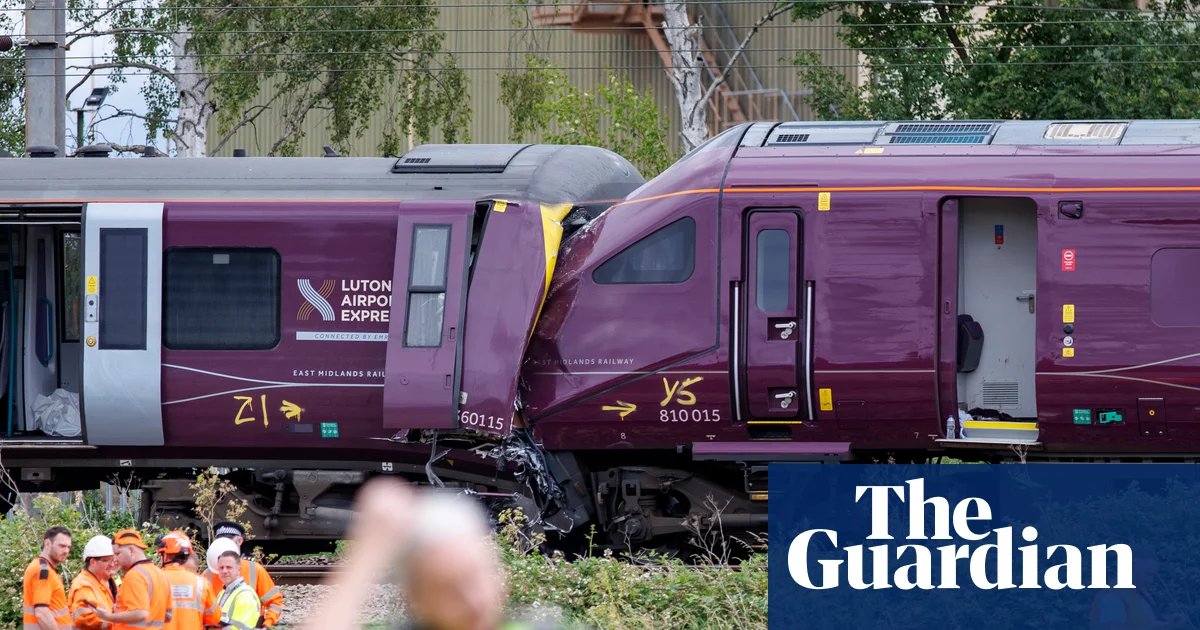
The train that ran into the back of another in the Bedford rail crash sped up after the driver received a warning he had passed a red light, rail investigators have reported.
The driver of the East Midlands train, who died in the crash in June, acknowledged the automatic warning but did not appear to act after passing a danger signal that was rarely ever red.
According to an updated report by the Rail Accident Investigation Branch, the train continued to accelerate before the driver applied the emergency brakes when the stationary train in front came into view.
The train, a southbound Luton airport express from Corby, could not stop in time, and the collision killed the driver, 60-year-old Shaun Burton, who was described by his employers as a “dedicated railway professional”.
Investigators had been seeking to establish if the automatic warning system (AWS) had worked properly, after an initial report found the train had passed a red signal.
The latest interim report published on Thursday concluded that the driver had acknowledged the warning, which had not previously displayed a red light during all of 2026, but continued to accelerate to 76mph. After braking, the train slowed to 49mph before it collided with a stationary Nottingham-London train on the same track.
The first train had stopped after braking when an AWS warning incorrectly sounded after passing a green signal. The train was a new Aurora class 810 model built by Hitachi, brought into service within the past six months on East Midlands Railway.
In a cab with an unfamiliar layout, when no warning signal was expected, the RAIB report said that “neither the driver nor driving instructor recognised this sound as being an AWS warning indication”. Without an acknowledgment in 2.7 seconds, the system applies an emergency brake.
The accident inspectors reported that in the weeks after the crash, another class 810 train had also incorrectly received an AWS warning indication at the same signal on green.
The RAIB said it would continue to seek to understand why the Corby train had passed a red light, and whether its safety systems had been functioning correctly, as well as the reason why the first Nottingham train had come to a halt.
The report said 160 people had also been injured in the crash, which happened at about 5.13pm on 19 June. It was the fourth involving passenger trains on the UK railway since 2020, after more than a decade without any similar serious incident.
Traffic & Transport
Wildlife arrives on time at rewilded chalk grasslands built along HS2 route | HS2

The air is scented with the sweet tang of ladies bedstraw and made musical by skylark and blackcap song. An abundance of marbled white butterflies, small skippers and common blue damselflies dart over the flowering knapweed, yarrow and wild carrot.
That the largest chalk grassland in the Chilterns is full of wildlife may not surprise you. But the fact that it is completely artificial, only four years old and has been built by the much-maligned HS2, may do.
The Western Slopes “rewilding” project is due to open to the public next year on land beside the high-speed railway as it dives under the M25 and into a 10-mile tunnel beneath the Chilterns. The trains may be running late, but the wildlife has already arrived.
A decade ago, this area was a vast wheatfield with precious little biodiversity. Today, as the construction effort winds down, more and more of the 127-hectare site is being turned into wildlife-rich grasslands, wet meadows, ponds and small woods.
It is now one of the largest wildlife habitat creation projects in south-east England, and has already witnessed the arrival of hedgehog clover, which hasn’t been recorded in Hertfordshire since 1878, alongside water voles, lesser emperor dragonflies and pyramidal orchids.
The transformation began when Matt Hobbs, lead ecologist at Jacobs, was invited to take a look at the huge planned HS2 works around the south entrance to the Chilterns tunnel.
“I asked the engineer: ‘What’s coming out of the tunnel?’ When he said ‘chalk’, it was like a lightbulb moment. I thought, I know what I’d like to do with that chalk,” said Hobbs, who has designed and overseen the Western Slopes project for HS2.
Chalk grassland is one of the most wildlife-rich habitats in southern England because a wide range of wildflowers flourish on its thin, nutrient-poor alkaline soils, alongside an array of associated invertebrates, including rare moths and bees.
According to Hobbs, the valley slopes could have been expensively restored to arable land by HS2, as much of the land temporarily taken for the huge construction effort will be. “We saw the opportunity to do something different,” he said. “This project is unique. The whole landscape was predicated on what’s the best thing to do with the earthworks and soils. We’re not moving any soils or material off site. Any concrete waste from this site is crushed and used as aggregate under the grasslands.”
Reusing 10m cubic metres of chalk, topsoil and subsoils from the construction effort in the immediate vicinity of the tunnel mouth has also drastically reduced CO2 emissions, and the construction traffic that dumping it elsewhere would have entailed.
According to HS2’s calculations, the wildlife grasslands here could sequester 7% of the carbon impact of the whole high-speed line’s construction, because grassland is much better at storing carbon than regularly-ploughed arable land, which releases carbon every time it is ploughed.
Over the past four years, all the chalk excavated from the tunnel has been sculpted into rolling “downs” on the land above the Colne Valley, creating varying topsoils and a future mosaic of grassland, scrub, woodland and ponds and wet areas.
It took the ecologists a bit of effort to retrain the digger drivers who were spreading the chalk over the site. Groundworks teams are trained to leave everything beautifully smooth and neat, whereas the ecologists were seeking topographical variation, with dips, hollows and “untidy” rough areas.
The future vision is a “wood pasture” landscape, inspired by rewilding sites such as Knepp in West Sussex, where a mixture of scrub and wildflower glades are grazed by herbivores.
Four cattle-grids have been installed on roads – believed to be the first in Hertfordshire – to enable free-roaming cattle to graze within four separate compartments.
“They were really key to the project. We wanted to have that Knepp rewilding technique where you have cattle that can move anywhere they want within the site – it’s brilliant for soil health, soil carbon and dung beetles,” said Hobbs.
Luke Craner, a senior landscape clerk of works for the HS2 contractor Align, said: “I’m really keen to get livestock grazing sooner rather than later so we can kickstart biological processes. We’ve already got a really good grassy sward establishing. We want natural regeneration to occur, because it’s always much more beneficial for wildlife. We’ve already got loads of hawthorn and quite a few oaks coming up. It’s already going out nicely.”
Later this summer, green hay from other calcareous grassland in the local area will be spread on the Western Slopes to bring in more invertebrates. As ant populations develop, rare butterflies including the Adonis, chalkhill and small blue are likely to arrive, with these species interacting with ant colonies. There is also a mammal shelf built into a culvert beneath the railway, enabling badgers, stoats and other mammals to safely cross the high-speed line.
Some footpaths through the site are set to be opened up in the next 18 months, although the western portion of the site is likely to remain protected from public access to boost the ground-nesting birds – from skylarks to little ringed plover – that have quickly colonised the land.
While HS2 is still under construction, the forthcoming track-building and electrics phase will require a much smaller construction footprint, enabling the nature areas to be expanded.
At the bottom of the slopes, beside the River Colne, nearly five hectares of new wetlands have been established. These pretty ponds have been rapidly colonised by club-rush, water mint and sneezewort, as well as breeding reed warbler and lesser emperor dragonfly.
“We’ve definitely extended the population of kingfishers,” said Craner, who has also recorded new sightings of water vole on a tributary of the Colne. “Water voles are a massively declining species because of habitat loss – we’ve put in habitat that’s good for water voles. They’ve colonised it immediately.”
What Craner has noticed is the changing soundscape. While the roar of the M25 and the clank of ongoing construction is never far away, in certain glades the human din is now overwhelmed by birdsong and insect hum.
“We didn’t have this harmony last year and all of a sudden it’s never silent,” said Craner. “This is our hidden gem.”
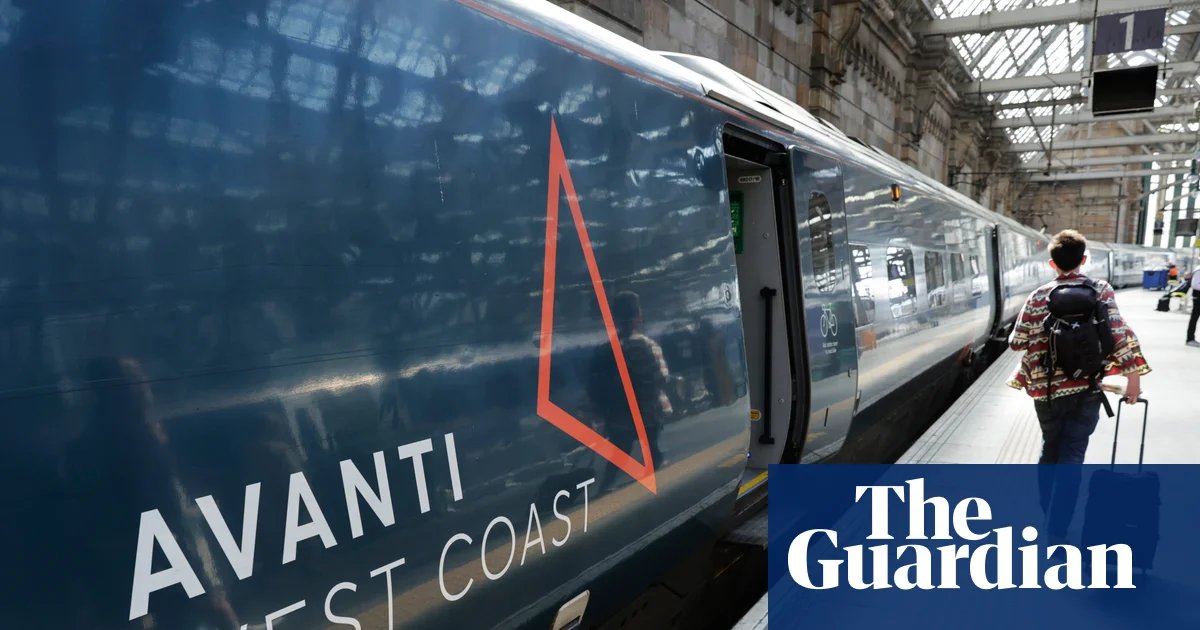
Avanti West Coast will be renationalised in spring, as prime minister Andy Burnham declares “enough is enough” for passengers who have put up with a rail service “that has failed them time and time again”.
The rail operator, which is one of the worst in the country for train delays and cancellations, will come under public ownership from March when its contract ends.
The Labour government has been nationalising passenger rail services across the country as their contracts have expired, as the public body Great British Railways prepares to take full oversight in 2027.
Avanti had among the highest proportion of train cancellations in Britain, at 7.1% from April to June this year.
The company connects the north and south of England, with its service running from London to Manchester and Liverpool.
Burnham has previously complained about high prices on Avanti, with tickets for peak-time returns from Manchester to London as high as £300.
The prime minister wrote on social media that “for years, people have been expected to put up with Avanti’s cancellations, delays, overcrowding, and a service that has failed them time and time again”.
“So my Labour government is bringing Avanti West Coast into public ownership at the earliest opportunity in March next year. That means passengers, not shareholders, will come first.
“More investment, fewer delays, and a renewed focus on getting the basics right. We’re putting essential services back in public hands and building a railway that actually works for the people who use it.”
Avanti, which has the worst punctuality rating for any large rail company in the UK, has also cut multiple services in the past year, including the 7am train between Manchester and London.
after newsletter promotion
The transport secretary, Heidi Alexander, – who will formally announce the decision in her speech at Labour conference on Tuesday afternoon – added that “for years, we’ve heard stories of Avanti underperforming, with passengers left paying the price”.
She added that the Labour government “is committed to putting essential services back in public hands, connecting people to opportunity and delivering growth in every postcode and this move reflects that commitment”.
Andy Mellors, managing director at Avanti West Coast, said: “We’re proud of what we’ve achieved over the last six years – from refurbishing our Pendolino fleet and introducing our new Evero trains to running more services than ever before.”
He said the improvements had given “customers greater choice, more capacity and better connectivity, while we’ve continued to innovate to shape the future of the west coast and wider rail industry”.
Traffic & Transport
TfL’s bailiffs are chasing me for a stranger’s unpaid Ulez fines | Low emission zones
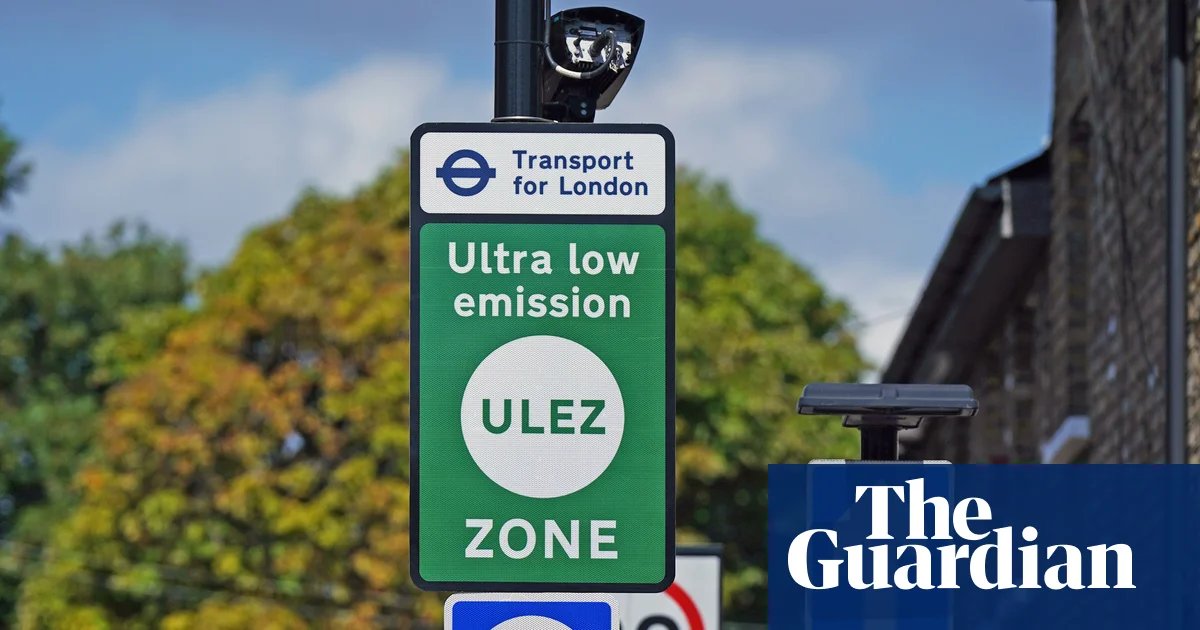
Bailiffs turned up at my home to seize goods over four unpaid Ulez fines issued by Transport for London (TfL) that have nothing to do with me.
The saga began two months ago when I received four enforcement notices from CDER Group relating to a vehicle I have never owned.
I was told my address had been obtained from the DVLA, but the DVLA confirmed that the vehicle has never been registered to me or my address. I sent this confirmation to CDER, but they nevertheless ordered bailiffs to come to my house and told me enforcement could not be stopped.
I complained to TfL, which referred me back to CDER. CDER then informed me that TfL had rejected the evidence I had supplied.
For more than 25 years I have been repeatedly mistaken for another individual with the same name, resulting in debt collection activity by numerous organisations. I have spent years proving my identity and correcting mistakes, only for the same problems to happen again.
CW, Blackpool
It seems that the original penalty charge notices (PCNs) were sent to the address of the offending driver and, when they ignored them, tracing agents trawled citizens with the same name and decided you were a good fit.
Your labours to prevent bailiffs confiscating your belongings, including sending CDER 13 years of payslips and eight years of bills, took such a toll that you had to be signed off work.
Most gobsmacking of all is an email from TfL to CDER rejecting the DVLA’s written confirmation that the offending vehicle has never belonged to you.
“We cannot consider the evidence as valid,” TfL wrote, and it instructed CEDR to continue enforcement action.
In the meantime, you discovered that the credit reference agency TransUnion had incorrectly merged a stranger’s credit report with yours. This, it turned out, was the third time in three years that it had done so.
That explains why tracing agents came to your address because of a debt owed by a man with the same name in Yorkshire. You have now established that your address has, over the years, been given to tracing agents acting for more than 20 creditors, a few of whom have pursued you for debts accrued by your Yorkshire namesake.
This blunder by TransUnion does not excuse either CDER or TfL for failing legal obligations to ensure they had the right person before contacting you, and for failing to accept the evidence proving your innocence.
TfL, responding also for CDER, belatedly apologised when I intervened.
“Our contracted enforcement agents use credit searches to track down the person liable [for unpaid PCNs],” a spokesperson says. “From this search, it wrongly concluded that CW was the owner of this vehicle.”
TfL has now cancelled enforcement action, and CDER has paid you £500 in compensation for the “anguish” it now recognises it has caused.
TransUnion declined to comment while the Financial Ombudsman Service investigates a complaint you have lodged about its conduct.
We welcome letters but cannot answer individually. Email us at consumer.champions@theguardian.com or write to Consumer Champions, Money, the Guardian, 90 York Way, London N1 9GU. Please include a daytime phone number. Submission and publication of all letters is subject to our terms and conditions.


Bedford rail crash: train sped up after red light warning, say investigators | Rail transport

Oxford United legend makes Anfield comparison with new stadium

Former Oxford United boss on Man City record and Premier League exit
-

 Oxford united FC1 week ago
Chris Gunter steps away Wales role to focus on Oxford United
-

 Oxford united FC2 weeks ago
Oxford United transfer chief explains EFL embargo and contract dilemma
-
 Oxford Events4 weeks ago
Oxford Open Doors: nine properties to explore without booking
-

 Oxford News4 weeks ago
UK private school’s ‘outstanding’ headteacher is to retire
-

 Oxford united FC4 weeks ago
Leicester City confirm ‘serious’ injury before Oxford United clash
-

 Student Life2 weeks ago
Oxford falls to lowest ever spot in The Times UK University Guide 2027
-

 Oxford united FC3 weeks ago
Former Oxford United boss Matt Bloomfield drops Wycombe manager hint
-

 Oxford News4 weeks ago
Salon Privé at Blenheim Palace 2026 – day one revs up