
Student Life
Traffic filters trial replaces congestion charge in Oxford


Oxfordshire County Council has introduced a traffic filters trial in Oxford to replace the congestion charge.
The scheme began on 28th September and can run for up to 18 months. Like the previous congestion charge, it aims to reduce traffic in and around Oxford.
Drivers will no longer be able to pay the £5 congestion charge when travelling into the city. Instead, any drivers who pass through the traffic filters without a permit will be liable to a fine of up to £70, reduced to £35 if paid within 21 days. For the first six months, drivers will receive a warning without a fine the first time they travel through the filters without a permit.
The traffic filters only apply to cars and motorhomes. Oxford residents, including students, can apply for permits allowing 100 days of travel through the filter zone, while Oxfordshire residents can apply for a 25-day permit. Some groups, such as blue badge holders or community health and care workers, are exempt from the traffic filters scheme.
Filters have been installed at the same six points across the city as the congestion charge: Hythe Bridge Street (near Said Business School), St Cross Road, St Clements Street, Thames Street, Marston Ferry Road, and Hollow Way. All parts of Oxford can still be reached without passing through a traffic filter, due to the reopening of Botley Road.
The new scheme will cost £6.56 million and is funded by the government. Under UK law, any money it raises must be invested into local transport initiatives.
Councillor Gareth Epps, Cabinet Member for Transport at Oxfordshire County Council, told Cherwell: “The county council’s transport policies are designed to make it easier for people to travel into and around Oxford and make the county a better place to live, work and do business.”
To help determine the success of the traffic filter scheme, Oxfordshire County Council has opened a public consultation, and residents can give feedback by completing an online survey. When asked whether the traffic filters will continue after the trial period, Councillor Epps told Cherwell: “The council’s future decisions about traffic filters will be influenced by many factors, including monitoring data, feedback from the six-month public consultation, the costs of operating and maintaining the scheme, legal advice, and relevant local and national policy.”

Botley Road, which has been closed since April 2023 to accommodate expansions to Oxford railway station, reopened to the public this week.
Originally scheduled for August, the reopening was pushed back to 20th September due to repairs to the gas network under the road. The road is now open to both pedestrians and vehicles. The reopening also brings improved bus services, a new walkway and a cycleway that runs under the rail bridge.
The road serves as a main passage into the city centre. It spans from Botley, which sits on the A34 to the west of the city, to Frideswide Square, near Oxford railway station and next to the Said Business School.
These developments form part of the Oxfordshire Connect programme. According to an information pamphlet provided by Network Rail, this infrastructure project seeks to build “a bigger, better station for everyone” and add “additional rail capacity for the future”. Plans include a new line linking Oxford and Cambridge and the reopening of the Cowley branch line. Network Rail estimates that the total cost of this scheme so far is £237.4 million, well above the initial estimate of £161 million.
Oxfordshire Connect justified their decision to close the entire road, rather than just one lane, with the intention to complete construction before the end of 2024. However, construction was delayed multiple times due to unforeseen circumstances, including the discovery of a Victorian brick arch under the road and complications with utility infrastructure.
Local residents have previously expressed their frustration at these delays. Following the closure of the road in 2023, many local businesses reported that their trade was negatively affected. Layla Moran, MP for West Oxfordshire and Abingdon, took the issue to Parliament and met with Minister of State for Rail Peter Hendy in 2024 to discuss the ongoing closure.
In response to the reopening, Layla Moran told Cherwell: “Whilst I feel relieved that the Botley road has reopened, it has come at long last after three and a half years of terrible disruption to the lives of my constituents…I promise to push for accountability, having requested that the National Audit Office carry out an investigation into why the cost of the project has now soared to £237.4 million”.
Network Rail have released a statement upon the road’s reopening which acknowledged that the road closure had a “significant impact” on Oxford residents and that they are “sorry for the disruption and the frustration it has caused”.
Although no date has been confirmed, the station renovations are expected to resume at a later point.
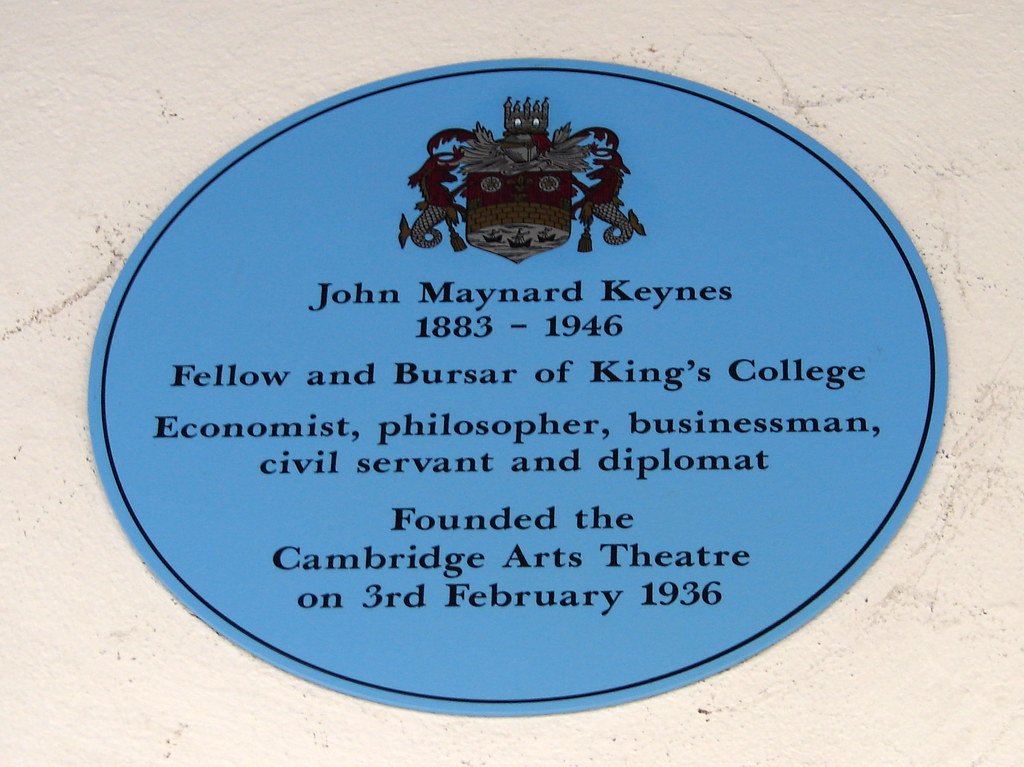
“What is a good life?” This axiological question, asked earnestly in the opening lines of James Graham’s The Standard of Living – playing at Theatre Royal Haymarket until December 12 – is often overlooked by the fractured and hyper-specialised discipline of economics. Yet for John Maynard Keynes, whose ideas motivated the ‘Keynesian revolution’ towards government intervention into the economy during the mid-20th century, it was the core motivation underpinning his life’s work. To Keynes, this so-called ‘good life’ is one replete with art and human connection, wherein the value of work lies in the leisure which it affords. However, Keynes’ dogged refusal to accept the state of the world tells us that, perhaps more fundamentally, a ‘good life’ is one characterised by a radical imagining of what a ‘better life’ might entail, and a tireless striving towards its realisation.
This ethical framework seizes The Standard of Living, turning what might have become a dull affair about aggregate demand and the death of laissez-faire into a colourful portrait of a remarkable man. The play flits between Keynes’ bohemian life as a member of the Bloomsbury Group, and his attempts to influence the British government to intervene in the economy across two world wars and the Wall Street Crash. Throughout, Keynes’ deployment of economic theory is portrayed as an act of profound artistic expression, akin to the literature of Virginia Woolf or the painting of Vanessa Bell (fellow members of the Bloomsbury Group). Keynes’ affinity to the arts, which saw him found the Arts Council of Great Britain shortly before his death in 1946, is reflected in the incorporation of paintings by Cézanne and Degas into the stage design. Additionally, the frenzied ballet numbers which mark scene transitions foreshadow his marriage to the ballerina Lydia Lopokova (much to the shock of his friends and colleagues, who believed him to be homosexual).
Rory Kinnear plays a reserved yet charming Keynes, providing glimpses of the charisma which convinced Douglas LePan to describe him as “the most beautiful creature I have ever listened to”. However, Natalia Osipova steals the show, in her theatre debut on sojournment from the Royal Ballet, playing a sharp, witty, and comedically Russian Lydia Lopokova. The highlight of the play is the meeting between Keynes and his great rival, the proto-neoliberal Friedrich Hayek, on the roof of King’s College Chapel, Cambridge. The almost unbelievably true encounter sees Keynes and Hayek on fire warden duty during a Nazi bombing raid, still arguing the merits of their respective worldviews. The pair meet again during a feverish tango scene which places Hayek’s “we must tighten our belts” against Keynes’ “buy a new belt”. Other standout performances include Pip Carter’s drippingly sardonic Lytton Strachey, a fellow member of the Bloomsbury Group and a former lover of Keynes, and Laurie Kynaston’s Hayek, whose thin veneer of self-confidence masks both a bitter ideological resentment of Keynes the economist, and a deep personal admiration for Keynes the man.
Those searching for a deep engagement with the economic arguments for and against government intervention in the free market may find themselves disappointed (much to the relief of the rest of us). Cursory context is provided regarding the debate between Keynes and Hayek, typically followed by a quip from a less economically –minded character about just how complicated it all is, reassuring the audience that the graphs and equations espoused by these characters are not at all the point of the play. Rather, the fundamental tension between Keynes and Hayek is captured in their differing worldviews, which shape the research they produce. Keynes’ good-natured belief in the capacity of governments to influence the world for the better, and the importance he places on leisure and the ‘good life’, stands in stark contrast with the cynical zealotry of Hayek, who draws on his experience of the hyperinflation in 1920s Vienna to justify his distrust of central bank interventions. Therefore, although Graham seemingly writes Keynes to be the ‘hero’ of the story (if there even is such a thing), this should not necessarily be taken as an endorsement of his economic ideas, but rather a simple admiration for his uncompromising style of living, and the way in which it shaped his life’s work.
Therefore, by highlighting the virtue inherent to Keynes’ radical imagination of a better life for all, influenced by his deep personal engagement with the moral philosophy of fellow Cambridge ‘Apostle’ G.E. Moore, The Standard of Living stands as a philippic against the state of political and economic thought today, implicitly lamenting those who sacrifice ideology and philosophy at the altar of pragmatism and incremental change. Morgan McSweeney’s pragmatism-over-principle may have achieved the largest British electoral victory this century, but it was this same lack of philosophical imagination which doomed Sir Keir Starmer’s premiership from the start. Through his exploration of John Maynard Keynes in The Standard of Living, James Graham implores us to not repeat these mistakes, but rather to learn from the ethos embodied by Keynes. By doing this, we might just be able to imagine a better way to live.

CW: Antisemitism
The University of Oxford was among ten universities to record five or more antisemitic incidents from 2024-2026, a new report on antisemitism at UK universities shows.
The Community Security Trust (CST), a UK charity which monitors antisemitism in Britain, has published a report tracking recorded antisemitic incidents affecting Jewish students, academics, university staff, and campus organisations between 2024 and 2026. Its executive summary warns that “the 7 October attacks ha[ve] resulted in a baseline level of antisemitism that is significantly higher than before”.
Last year saw 95 reported incidents across UK universities, a 14% increase on previous years. This figure remains below the “unprecedented” 272 incidents recorded during the single academic year of 2023/24 but is 79% higher than the last academic year before the Hamas attacks on 7th October.
CST’s report shows that the city of Oxford had the joint seventh most incidents of University antisemitism in the UK. Of the five incidents reported in Oxford, the majority occurred online. The report also references an incident in October 2024 where a swastika was drawn on a sign for the David Slager Jewish Students society on George Street.
A significant proportion of antisemitic incidents concerned Israel, Gaza, Hamas, the October 7 attacks, and the ongoing conflicts in the Middle East. A reported 62% of incidents “contained such references alongside anti-Jewish language, motivation or targeting” while 55% of incidents “demonstrated explicitly anti-Zionist motivation alongside antisemitism”. References to Hitler, the Nazis, or the Holocaust appeared in 26% of incidents.
The CST findings follow the Union of Jewish Students’ (UJS) ‘Time for Change’ report, published in March 2026, which found that “antisemitism on campus is normalised”.It urges universities to “make clear the difference between anti Israel speech or activity, and antisemitism – and enforce this difference through disciplinary action when students, staff or societies cross the line”. The charity also suggested that educational institutions “make reporting of incidents accessible and worthwhile” in order to “build trust in university processes”.
In response to the report, a spokesperson for the Oxford Jewish Society told Cherwell that they “value the continued engagement of the University with the Jewish community to resolve issues of antisemitism”. However, they said that “the collegiate structure of the university and the unaffiliated nature of key institutions means that there is a deficit of accountability across the University”.
“Jewish students should not have to become less visibly Jewish, less openly Zionist or less willing to speak in order to feel comfortable at university”, the society added. “Antisemitism does not cease to be antisemitism because it is expressed in the language of anti-Zionism. Hostility towards Jewish students because of their real or assumed connection with Israel is not legitimate.”
A spokesperson for the University of Oxford told Cherwell: “Oxford is unequivocal: there is no place for antisemitism, harassment, or discrimination within our community.
“The University condemns, in the strongest possible terms, any form of racial hatred, including any actions or language urging violence against groups of people.”
When asked about measures taken to counter antisemitism at Oxford, the University spokesperson highlighted efforts to promote racial and religious inclusion. These include an annual Student Racial and Religious Inclusion Forum, first held in March 2026, which brought students together to share their experiences. The University also said its Equality and Diversity Unit has facilitated antisemitism training from the Union of Jewish Students for student-facing staff.



-

 Oxford united FC2 weeks ago
Chris Gunter steps away Wales role to focus on Oxford United
-

 Oxford united FC4 weeks ago
Former Oxford United boss Matt Bloomfield drops Wycombe manager hint
-

 Oxford united FC3 weeks ago
Oxford United transfer chief explains EFL embargo and contract dilemma
-
 Student Life3 weeks ago
Oxford falls to lowest ever spot in The Times UK University Guide 2027
-

 Oxford University2 weeks ago
New to the Oxford English Dictionary this September
-

 Oxford united FC3 weeks ago
Aaron Ramsey gives Luka Lynch update after Oxford United absence
-
 Student Life2 weeks ago
Oxford partnership allows OpenAI to use rare Bodleian texts to train ChatGPT
-
 Oxford Events2 weeks ago
Four days of equestrian spectacle at 2026 Blenheim Palace International Horse Trials