
Oxford Events
Stage Watch: Six, The Traitors, Strictly Come Dancing, Little Dancer, and Dirty Dancing


Stage Watch brings together a curated selection of upcoming theatre, musicals and live performances from London and across the broader Oxfordshire region – from internationally recognised stage productions and television phenomena to inventive new musicals and much-loved screen classics.
This week’s line-up moves between Tudor pop, psychological drama, spectacular live dance and emotionally charged musical theatre, with a much-anticipated Oxford return providing a more immediate highlight.
Together, these productions offer very different kinds of theatrical experience – from intimate storytelling and historical reimagining to arena-scale entertainment and the enduring appeal of a cultural classic.
Six
Vaudeville Theatre, London.
Booking until 28 Nov 2027. No Booking Fees.
History gets a pop-concert makeover in Six, the award-winning musical that puts the six wives of Henry VIII centre stage and gives each of them the opportunity to reclaim her own story. Catherine of Aragon, Anne Boleyn, Jane Seymour, Anna of Cleves, Katherine Howard and Catherine Parr step out of the historical footnotes to compete for the crown – and challenge the version of their lives that has been handed down through centuries.
Created by Toby Marlow and Lucy Moss, the production draws on the language and energy of contemporary pop, transforming a familiar Tudor rhyme into a sharp, witty and fiercely modern piece of musical theatre. Each queen has her own musical identity, while the live band – the Ladies in Waiting – gives the show the feel of a concert as much as a conventional West End musical.
Now an established international hit, Six combines humour, choreography and an infectious score with a more pointed examination of how women’s stories are shaped and remembered. At just 80 minutes without an interval, it is also a fast-moving evening of theatre that makes a virtue of its compact scale.
Best for: Fans of musical theatre, contemporary pop, history with a twist, and high-energy performances.
Good to know: Recommended for ages 10+. The production runs for approximately 80 minutes without an interval. Children aged 14 and under must be accompanied by an adult at Nimax Theatres.
The Traitors – Acts of Betrayal
Gillian Lynne Theatre, London.
11 May to 31 Jul 2027.
The phenomenon of The Traitors moves from television to the West End with a theatrical experiment built around one deceptively simple question: what if the game had played out differently? The Traitors – Acts of Betrayal turns the show’s central themes of suspicion, loyalty and deception into a cycle of five interconnected possibilities.
From Monday to Friday, the same story begins but develops into a different play, with characters who are eliminated in one version emerging victorious in another. The result is less a conventional stage adaptation than an exploration of the alternative paths a single decision can create – and of what pressure reveals about people.
The production also gives its audience an unusual degree of agency. On Saturdays, the audience votes to determine which version will be performed, meaning the outcome is decided in real time. Written by John Finnemore and directed by Robert Hastie, with Nick Mohammed as The Host, the production brings together theatrical storytelling and the participatory instincts of the television format.
Best for: Fans of The Traitors, psychological drama, dark humour and theatre that plays with audience participation.
Good to know: There are five different versions of the play. Weekday performances follow a fixed schedule, while Saturday audiences decide which version is staged. The running time is yet to be confirmed.

Strictly Come Dancing – The Live Tour
The O2, London.
12 to 14 Feb 2027.
The glitter, choreography and competitive spirit of Strictly Come Dancing return to the arena in a live spectacular that takes the familiar television format and expands it for thousands of spectators. Expect dazzling routines, elaborate costumes, live music and the judges’ familiar combination of expertise and banter.
Rather than attempting to recreate the intimacy of the television studio, Strictly Come Dancing – The Live Tour embraces the scale of the arena. The emphasis is on performance, atmosphere and the collective excitement of seeing the dancing unfold live, surrounded by fellow fans.
For those who enjoy Strictly for its combination of ballroom tradition, contemporary choreography and sheer theatrical spectacle, the tour offers an opportunity to experience the show without the screen between audience and performers.
Best for: Strictly Come Dancing devotees, dance fans and anyone looking for an upbeat, large-scale night out.
Good to know: The 2027 tour visits The O2 from 12 to 14 February. Cast details and running time are yet to be confirmed.

Little Dancer
Theatre Royal Haymarket, London.
15 Feb to 27 Mar 2027.
A celebrated work of art becomes the starting point for Little Dancer, a new musical centred on Marie van Goethem, the young Parisian who posed for Edgar Degas and became the subject of one of the most recognisable sculptures in modern art. Behind the poised figure immortalised by Degas lies the story of a working-class girl navigating ambition, poverty and a world that was prepared to look at her without necessarily seeing her.
Set in Belle Époque Paris, the musical explores the relationship between Marie and Degas, bringing together questions of artistic ambition, social inequality and the desire to leave a mark. It comes from Tony and Olivier Award-winners Lynn Ahrens and Stephen Flaherty, whose previous work includes Anastasia, Ragtime and Once on This Island.
Susan Stroman, the five-time Tony and Olivier Award-winning director and choreographer, leads the production, with Tiler Peck – principal dancer with New York City Ballet and star of Étoile – playing Young Marie. The combination of musical theatre and ballet gives the production a distinctive physical language, while a cast including Julian Ovenden, Laura Pitt-Pulford and Josefina Gabrielle brings the story firmly into dramatic territory.
Best for: Lovers of ballet, musical theatre, art history and richly realised period drama.
Good to know: The production plays for six weeks at Theatre Royal Haymarket before embarking on a world tour. Tiler Peck is currently scheduled to appear through 20 March 2027. Children under four are not admitted; anyone aged 15 or under must be accompanied by an adult.
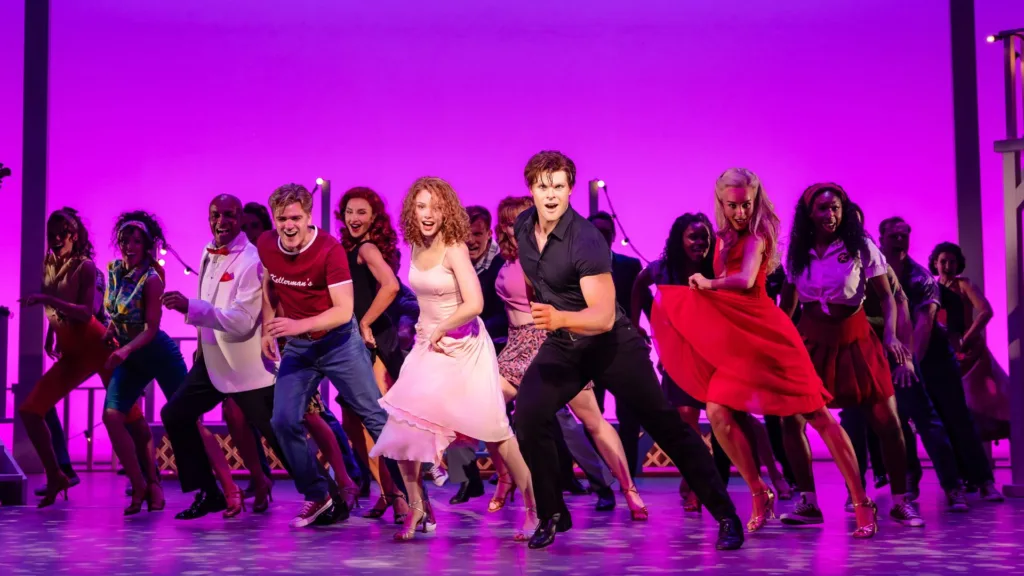
Dirty Dancing – The Classic Story on Stage
New Theatre Oxford.
06 to 10 Oct 2026.
The summer romance that became a cultural phenomenon returns to Oxford this week, as Dirty Dancing – The Classic Story on Stage brings the world of Kellerman’s holiday resort to New Theatre Oxford. Based on Eleanor Bergstein’s screenplay for the 1987 film, the stage production follows Frances ‘Baby’ Houseman and Johnny Castle as their relationship develops across the social divide separating them.
The production retains the musical identity that helped make the film an enduring favourite, with songs including Hungry Eyes, Hey! Baby, Do You Love Me? and the Oscar-winning (I’ve Had) The Time of My Life. Live music and an ensemble of dancers give the familiar story a theatrical energy of its own, while the choreography remains central to the relationship between Baby and Johnny.
Joel Benjamin stars as Johnny Castle, with Charlie Varlet as Baby and Ellie Fergusson as Penny. Directed by Federico Bellone and choreographed by Austin Wilks, the production is part of the current UK and Irish tour, which continues through summer 2027. Its return to Oxford offers audiences the chance to revisit a much-loved story in a form designed for the stage.
Best for: Fans of the original film, romantic musicals, dance and nostalgic live entertainment.
Good to know: The Oxford run continues until Saturday 10 October, with evening and weekend matinee performances. Age guidance is 14+. The production has an interval.
Oxford Events
Oxford Greenways: Here’s what the plan to connect Oxford with its surrounding towns and villages means

For generations, Oxford’s roads have provided a network of connections between the city and the communities around it. Cars, buses and commercial traffic can follow established routes towards Abingdon, Woodstock, Eynsham, Wheatley and the villages beyond, with a system of roads, junctions and signs designed to make those journeys possible.
For people travelling on foot, by bicycle or using a wheelchair or mobility aid, the picture is often less straightforward. A route may be perfectly usable for several miles before reaching a busy junction, a narrow section of road or a point where the infrastructure simply ends. What exists is often a collection of individual paths rather than a network that can be relied upon for an entire journey.
Oxford Greenways is an attempt to change that.
A masterplan launched on 01 October by Oxfordshire County Council, Oxford City Council and the University of Oxford sets out a long-term vision for 18 walking, wheeling and cycling routes connecting Oxford with nearby towns, villages, employment centres and green spaces. Most of the proposed routes extend around five to eight miles from the edge of the city, bringing communities within approximately eight miles of Oxford into a wider active-travel network.
The ambition is considerable. So is the task of turning it into something people can actually use.
A network designed around Oxford’s growth
The Greenways masterplan is not proposing 18 identical cycle paths. The routes will take different forms depending on their surroundings, with some sections entirely traffic-free, others running alongside roads and separated from vehicles where possible, and quieter stretches using existing roads where traffic speeds and volumes allow people to walk and cycle safely.
Some routes already exist and are used regularly, although parts will need upgrading. Others will require new connections, permissions and entirely new infrastructure. The network includes routes towards Abingdon, Berinsfield, Culham, Cumnor, Eynsham, Kidlington, Wheatley, Woodstock and Wootton, alongside routes following the Oxford Canal and the waterways and countryside to the north and south of the city.
The intention is to make these routes useful for more than recreational cycling. The county says the network is being planned around commuting, education, access to services, public transport and leisure, with accessibility considered through decisions about surfaces, route widths, lighting and separation between different users.
That broader purpose is important because the case for Greenways is ultimately a case about transport choice. A person who cycles to work occasionally because the weather is good is not necessarily evidence of a successful transport network. A person who can depend on a route to get to work, school, a station or an appointment without having to think about whether the next section of road will be safe is a different proposition.
The project also sits within a much larger period of growth across Oxford and its surrounding communities. New housing, employment and development will create additional demand for travel, and the Greenways plan is intended to ensure that walking and cycling infrastructure is considered as part of that growth rather than added afterwards.
Councillor Gareth Epps, Oxfordshire County Council’s cabinet member for transport, said the masterplan would provide a shared plan to guide future investment and delivery, but acknowledged that delivering the programme would require councils, communities, developers, landowners and funding partners to work together.
In that sense, the masterplan is as much about the future shape of Oxfordshire as it is about cycling.
From an idea to an 18-route network
The current plan is the result of several years of work. The project was originally developed as a way of identifying a network of longer-distance active-travel routes around Oxford, but progress was affected by the delays and disruption of the pandemic.
In February and March 2025, residents, parish councils and organisations were invited to comment on the emerging proposals. More than 500 responses were received, with feedback subsequently used to refine route alignments, identify opportunities and constraints, consider nearby developments and bring the individual proposals together into a single network plan.
The result is the current 18-route concept masterplan.
The consultation process is significant because the routes will cross a variety of environments and, in some cases, depend on cooperation from people and organisations whose land or interests are affected by them. The county says the masterplan draws on technical analysis, route assessments and feedback from residents, parish councils and stakeholder organisations.
The project has also been developed with the University of Oxford as a partner. Professor Mark E Smith, the University’s Pro-Vice-Chancellor for Planning and Resources, said the University supports the plan as part of its efforts to encourage staff and students to make healthier and more sustainable journeys around Oxford.
The University’s involvement reflects the extent to which travel between Oxford and its surrounding communities is tied to the city’s employment and education economy. A network that makes it easier to reach major employment and educational destinations without a car could have implications beyond recreational cycling.
But the distinction between a masterplan and a construction programme remains important. The council has now agreed the overall concept for the routes, but the existence of a line on a map does not mean that a completed path is imminent. Further design work, engagement, permissions and funding will be required before individual sections can be delivered.
The next phase will therefore be less about deciding whether Oxford Greenways should exist and more about determining which parts can be built, when and at what cost.
The difficult work starts now
Creating a continuous route between two places can look deceptively simple on a map. On the ground, the problems become considerably more complicated.
A Greenway may have to cross existing roads, public rights of way, waterways and private land. A route that appears direct on a masterplan may encounter environmental constraints or require a new crossing, while a relatively short section at a busy junction can become one of the most expensive and technically difficult parts of an otherwise straightforward journey.
Landowners, parish councils, developers and local communities will all have a role to play. The county has said it expects to work with these groups as designs develop, while also looking for opportunities to incorporate sections of the network into future development.
There is another practical issue that is less visible on a masterplan: maintenance. For a route to become part of the everyday transport network, it has to remain usable throughout the year. Surface quality, drainage, vegetation, lighting, signage and junctions all matter. A route that is attractive in summer but difficult to navigate after heavy rain is unlikely to persuade someone to leave the car at home for an important journey.
The project will therefore be judged not simply on how many miles are eventually built, but on whether those miles form a reliable network.
Who will use it?
This is where some of the debate around Greenways becomes more complicated.
Supporters argue that safe, continuous routes can give people a genuine alternative to the car and reduce pressure on roads by taking some journeys away from them. Cycling and pedestrian campaigners have been calling for a more connected network around Oxfordshire for years, and have welcomed the 18-route plan as an opportunity to make active travel a practical option for a much larger number of people.
Robin Tucker, co-chair of the Coalition for Healthy Streets and Active Travel and chair of the Oxfordshire Cycling Network, has described the network as a chance to provide cheaper, healthier and safer alternatives as Oxford and its surrounding communities grow. He has pointed to the Abingdon route, which he uses for business and shopping, as an example of how a predictable journey can make cycling a realistic form of transport rather than simply a leisure activity.
Cyclox chair Ian Loader has made a similar argument, noting that drivers already take for granted the existence of a road network connecting Oxford with surrounding towns and villages. If cycling is expected to become a realistic alternative for more people, he argues, it needs an equivalent network of connected, dependable routes.
Other campaigners have emphasised the potential benefits beyond cycling. Siobhan Mansel-Pleydell, managing director of Oxfordshire Liveable Streets, has argued that people in towns and villages can become dependent on cars when they lack practical alternatives, and that providing another way into Oxford could benefit both those who choose to use it and people who still need to drive.
But the objections are equally familiar. Critics have questioned whether people will cycle several miles into Oxford in poor weather, whether families and people carrying equipment will find the routes practical, and whether money allocated to active travel would be better spent repairing roads or improving public transport.
Those are not questions that the Greenways masterplan can answer on its own. A walking and cycling route cannot replace every car journey, and there will always be people for whom driving is the most practical option. Nor can the project resolve Oxfordshire’s wider problems with congestion, public transport capacity or road maintenance.
The argument for the network is instead that transport infrastructure can influence the choices people are able to make. Where a safe and direct alternative exists, some journeys that would otherwise require a car become possible by foot or bicycle. The objective is not to make every journey an active-travel journey, but to make more journeys possible without a car.
The Cambridge comparison
The idea behind Oxford Greenways is not entirely new. The project has previously been linked to the experience of Cambridge, where the development of longer-distance cycling routes has formed part of a broader attempt to provide alternatives to car travel between the city and surrounding communities.
When the scheme was approved for development in 2024, Oxford City Council cabinet member Anna Railton described the Cambridge approach as a useful model and argued that having a portfolio of schemes ready to develop would help when funding became available.
The comparison is useful, but Oxford has its own geography and transport patterns. The city sits within a relatively close ring of towns and villages, while its universities, hospitals, businesses and other major employers attract large numbers of people from outside the city each day.
That combination makes longer-distance active travel potentially more significant than a conventional urban cycle network.
It also makes the quality of the routes particularly important. A five-mile journey on a continuous, well-designed route is a very different proposition from a five-mile journey involving busy roads, difficult crossings and several points where the infrastructure disappears.
That is why continuity will matter more than individual sections.
A high-quality route from a village into Oxford that stops at a difficult junction is of limited value. A series of connected routes that allow someone to continue safely into the city, connect with public transport and reach their final destination is something much more useful.
Funding will determine how much of the vision becomes reality
The most obvious constraint is money.
The original development of the Greenways programme was supported by a relatively modest budget for planning and design. Building the eventual network will require considerably greater investment, and there is no single pot of money allocated to construct all 18 routes.
Instead, the county expects funding to come from a combination of government grants, council investment, developer contributions and partnerships.
That means the routes are likely to emerge gradually rather than as one large infrastructure project. Some may be able to take advantage of development already planned nearby. Others may depend on successful bids for government funding or the availability of future council investment.
This staged approach is not unusual for major transport infrastructure, but it creates a risk for a project whose value depends on connectivity. A network can only perform as well as its weakest gaps.
The county’s current priorities include developing designs and cost plans for individual routes, identifying funding opportunities, working with landowners and developers and ensuring that the Greenways network fits with future growth.
Councillor Anna Railton, Oxford City Council’s deputy leader and cabinet member for planning and zero carbon Oxford, said the network would be important as Oxford grows, particularly in providing safe, sustainable and accessible ways for people living outside the city to travel into it.
The next few years will therefore be crucial. The masterplan has established the geography of the ambition; the challenge is to establish a credible delivery programme behind it.
More than a cycling project
There is a temptation to describe Greenways simply as a cycling scheme. That understates what is being proposed.
The network is intended to accommodate people walking and wheeling as well as cycling, and to connect communities with public transport, employment, education, services and leisure destinations. Some routes will pass through the countryside and along waterways, potentially providing new ways to experience the landscape around Oxford as well as practical transport connections.
For Oxfordshire, that distinction could become increasingly important as the population and built environment change.
If new housing is accompanied primarily by additional car journeys, existing congestion and pressure on the road network will increase. If new development is connected to a wider network of walking, cycling and public transport infrastructure, residents have more options from the moment they move in.
That is the thinking behind the county’s decision to position the Greenways masterplan as part of future growth planning. Rather than treating active travel as an additional feature once development is complete, the network provides a framework against which new infrastructure can be planned.
It does not mean Greenways can solve Oxford’s transport problems. It cannot. But it can become one part of a wider system in which roads, buses, railways, cycle routes and pedestrian infrastructure work alongside one another rather than being considered separately.
What happens next?
For now, Oxford Greenways is a map of possibilities.
The 18 routes have been brought together into an agreed concept masterplan, but further design, consultation, land agreements, funding and approvals will be needed before the network can be delivered. The county has said it will develop the routes as opportunities arise, while maintaining the wider network as the framework within which those individual schemes fit.
That approach could allow individual sections to move forward when funding or development opportunities become available without losing sight of the wider network. It also means that the first routes to be delivered will provide an early test of the wider proposition.
The question will be whether people use them for ordinary journeys rather than simply for leisure; whether they connect effectively with existing infrastructure and public transport; and whether the benefits are sufficient to attract the investment needed for the remaining routes.
The ambition is clear enough. Oxford has a well-established network of roads connecting it with the towns and villages around the city. Oxford Greenways proposes building another network alongside it — one designed for journeys made on foot, by bicycle or by wheelchair.
The map now exists. The harder part is turning those lines into routes that people can trust.
Reporting contribution by Isabella Harris, Local Democracy Reporter (LDR) for Oxfordshire, covering local politics, council meetings and planning decisions across six councils in the county.
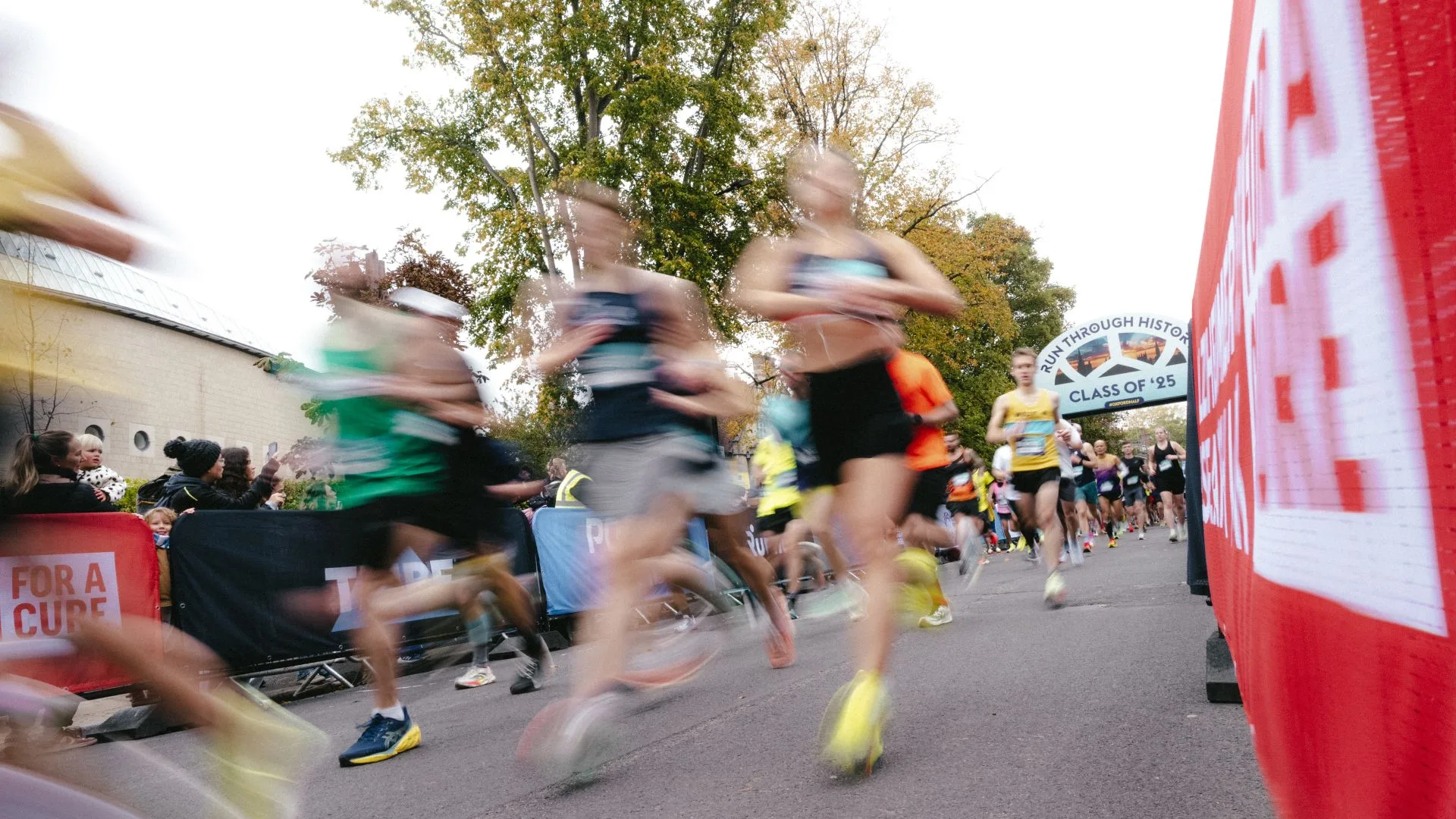
Oxford’s annual half marathon returns on Sunday 11 October, bringing 15,000 runners to the city for a 13.1-mile course through historic Oxford, Summertown and Old Marston. Here is everything you need to know before race day.
The Oxford Half Marathon returns on Sunday 11 October, with a record field of 15,000 runners expected to take to the city’s streets.
Now a fixture in Oxford’s sporting calendar, the race combines a fast, largely flat course with some of the city’s most recognisable landmarks, leafy residential streets and a strong atmosphere along the route.
Whether you are running, supporting someone taking part or simply planning to be in Oxford that weekend, here is what to expect.
The route
The 2026 route starts and finishes on Mansfield Road, the shared start and finish location introduced for the first time in 2025.
From the centre of Oxford, runners pass some of the city’s most recognisable landmarks, including the Bodleian Library, Radcliffe Camera, Sheldonian Theatre and Bridge of Sighs, before heading north through Summertown and towards Old Marston.
The course then loops back towards the city centre, with Oxford University Parks providing a focal point for the post-race celebrations.
The combination of historic Oxford and the city’s quieter, greener neighbourhoods is one of the defining features of the route.
When is the Oxford Half Marathon?
The Schools Challenge Race begins at 8.30am, followed by the main Oxford Half Marathon at 9.30am.
Runners are allocated wave starts, helping to manage the flow of participants onto the course.
The Event Village in Oxford University Parks opens from 7.30am, providing the main pre- and post-race hub, including bag drop and other race facilities.
Getting to the race
With extensive road closures across Oxford, driving directly to the event is strongly discouraged.
The organisers recommend using Park & Ride, with services operating from Redbridge Park & Ride, Pear Tree Park & Ride, and Thornhill Park & Ride. Pre-booking does not guarantee a space, so runners and spectators are advised to arrive in good time.
The first shuttle services leave at 7.00am.
Local buses will operate with diversions, while those travelling by rail can use the shuttle service from Didcot Parkway to Oxford, with three scheduled departures timed around the race.
The Oxford Tube also operates from London, with services from 3.15am onwards.
Anyone travelling into Oxford should allow additional time and check their route before setting out.
Before the start
For runners, race-day preparation begins before reaching the start line.
Anyone who has not received their race pack in the post will need to collect their bib on Saturday 10 October, when the helpdesk is open from 10.00am to 5.00pm.
Runners should bring their bib and safety pins and make sure their emergency information has been completed.
The Event Village opens from 7.30am on race day, giving participants time to use the bag drop and prepare before their allocated start wave.
On the course
Five aid stations will be positioned around the route, providing water to runners.
The second station, at approximately 6.5 miles, will also provide OTE energy gels.
The race has a 1.00pm 45 cut-off. After this time, roads will begin to reopen and runners still completing the course will continue to be supported, although they may be asked to move onto the pavement as normal traffic resumes.
Road closures
The Oxford Half brings extensive temporary road closures across the city.
The start and finish infrastructure will be installed on Mansfield Road from Saturday, with Mansfield Road, Savile Road, Jowett Walk and Holywell Street affected from 9.00am on Saturday 10 October until 9.00pm on Sunday 11 October.
On race day, closures will extend across central Oxford, Summertown, Cutteslowe and Old Marston.
Many roads will close from 7.30am, with restrictions lifted progressively as the race passes. Some central roads will be closed from 6.00am, while the wider network will be reopened in stages through the afternoon.
For a detailed road-by-road breakdown, see our guide to Oxford Half Marathon 2026 road closures and traffic restrictions.
Where to watch the race
For spectators, the start and finish on Mansfield Road are likely to provide the biggest atmosphere, with crowds gathering to see runners set off and cross the line.
University Parks offers another natural meeting point, particularly for families and groups combining spectating with the post-race celebrations.
Along the route, the historic centre provides the opportunity to combine watching the race with a day in Oxford, while the sections through Summertown and Old Marston offer a different perspective on the city and more space for supporters.
The Oxford Half’s atmosphere is a significant part of the experience, with live music, entertainment and crowds supporting runners throughout the course.
After the finish
The event continues beyond the finish line at the University Parks Event Village.
Runners and supporters can meet there after the race, with live entertainment, food and drink, merchandise and race facilities creating a post-race hub.
For anyone meeting a runner, agreeing a meeting point in advance is advisable, particularly given the size of the field and the number of people expected in the city.
Track your runner
The Oxford Half app provides live race updates and runner tracking, making it easier for spectators to follow a participant and plan where to watch them along the course.
For friends and family, this can be particularly useful when combined with the route map and planned meeting point.
Looking ahead to 2027
The 2026 Oxford Half has already sold out, with 15,000 runners registered for this year’s race.
Entries for the 2027 Oxford Half are expected to go on sale shortly after this year’s event. Those hoping to take part can join the organiser’s waitlist for updates.
Find out more about the Oxford Half Marathon at oxfordhalf.com.
Oxford Events
Stage Watch: Cirque du Soleil’s Kurios brings a cabinet of curiosities to London’s Royal Albert Hall

There are few theatrical worlds quite like those created by Cirque du Soleil. For KURIOS – Cabinet of Curiosities, the company turns its attention to a fantastical mechanical universe of inventors, acrobats and impossible contraptions, bringing the production to London’s Royal Albert Hall for a limited run in early 2027.
The production arrives at the historic venue from 13 January to 28 February 2027, with seven weeks of performances forming part of Cirque du Soleil’s 30th anniversary celebrations at the Royal Albert Hall.
At the centre of KURIOS is a Seeker, an inventor working inside an elaborate mechanical laboratory. He is convinced that another world exists beyond the one visible to us — a hidden universe where imagination takes precedence over the familiar rules of reality.
His search leads him to a collection of peculiar characters who emerge from his cabinet of curiosities. As the mechanical world around him begins to transform, the boundary between invention and reality becomes increasingly blurred.
The premise provides the framework for what is, above all, a visual and physical spectacle. Cirque du Soleil combines acrobatics, contortion and theatrical performance with elaborate sets and a steampunk-inspired aesthetic, creating a world of oversized machinery, curious inventions and characters that appear to have stepped out of another era.
Rather than relying on a conventional narrative, KURIOS uses movement, music, visual design and physical skill to tell its story. The result is a production in which the performers and the machinery share the stage, with the human body becoming another part of the show’s fantastical mechanical landscape.
A world of curiosities
The production is set in an alternative version of the past, drawing on the visual language of early industrial machinery and Victorian-era invention while deliberately pushing it into the realm of fantasy.
The Seeker’s laboratory becomes the gateway into this world. Once the hidden universe is revealed, a succession of eccentric characters and performers appear, each bringing a different form of physical artistry to the stage.
Acrobatics sit at the heart of the production, alongside acts of contortion and other displays of strength, balance and precision. The theatrical design is equally important, with the stage populated by mechanical-looking creations that help establish the show’s distinctive visual identity.
The central idea is that the extraordinary can exist alongside the everyday — provided the imagination is allowed to look beyond what is immediately visible.
From Montreal to London
KURIOS – Cabinet of Curiosities first premiered in Montreal in 2014. Since then, the production has travelled internationally, attracting more than seven million spectators across 50 cities and playing more than 3,500 performances.
Its London engagement brings the production back to the Royal Albert Hall, a venue with a long association with Cirque du Soleil.
The 2027 season also marks 30 years of Cirque du Soleil productions at the Royal Albert Hall, giving the return of KURIOS an additional significance within the company’s history at the venue.
The Royal Albert Hall’s distinctive circular auditorium also provides a particularly different setting for a production built around spectacle. With the audience surrounding the performance space, the scale and visual detail of the production become part of the experience rather than simply providing a backdrop to the action.
An early 2027 spectacle
For audiences looking for something outside London’s traditional theatre season, KURIOS offers a different kind of theatrical experience. There is no conventional play to follow and no straightforward distinction between circus and theatre. Instead, the production builds its world through physical performance, design and visual storytelling.
The show runs for approximately two hours and 20 minutes, including an interval, making it an evening-length production rather than a conventional circus performance.
Alongside standard tickets, a number of premium experiences are available, including VIP boxes, a VIP Gallery package, cast meet-and-greet opportunities and dining at Coda restaurant at the Royal Albert Hall.
With its combination of circus artistry, theatrical design and an imagined mechanical world, KURIOS – Cabinet of Curiosities brings one of Cirque du Soleil’s established productions to London for a strictly limited engagement at the beginning of 2027.
Cirque du Soleil Kurios – Cabinet of Curiosities
Venue: Royal Albert Hall, London
Dates: 13 January–28 February 2027
Running time: 2 hours 20 minutes, including interval
Tickets: On sale now. Buy tickets
Production: Cirque du Soleil
Watch trailer



-

 Oxford united FC2 weeks ago
Chris Gunter steps away Wales role to focus on Oxford United
-

 Oxford united FC3 weeks ago
Oxford United transfer chief explains EFL embargo and contract dilemma
-

 Oxford united FC4 weeks ago
Former Oxford United boss Matt Bloomfield drops Wycombe manager hint
-

 Student Life3 weeks ago
Oxford falls to lowest ever spot in The Times UK University Guide 2027
-

 Oxford united FC3 weeks ago
Aaron Ramsey gives Luka Lynch update after Oxford United absence
-

 Oxford University2 weeks ago
New to the Oxford English Dictionary this September
-

 Student Life3 weeks ago
Protest held outside Town Hall over sale of Council-owned building to St Peter’s
-

 Oxford Events3 weeks ago
Stage Watch: Pinocchio, Peppa Pig, Affluenza, Dirty Dancing, & Ballet Shoes