
Student Life
Sport Spotlight: Sam Fitzgerald – Cherwell


Sam Fitzgerald only took up cycling during his undergraduate degree, and yet he’s now President of Oxford University Cycling Club. He first joined the cycling club at Cambridge, where he studied engineering, before moving to Oxford to pursue a DPhil in Renewable Energy.
Cycling at both Oxford and Cambridge offers the opportunity to explore the surrounding countryside – the club’s weekly cycle rides take place between the Cotswolds and the Chiltern Hills. Cyclists enjoy venturing out into the countryside and exploring nearby villages.
Alongside these leisurely weekend rides, Fitzgerald tells me that the club trains for more serious competition. For the first time, it now has a club coach and is moving towards a more formalised training plan to prepare for competitions.
Fitzgerald’s cycling journey has seen its fair share of unforgettable experiences. “I have been hit by a car crossing the road in Spain,” Fitzgerald recalls when I ask if there are times things went wrong. “I had to try to explain to the police what had happened in broken Spanish.”
A highlight for Fitzgerald was the Lincolnshire BUCS race last year. “In Lincolnshire you race with hundreds of people by the side of the road, playing music, like a party by the side of the road,” he tells me. “Oxford was fourth overall – we came very close to getting a BUCS medal together.”
But cycling races rarely have that festive feel. They often take place deep in the countryside, and while there might be people from nearby villages watching on, often “it is just you and the countryside”, Fitzgerald says. He describes races as a mental struggle as much as a physical one. “You’ve got to be aware of who to follow, who to chase. You’re also aware of the pain in your own legs as you catch up with those ahead.” “Having the crowd there distracts you and allows you to push to a level that you didn’t think you could,” he adds. “In the Lincolnshire race, my power levels were higher than they have ever been before or since. That can only be attributable to the crowd support.”
Oxford University Cycling Club was founded in 1873, making it one of the oldest student cycling clubs in the world. At the time, cycling was a new sport and a novel, exciting mode of transport: a technological invention which opened up new worlds for its intrepid adventurers. From novel Victorian invention to modern university sport, Oxford’s Cycling Club has endured. Fitzgerald is excited about what is to come.
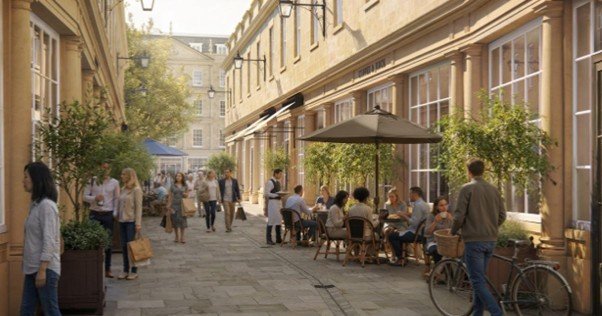
Oxford City Council has approved plans to transform Oxford’s Clarendon Centre into a new public square, with trees, seating, and a water feature.
The redevelopment, proposed by the site’s owner Goldmoney Properties, will involve removing the shopping centre’s roof to create an open-air square measuring approximately 41 by 42 metres. The pedestrianised space is intended to host events including Christmas markets, ice skating, and outdoor concerts.
Council planning officers concluded that “the proposal would make best and most efficient use of the existing site” and that “economic benefits would be derived from the provision of high-quality retail, food and beverage and office uses”.
Plans for Clarendon Square were first submitted earlier this year. On 24th February, Goldmoney Properties Ltd submitted an application for planning permission, proposing the demolition of over 8,000 square metres of existing floorspace and the removal of the centre’s roof to create a large public square open to the sky.
The 3.5-acre site, located on the corner of Cornmarket Street and Queen Street, was conceived by Roy Sebag and designed by Quinlan Terry CBE. Terry’s design features classical stone facades along both streets.
Goldmoney Properties acquired the site in a £30 million deal after its previous owner, Lothbury Property Trust, entered liquidation. Sebag, the investor behind the redevelopment, outbid a joint venture involving the Crown Estate, Pioneer Group and Oxford Science Enterprises.
The Council accepted a previous application, submitted in July 2024. It also aimed to remove the roof of the Clarendon Centre and create a new public space, but included plans for student accommodation that are not in the current proposal.
The approval marks a significant step toward the redevelopment of one of Oxford’s central shopping sites. Sebag told Cherwell: “I am delighted that Clarendon has received planning approval and grateful to everyone who has helped us reach this point. My intention is to create a beautiful public square in the heart of Oxford: somewhere people can meet, sit and enjoy the city.”
A spokesperson for Goldmoney Properties Clarendon Square Ltd told Cherwell: “At Clarendon, we have made a deliberate and quite radical choice: to reduce the amount of built space and open the estate to the sky, creating a substantial outdoor square and open-air streets.”
They added: “We believe the relative scarcity of this kind of setting in central Oxford, together with the quality of the architecture and the interest we are seeing from prospective occupiers, gives the scheme a strong commercial foundation.”
Councillor Susanna Pressel, who previously welcomed the plans, told Cherwell: “I’m glad this planning application got permission – with some sensible conditions. I think the new Clarendon Centre will be a great asset to the city.
“Students are lucky to have access to dozens of college quads, but most townspeople would never think of going through those private-looking doors, so a new green space will be very welcome.”
Pressel added: “The developers have promised to seek out lots of independent stores and cafes, and not charge ridiculously high rents, so let’s hope for some interesting new places to go to.”
The redeveloped Clarendon Centre is set to open in 2028.

Pro-Palestine protesters marched from Cowley to the Weston Library on Saturday 31st October, demanding Oxford University’s divestment from Israel.
Around 120 people attended the protest, including groups such as Oxford Students for Palestine (formerly Oxford Schools for Palestine), Oxford Action for Palestine, Oxford City Green Party and Health Workers & Allies for Palestine.
The protest started with a speech about Oxford-educated administrators’ role in the creation of Israel, notably through the Balfour Declaration.
Green councillor Ahalya Bala also commented on the current situation in Palestine: “This is not a war. This is annihilation… The atrocities are still happening. It is just the pace that changes.”
“In the West Bank, forced displacement, seizures, neighbourhoods levelled to the ground, military raids, arbitrary detentions, torture, rape, executions, and land theft for Israeli expansionism and the cruel racial segregation and domination of Palestinians.”
A large banner at the centre of the gathering read: “Israel bombed 36 hospitals in Gaza and murdered more than 1700 healthcare workers. Targeting healthcare is a war crime. Arms embargo & Sanctions now!”
As protesters moved through Oxford, they chanted “blood money on your hands, show us your divestment plans”, “arms embargo right now”, and “Oxford University pick a side, justice or genocide”.
Two march attendees, Lisa and John, have been protesting for Palestine daily outside Carfax Tower. They spoke to Cherwell about the current state of the student movement for Palestine. Lisa, a current graduate student said that: “For students the consciousness is there and the willingness is there but people are afraid.” John added that Oxford’s prestige meant “there is a lot of power and opportunities to speak up concentrated here”.
Outside the Weston Library, protesters heard speeches from Nick Maynard, an Oxford alumnus and surgeon who has worked extensively in Gaza, and Haya Adams, an activist from the SOAS-liberated zone. Maynard, who went to Exeter College, said in his speech: “There are moments in history when silence becomes a form of complicity… More than 22,000 children have been killed in Gaza in the last three years.” He told the audience about individual patients he had seen in hospitals in Gaza, explaining that, on one occasion, his colleagues were stripped of critical supplies of baby formula by the Israeli military upon entering the strip.
Regarding the international treatment of Palestine, Maynard later told Cherwell: “We know it’s been failed by our governments, we know it’s been failed by our media, but it’s also being failed by our academic institutions… They have not given students a sufficient platform to talk about the genocide. Students have been fantastic. The university needs to give a much bigger platform to its students.”
Oxford Students for Palestine, one of the groups organising the protest, told Cherwell: “We wish to remind the University and others that Oxford city is extremely pro-Palestine, that we call for the end of the genocide and apartheid, and we call for every Palestinian to be liberated and have the right to return. We are twinned with Ramallah for a reason.”
The group added that “we’re calling on Oxford University and its colleges to disclose and fully divest from any Israeli investments, products, or banks like Barclays”. They also criticised the Oxford University Endowment Fund (OUEM) as “fundamentally resistant to disclosure and divestment”.
Adams, from the SOAS-liberated zone, told Cherwell: “The most basic and bare minimum thing that Oxford University can do is cut ties with genocide through their investments, through their partnerships. There really are ethical alternatives… Oxford University can also protect the right to free speech by allowing students to speak up for Palestine with no disciplinary action. They need to be held accountable for the arrests that happened during the time of the encampments.”
In response to a right of reply, Oxford University said: “Oxford is steadfast in its commitment to freedom of expression and to the right to peaceful protest within the law. At the same time, we have a legal and moral duty to uphold the rights, dignity and safety of every member of our community. When behaviour, including protest, causes serious disruption, harassment or safeguarding concerns, we will act in accordance with the law and our own established procedures.”
OUEM did not respond to our request for comment.
As the march ended, Oxford Students for Palestine reflected on how it fit with the global student movement. They told Cherwell: “The last thing we will say is that the students united will never be defeated, as we’ve seen across the world.”
Additional reporting by Stanley Arlidge and Freya Robson.
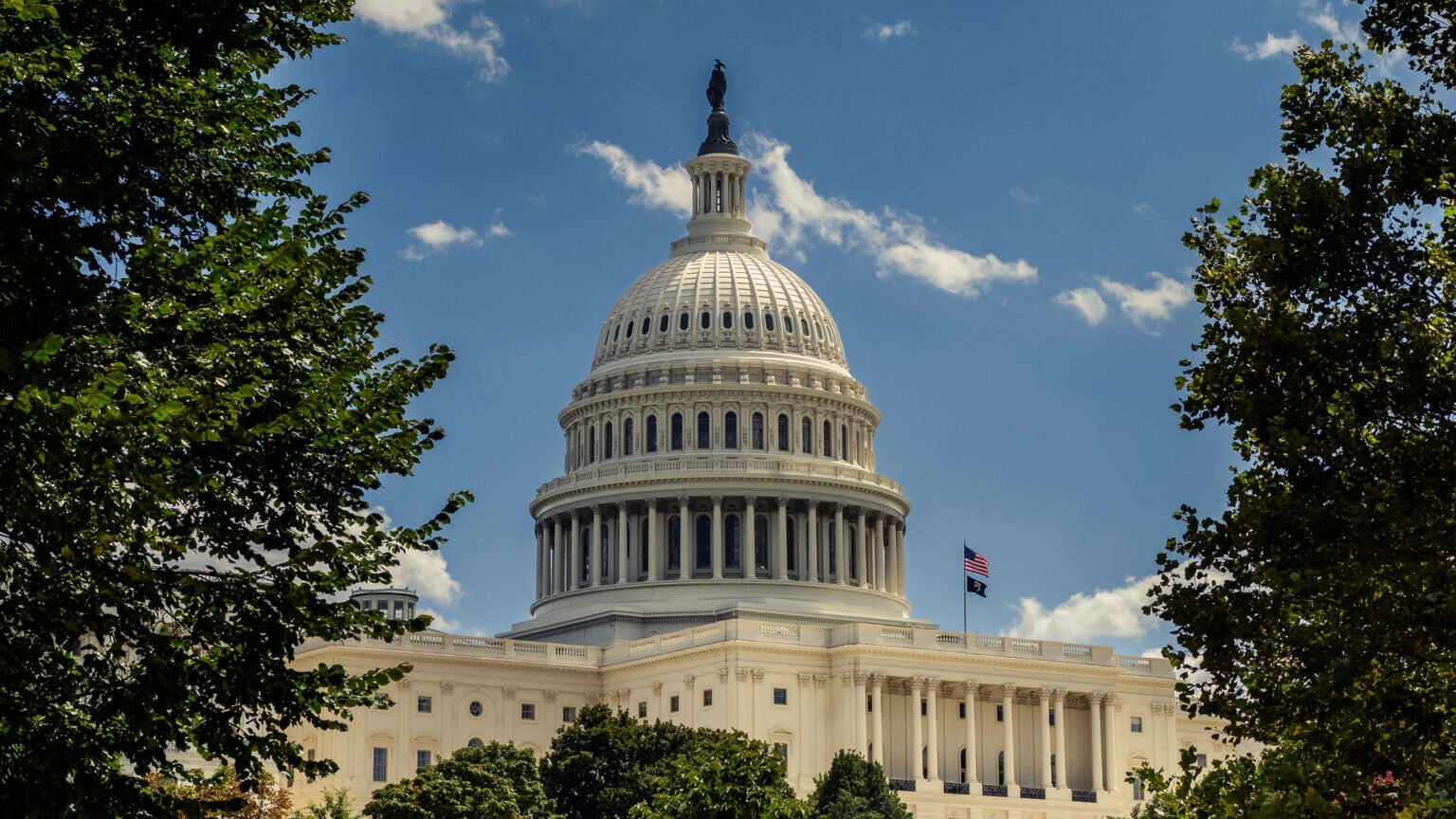
How could the outcome of the US midterm elections ever affect an Oxford student? Well, the elections might affect the cost of your next Tesco or Sainsbury’s visit. This month, diesel prices surpassed £2 per litre. British grocery inflation also just ticked up to 2.5% from 2.3%. The two are not unrelated. Many attribute Britain’s inflation to the ongoing conflict between Iran and the United States in the Middle East. On top of this, the Trump administration has threatened a 100% tariff on UK goods if the country does not abandon its digital services tax.
For better or worse, US government policy can affect the world, and with President Trump’s party holding slim majorities in both legislative chambers, current US policy may be challenged or forced to change. While, strictly speaking, the midterm elections only involve voting for representatives and senators, many view them as a vote of confidence in the president. Historically, the election has generally reflected a lack of confidence in the president, at least within the House of Representatives. Since 1946, regardless of party, the incumbent president’s party has gained seats in just two midterm elections: 1998 and 2002. These elections stand out because 1998 was the year President Clinton was impeached and 2002 was the election following 9/11.
Making sense of the midterms
Let’s say you agree with the notion that the outcome of the midterms may affect your grocery spend or your travel spend between or after term time; how on Earth do you make sense of the US election? Why do some politicians appear up for election and others do not? How do you know if power has shifted and a debate will occur on issues that affect an Oxford student?
In the US, Congress consists of two elected legislative bodies: the House and the Senate. Every two years, the entire House and one-third of the Senate stand for election.
A representative serves a two-year term in the House. This means the entire House stands for election on a two-year cycle, which includes the presidential election and the midterms in between. Currently, the Republican Party holds a slim majority in the House, and the Democratic Party would need a net gain of 3 seats to take control.
A senator, on the other hand, serves a six-year term, and there are 100 Senators. Further, the Senate is divided into three classes, with about 33 Senators per class. Senate elections are staggered so that one-third of the Senate stands for election every two years. Like in the House, the Republicans hold a majority in the Senate, and the Democrats would need a net gain of 4 seats to take control.
What Congress can do
Now that we understand how the election works, how would a change of power in Congress affect an Oxford student’s daily life?
Congress was designed as a restraint on the presidency. Congress possesses extensive power in budgeting, defence, foreign policy, trade, and other matters which can be used to counter the president. If the opposition party, the Democrats, wins control of either or both chambers, then expect attempts to foil President Trump. This matters to students from the UK and abroad. As mentioned before, US global policy might increase our food bill, but even more, as petrol prices rise, so will prices for all travel and, in particular, air travel back home for international students.
The Iran war
So, what can Congress do? Congress has a variety of options to influence the Iran war, one of which is the War Powers Resolution. Under this law, Congress could force an end to hostilities by voting to instruct the president to begin withdrawing the US military from hostilities within 60 days. However, this would require a supermajority of Congress because the president would likely veto a War Powers Resolution on the Iran war.
Alternatively, Congress can take other steps to impede the war. This includes restricting the military’s budget, rejecting or not voting on nominees, holding hearings, forcing Department of Defense officials to testify, and more. If the Senate doesn’t confirm a nominee, the president is limited in whom he may select, and the ‘acting’ official tends to hold little political power. All of this pressure would go a distance in bringing an end to a conflict that has increased petrol in the UK by 16-30% on average and increased airline jet fuel globally by 20%.
Tariffs and the power of the purse
On tariffs, Congress could pass legislation to terminate specific tariffs or rescind the president’s authority more broadly. Much of the same congressional options that applied to the Iran war also apply to tariffs. The key difference is that if both chambers of Congress switch to the Democrats, there is a good chance legislation curtailing the President’s tariffs could override a presidential veto.
The congressional power of the purse should also not be underestimated. In 2019, former Speaker of the House Nancy Pelosi refused to allow appropriations legislation to pass over a dispute to fund a border wall on the US-Mexico border, leading to a government shutdown. This can hurt the American public, as the lack of funding ceases or slows essential operations and functions like airports, issuance of small business loans, court proceedings, and heavily used public venues like national parks. Traditionally, this stalemate places great pressure on the party that appears unwilling to compromise and in 2019, President Trump found himself in that position. All of this puts the President’s 10% tariff on UK goods in jeopardy and diminishes the risks of new tariff threats.
The bottom line
So, today, take note of these facts if you attend a University of Oxford watch party. The election taking place 3,000 miles away may affect you more than you imagine, as it may affect the cost of what you eat, the cost of travel around Oxford, the cost of a flight home following term time, or even more; it may affect the global economy every Oxford student wishes to work in. Don’t stay up too late, but hopefully, if you watch the election, you will appreciate its significance, and it will also provide some entertainment.



-

 Student Life4 weeks ago
From Oxford to Cambridge: The 204-mile punt for Alzheimer’s
-

 Oxford united FC4 weeks ago
Oxford United youngster opens up on ‘surreal’ Aaron Ramsey influence
-

 Oxford united FC4 weeks ago
Oxford United win 2-1 at Notts County in League One return
-

 Student Life4 weeks ago
Exeter College to fund data centre in Oxford
-
 Student Life3 weeks ago
Hidden in plain sight: the bakery behind Oxford’s café counters
-
 Property & Housing4 weeks ago
Plans developed for 12 affordable Blackbird Leys homes
-

 Property & Housing4 weeks ago
Blenheim displays new Oxfordshire scheme with show home
-

 Traffic & Transport3 weeks ago
Uber begins self-driving robotaxi trial in Manchester | Uber