
Traffic & Transport
Uber begins self-driving robotaxi trial in Manchester | Uber

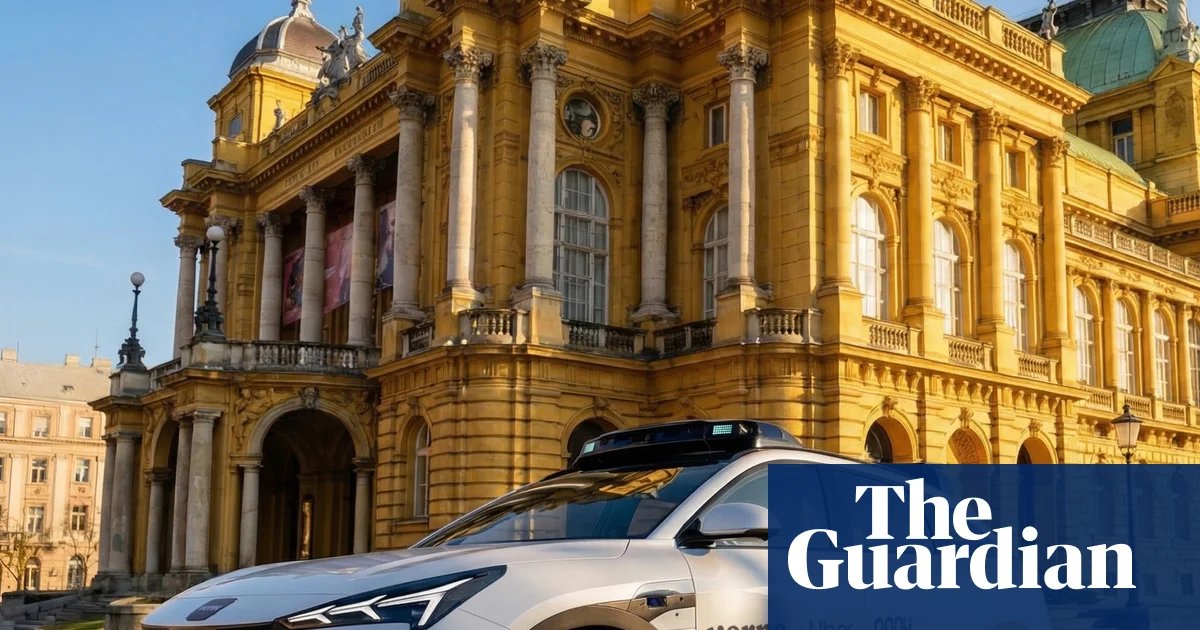
Uber has begun a trial of autonomous vehicles on the streets of Manchester as it looks to bring robotaxis to cities around the UK.
The first self-driving cars are operating, using the technology of its partner firms Pony and Verne, with whom Uber recently launched Europe’s first autonomous taxi service in the Croatian capital, Zagreb.
Uber said it was “excited to take this first step toward making this technology accessible to people across the UK”.
In social media posts, Verne said it had “started our autonomous vehicle testing in Manchester”, while Pony said there were “plans to bring robotaxis to the city” and that testing was under way.
The tests involve the company mapping the streets of the city in north-west England with a safety driver behind the wheel and no passengers.
Limited passenger services started last month in London, but with a safety driver in the front seat of cars supplied by Wayve under Transport for London’s licensing rules for private hire vehicles.
The next steps are unclear. Opposition from Uber drivers, their unions and the capital’s politicians to the rollout of robotaxis is mounting. The GMB and ADCU unions have both said thousands of drivers jobs will be lost and have called for help for those affected.
A critical report from London assembly’s transport committee this week called for the government to devolve authority over autonomous taxi services.
It said there was “considerable uncertainty about many of the claimed benefits of autonomous passenger vehicles”, and fears over the impact on public transport and congestion, as well as safeguarding and accessibility for disabled passengers.
There has been no official application to launch passenger services in Manchester so far, and the vehicles are operating under government licence via the Driver and Vehicle Standards Agency (DVSA) and the Department for Transport.
A spokesperson for Transport for Greater Manchester said it wanted the city’s taxis to be the safest in the country.
after newsletter promotion
“New technologies play an increasingly important role in the growth of our city region,” they said. “But they need to be introduced responsibly, safely and with real thought about what it means for our residents.
“Although no applications have been made to operate driverless taxis in the Greater Manchester, we’re aware of potential interest from companies to do so.
“Safety will always be our top priority, and we will need strong assurances that no vehicles will operate on our roads that pose any risk to residents.”
Uber said it expected to offering robotaxi trips in as many as 15 cities worldwide by the end of 2026, mainly in the US and the Middle East.
Traffic & Transport
‘A big responsibility’: Clifton Suspension Bridge master hails £7.6m renovation | Bristol
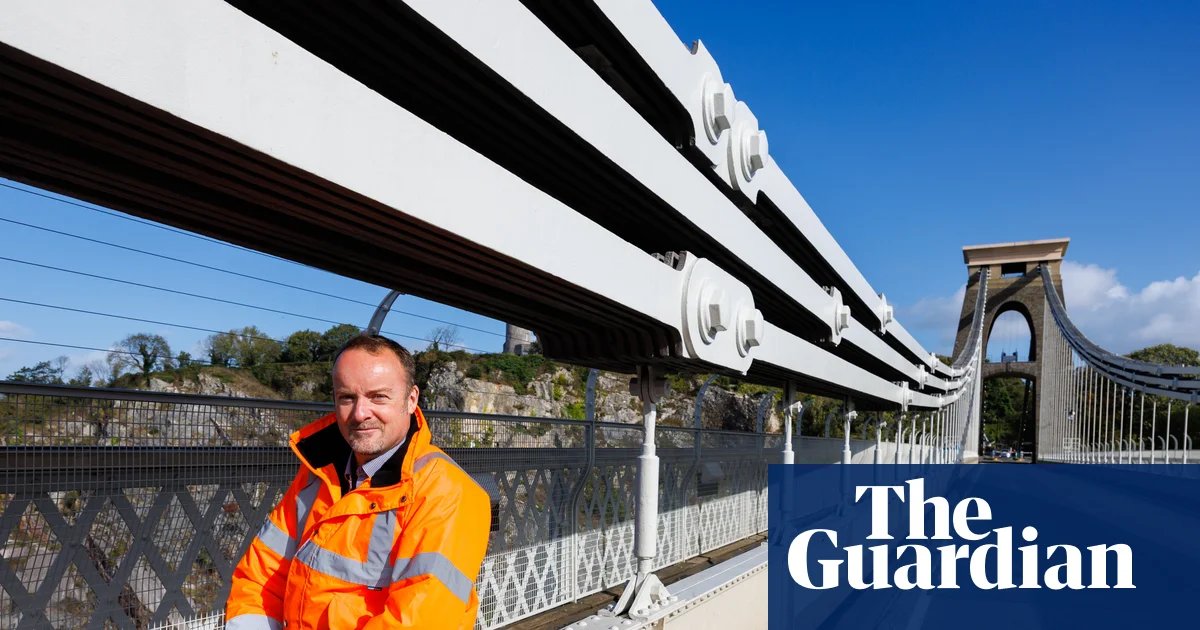
The job does not give the holder age-old perks such as the right to drive sheep across the great structure, but the title “bridge master” does have a certain ring to it.
“I don’t tend to say I’m the bridge master when I’m at a party,” said Tristan Ralph, the current holder of the title. “But people do seem to know and bring it up. It’s a job less ordinary, isn’t it? It’s a Victorian sounding title and people are really, really interested.”
There is, however, nothing ceremonial about the title. Ralph is in charge of maintaining and running the Clifton Suspension Bridge, a UK feat of engineering, without any public money.
“It does feel a big responsibility,” said Ralph. “When the chairman of the trustees rang to say we’d like you to do it, you suddenly feel the pressure. It’s so famous and people in Bristol, quite rightly, are proud and almost possessive of it. Bristolians think: ‘It’s our bridge.’”
The bridge master – and the not-for-profit charity the Clifton Suspension Bridge Trust – have the task of maintaining the bridge “in perpetuity”. “I’m a temporary custodian,” Ralph said. “When I’m finished, I have to make sure it is handed on in just [as] good a condition or better than I inherited it.”
Ralph, a bridge engineer by profession, was speaking to mark the conclusion of a large refurbishment project that has taken two and a half years and involved hand-painting more than 4,000 original iron chain links and installing an energy-efficient lighting system. It has cost about £7.5m. “It’s been a big job,” he said. “But it’s come pretty much bang on budget, which is rare these days.”
That is important because, to many visitors’ surprise, the bridge does not receive public funding. “The upkeep of the bridge, the running of it, the salary costs and everything are all paid only by our toll money,” said Ralph. “People think that we might get something from local or central government. But, no, it’s just the toll money.”
Motorised vehicles – including motorcycles – pay £1 to cross the bridge. There is no charge for pedestrians, cyclists or horse riders. As well as being a beautiful structure, it is also a vital part of Bristol and North Somerset’s transport system.
Ralph said: “It draws the tourists in. We get visitors from hundreds of countries every year but primarily, it’s still a vital piece of local infrastructure. If the bridge wasn’t here, the difference it would make to Bristol traffic would be incredible. We average over 8,000 vehicles a day still. Maintaining it as a transport link is utterly vital.”
The end of the refurbishment does not mean Ralph can rest on his laurels and spend more time hobnobbing with members of the Bridge Owners Forum.
“In a few years, we’ll need to paint the underside of the bridge. The under-bridge gantry unit itself will be replaced over the coming years. So there’s always something. We need to keep on top of things. It’s like your house or your car. If you just ignore it, don’t do things for a couple of years, they start breaking down.”
As in most walks of life, the climate emergency is a challenge Ralph and the trust are having to face. “We were monitoring the bridge daily in the summer with the very hot weather. And maybe if the bridge was being designed today, there would be a little bit more robustness around wind.”
The prevailing south-west wind is not usually a problem and the bridge rarely has to close but if it blows directly through the Avon Gorge it can be more difficult. “We need to keep an eye at both the magnitude of any wind events but also their frequency,” Ralph said.
The engineer admires the bridge’s designers, including Isambard Kingdom Brunel. “It’s remarkably advanced for its time.”
And there is no sign that its days are numbered, largely because the Victorians did not skimp. Ralph said: “There are three layers of chains. The original Brunel design only had two, but because it went from a timber design to a cast-iron deck, they upped it to three.
“There’s a little bit of comfort in there. Today there might be pressure to say, well, can you keep it to two, but in Victorian times they did like to add a little bit of meat on the bones.
“It doesn’t have a finite life. There’s no end date in our plans. We all just keep it going in the highest standards as we can. It’s in really good condition as long as we keep doing what we need to do, keep our attention on it and don’t let things drift. Forever is a long time but there’s no reason why we have any need to worry at the moment.”
Traffic & Transport
Yes, Britain’s railways are a mess. But is anyone sober enough to care? | Zoe Williams
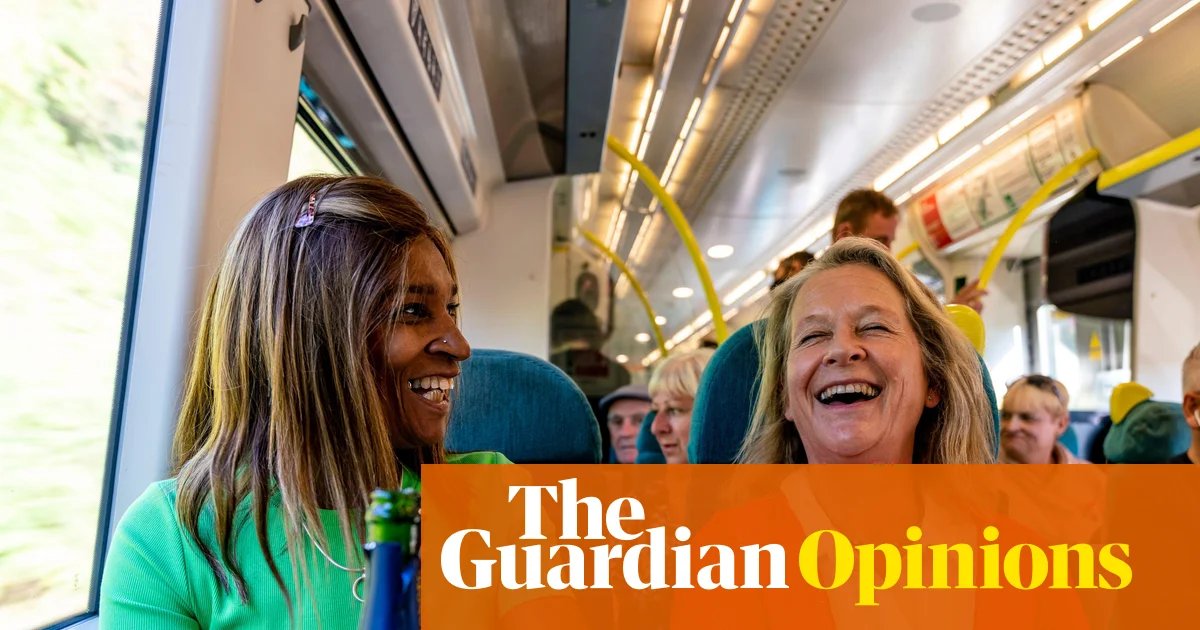
On Saturday I went to Liverpool with my youngest, and the overhead lines went down at Crewe, but also there were crew shortages across the land, so between the homophones and my lifelong inability to start listening to a train announcement until halfway through, I cannot tell you at what point this journey became a five-train, four-hour odyssey. All I know is what’s happening on every train, in every part of the country. The 7.48am is a calm and ordered cohort of people who think they know where they’re going and will be there soon. And from 9.04am onwards, everyone’s drunk, all the way to everywhere.
Between Rugby and Birmingham New Street, there was an incredibly festive crowd going to the Horse of the Year show, squishing real fruit into cans of Pimm’s, because it was breakfast time, and also because it was funny. But what were the horses going to make of all this? Because they’re quite short on appreciation for ludic pranking, and famously easy to frighten.
Between Birmingham New Street and Wolverhampton, there was a 40th birthday party with a load of mini-bottles of prosecco, and they were extremely charming and well signposted in some ways (for instance, how did I know it was a 40th? Because of the massive flashing deely-boppers saying “40”), but I still had so many questions. Why buy 15 tiny bottles, when you could get four regular bottles for a fraction of the price, and they would have exactly the same effect? What earthly state are you going to be in when you get there? Is there somewhere you could have a little snooze before your next appointment? Maybe things are different when you’re 40, but I dimly remember it, and it’s not that different.
Between Wolverhampton and Stafford, it’s only 13 minutes, so I was mainly awed by how many people could even be bothered to open a can of Stella. Stafford to Liverpool was a stag do, and it was brunch o’clock by now, so running up and down the carriage, yelling “Ay ay ay” in a fake scouse accent, dressed in a Brazilian flag, all fell under the umbrella “having a normal one”.
I abhor British exceptionalism, except on this one subject: exceptionally bad train network; exceptionally fun trains. Would recommend.
Zoe Williams is a Guardian columnist
The Guardian’s year in review 2026
On Tuesday 1 December 2026, join your favourite Guardian writers for an evening of candid conversations, witty remarks and surprises as we look back on the year-defining stories of 2026. With Zoe Williams, John Crace, Pippa Crerar, Jonathan Liew and Lucy Mangan. Book tickets here or at guardian.live
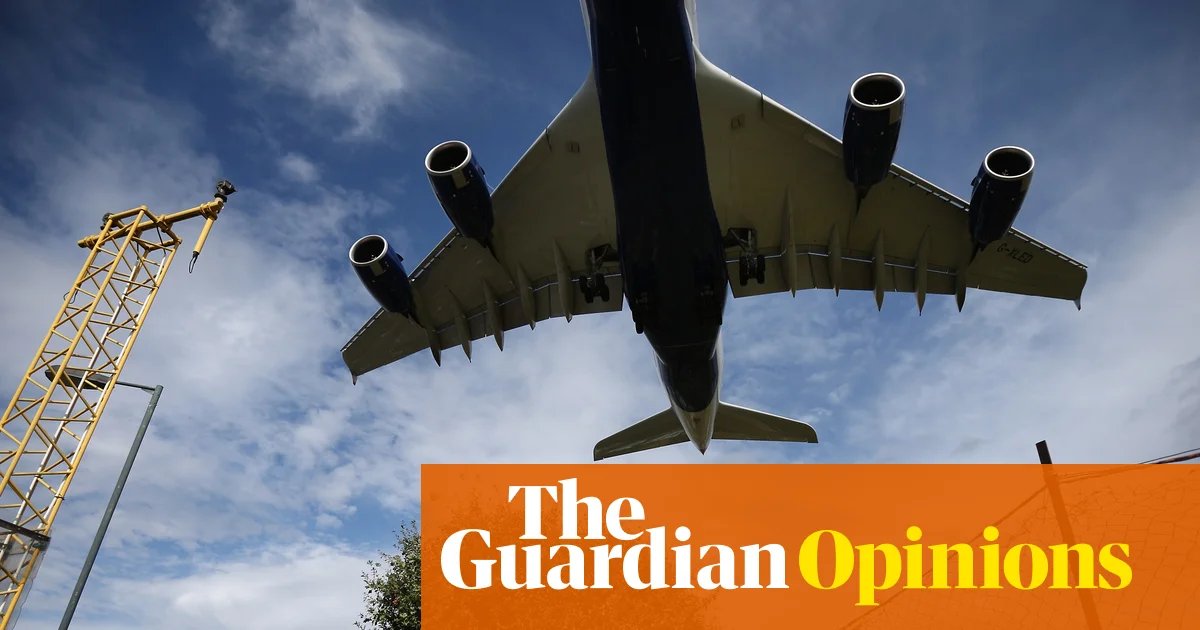
Infrastructure sends politicians berserk. Propose more money for the health service or reopening youth clubs and frowns break out all round. Can we afford it? But shout infrastructure and cheers go up. The word suggests glamour, chest-beating and “growth”. Reason flies out of the window.
The saga of Heathrow’s third runway beggars belief. A foreign-owned private company wants to make more money out of its cramped west London investment. The airlines are sceptical and passengers will have to pay surcharges higher than any in Europe. Meanwhile fields lie empty round its rival, Gatwick, and capacity at London’s third airport, Stansted, is underused.
The third runway is a nightmare. The official price tag is now a staggering £49bn but the overall budget for Heathrow’s expansion and operating expenditure could soar beyond £100bn. An unknown proportion of this will fall on the taxpayer. The proposal has been debated for 20 years and the opening constantly postponed. A date of 2035 has now become 2039. I would not take bets on 2045.
Sixty years ago, the British government agreed it was totally inappropriate for crowded and polluted Heathrow to expand in densely populated west London. Nor could an expanded Gatwick meet demand. The debate was over where to locate a new third airport. Sites in the Thames estuary and at Cublington and Stansted were researched. Stansted won. It already had an RAF base and it would service the expected growth in demand from London’s growing eastern reaches. Stansted opened in 1991.
The Tories privatised London’s airports. This turned what should have been a planned expansion into a battleground of feuding rivals. Each airport became a matter not of orderly growth but of quick profits, self-serving airline slots and a shifting army of amateur officials. Commissions came and went, in the grip of overpaid lobbyists. A Heathrow runway proposed by businessman Surinder Arora within the existing airport curtilage was brushed aside as insufficiently bold. As for Stansted, it was taken over by Manchester airport and is now hardly mentioned as an alternative to a third runway.
Airport public relations endlessly suggests it is about “business” and therefore relevant to “growth”, as if it were part of Andy Burnham’s re-industrialisation of Britain. Heathrow claims its new runway will create 100,000 jobs. But fewer than 15% of air travellers claim to be “on business”, and whatever happened to video conferencing reducing the need for intensive business air travel? As for Heathrow’s claim to be Britain’s leading cargo airport – “a quarter of all UK trade by value” – that is based, ludicrously, on the value of the gold ingots that form roughly 60% of the goods it transports. What banks shifting bullion has to do with growth is unclear.
Heathrow now has eerie echoes of HS2. Even its upper cost limit of £100bn is much the same. Both are plagued by extravagant planning horizons and consultancy-driven budgets in which each contractor has a vested interest in cost inflation. A third similar project is Hinkley Point nuclear power station, its cost currently rising through £50bn. Both the railway and the power station have been savaged by the National Audit Office. These projects are widely considered political white elephants and years from completion. Few dare say so. Meanwhile we should note that a new general hospital costs £1bn, as would rebuilding 50 secondary schools.
Stupefying sums are here being channelled into London and the south of England. That they have been born of the age of Boris Johnson’s “levelling up” and Burnham’s tilt to the north is bizarre. This week, conference politicians have cited budgets with endless savings: half a million off student exchanges here, a billion off quangos there. Yet no one mentioned that every year for the next decade John Healey’s Treasury will blow about £7bn just to relieve overcrowding on trains from London to Birmingham. This is almost 70% of his total rail investment.
The fact is that big infrastructure is monumental and sexy. No one boasts about building a care home, rather a fancy train or a nuclear power plant. One of Parkinson’s laws states that, while tiny items of corporate spending are debated for hours, big ones go through on the nod. They are too big to check and easy to promote.
It is absurd for the government to spend the next two decades upheaving Heathrow and tearing apart the M4 corridor for the profit of a band of foreign investors, when a simple alternative lies in growing Gatwick and Stansted. This whole debate is about tourism, and tourists can surely suffer the mild inconvenience of using the other two venues, as was intended half a century ago.
after newsletter promotion
The rest of us – politicians not least – should realise that this is serious money. There are serious uses to which it should be put.



-

 Oxford united FC3 weeks ago
Chris Gunter steps away Wales role to focus on Oxford United
-

 Oxford University3 weeks ago
New to the Oxford English Dictionary this September
-

 Traffic & Transport2 weeks ago
How poor public transport policy is putting the brake on cities | Road transport
-

 Student Life3 weeks ago
Oxford partnership allows OpenAI to use rare Bodleian texts to train ChatGPT
-

 Traffic & Transport2 weeks ago
Why should I have to pay more for buses if I don’t use a smartphone? | Bus fares
-

 Oxford united FC1 week ago
LIVE: Exeter City vs Oxford United – Jersey Mike's Trophy group stage
-

 Oxford united FC2 weeks ago
Northern Ireland fans laud Oxford United defender Ciaron Brown
-

 Oxford Events3 weeks ago
Four days of equestrian spectacle at 2026 Blenheim Palace International Horse Trials