
UK News
Simply divine: the extraordinary supernatural visions of Francisco de Zurbarán | Art and design

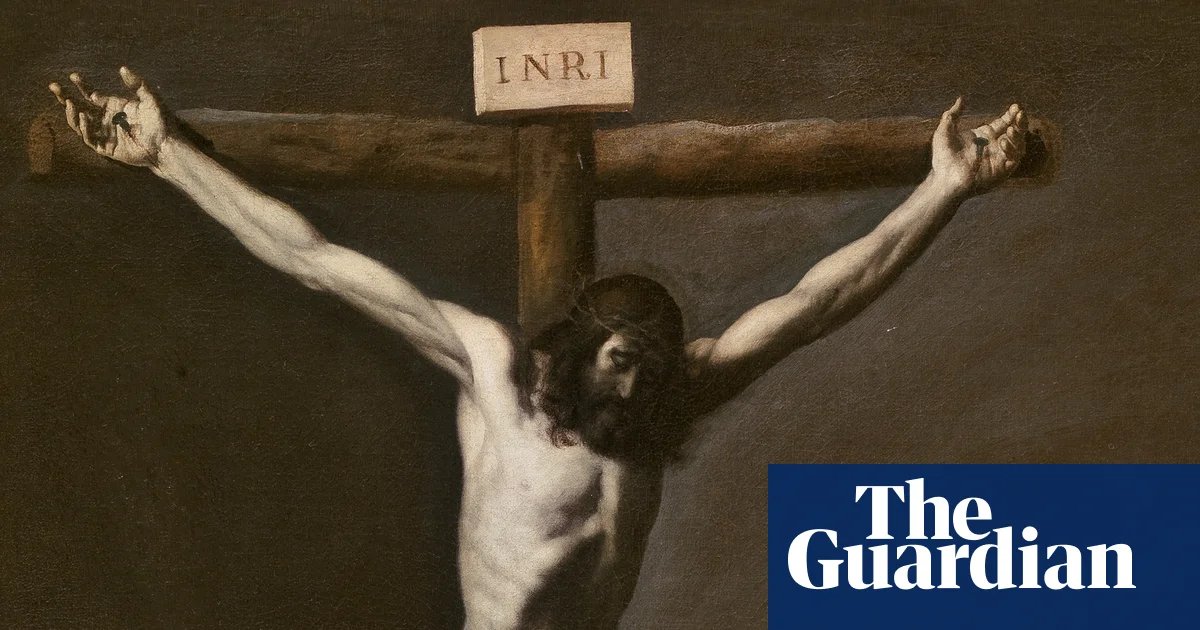
Against an impenetrable black ground, the crucified figure looms pale and shining. There’s almost no colour, beyond the trickle of blood on Christ’s feet from the nails driven through his flesh. His head slumps, and his carefully modelled face is at peace (no agony here). But the most striking part of the picture is surely the loincloth, which folds and crumples and bunches around his midriff – you can imagine passing your hand over it, feeling the linen’s volume and texture. In its original home, the monastery of San Pablo el Real in Seville, the painting was displayed with “little light”, according to the 17th-century Spanish artist and writer, Antonio Palomino. “Everyone who sees it, and does not know it, believes it to be a sculpture.” The paleness of the body, the fabric, must have loomed out of the dark like a vision.
Francisco de Zurbarán, who painted this solitary crucified Christ, is one of the three great artists of the Spanish 17th century. But, unlike his peers Velázquez and Murillo, he has never had a show to himself in the UK – until now, as his work forms the basis of a major exhibition about to open at the National Gallery in London. Compared with his precise contemporary and friend Velázquez (born in 1599, a year after Zurbarán), his work can seem stilled, becalmed. You can see the contrast clearly, in works commemorating Spanish military success that each of them were commissioned to paint for Philip IV of Spain’s new palace, the Palacio del Buen Retiro. Both are now in the Prado. Zurbarán’s The Defence of Cádiz Against the English has the quality of a frieze, as the Spanish generals look down serenely at the sea battle below. Velázquez’s The Surrender of Breda is all drama, encounter: a quicksilver painting that captures time as it flees.
Zurbarán’s skill is different. His is an artist of inner vision, of meditation and contemplation. Time does not flee, but stands still. He has a paradoxical quality, making you wonder what it is that you are looking at, partly because he can make the immaterial seem solid and touchable, partly because at times his works depict two planes of reality simultaneously.
Take one of the first in the National Gallery exhibition: The Apparition of Saint Peter to Saint Peter Nolasco, the latter saint being the founder of the Mercedarian order of friars, whose mission was to recover fellow Christians who had been captured by Muslims during conflicts in the Mediterranean. (The work was one of two dozen commissioned in 1629, early in Zurbarán’s career, for the monastery of the Merced Calzada, Seville, now visitable as the city’s Museum of Fine Arts.)
St Peter Nolasco is on the right, enrobed in white, and he “sees” St Peter – crucified upside down – hovering on a backdrop of ochre clouds. But St Peter Nolasco hardly seems to be in the realm of the real himself. We are not “with” him, wherever that might be (the shadowy background is entirely abstract). The painting seems to be offering itself as a double refraction of unreality, as if it was itself a vision.
There were good theological reasons for painting like this at the time: in the wake of the Council of Trent, whose deliberations defined the Counter-Reformation, religious art was charged with a direct, clear purpose: to move the viewer to devotion. Aside from the year or so that he spent in Madrid painting for the court in the mid-1630s, his career was largely based in Seville, and his clients were mostly the hugely powerful religious foundations of the city and the wider region.
Just then, Seville was wildly prosperous. Since 1503, it had had a monopoly on trade with Spain’s viceroyalties in the Americas – a status of which Zurbarán took advantage, sending out over 100 canvases for export to Lima, Buenos Aires and elsewhere. Zurbarán did provide secular scenes for Philip’s Buen Retiro – aside from his sea battles at Cádiz, 10 paintings of Hercules pounding through his labours, as well as a curious, colossal head of a man that startles when it is glimpsed through the enfilade of rooms in the National Gallery. But it is in paintings of the divine and the spiritual that he excelled.
Sometimes these commissions were on a stunning scale, and must have required a busy studio – as in the 24 paintings for the Merced Calzada in Seville, or the 15 x 10m altarpiece for the Carthusian monastery of Nuestra Señora de la Defensión, just outside Jerez de la Frontera. The last monks moved out recently, and it is now possible to visit the honeyed-stone establishment, with its baroque facade stuck on to the front of the former 15th-century Renaissance frontage. But there in the church you have to imagine the full force of Zurbarán’s altarpiece, with its dozen paintings set between gilded sculptures since, in the wake of the Napoleonic wars and the dissolution of Spain’s monasteries in 1835 these – like many other works in Spanish churches – were sold off and scattered.
Scholars have debated the altarpiece’s original layout. The National Gallery’s putative reconstruction has Zurbarán’s enthroned Virgin in the most prominent position, flanked by his Adoration of the Magi and Circumcision. If the gallery is right in supporting this reconstruction, it will be the first time the works have been set alongside each other since the dissolution.
From the vast in scale to the intimate and hushed: some of Zurbarán’s most arresting works are not these busy, exciting scenes of saints and biblical stories but his remarkable small-scale still lifes. He was an extraordinary painter of the texture and weight of things. In a work in Seville’s Museum of Fine Arts – not in the London show – the most thrilling part of the scene of St Hugh’s visit to the founders of the Carthusians is, to me, not the miracle of the meat turning to ash, or even the austere faces of the monks, but the exquisite breadiness of the bread rolls, and the smoothness of the blue-and-white ceramic carafes that, at the base, turn rough and unglazed.
Zurbarán’s son Juan – who died in the catastrophic outbreak of plague that robbed Seville of its prosperity and half its population in 1649 – made still lifes that provide an interesting contrast to his father’s. They are more luscious, more overflowing with lilies, marigolds, jasmine, pears and lemons than his father’s, where each object sits in its own space, self-contained. As in his paintings of visions of the divine, a small-scale row of dishes and vases made late in his career, around 1650, shines out against a sepulchral background.
An earlier work, from 1633, has a dish of citrons reflecting gold into their silver platter; a basket of oranges complete with a twig of leaves and blossom (accurately, since oranges flower and fruit simultaneously) and a cup of water sitting in a silver dish with a rose lying on its rim. The fruit and the flowers can be read as symbols of the divine. But as with Zurbarán’s paintings of visions, these works seem to invite you into the illusion that you are seeing tangible things, objects over whose surfaces you want to run your fingers – and something otherworldly, things prompting contemplation of the supernatural.
The ambiguity in what we are being invited to see is at its strongest and most compelling in the final work in the exhibition. It is small, and you might whisk past it as you head for the exit, mistaking it for just another crucifixion with a praying figure in the foreground. But look again: it turns out that the figure standing before Christ – against another of Zurbarán’s darkened backgrounds – is a painter. In his left hand are brushes, and a palette loaded with paints that are surely just right for making the figure’s very own flesh tones and robe. The artist’s right hand is clamped to his heart, his ruddy face looking upwards in awe at his saviour – who, by contrast, is grey of skin and quite dead.
Who is this figure with his paints standing at the foot of the cross? At times he has been identified as St Luke, patron saint of artists. But it’s irresistible not to consider him, in a sense, also Zurbarán himself. It’s impossible not to think about the very act of painting when looking at this work. Painting as an act of devotion, wonder and prayer. Painting as a means of seeing the divine. Painting as a way of imparting visions that hover between the real and the unreal, the illusory and the tangible.
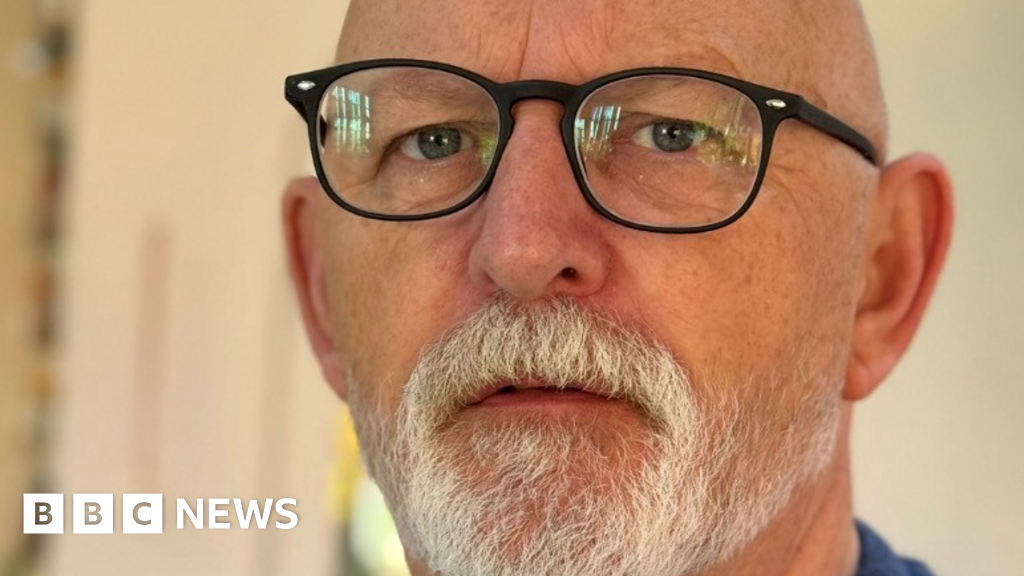
The family of Shaun Burton, say they are “devastated” by the loss.
Source link

Key events
In the opening half an hour against Cape Verde, Mikel Oyarzabal, the centre-forward, did not get a single touch.
Kyle Green gets in touch: “Your highlighting of Lalas and his absurdity is something that has prevented me from wanting to watch the coverage on Fox. While every channel has its pros and cons I just can’t.
“I’m 45 and probably the youngest of anyone who remembers him as a player instead of an opinionated insert insult here. As for the match this could be more competitive than it looks on paper Spain need a win the pressure is on them. Saudi Arabia could hold out for a draw and see what happens in their last match. “
News from the England camp, and it seems to be good news on Declan Rice.
“I’m ready and fit, raring to go. I was feeling a little bit of neural pain in my hamstring, which I was managing from after Christmas with Arsenal for a very long time. Obviously, not a lot of people would have known that. It was all behind-the-scenes stuff but it was a smart decision.
“In the end, that last 20 minutes is probably where you pick up the most, and it’s where you play a 70-minute match. But that last 20 is where you really feel your body going for it. And I think it was a smart decision because the last few days I felt really, really good.”
Alex Reid has penned today’s weekend special Football Daily.
Portugal v Uzbekistan on Tuesday enticingly pits the incredibly nice, incredibly 41-year-old-superstar-tolerant Roberto Martínez against Fabio Cannavaro, who’s won a Ballon d’Or as a player and the Chinese Super League as a coach. While the fixture following that game really does see the dream of Thomas Tuchel – in his first international job with England – taking on Queiroz, who is in charge of his ninth national side with Ghana.
The expected formations are 4-2-3-1 for Spain, and 5-3-2 for the Saudi Arabians.
The Saudi team features two Donis changes: Ali Lajami, a defender, and Nasser Al Dawsari, a midfielder, are preferred to Mohammed Abu Al Shamat and Mohamed Kanno. You may recall Salem Al Dawsari, the Saudi captain, as the man who scored the winner against Argentina.
An entertaining read, even for those of us who have just seen the clips.
In a conversation where his co-panelist is casually reminiscing about his days playing alongside Messi or exchanging shirts with Ronaldo Nazário at the World Cup, what exactly is Lalas going to talk about – coming on as a second-half substitute for Earnie Stewart in a friendly against Scotland in 1998? Helping the Kansas City Wizards finish last in the 1999 MLS Western Conference? Did Lalas enjoy an elite playing career? No. But does he do the background reading that could compensate for his relative lack of standing in a conversation with titans like Henry and Zlatan? Also no. But is he charming or funny or charismatic or otherwise magnetic on screen? Eh, no.
For the record, I once interviewed Alexi Lalas on the challenge of playing against Romario in the 1994 World Cup. He had this to say:
“He could kill you in so many different ways. If you remember from that World Cup, he scored so many types of goals. That ranged from solo adventures to an outside-of-the-right-foot half-volley off a corner kick. Romario was both the most difficult to play against and the best that I have faced.
“Roberto Baggio was doing his thing, but in terms of consistency and living up to the hype, he [Romario] was the best. As with all stars, there was a moment when the fans sit up in their seats, and that was a feeling I got with Romario. When it got close to him and the potential for his involvement in a play was there, everybody sat up in their seat. They knew that something spectacular would be happening.”
Saturday’s match reports here.
The Saudi Arabia coach, and Blackburn legend, Georgios Donis, spoke about the challenges facing his team: “Spain is not the same team when Yamal or Williams are on the bench.
“While they still have plenty of possession, they lack the individual one-on-one penetration when these two are missing. I’m not saying it’s a problem for Spain, but when those players are missing, they play in a different way. We saw this very clearly against Cape Verde.
“We are playing against one of the best teams in the world, and it’s very important that when you play against these kinds of teams, you should enjoy the experience and respect the opponent, but not too much.
“It is very hard for any team playing against Spain to have any time in possession. So what we must do is to be more in control of our movement and compact, and when the ball goes through the lines, be able to defend dynamically.
“It’s nice to see miracles in football, and we’ve seen favourites losing against underdogs. Of course, it’s great for Saudi football to have a great memory of the result against Argentina, but we aren’t drawing anything from that.
“I think we’ll feel more pressure in that [Cape Verde] game than we will against Spain.”
The Spain coach, Luis De La Fuente had this to say in his Saturday press conference: “This generation of footballers is highly competitive and really fired up… It’s going to be a completely different story,” he said at his pre-match press conference on Saturday. There is no drama or crisis. The bottom line is simply that we need to win tomorrow.”
Four changes for Spain: Lamine Yamal, Pedro Porro, Dani Olmo and Alex Baena also come into the side with Marcos Llorente, Fabian Ruiz, Ferran Torres and Gavi dropping out.
The teams – Lamine Yamal starts
Spain: Simon, Porro, Cubarsi, Laporte, Cucurella, Gonzalez, Rodri, Yamal, Olmo, Baena, Oyarzabal. Subs: Raya, Joan Garcia, Pubill, Grimaldo, Eric Garcia, Llorente, Merino, Torres, Fabian, Gavi, Pino, Williams, Zubimendi, Munoz, Iglesias.
Saudi Arabia: Al Owais, Abdulhamid, Tambakti, Lajami, Al Amri, Al Harbi, Nasser Al Dawsari, Al Khaibari, Al Juwayr, Al Buraikan, Salem Al Dawsari. Subs: Al Aqidi, Al Kassar, Majrashi, Yahya, Al Shehri, Al Boushal, Kadesh, Al Johani, Al Ghannam, Al Hajji, Al Hamdan, Mandash, Kanno, Thakri, Abu Al Shamat.
Referee: Raphael Claus (Brazil)
Perhaps one of the Saudi -players can write themselves into this high-grade selection?
Perhaps it can be their goalkeeper.
Madrid screening of Spain v Saudi Arabia cancelled due to heat
The public screening of Spain’s World Cup match against Saudi Arabia in Madrid on Sunday has been cancelled because of extreme heat forecast for the Spanish capital, officials said.
The match, due to kick off at 6pm local time on Sunday, had been scheduled to be shown on a giant screen installed by the Spanish football federation (RFEF) at a fan zone in Plaza de Colón in central Madrid.
Madrid city council and the federation decided to cancel the screening after national weather agency AEMET issued an orange heat warning – the second-highest level – for the Madrid region, with temperatures forecast to reach 40C.
“The decision has been taken with the aim of protecting the health of attendees, event staff and support services involved in the event,” Madrid city hall said in a statement, apologising for any inconvenience.
Officials urged supporters to watch the match indoors in air-conditioned spaces and avoid prolonged exposure to the heat.
Large parts of Spain are experiencing unusually high temperatures for June as a mass of hot air from North Africa moves across the Iberian Peninsula.
A total of 13 of Spain’s 17 regions are on orange alert for heat on Sunday, while the northern Basque Country bordering France is on red alert, the highest level.
Authorities advised residents and visitors to take precautions during the heatwave, including drinking water regularly, staying in cool environments, limiting outdoor physical activity during the hottest hours of the day and taking extra care of vulnerable people. AFP
Can Saudi Arabia repeat the magic of 2022?
Argentina arrived in Qatar on a 36-game unbeaten run. When Lionel Messi opened the scoring from the penalty spot after 10 minutes, a comfortable afternoon seemed in the offing. Saleh al-Shehri and Salem al-Dawsari had other ideas, Argentina had three goals disallowed for offside in the space of 13 minutes and the greatest comeback in Saudi Arabia football history was made. Argentina went on to lift the trophy, while defeats to Poland and Mexico meant the Saudis did not reach the knock-out stage.
Unai Simon over David Raya is a controversial choice for De la Fuentes. The Arsenal keeper could lay claim to being Europe’s best this season.
“Those at the Champions League final had a few more days, so I got there on the Wednesday night,” Raya says. “I arrived a bit before Fabián [Ruiz]. I was saying hello to some of the others in reception when he arrived. I went to say congratulations; that was almost the first thing I did. I couldn’t really talk [to him] after the final; I just didn’t have it in me. The next day we talked about the game properly. Just two mates chatting … I was happy for him that he could lift the trophy for a second time.”
A high pressure game for the European champions, as Sid Lowe reports.
“If we had scored one, the game would have changed,” Martín Zubimendi said. Immediately after the game, De la Fuente had offered a simple analysis: when the ball doesn’t want to go in it doesn’t want to go in, he insisted. Spain had racked up 27 shots, after all. Ferran Torres had hit the bar and seen another clear opportunity saved. Vozinha, the 40-year-old goalkeeper who stopped that, saved six more and was named the man of the match. “There’s nothing to reproach the team for,” Rodri said. “We generated chances but couldn’t put it away; the good thing is they created almost nothing.”
We wait to see what role Lamine Yamal will play today. His coach would surely like to be able to use him.
The worst mistake we could make would be to compare him to anyone. He is the midst of a process. He has exceptional footballing maturity and lives it all with total naturalness. He has great serenity and strength. We have to let him follow his path but those players who have something different are ready for that. They’re geniuses, like Dalí [who] can paint a picture, or Michelangelo. They’re different. What is exceptional to us, isn’t to them. In those extremes, they feel comfortable. Why? Because they are different. What we think is exceptional, they consider normal.
Preamble
Spain’s campaign did not get off to a flying start, and Luis de la Fuentes may wake up in the night to visions of Cape Verde’s Vozinha. He will have Georgia on his mind ever since Monday. Saudi Arabia are no pushovers and gave Uruguay a scare in their opening match. Memories of downing Argentina four years ago still abound, and so Spain might beware. They can ill afford to go into the final game with Uruguay at a disadvantage. All eyes on Lamine Yamal, whose fitness situation remains opaque, though Spain need their other forwards to come to the party.
Kick-off 5pm UK, 1pm ET, 2am AEST. Join me.

A topless man can be seen driving erratically in Edinburgh before abandoning his car and attacking a black man and a delivery rider.
Source link



-

 Oxford University4 weeks ago
New to the Oxford English Dictionary this September
-
 Oxford united FC4 weeks ago
Chris Gunter steps away Wales role to focus on Oxford United
-
 Oxford united FC2 weeks ago
LIVE: Exeter City vs Oxford United – Jersey Mike's Trophy group stage
-
 Student Life3 weeks ago
Oxford partnership allows OpenAI to use rare Bodleian texts to train ChatGPT
-

 Traffic & Transport2 weeks ago
Why should I have to pay more for buses if I don’t use a smartphone? | Bus fares
-

 Traffic & Transport2 weeks ago
How poor public transport policy is putting the brake on cities | Road transport
-
 Oxford united FC3 weeks ago
Northern Ireland fans laud Oxford United defender Ciaron Brown
-
 Oxford united FC2 weeks ago
Oxford United lose to Exeter City on penalties in Jersey Mike’s Trophy