
Student Life
New research shows high temperatures affect sex ratios at birth

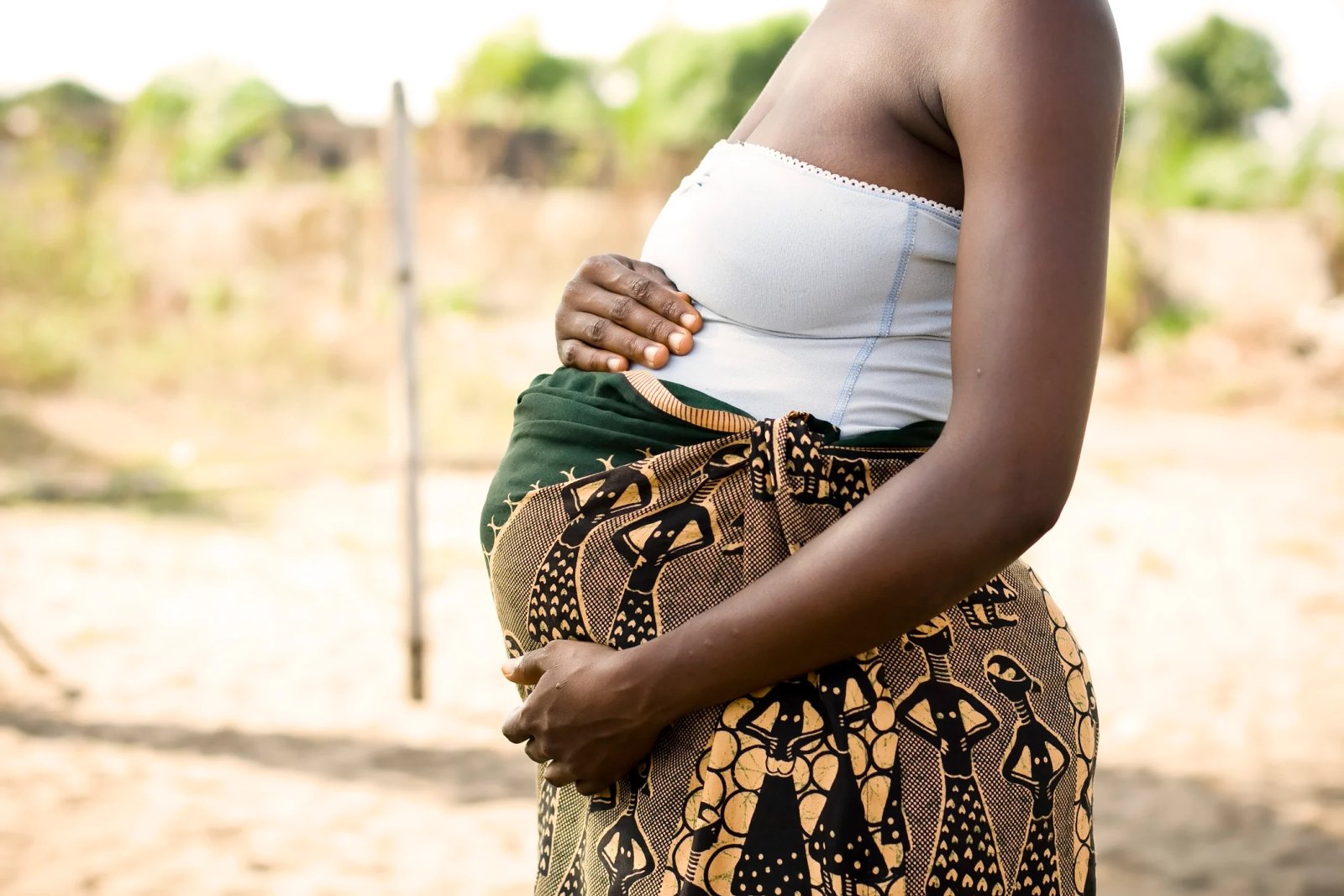
Authored by Dr Jasmin Abdel Ghany, Nuffield Postdoctoral Prize Research Fellow at Nuffield College and Associate Member of the Leverhulme Centre for Demographic Science and the Department of Sociology, along with Dr Joshua Wilde, Senior Scientist and Researcher, Leverhulme Centre for Demographic Science, and Professor Ridhi Kashyap, Professor of Demography & Computational Social Science, Department of Sociology and Leverhulme Centre for Demographic Science, the study analyses more than five million births across 33 sub-Saharan African countries and India. By linking large-scale survey data with high-resolution temperature records, the authors examine how exposure to heat during pregnancy affects the sex ratio at birth.
Extreme heat is not only a major public health threat. We show that temperature fundamentally shapes human reproduction by influencing who is born and who is not born. Our findings indicate that temperature has measurable consequences for foetal survival and family planning behaviour, with implications for population composition and gender balance. Understanding these processes is essential for anticipating how the environment affects societies in a warming climate.
Dr Abdel Ghany, Nuffield Postdoctoral Prize Research Fellow in Sociology
Sex ratios at birth – the number of boys born relative to girls – are a key demographic indicator. They reflect underlying patterns of maternal health, prenatal survival, and, in some contexts, gender discrimination. In recent decades, skewed sex ratios have raised concerns in several regions, particularly where son preference and sex-selective abortion are prevalent. This research links these concerns to worries about increasing exposure to extreme heat worldwide, raising new questions about how environmental stress affects pregnancy outcomes and population composition.
The results show that temperatures above 20°C are consistently associated with fewer male births in both regions – but through different mechanisms.
In sub-Saharan Africa, exposure to high temperatures during the first trimester of pregnancy is linked to a decline in male births. This pattern is consistent with increased prenatal mortality driven by maternal heat stress, and is particularly pronounced among women living in rural areas, those with lower levels of education, and those with higher birth orders.
However, in India, where sex ratios have historically been distorted by son preference and sex-selective abortion, the effects appear later in pregnancy. Higher temperatures during the second trimester are associated with fewer male births, especially among older mothers, high-parity births, and women without sons in northern states.
This pattern suggests that heat exposure may reduce access to, or use of, sex-selective abortion, temporarily narrowing gender imbalances.
Dr Abdel Ghany, lead author of the study, said: ‘Extreme heat is not only a major public health threat. We show that temperature fundamentally shapes human reproduction by influencing who is born and who is not born. Our findings indicate that temperature has measurable consequences for foetal survival and family planning behaviour, with implications for population composition and gender balance. Understanding these processes is essential for anticipating how the environment affects societies in a warming climate.’
The study highlights that the effects of heat are not evenly distributed. Women with fewer resources and those living in more vulnerable settings are more strongly affected, raising concerns about widening health inequalities under climate change.
By combining large-scale demographic data with detailed climate records, this research demonstrates how environmental change can shape fundamental population processes. It contributes to growing evidence that extreme heat is not only an environmental and economic challenge, but also a major public health and demographic issue. As global temperatures continue to rise, the authors argue that protecting maternal health and improving access to healthcare will be central to reducing the long-term impacts of heat on reproduction and population dynamics.
Read ‘Temperature and sex ratios at birth‘ in full in Proceedings of the National Academy of Sciences of the United States of America (PNAS).
For more information about this story or republishing this content, please contact [email protected]
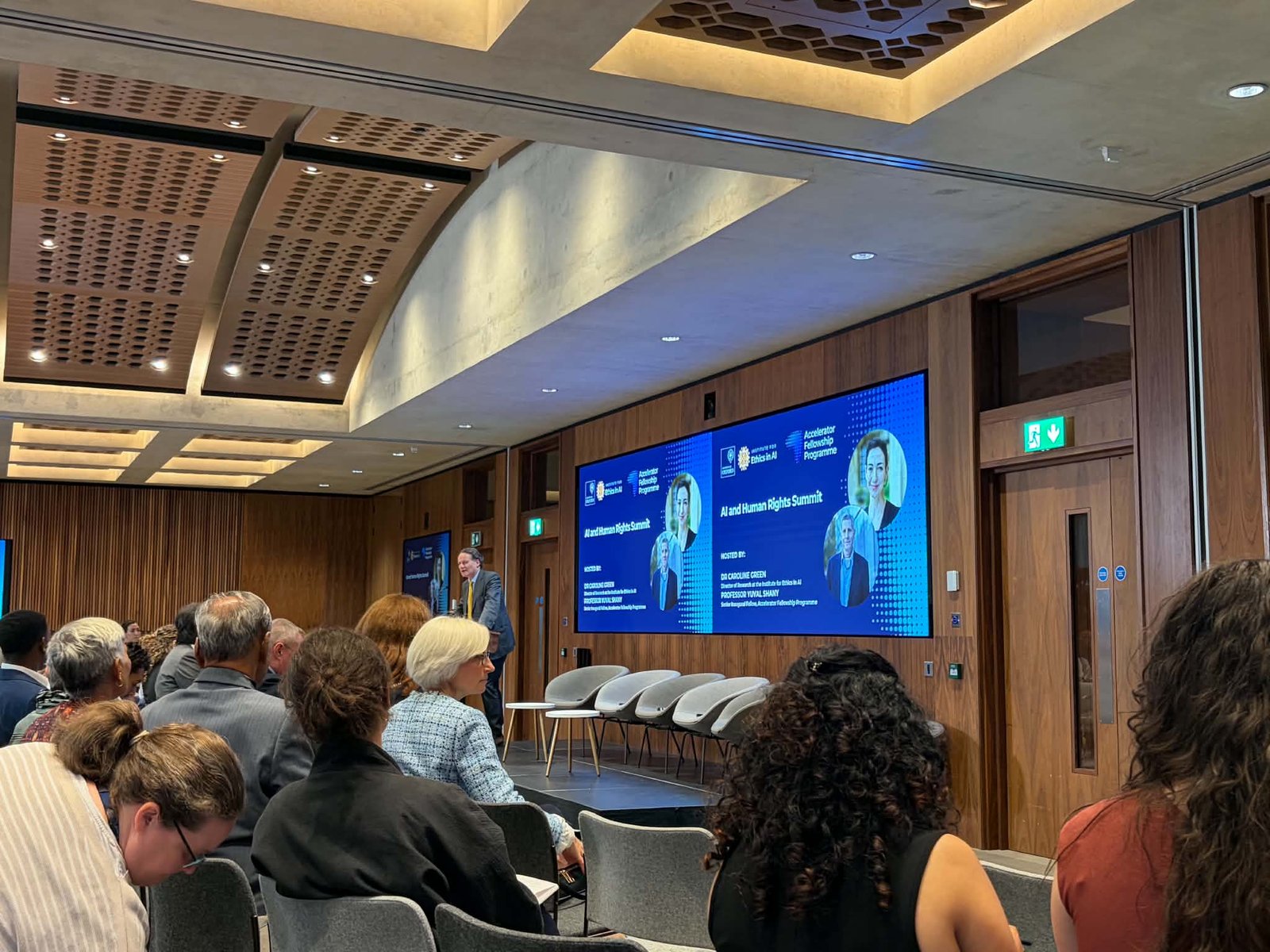
Human rights experts called for stronger legal protections against the risks posed by artificial intelligence (AI) at an Oxford AI and Human Rights Summit, with speakers arguing that human rights standards must be embedded into AI governance and technology.
The summit was hosted at the newly redeveloped Rhodes House in Oxford and organised by the Institute for Ethics in AI. It built upon Professor Yuval Shany’s consultation on a white paper, published in 2025, on the need for and feasibility of an international AI Bill of Human Rights, which proposes ways to adapt existing human rights standards so as to better address some of the unique challenges posed by AI systems and their uses.
An opening video address from the United Nations High Commissioner for Human Rights Volker Türk outlined how AI policy can keep pace with a fast-developing technology. He said that “great power demands responsibility on the same scale, and when the two don’t match, we have a problem”. Corporate control, he explained, means that AI policy stretches beyond existing national borders. He continued to praise this summit for bringing together leaders and representatives at the forefront of the discussion.
Speakers called on the UK government to establish legislation, recalling Labour’s manifesto commitment to an AI Bill of Human Rights. The panellists broadly agreed on the importance of human rights, but appeared less aligned on what enforcement should look like in practice.
In an exclusive interview, Michael O’Flaherty, the Council of Europe’s Commissioner for Human Rights, told Cherwell that political short-termism Continued on pg. 2 risks undermining efforts to address the long-term consequences of AI. “We are infected across our societies with shorttermist responses to the great issue of our societies and politics,” he said, adding that electoral cycles make it difficult for politicians “to think beyond the next election”.
O’Flaherty also noted that younger generations no longer take the international human rights system for granted. “There is no longer an assumption that the human rights system is safe, that it will survive,” he told Cherwell. He argued that political leaders increasingly treat human rights selectively, saying: “Increasingly, leaders are treating human rights, if they are respected at all, as an a la carte buffet. We take those rights because they serve our goal. We’ll ignore others because they get in the way.
The summit also heard concerns about the effects of AI-generated misinformation on communities that may have limited access to, or awareness of, the technology itself. An audience question asked human rights experts to consider the impacts of AI on populations, such as those in India, who might be unaware of its existence. The focus on the impact of AI on populations in developing countries more vulnerable to the power of big tech was a key theme of the summit.
Eileen Carter from the South African Human Rights Commission warned that underrepresentation of African languages in large language models could exacerbate existing inequalities. She also raised concerns about the effects of misinformation and deepfakes on elections, referring to more than 360 deaths associated with unrest and the amplification of narratives.
The third panel, which offered a civil society perspective on promoting human rights in AI systems, offered some hope. Across all speakers, the potential for AI to transform the beliefs that underpin human rights, including the rights to water, education, and an interpreter, was debated. When asked about AI’s potential to unravel and alter the definition of human rights, such as what is included in the ‘right to education’ O’Flaherty told Cherwell: “The damage that can be done by AI has hit more dramatically and more visibly than perhaps any other sector within education through the phenomenon of cognitive loss, of cognitive transfer. We’re only beginning to realise the extent to which we have allowed education to be fundamentally undermined for an entire generation.
“It’s time to seize that now and engage it. I’m not sure that the classic understanding of the human right to education is particularly well-framed for this extraordinary development.”
In a discussion on different countries’ regulatory approach to AI, Suresh Venkatasubramanian, professor at Brown University and former AI advisor to US President Joe Biden, argued that AI systems should not be treated as inevitable developments beyond human control. “We continue, I think, to talk about AI as a thing that emerged out of nowhere that we just have to deal with,” he said. “We forget that these aren’t coming from an alien planet and they were built by entities that choose to build them in a certain way.” He called for pressure on technology companies to make different choices about how AI systems are developed.
Questions of accountability also emerged during discussions about AI’s potential to improve access to justice. Research presented by Philippa Webb said that only 10% of people who have access to a lawyer can get one while there are thousands of bookings for an interpreter in a court covering 150 languages. However, this progress is not cemented as “general-purpose chatbots hallucinate 58% of the time on a legal task”. The use of AI in moderating legal proceedings raised fundamental questions about humanity and authority. Thompson Chengeta from Liverpool John Moores University said that “human rights is the last line of defence so when we say we want a human rights based governance… human rights is not an idea, it is an obligation. There is a gap that can only be recovered by a legally binding instrument”.
The event culminated in a panel offering an industry perspective. Co-host Dr Caroline Emmer De Albuquerque Green questioned representatives from Meta, Google, Microsoft, and OpenAI. Michael Karimian, who works in digital diplomacy at Microsoft, discussed the role of private sectors in engaging with AI, defining corporate responsibility as something which “provides transparency and identified risks”.
All companies supported having formal programmes to ensure that they have an AI policy in place. Within their own companies, they suggested protective measures such as specialised training to ensure that policies, such as whistleblowing, are understood. Alexandria Walden from Google described how consultations with stakeholders could be used to identify when the product breached users’ boundaries. These assessments, according to OpenAI’s spokesperson, “feedback into tangible technical input” and “benchmark it”.
Fundamentally, understanding the rationale behind human rights is imperative, though lacking. Alexandria Walden from Google said: “Whether or not they understand human rights, they care enough to infuse it in their company… we might not always get it right, but it is something we care about.”
Where former panels discussed controls to ensure human rights are considered in the development and implementation of AI products, this panel focused on mitigation. A spokesperson from Google pointed out that technology is inevitably going to move faster, so multiple tools are needed. Companies, OpenAI’s representative noted, still encounter issues such as discrimination and free speech. Consequently, they regard this as an additional policy which companies have a structured model to deal with, but newer companies, and newer industries, haven’t learnt it yet.
In her concluding remarks, Green called for policy makers to “make the abstract actionable” at both governmental and corporate levels. She argued that, by framing the issues posed by AI as human rights issues, we gain a “foundation” for recognising AI’s many societal impacts.
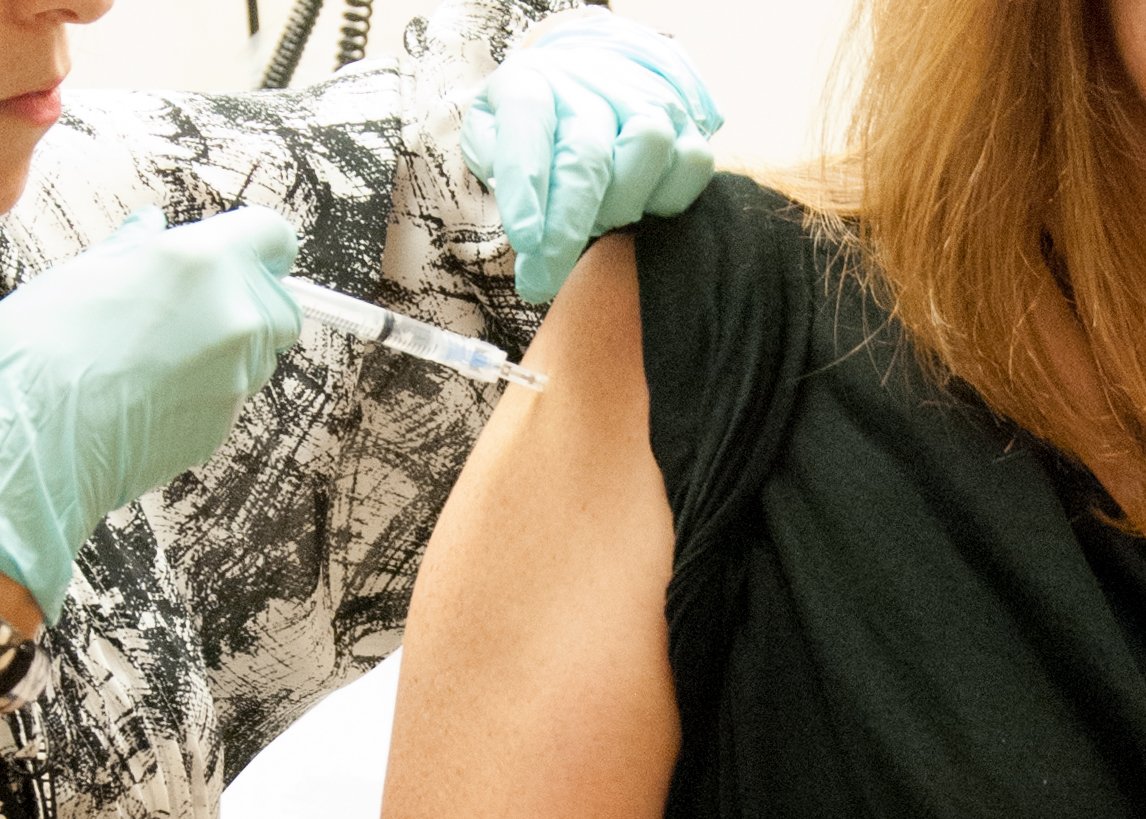
Ugandan participants in a clinical safety study received an Oxford developed Ebola vaccine this week.
Researchers vaccinated the first participants on 6th October in Masaka, Uganda. The phase follows the launch of a first-in-human Phase I trial in the UK evaluating the same vaccine candidate.
They received the vaccine as part of an evaluation of the safety and efficacy of a ChAdOx-based Bundibugyo Ebola vaccine candidate developed by the Oxford Vaccine Group (OVG) and the Pandemic Sciences Institute at the University of Oxford.
Development for this vaccine began in May this year in response to the ongoing Ebola outbreak in the Democratic Republic of the Congo (DRC). The research, led by OVG’s Professor Teresa Lambe and Professor Simon Drysdale, is funded by the Coalition for Epidemic Preparedness Innovations (CEPI). No licenced vaccine for the Bundibugyo strain of Ebola virus currently exists.
In a statement to Cherwell, OVG said its involvement includes collaborating with the Ugandan research team to support “the study’s scientific design, clinical trial coordination, safety oversight, and evaluation of vaccine safety and immunogenicity”. The Phase I clinical trial addresses a rare strain of Ebola virus affecting communities in the DRC since May. The phase is a collaboration between the Medical Research Council/ Uganda Virus Research Institute and the London School of Hygiene and Tropical Medicine (LSHTM).
Dr Nicole Lurie, CEPI’s Executive Director for Emergency Preparedness and Response, told Cherwell: “It [the Bundibugyo outbreak] remains the fastest-growing and second-largest Ebola outbreak ever recorded – and we currently remain without a licensed vaccine or treatment.” The Bundibugyo Ebola epidemic in the DRC has surpassed 8,600 cases, with almost half of infections proving fatal.
The outbreak was declared a Public Health Emergency of International Concern (PHEIC) by the World Health Organisation (WHO) in May.
OVG told Cherwell: “For more than a decade, the University of Oxford has performed many clinical trials of candidate viral-vectored vaccines. Some of the most promising vaccines used a modified chimpanzee adenovirus, a harmless version of a common cold virus. The Oxford-AstraZeneca (ChAdOx1) COVID-19 vaccine was approved for emergency use in the UK in December 2020 and was estimated to have saved six million lives during 2021 alone, and over 3 billion doses were used worldwide.” The adenovirus vector vaccine technology trialled in this study was successfully used worldwide as part of the Oxford-AstraZeneca COVID-19 vaccine.
More funding is necessary to ensure the development and approval of the Ebola vaccine. Lurie told Cherwell: “Without sufficient additional funding, we are at risk of not being able to develop these promising vaccine candidates… CEPI urgently needs US$128M now to keep our Bundibugyo emergency R&D response moving. Without it, we are putting the DRC, and the world, at tremendous risk.”

Spoilers Ahead!!
East of Eden is a special book in many ways. It is beautiful, for one, and loving too. John Steinbeck dedicated it to his editor and long-term friend Pascal ‘Pat’ Covici. In the preface, he describes East of Eden as though it were a box, a wrapped gift; for his dear friend, the author has packaged “the pleasure of design and some despair and the indescribable joy of creation”, there is also “on top of these” “the love I have for you”. Above that “gratitude and love,” trapped with all the “joy” and “despair,” is the empty space of human potential: “Still the box is not full.”
Steinbeck was born in 1902 in Salinas; thus, an unmistakable personal nostalgia colours the voice of the semi-autobiographical narrator. “I remember my childhood names for grasses and flowers,” he begins on the first page, “I remember where a toad might live and what time the birds awaken in the summer”. Throughout, despite, or perhaps because of, the various horrors the author explores, he always makes time for nature. In chapter eight we meet Cathy, one of those “monsters born in the world to human parents”. Amongst the schemes of her girlhood, Steinbeck remembers to mention “the young grass” that “bristled under the sun” and “the yellow dandelions”. In part, I think the explosion in East of Eden’s popularity is due to Steinbeck’s affection for Salinas Valley. The compulsiveness of his characters is present, as always, so is his ability to render any landscape powerful, visceral in prose. But there is something, ironically, lapsarian about East of Eden: it is a relic of the author’s own childhood.
Everyone enjoys beauty; a beautiful book, written in a determinedly readable style, is bound to become popular, not to mention the endless power of nostalgia. But there is something else in East of Eden, I believe, that has catapulted it from the fame of every book-tok influencer’s favourite lists to a multi-million dollar Netflix show. I read the book in 2023, perhaps a little ahead of the curve – if that’s possible for a book published in 1925. Since then, I have recommended East of Eden to everyone who asks. But, I would not say it is my favourite book; it might not be in my top five. Rather, I recommend East of Eden in the same way a film buff recommends Good Will Hunting.
It’s feel-good; it’s the ultimate feel-good book because it tells you that your life is your choice. Be good, be bad, be a little bit the one and a little bit the other: just don’t imagine for a second that it is not under your control to be so. The message emerges slowly over the first few hundred pages, but arrives suddenly at the forefront in chapter 24, through the voice of Lee, a Chinese man who cares for Adam Trask’s boys when both father and mother have abandoned them. Adam Trask, of course, embodies his biblical namesake as husband to the ‘monster’ Cathy, and father to the Cain/Abel parallel, Cal and Aran.
Lee describes the arduous process of translating Hebrew with four elderly Chinese gentlemen who live in San Francisco, smoking opium and solving whatever problems people bring them. After two years, he and the four elderly gentlemen can translate the passage – thus resolving a discrepancy in English translations of the Bible. “The American version orders men to triumph over sin… The King James translation makes a promise… But the Hebrew word, the word timshel – ‘thou mayest’ – that gives a choice,” Lee concludes, “It might be the most important word in the world”. Regardless of whether or not Steinbeck’s Hebrew translation is correct, which it likely isn’t, he’s right that ‘may’ is the most important word in the world: it is the belief in choice, the hope at the bottom of the jar, the empty space in the box that is “still not full”.
If it weren’t couched in the natural beauty of Salinas Valley, or the fascinating moral drama of the Trask and Hamilton families, Steinbeck’s message wouldn’t work so well. That said, the message is central to the book. Whilst other authors of his period reach for obscurity, designing their work to be a puzzle, a dream that requires clever interpretation, Steinbeck teaches a lesson. He delivers an earnest sermon. East of Eden is didactic; it is a fantastic book, it has beautiful language and compelling characters, but it is ultimately didactic. People enjoy reading it because it gives them a sense of control: Netflix could gamble millions on its popularity because they knew it was something that made people feel good about themselves, something they would want to watch on the screen.
East of Eden is a book like Pandora’s Box. It is well crafted, beautiful to look at. Inside, the author examines what he sees as the fringes of humanity, our best and worst parts: “Pain and excitement are in it, and feeling good or bad and evil thoughts and good thoughts.” When all this has been discarded, when we think the box is nearly empty and the indomitable Trask lies dying, Steinbeck presents us with the final gift. It is the word timshel, the choice to be good or bad in our lives: hope.



-

 Oxford united FC4 weeks ago
Chris Gunter steps away Wales role to focus on Oxford United
-

 Oxford University3 weeks ago
New to the Oxford English Dictionary this September
-

 Oxford united FC1 week ago
LIVE: Exeter City vs Oxford United – Jersey Mike's Trophy group stage
-

 Traffic & Transport2 weeks ago
How poor public transport policy is putting the brake on cities | Road transport
-

 Student Life3 weeks ago
Oxford partnership allows OpenAI to use rare Bodleian texts to train ChatGPT
-

 Traffic & Transport2 weeks ago
Why should I have to pay more for buses if I don’t use a smartphone? | Bus fares
-

 Oxford united FC2 weeks ago
Northern Ireland fans laud Oxford United defender Ciaron Brown
-

 Oxford Events4 weeks ago
Four days of equestrian spectacle at 2026 Blenheim Palace International Horse Trials