
Traffic & Transport
How 20mph on our roads benefits everyone | Transport

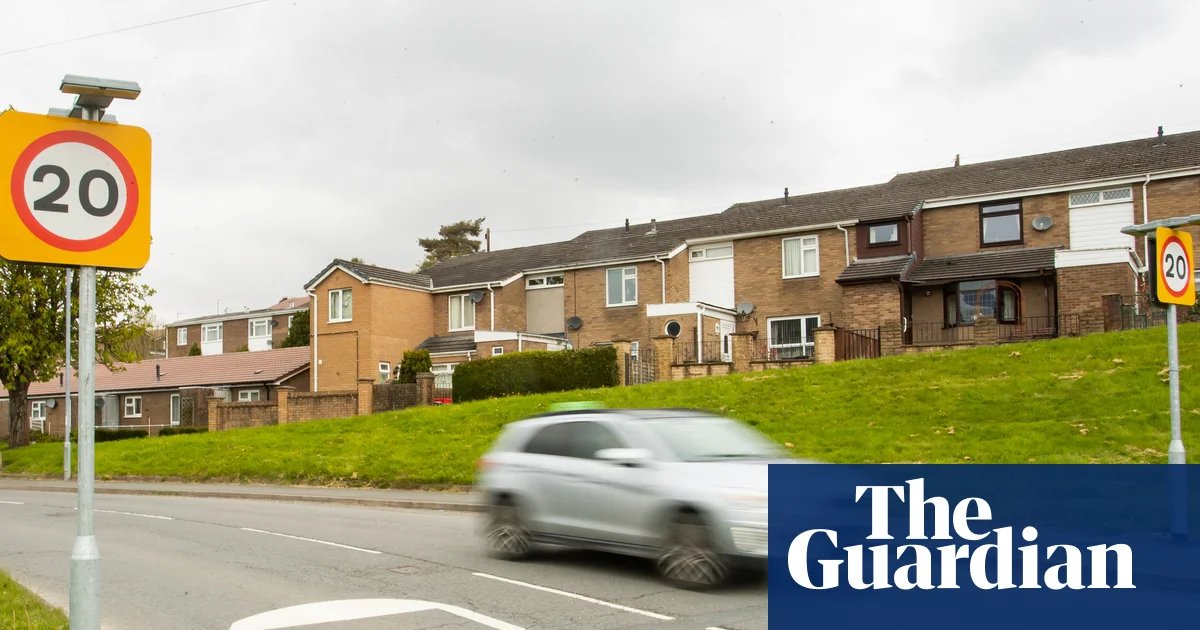
Thanks to Christian Wolmar for his insightful article on a 20mph limit and how it would be a good thing for Birmingham (Dear culture-war motorists, look to the future. We’ll all be driving at 20mph soon, 28 August). He is right to identify that the world has changed from when the car was king and we planned our city mobility almost exclusively around automobiles.
At 20’s Plenty for Us we have seen our movement developing from being classed as radical in the 2000s, to progressive in the 2010s and the new normal in the 2020s. As 20mph limits have been adopted by progressive authorities, we have seen the significant benefits extend beyond pedestrians and cyclists to those who drive.
There is clear evidence that when implemented on a wide scale, as in Wales, the average motorist benefits. Journeys for drivers took less than a minute more on average, and journey times were more reliable; car, van and taxi occupant casualties on urban and village roads were reduced by 29.6% in the first year; and insurance costs were reduced by £45 for the average driver owing to 20% fewer damage claims.
These are real gains for the average motorist, who also benefits from 20mph being the foundation for people to choose to walk or cycle instead of being in another car in front of them. Of course, when they are not in their car, the same people benefit, and their community becomes a safer and less stressful place.
Some drivers will always object to community needs being placed above their own judgment. But the world has changed, and soon a 20mph speed limit will be the urban and village norm, making all of our places better places to be.
Rod King
Founder and chair, 20’s Plenty for Us CIC
Good luck to Birmingham city council with their plan for a blanket 20mph speed limit. However, many speed cameras were turned off a decade ago to make austerity savings. As a result, current speed limits are widely (and sometimes enthusiastically) ignored with apparent impunity – particularly, it seems, the existing 20mph limits on residential roads.
If there’s a war on motorists here, it is one that motorists are now winning: if existing limits are not enforced, it seems unlikely that simply extending the zone will result in a change in behaviour.
John Hopkin
Moseley, Birmingham
Traffic & Transport
Badly parked ebikes in London are a menace – but other cities have shown us the solution | Agustin Guilisasti
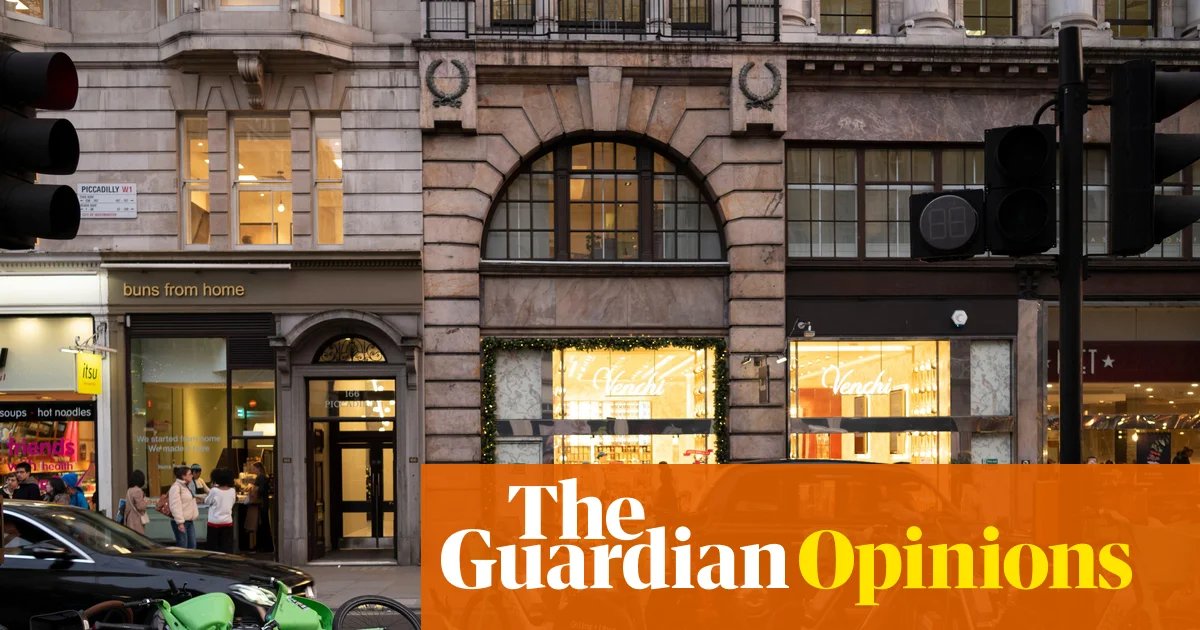
Shared ebikes have become a key part of London’s transport network. From Hounslow to Greenwich, it’s rare to step on to the street without seeing one, and they now facilitate millions of journeys every month. Forest recorded 3m rides this July alone, a new high. Demand keeps rising, and operators are logging ever-higher ride-per-bike ratios, a key measure of how intensively fleets are being used.
This is good news for London, which gains a cleaner, healthier and more sustainable way to get around – one that eases reliance on private car ownership. And, with new research revealing that air-quality improvements driven by the ultra-low emission zone (Ulez) have led to better lung health in children, the benefits of reducing polluting journeys are increasingly clear.
But shared ebikes also draw real criticism. Poorly parked bikes make near-daily headlines, and with good reason. I’m acutely aware of the criticism directed at us and I know this is a problem. Misparked bikes, and the cluttered pavements they leave behind, cause understandable frustration. It’s a nuisance, and – at worst – a genuine hazard for pedestrians and other road users. Especially disabled pedestrians or those with access needs.
But the solution doesn’t lie in fewer bikes – it lies in answering the crucial question around parking. Other European cities have shown that, with the right infrastructure and planning, shared ebikes can be woven into existing transport systems. They’ve done it by answering one key question: where should bikes go when they’re not moving?
London’s cycling infrastructure has come a long way – the Cycleway network now covers 450km (280 miles) – but our roads are still asked to accommodate buses, taxis, pedestrians, scooters, cyclists, private vehicles and mopeds within the same finite space. If London is serious about making shared ebikes part of its transport network, policymakers need to rethink how that space is allocated, particularly when it comes to parking.
Paris offers the clearest case study. The administration of the former mayor, Anne Hidalgo, didn’t just build cycle lanes; it fundamentally reconsidered how public space should be used once the pedalling stops. Her administration converted tens of thousands of on-street car parking spaces into Vélib’ docking stations (Paris’s version of Transport for London’s Santander bike scheme) and dedicated bays for bikes and shared micromobility. These, incidentally, also made room for wider pavements and more trees.
Hidalgo’s approach was informed by a simple insight: a single car parking space can hold about 10 bicycles. Repurposed, that space now serves hundreds of people a day instead of storing one stationary vehicle.
London hasn’t yet had this conversation, but the timing has never been better, for two key reasons. First, car ownership in the capital is declining. Almost half of London households no longer own a car, rising to nearly two-thirds in inner London. Yet about 18% of households in inner London still own two or more vehicles.
And, second, as part of the recently passed English Devolution and Community Empowerment Act, TfL has been tasked with designing a pan-London licensing framework for shared micromobility that will finally bring regulation to a market that has grown rapidly over the past five years. It is inevitable that parking for shared mobility schemes will be a key part of that framework’s design.
I see this scheme’s design as a real opportunity to question whether one of the world’s best-connected cities should keep prioritising scarce street space for second cars, over transport that serves thousands of people every day.
after newsletter promotion
For example, if the mayor and TfL converted even 15% of the on-street parking currently taken up by second cars into dedicated micromobility bays, this would create space for almost 1m shared ebikes – far more than the estimated 50,000 already in London and far more than we would ever conceivably need – with every one of them parked on the carriageway, not the pavement.
With help from operators, boroughs, TfL and the mayor, London could solve its ebike parking conundrum in an instant and get on with the most urgent task: integrating them into the transport system safely, sustainably and for the benefit of all Londoners.
Traffic & Transport
Uber drivers launch European class action over ‘soulless’ and ‘scary’ AI algorithm | Uber

Uber drivers have launched a landmark legal action against the ride-hailing company claiming they live in “constant fear” of a “soulless” algorithm it uses to set pay and allocate jobs.
Drivers from the UK, the Netherlands and other countries have joined the compensation claim that could run into billions of dollars. It alleges an AI-powered pay-setting system breaches data protection laws and pushes down their earnings.
The claim has been filed at Amsterdam’s district court, where the $150bn (£111bn) San Francisco tech company has its European HQ. It is the first collective legal move of its kind, according to the European Trade Union Confederation.
The case centres on an opaque “black box” algorithm fed on information about drivers, which sets a personalised rate for each ride. Drivers fear it pushes down fares to the minimum they are willing to accept.
Drivers have told the Guardian the algorithm has offered the same job to different people at different pay rates and offers them less for a return journey after a long trip because it calculates they will not want to come home empty.
“It is like someone watching you all the time and knowing about your weakness – the boss is the algorithm,” said Mohammed Shirwa, a 41-year-old Uber driver in Rotterdam. “All the time the algorithm is learning about you and what you are willing to accept. So the prices go low but you are stuck. It knows you need the job.”
Kola Oba, who calls the algorithm “soulless”, was taking a break in Tottenham, north London, with another driver when they were offered the same job.
The other driver was offered £27 and Oba was offered £23. The pair suspected it was because Oba, 48, had taken several cheap jobs and the AI assumed he would accept a lower price. Uber has previously said such discrepancies were down to other features of its system including GPS, surge pricing, promotions and testing.
“It’s scary – they have all my information and they are using it against my own wellbeing,” Oba said. “It defines how much I earn, how long I have to work, my time with my family, my resting time.”
AI models take an increasing role in assigning work to humans by using their rapidly increasing power to learn about a business’s needs and staff behaviour and then acting as a “synthetic manager”.
The Dutch data protection authority fined Uber €825m (£708m) last month for deactivating driver accounts through automated systems without adequate notice. Uber said it would appeal. The company is also planning to roll out driverless cars in European cities from London to Zagreb, initially with human supervisions.
The legal case is being led by the Worker Info Exchange, a campaign group whose founder, James Farrar, secured a UK supreme court ruling that Uber drivers should have worker rights.
Relating to about 241,000 drivers across the EU and the UK, the claim alleges that Uber has unlawfully used automated decision-making, including profiling, in dynamically setting pay and allocating work.
The lawsuit, which also claims the company unlawfully used driver data to train its AI models, is seeking damages for affected drivers and an injunction to halt the conduct which it claims breaches GDPR data regulations.
The drivers claim Uber has operated dynamic pay-setting in the UK since 2023, pushing down their annual incomes by about £5,000. The system was introduced in the Netherlands this year.
after newsletter promotion
Uber’s chief executive, Dara Khosrowshahi, said in 2023: “I think that what we can do better is targeting of different trips to different drivers based on their preferences or based on behavioural patterns that they’re showing us.”
Uber said it did not adjust the price offered for a trip based on an individual driver’s behaviour and that a history of accepting or rejecting trips was not used to personalise pay offers. Instead, it said, dynamic pricing allowed it to increase pay on less attractive trips, boosting a driver’s earning potential.
“While we haven’t seen the claim yet, we categorically reject the allegations,” an Uber spokesperson said. “The Uber app uses real-time information about the trip such as journey, duration and destination to calculate fares.
“Drivers see their earnings and where a trip is going before they decide whether to accept it. The vast majority of total fares continue to go where they belong: into drivers’ pockets, and the percentage that Uber keeps from fares has remained relatively flat.”
A 2025 study by academics at the University of Oxford, which Uber said relied on incomplete and selective data, found there had been substantial cuts in driver earnings after the “dynamic” algorithm was introduced.
Farrar said: “It’s bad enough that Uber’s dynamic pay algorithms have squeezed driver pay for years now but the intrusive and underhanded way in which Uber uses its technology to monitor and influence drivers’ behaviour is an affront to their dignity as workers and as human beings.”
Anton Ekker, a Dutch lawyer leading the case, said: “A computer algorithm should not independently make decisions that strip individuals of their livelihood. Like so many other online platforms, it should be held accountable for the large-scale exploitation of vulnerabilities of European citizens.”
Traffic & Transport
Sadiq Khan fined by fast-track court over untaxed car City Hall says is not his | Sadiq Khan
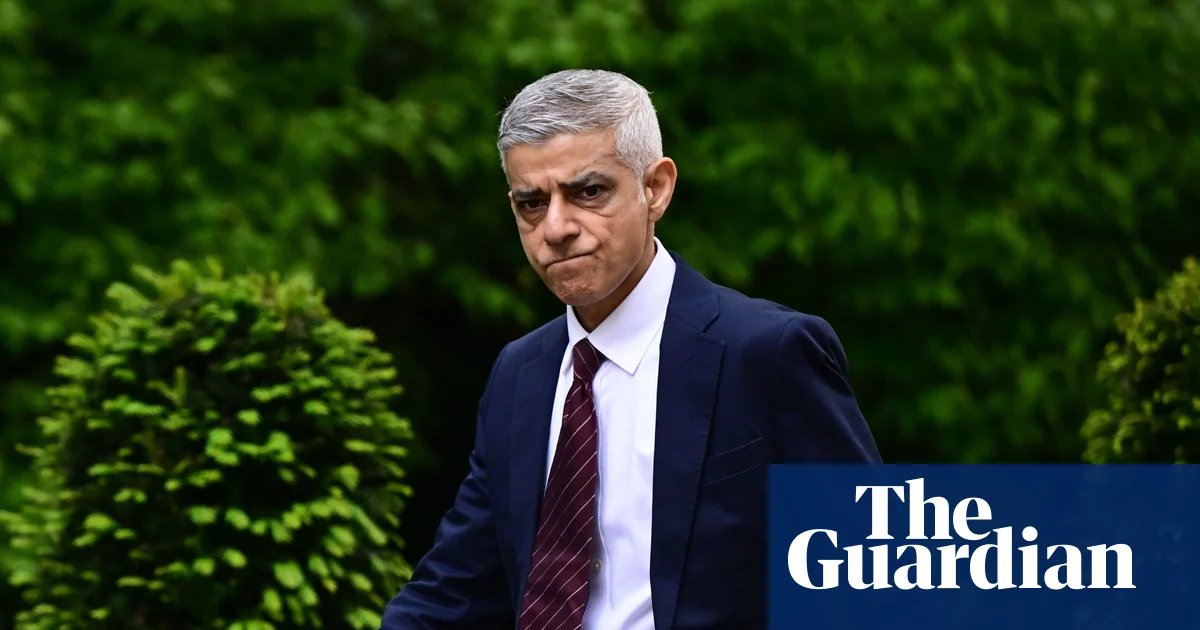
The London mayor, Sadiq Khan, has been convicted and fined for not taxing a 24-year-old car, through a controversial fast-track court system.
He was found guilty last month under a system critics have described as “conveyor-belt justice”, with magistrates deciding on hundreds of daily cases and sometimes spending less than a minute on them.
City Hall officials say the car does not belong to either Khan or Transport for London (TfL), raising the possibility he was wrongly convicted.
The mayor has been the focus of protests by motorists angry at the expansion of the ultra-low emission zone (Ulez) to cover the whole of London, who said they planned to register cars in Khan’s name – supposedly to make him liable for the £12.50 daily charge.
The prosecution was taken by the Driver and Vehicle Licensing Agency (DVLA), the government organisation that maintains databases of drivers, which accused Khan of being the keeper of the vehicle when it was spotted as being untaxed on 24 January.
A magistrate, sitting in a private hearing of the single justice procedure in Herefordshire, convicted Khan in his absence and ordered that he pay a £220 fine, £85 in costs and settle the £35.84 bill for unpaid tax on the Micra.
After the Press Association flagged the criminal conviction to the DVLA on Tuesday, officials confirmed they were reviewing the case and investigating the circumstances of the prosecution.
In a development that raised more questions, court documents show that DVLA letters addressed to the mayor about the unpaid tax bill were sent to a Gordon Ramsay restaurant in east London instead of the nearby TfL offices.
The mayor faces the possibility of having to appear in court in person to try to overturn the conviction.
after newsletter promotion
The single justice procedure was brought in in 2015 as a cheaper method of dealing with low-level criminal cases, allowing magistrates to sit alone and in private to hand out convictions rather than sitting in open court.
The system, which is under government review, was criticised in 2024 when about 59,000 train-fare evasion convictions had to be overturned for being unlawful and it emerged children had been wrongly convicted in the secretive courts.
It has also been the focus of intensifying scrutiny thanks to regular incidents of sick and incapacitated pensioners being harshly convicted for not paying their household bills.
In Khan’s case, court records seen by the Press Association show he was prosecuted by the DVLA after the annual tax on the blue Nissan Micra, which was first registered in 2002, ran out in September last year.
The DVLA has been approached for comment.



-
 Oxford News3 weeks ago
Train cancellation alert amid ‘fault’ near London Paddington
-

 Oxford News3 weeks ago
Museum evacuated and Oxford University closed amid incident
-

 Business & Technology3 weeks ago
Currys rolls out NiCE software to unify customer service
-

 Oxford University4 weeks ago
OUP hosts AI in Education at Oxford University summer school
-

 Business & Technology4 weeks ago
Staff at two major UK banks brace for further redundancies
-

 Business & Technology2 weeks ago
Apprentices say AI is reshaping tech skills demand
-

 Oxford Events3 weeks ago
Wilderness Festival 2026: four days of music, food, art and wild escapism
-

 Business & Technology3 weeks ago
UK flight school collapsed into liquidation