
Traffic & Transport
Uber drivers launch European class action over ‘soulless’ and ‘scary’ AI algorithm | Uber


Uber drivers have launched a landmark legal action against the ride-hailing company claiming they live in “constant fear” of a “soulless” algorithm it uses to set pay and allocate jobs.
Drivers from the UK, the Netherlands and other countries have joined the compensation claim that could run into billions of dollars. It alleges an AI-powered pay-setting system breaches data protection laws and pushes down their earnings.
The claim has been filed at Amsterdam’s district court, where the $150bn (£111bn) San Francisco tech company has its European HQ. It is the first collective legal move of its kind, according to the European Trade Union Confederation.
The case centres on an opaque “black box” algorithm fed on information about drivers, which sets a personalised rate for each ride. Drivers fear it pushes down fares to the minimum they are willing to accept.
Drivers have told the Guardian the algorithm has offered the same job to different people at different pay rates and offers them less for a return journey after a long trip because it calculates they will not want to come home empty.
“It is like someone watching you all the time and knowing about your weakness – the boss is the algorithm,” said Mohammed Shirwa, a 41-year-old Uber driver in Rotterdam. “All the time the algorithm is learning about you and what you are willing to accept. So the prices go low but you are stuck. It knows you need the job.”
Kola Oba, who calls the algorithm “soulless”, was taking a break in Tottenham, north London, with another driver when they were offered the same job.
The other driver was offered £27 and Oba was offered £23. The pair suspected it was because Oba, 48, had taken several cheap jobs and the AI assumed he would accept a lower price. Uber has previously said such discrepancies were down to other features of its system including GPS, surge pricing, promotions and testing.
“It’s scary – they have all my information and they are using it against my own wellbeing,” Oba said. “It defines how much I earn, how long I have to work, my time with my family, my resting time.”
AI models take an increasing role in assigning work to humans by using their rapidly increasing power to learn about a business’s needs and staff behaviour and then acting as a “synthetic manager”.
The Dutch data protection authority fined Uber €825m (£708m) last month for deactivating driver accounts through automated systems without adequate notice. Uber said it would appeal. The company is also planning to roll out driverless cars in European cities from London to Zagreb, initially with human supervisions.
The legal case is being led by the Worker Info Exchange, a campaign group whose founder, James Farrar, secured a UK supreme court ruling that Uber drivers should have worker rights.
Relating to about 241,000 drivers across the EU and the UK, the claim alleges that Uber has unlawfully used automated decision-making, including profiling, in dynamically setting pay and allocating work.
The lawsuit, which also claims the company unlawfully used driver data to train its AI models, is seeking damages for affected drivers and an injunction to halt the conduct which it claims breaches GDPR data regulations.
The drivers claim Uber has operated dynamic pay-setting in the UK since 2023, pushing down their annual incomes by about £5,000. The system was introduced in the Netherlands this year.
after newsletter promotion
Uber’s chief executive, Dara Khosrowshahi, said in 2023: “I think that what we can do better is targeting of different trips to different drivers based on their preferences or based on behavioural patterns that they’re showing us.”
Uber said it did not adjust the price offered for a trip based on an individual driver’s behaviour and that a history of accepting or rejecting trips was not used to personalise pay offers. Instead, it said, dynamic pricing allowed it to increase pay on less attractive trips, boosting a driver’s earning potential.
“While we haven’t seen the claim yet, we categorically reject the allegations,” an Uber spokesperson said. “The Uber app uses real-time information about the trip such as journey, duration and destination to calculate fares.
“Drivers see their earnings and where a trip is going before they decide whether to accept it. The vast majority of total fares continue to go where they belong: into drivers’ pockets, and the percentage that Uber keeps from fares has remained relatively flat.”
A 2025 study by academics at the University of Oxford, which Uber said relied on incomplete and selective data, found there had been substantial cuts in driver earnings after the “dynamic” algorithm was introduced.
Farrar said: “It’s bad enough that Uber’s dynamic pay algorithms have squeezed driver pay for years now but the intrusive and underhanded way in which Uber uses its technology to monitor and influence drivers’ behaviour is an affront to their dignity as workers and as human beings.”
Anton Ekker, a Dutch lawyer leading the case, said: “A computer algorithm should not independently make decisions that strip individuals of their livelihood. Like so many other online platforms, it should be held accountable for the large-scale exploitation of vulnerabilities of European citizens.”
Traffic & Transport
Sadiq Khan fined by fast-track court over untaxed car City Hall says is not his | Sadiq Khan
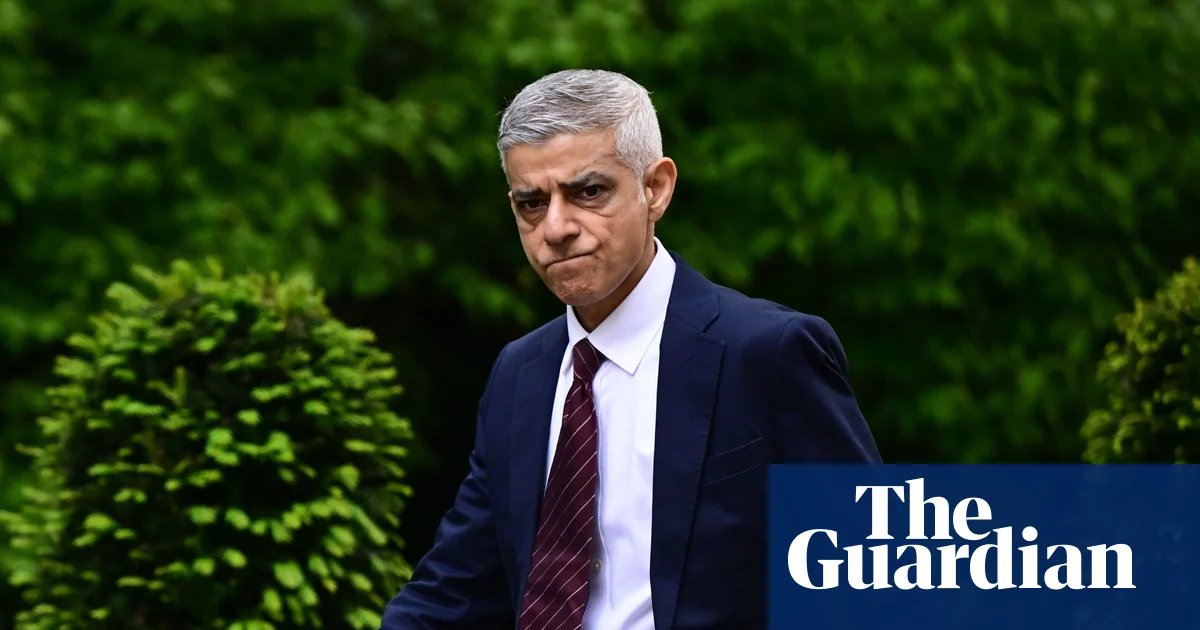
The London mayor, Sadiq Khan, has been convicted and fined for not taxing a 24-year-old car, through a controversial fast-track court system.
He was found guilty last month under a system critics have described as “conveyor-belt justice”, with magistrates deciding on hundreds of daily cases and sometimes spending less than a minute on them.
City Hall officials say the car does not belong to either Khan or Transport for London (TfL), raising the possibility he was wrongly convicted.
The mayor has been the focus of protests by motorists angry at the expansion of the ultra-low emission zone (Ulez) to cover the whole of London, who said they planned to register cars in Khan’s name – supposedly to make him liable for the £12.50 daily charge.
The prosecution was taken by the Driver and Vehicle Licensing Agency (DVLA), the government organisation that maintains databases of drivers, which accused Khan of being the keeper of the vehicle when it was spotted as being untaxed on 24 January.
A magistrate, sitting in a private hearing of the single justice procedure in Herefordshire, convicted Khan in his absence and ordered that he pay a £220 fine, £85 in costs and settle the £35.84 bill for unpaid tax on the Micra.
After the Press Association flagged the criminal conviction to the DVLA on Tuesday, officials confirmed they were reviewing the case and investigating the circumstances of the prosecution.
In a development that raised more questions, court documents show that DVLA letters addressed to the mayor about the unpaid tax bill were sent to a Gordon Ramsay restaurant in east London instead of the nearby TfL offices.
The mayor faces the possibility of having to appear in court in person to try to overturn the conviction.
after newsletter promotion
The single justice procedure was brought in in 2015 as a cheaper method of dealing with low-level criminal cases, allowing magistrates to sit alone and in private to hand out convictions rather than sitting in open court.
The system, which is under government review, was criticised in 2024 when about 59,000 train-fare evasion convictions had to be overturned for being unlawful and it emerged children had been wrongly convicted in the secretive courts.
It has also been the focus of intensifying scrutiny thanks to regular incidents of sick and incapacitated pensioners being harshly convicted for not paying their household bills.
In Khan’s case, court records seen by the Press Association show he was prosecuted by the DVLA after the annual tax on the blue Nissan Micra, which was first registered in 2002, ran out in September last year.
The DVLA has been approached for comment.
Traffic & Transport
Uber driver takes TfL to court over ‘pain‘ caused by licence renewal delay | TfL
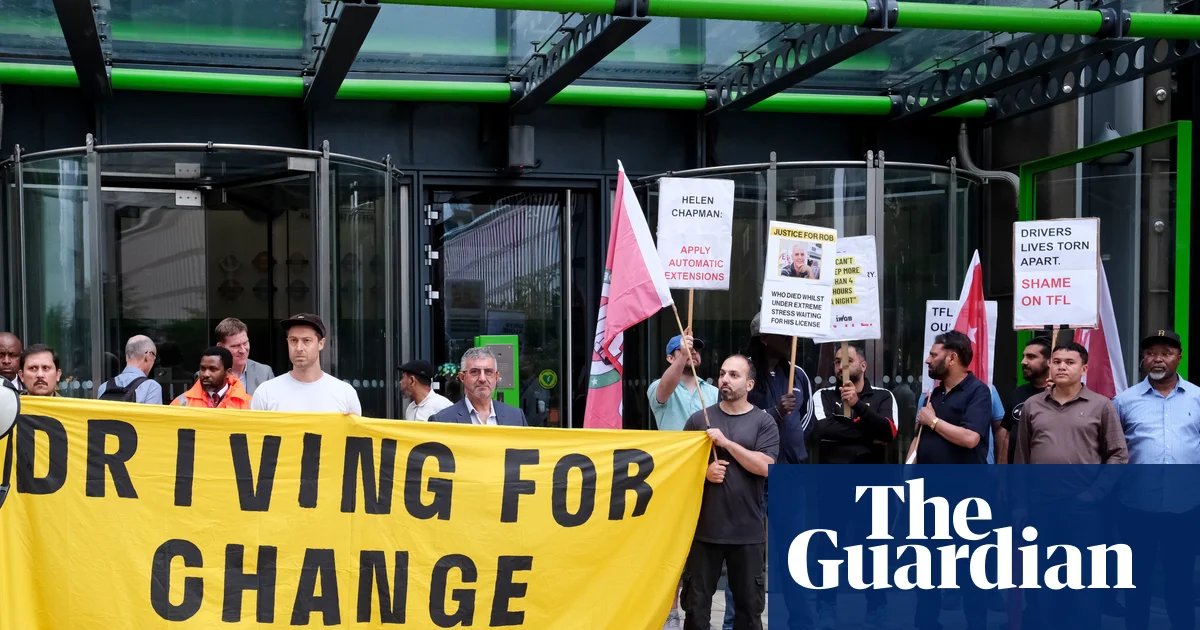
An Uber driver who got into thousands of pounds of debt and feared losing his home due to delays in Transport for London renewing his licence to pick up passengers is taking on the organisation in the high court in the first challenge of its kind.
Julius Mugabo, 55, has been an Uber driver licensed by TfL since 2016. Under the Private Hire Vehicles (London) Act 1998, all minicab drivers cannot work lawfully unless TfL has carried out checks on them and issued or renewed their licences. These licences must be renewed every three years.
There are approximately 100,000 private hire drivers in London working through apps such as Uber and Bolt. According to freedom of information data obtained by the Conservatives, almost 18,000 of them have received “goodwill” payments of between £300 and £500 due to delays in renewing their licences.
“Because of all the pain I have been through, I am bringing this legal challenge to help other drivers,” Mugabo told the Guardian.
Mugabo had not experienced any problems until he made a routine renewal application at the end of last year. TfL repeatedly delayed processing his renewal application, asking him to provide supporting documentation he said he had already provided.
“Even if TfL delay renewing licences, drivers like me still have to eat and pay bills. My licence expired at the end of March 2026. I only received my renewed licence recently after I started the legal action against TfL,” he said.
“Because of their delays everything in my life was a mess. I owed HMRC £3,000 in tax but because I couldn’t pay my tax bill on time the bill has gone up to £20,000 because of the interest. We didn’t lose our home but I was under so much stress and pressure. The landlord threatened to evict us because I struggled to pay the rent.”
The high court action against TfL alleges that the transport authority breached its legal duties by failing to process private hire vehicle licence renewals on time.
In a ruling granting a full judicial review hearing, Mr Justice Sweeting said the delay “caused immediate and serious consequences for [Mugabo] and his family”.
He added: “TfL accepts that the processing of the claimant’s application did not meet its usual standards.”
The Independent Workers’ Union of Great Britain (IWGB), which represents private hire drivers on apps such as Uber and Bolt, said it had many members affected by the TfL licence processing delays, and that some of drivers had fallen into debt, had lost their cars and faced eviction. It is supporting the high court challenge.
Alex Marshall, the president of the IWGB, said: “As they celebrate this ruling bringing them closer to justice, the minicab drivers who keep London moving are sending TfL a clear message: they will not be taken for a ride.
“The suffering TfL inflicted on its predominantly migrant private hire driver workforce speaks volumes about who this public institution values, and who it takes for granted. TfL could easily have acted at the earliest sign of crisis, as the first drivers lost their incomes through no fault of their own. Instead, it watched at least 17,000 others suffer the same fate.
“By the time TfL finally acted, drivers had burned through their savings, lost their houses and fallen into debts they are still working longer hours to repay. Now, thanks to drivers’ tireless fighting and campaigning, TfL will have to answer for its failures in court. We will not stop until TfL has been forced to fix this broken system for good.”
Ahmed Aydeed, of Deighton Pierce Glynn solicitors, who is representing Mugabo, said: “TfL regularly strips drivers of their livelihoods, by failing to provide renewal licences before the expiry of the previous licence. Any driver who continues to work while waiting for their renewal licence is liable for criminal prosecution.
“No one should be stripped of their ability to feed their families and pay their bills, especially during this cost of living crisis. Any public authority that does this to working-class people is not fit for purpose,” he said.
A TfL spokesperson said: “We are aware of the judicial review claim, which has been brought by one driver regarding the processing of his licence. We are awaiting the date of the hearing.”

What a joy to read John Harris’s piece on the cultural changes taking place in rural areas (Walking the Peak District, I discovered a wonderful rejection of the right’s monotone vision of England, 23 August. My husband and I have walked many miles in the Peak District and we would comment on the monocultural nature of other walkers. As a headteacher, I also took groups of children to stay in Hartington Hall, where Harris stayed with his own children, and other school groups also appeared to be monocultural. We knew nothing about Black Girls Hike or Steppers UK that Harris mentions, but hope that these movements will support positive change.
Nina Young
Collingham, Nottinghamshire
John Harris rightly highlights the cost of gastropubs and boutique Airbnbs replacing budget alternatives as an issue, but overlooked another. The replacement of basic (cheap) campsites with (expensive) glamping yurts and fully serviced campervan pitches is threatening dirt-cheap summer holidays spent backpacking around the country and learning to appreciate new landscapes and peoples, from which many of us oldies benefited greatly.
Mike Coogan
Abbeystead, Lancashire
John Harris omits one critical issue that impacts participation. Public transport outside cities and towns is often poor. To places like Bellever on Dartmoor, the location of one of his favourite hostels, buses are very limited indeed.
Les Bright
Exeter



-
 Oxford News3 weeks ago
Train cancellation alert amid ‘fault’ near London Paddington
-

 Oxford News3 weeks ago
Museum evacuated and Oxford University closed amid incident
-

 Business & Technology4 weeks ago
Muscle Food at risk of closing after entering administration
-

 Student Life4 weeks ago
My year of rest and rustication
-

 Business & Technology3 weeks ago
Currys rolls out NiCE software to unify customer service
-

 Oxford University4 weeks ago
OUP hosts AI in Education at Oxford University summer school
-

 Oxford Events3 weeks ago
Wilderness Festival 2026: four days of music, food, art and wild escapism
-

 Business & Technology4 weeks ago
Staff at two major UK banks brace for further redundancies