
Oxford University
OUP hosts AI in Education at Oxford University summer school


OUP Education and English Language Teaching teams were proud to participate in, and host, the attendees of the AIEOU (AI in Education at Oxford University) Summer School, in July.
The conference marked one year since the founding of this growing global community of researchers, academics, educators, industry leaders, and policymakers – united by the goal of tackling some of the biggest questions facing education today.
Dr Sara Ratner, of the University of Oxford’s Department of Education, designed a week-long programme in collaboration with colleagues at the University’s Social Sciences Division as well as a team at the UK’s Department for Education, bringing together diverse perspectives from over a hundred representatives of academia, schools, government, industry, and civil society.
Over the week, attendees discussed not only the advances in AI technology, but also what meaningful impact looks like in education.
Discussions throughout the week brought together diverse perspectives, asking difficult questions about what AI should do in education and demanding evidence of its impact on learner outcomes.

Sarah Ultsch, Director of Global Product at OUP, shared her impressions of the event: “The debates and workshops of this summer school have been tremendously important, because the decisions we make now will shape the experience of learners for years to come.”
She also highlighted her team’s recent launch of L2-Bench, the world’s first benchmark for evaluating AI in second language learning, culminating in the release of an open-source dataset for the benefit of the wider education and technology community.
During the week, summer school attendees were welcomed to OUP’s Oxford offices for an informal gathering and tour of the OUP Museum, which showcases key milestones and stories from our 500-year history. Liz Tyler, Managing Director of UK Education, welcomed participants and applauded the aims of the event that align with OUP Education’s commitments:

Liz Tyler
Managing Director, UK Education
“At OUP, we develop services to support teachers and schools that are based on evidence and research, and we are deeply committed to working with the sector and with experts to establish an evidence base that will help us understand how AI might improve teaching and learning.”
She also pointed towards recent research conducted by teams at OUP into student attitudes to the use of AI: the Teaching the AI Native Generation and Navigating AI in Education reports. These have shown how much students as well as their teachers need more data and evidence to guide the use of AI in developing cognitive skills and improving learning.
As the AIEOU community enters its second year, the conversations and partnerships sparked during the summer school will continue to shape the understanding of AI’s role in education. Through ongoing research and collaboration with the University of Oxford, OUP remains committed to helping the sector navigate the opportunities and challenges of AI and focus on improved learner outcomes.

Chair of the Global Prize Committee and Professor of International History and Politics at the Geneva Graduate Institute
“This year’s pool of submissions was remarkably strong. A large number of manuscripts made genuine contributions to their respective fields and were worthy of serious consideration. The judging process was accordingly tough and energizing. I, for one, learned an enormous deal about themes as diverse as Caribbean environments, Vietnamese cities, and Latin American rivers.
“The ECR First Book Prize is invaluable. It doesn’t just recognize excellent books, but helps launch them.”
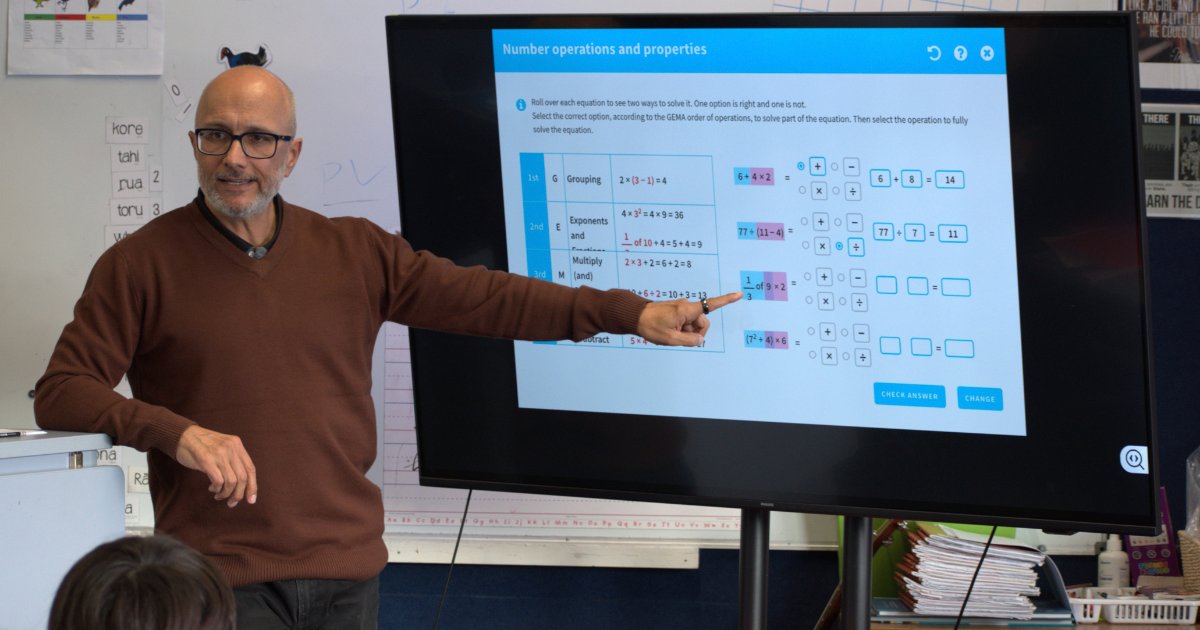
Rhea Realo, Head of Digital Product at OUP ANZ, said:
“Oxford Digital brings together proven education research, recognized accessibility standards, and ongoing feedback from teachers. Being named a finalist on the global stage is a strong endorsement of the practical, inclusive learning experience we’ve worked with educators to create.”

The Oxford English Dictionary (OED) is a historical dictionary, containing over 500,000 entries and 3.5 million quotations to capture over 1,000 years of English.
Every quarter, we update the OED by revising versions of existing entries as well as defining new words and senses. These updates subtly broaden our understanding of the English language and its use around the world.
10 highlights from this quarter’s update
1. We added more than 400 new words, phrases, and senses to the OED this quarter, including hot yoga, fantabulosa, will-they-won’t-they, and auto-reply.
2. By happy coincidence this update lands just before International Coffee Day (1 October). Coffee drinks new to the OED include Café Cubano, café con leche, cafezinho, and cold brew.
3. This release sees additions from across the world, including contributions from East Africa, Caribbean, Bermuda, New Zealand, Wales, and the Isle of Man. Learn more from Executive Editor, Danica Salazar.
4. From shadeesh to hamma, we welcome several Bermudian English additions, as part of a valuable new collaboration with the Bermuda Spelling Bee. This is an annual spelling competition for 9- to 13-year-olds designed to foster a love of language and learning among young Bermudians.
5. Several new words for supernatural creatures appear in this update. From Welsh folklore we have a bwbach, from Caribbean folklore a jablesse, and we also have the Trinbagonian addition of douen.
6. An important feature of the OED’s New Words team’s work is its Monitor Lexicography (MonLex) programme. This is our way of monitoring, collecting, and prioritizing contemporary language for inclusion in the OED, looking at sources including trending words on language corpora, social media, material generated by our reading programmes, and suggestions made by colleagues on our own internal database. Every other quarter we gather the items collected and assess them for inclusion, prioritizing so that we include the most relevant and important.
Some new words added this quarter from our MonLex programme include: the social media sense of timeline, the sense of slammed meaning very busy or overcome with work, the chiefly North American English word bothsidesism, and lastly, overnight oats.
7. Craig Leyland, Executive Editor, notes the welcome of two reference related words – thesaural and mountweazel. The latter is defined as ‘an invented or fake entry in a reference work (esp. a dictionary or an encyclopedia), a database, etc., typically used by the publisher to identify plagiarism that constitutes an infringement of copyright’. Does the OED contain any mountweazels? We can’t say, of course. You can read more from Craig about both here.
8. More than 700 entries have been revised as part of this update, including ‘gym’ and ‘kanaka’ words. Read more in this commentary from Andrew Ball, OED Editor.
9. The words newly revised this quarter show an especially rich variety of etymologies. In the month that the Bayeux Tapestry goes on view in London, it is fitting that we have a healthy crop of Middle English borrowings from French, or more specifically Anglo-Norman (i.e. French as used in medieval Britain), including doubt, equity, fantasy, and garner. Read more from Philip Durkin, OED Deputy Chief Editor.
10. And finally, being asked about ‘scone’ usually raises a groan for pronunciation editors, but it was good to have the opportunity to provide the ‘skoon’ pronunciation appropriate for the Stone of Scone in this update. Hear more from Catherine Sangster, OED Pronunciation Editor.
Explore the update in more depth here.



-

 Oxford united FC4 weeks ago
Chris Gunter steps away Wales role to focus on Oxford United
-

 Oxford University3 weeks ago
New to the Oxford English Dictionary this September
-

 Traffic & Transport2 weeks ago
How poor public transport policy is putting the brake on cities | Road transport
-

 Student Life3 weeks ago
Oxford partnership allows OpenAI to use rare Bodleian texts to train ChatGPT
-

 Oxford united FC1 week ago
LIVE: Exeter City vs Oxford United – Jersey Mike's Trophy group stage
-

 Traffic & Transport2 weeks ago
Why should I have to pay more for buses if I don’t use a smartphone? | Bus fares
-

 Oxford united FC2 weeks ago
Northern Ireland fans laud Oxford United defender Ciaron Brown
-

 Oxford Events3 weeks ago
Four days of equestrian spectacle at 2026 Blenheim Palace International Horse Trials