
Student Life
Galliano for the masses (on the Zara sale rack)


The fashion world is mourning the loss of John Galliano. Not a literal death, but something closer to a fall from grace. The designer, who defined an era at Dior, has entered into a two-year partnership with the fast fashion giant Zara. For some, this is a cause for celebration, a Robin Hood-esque democratisation of his genius, so to speak – after all, Galliano’s archival pieces remain some of the most sought after by celebrity stylists and Vinted warriors alike. However, for others, this feels like a betrayal: my initial reaction was admittedly one of shock and a sense of disappointment. God knows I have a weakness for a Zara sale, but surely, even in the current economic climate, Galliano didn’t have to end up here.
Galliano’s work has long existed within the realm of artistry rather than mere design, famously describing “the joy of dressing” as “an art”. His legendary tenure at Dior, spanning from 1997-2011, was known for its theatrical runway shows, with the catwalks being transformed into a stage upon which he paraded fantastical works oozing whimsy and fantasy. He drew inspiration from everything from Ancient Egypt and chinoiserie, to the indulgence and excess of Paris in La Belle Epoque, as can be seen in the pageantry of his Spring/Summer 1997 collection, metamorphosing the runway into a debutante ball at its most dreamy. Put simply, Galliano walked so Carrie Bradshaw and her Dior saddle bag could run. Bringing the same level of creativity to Maison Margiela as to the high street could, in theory, be seen as a kind of fashion egalitarianism. Nonetheless, I would argue that the mixed response to this partnership suggests something more complicated is at play. Galliano is far from an unproblematic figure, facing prosecution for antisemitic comments which ended his tenure at Dior in 2011. Yet I feel as though his appointment is not an isolated incident, but rather representative of a shift in the wider perception of fashion itself.
What was once an art form has become about consumption and profit – art equals transaction in this capitalist economy. The rise of fast fashion lies at the centre of this tension, a double-edged sword. On the one hand, brands like Zara were the first to replicate the trend-led styles of the runway, making them accessible to a broader socioeconomic audience than ever before. On the other hand, it comes at a significant environmental and ethical cost, one that is becoming harder to ignore in an age of climate awareness and with the increased prevalence of alternatives such as second-hand shopping and conscious consumption. The very speed that makes Zara’s model accessible also depends on overproduction and disposability, with garments designed for short-term wear as opposed to longevity. In this sense, what is initially framed as democratisation begins to look more like a dilution, offering the illusion of participation whilst simultaneously undermining the craft and permanence that once defined fashion as an art form. Perhaps most interesting is the announcement’s wording, which seems to implicitly frame Galliano’s involvement as a form of fashion egalitarianism. After all, the collection’s stated purpose is to bring high fashion and dramatic design to a broader audience through the combination of Galliano’s couture process with fast-fashion capabilities.
This isn’t the first time that Zara has dabbled in the world of high fashion, collaborating with other acclaimed designers such as Narciso Rodriguez and Stefano Pilati, even releasing a capsule collection with Kate Moss. However, this new partnership – between a designer once shunned from his creative industry and a fast fashion giant – speaks to the changing idea of luxury in fashion. These kinds of high-low collaborations have become commonplace in the fashion world since H&M launched its first designer partnership with Karl Lagerfeld in 2004, building an entire business model upon the merging of luxury appeal and mass-market accessibility. This underscores how the industry is rethinking value, access and who gets to buy into trends. Exclusivity is no longer the sole marker of value, with access and immediacy becoming equally important, fundamentally reworking the idea of who gets to participate in fashion and at what cost.
And yet, for all my reservations, I can’t entirely reject the appeal. This is the contradiction at the heart of modern fashion, a growing awareness of its ethical failings, paired with an undeniable pull towards accessibility and trends. Fast fashion no longer thrives on ignorance, but on a kind of covertly conscious complicity. Consumers understand the environmental and ethical costs and yet are still drawn in by the immediacy and affordability. Frankly, if you’re telling me I can stroll into Westgate and buy Galliano without having to forfeit the entirety of my student loan, I’d be lying if I said I wouldn’t be tempted.
By Victoria Corfield
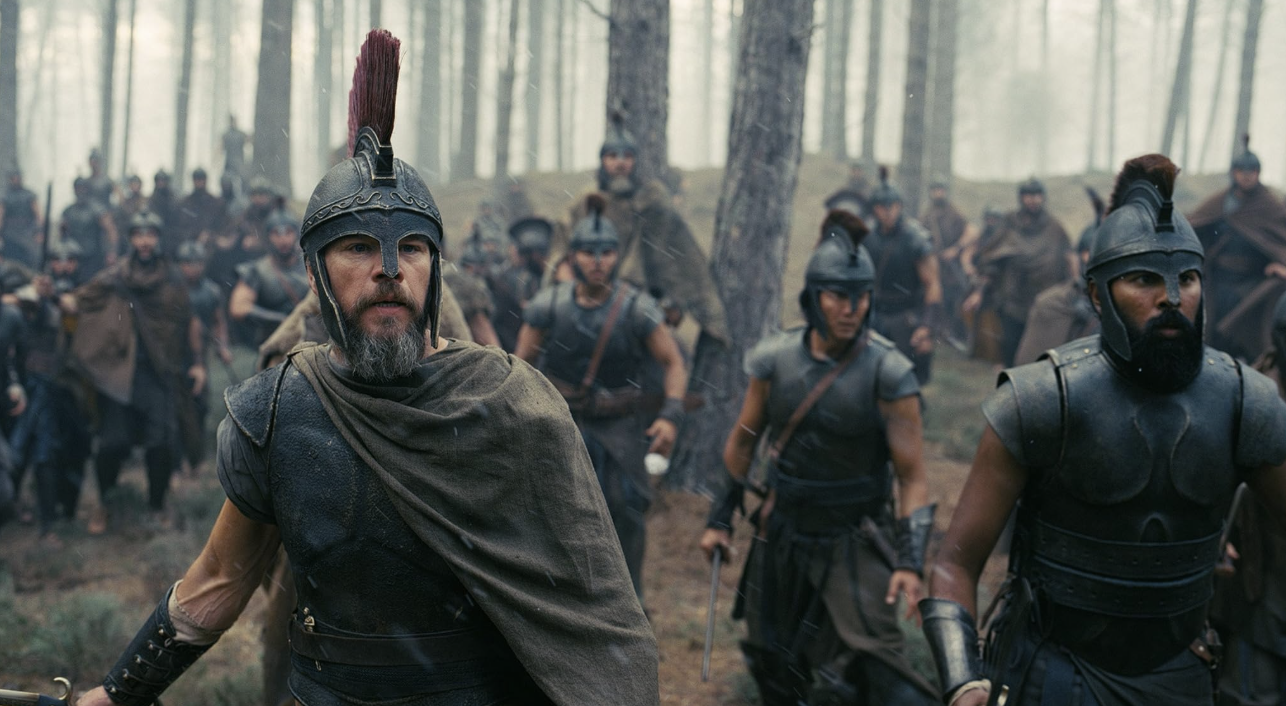
Anyone who has been within earshot of me whenever the terms ‘Odyssey’ and ‘Christopher Nolan’ have been mentioned during the past few months would know my strong opinions about the costuming, colour grading, casting and language choices dominant in the trailer. In the run-up to the film, classicists I have spoken to at Oxford seem to be divided into two camps: those who are like me, cynical and decrying the modern depreciation of the classics. Then there are those who call us purists and snobs, and say that Nolan is merely participating in the long-standing oral tradition that has always interpreted and adapted forms of storytelling, as Homer intended. So what’s the verdict?
Despite the trailers, I was surprised at the full extent to which Nolan leaned into the set design. Stark and devoid of colour, Troy has white pillars, statues, and temples. All of this looks like it was built in a lab – the set looks like a set. It is incongruent with the ancient Greece that has long been established by researchers, where people wore vibrant, patterned peploi, and the statues were painted in bright colours. Instead, Nolan’s Greek cities and kingdoms resemble the inaccurate remnants seen under the sterile lens of a curated museum collection. This feels thematically deliberate, and therefore brilliant. Moments of magic are downplayed – ironic, since the film’s opening card sets it ‘in a time of apparent magic’. Lacking the ‘glimmer’ of magic, the transformation of Odysseus’ men into pigs becomes one of the most grotesque and viscerally disturbing sequences in the film.
This also makes pops of colour, what we regard as ‘signs of life’, perversely memorable – Agamemnon’s stark black helmet plume with its mechanical golden vertebrae becomes recognisable from a distance, and terrifying against the bright white of the city he is about to destroy. The opening shot of the Trojan horse half-buried in sand, cutting a bronze diagonal across the too-white beach and the too-dim sea is emblematic of Nolan’s choice of set and costume design, almost backrooms-like in its struggle to reconstruct memory. The visual language of the film translates itself to something on the verge of collapse, which ties in neatly with the overarching theme.
And memory is important here. The film’s episodic structure reflects how Odysseus’ memories gradually come back to him on Calypso’s island, having long repressed them due to trauma. This is, in my opinion, one of the bigger points of reinvention that I actually don’t mind. Through the bard figure, hilariously performed by Travis Scott, Nolan shows an awareness of the weight this story carries within a long-standing oral tradition. The original text is itself already highly meta: a story that focuses on storytelling as an active act of remembrance, and attempts to translate the story as ‘live performance’ of stories within stories.
The film’s treatment of gods also relates to memory, specifically through Athena, the only ‘goddess’ who appears in physical form and stays constantly by Odysseus’ side. The reveal that she takes the face of the priestess beheaded at the Temple of Athena during the sack of Troy is haunting, while simultaneously making me insane with joy, because Nolan has managed to visualise the very human way the mortals relate to the divine. Athena shows up as the only god Odysseus can put a face to because her face is a manifestation of his guilt and grief. Despite the multiple invocations of the other gods in turning points of life and death by Odysseus’ men, most prominently Poseidon and Zeus, they remain silent. Is this representative of the perversion of the divine-human relationship, broken forever due to the Trojan War?
However, the film’s semi-atheistic outlook translates to something confusing and inconsistent. It cannot decide how much moral responsibility its characters actually have. The film’s tagline is ‘defy the gods’, and through the film this is framed as a condemnation – the defiance of the laws between men is a defiance of the gods. Yet a line from Athena at the start of the film, when Odysseus is still on Calypso’s island, throws a spanner into this moral, where Athena disparages Odysseus for taking full responsibility for what is already fated and inevitable. The implication here is that she condemns him for being almost hubristic in his urge to constantly assume full responsibility for the loss of other lives, when the gods have already decreed that they were bound to die. Such a bold statement never really gets resolved, and the scene in the Underworld, where Teiresias once again emphasises that there is nothing Odysseus can do to prevent his entire crew dying because he ‘cannot save them from themselves ’, deepens this problem.
In Homeric epic, the gods, Fate, and free will toe a very fine line. The gods do intervene, but human motivation and human choice always come first in narrative terms. There are many moments where mortals blame the gods within the poem, and none of these positions are justified in Homeric theology. So when Odysseus laments that Zeus made him fall asleep while his men ate Helios’ cattle, the audience is not meant to sympathise with his argument that this therefore makes him blameless – it can be an expression of frustration that the god has not helped him, or the confusing incomprehensibility of the gods (which Nolan also emphasises), but it does not mean Odysseus is free of the responsibility of his choice. Characters’ freedom to make choices is integral to driving the plot and characterisation forward, and yet Nolan fails to make clear the explicit chain of human cause and effect between the plunder and massacre Odysseus and his men conducted at Troy and the disastrous journey home. This leads to interpretations that the whole action of the film is simply the gods’ decree, and Nolan risks diluting his moral message.
This confusion ultimately boils down to where the film suffers the most – the overt sanitisation of Odysseus’ character. Throughout the film, Odysseus’ eyes are those we look through to judge the events of the Trojan War, the journey, and most of the narrative – the audience is inclined to sympathise with him, and having suffered the repercussions of his actions in the Trojan War, he becomes the plausible mouthpiece for Nolan’s message, the righteous avenger against the suitors who violated Zeus’ law first. But as the film repeats the shot of Odysseus staring out as he leans against the marble staircase at Troy, watching the priestess’ head get cut off, I cannot help but wonder – why is Odysseus so special? What makes Odysseus so much better that he is singled out by the gods to return home, and the rest of his men do not, when their actions have been so similar? If that moment where he watches the destruction of Athena’s temple is meant to be his epiphany, why does he carry on to burn down the first island he sees? Nolan has simplified Odysseus so much throughout the film that any straying away from virtue lands oddly instead of adding nuance. Emily Wilson is right: Nolan has written a very uncomplicated man indeed.
Homer, however, never hides how Odysseus is, in many ways, an incompetent leader, and most of the disastrous journey can be attributed to Odysseus’ bad judgement or arrogance. One famous example is the Cyclops episode, where after he and his remaining men successfully leave, Odysseus shouts back into the cave his name, his father’s name, and the destination he is heading to, entirely unnecessary apart from establishing glory for himself. Essentially, Homer establishes clear cause and effect (how Odysseus’ poor choices lead to the downfall of his men), and this elevates narrative significance when he does make the correct choices. Odysseus is not a character who can become a noble, simple character while retaining the same story beats. He is polutropos, a man of many ways – the complexity of his journey home reflects the complexity of the man. Dropping his incriminating story beats makes Odysseus more likeable, but the result is inconsistent characterisation, as well as a lack of character depth. Nolan’s version of Odysseus is unrecognisable when compared to Homer’s, who is cunning, flawed, and subtle.
The other issue with Nolan’s insistence on Odysseus’ nobility: it comes at a cost to the depth of other characters too, especially the women around him, and this is most evident in Penelope. Homer’s Penelope is Odysseus’ narrative parallel, and Book 23 is, in epic terms, Penelope’s aristea, her big ‘heroic’ moment, where she tests the reality of Odysseus’ identity by asking her handmaiden to move her bed, and waits for Odysseus to refute it because only her husband should know that it is immovable. Only then does she relent and greet Odysseus. There is much scholarly debate that Penelope had recognised him much earlier than Book 23, adding to the complexity that she may have been planning the exact type of contest that would benefit Odysseus ever since she saw him in disguise. The bed scene is left out entirely in Nolan’s film, and there is also no nuance as to when Penelope finally does recognise Odysseus.
Nolan also makes the mistake of telling rather than showing when Penelope screams at Telemachus that she has been ruling Ithaca for years and that it is about to be taken away from her male heir. Yet from an audience’s perspective, she isn’t doing much ruling, as all we see of her in the film is her crying and pining away for Odysseus. Even the scene where it is revealed that she has been taking apart the shroud every evening, her overarching line of characterisation throughout the story, is overshadowed by the strange scene where she almost caves to Antinous’ advances – stranger still, because at no point in Homer’s story does Penelope even remotely entertain him. Her complexity becomes less of a point of attention because her parallel character, Odysseus, is also not stepping up to the narrative depth game. In the poem, Odysseus and Penelope work since although they occupy very different spheres of movement and gender roles, they still mirror each other. Nolan’s Penelope falling flat is especially fatal because she has no ‘action’ to rectify or distract from it, unlike Odysseus.
In general, I think I liked the film a lot when I was watching the credits roll. It is a spectacle, and despite knowing the exact story beats of the plot, the escape from Polyphemus and the harrowing flashes of the storm still had me on the edge of my seat. Odysseus’ final stringing of his bow still almost brought tears to my eyes. And much of it for me is that there is clear love shown in the stunning visual and musical language to deliver those emotional beats, and in a very meta way, I love that this much is devoted to a subject that I have spent many years loving and studying, and seeing a work from so long ago come alive on the modern screen.
I also mourn the fact that this may be the only version of The Odyssey that a modern audience will see in their lifetime. To me, Homeric epic has withstood the test of time not only because of a flashy plotline, but because it is, at its core, a story that contains the scattering multitude of human experience and complexity – to return home as a complicated, flawed individual to a complicated, flawed community, and finding love anyway. For that to hold, the characters cannot all feel universal, and that is unfortunately what Nolan tried to narrow down with his characterisation and theology. I just wish that I could point to a moment throughout the film where I leapt for joy that Nolan understood the character, their motivations, and why some things are important for the story to keep. I wish I was actually watching the Odysseus I love to hate, and the Penelope that mirrored him in all the strangest ways.
Nolan had all the tools for greatness. Instead, to my eternal frustration, his Odyssey will always only be just alright.

When I was seven, my grandma decided I was going to be a pianist. For the next twelve years, I sat through weekly piano lessons, despite a complete absence of enthusiasm for the instrument. Long after my grandma informed me that I was not, in fact, going to be a pianist, but rather a lawyer, I carried on these lessons. My goal was not enjoyment, but that treasure of infinitely greater value: a grade eight certificate.
What teenage me didn’t understand was the value of putting time and effort into something non-productive, purely for the sheer joy of it. I’ve heard people complaining that they don’t know how to relax, and the advice given in response is always that they’re lacking hobbies, that if they pick up a new interest their free time will become fulfilling and restorative. However, I think that what this fails to acknowledge is that it’s not simply a case of acquiring any old hobby. Our aim should be to find a genuine source of enjoyment, rather than a new avenue through which to seek validation.
We’re well into August now, the summer vacation stretching out both behind and ahead of us. While you’ve got a bit of time on your hands (Michaelmas pre-reading is a September problem), this is the perfect opportunity to ditch productivity and perfectionism, and instead, embrace the art of being an amateur.
Amateur, a word often used as an insult, comes from the Latin verb amare, meaning ‘to love’. ‘Amateur’ in its modern form stems from the French word for ‘one who loves’. To be an amateur in the literal sense, therefore, isn’t about an absence of skill, or experience, but rather doing something for the sake of passion, and without profit.
So what might doing something just for the love of it look like? This is an impossible question – the answer will look different for everyone, and will vary across different phases of your life. But the central idea is that whatever you’re doing, you’re not doing it for the sake of gaining something else. You might learn an instrument without taking graded exams, or maybe you want to write terrible notes app poetry that you will never show to anyone. Or perhaps what really calls your name is turning bottle corks into life-size models of the wildlife of the West Midlands. It doesn’t need to make sense to anyone but you.
If there’s one thing we’re all familiar with as Oxford students, it’s the constant pressure to be ‘LinkedIn warriors’ and build up an impressive array of things to put on a CV. It seems even the much-coveted summer internship isn’t enough – you also need a hobby with tangible achievements that confirm your status as a strategic, results-driven team player. Activities that boost your employability are undoubtedly important, but they are not a substitute for doing the things you truly love.
Around the time my grandma accepted that I was not destined for piano greatness, I joined a choir. I would love to tell you I joined purely for the love of it, but this would be a lie – I joined because my older sister had. However, after the first couple of months, I found myself hooked. The feeling of hitting that high note, perfecting that one impossible harmony, was a far cry from anything I’d felt playing the piano. I didn’t take singing exams, I never went for solos. And of all the hobbies I’ve taken up in my life, choir is the one I always return to.
Let’s be honest, how many of us genuinely make an effort to try new things on a regular basis? It’s intimidating – it involves accepting that you will not be good at something, that the most you can hope for is ‘good for a beginner’, which is never much of a compliment. Perfectionism is not an easy thing to kick. And though it can be useful in many situations, it can also be very effective in holding you back for fear of failure. This is where the amateur thesis comes in. If you are doing something for the love of it, then the act of doing is enough. It doesn’t need to be perfect, so there’s really no way to fail.
I think we can all agree that our culture is obsessed with productivity. Many of us now find the idea of doing nothing far from relaxing, and it’s sometimes even downright uncomfortable. With weekly essay deadlines, and a constant sense that you’ve forgotten something, the fear of time wasted creeps into every part of life at Oxford. Is it any wonder that committing time to being an amateur isn’t something that comes naturally to us? Maybe this speaks to a wider issue: a disinclination to see our own immediate happiness as a valid goal.
Through building up hobbies that give us joy rather than measurable achievement, we cultivate self-validation. As human beings, we are very good at outsourcing our need for validation. This is especially true in the age of social media, where you can build an image of the great life you’re leading, regardless of whether or not it’s true to reality. What if we tried to practice self-validation instead? What if your joy was an end in itself, regardless of whether or not other people knew, understood, or were impressed? By treating our own independent interests as something valuable, without seeking external confirmation of that value, we are, in turn, treating ourselves as worthy of effort. In our pursuit of confidence and self-esteem, this is surely a crucial practice.
My grandma and grandad were two very different people. While my grandma was the kind of person who’d lovingly (but firmly) encourage me to chase the validation of the music examination board, my grandad was never happier than when he was with his beloved pigeons. He had names for the clans (what he called the different colours and patterns), and no one was allowed to feed them but him. No one else understood, and no one else had to. He was an amateur pigeon-feeder, doing it purely for the love of it.
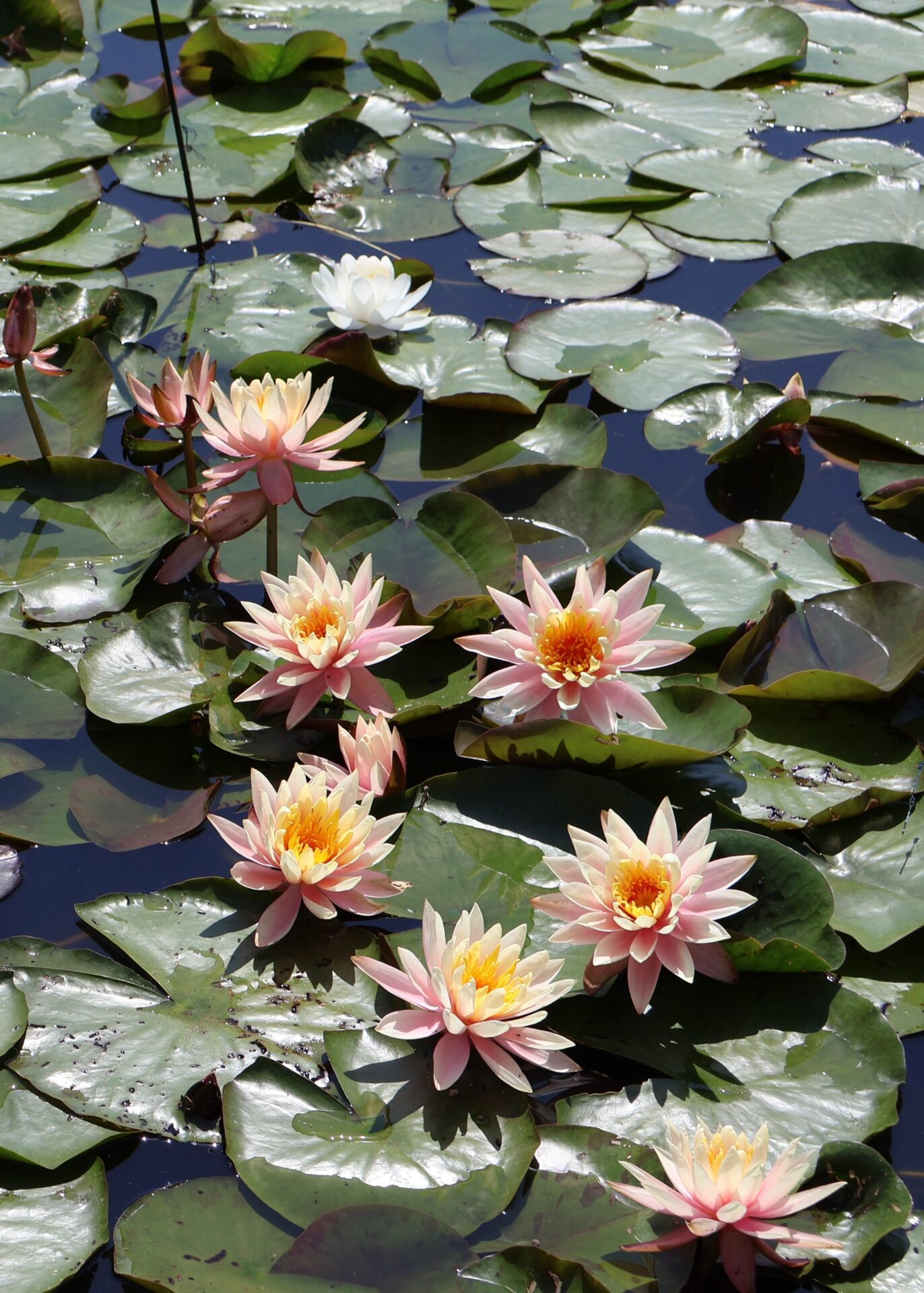
We seem to have been locked in an eternal attempt at domination over nature for millennia. My recent trip to Thailand shifted this into clear focus: perhaps the attempt was never really about humans over nature. Perhaps it was humans versus anything that refuses to behave itself.
When I was in Thailand, I saw signs telling tourists not to anger, feed, touch or otherwise harass the animals. Sensible enough. Yet tourists, and occasionally locals, still seem determined to test the boundaries.
I watched a pig bite down on a plastic water bottle handed to it by a boy on holiday. The pig squealed and fought back when the boy tried to pick it up. He dropped it. I felt shocked and unnerved at his behaviour, but clearly I could not intervene; it was not my place, and his family was there.
And there it was: an acute example of our relationship with nature in miniature. We like animals right up until they stop being cute.
The pig had not suddenly become aggressive for no reason. A teenager had put a plastic bottle in its mouth, invaded its space and then tried to grab it. It reacted like an animal. Yet somehow the animal becomes the villain: ungrateful, dangerous, and stupid. We are remarkably good at creating the conditions for conflict and then blaming nature for responding to them.
The double standard becomes even stranger when we compare animals with humans. When a person causes harm because they ‘didn’t know any better’, we often regard that as an extenuating circumstance. With animals, ignorance is rarely afforded the same generosity. An animal trapped in a man-made environment can respond according to instinct and still be punished as though it possesses the same understanding and intentions as a human being.
And before anyone reaches for the familiar argument that humans are more intelligent, we should be careful about confusing intelligence with moral entitlement. Being clever enough to build skyscrapers, develop financial markets, and create nuclear weapons certainly does not give us a sense of moral superiority over the natural world. We cheat, lie, and steal, and are not the perfect paragons of morality we assume ourselves to be. Besides, anyone who has watched five minutes of reality TV anywhere in the world might want to reconsider how confidently we use ‘intelligence’ as our species’ trump card.
The more interesting problem is what happens when humans’ supposed love of nature meets modern consumer culture. We don’t simply want nature; we want nature packaged for consumption.
Our consumerist tendencies towards nature are best seen through the ‘cottagecore’ trend: curated hiking trails, luxury eco-resorts, wellness retreats, and the endless Instagramming of supposedly untouched landscapes. Nature is wonderful, as long as it is photogenic, accessible, and preferably equipped with decent Wi-Fi.
This is the deception of capitalist aesthetics. We take something wild, unpredictable, and inconvenient and remove the parts we dislike before giving it attractive branding and selling it as an authentic experience.
Nature, but with a convenient booking link. Mud is no longer mud; it is an obstacle on the hiking trail. Insects are not part of an ecosystem; they are pests. Decay is not part of nature’s cycle; it is something to clean up. And an animal behaving like an animal is an affront to our sanitised version of nature. Thailand makes this contradiction particularly visible. Islands are marketed as pristine escapes while motorways and industrial-scale ferries help move ever-growing numbers of people towards these supposedly untouched places. Humans want wilderness – but we also want convenient infrastructure capable of delivering us directly to it. Ideally, between 10 am and 4 pm, with a return transfer.
Our environmentalism therefore has a surprisingly low tolerance for actual nature. As soon as it contradicts our perfect reality, with biting animals, unbearable heat, or a lack of creature comforts, we turn against it. This reveals something deeper than hypocrisy; it reveals our obsession with control.
We have spent centuries trying to place ourselves above the natural world rather than recognising that we are embedded within it. We pave it, fence it, landscape it, label it, and commodify it. We make it predictable enough to enjoy and tame enough not to frighten us, because genuine nature is volatile. It grows where we don’t want it to grow. It dies, rots, bites, floods, escapes, and refuses to care about our schedules, property boundaries, or aesthetic preferences. This is precisely what makes it frightening.
The fantasy of the sovereign human depends on believing that we exist outside of nature and are capable of mastering it. But this is not the case. We are animals who build unusually elaborate buildings and maintain an impressive capacity for self-delusion. The pig did not violate some sacred contract with humanity when it bit the bottle; it simply behaved like a pig.
Perhaps the lesson is not that nature needs to be taught how to live alongside us. Perhaps we need to learn how to live alongside something we cannot completely control. Does the responsibility not lie with humanity to learn to live alongside the uncontrollable force of nature rather than vice versa? The battle was never between humans and nature. It was humans versus our own arrogance, the desire to dominate, sanitise, and commodify a world that we are terrified to admit we never truly controlled in the first place.


‘Without us, no wheel would turn’: the unsung heroes keeping England’s transport moving | Business

Train drivers secure 3.6% pay rise after threat of strikes on busy UK routes | Rail transport
Oxfordshire road between the A420 and Coxwell Road to close
-

 Oxford News3 weeks ago
Train cancellation alert amid ‘fault’ near London Paddington
-
 Oxford News2 weeks ago
Museum evacuated and Oxford University closed amid incident
-

 Business & Technology4 weeks ago
Muscle Food at risk of closing after entering administration
-

 Business & Technology4 weeks ago
British Business Bank backs PhysicsX with USD $25 million
-

 Business & Technology4 weeks ago
Nuggit launches GBP £5 million fund for UK YouTubers
-

 Business & Technology4 weeks ago
Historic town faces series of high street shop closures
-

 Student Life4 weeks ago
My year of rest and rustication
-

 Student Life4 weeks ago
Academic tourism: Oxford University and its summer schools