
Student Life
From Oxbridge to Silicon Valley


90% of startups fail – but some young people aren’t deterred by this infamous statistic. Between 2014-15 and 2022-23, there was a 70% increase in the number of UK university startups, with these being led by some of Britain’s brightest young minds. But as the graduate job market continues to suffer, these founders often look abroad to scale their businesses. The pattern is a familiar one, and one characteristic of an ‘incubator economy’, in which startups move to London or overseas due to a lack of funding. Does a university education remain valuable for these young entrepreneurs, or can entrepreneurship serve as an increasingly popular alternative to traditional routes to success?
Social media and startups
For content creator and Cambridge student Erin McGurk, entrepreneurship was the natural outcome of her social media experience. Beyond the hard-earned skills that come with a combined following of over 1 million on multiple social media platforms – such as negotiating contracts, having her voice heard in sales meetings, and creating engaging videos – Erin told Cherwell that documenting her university experience was the main factor motivating her to launch her business. Egoist Machines allows users to create an ‘AI passport’, in which their personal information can be transported across AI platforms. The startup is backed by Y Combinator, arguably the most prestigious startup accelerator in the world – but, speaking to Cherwell from San Francisco, she still sees the immense value of a university degree.
Erin’s appreciation for her Cambridge experience derives primarily from the opportunity to connect with like-minded people: “Without Cambridge, I wouldn’t have met my co-founder, Daniel. There’s also a sort of availability bias, as I have the privilege of meeting experts in their fields.” Erin also shared on her TikTok page that she had switched courses in her first year, shifting from economics to land economy, stating that she wanted to study “the practical applications of economics”, a choice that seems to align with her ambitions in the business world. Nevertheless, Erin doesn’t entirely reject a traditionally successful career path, such as law or finance: “These industries make the world work!” For her, the risk of founding a business was something she was prepared for, because she had her social media career as a backup and was still young enough to lack significant financial responsibilities. If anything, one of the hardest adjustments has been to American hustle culture: “The UK has a disproportionate amount of talent, but ‘San Francisco optimism’ is abundant, and quite un-British.”
For some young entrepreneurs, however, university is off the table. Ishaan Bhimjiyani, better known online as Revishaan, shocked his ‘studytok’ audience in 2023 by abandoning his Oxbridge aspirations for an entrepreneurial path in Dubai. Speaking to Cherwell, he lists a number of factors that influenced his decision, the greatest of which was his social media success. With just over 400,000 TikTok followers as of 2026, Ishaan has been creating content since before he even sat his GCSE exams. He first gained attention for his study-focused videos, from livestreaming his revision to hosting study meet-ups in London. Speaking to Cherwell, he noted that developing his image and working with brands gave him the skills he needed to start his own business. He told Cherwell: “Content creation starts as a fun hobby and slowly becomes a side hustle. I had to file my own taxes, negotiate my worth, and learn how to be brand safe.”
This business acumen, acquired from a relatively young age, was bolstered by him having the right characteristics for entrepreneurship. “You can’t get anywhere without taking risks”, he said. “Being a good entrepreneur is about what you do with your opportunities, how you communicate, whether you know your worth, and whether you can solve problems.” For Ishaan, these characteristics are enough. “People think I come from a wealthy background, but I had no family connections in this industry. A full-time job isn’t enough anymore, and the pressure on young people to earn is enormous, so side hustles often end up performing better than a main career.” This precarious situation in the UK led Ishaan to relocate to Dubai, where he enjoys lower taxes and better support for his entrepreneurial vision. “The UK really punishes business owners,” he said. “You pay so much in tax, and you don’t see where it goes, whereas countries like Norway and Finland have high taxes but plenty of support for businesses. Silicon Valley and Dubai are the best places for an entrepreneur to be.”
Ishaan doesn’t regret his choice to forgo a university degree: “Gap years exist for a reason. You can always go back to education.” He is currently the CEO of TapLab, a talent management agency representing over 100 ‘study influencers’. With an impressive display of brand partners, from Apple to Samsung and Beats, his ed-tech company reflects the very beginning of his career – in his room, livestreaming his GCSE revision. When asked about the future of his business, Ishaan firmly states that he is aiming to eventually exit and sell the company. Investing is his main passion, and has been the focus of his content since deciding not to attend university. Speaking to Cherwell, he revealed that this pivot in itself was incredibly difficult, as it struggled to resonate with his study-oriented audience. But Ishaan believed first and foremost in pursuing his passions, whether that meant revision or entrepreneurship.
Being your own boss
For Erin, Ishaan, and other content creators, taking responsibility for their online presence made the foray into entrepreneurship natural. But there are other factors at play that make the world of startups, pitching, and incubators appealing.
The barrier to entry is lower than ever, with AI tools accelerating the process of building a business. From maximising the productivity of a small team to allowing for cost-free testing, what once may have required a dedicated marketing team or extensive market research can now be done in a matter of hours with Claude or ChatGPT, the latter of which is at many students’ fingertips. Similarly important is the widespread availability of open-source AI models like Llama, Qwen, and Mistral, which can be easily adapted and redistributed with little knowledge of the technical ins and outs – a practice known as ‘vibe coding’, and heavily criticised within the industry.
Much like the iconic, rose-tinted representation of Hollywood, San Francisco and its entrepreneurial culture are increasingly common symbols in popular imagination. TV shows such as Silicon Valley, Shark Tank, and even The Apprentice hold significant cultural weight as representatives of capitalist optimism – particularly for Big Tech – that has grown in recent decades in the UK. This has occurred to such an extent that the Oxford-Cambridge Growth Corridor has been dubbed ‘Europe’s Silicon Valley’ in government communications. Yet, the lifestyle and status of being a ‘founder’ is also increasingly glamourised. For instance, Steven Bartlett’s massively popular The Diary of a CEO podcast makes use of the jargon and self-help sheen of the Silicon Valley mindset, with The Times columnist James Marriott describing the show in 2023 as “encouraging, motivational, [and] vaguely businessy”. It raises the question of whether entrepreneurship is truly motivated by passion for a product or company, or is in large part a vanity project in tandem with content creation and personal branding. However, while there may be aesthetic motivations in getting stuck into ‘founder’ terminology and vying for a lucrative exit, much of the same could be said for traditional law or finance, in which industry rankings and generous perks are part and parcel of the profession.
But entrepreneurship is not accessible to everyone. Some of the most touching – and viral – stories are about entrepreneurs who come from nothing and have no connections, but this is very much the exception that proves the rule. Having access to wealth and connections through nepotism is often what allows individuals to take the risks necessary in business since they possess a safety net to fall back on. Even in the competitive race to attract investment, socioeconomic inequality runs rife: Y Combinator’s prestigious funding scheme includes a compulsory 3-month residential in San Francisco, in which accommodation and flights are not covered. These inequalities exist in almost every industry, but we should perhaps feel greater concern when these persist in a line of work so heavily entrenched in ‘meritocratic’ ideology.
The value of university
In many ways, student entrepreneurship also speaks to the real concerns young people have about higher education. Rising tuition fees, extortionate interest rates, and a precarious job market have markedly devalued a university degree, and the unattractive prospect of being saddled with lifelong debt makes for a poor return on investment. In January, Labour MP for York Outer, Luke Charters, described England and Wales’ student loans system to Parliament as a “mis-selling scandal waiting to unfold”. A scandal, it is. After years of paying their debts, graduates often find themselves left with higher remaining balances than when they took out these loans, a particularly concerning result when the terms of such loans were rarely advertised as being subject to change. Home ownership, children, and retirement are becoming unrealistic financial investments as a result.
More and more often, a university degree does not translate into a job at all, let alone a high-paying, high-status role. This month, a record 262,820 students were accepted onto an undergraduate course, with roughly 17,000 graduate jobs available. According to the What Do Graduates Do? 2025-26 survey, only 56.4% of first-degree graduates were in full-time employment 15 months after graduating. Of those working in either full-time or part-time employment, 10.2% worked as retail, catering, waiting, and bar staff, the second-most popular category. Statistic after statistic reveals a hostile environment for young people, but there are few alternatives, with places for degree apprenticeships being similarly competitive.
But university is not always doom and gloom. Particularly for those at Oxford and Cambridge, the institutional prestige and potential to form high-profile connections are unrivalled. In addition, Oxford and Cambridge both aim to promote entrepreneurship in their students. The OX1 Incubator, for example, has provided over £120,000 worth of equity-free funding to over 800 student founders. Cambridge’s entrepreneurial culture is perhaps even more impressive, with the city being a British biotech hub. Alongside the Cambridge University Entrepreneurs, a society which has awarded over £750,000 in funding, several colleges host their own incubator programmes, from the King’s Entrepreneurship Lab to the Trinity Hall Entrepreneurs’ Network. However, few universities can match the resources and funding of Oxbridge, and as the industrialised world’s most regionally unequal nation, the UK may be home to only a tiny minority of students who can take advantage of these programmes.
Anya Trofimova, a recent graduate from St John’s College and former Oxford BNOC, was offered a training contract in her final year. She turned it down to build her own AI startup, PRINCEPS, which aims to reshape how data centres are insured – PRINCEPS is backed by Y Combinator and recently won a £1.7 million prize at London Tech Week. While reminiscing positively on her Oxford experience, she felt that a life in corporate law was not for her. “It’s a huge privilege to have my first proper job be one in which I’m self-employed, and I certainly wouldn’t have had that opportunity had I not gone to Oxford. But in terms of making a meaningful impact, I couldn’t do that in law or policy without a good decade of experience.” Anya felt that the corporate environment was ultimately too far removed from the interesting, and often hugely consequential, cases which she got a taste of. Entrepreneurship, on the other hand, allows her to build her vision here and now. “The Oxford process facilitates this – you realise just how much you can achieve if you apply yourself.”
What’s the point?
Though it is one of the most popular industries for student startups, AI is a particularly contentious field to venture into – most AI is accessed in the cloud, hosted in large data centres which consume huge amounts of water and electricity. There are eight data centres in Oxfordshire alone, seven of which are situated in Didcot, while plans for a ninth near Bicester have recently been approved by Cherwell District Council. In a country significantly impacted by drought, and in which water bans are being introduced, reconsidering our distribution of these limited resources may be long overdue. Or, perhaps, as Erin tells Cherwell, it may be a mistake to ignore the inevitable: “There are good things happening with AI, especially in the medical field. After a rocky transition we’ll hopefully be left with these, but for now the environmental impact is disastrous.” For her, optimising data centres to be as environmentally efficient as possible is how we mitigate what is already well underway.
No one can know what the future has in store for these young entrepreneurs, but on paper, they have everything needed to succeed: a world-class education, substantial funding, and the audacity to aim high. An Oxbridge education, once a direct pipeline into law and finance, is changing, with students increasingly pursuing other ventures while still enrolled in undergraduate study. Perhaps our brightest minds could be put to better use, or perhaps they will continue to solve complex problems – even if they tend to be the problems of Big Tech’s wealthiest. In the meantime, these entrepreneurs will no doubt continue to build ferociously enviable CVs.

Hollywood has had a tough year so far. That the ‘In Memoriam’ section of the 2026 Academy Awards is going to be a serious tear-jerker was solidified by the passing of Dolly Parton and Tim Curry over two consecutive days. Both legends in their own right, one can scarcely imagine Parton and Curry in the same room, the former a peroxide-blonde, rhinestone-clad country singer and the latter the ultimate black-comedy villain typecast – but their successive deaths have brought to light the many ways in which the two stars embodied the same, distinctive strangeness in the celebrity scene.
The current cultural landscape requires that every celebrity also be an influencer. Since the start of the millennium, stardom has been undergoing a perhaps uncalled-for yet inevitable co-mingling with the rise of social media. It is no longer possible to be celebrated simply for, say, your acting skills – you must also cultivate a persona with which to engage with your fans. This means that ultimately what celebrities profit off most is normalcy. To appeal to the largest group of people, they must appear quirky whilst actually being anything but. The ‘niches’ they sign their names to are of no use if they are not easily applicable to anybody who has an Instagram account. Hence the mass hysteria surrounding what I term ‘nothing aesthetics’: clean girl. Quiet luxury. No-makeup makeup look. The most sought-after manicure? Funny bunny (milky white), or if that is sold out, bubble bath (pinkish white). Pantone’s colour of the year? Cloud dancer (cloudy…white?). Disturbing political implications aside – we are still living in the aftermath of Sydney Sweeney’s American Eagle ad, after all – we are somehow witnessing the death of both individuality and community formed around unique and marginal traits at the hands of inoffensiveness.
One of the biggest perpetrators of the monochrome and monotone-ification of everything is Kylie Jenner. In an effort to keep up her quirky appearances, she has momentarily set the nude lip-kits aside to start a trend of putting gem stickers on everything – including the lip-kits. She’s so crazy, love her! Since Jenner launched the bedazzled editions of her makeup line, every social media platform has been flooded with images of people covering their journals, bedsheets, and pickle jars with gem stickers, no doubt to be removed as soon as the photo has been taken. It’s both devastating and embarrassing, then, to hear Dolly Parton’s nephew Bryan Seaver announce that before her death Parton told him that she wanted “to rest in a beautiful bed of plush cotton because after a life wearing heavy rhinestones, she finally deserves to be comfortable and have some rest”. Not even the most committed “whimsy-maxxer” will ever get to make such a bittersweet statement.
Largely acknowledged as the most universally beloved public figure, dead or alive, Dolly Parton spent much of the first few decades of her 70-year career facing ridicule for the way she presented herself. Infamously modeling her look after the ‘town tramp’, Parton sported blonde wigs piled up to the high heavens, blood-red acrylic nails, and tight, rhinestone-studded clothes that accented her figure all the way until her final public appearance. “I’ve often made the statement that I would never stoop so low as to be fashionable”, she said in a 1977 interview with Barbara Walters, where she also acknowledged that many people’s initial reaction to “the ridiculous way I look” was either shock or mockery. However, she knew that the real joke was always on those who made fun of her: “I know exactly what I’m doing, and I can change it at any time.” Hers was a costume that was designed to be abnormal, and she chose to put it on every day. She reveled in the caricature that she made of herself, and by never once folding under the pressures of those who thought her ‘trashy’, she eventually brought everybody over to her side.
Though even Donald Trump joined in on the national mourning period, Parton lived as a decided non-conformist until the end. She never had children; she never made public appearances with her husband, and often talked about how their relationship thrived because she was often away from home and free to do whatever she wanted; she supported LGBTQ+ causes, and even went on record many times to say that if she were born a man, she would have been a drag queen. Indeed, many of her queer fans think of her as the first cisgender woman to do drag on the global stage on account of her campy, ultra-feminine persona, performance skills, and witty, self-effacing humour. Beyond her branding, her philanthropy was also consistently aimed at enabling social and cultural progress. She supported new artists, both financially and morally; she started one of the biggest and most successful literacy programmes in history with her Imagination Library; she funded COVID-19 vaccine research, and offered herself up for their trial. She used the glitz and glamour which once made her strange, different, and alienated her from her people to foster happiness, mobility, and freedom in communities like her own.
Unlike Parton, Tim Curry revealed little to nothing about his personal life throughout his lengthy career on both screen and stage. He also didn’t have a consistent persona like Parton’s, rather walking through a revolving door of increasingly freakish and subversive characters. Similar to Parton, though, his embrace of the caricature was a force that created community, even in the absence of any discernible shared traits. Best known for his performance as Dr. Frank-N-Furter in The Rocky Horror Picture Show (1975) – described by Peter Bradshaw as a “sonorous and feline… vampirically queer alien sex god” – Curry’s lasting influence in the role is showcased by the millions who attend showings of the film in full costume every year. A self-proclaimed “sweet transvestite”, Dr. Frank is a figure of unintelligible sexuality and gender who violates both scientific and ethical codes to satisfy his desires. He is also not altogether human, hailing from the planet “Transsexual” in the galaxy of “Transylvania”. By playing into these stereotypes about queer people, Curry’s performance emphasises their ridiculousness and forces the audience to reckon with the rigidity with which they treat those unlike them, and how their bigotry ultimately reflects on how they govern themselves. For 50 years, Curry’s Frank-N-Furter has brought people together and allowed them to leave the binaries that rule their lives at home. That is the power of kitsch: it invites you to laugh with, not at, the strange and unfamiliar.
We are living through a watershed period of conservatism and regression. What conservatism does, as well as actively infringe on our rights and livelihoods, is inspire fear and shame surrounding behaviours that might provoke those in charge to infringe on our rights and livelihoods. It also turns us against people who are in truth no different from us, but we see them as stepping over some arbitrary line we have drawn, fearing that it might endanger us too. The weekly ‘cancellation’ of Chappell Roan, who is more like both Parton and Curry than not, proves it. The definition of ‘normal’ is becoming narrower by the day, and even if you currently believe yourself safe, come tomorrow you too might be strange and dangerous in the eyes of the law. Though their deaths have dimmed the sun in my world as well as many others, I rest easy knowing that Parton and Curry never once compromised the things that made them happy in fear of being perceived as strange, and the art that they have left behind means that they will be remembered forever. Few of us will get to be so lucky.

CW: Eating disorders.
We’re sitting at a makeshift dining table at the foothills of the Pyrenees, the mystic beauty of the mountains enveloping our little group. Stretched out before us is rich tomato pasta, savoury soups, cold chicken, and crusty baguette from the best bakery in Tournefeuille. A ‘quick lunch’ in the midst of a busy choir tour. An impossibility in the French mind. The main course is naturally followed by a litany of post-lunch titbits: cheese, compote, coffee. I enjoy my food without anxiety – the mountains have made me hungry, and I relish each bite.
I have not always felt so liberated in my enjoyment of food as I did that day in the Pyrenees. I never really considered our relationship to be damaged – it was just the natural suspicion of something which might affect my weight, and thus my worth. Calories occupied my thoughts, but I had never restricted myself so much as to cause a physical problem, which meant that there was no problem.
As someone who developed at a young age and towered over primary school friends, I found it hard not to be conscious of the space I took up. At secondary school, while other fears crept in, that one, the one about my body, seemed to fade out. Yet almost immediately after starting my first year at Oxford, I felt it return, this time stronger than before and reinforced with a healthy dose of imposter syndrome.
My academic and social status felt newly intertwined with how my body looked. I remember excruciating conversations at formals – the declaration of the confident maxim that “everyone here is skinny!” – and feeling my stomach drop, thinking that I was not included in this “everyone”. Looking back, such thoughts were paranoid and irrational, and the decision to only very occasionally eat breakfast during first year made me tired and unhappy at a time when my tutorial essays were exhausting enough.
Something began to shift in my second year. Having faced down Prelims, I had a greater confidence in my academic ability and started exercising regularly, which necessitated eating more food. I also started going out with someone who loves cooking and eating as much as I do, and I’m happy to say that the enjoyment of delicious food continues to be a core part of our relationship. Despite this, food still played on my mind. I enjoyed a regular breakfast, but fears of calories loomed and I only allotted myself one sweet treat every two days (or often every three, or four).
Enter the year abroad. On my second day in Toulouse, where I would study for one semester, we lunched with family friends at a food market that could be classed as one of the ‘Seven Wonders of the Modern World’. Stalls sold glossily sheened and butter-enriched pastries, every cut of meat imaginable, and an exotic variety of fish, including sea urchins. All this wonderment preceded a long lunch upstairs, which observed the restaurant’s formule (a concept I came to know extremely well). Naturally, the meal started with an apéritif, followed by crusty bread and two courses. Though at this first, emblematic encounter I instinctively wanted to excuse my indulgence with thoughts of “it’s okay to eat like this because I’m technically on holiday”, I would soon come to break this pattern of thinking – my delight in French cuisine had only just begun.
In French culture, dining is about conversation as much as food. I quickly noticed that Toulousains often sat for hours, chatting, over meals. A combination of reasonably priced restaurant menus – free from the shackles of calories (thanks, Boris!) – the travesty of my student accommodation prison kitchen, and a rapidly formed friend group of fellow Erasmus students, quickly allowed me to assimilate into this alluring way of life.
Of course, my student lifestyle in Toulouse did afford me much more time than I ever had in Oxford. Post-Brideshead Revisited, most of us rarely have time for a three hour long lunch in between lectures and tutorials. However, even working 9am to 5pm for six months in Paris, I found space to regularly enjoy an apero with my friends and relish a superb sandwich from my favourite boulangerie. I was fortunate to live in an unusual student residence in Paris which offered a daily breakfast of tartines to all inhabitants, a practice which both saved me money and facilitated some of the most interesting conversations I had during my time in France.
My relationship with food had changed without me realising it. I no longer limited my intake of sweet things to twice or thrice weekly, instead relying on my own intuition. Sometimes that final course doesn’t seem appealing at a restaurant, but equally one sometimes must acknowledge the futility of denying oneself a particularly appealing patisserie. The year abroad was transformative for me in so many ways – not only did my relationship with food begin to heal, but I also had the luxury of time to reflect on how I was changing as a person, which, in turn, motivated me to maintain these positive changes.
I do not mean to say that diet culture and eating disorders do not exist in France – of course they do. Through conversations with French friends and colleagues, I learnt that fatphobia is also rampant, as is the favourite French appetite suppressant: the cigarette. Nor is French culture unique in granting the dining table a hallowed status – I recently learnt that in the Antioquian culture of Colombia, it is customary to spend the first hour of dinner discussing the quality of the food.
I am reluctant to claim that my relationship with food is completely healed. Like learning a language, the process has been a non-linear one – some days are worse than others. There is no doubt, however, that my time in France has irretrievably altered this crucial relationship for the better, and I expect to continue this healing process as I rejoin Oxford life.
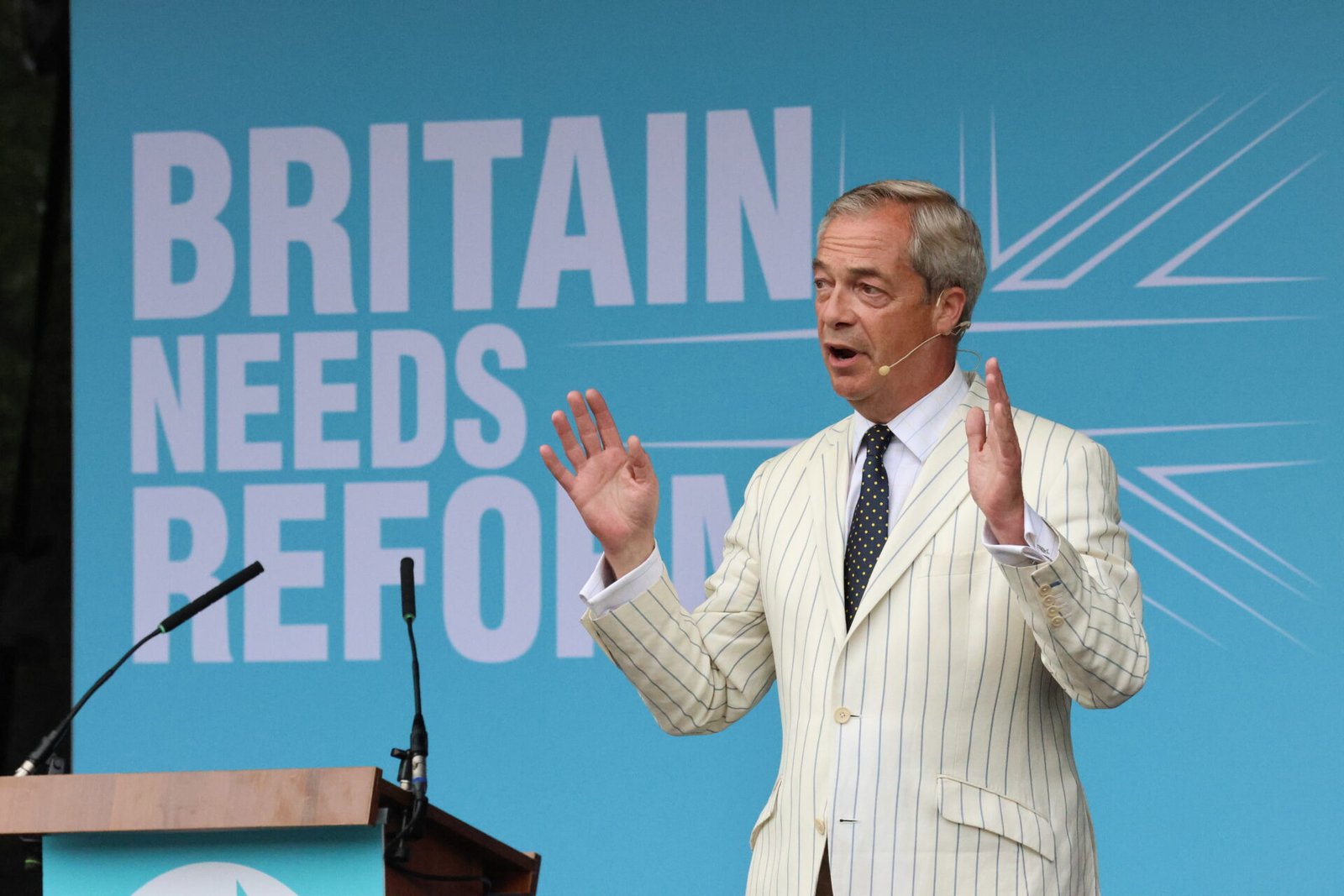
The University of Oxford has a Reform UK society for the first time, after registering with the Proctors.
After a six-month wait to approve their application, the political society announced its official registration with the University in an Instagram post. The society’s President, Lincoln Hewitt, told Cherwell: “Our overarching aim is to open up Oxford to new ideas and debates ideas that students have had nowhere to discuss but a quiet pub corner, debates that the Union would not host.”
Though previously operating as the Oxford University Reform Society, they are officially referred to as the Oxon Universities’ Reform Society due to University rules on the use of the University trademark by new clubs. The extent of the society’s official relation to Reform UK is unconfirmed.
The Oxford society’s registration comes amid a surge of Reform-affiliated groups at UK universities. In November 2025, the national party set up Students for Reform, a network of Reform UK groups in universities across the country, to champion Reform-supporting students. A recent Instagram post by Students for Reform celebrated the presence of Reform societies at 13 out of 24 Russell Group universities.
Increased Reform presence on campus has caused controversy at multiple UK universities. Over 400 students and staff at the University of York protested against a Reform UK speaker event in November, while other Reform societies have faced hostile campaigns from left-wing groups and petitions against their affiliation. Earlier this year, a confrontation between Reform students and left-wing protestors at St Andrews University prompted Suella Braverman, a former Conservative MP who defected to become a spokesperson for Reform UK, to release a statement condemning both the university and the “political violence” of the students involved. A poll from the Higher Education Policy Institute (HEPI) in January showed that 35% of UK students believe Reform should not be allowed to speak on campus.
While unregistered, the society hosted a Restore-Reform Britain debate and an event with historian David Starkey titled “A Scandal Unlike Any Other: Mandelson and the Rise and Fall of the New Labour System of Corruption”. The President of Reform Society told Cherwell that “the resources at our disposal and the University’s freedom of speech protections will permit us to run the full complement of events expected of an Oxford political club”. A forthcoming term card promises an “extensive programme of speaker events including members of parliaments and public figures”, the President added.
Regarding the new society’s role in the student politics landscape, the President told Cherwell: “Students on the right can expect to find their home and their voice.” President-Elect of the Oxford University Conservative Association, Aarav Desai, told Cherwell: “Oxford University Conservative Association will always remain the greatest home of conservatism in the University, with our esteemed history of fostering debate, free speech and conservative ideals… There will be no defectors to Reform society here”.



-

 Oxford News4 weeks ago
Train cancellation alert amid ‘fault’ near London Paddington
-
 Oxford News3 weeks ago
Museum evacuated and Oxford University closed amid incident
-

 Business & Technology4 weeks ago
Currys rolls out NiCE software to unify customer service
-

 Business & Technology3 weeks ago
Apprentices say AI is reshaping tech skills demand
-

 Oxford Events4 weeks ago
Wilderness Festival 2026: four days of music, food, art and wild escapism
-

 Business & Technology3 weeks ago
Love Island unknowns outshine influencers in growth
-

 Oxford News4 weeks ago
Oxford’s iconic shark in roof celebrates 40th anniversary
-

 Oxford News2 weeks ago
Richard Hammond takes control of classic car company