
Student Life
CUSP’s Dan Stock on the memories behind ‘English Country’

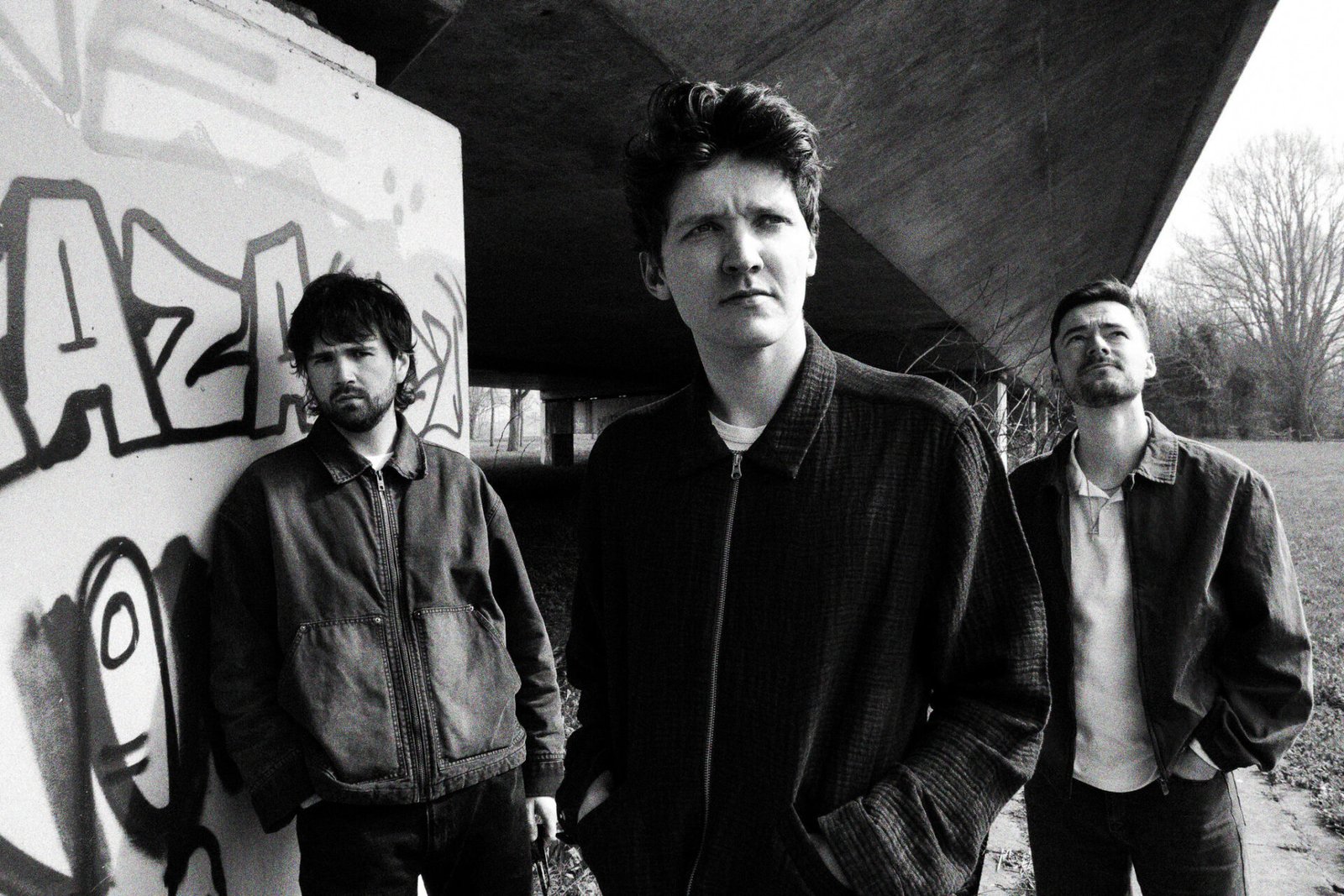
On Friday, CUSP, a Milton Keynes-based indie rock band, released their debut album, English Country. It recalls guitar bands from the ‘90s, but with a clear indie streak. Richly coloured with soaring strings and a utopian imagination of (unsurprisingly) the English countryside, the record is emotional without losing its energy. I got the chance to sit down with Dan Stock, singer, songwriter, and guitarist of CUSP, to discuss making his debut album.
Dan is a lovely, passionate, and clearly very clever interviewee. CUSP’s Instagram sees him as a tall, thin man with an affable face. His haircut recalls a pre-Beatles, 1958 George Harrison, and his dress sense is at once Richard Ashcroft and ‘70s Bruce Springsteen. More than that, he was clearly born to be a musician; early in the interview, he recalls being “obsessed” with songs, leaving out more popular childhood fanaticisms like ‘Star Wars’ or ‘Lord of the Rings’: “I’ve been writing songs for as long as I can really remember. I was learning other people’s songs – the Beatles, or, like, Arctic Monkeys – I’d learn the songs but then re-write the words.” I had never heard of somebody doing that before. “It’s a good cheat code!” defended Dan. “Because you think – how do you learn anything? You start by copying, don’t you? So it’s a really playful way to learn, and there’s no rules, as well. I think it means that I learned how to reverse-engineer songs. I find that I can write songs really easily, and I think that’s because I have loads of material in me from being a kid.”
His ten-thousand hours of writing practice as a child have paid off on this record. The opener, ‘English Country’, is a driving, melodic piece with a hell of an opening line: “Congratulations on the engagement / do you still hate my guts?”. Full, rich instrumentals underline Dan’s vocals, which sound a bit like Richard Ashcroft in his lower register. ‘English Country’ establishes a pervasive theme of the album, that of England as a utopian space embodying freedom, happiness, wellness, and love. Rooting these dreams in the land itself both recalls the ‘Cool Britannia’ of the ‘90s, when clear influences like Oasis and the Verve held the throne, and extends that sense of English pride and identity into musicianship in the 2020s.
Slower tracks, like ‘Edge of Tears’, maintain that theme. ‘Edge of Tears’ is a remarkably vulnerable title which is offset by a pretty musical enmeshment of some almost folk-y techniques with distortion effects common in ‘90s rock and 2000s indie. Dan earns the Verve comparisons with some soaring strings on this track. Those, along with the steady drums, counterbalance the heavy lyrics. The titular line, ‘I’m on the edge of tears’, is a lovely, soft, and honest confession. The best line, ‘Is anybody home? / Except that old depression / that takes the wonder out of walking ‘round an English garden’ continues to establish that sense of English identity within the record.
I asked Dan if the creation of that English identity was a priority when making the record. “I think it was natural, because that’s my experience. And I think it goes back to where my influences come from. My influences were American – Springsteen, or Tom Petty, or Dylan. And their songs were about specific places, so I kind of want to do that.” Though I had asked Dan if he was a big reader earlier (“I don’t know if I have the attention span for novels,” though he noted he likes reading poetry), Dan referenced literary history by way of music: “Van Morrison – he’s inspired a lot by William Blake, who will take the idea of England and mystical England, and dreams, and mishmash all of that together. It’s kind of my attempt at that – it’s the idea of the English country.”
Dan emphasized how much of an impact Bruce Springsteen had on him, “Bruce taught me everything about life. I just lived inside that music as a kid. It gave me an imagination – when I was a kid, I went on holiday to Jersey, between here and France – I was on holiday there and listening to Bruce Springsteen, and he was talking about Jersey, and I didn’t know he was talking about New Jersey in the States, so I was like – ‘Oh! He’s talking about Jersey! And here I am in Jersey!’ So it’s just amazing, your imagination.
After he mentioned it, I could see some threads of Americana within the album. Lines like ‘I carry a gun and a bible in the glove box’ on ‘Forever, Forever’ (a track more on the indie-pop side than anything, though included in Spotify’s ‘All New Rock’ playlist) sound more descriptive of America than England. I happily noted a reference to Dylan’s ‘Blood on the Tracks’ on ‘Love is a Dying Art’. ‘Temporary Sky’, which is an almost overwhelming song, has the singer taking advice from “the Americans”.
Musically, ‘Temporary Sky’ has an intense build. While not as dramatic as some of the other instrumentals on the album, the strings and guitars trading melody and the incessant drum feel immensely cinematic, and profoundly hopeful. The song feels like running towards something, which, of course, implies running from something else. Another pervasive theme within the record is the tension between a negative perception of one’s identity and an irrepressible optimism and hope for the future.
“Something I find really cool is when the singer beats himself up,” Dan explains. “Like, Elvis or Springsteen, or Alex Turner, or someone like that: I’d always look at the singer as a god. So when they’re beating themselves up, or showing frailty: I think that’s really cool.” Tracks like ‘English Country’, ‘Human Nature’, and ‘Shadow Boxing’ (the album’s great closer) foreground imperfection within the speaker. On ‘Human Nature’ in particular, both Dan and Tom Smith, a feature, sing “I’m gonna get my shit together / by this time next year / I’m going to show you who I can be / I just need a little time”. While confessional, that sense that the singers are, even if imperfect, trying to get better, is extremely endearing.
When I pointed out that many of these songs are “quite sad”, Dan laughed. I asked if putting out such a vulnerable piece of art into the world was at all frightening. “You can’t think about that,” Dan said. “As a creative in any form, I just think you can’t let that go into your brain. It just happened that the things that were quite vulnerable and the most honest, and probably the things that I wouldn’t say out loud, tended to be the things that moved me. When I’m then writing, and lines come, and I feel physically moved, I just follow that feeling. It tends to have that same effect on the listener. So you just have to trust yourself.”
I had to try to see if the breakup songs had any basis in reality. “Well… yes and no. It’s not a preconceived thing. People really only want to hear love songs. But there’s a song of mine that comes to mind that I wrote about when I was solo, and I got dropped by a record label, and that broke my heart. I wrote a song about that through the lens of a romantic relationship, but it wasn’t romantic. It was between me and this sixty-year-old boss of a record label. But I could get these lines that were really weighty and meaningful, and true to me, even though I wasn’t singing about a girl.”
I thought ‘Caledonia’ was the standout track on the album. Romantic, imagery-heavy lines slot nicely alongside catchy juxtapositions in the first half. The second half, however, features the best instrumentation on the entire album. The sweeping strings of the first half fade out into delicious, distorted, incessant guitar riffs. Dan’s voice soars out over that vital, lively instrumental drive. The second half of ‘Caledonia’ is, I would argue, a real example of a renaissance of rock music.
Not every track was exactly as watertight as ‘Caledonia’: though largely forgivable, certain instances of awkward lyricism pop up in ‘Human Nature’ or ‘English Country’. I found ‘Help Yourself’ and ‘Forever, Forever’ to be largely more indie-pop (or country-pop!) than indie-rock, though overall these aren’t mortal sins: ‘Help Yourself’ recalls country-pop ballads at their prime: romantic, catchy, and grounded in reality. Ultimately, all the tracks work very well together. English Country, as a record, is more than the sum of its parts.
“I always think in terms of albums,” Dan said, “I would always write albums – that’s the art form. With us, it definitely feels like more of a slow burn. We decided we wanted to make a full-length piece of work. I believe that hopefully, once people hear it, things will continue to grow. For me, it feels like the first of many. It’s very much just scratching the surface of what we want to release.”
I asked Dan about the start of the band – who else is in it, and how long had they been together before releasing this debut? “We actually got together just before COVID, and that delayed us, which was a blessing and a curse. The good thing was we had a lot of time to write and make music, because we weren’t playing shows. So even though we’ve been together as people and musicians and friends for a long time, we haven’t really been out in the world gigging as a band for as long. The band is me, Dan, singing and playing guitar and writing songs, and then we have Adam on the bass, Jack on drums, and we’ve just added Joey recently, in the live setup, on acoustic guitar.
“Me and Jack, the drummer, had been playing together for a long time now. We know each other locally – we’re from a town called Milton Keynes. There’s not much culture going on here. It tends to be the kind of place where, when you’re eighteen, you leave and you go to uni in a big city, so when we got to around that age, there’s not really many people left in the town. I don’t want to say we were the only people our age into that kind of music, but we kind of are. So we gravitated towards each other, and got really lucky.”
I wanted to ask about the cover art for English Country, which is an odd, sort of surreal photo of somebody doing a headstand with a guitar between his legs. “There’s actually a story behind it that no one really knows,” Dan explained. “It’s a picture of my girlfriend’s dad, who passed away, when he was in his twenties. When we met – me and my partner – a couple months after, he got diagnosed with cancer, and he was in his mid-forties. He then deteriorated and then passed away, but this image, their family found. He was the biggest music fan I’ve ever met, but he kind of lived a quiet and normal life – he focused on raising a family, and he had a job that he probably didn’t love, but that put food on the table for his family.
“He loved music more than anyone I’ve ever met. We also had very similar taste. Me and the family found this picture, and it really stuck with everyone, because – why is he on his head with a guitar between his legs? No one knows,” Dan said, with a smile in his voice. “And then when I was thinking about the album art: one day, for Christmas, I got my partner those pictures made in a frame that we have at home. And I was just sat there, and I looked at that picture, and I was like, ‘that looks like an album cover’. And then I realized that all of those things in the album about freedom and what music can do at its best – the joy and sadness – was kind of expressed in that image. And I think the image alone looked quite iconic even without the story. So I love it because there’s so much packed into it. It is incredible; it’s also surreal for them, and for us – the fact that he would have loved that so much. Because he loved records so much himself.”
‘English Country’ has been very well received in the indie rock world before and since its release. Excitingly, for the band, Oasis’ Noel Gallagher complimented a track of theirs (‘Coming up Roses’; not on English Country) whilst on a podcast. “Somebody’s paying a lot of money to record shit like this.” Noel, characteristically irreverent, remarked. “It sounds like it was done in the nineties. It’s good though. The guitars are all great.”
I wondered what Dan thought of the review. “It was amazing. When I knew he’d be listening to it, I was kind of bracing myself to be ripped to shreds, because it’s Noel Gallagher. I don’t know if he’s mellowed in his old age, or what… if it was the nineties, it might have been different. It’s not that he was sweet; it’s like he gave a slight backhanded compliment. ‘How did these peasants afford this?’ That it sounds expensive, and the guitars sound great – you hear in his voice that he’s kind of surprised, because I don’t think he has much faith in new bands, so it was a massive compliment. And we’re lucky that Bonehead in Oasis commented on Instagram; that was unexpected. It’s nice.” Bonehead commented ‘Tune’ on an Instagram post about ‘Forever, Forever’. And Noel wasn’t right about the band spending a lot of money to record the album – the band “pulled favors, basically”, and “did it really cheaply”.
It seems like CUSP is well received by more than just old gods of Britpop. Dan reflected on a great festival season, where CUSP played Isle of Wight, Truck, and Y Not. “The funny thing is when we were making the album, we weren’t really thinking about singles or songs for festivals. I love it for that, but then when it comes to playing festivals, it’s kind of hard, because some of them are quite sad songs.” ‘Forever, Forever’ apparently did very well on the festival circuit.
When promising even more new music next year, Dan said, “I just want to make music that connects with people in that way. So rather than this first album, which was quite dark and sad in places, I want to make big songs, or songs that are immediate, and work live.”
CUSP is on tour for the rest of the year, starting in Manchester on the 22nd of October, and ending in London on the 7th of November. “If it was up to me and no one else, we’d kind of decide what we were playing the night of.” Dan said. “Very Radiohead.” I noted. “Yes, the others are making me stick to a setlist. I did an acoustic gig, and I just took requests from the crowd, and it was my favourite gig in a long time,” Dan remembered. “Because I was relearning the song in the moment, and I didn’t know if I’d remember all the words, and I loved the uncertainty.”
I’ll be in London for the November 7th show, and though they don’t play it often, I’m holding out hope for ‘Caledonia’. “We’ve got the staples, and then there’s a bit of a revolving list.” Explained Dan. I may have a chance. Dan is looking forward to the tour and said he’s excited to get out into his community. “In 2026, the people that buy tickets to watch small bands are incredible. Normally, you see the artists you love, and tickets are so expensive for big gigs, aren’t they? Even leaving the house, for a lot of people – there’s so much to compete with, with social media and TV. So to go out and watch a band is an amazing thing. So I have a lot of gratitude.”
Ultimately, English Country isn’t a challenging record, but it is catchy. There are some standout tracks – notably ‘Caledonia’ – but generally the record stays within the boundaries of indie-pop-rock: it is both danceable and likable. While generally playing it safe, its relentless hopefulness is endearing enough to forgive weaker elements of certain tracks. CUSP certainly has potential, and I’ll definitely be keeping an eye out for any new releases.

Given its intense media coverage and everything that seems to be on the line, I feel as though I have been anxiously awaiting the results of the 2026 US midterm elections for weeks, months – maybe years. Having lived in Central America in the lead-up to the 2024 presidential elections, I had become utterly disillusioned with the idea that shared identity could ever guarantee political solidarity. I had watched people around me sport MAGA hats and post AI-enhanced pictures of Donald Trump as Jesus on their Instagram stories; people with skin like mine, who spoke English with an accent (or not at all), people who joined me in holding up the passport queue at the Houston border. It made my stomach turn to think that the win had been secured with the help of people I considered my kin and, no matter what they had been led to believe, people I knew would be quickly alienated by Washington if they were to ever step out of line. The horrific acceleration of ICE activities across the country, but particularly around the Mexican border, had been a predictable, but nonetheless more upsetting development under the current administration, knowing what I knew. So, despite Zohran Mamdani’s landmark win in New York (which I saw announced in an A&E waiting room in Oxford at 2 am, heart beating out of my chest unrelated to any medical issues), I did not have high hopes coming into the midterms.
My political pessimism, however, has not extended to my taste in literature. I don’t know how many of my coursemates would admit this, but my decision to study English was partly propelled by my love of Young Adult literature. If I ever find the time in between reading lists, I am most likely to be found with my nose buried in some trashy Harry Potter fanfiction with the names changed for copyright purposes. I enjoy unadulterated fluff. I yearn for inconceivable happy endings. I don’t want realism in my YA – I want happiness against all odds, and refractory periods that bend the rules of biology. As such, Casey McQuiston’s 2019 novel Red, White & Royal Blue, with its queer romance and almost aggressively optimistic vision of American politics, has been my comfort read for many years.
For the uninitiated, RW&RB tells the story of Alex Claremont-Diaz, son of the US President, and Prince Henry George Edward James Fox-Mountchristen-Windsor (average Oxonian number of middle names), fourth in line to the British throne. Despite long-standing animosity, after an incident that could threaten the president’s re-election campaign, Alex and Henry are forced into a PR friendship that soon unravels into something more. The enemies-to-lovers façade is shattered, as the two come to realise they have loved each other all along. The fictitious stakes for their relationship are very high – Alex doesn’t want to put his mother’s career at risk, and Henry fears being estranged from his family. However, the story is sold on its lack of realism: though it’s impossible not to invest in Alex and Henry’s relationship, just a quick scan of the list of characters tells you that something like this could never happen, so it’s easy to infer that everything will work out in the end. Alex is half-Latino, and his mother Ellen is the first female President in US history. She is a divorced, middle-aged woman, and the Democratic candidate from Texas. She has one trans and one pansexual Secret Service agent on her security detail. One of her closest allies is Rafael Luna, an openly gay, Latino senator from Colorado. Henry’s older sister is a recovering cocaine addict. McQuiston imagines a true woke-gone-wild, blue-hair-and-pronouns takeover. In the final chapter of the book, Ellen wins her re-election. Her home state, Texas, is the last to be called: “Texas is gray for five more seconds, before flooding beautiful, beautiful, unmistakable, Lake LBJ blue.” It is utter nonsense, and the only conceivable end to a narrative filled with things going right at the last second for the most unexpected people.
The Venn diagram for literary scholars and queer activists overlaps when it comes to tangible prejudice against gay pop-lit. It’s not entirely uncalled for; there is a concern that people are writing about a community they aren’t a part of, in a manner that doesn’t provide an adequate depiction of queer lived experiences or isn’t conducive to relatability for those peering in from outside the bubble. The medium seems too flat to convey the varied lives of people within the community without making caricatures out of them. I sympathise – it is difficult not to perceive stories like RW&RB as indulgent and mocking, particularly at a time when it feels like stereotypes are being used to demonise and legislate against us. But I also think there is value in shameless positivity and, much like mainstream music, I charge the elites to approach the corny YA novel poptimistically. To turn a blind eye to the suffering we have long endured would be a disservice to the progress we have made in being unashamed of who we are and of the people we love, but part of that progress is also learning to be comfortable in the idea that we can be happy, in the same cheesy, tooth-rotting way as anyone else. We are not doing ourselves any favours by self-flagellating, and in the same way that we shouldn’t be expected to justify our identities to anyone else, we also shouldn’t have to justify any fantastical romances we revel in to ourselves.
The Democratic platform for the midterms was built almost entirely in reaction to the decreasing quality of life under the Republican administration. Candidates emphasised the cost of living and claimed unaffordability to be a direct result of corruption in the White House. For once, it was almost impossible to claim what the right always does, which is that liberal candidates sideline economic issues in favour of trivial social problems that affect only a small minority of people. Despite this, the character list for Democratic wins in the midterms rivals the diversity of RW&RB. Chris Pappas became the first openly gay man elected to the US Senate in New Hampshire; Abdul El-Sayed is the first Muslim man to win a seat in the US Senate in Michigan; Keisha Bottoms, in Georgia, is the first Black female governor of any US state. Hakeem Jeffries remains the frontrunner for Speaker of the House of Representatives, a position that is second in the presidential line of succession. And of course, as the prophecy of RW&RB foretold, James Talarico won the Senate seat in Texas, flipping the state blue for the first time since 1988. We now live in a world where deep-South, Bible-belt Texas is being led by a man who five years ago claimed that God is nonbinary. “The Lometa Longshot and a long-awaited blue Texas.” Who would’ve thunk it.
So, despite her cartoonish faith that the good guys will always win, Casey McQuiston has won this particular battle in the culture war this time. The ideological optimism that Red, White & Royal Blue upholds has been reaffirmed by real changes in the American political climate, and though there is still a long way to go and now is certainly not the time to relax our hold, I think that we have at least reminded ourselves that hope and solidarity go a long way. I’m embarrassed to say that I had forgotten. And if the next time you see me I’m reading a book with a bright pink cover, maybe you’ll hold off the ridicule for a couple of seconds longer.
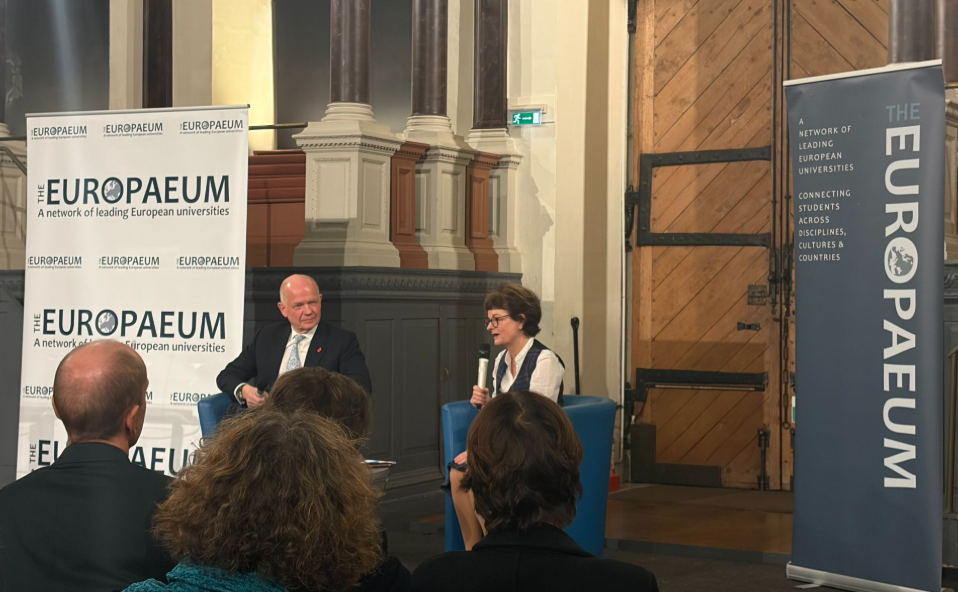
Chancellor of the University of Oxford, Lord William Hague, delivered the 2026 Europaeum Annual Lecture at the Sheldonian Theatre on 4th November. Hague called for closer UK-EU ties as a matter of urgency, including strengthening cooperation on technology, defense, and climate change, whilst upholding democracy and doubling down on multilateralism.
Hague’s wide-ranging speech is the second ever Europaeum Lecture. The series brings together high-profile speakers from top European universities to discuss Europe’s challenges. Describing the current era as “the most dangerous period since 1945”, Hague outlined his vision for Europe to escape decline by rebuilding through renewal and resilience. In response to Prime Minister Andy Burnham’s call for the UK to eventually rejoin the EU, Hague expressed scepticism about the move’s feasibility, but declared that “our fate is as entangled with the fate of the continent as it has ever been”.
On technology and the rise of artificial intelligence, Hague warned that Europe risks becoming either a “digital colony of the US or a tech dependency of Beijing”. He urged the continent to “take back control”, including by ensuring the “free cross-border flow” of global talent. The Chancellor portrayed universities as “engines of ideas” crucial to spurring innovation. Oxford ranks as Europe’s leading university for spinout value creation, accounting for 20% of all investment into spin-outs across Europe.
Noting Britain’s record summer temperatures, the Chancellor called for new measures to adapt to the effects of climate change and greater investment into “novel technologies”. These included carbon capture, geoengineering, and genetic engineering. Citing Greece’s recent launch of a satellite system for wildfire prevention, Hague urged the UK and EU to work together on a similar scaled-up Europe-wide solution. He also encouraged both sides to unify carbon markets and simplify trading of electricity.
Cherwell asked the Chancellor about possible reductions in tuition fees for EU students at UK universities, currently under consideration as part of UK-EU negotiations. In his reply, Hague told Cherwell: “We’d love to see it easier for EU students to come to our universities, but it does require governments to reach agreement.” He expressed support for a youth mobility scheme enabling young British and EU citizens to live and work in each other’s countries. However, Hague also referred to negotiating conflicts over equalising tuition fees for EU nationals with British citizens to pour cold water over a deeper UK rapprochement with the EU.
In exchange for a youth mobility scheme, the Chancellor encouraged the EU to involve Britain in its “Made in Europe” industrial policy. He also endorsed closer defense cooperation through the EU’s €150 billion Security Action for Europe (SAFE) loan scheme, as well as joint UK-EU leadership on international governance of new technologies, including creating guardrails against artificial intelligence.
Founded in 1992 by former Oxford Chancellor and the only-ever British President of the European Commission, Roy Jenkins, Europaeum offers postgraduate programmes to students across 17 European universities. The network describes itself as “an alliance of pre-eminent universities” focused on interdisciplinary learning to tackle Europe’s major issues. The University of St Andrews is the only other UK member of the organisation, which continues to be headquartered at St Antony’s College, Oxford.
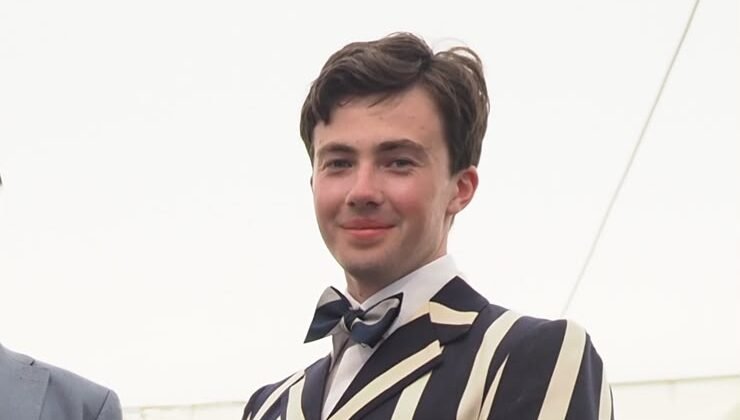
When I sit down to interview second-year Ancient and Modern History student Robin Munday, he happens to be wearing his Swiss Glacier Pistol Club fleece. The Oxford University Pistol Club (OUPC) captain is right to sport his discipline with pride. In his first year at the club, the team beat Cambridge twice: in an official varsity match in Hilary, and an unofficial competition in Switzerland during the long vacation. A few further victories against other university teams in the summer also contributed to OUPC’s “moderate success” last year, he tells me.
This year does not look set to disappoint either. Competition has not started yet, but since an appearance at Freshers’ Fair, the club’s weekly training sessions at Iffley Road Sports Centre are fully booked, and its group chat has over 200 members. “There are some very talented freshers,” Munday tells me. “By and large most have never touched a gun before, but some of them have and are very promising shots.” Munday mentions how some of the new members are getting to grips with trickier techniques, like aiming at targets that collapse when the bullet hits.
The incoming pistol shooters could not be in safer hands. “I’d always grown up around shooting,” Munday says. “The first time I was on a shooting range I was a few weeks old, and I started shooting aged five, with an air pistol I got for Christmas. When I was six, I was on centre-fire, more powerful revolvers.” Munday started competitive shooting at the 2015 Swiss Federal Shooting Festival aged ten, the youngest of around 35,000 competitors. He went on to win the under-21 division of the Swiss Feldstich contest in 2024, and a year later placed third.
His affiliation with OUPC, though, started well before its recent successes. Munday’s parents met at OUPC as undergraduates. His father served as “one of the early captains” after the club broke off from the Rifle Club in 1976, and his mother became captain a few “generations” later. He still owns and occasionally wears a size XS OUPC polo shirt which the club gave his parents as a gift for him.
“For a very long time, I’ve wanted to become captain of the OUPC – I’m proud partly because I’m following in my parents’ footsteps,” Munday tells me. The club’s events lined up for this year will certainly make his tenure an exciting one. “In a couple of weeks there’s the Oxfordshire Rifle Association Gallery Rifle Championships, and, like every year, there’s the Faded Blues.” In part of the latter event, Munday tells me, OUPC alumni compete against current members, who, he adds, “are almost always defeated”. Whatever the case, there cannot be anyone better placed than Munday, with his unique overview of OUPC’s history, to take part.



-
 Student Life4 weeks ago
From Oxford to Cambridge: The 204-mile punt for Alzheimer’s
-

 Oxford united FC4 weeks ago
Oxford United win 2-1 at Notts County in League One return
-
 Student Life3 weeks ago
Hidden in plain sight: the bakery behind Oxford’s café counters
-

 Property & Housing4 weeks ago
Plans developed for 12 affordable Blackbird Leys homes
-

 Property & Housing4 weeks ago
Blenheim displays new Oxfordshire scheme with show home
-

 Traffic & Transport3 weeks ago
Uber begins self-driving robotaxi trial in Manchester | Uber
-

 Oxford united FC4 weeks ago
Oxford United boss Aaron Ramsey opens up on Jamie McDonnell injury
-
 Student Life4 weeks ago
Botley Road reopens after three and a half years