
Traffic & Transport
Builders, bakers and cheeseburger-makers: the UK workers struggling in extreme heat | Extreme heat

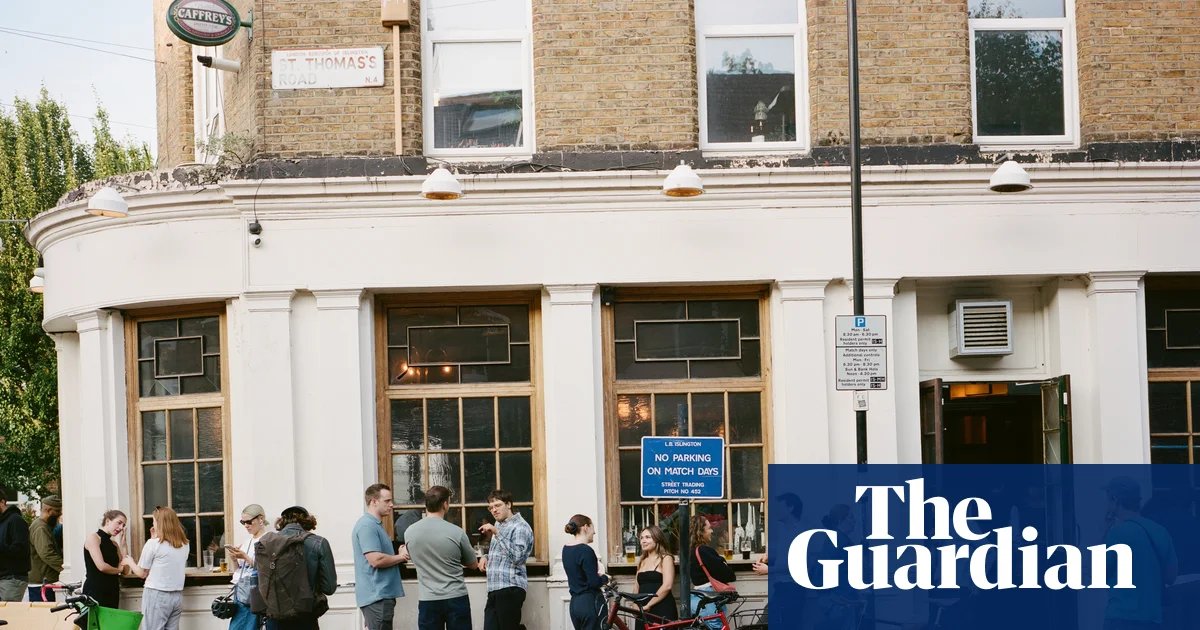
In the sweltering kitchen of the Plimsoll pub in north London, the head chef, Joshua Swinney, has a frozen tea towel wrapped around his neck to combat the heat.
As temperatures exceeded 35C (95F) in the capital, workers who were not lucky enough to be in air-conditioned offices sweltered in the heat.
To cope, Swinney said the pub tried to put more dishes on the menu that did not require ovens or stoves. That is tricky, however, when it is most famed for its cheeseburger, the making of which entails standing over a grill.
“Suddenly you realise you have seven salads on and can’t get enough raw fish dishes in there,” he said. “As for the heat itself, fans help, but mostly just blow the hot air around, and you can’t have them in the service kitchen.” He said kitchen staff had been known to keep cool a number of ways: “I’ve even seen someone take an ice bath in a flexi bucket.”
Swinney is just about managing, but bakers, construction workers, bus drivers, paramedics and teachers all say heatwaves are becoming incredibly dangerous for them. A campaign for a maximum working temperature, to bring England into line with other European countries, is gathering pace.
Spain is the gold standard: the maximum working temperatures for sedentary work, such as office work, is 27C, while for light physical work it is 25C. In Belgium, it is 29C for light physical work, 26C for a moderately heavy physical work, 22C for heavy physical work and 18C for very heavy physical work.
Kenny Dinsdale, a construction worker, said there was a risk to life from working in extreme heat. “If you’re not careful, you run the risk of significant injury, either through dehydration or through heat stroke or, you know, the ultimate thing is death.”
He said the demographics of the construction industry meant workers like him were particularly at risk. “We’re an older workforce. I’m 65 years of age coming up this birthday, I’m still working in the industry.” He suggested construction should adopt more “Mediterranean-style hours” to avoid the heat of the day.
Bakers, with their large, hot ovens, often working in small unventilated spaces, were also struggling. Sarah Woolley, the chair of the Bakers, Food and Allied Workers’ Union, said: “As it heats up outside, an already hot workplace with ovens and provers is going to get hotter still.” Her union has been calling for a maximum working temperature for a decade.
She said that rather than just putting regular fans in their bakeries, some employers had implemented extra measures, such as relaxing the uniform guidance without impacting food safety standards, providing cold water and offering additional breaks. “But others, where we haven’t got [union] recognition, stay open and expect workers to continue as normal. Some employers have provided isotonic drinks rather than just ice pops, reduced lines running, and instructed unnecessary equipment, like hot holds, to be turned off rather than adding to the heat.”
It is difficult for essential workers, such as paramedics, to stop working in intense heat, but they are asking to be allowed to shed their sweltering uniforms when temperatures reach a certain level.
An ambulance medical technician in Birmingham said: “Working in the heat has been awful. It’s vile. It’s also ridiculously busy when it’s hot. We have one uniform, whether it’s -10C or 30C. You’re sweating even when you’re just driving. I could have cried during my last shift. I often think: ‘I can’t do this again’.”
A London paramedic said of his uniform: “I love the good weather, but the minute I put my uniform on, it’s unbearable. I recently had to carry someone down from the seventh floor, and I don’t think I’ve ever sweated that much in my life. I work at capacity, both physically and mentally. The physical demands of working in the heat are extreme.”
Unison’s head of policy, Sampson Low, said: “Paramedics, cleaners and other public sector workers have no choice but to carry on when the mercury rises. Extreme heat not only brings a rise in demand for care but can also affect the health of staff. What’s needed are thresholds based on evidence. This is for jobs where work can’t simply stop when a temperature is reached.”
Bus drivers have been voicing their frustration about the greenhouse-like effect in their cabs, where air conditioning, if it exists, often does not work and temperatures can exceed 40C. Some have recently gone on strike to protest against their conditions.
One London bus driver said: “The buses are at the poorest state ever. The aircon barely works, the heatwave is icing on the cake. I feel we as bus drivers are treated extremely unfairly and we just add up numbers, to the companies we mean nothing.’
Another added: “The buses don’t have AC, they think putting a little fan in the cab helps. It doesn’t. The cab’s temperature is hotter than being outside, it’s ridiculous. Something needs to be done. I have suffered with migraines and when it’s hot they get worse.”
The Trades Union Congress’s health and safety lead, Huma Haq, said: “The experience from other countries is clear: maximum workplace temperatures can work. If they work in Spain, where summers are far hotter than in the UK, they can work here too. Unions are calling for rules that require employers to take action to reduce temperatures when they exceed 24C, and for work to stop when temperatures reach 30C, or 27C for strenuous jobs.
“Unions have been leading this campaign, and right now workers are taking action to keep themselves safe as temperatures climb to extremes again. From bus drivers in north London to front of house at the V&A Museum, workers are using their collective power to bring about the changes needed for cooler and safer workplaces.”
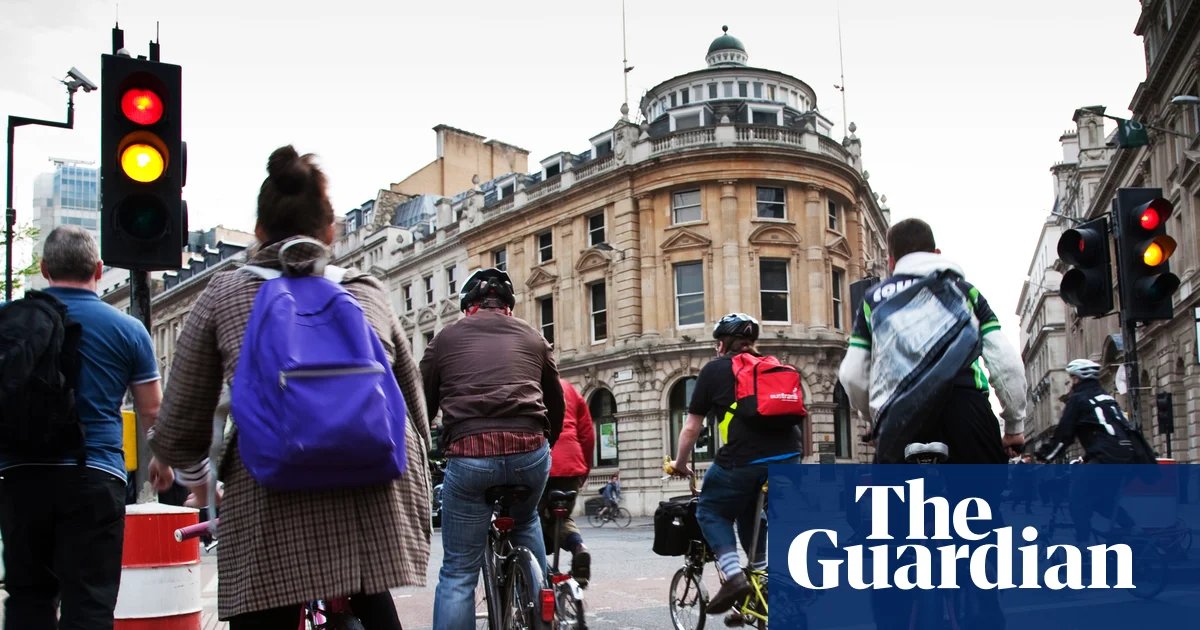
Simon Jenkins is right that traffic rules can feel bureaucratic, but using Hans Monderman’s “shared space” to justify running red lights misses the entire point of Monderman’s philosophy (I’ll admit it: I’ve cycled through red lights. But Britain’s traffic laws are to blame, not me, 21 August).
Monderman didn’t champion anarchy so individuals could cherrypick which laws to follow; he suggested infrastructure be removed precisely to force collective cooperation, eye contact and mutual caution.
The moment cyclists ignore that negotiation process while vulnerable pedestrians are left unprotected, the delicate psychological balance collapses. Freedom without universal accountability isn’t shared space. It is just a system that rewards the most aggressive road user.
That is precisely why high-profile implementations like London’s Exhibition Road faced a fierce backlash and were reversed, and why the UK government eventually halted new level-surface shared-space projects: when compliance breaks down, it is blind and elderly people, and vulnerable pedestrians, who pay the price for an idealised view of human nature.
Gary Ogin
London
As a lifelong cyclist may I point out an alternative view to that of Simon Jenkins? I don’t mind red lights; they offer unplanned fartlek opportunities on a training ride, skill development in maintaining a track stand for an unpredictable length of time, and stomp intervals in getting away from them. And if I’m knackered, a nice unplanned rest and chance to take a drink. I’m not sure Jenkins’ anarchic behaviour and justification for it does much to help the case of cyclists.
Peter Anderson
Barwick-in-Elmet, West Yorkshire
I ride a bike and a motorbike, and drive a car, and on all three I stop at red lights. Cyclists who ignore traffic lights contribute to the growing antagonism towards the rest of us. Simon Jenkins should know better.
Edward Collier
Cheltenham, Gloucestershire
Four years ago, aged 83, I was knocked down by a young man on a bike. Damaged wrist. He rode away quickly after making sure I wasn’t dead. April this year, aged 87, I was knocked down on a pedestrian crossing by a black ebike. Deep wound on leg, police, ambulance, hospital. Four months later, the leg is still being treated. The rider rode off after making sure I wasn’t dead. Shame on you, Simon Jenkins.
Joan Grabham
Cambridge
Traffic & Transport
UK petrol prices hit highest level in almost four years as bank holiday getaway looms | Petrol prices
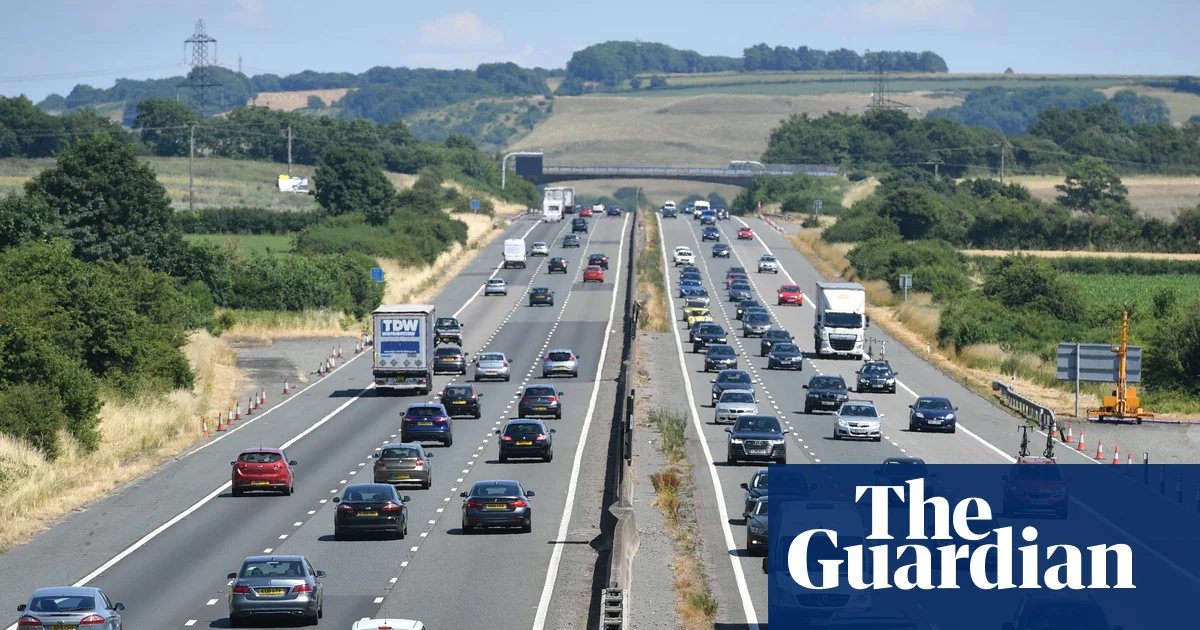
UK petrol prices have hit their highest level since 2022, piling more financial pressure on motorists before the bank holiday weekend.
The average cost of petrol has reached 161.6p a litre, while diesel costs an average of 183.4p a litre, according to the AA breakdown company.
The last time the petrol price was so high was in November 2022, when it soared in the aftermath of Russia’s invasion of Ukraine.
It comes as millions of people prepare to make car journeys over the bank holiday weekend, which will be marked in England, Wales and Northern Ireland. The RAC estimates that the UK’s motorways and major roads could have the most traffic since its records began in 2015.
The services company has predicted Friday is likely to be the worst day for heavy traffic, with more than 4.1m cars expected on the roads.
Luke Bosdet of the AA said the rise in petrol prices showed that “UK pump pricing is back to its worst”. It is “too often overpriced and uncompetitive, with too many communities denied road fuel at a reasonable price”, he said.
The UK’s competition regulator told fuel retailers this year that it would step up its monitoring of pump prices amid concern over profiteering as the US war with Iran drives up wholesale costs.
Before the US-Israeli attack on Iran in February, Brent crude – the international benchmark for oil prices – traded at about $72 a barrel. It hit a peak of $126 a barrel in April, before dipping to $71 at the start of July on hopes of a peace deal. It now trades at $89.63.
The Competition and Markets Authority found this summer that many petrol stations were too slow to pass on falls in wholesale energy prices to their customers.
A government scheme called Fuel Finder allows drivers to compare the cost of fuel offered by petrol stations across the UK. The AA found that in some areas, petrol was sold at about 10p below the national average cost for a litre on Thursday night, at stations in areas such as Aylesbury, Wembley and Gloucester.
after newsletter promotion
Bosdet said just one competitively priced forecourt “can often pull down the price of fuel locally, including at nearby supermarkets”.
He said: “Drivers just need to find them and go to them.”
Earlier this month the CMA said it had sent out more than 1,000 warning letters to retailers who had failed to share their prices with the Fuel Finder service.
Traffic & Transport
How Britain’s railways are struggling in the heat – and can they be fixed? | Rail industry
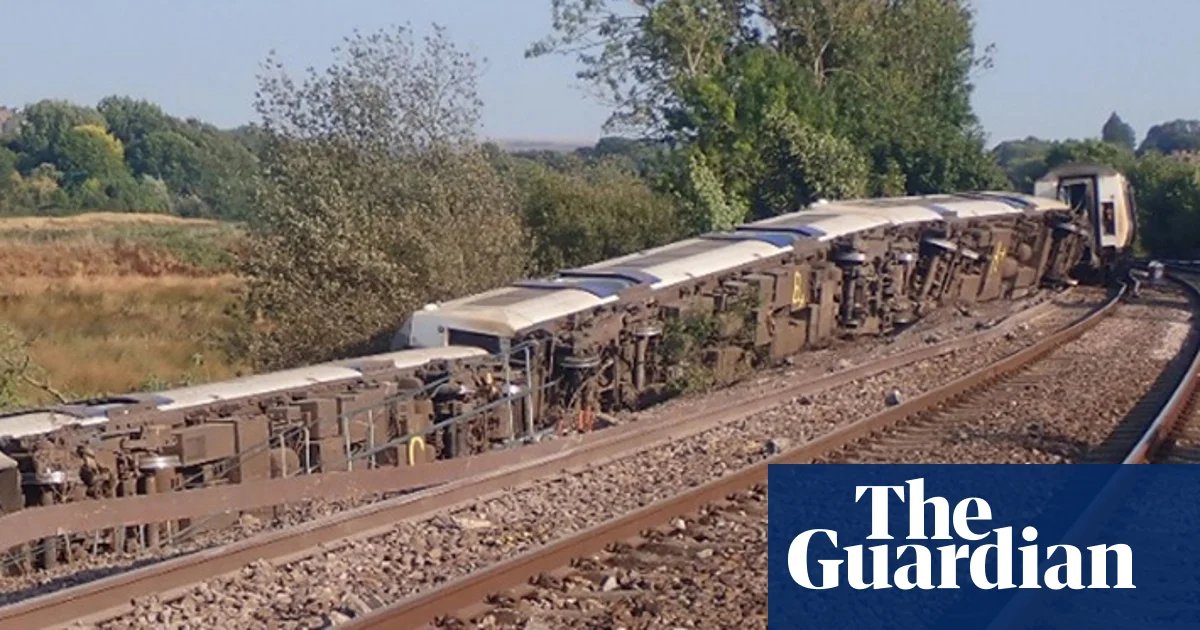
Britain’s railways have faced a string of heat-related problems this summer, including a derailment near Lewes in East Sussex two weeks ago that injured 30 people, and another the next day when the rear carriages of a Greater Anglia train derailed “in an upright position” at Wickford railway station in Essex, with no reported injuries.
The problems came during one of the hottest and driest summers on record, with a series of heatwaves, and drought declared across large parts of England and Wales. Britain’s railways, built for a cooler, wetter climate, have been put under pressure. Network Rail said the summer had “presented exceptional challenges to the railway”.
Here’s what we know about how heat affects the rail network and what can be done to tackle it.
What happens to railways in the heat?
Steel expands when it gets hot, and the long, welded steel sections that make up modern railway tracks are no exception. “The classic concern for railways with hot weather is that the track might buckle,” said William Powrie, a professor of geotechnical engineering at the University of Southampton.
As temperatures rise, the rails expand, but their continuous design means there is little room for movement. “If they haven’t got anywhere to go, they end up generating compressive stresses,” Powrie said. “The problem with any sort of structure which has got a compression in it is that it can fail by buckling.”
The consequences can be serious. Just two days of record heat in 2022 led to almost 7,700 cancelled trains and an estimated £30m in costs, according to a taskforce set up by Network Rail after that heatwave.
On a hot day, the rail can reach much higher temperatures than the air. Network Rail says most of the network can operate when track temperatures reach up to 46C, roughly equivalent to an air temperature of 30C. But rails have been recorded at temperatures as high as 51C.
The sleepers and ballast that rails sit on can help stop them from buckling, keeping the track in place – but long periods of heat and drought can dry the soil beneath them. That soil can shrink when it dries, a problem given it “is essentially the foundation for anything on top of it”, said Manu Sasidharan, an assistant professor of infrastructure asset management at University College London.
The weight of passing trains makes the problem worse, putting pressure on the weakened soil and causing it to settle unevenly. Whatever sits on top, including the track, “will follow suit”, Sasidharan said.
While tracks and stations have been continually updated over the decades, some embankments, tunnels and other structures date to the 1800s, when much of the network was first laid.
How do hotter countries cope?
To stop rails from buckling, engineers lay them slightly stretched, a process called pre-stressing. It means the rail has some give in it before it starts expanding in the heat.
In the UK, rails are stretched so that they do not undergo compression until the air temperature passes 27C. That figure sits between the UK’s highest and lowest seasonal rail temperatures, protecting against buckling in the summer and breaking under tension in the winter.
Other countries set that figure differently. In parts of Australia and the US, the so-called stress-free air temperature can exceed 35C. In southern Europe too, where winters rarely get as cold as in the UK, rails are designed for more heat, since there’s less risk of the rail snapping in the cold.
“If you’re looking at Italy, where you don’t really get very low winter temperatures, then you can afford to increase the stress-free temperature,” Powrie said. “The problem is the range of temperatures that we have [in the UK] … in the winter, they go into tension and that can cause the rails to break.”
One option, in theory, could be to re-stress rails between seasons, loosening and retensioning them so the stress-free temperature is set higher for summer and lower for winter, rather than fixed year-round.
Network Rail says: “In Britain, the variations in short-term weather and long-term climate mean that it is neither practical nor cost-effective to implement these measures permanently.”
Another option is to lay track on solid concrete slabs, as in some countries, rather than the more common bed of sleepers and ballast. However, slab track costs about four times as much to install as standard ballasted track, which is why it remains rare across most of the UK network.
What can be done?
One idea under discussion is raising the temperature British rails are built to withstand. The post-2022 taskforce said that on modern, well-supported track the stress-free temperature could rise from 27C to 30C.
“You might say we should actually have a different stress-free temperature in the south of England compared to, say, the north of Scotland,” Powrie said. However, higher stress-free temperature also leaves rails more vulnerable in a cold snap.
Simpler measures are already in use. Some sections of track are painted white to reduce how much heat they absorb. Network Rail says a rail painted white is typically 5-10C cooler.
Both tactics may be necessary as summers get hotter – something that will be increasingly normal amid the climate crisis. All five of the UK’s warmest summers on record have happened since 2000, according to the Met Office.
Monitoring for faults remains difficult, though. The Network Rail taskforce found that fewer than half of the track buckles recorded in 2022 had been identified before they happened.
Part of the issue is the sheer amount of data modern trains generate. Many now carry sensors that pick up rough riding or unusual vibrations, but sifting through it all is a challenge that needs to be automated, experts say.
Much, therefore, still relies on judgment rather than data – for example, a train driver detecting rough riding on one part of the line and reporting it.
As a temporary measure, speed restrictions were imposed on trains in southern Essex in the aftermath of the Wickford derailment.
Did the Lewes derailment happen because of the heat?
It’s impossible to say for sure. An interim report by the Rail Accident Investigation Branch (RAIB) found that a “track geometry irregularity” existed before the derailment, and said investigators had since received reports of rough riding from passengers on that stretch of line.
Sasidharan said early evidence pointed to the track itself. “The initial indication of the derailment … is that it’s a track infrastructure fault, most likely,” he said.
At the site of the derailment, the embankment is built on clay, which shrinks more than other types of soils as it dries out. The RAIB said the clay was “sensitive to variations in water content”, and there was evidence it had shifted before the derailment, though not enough to amount to a significant slip.
Powrie said the location had several things working against it at once, making it a case of what safety experts call the “Swiss cheese” theory of accidents, where one only happens when several small failures line up together.
The derailment happened on a bend – where more force is exerted on the track – and close to where the track leaves a bridge and moves on to the embankment.
Powrie said these transition points were a natural weak spot because the track had to cope with a sudden change from something rigid to ground that could shift, especially when it was dried out. “It wouldn’t surprise me if the defect turned out to be related to the dryness,” he said, “but I don’t really want to speculate.”
Network Rail has said it is “fully committed to supporting the continuing investigation and acting on any lessons that emerge from its findings”.
It said: “Safety is and will always remain our highest priority. While Britain’s railway is one of the safest in the world, when incidents like this occur it is essential that we understand exactly what happened and identify any lessons that can be learned.
“Given the complexity of the issues being examined, it is important that the independent investigation is allowed to reach its conclusions. We will continue to cooperate fully with the RAIB throughout this process.”



-
 Oxford News3 weeks ago
Train cancellation alert amid ‘fault’ near London Paddington
-

 Oxford News2 weeks ago
Museum evacuated and Oxford University closed amid incident
-

 Business & Technology4 weeks ago
British Business Bank backs PhysicsX with USD $25 million
-

 Business & Technology4 weeks ago
Muscle Food at risk of closing after entering administration
-

 Business & Technology4 weeks ago
Nuggit launches GBP £5 million fund for UK YouTubers
-

 Business & Technology4 weeks ago
Historic town faces series of high street shop closures
-

 Student Life4 weeks ago
My year of rest and rustication
-
 Student Life4 weeks ago
Academic tourism: Oxford University and its summer schools