
Oxford Events
Booker Prize 2026 shortlist explores the secrets, divisions and uncertainties of human life


From a post-apocalyptic coastline to a remote Hebridean island, the six shortlisted novels examine the limits of understanding, the pressures of belonging and the private lives concealed beneath public appearances.
The six novels shortlisted for the 2026 Booker Prize range from a surreal vision of a world after catastrophe to an intimate portrait of family life in the Outer Hebrides. Their settings and styles differ sharply, but together they return to a common preoccupation: how little people can know of one another, even when their lives are bound together by family, friendship, desire or fear.
The shortlist, announced by the Booker Prize Foundation, includes previous winners Marlon James and Douglas Stuart, alongside Elizabeth Strout, a three-time nominee for the award. M. John Harrison, Luke Kennard and Rebecca Perry complete a selection that moves between speculative fiction, campus satire, historical storytelling and contemporary realism.
Chosen from a longlist of 13 books drawn from 163 submissions, the final six were selected by a judging panel chaired by classicist, author and broadcaster Mary Beard. The winner will be announced at a ceremony at Old Billingsgate in London on 9 November, receiving £50,000. Each shortlisted author will receive £2,500.
What distinguishes the selection is not a single literary movement or subject, but the range of ways in which its authors approach uncertainty: through social violence, family conflict, concealed identities, historical imagination and the increasingly fragile boundaries between private experience and the world beyond it.
Six books, six examinations of belonging
In The End of Everything, M. John Harrison turns the familiar conventions of post-apocalyptic fiction into something more disquieting. Phillip Tennent makes a precarious living collecting objects washed ashore by the Channel, years after a crisis whose precise nature remains obscure. Government has largely ceased to function, unfamiliar creatures inhabit the seas and Europe itself appears to have been lost.
The discovery of a shape-shifting creature forces Phillip away from the coastline and into an uncertain interior world. Harrison uses the premise not simply to imagine the aftermath of catastrophe, but to question the assumptions through which people make sense of reality. The result, according to the book’s publisher, is a satirical and unsettling adventure in which the familiar distinction between the known and the unknowable begins to break down.
Where Harrison approaches uncertainty through speculative fiction, Marlon James locates it in the consequences of hatred and exclusion. The Disappearers returns to the Jamaica of his Booker Prize-winning A Brief History of Seven Killings, setting its central events in Kingston in 1988.
Eight gay men respond to a casting call for an openly queer play, taking a considerable risk simply by assembling. When a mob attacks a rehearsal, one man dies, everyone present is injured and two subsequently disappear. The survivors must decide how to live with the violence: whether to suppress its memory, answer it with anger or withdraw from a society that refuses to accept them.
James’s novel follows the consequences of that night through a story concerned with both collective persecution and individual survival. Its central question is not only what violence does to its victims, but what happens when a society makes certain people unsafe in their own lives. The search for those who have disappeared becomes inseparable from the wider struggle to confront the perpetrators and the prejudice that enabled them.
Luke Kennard’s Black Bag approaches contemporary anxieties about identity and masculinity through absurdity. Its protagonist, a penniless actor, accepts work with a university professor conducting a psychological experiment. His task is to sit at the back of lecture theatres inside an oversized black bag, concealed from the students around him.
The arrangement soon develops beyond the experiment’s original purpose. A professor of post-humanism begins asking her own questions, including whether it is possible to love someone whose identity is hidden inside a bag. Meanwhile, the actor’s childhood friend sees commercial possibilities in the unusual situation.
Kennard uses the conceit to unsettle assumptions about visibility, intimacy and the performance of identity. The campus novel becomes a comic investigation into how men understand themselves and relate to others, with friendship and tenderness emerging beneath the deliberately outlandish premise. Its humour also offers a counterpoint to the shortlist’s darker examinations of isolation and social hostility.
In May We Feed the King, Rebecca Perry shifts attention to the relationship between the present and the past. Her protagonist is a curator who dresses the rooms of historic buildings, bringing their former occupants and surroundings back to life. While working in a medieval palace, she becomes absorbed in the reign of a largely forgotten king, to the point where her fascination begins to blur the boundaries of her own existence.
The king, meanwhile, has assumed the throne reluctantly after the deaths of his older brothers. With little appetite for power, he faces mounting doubts about his fitness to rule and the possibility that another figure might take his place.
Perry moves between the two lives, using the historical setting to explore how reputations are constructed and how stories shape our understanding of people who are no longer able to tell their own. The novel’s interest in what makes a ruler great is matched by a more intimate question: whether retreating into the past can help someone recover a sense of meaning in the present.
Elizabeth Strout’s The Things We Never Say brings the shortlist back to the apparent ordinariness of contemporary life. Artie Dam is a high-school history teacher in coastal Massachusetts, a husband of three decades and a familiar presence in his neighbourhood. He spends his days educating pupils, offering kindness where he can and maintaining the routines of a comfortable life.
Yet beneath this outward stability lies a persistent sense of isolation. Artie wonders how people can remain so unfamiliar to one another, including those with whom they share their lives. When he discovers a secret that threatens to overturn his understanding of his own circumstances, he must reconsider the relationships he has taken for granted.
Strout’s subject is the distance between a person’s public life and private experience, and the way an undisclosed truth can alter the meaning of years of apparently settled existence. Grief, friendship and the possibility of beginning again emerge from a story that treats ordinary relationships as sites of profound uncertainty.
The final novel, Douglas Stuart’s John of John, explores the same tensions through a family rooted in the traditions of the Outer Hebrides. John-Calum Macleod returns to the island of Harris after his art-school education has failed to provide him with a clear future. At home, he finds a life shaped by the competing influences of his father, John, a sheep farmer, weaver and pillar of the local Presbyterian church, and his grandmother Ella, who has spent decades maintaining a fragile peace within the family.
Cal’s return exposes the distance between his aspirations and the expectations of the community he has left behind. His father is troubled by his son’s long hair and apparent reluctance to embrace religious salvation, while Cal finds himself wondering whether there might be other lonely men in the surrounding landscape.
As the seasons pass, the family’s tensions become entangled with the future of the wider community. Stuart, whose Shuggie Bain won the Booker Prize in 2020, returns to questions of masculinity, religion, sexuality and class, examining how affection can coexist with disapproval and how the bonds of home can sustain as well as constrain.
The limits of knowing another person
Read together, the novels suggest that isolation takes many forms. In Harrison’s imagined aftermath, the world itself becomes difficult to interpret. In James’s Jamaica, social prejudice determines who can live openly and who must disappear. Kennard’s actor is physically concealed even as his presence provokes questions about intimacy; Perry’s curator becomes absorbed in a historical life while negotiating her own. Strout’s teacher discovers that familiarity offers no guarantee of understanding, while Stuart’s returning son finds that homecoming cannot erase the divisions that shaped him.
The connections are thematic rather than uniform. The shortlist places comedy alongside violence, speculative invention beside domestic realism, and historical distance beside the immediacy of family conflict. Its characters do not all seek the same kind of resolution, nor do their circumstances offer comparable degrees of freedom. What unites them is the difficulty of reconciling the stories people tell about themselves with the lives they actually lead.
Beard said the judges had not begun their deliberations with a checklist of genres, subjects or types of author they wanted to include. Instead, the final selection emerged from discussion of the 13 longlisted books, many of which the judges had read more than once.
She described a group of novels ranging from the hilarious to the discomfiting, and from the frighteningly strange to the unexpectedly domestic. The shortlist, she said, offered both enjoyment and writing capable of changing how readers see the world.
Gaby Wood, chief executive of the Booker Prize Foundation, also identified isolation as a connecting concern, pointing to relationships that break down or are withheld, characters who harbour secrets or pain, and people attempting to reach beyond their solitude.
The result is a shortlist that places established literary reputations alongside writers reaching this stage of the prize for the first time. James and Stuart return as previous winners, while Strout brings further experience of the competition. For Harrison, Kennard and Perry, the selection offers a different kind of recognition, bringing their work into the same conversation.
When will the Booker Prize 2026 winner be announced?
The winner will be announced on Monday, 9 November 2026, at Old Billingsgate in London. The winning author will receive £50,000, with the other five shortlisted writers each receiving £2,500.
The Booker Prize has recognised fiction written in English and published in the UK or Ireland since 1969. Its annual selection draws attention not only to individual books but also to the changing range of subjects, forms and voices represented in contemporary fiction.
This year’s six novels offer no single answer to the question of what it means to understand another person. Instead, they approach it from different directions, examining the pressures of history, family, identity and society on lives that are never quite as straightforward as they appear.
Oxford Events
Stage Watch: Sinatra, The Truth, Jaja’s African Hair Braiding, Million Dollar Quartet, & Silence of the Lambs

The five-show line-up brings together West End musicals, sharp-edged comedy, contemporary drama and a landmark psychological thriller. From the birth of rock ’n’ roll and the enduring appeal of Frank Sinatra to the secrets that shape relationships and the women whose lives intersect in a Harlem hair salon, these productions explore the stories people tell, the identities they inhabit and the moments that change them.
With a world stage premiere arriving in Oxford and limited London engagements featuring familiar names from stage and screen, this selection offers a mix of musical nostalgia, theatrical reinvention and gripping storytelling for the months ahead.
Sinatra the Musical
Aldwych Theatre, London.
Booking from 03 June 2026 to 10 April 2027. Running time of 2 hours 45 minutes.
Save up to 48% on booking in week commencing 12 October
The voice behind some of popular music’s most enduring standards takes centre stage in this new musical tracing Frank Sinatra’s rise, fall and remarkable return to prominence. Beginning on New Year’s Eve in 1942, the story follows the young Italian-American singer as a career-defining performance propels him towards national fame, while his private life becomes increasingly complicated by his marriage to Nancy Sinatra and his relationship with Hollywood star Ava Gardner.
Written by two-time Tony Award winner Joe DiPietro and directed and choreographed by Kathleen Marshall, the production combines biography with a catalogue of more than 20 songs, including That’s Life, One for My Baby, The Best Is Yet to Come, and I’ve Got the World on a String. Joel Harper-Jackson plays Sinatra, with Ana Villafañe as Ava Gardner and Phoebe Panaretos as Nancy Sinatra.
Rather than simply revisiting a familiar musical legacy, the show explores the tensions between public image, personal ambition and the private costs of fame.
Best for: Sinatra devotees, fans of classic American songbooks and audiences drawn to biographical musicals.
Good to know: The production runs for nearly three hours. Age guidance is 13+. Content includes swearing, mild violence, smoking, nudity, haze and potentially strobe-like lighting effects.
The Truth
Theatre Royal Haymarket, London.
A 12-week West End engagement from July 2027. Running time of 90 minutes, without interval.
How much honesty can a relationship withstand? Florian Zeller’s Olivier-nominated comedy returns to the West End with a sharply constructed examination of infidelity, friendship and the stories people tell to protect themselves.
At its centre is a man caught in a complicated affair, where loyalties shift, and suspicion spreads beyond the couple directly involved. As secrets emerge, the boundaries between truth and deception become increasingly difficult to distinguish. The play’s tension lies not simply in discovering who has lied, but in questioning whether complete honesty is always as straightforward or desirable as it appears.
The returning cast brings together Stephen Mangan, Ardal O’Hanlon, Sarah Hadland and Janie Dee. Mangan’s screen and stage experience, O’Hanlon’s comic timing and Hadland’s familiarity to television audiences provide a strong ensemble for Zeller’s intricate writing, in which apparently ordinary conversations can carry a second, more revealing meaning.
Best for: Admirers of sophisticated comedy, relationship dramas and plays that leave audiences debating what they would do in the characters’ place.
Good to know: The 90-minute running time makes this a compact evening at the theatre. Age guidance is 12+, with mild adult themes.
Jaja’s African Hair Braiding
Lyric Hammersmith, London.
Limited run to 29 January. Running time: 90 minutes, without interval.
A Harlem hair-braiding salon becomes the lively setting for Jocelyn Bioh’s comedy-drama about work, friendship, identity and the ambitions of women building lives far from the countries they once called home.
Over one sweltering summer’s day, Jaja’s draws a steady stream of customers seeking elaborate hairstyles, while its West African immigrant braiders navigate demanding clients, personal secrets, romantic complications and the pressures of making a living. The salon is both workplace and meeting point: a space where humour and gossip sit alongside vulnerability, and where individual dreams collide with the realities of life in New York.
Bioh’s writing brings the rhythms of everyday conversation to the foreground, allowing the characters’ personalities and relationships to emerge through the bustle of the shop. The result is a portrait of a community that is neither idealised nor reduced to its struggles, with its warmth and exuberance inseparable from the challenges its women face.
Director Monique Touko reunites with Bioh following their work on School Girls; Or, The African Mean Girls Play. Together, they bring a distinctive perspective to stories about African identity, female friendship and the experience of finding one’s place in a changing city.
Best for: Audiences interested in contemporary writing, character-led comedy and stories exploring migration, community and women’s lives.
Good to know: The production is recommended for ages 14+. Tickets were listed as unavailable in the supplied booking information, so check the theatre’s current listings for availability and the confirmed final performance date.

Million Dollar Quartet
The Arts at Marble Arch, London.
Booking from 04 September to 06 December 2026. Running time 2 hours 5 minutes.
One recording session, four emerging legends and a collection of songs that helped define modern popular music provide the foundation for Million Dollar Quartet, the Tony Award-nominated musical returning to London for a limited season.
The story takes audiences to Memphis on 4 December 1956, when Elvis Presley, Johnny Cash, Jerry Lee Lewis and Carl Perkins unexpectedly came together at Sun Records. Their impromptu jam session became one of rock ’n’ roll’s most celebrated encounters, bringing together musicians whose careers would follow very different paths.
The production recreates the energy of that meeting through live performance and a soundtrack featuring Blue Suede Shoes, Fever, Walk the Line, Hound Dog and Great Balls of Fire. Darren Day stars as Sam Phillips, the record producer whose instinct for emerging talent helped shape the sound of a generation.
The appeal extends beyond nostalgia. The musical explores the rivalries, friendships and commercial pressures surrounding the birth of a new musical movement, when country, gospel, blues and early rock ’n’ roll converged in a recording studio.
Best for: Live-music enthusiasts, fans of 1950s rock ’n’ roll and audiences who prefer their musicals driven by a live band and familiar songs.
Good to know: Age guidance is eight and above. The engagement is scheduled to end on 6 December 2026, so this is the most time-sensitive booking in the line-up.

The Silence of the Lambs
New Theatre Oxford.
19 to 24 October 2026. Running time 2 hours 15 minutes, including interval.
Thomas Harris’s landmark psychological thriller arrives on stage for its world premiere, bringing the unsettling relationship between FBI trainee Clarice Starling and imprisoned psychiatrist Hannibal Lecter to a live audience in Oxford.
Sent to interview Lecter in the hope that his formidable intelligence will help the FBI catch another killer, Starling finds herself drawn into a dangerous exchange. As the search for Buffalo Bill intensifies and another victim remains in danger, Lecter offers information at a price: he wants access to Starling’s own memories and vulnerabilities. The investigation becomes a psychological contest in which the pursuit of a murderer is inseparable from the risk of being manipulated by one.
John Partridge plays Lecter, with Mollie Gallagher as Starling, Oliver Farnworth as Agent Jack Crawford and Sam Jackson as Buffalo Bill. The adaptation is written by award-winning playwright Gina Gionfriddo and directed by Nikolai Foster, whose production brings the novel’s disturbing characters and claustrophobic tension into a theatrical setting.
Translating such a familiar work to the stage presents a particular challenge: the suspense must be sustained without the cinematic techniques audiences associate with the story. The production’s live setting offers a different kind of proximity to its characters, placing their exchanges and shifting power dynamics at the heart of the experience.
Best for: Psychological-thriller enthusiasts, crime-fiction readers and audiences drawn to dark, tension-filled drama.
Good to know: Recommended for ages 15 and above; under-16s must attend with an adult. Content warnings include threats, murder, disturbing material, depictions of human remains, sexual references and harassment, very strong language including historically contextual homophobic language, flashing lights, haze, loud noises and gunshots. Audio description and captioning are provided.
Oxford Events
Stage Watch: Burning Down the House asked who owned a story when the person who lived it was written out

A woman’s life became the raw material for one of theatre’s most celebrated plays. Breach Theatre’s Burning Down the House, staged at the Schwarzman Centre in Oxford, revisited the relationship between Henrik Ibsen and Laura Kieler, raising questions about artistic appropriation, historical perspective and the power to decide whose stories endure.
In 1879, Henrik Ibsen unveiled A Doll’s House, a play that would become one of the defining works of modern theatre. Its heroine, Nora Helmer, leaves her husband and children in a dramatic rejection of the domestic conventions governing women’s lives. The play challenged audiences to reconsider marriage, individual freedom and the price of social conformity.
But what if the story behind this celebrated work belonged, in part, to someone else?
Laura Kieler was a young writer who had developed a relationship with Ibsen after he took an interest in her literary work. She turned to him for help during a personal and financial crisis, only to recognise elements of her own circumstances in his fiction. As Ibsen’s reputation grew, Kieler faced the consequences of a private history becoming public material. She subsequently wrote Men of Honour, a theatrical response to the appropriation of her experience.
It is this collision between literary achievement and personal cost that animates Burning Down the House, written by Ellice Stevens and Billy Barrett, directed by Barrett and devised with the cast. The production brings Kieler out from behind Nora’s shadow, asking what happens when the person who supplies the story is not the person who receives the credit.
The question extends well beyond nineteenth-century Scandinavia. It reaches into the ethics of biography, the commercial machinery of contemporary culture and the assumptions through which history is written. It also presents an uncomfortable challenge to the production itself: in attempting to restore Kieler’s voice, how does a modern company avoid imposing another interpretation on a woman whose life has already been repeatedly interpreted by others?
The thin line between inspiration and exploitation
Art has always borrowed from life. Writers draw on personal relationships, artists absorb the visual languages of other cultures, and playwrights transform real events into dramatic conflicts. Without that exchange, much of the creative world would be impoverished.
But the freedom to take inspiration from another person does not automatically settle the question of what is owed to them.
Ibsen was an established literary figure whose work would acquire international significance. Kieler was a writer, too, but her association with A Doll’s House has historically been far less prominent than his authorship of it. The imbalance is not simply a question of who had the better idea. It concerns who had the authority to transform experience into art, whose version reached the public and who bore the consequences.
Consider the fashion industry, where luxury brands have drawn on the textiles, motifs and craftsmanship of Indigenous and other culturally distinct communities. When those influences are commercialised without meaningful acknowledgement, consent or compensation, the language of inspiration can become a convenient defence for extracting value from someone else’s cultural inheritance.
The comparison is not exact: an individual’s private experience is not the same as a community’s collective cultural knowledge. Yet both cases expose a familiar asymmetry. The person or institution with the resources to transform an idea into a commercially successful product may be far better positioned to benefit from it than the people whose knowledge or experience made it possible.
Is the act creative simply because the finished work is original? Does artistic merit excuse the appropriation of its source? And if the source is acknowledged, is that sufficient, or should the original contributor share in the rewards?
Burning Down the House does not allow the question to remain comfortably abstract. Kieler’s circumstances give it a human cost: the distinction between having one’s life turned into art and having control over how that life is represented.
There is a danger, however, in reducing the relationship to a familiar morality tale in which the powerful man takes and the powerless woman suffers. The production’s own programme resists a straightforward division between villain and victim, describing two intelligent, flawed adversaries. That complexity matters. The ethical problem is not necessarily that artists should never draw on other lives, but that creative freedom does not remove the responsibility to consider the consequences.
Nor does giving Kieler a stage settle the matter. Her story is now being interpreted by Stevens and Barrett, performed by actors and framed by research. A woman once transformed into another writer’s fictional character has become the subject of a new work. The circumstances have changed, but the process of turning life into drama continues.
Who gets to write the historical record?
The production’s most enduring question may be less about whether Ibsen borrowed from Kieler than about how stories acquire authority.
Every narrative involves selection. Some events are emphasised; others disappear. One character’s motivations are explained, while another’s actions are left open to judgement. A person may be presented as courageous or reckless, sympathetic or manipulative, depending on which details are foregrounded and which remain outside the frame.
Such choices need not amount to deliberate deception. A writer can be sincere and still produce a partial account. Artistic interpretation requires decisions about what matters, and those decisions inevitably reflect a perspective.
In the case of Ibsen and Kieler, the distinction between historical fact and literary interpretation is particularly important. The relationship between her circumstances and A Doll’s House is the basis of this production, but a resemblance between life and fiction does not, by itself, establish every aspect of the playwright’s intention. Did Ibsen deliberately make the fictional account more favourable to himself or less favourable to Kieler? Did he alter events to sharpen the drama or appeal to his audience? How much was conscious self-protection, and how much was the ordinary transformation of experience into art?
These are questions worth asking, but they should not be mistaken for settled answers.
What can be said is that the person who controls the narrative has considerable power over how others are remembered. Ibsen’s play entered the theatrical canon; Kieler’s response remained comparatively obscure. The survival and prominence of one work over another helped determine which account subsequent generations were most likely to encounter.
That is one of the less visible forms of power: not necessarily the ability to silence another person outright, but the ability to ensure that one version of events becomes the version everyone knows.
There is a further complication. Correcting an omission does not automatically produce a complete or impartial history. Recentring Kieler may reveal dimensions of Ibsen’s story that have been neglected, but it also creates a new narrative, with its own emphases and exclusions. The objective should not be to replace one unquestioned authority with another. It should be to make room for competing interpretations and to examine the evidence on which they rest.
Translation is interpretation, too
The questions raised by Burning Down the House become particularly pertinent in its Oxford setting.
The production emerged from a five-year collaboration between Breach Theatre and researchers at the University of Oxford, including Professor Kirsten Shepherd and doctoral researcher Tzen Sam, alongside literary translator Gaye Kynoch. Archival research into Kieler’s life and work informed the theatrical process, while Kynoch’s new English translations of A Doll’s House and Men of Honour helped provide its source material.
It is an ambitious journey from historical documents to public performance. Research recovers material that might otherwise remain inaccessible; translation makes it available to a new audience; theatre gives it a physical and emotional presence. Each stage creates an opportunity to recover a neglected voice, but each also introduces decisions about what that voice will sound like.
This became especially clear in the post-show discussion, where the question of translating playscripts exposed a tension between fidelity to the original and adaptation for a contemporary audience.
A play is made of words, but it is not only words. Unlike a novel, it has less space for extended explanation, interior reflection and descriptive context. Meaning must be conveyed through dialogue, rhythm, silence, gesture, movement and the relationships between performers. A line that works on the page may sound unnatural when spoken aloud; an expression that once carried an obvious social meaning may leave a modern audience bewildered.
Should a translator preserve the original language as faithfully as possible, even if some of its meanings are lost on a contemporary audience? Or should the text be modernised, making it more immediately accessible at the risk of importing present-day assumptions into a historical setting?
Neither approach is neutral. Modernisation can illuminate an old work, but it can also erase the very differences that make it worth encountering. Literal fidelity may preserve the wording while losing the effect. The task is not simply to transfer words from one language to another, but to decide what must survive the journey.
The same difficulty applies to historical research. An Oxford scholar brings specialist knowledge, access to archives and the discipline of academic inquiry. A translator brings a different expertise; an actor brings an understanding of how words inhabit a body; an audience member may recognise social dynamics that a specialist’s framework does not foreground. None of these perspectives is inherently sufficient on its own.
The question is not whether the people making the work bring their own experiences and assumptions to it. They inevitably do. It is whether they recognise those influences and remain open to interpretations that challenge them.
Academic rigour is not the same as neutrality, just as instinctive, street-level understanding is not automatically more authentic than scholarship. The risk arises when the authority of an institution or profession makes one perspective seem definitive before alternatives have been heard.
The production’s research-to-stage process is a persuasive example of scholarship informing creative work. It is also a reminder that the recovery of a historical voice is never quite the same as hearing that voice without mediation.
The new machinery of storytelling
The same questions take on another dimension as artificial intelligence becomes part of the machinery through which stories are written, edited, summarised and distributed.
AI systems can bring together material from different sources, identify connections and draw attention to social or historical contexts that a writer might overlook. Used carefully, they could help make neglected perspectives more visible. A system examining Kieler’s letters, published work and historical circumstances alongside Ibsen’s writing might generate questions that a reading of A Doll’s House alone would never prompt.
But broader access to information does not guarantee a balanced account. The sources available to a system may already reflect historical inequalities. Its summaries may flatten disagreements, while a confident narrative can conceal the difference between established fact and inference. A response tailored to a user’s interests may make an account more relevant, but it may also reinforce the assumptions the user brought to the question.
Even the framing matters. Ask an AI system to explain Ibsen’s literary legacy and the answer may centre on his influence on modern drama. Ask it about the women whose lives informed celebrated works and it may produce an entirely different account. Both can contain accurate information, yet the choice of starting point determines what comes into focus.
This is not an argument that AI is uniquely biased, or that human storytellers are inherently more trustworthy. Human writers, editors, translators and historians also select, interpret and omit. The difference is that the machinery of automated storytelling can operate at enormous scale, making particular framings easier to reproduce and harder to notice.
The important question is not whether a storyteller is human or artificial, but whether the origins, assumptions and limitations of the resulting account can be examined. Who supplied the material? Which voices are missing? What has been inferred rather than established? And who is accountable when a persuasive story distorts the people it purports to represent?
AI does not resolve the problem of perspective. It makes understanding that problem more urgent.
Who gets the last word?
The intimate setting of the Schwarzman Centre’s theatre offers an appropriate space for a production concerned with the distance between public reputation and private experience. The audience was not large enough to make the room feel packed, lending the occasion a relatively unhurried atmosphere rather than the sense of a major theatrical event. The post-show discussion extended the work beyond the stage, making the questions around translation and interpretation part of the experience itself.
That conversation was valuable because it brought an often invisible part of theatrical production into view. We tend to encounter a play as a finished work, rather than as the outcome of research, translation, adaptation and rehearsal. Yet each of those processes shapes what eventually reaches the audience.
The wider achievement of Burning Down the House lies in making that process part of its subject. Kieler’s story is not merely an alternative footnote to Ibsen’s achievement. It is an opportunity to examine how literary reputations are formed, how private experience becomes public property and how the stories that survive can determine our understanding of the people who lived them.
There is, of course, a risk that a production so rich in ideas becomes more interesting as a proposition than as a piece of theatre. The ethical questions it raises cannot substitute for a critical assessment of the writing, direction and performances. But the premise gives the work a significance beyond the historical relationship it reconstructs.
The Nigerian novelist Chinua Achebe once invoked a proverb: “until the lions have their own historians, the history of the hunt will always glorify the hunter.” The observation captures the problem at the heart of Kieler’s story. Those who possess the means to tell a story are often best placed to determine how it will be remembered.
Yet giving the lion a historian is only the beginning. Who publishes the account? Who translates it? Who decides whether it belongs in the archive or on the stage? And will the audience be willing to reconsider a story it thought it already knew?
There may be no way to tell a story entirely free of perspective, nor should that necessarily be the ambition. Art depends on interpretation; history depends on judgement; translation depends on choices. The more useful goal is to make those choices visible, to acknowledge uncertainty and to resist treating the most powerful account as the only credible one.
Burning Down the House asks us to reconsider who owns a story once it leaves the hands of the person who lived it. Its deeper challenge is to recognise that storytelling is never simply a question of who speaks. It is also a question of who is heard, who is believed, who receives the credit and who is left outside the frame.
Oxford Events
Stage Watch: Six, The Traitors, Strictly Come Dancing, Little Dancer, and Dirty Dancing
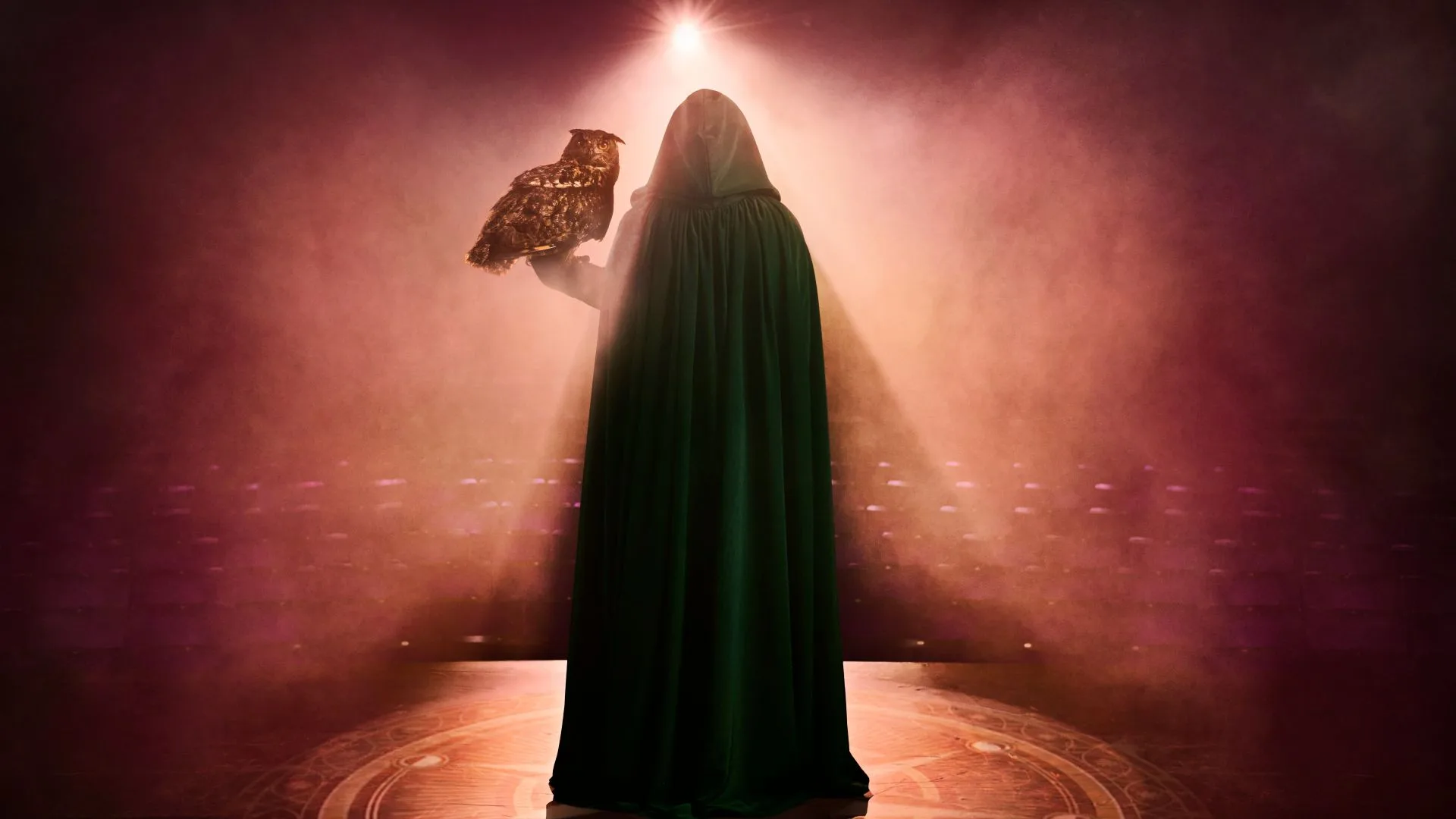
Stage Watch brings together a curated selection of upcoming theatre, musicals and live performances from London and across the broader Oxfordshire region – from internationally recognised stage productions and television phenomena to inventive new musicals and much-loved screen classics.
This week’s line-up moves between Tudor pop, psychological drama, spectacular live dance and emotionally charged musical theatre, with a much-anticipated Oxford return providing a more immediate highlight.
Together, these productions offer very different kinds of theatrical experience – from intimate storytelling and historical reimagining to arena-scale entertainment and the enduring appeal of a cultural classic.
Six
Vaudeville Theatre, London.
Booking until 28 Nov 2027. No Booking Fees.
History gets a pop-concert makeover in Six, the award-winning musical that puts the six wives of Henry VIII centre stage and gives each of them the opportunity to reclaim her own story. Catherine of Aragon, Anne Boleyn, Jane Seymour, Anna of Cleves, Katherine Howard and Catherine Parr step out of the historical footnotes to compete for the crown – and challenge the version of their lives that has been handed down through centuries.
Created by Toby Marlow and Lucy Moss, the production draws on the language and energy of contemporary pop, transforming a familiar Tudor rhyme into a sharp, witty and fiercely modern piece of musical theatre. Each queen has her own musical identity, while the live band – the Ladies in Waiting – gives the show the feel of a concert as much as a conventional West End musical.
Now an established international hit, Six combines humour, choreography and an infectious score with a more pointed examination of how women’s stories are shaped and remembered. At just 80 minutes without an interval, it is also a fast-moving evening of theatre that makes a virtue of its compact scale.
Best for: Fans of musical theatre, contemporary pop, history with a twist, and high-energy performances.
Good to know: Recommended for ages 10+. The production runs for approximately 80 minutes without an interval. Children aged 14 and under must be accompanied by an adult at Nimax Theatres.
The Traitors – Acts of Betrayal
Gillian Lynne Theatre, London.
11 May to 31 Jul 2027.
The phenomenon of The Traitors moves from television to the West End with a theatrical experiment built around one deceptively simple question: what if the game had played out differently? The Traitors – Acts of Betrayal turns the show’s central themes of suspicion, loyalty and deception into a cycle of five interconnected possibilities.
From Monday to Friday, the same story begins but develops into a different play, with characters who are eliminated in one version emerging victorious in another. The result is less a conventional stage adaptation than an exploration of the alternative paths a single decision can create – and of what pressure reveals about people.
The production also gives its audience an unusual degree of agency. On Saturdays, the audience votes to determine which version will be performed, meaning the outcome is decided in real time. Written by John Finnemore and directed by Robert Hastie, with Nick Mohammed as The Host, the production brings together theatrical storytelling and the participatory instincts of the television format.
Best for: Fans of The Traitors, psychological drama, dark humour and theatre that plays with audience participation.
Good to know: There are five different versions of the play. Weekday performances follow a fixed schedule, while Saturday audiences decide which version is staged. The running time is yet to be confirmed.

Strictly Come Dancing – The Live Tour
The O2, London.
12 to 14 Feb 2027.
The glitter, choreography and competitive spirit of Strictly Come Dancing return to the arena in a live spectacular that takes the familiar television format and expands it for thousands of spectators. Expect dazzling routines, elaborate costumes, live music and the judges’ familiar combination of expertise and banter.
Rather than attempting to recreate the intimacy of the television studio, Strictly Come Dancing – The Live Tour embraces the scale of the arena. The emphasis is on performance, atmosphere and the collective excitement of seeing the dancing unfold live, surrounded by fellow fans.
For those who enjoy Strictly for its combination of ballroom tradition, contemporary choreography and sheer theatrical spectacle, the tour offers an opportunity to experience the show without the screen between audience and performers.
Best for: Strictly Come Dancing devotees, dance fans and anyone looking for an upbeat, large-scale night out.
Good to know: The 2027 tour visits The O2 from 12 to 14 February. Cast details and running time are yet to be confirmed.

Little Dancer
Theatre Royal Haymarket, London.
15 Feb to 27 Mar 2027.
A celebrated work of art becomes the starting point for Little Dancer, a new musical centred on Marie van Goethem, the young Parisian who posed for Edgar Degas and became the subject of one of the most recognisable sculptures in modern art. Behind the poised figure immortalised by Degas lies the story of a working-class girl navigating ambition, poverty and a world that was prepared to look at her without necessarily seeing her.
Set in Belle Époque Paris, the musical explores the relationship between Marie and Degas, bringing together questions of artistic ambition, social inequality and the desire to leave a mark. It comes from Tony and Olivier Award-winners Lynn Ahrens and Stephen Flaherty, whose previous work includes Anastasia, Ragtime and Once on This Island.
Susan Stroman, the five-time Tony and Olivier Award-winning director and choreographer, leads the production, with Tiler Peck – principal dancer with New York City Ballet and star of Étoile – playing Young Marie. The combination of musical theatre and ballet gives the production a distinctive physical language, while a cast including Julian Ovenden, Laura Pitt-Pulford and Josefina Gabrielle brings the story firmly into dramatic territory.
Best for: Lovers of ballet, musical theatre, art history and richly realised period drama.
Good to know: The production plays for six weeks at Theatre Royal Haymarket before embarking on a world tour. Tiler Peck is currently scheduled to appear through 20 March 2027. Children under four are not admitted; anyone aged 15 or under must be accompanied by an adult.
Dirty Dancing – The Classic Story on Stage
New Theatre Oxford.
06 to 10 Oct 2026.
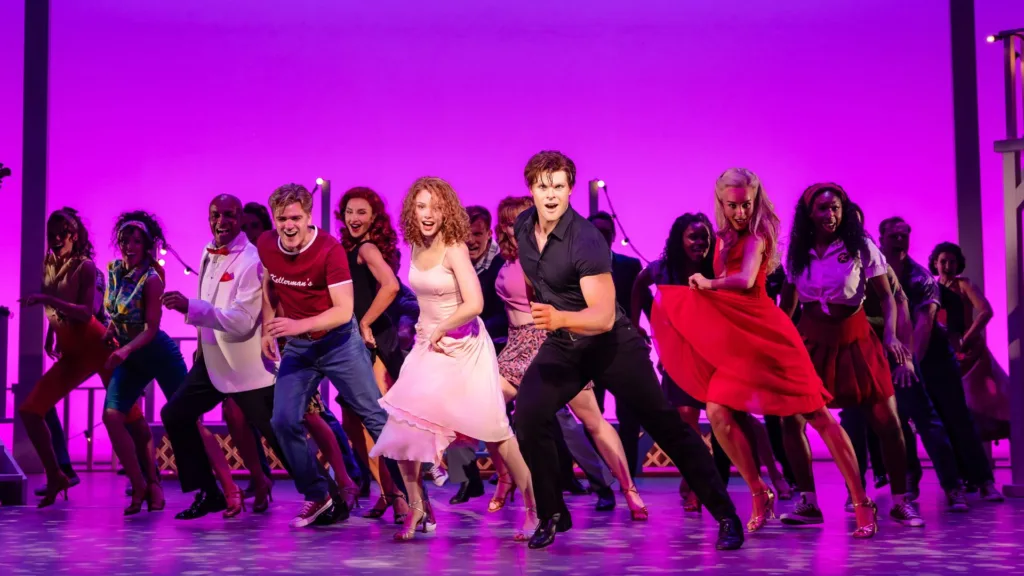
The summer romance that became a cultural phenomenon returns to Oxford this week, as Dirty Dancing – The Classic Story on Stage brings the world of Kellerman’s holiday resort to New Theatre Oxford. Based on Eleanor Bergstein’s screenplay for the 1987 film, the stage production follows Frances ‘Baby’ Houseman and Johnny Castle as their relationship develops across the social divide separating them.
The production retains the musical identity that helped make the film an enduring favourite, with songs including Hungry Eyes, Hey! Baby, Do You Love Me? and the Oscar-winning (I’ve Had) The Time of My Life. Live music and an ensemble of dancers give the familiar story a theatrical energy of its own, while the choreography remains central to the relationship between Baby and Johnny.
Joel Benjamin stars as Johnny Castle, with Charlie Varlet as Baby and Ellie Fergusson as Penny. Directed by Federico Bellone and choreographed by Austin Wilks, the production is part of the current UK and Irish tour, which continues through summer 2027. Its return to Oxford offers audiences the chance to revisit a much-loved story in a form designed for the stage.
Best for: Fans of the original film, romantic musicals, dance and nostalgic live entertainment.
Good to know: The Oxford run continues until Saturday 10 October, with evening and weekend matinee performances. Age guidance is 14+. The production has an interval.


Booker Prize 2026 shortlist explores the secrets, divisions and uncertainties of human life

Must theatre be so dire? Thoughts on the “unworthy scaffold”

Stage Watch: Sinatra, The Truth, Jaja’s African Hair Braiding, Million Dollar Quartet, & Silence of the Lambs
-

 Oxford united FC3 weeks ago
Chris Gunter steps away Wales role to focus on Oxford United
-

 Oxford united FC4 weeks ago
Oxford United transfer chief explains EFL embargo and contract dilemma
-

 Oxford University3 weeks ago
New to the Oxford English Dictionary this September
-
 Student Life4 weeks ago
Oxford falls to lowest ever spot in The Times UK University Guide 2027
-

 Student Life2 weeks ago
Oxford partnership allows OpenAI to use rare Bodleian texts to train ChatGPT
-

 Oxford Events3 weeks ago
Four days of equestrian spectacle at 2026 Blenheim Palace International Horse Trials
-

 Traffic & Transport2 weeks ago
How poor public transport policy is putting the brake on cities | Road transport
-

 Oxford united FC2 weeks ago
Northern Ireland fans laud Oxford United defender Ciaron Brown