
Student Life
UK government blocks proposal for Europe’s largest solar farm in Oxford


The UK government has blocked plans to build Europe’s largest solar farm in the outskirts of Oxford. As a Nationally Significant Infrastructure Project (NSIP) requiring approval by the government, the £800 million proposal in Botley West was rejected by Baroness Margaret Curran, on behalf of the Secretary of State for Energy Security and Net Zero.
Spanning across more than 2,000 acres of land, Botley West Solar Farm would have generated 840MW of clean energy for 330,000 homes, equivalent to roughly 1.5% of the government’s solar generation capacity target by 2030. Photovolt Development Partners (PVDP) has previously claimed Botley West’s capacity would be sufficient to power all homes in Oxfordshire and upgrade what is “currently one of the most carbon-intensive [grids] in the country”.
The Decision cites concerns of “substantial harm to the Green Belt”, adverse effects to designated assets of cultural heritage, visual pollution, and impacts on nearby London Oxford Airport that would pose an “unacceptable risk to public safety”. Baroness Curran’s Decision highlights the proposed site’s proximity to Blenheim Palace, a World Heritage Site, the Cotswold National Landscape, and other Listed Buildings, noting that the applicant, PVDP, did not conduct their assessments in sufficient detail “proportionate to the importance of the heritage assets”.
Reacting to the government’s Decision, John Orme from local campaign group, Stop Botley West, told Cherwell: “The Botley West proposal was wrong in scale, location, governance and process. Solar panels belong on roofs, and not on productive arable land.” A survey of 1,442 local residents commissioned by the campaign found that 90.8% were opposed to the construction plans.
Orme added “We believe there is a clear need for national guidelines on the style and location of renewable projects, so that speculative, misguided and poorly-judged applications such as Botley West are rooted out at the start of the planning process.” Stop Botley West has urged the government to instead use “industrial and brown field sites to house large-scale solar arrays.”
Local farmers have also highlighted potential negative impacts on food production. These claims have previously been dismissed by Professor of Energy and Climate Policy at the University of Oxford’s Environmental Change Institute, Nick Eyre, as “hugely exaggerated”, who has also added that there are an insufficient number of homes in Oxfordshire to construct the necessary amount of roof solar panels.
Mark Owen-Lloyd, Director of PVDP, told Cherwell: “We are extremely disappointed by the decision to refuse development consent for Botley West Solar Farm. We continue to believe that there is a compelling case for Botley West, based on the project’s merits and its potential to deliver significant benefits for Oxfordshire, while contributing to the UK’s energy security and clean energy ambitions.”
Stop Botley West, the community volunteer group who spearheaded public and legal opposition to PVDP’s Botley West project, continues to advocate for changes to the UK’s planning system. When asked about the implications of the government’s Decision in relation to wider plans for an “Oxford-Cambridge growth corridor”, Orme told Cherwell: “One of the major limitations of the NSIP planning process is that each application is considered in isolation, rather than consider the cumulative impact of development applications. We would like to see that the important role of local authorities and their communities is emphasised.”
Plans for a £900 million data centre funded by Exeter College, located near Oxford Parkway station in Kidlington, have also sparked controversy. Exeter was in “advanced negotiations” with PVDP to power its data centre, titled EXOq, using a maximum of 5% of Botley West Solar Farm’s energy output. A decision by Cherwell District Council on whether to grant permission for the EXOq data centre remains pending.
PVDP has six weeks to challenge the Secretary of State’s Decision at the High Court and request a judicial review. A spokesperson for PVDP told Cherwell: “We will now carefully consider the reasons for the decision and assess all available options before determining our next steps.”
Baroness Curran was approached for comment.

The UK and EU have agreed to a reciprocal ‘Youth Experience Scheme’ at a joint summit in Brussels on 20th November. The initiative will allow 100,000 UK and 100,000 EU young people aged between 18 and 31 to work, study, au pair, volunteer, or travel in each other’s territories for up to three years.
The deals signed on Friday, which also include agreements on agri-food trade and carbon markets, have been described as the UK’s “biggest step towards deeper ties with the EU since Brexit”.
A spokesperson for the University told Cherwell: “The University of Oxford welcomes efforts to strengthen the UK’s relationship with the European Union. Any changes to tuition fee arrangements for EU students would need to be accompanied by a credible plan to meet the significant additional costs this could impose on many UK universities, particularly at a time when university finances are already under considerable pressure.”
The Russell Group has projected that granting home tuition fee status for EU students could cost UK universities £570 million, although others, such as Professor Christoph Meyer at King’s College London, have disputed this modelling.
The EU has lobbied for its nationals to pay the same tuition fees as UK domestic students, but the issue remains unresolved, with agreement postponed for six months. The UK has proposed an intermediate cut for EU nationals, reportedly as low as £12,000, without granting full home fee status. UK universities have generally opposed equalising tuition fees for EU students on financial grounds, while Oxford’s Chancellor, Lord William Hague, has previously called for governments to “reach agreement” on the issue.
The number of EU students enrolling in undergraduate courses at UK universities has fallen sharply since Brexit, declining by 68% between 2020 and 2024 to the lowest level since 1994. The higher international fees, which can reach £66,580 for some courses at Oxford, have driven students away from the UK.
The Oxford University Italian Society (OUIS) told Cherwell: “EU students now face visa costs and administration, the immigration health surcharge, international fees often several times those of home students, and limited access to student finance. These burdens fall most heavily on less affluent students, so the university risks losing some of the continent’s most able students for purely financial reasons.” Oxford’s 2025 undergraduate admissions report noted that the proportion of students who applied from the EU decreased from 11.7% in 2020 to 6.5% in 2024.
The Telegraph has reported that the UK agreed at Friday’s summit to exempt EU students from the government’s new international students levy. From 2028, universities will have to pay £925 annually per international student.
The Oxford University German Society welcomes the youth agreement. Ludwig Illies, the society’s Co-President, told Cherwell: “Focusing on young people is important because we form our identities and friendships in our youth. It is a great first step, of hopefully many, to make it easier for people of both countries to connect.”
Under the youth mobility scheme, UK nationals will be able to stay in up to three EU Member States over a three-year period. The 100,000 cap for both inbound EU participants and outbound UK participants will be distributed between EU Member States on a per capita basis relative to population size.
However, the agreement may not be implemented until January 2030. OUIS told Cherwell: “The prospect of further delay is disappointing. Having already lost freedom of movement and years of Erasmus, this generation has watched successive cohorts graduate without opportunities their predecessors took for granted, and each postponement contributes to that sense of loss.”
Oxford has benefitted directly from EU programmes, including Horizon Europe research funding. The UK is the largest beneficiary in the latest round of the European Research Council (ERC) Advanced Grants, a sub-programme of Horizon Europe, with the University of Oxford the biggest overall winner, obtaining 14 grants out of 319 supported projects across Europe. By May 2025, Oxford had already received €42 million in total funding since the UK rejoined Horizon Europe in 2024.
The University is also set to join the EU’s Erasmus+ programme from January 2027, although the future of the scheme remains uncertain amid EU-wide budget negotiations for the 2028 to 2034 cycle. Plans are underway for Oxford University students and staff to access funding for exchanges in the 2027-28 academic year.
The impact of the ‘Youth Experience Scheme’ on Oxford University undergraduates undertaking a year abroad is unclear. Students post-Brexit have faced numerous administrative barriers when applying for visas to study or work in the EU.
A British student from Christchurch College who recently returned from a year abroad told Cherwell: “Acquiring a visa to study abroad came at a significant personal cost, and the application process was lengthy. Although I managed to study for an extended period of time in Estonia, my time in Spain was limited as obtaining a visa proved to be impossible”.
British Modern Languages student Anna Sadowski, who studied in France and Italy, told Cherwell: “I was a teenager when the referendum reshaped what was possible for young Britons in Europe, and for young Europeans in Britain. Nevertheless, some of my closest connections are with students from across Europe, which to my mind is the most persuasive case for youth mobility.”
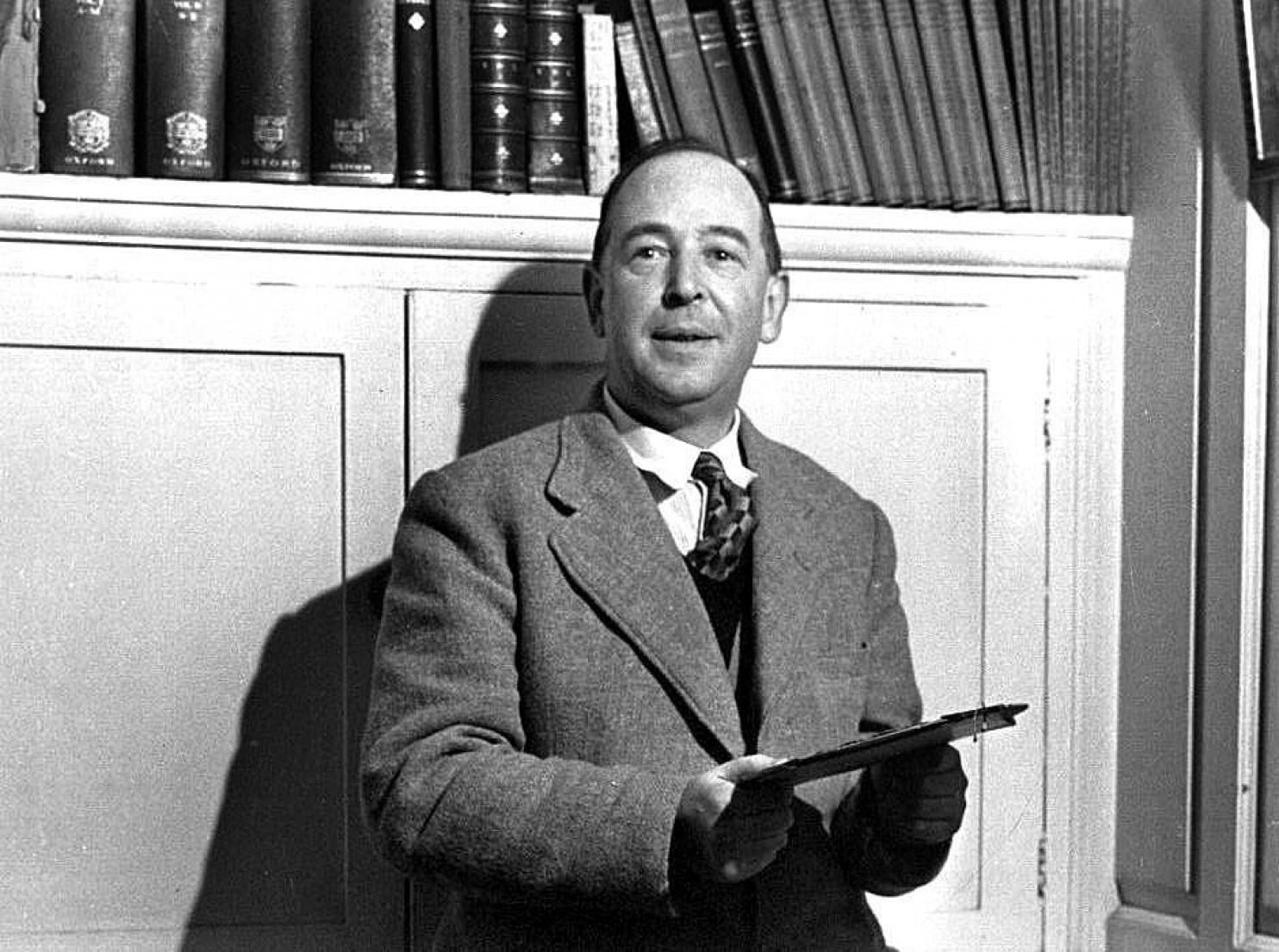
As a young tutor at Magdalen College, CS Lewis had a famously strained relationship with one of his students: John Betjeman, the future poet laureate. “I wish I could get rid of this idle prig”, Lewis wrote of the student, who had turned up to a tutorial in “eccentric bedroom slippers”. Betjeman’s dislike of Lewis was mutual. In the preface of his 1937 collection Continual Dew: A Little Book of Bourgeois Verse, he thanked his former tutor, “Mr C.S. Lewis for the fact on page 265”. The book is only 45 pages long.
It’s an extreme case, but a revealing one: Lewis’s contempt was recorded in a diary; Betjeman’s resentment outlasted his time at Oxford. That such emotions form part of their respective biographies is simply explained: the relationship between student and tutor was the key relationship at Oxford, and, when it failed, it was a big deal. Very frequently, as can be gleaned from the memoirs and biographies of scores of Oxford graduates, it was formative for the student and enriching for the tutor. But that relationship – its intellectual and social complicities, its sometimes awkward or downright inappropriate intimacies – is now close to extinction. This much is clear from the grousing of my friends about our much-vaunted ‘tutorial system’, and from my own experience with a fixed-term tutor whose indifference to us was all too apparent.
So how did a relationship that is meant to be at the heart of Oxford fall so far? And what, if anything, can be done to rehabilitate it?
Let us start with the causes of decline. One is casualisation: the shift from permanent posts to temporary, fixed-term and hourly paid work. In a 2024 Cherwell article, it was revealed that 61% of tutorials were taught by non-permanent academics, with 20% taught by hourly-paid tutors. The University and College Union (UCU) say that many staff spend years, even decades, on fixed-term contracts. “Usually,” they say, “this is not through personal choice, despite the law which means any employee who has 4+ years of continuous employment should… become a permanent member of staff.” One current stipendiary lecturer told Cherwell that even after five years on a fixed-term contract, he was wary of asking his college to make him permanent, for fear of giving them an excuse to let him go. “Oxford is supposed to be a place of open inquiry,” he said, “and yet when it comes to these kinds of questions, it’s absolutely not.”
The UCU’s general secretary has called the arrangement “Deliveroo-style”. Like a delivery rider, an hourly-paid tutor is paid for the time in front of the customer rather than the work that makes the tutorial possible. In theory, the basic rate already covers college-based teaching, preparation, and marking. In practice, the UCU says, the “allocated time is laughably small and remunerated at Grade 5 on the University’s salary and pay structure, which is not an academic grade. Apparently, Oxford students do not deserve to be taught by academics”. The lecturer I spoke to described having to move back home and commute during his year of hourly-paid tutorials. “The only reason I could still keep my foot in the door is because my parents lived nearby. If you’re doing hourly teaching, you can’t afford to pay bills.” He describes noticing a big difference in his current relationship with his own students now that he’s in a permanent position: “Tutorials are intellectually intimate spaces, and when you’re teaching a set of three to four on hourly pay, you drop in on the cohort and have no chance to establish a rapport. The whole thing can get quite cagey in a way.”
This is the gig economy imported into the tutorial room. Figures are stark too; according to a 2023 UCU report, the real hourly wage of a college tutor falls between £8.42 and £12.63, below the Oxford Living Wage of £14.06. It is little wonder that a tutor who is underpaid and works term-by-term has little incentive, and even less time, to get to know the students in front of them. Tutorials and the mythology behind them rest on continuity: a tutor who knows you across three years and is invested in your long-term development. While this investment was historically built into the job – with Oxford dons being required to be unmarried and live in college – that attitude is now a dwindling ideal: it is hard to resent, or to be fond of, someone you meet for an hour a week, and who may be gone by next Michaelmas.
Another factor to take into consideration is ‘elitist Oxford’. For much of their history, the Oxbridge students and tutors were drawn, overwhelmingly, from the same, narrow slice of British society. The nine ‘Clarendon Schools’ – a group of elite schools including Eton and Harrow – often functioned as a direct feeder pipeline into Oxford. This was more than a matter of informal preference; as The Oxford Student writes: “Eton was created as a feeder school for King’s College, Cambridge, and so was built to mirror the college. The same applies to Westminster School and New College.”
Tutors and students would have sat at the same rung of society, sharing both a social and gendered world: women were only admitted as full members of the University in 1920. Perhaps you’d even have been linked by a web of acquaintance – as is the case in Anthony Powell’s A Question of Upbringing. “How is your mother?”, the eccentric don Sillers asks his student, “Do you know, I have not seen her since the private view of the Royal Academy in 1914”. It is a comic exchange, but also demonstrates what David Palfreyman identifies as the system’s real foundation: “Oxbridge was a place where the intellectual elite could train the next generation of social elite, and so both tutors and students knew what was expected, why they were there, and what the rules of the game were.”
That shared grammar has significantly eroded. Oxford now draws its students from a far wider social map – despite the extent of that change still remaining contested. David Lammy, in 2018, called Oxford “a bastion of entrenched, wealthy, upper-class, white, southern privilege”. Nonetheless, the figures mark a dramatic shift: in 2025, 66.5% of UK students admitted came from the state sector, compared with just 9% in 1928. None of this is an argument for returning to the old Oxford, whose intimacy was bought with exclusion. Yet the tutorial was built for a world of shared codes and permanent dons, and while the first has rightly gone, the second has gone with it. What remains is a relationship asked to do the same work without those foundations – it is hardly surprising that it has curdled. Lewis and Betjeman, at least, cared enough to loathe each other.
What has replaced that informality is, depending on your view, either professionalism or distance. Pastoral care has become more formalised and arms-length, and the old mentorship has largely gone with it. One current tutor, who was herself an undergraduate here, recalled a tutor who would sometimes offer sherry at the end of a tutorial. “I remember discussing this a long time later with a colleague, but you couldn’t do that now because it would be deemed inappropriate. The boundary between teaching and informal sociability is much more rigid now than it used to be.”
Sexual harassment is hardly a new problem, but it’s one that the University can no longer leave unchecked. In the last year alone, an Oxford university chaplain was removed following a student sexual complaint; the former Dean of the Saïd Business School was found to have sexually harassed a female academic; and a Bloomberg investigation alleged a pattern of the University responding to complaints against senior male academics “slowly, quietly, or not at all.” This is unsurprising: in 2017, The Guardian found that, amongst all UK universities, Oxford had the highest number of student allegations of sexual misconduct by staff.
In an earlier Oxford, with no formal definition of harassment and no clear route for complaint, such behaviour would rarely have been reported – or even noticed. A current modern languages tutor, himself an undergraduate here, agreed: “In the 1990s, there was no such thing as a code of sexual harassment which defined things. That is the biggest difference. You can point to something in writing and say it is clearly appropriate or not.”
“Boundaries haven’t changed,” he claims, “but the clarity with which they have been expressed has.” He recalls there being several instances from his own undergraduate years when “things were said which would nowadays be absolutely under question, at the least inappropriate, or almost certainly sexual harassment”. So, when Powell’s tutor character – Sillery – in A Dance to the Music of Time is described as “playfully pinching the nape of [his student Mark] Members’s neck”, the moment, to the contemporary eye, can be read less like affectionate eccentricity and more like the kind of casual physical liberty that today’s safeguarding frameworks exist to prevent. Movements like It Happens Here and The 1752 Group have rightly pushed the University towards a culture of formal safeguarding, mandatory training, and risk assessment that Sillery’s day would have lacked.
Clearer boundaries have made Oxford safer, yet they carry a price: a tutor who knows where the line sits is a tutor who keeps well back from it. Felipe Fernandez-Armesto puts it bluntly – if not harshly – in The Spectator: “Undergraduates and their tutors were poised to be friends when they met. Now the diversity of backgrounds is better, but, in consequence, the old system no longer works… Social and generational gaps yawn in the tutorial, making it tedious and unrewarding. Unlubricated by sherry, which underpaid tutors can no longer afford to splash around, the relationship never takes off. Friendly overtures are likely to be mistaken for sexual harassment.”
Underneath all this sits the more mundane pressure of academic work. Oxford students are tested by exams and burdened with unmanageable reading lists, and we – like many others – fall back on AI to fill the gaps. Cherwell reported on a 2025 survey by the Higher Education Policy Institute, which found that 92% of students had used AI in some form at university, up from 53% in 2024. Rather than resisting the tide, Oxford has chosen to ride it: in September 2025, it became the first university to offer ChatGPT Edu to all students. Tutors, understandably, are wary. The modern languages tutor I spoke to understands why students use AI as an aid, but admits it does erode his trust: “It raises genuine problems relating to originality of thought and victimless plagiarism, as you’re not stealing items from an identifiable authority, you’re plucking them out of thin air.” That erosion matters because trust is the currency of the tutorial. It asks a student to arrive with a half-formed argument of their own, to be dismantled and rebuilt in conversation. That exercise is fruitless if tutors are fielding essays that are polished and hollow.
CS Lewis tutored at an Oxford barely recognisable today, one whose intimacy was both real and unregulated. Today’s safeguards, while making the relationship safer, have also made it more guarded.
At its best, the tutorial system offers both intensity and mutual benefit: students get an expert’s undivided attention while tutors can see how young people think and be granted a fresh perspective on their own subject. It gives university life a texture impossible to imagine in a large lecture hall. It is time for the University to recognise what has been lost and end the uberisation of the tutorial system, while wary students need to acknowledge that the most rewarding relationships are never risk-free and that by navigating unfamiliar social terrain we learn and mature. So bring back the old system without the groping – and the sherry, too.
If it won’t completely discredit me as a reviewer, I would like to start this by making an unqualified comparison to disgraced YouTuber Cody Ko. Before Tana Mongeau came forward with allegations that Ko assaulted her when she was 17, there was one instalment of his and Noel Miller’s ‘That’s Cringe’ series that, at 13, I thought was the height of humour. In it, they react to a video entitled ‘you.’, which is essentially a VSCO-colour-graded montage of a couple living together in LA, overlaid with an awkwardly unscripted conversation about love, art, and entrepreneurship (by which they mean finger-painting and making smoothie bowls). The couple recount how they met: a month ago at Whole Foods, when she was buying celery, and he was buying rosé. “I always knew I would meet my soulmate at Whole Foods”, she rasps, completely serious. They seem utterly high and deluded about their love for each other, convinced that they see the world differently than everyone else, and that their ‘work’ has the capacity to change everything. At one juncture, there is an extended shot of the shadow of a hose dripping water, the phallic nature of which prompts Ko and Miller to joke that they get it now.
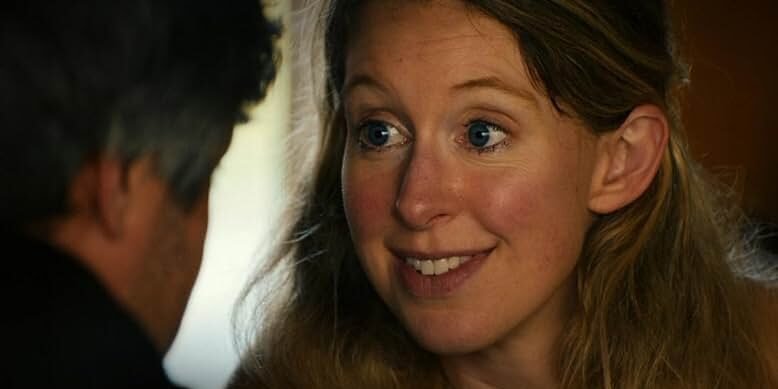
Early in Nathan Fielder’s You Can See Everything, we watch Elizabeth Holmes’ romantic and business partner Billy Evans in the shower while Fielder stands outside with headphones on. He doesn’t seem to know where to look, or what to do with his hands. The audience doesn’t fare much better, as the wide shot of Evans’ naked body occupies the screen for an oppressive amount of time. This is when the uncanny feeling that I had seen this film before finally realised itself. What Fielder captures throughout the first half of the documentary is that when Holmes and Evans talk to one another, no actual constructive dialogue ever happens. Instead, they stare unblinkingly into each other’s beady, blue eyes and rattle off these therapy-speak neologisms that seem to put up more barriers than they take down, all under the guise of compassion. “I know exactly how you feel,” Evans tells Fielder repeatedly, as he near-literally pulls it out and slams it on the table. Later, it becomes clear that he would also purport to know exactly how Holmes feels. About everything. To the point that she doesn’t need to be around, and if she were, it would only decrease the efficiency of their product – sorry, relationship.
What I mean to say is, much of You Can See Everything feels like a mockumentary. Some viewers, whose eyes are more trained to Fielder’s quirks than mine, claim that it actually is, and that many of the interactions are scripted to max out on absurdity. Perhaps because it was a midnight showing, perhaps because I had just had two cocktails, or perhaps because I was sitting in the fourth row on a friend’s recommendation, so the possibility of Holmes and Evans crawling out of the screen The Ring-style felt low but not zero; that was not the impression I got. The absurdity felt eerily real. Parts of the three-hour-long footage are plain, laugh-out-loud ridiculous: Evans tells Fielder he did not recognise Holmes upon their first meeting because she was wearing a hat and a bandaid, Holmes claims not to understand the gag in Abbott and Costello’s “Who’s on first?” routine, which somehow proves her innocence, and the couple spend pretty much their entire screen-time with dry lips and red-rimmed eyes, sniffling between every word they speak (one X post about the film reads, “You Can See Everything more like Me and My Gay Cocaine Husband Need Some Lip Balm”). Other parts, however, are akin to something from A24’s horror catalogue.
The question the film asks (and fails to answer) is whether Elizabeth Holmes is innocent. What it proves is that anyone can become a conspiratorial maniac under the right circumstances. Holmes and Evans are convinced that the world is out to get them, and they feign a failure to understand how they ever got into this situation in the first place. As a result of this self-victimisation, Evans begins to lash out – he eventually reveals that Holmes has granted him power of attorney, which he has been using to post deranged political takes on X under her name and make an AI bot of her likeness. He shrugs when Fielder asks how he would feel if someone used it to create a pornographic video. “If anything happens to me, this needs to be out there,” he says, pupils blown wide. He declares that this is what Holmes would want; if she were free, she would spend all her time building “monuments of love” for him. So what’s the difference if he exploits her will when she is unable to speak for herself?
Fielder’s position remains unclear for most of the film, but by the end he has obviously developed a fondness for Holmes that is clouding his judgment. He wants the truth, but he also wants to avoid making Holmes look like a villain. The most interesting position is that of (spoiler alert) Amanda Seyfried, who Fielder consults on the project after Holmes begins serving her sentence. Arguably the most well-adjusted of the whole lot, even Seyfried seems stir-crazy at times. She expresses some guilt over her portrayal of Holmes in the 2022 Hulu show The Dropout, but she continues to assist Fielder in ‘re-enactments’ of his interactions with Holmes that he could not get on camera. One particularly poignant re-enactment is of Fielder’s visit to the prison – we watch Seyfried-as-Holmes lament Seyfried’s depiction of her, and (irony of all ironies) say that she never wants to be portrayed that way again. The re-enactment is cut with a scene where she and Fielder read the ‘script’ together, and she appears frustrated at Holmes’ gripe with her. “I was playing a character!” she exclaims. Seconds later, she walks it back: “But she did do that.” She, like Holmes, doesn’t want to be the villain of the story.
Of course, we aren’t exempt from the cabin fever either. At about the halfway point, Fielder reveals to Seyfried that before they began filming, Evans struck a deal with the A24 executives so that he and Holmes would receive a portion of the profits that the documentary made upon its commercial release. Fielder argued that on top of being uncustomary for documentary subjects, this deal would look uniquely terrible for Holmes and Evans, as it would put into question the objectivity of the narrative. Evans threatened to pull out of the project, so the filmmakers were forced to agree. This puts the audience in a position where, for the next hour and a half, we are forced to reckon with the fact that we’ve made a transaction not with an independent film studio but with a money-laundering fascist. We are only released from this moral anxiety at the very end, where some postscript tells us that Evans decided to cancel the deal right before the film’s official US release. The relief of this reveal is so immense that for a moment we sympathise with those that are actually complicit.
In the prison visit re-enactment, Fielder asks whether Holmes knew about Evans’ deal, or about anything else he has been doing under her name since her imprisonment. Seyfried-as-Holmes tells him that she doesn’t know, and doesn’t care. She has never felt closer to Evans; they are constantly “building monuments of love” for each other. Fielder never points out this verbal parallel – in fact, he is convinced of her sincerity. The only thing that is clarified by the time the screen fades to black is that Holmes and Evans certainly were, are, building monuments. Towards what, it remains to be seen.



-

 Student Life4 weeks ago
The Vinted paradox: Consuming our way out of overconsumption
-

 Oxford united FC4 weeks ago
Oxford United striker ‘not affected’ by missed League One chances
-
 Oxford Events4 weeks ago
Events in Oxford & Oxfordshire this November
-

 Oxford united FC3 weeks ago
Dogs, drones and extra police powers for Oxford United game
-

 Oxford united FC4 weeks ago
Oxford United beat Stockport 1-0 in statement victory
-

 Oxford united FC4 weeks ago
Oxford United battle for 0-0 draw against Bradford in League One
-

 Oxford united FC3 weeks ago
LIVE: Barnsley 1-0 Oxford United – Yoganathan puts 10-man Tykes ahead
-

 Oxford united FC4 weeks ago
Oxford United leaders criticised as results hide concerns