
Oxford Events
Stage Watch: Heathers, Hunger Games, High School Musical, Kurios, & Now You See Me


Stage Watch brings together a curated selection of upcoming theatre, musicals and live performances from London and across Oxfordshire – from much-loved screen adaptations and ambitious new stage productions to extraordinary circus and illusion.
This week’s selection moves between the familiar and the unexpected, with stories of teenage identity, rebellion and survival sitting alongside theatrical spectacle designed to challenge the imagination.
Celebrating an iconic Disney musical, bringing a bestselling dystopian novel to the stage, and welcoming the return of a celebrated magic spectacular, these five productions offer very different reasons to take a seat.
Whether you are drawn to musical theatre, dark comedy, high-stakes drama or world-class performance, there is plenty to look forward to in the months ahead.
Heathers the Musical
New Theatre Oxford, Oxford.
24 to 28 November 2026.
Darkly comic, sharply observed and decidedly unconventional, Heathers the Musical brings its cult-favourite take on American high-school life to New Theatre Oxford for a limited run. Following successful productions in London and New York, the WhatsOnStage Award-winning musical revisits a story in which the pursuit of popularity carries considerably higher stakes than anyone might expect.
At Westerberg High, Veronica Sawyer is an outsider longing to escape the social hierarchy that defines her school. Her fortunes change when she is welcomed into the inner circle of the three Heathers, the school’s beautiful, influential and merciless ruling clique. But the arrival of mysterious outsider J.D. soon turns her newfound popularity into something much darker.
Based on the film starring Winona Ryder and Christian Slater, the musical combines biting satire, dark humour and an energetic score to explore teenage identity, social pressure, cruelty and the consequences of wanting to belong. Its deliberately provocative approach gives the familiar high-school setting a distinctly unsettling edge, while its musical numbers bring an infectious theatrical energy to the story.
Presented by Bill Kenwright Ltd and Paul Taylor-Mills, this return engagement offers Oxford audiences the opportunity to experience one of contemporary musical theatre’s most distinctive cult favourites.
Best for: Fans of dark comedy, contemporary musical theatre and cult film adaptations.
Good to know: At its heart, this is a darkly comic story dealing with bullying, social exclusion, violence and teenage relationships. Its humour and themes are aimed at a more mature audience.
The Hunger Games: On Stage
Troubadour Canary Wharf Theatre, London.
Booking to 14 February 2027.
The brutal world of Panem arrives on the London stage in the first-ever theatrical adaptation of Suzanne Collins’ internationally acclaimed The Hunger Games. At its centre is Katniss Everdeen, whose decision to volunteer for her younger sister in the deadly annual Games sets her on a journey that will challenge the authority of the Capitol and make her an unlikely symbol of resistance.
Set in a dystopian future where 24 young tributes are forced to fight for survival, the story combines political oppression, personal sacrifice and the spectacle of a society built around entertainment and control. Its themes of power, inequality and rebellion give the production a particular resonance beyond its high-stakes premise.
The adaptation brings together an accomplished creative team, with Conor McPherson, whose previous work includes Girl from the North Country and The Weir, writing for the stage, and Matthew Dunster directing. Elizabeth Anderson leads as Katniss Everdeen, alongside Vinnie Copeland as Peeta Mellark and Nathan Stokes as Gale Hawthorne. The wider cast includes John Malkovich as President Snow, with Neil McDermott as Haymitch Abernathy and Daniel Brocklebank as Caesar Flickerman.
Presented in the purpose-built Troubadour Canary Wharf Theatre, the production promises a large-scale theatrical interpretation of a story originally conceived for the page and screen, with the opportunity to explore its dramatic world through live performance.
Best for: Fans of Suzanne Collins’ novels and the film adaptations, dystopian drama and ambitious large-scale theatre.
Good to know: Running time approximately 2 hours 30 minutes, including interval, subject to change. The production includes themes of violence, oppression and survival.

High School Musical
Troubadour Wembley Park Theatre, London.
12 October 2026 to 03 January 2027.
Twenty years after Disney’s High School Musical became a global phenomenon, the story of East High returns in a new theatrical production that brings its familiar characters and much-loved songs to the stage. Troy, Gabriella and their classmates find themselves navigating first love, friendship and self-discovery, while negotiating the competing expectations of school, sport and the performing arts.
At the heart of the story is the unlikely connection between basketball star Troy and newcomer Gabriella, whose shared enthusiasm for music challenges the social divisions of their school. With songs including Breaking Free, Get’cha Head in the Game and We’re All in This Together, the production revisits the soundtrack that made the original film such an enduring favourite.
Harry Judd of McFly stars as Coach Bolton, alongside KayCee Stroh, who returns to the world of High School Musical having played Martha in the original film. Tobias Turley and Leonor Correia lead as Troy and Gabriella, with Caitlin Tipping and Luke Bayer as Sharpay and Ryan.
Co-directed by Hope Mill Theatre founders Joseph Houston and William Whelton, with choreography by Aaron Renfree, the production makes use of the Troubadour’s immersive staging, including on-stage seating designed to bring audiences closer to the action.
Best for: Fans of the original Disney film, musical theatre enthusiasts and families looking for a lively, feel-good production.
Good to know: Running time approximately 2 hours 20 minutes, including interval. The immersive staging and on-stage seating offer a different perspective on the familiar story.
Cirque du Soleil Kurios: Cabinet of Curiosities
Royal Albert Hall, London.
13 January to 28 February 2027.
An extraordinary collection of characters, acrobatic feats and mechanical inventions takes centre stage as Cirque du Soleil brings Kurios: Cabinet of Curiosities to the Royal Albert Hall for its European premiere. Inspired by the aesthetic of steampunk, the production imagines an alternative world in which curiosity and imagination open the door to extraordinary possibilities.
The story follows a Seeker, a figure convinced that an invisible world exists beneath the surface of everyday reality. Within his elaborate cabinet of curiosities, unusual characters emerge one by one, bringing a makeshift mechanical universe to life and challenging the boundaries between what is possible and what is imagined.
As with Cirque du Soleil’s celebrated productions, the storytelling is driven as much by physical performance as by narrative. Daring acrobatics, intricate contortion and extraordinary feats of balance and movement combine with elaborate visual design to create an immersive theatrical experience.
The Royal Albert Hall provides a fitting setting for the production, which arrives as part of the venue’s 150th anniversary celebrations. With its distinctive visual world and emphasis on the unexpected, Kurios promises a spectacle that invites audiences to look beyond the obvious and rediscover a sense of wonder.
Best for: Lovers of circus arts, visual theatre and extraordinary live performance, as well as families looking for something beyond conventional theatre.
Good to know: Running time approximately 2 hours 20 minutes, including interval. The production combines acrobatics, contortion and imaginative theatrical staging.
Now You See Me Live
Troubadour Wembley Park Theatre, London.
12 February to 05 September 2027.
The line between illusion and reality becomes the evening’s central fascination as Now You See Me Live returns to London, bringing the spectacle of the blockbuster film franchise into a live theatrical setting. Inspired by the world of the Four Horsemen, the production combines large-scale illusions, psychological misdirection and daring individual performances in a show designed to keep audiences questioning what they have just witnessed.
From the producers of The Illusionists, the production has already travelled internationally, appearing in cities including Sydney, Singapore, Las Vegas and London. Its latest residency brings together four performers known collectively as The Horsemen: Natasha Lamb, James More, Darcy Oake and Matthew Pomeroy.
Rather than relying on the cinematic techniques of its screen inspiration, the live production places the action directly in front of the audience. High-tech illusions and apparently impossible feats unfold in real time, making the experience as much about the skill and showmanship of the performers as the mystery of the tricks themselves.
With its combination of theatrical presentation, visual spectacle and close-up feats of perception, this is a production that aims to make an ordinary evening out feel rather less predictable.
Best for: Magic enthusiasts, fans of the film franchise and anyone looking for an entertaining night of theatrical spectacle.
Good to know: The running time has yet to be confirmed. The production is scheduled for a London residency from February to September 2027.

What to do in Oxford and across Oxfordshire in December
Welcome to your essential guide to what’s happening in Oxford and Oxfordshire this December!
December arrives with its own kind of magic. The last of the autumn leaves give way to crisp winter mornings, and the county begins to glow with the early signs of the festive season.
But beyond the Christmas lights, markets, and seasonal celebrations, there’s a whole world of non-Christmassy things to do across Oxfordshire – often overlooked, but absolutely worth your time.
This round-up focuses on everything happening in December that isn’t Christmas-themed. From theatre, live music and winter exhibitions to talks, workshops, comedy, food events, and fantastic days out, there’s still plenty to enjoy even if you’re taking a breather from all things tinsel and turkey.
If you are looking for festive fun, you’ll find our dedicated, comprehensive Christmas guide – packed with markets, trails, concerts, shows, and seasonal events – over on our Christmas page.
As always, this is a curated list of things to do in Oxford and across Oxfordshire this month. You’ll find even more local listings – and a selection of standout events beyond the county – in the “Events” section of the website.
Have an event you think should be featured? List your event on The Oxford Magazine and reach an engaged audience of people who live, work, or play in Oxfordshire.
From Tudor Queens to Pop Princesses, the six wives of Henry VIII take to the mic to tell their tales, remixing five hundred years of historical heartbreak into an 80-minute celebration of 21st-century girl power. These Queens may have green sleeves, but their lipstick is rebellious red. Think you know the rhyme, think again… Divorced. Beheaded. LIVE!

Schwarzman Centre for the Humanities
Explore On Paradise, an exhibition by Oxford artist Saad Qureshi featuring sculptural works inspired by hope, memory and visions of paradise, describing what paradise represents or looks like, and translating hopes and dreams into sculptural mindscapes.

Watch a special screening of the classic film, The Holiday, with the musical score performed live by a full orchestra.

The Australian Pink Floyd Show is heading back out on tour in 2025 to celebrate 50 years of the iconic Pink Floyd album ‘Wish You Were Here’. Featuring the songs “Have a Cigar“, “Wish You Were Here” and “Shine On You Crazy Diamond“, The Australian Pink Floyd will perform the album in full alongside Pink Floyd’s greatest hits.

British jazz-funk legends LEVEL 42 celebrate 45 years since the release of their self-titled debut album with a five-date UK tour in December 2026. Expect an evening of timeless hits, including ‘Lessons in Love’, ‘Something About You’, ‘Leaving Me Now’, ‘Running in the Family’, and ‘Hot Water’.

Featuring all the biggest emo songs in existence with a live band and DJs spinning all the angst your teenage dirtbag heart desires all night long. Put on your eyeliner, lace up your high tops, and get ready to rock to all your favourite nostalgic emo anthems.

Catch comedy all-stars live in Oxford for a spectacular festive show, Live at Christmas at New Theatre Oxford. Nina Conti headlines this huge holiday bill and joined by Netflix top 10 idol and Scottish stand-up queen Fern Brady, rising talent Toussaint Douglass, Taskmaster sensation Bridget Christie, plus all-round vibe magnet John Robins as host.

JukeBox Christmas Special brings decades of feel-good music, singalong favourites and celebration fun to Oxford for a night of dancing with friends.

The Wildhearts make their long-awaited return to Oxford after more than two decades. Led by Ginger Wildheart, the legendary rock band promises a high-octane show packed with thunderous riffs, infectious melodies and their signature blend of punk, metal and power pop.

The Oxford Bach Choir performs Bach’s monumental Mass in B minor under conductor Benjamin Nicholas, joined by period-instrument ensemble Instruments of Time and Truth and an acclaimed quartet of soloists. Experience the drama, intimacy and extraordinary beauty of one of the greatest works in choral music.

Glitz up your Panto season and join the London Gay Big Band and special guests for a festive night out packed with pomp, pageantry, and pure festive joy, featuring iconic Christmas classics, jazzy yuletide showstoppers and swinging big band favourites.

Oxford Coffee Concerts welcomes Heath String Quartet to the historic Holywell Music Room for a morning of chamber music, featuring Janáček’s String Quartet no 2, JW VII/13 and Mendelssohn’s String Quartet no 5 in E flat major, op 44 no 3.

Join globally renowned adventurer, Chief Scout to millions of young people, TV host and No.1 bestselling author Bear Grylls for an unforgettable evening of stories, survival, and inspiration – a fun, thrilling, and family-friendly live show for adventurers of all ages. Bear Grylls: Never Give Up is packed with survival stories, unseen footage and behind-the-scenes adventures, as the world-famous explorer shares powerful lessons on courage, resilience and determination for families and young adventurers.

Yotam Ottolenghi invites you to celebrate the release of his highly anticipated new cookbook, Simple Too, an irresistible companion to the era-defining Simple.

Step into the magical world of Clara & The Nutcracker, a fully immersive 360° experience bringing the beloved Christmas story to life in a spectacular new way. Featuring Northern Ballet’s world-class dancers, richly animated scenes and Tchaikovsky’s iconic score performed by the BBC Concert Orchestra, this all-ages experience blends ballet, technology and festive wonder.

Waterperry Opera Festival returns from 11 to 13 December 2026 at Waterperry House this Christmas. This magical Winter Season features four distinct seasonal events ranging from jazz and candlelit carols to classical family favourites.. Audiences can look forward to an uplifting programme filled with seasonal warmth, wonder, and musical delight.

Renowned DJ Craig Charles invites fans to join him as he delves into his extensive record collection, spinning straight-up groove bangers, exclusive funk and soul cuts, and much more.

After selling over 250,000 tickets on his critically acclaimed 2025/26 UK & Ireland tour, Greg Davies – star of shows such as Taskmaster, The Inbetweeners, The Cleaner, Never Mind The Buzzcocks, Man Down and Cuckoo – is heading back out on the road in 2026/27 to satisfy the overwhelming demand to witness the Full Fat Legend at the very top of his game.

Experience Oxford’s 1749 Messiah, a historically inspired performance by Instruments of Time and Truth and Edward Higginbottom recreating Handel’s Oxford tradition.

Guitarist Dave Hill brings the spirit of Slade to the stage, celebrating the band’s distinctive mix of pop, rock’n’roll and flamboyant showmanship. Featuring classic hits including Far Far Away, Cum On Feel the Noize and Coz I Luv You, expect an exhilarating live performance.

Oxford Coffee Concerts presents Haydn’s String Quartet in B flat major, op 76 no 4, Hob III:78 (“Sunrise”) and Mendelssohn’s String Quartet no 3 in D major, op 44 no 1 by Carducci String Quartet.

Join The Snow Queen’s sister, the Summer Fairy along with the panto dame Nancy Neapolitan and her silly Reindeer friends to break the ice and save Wantonia in this magical family panto.

The 30-piece Down for the Count Orchestra returns to The Olivier Hall at St Edward’s School, Oxford, for their annual festive extravaganza – it’s time to Swing Into Christmas. This is a Christmas celebration like no other, as Down for the Count recreates the music of Nat ‘King’ Cole, Billie Holiday, Ella Fitzgerald, Frank Sinatra and many more!

Join The Smyths as they celebrate the 40th anniversary of two iconic Smiths albums, The Smiths and Hatful of Hollow, that feature such classic tracks as ‘This Charming Man’, ‘What Difference Does It Make?’, ‘Heaven Knows I’m Miserable Now’ and ‘How Soon Is Now’.

Oxford Coffee Concerts welcomes the Adderbury Ensemble to the historic Holywell Music Room for a morning of chamber music, featuring Mozart’s Piano Concerto no 24 in C minor, K 491TBA.
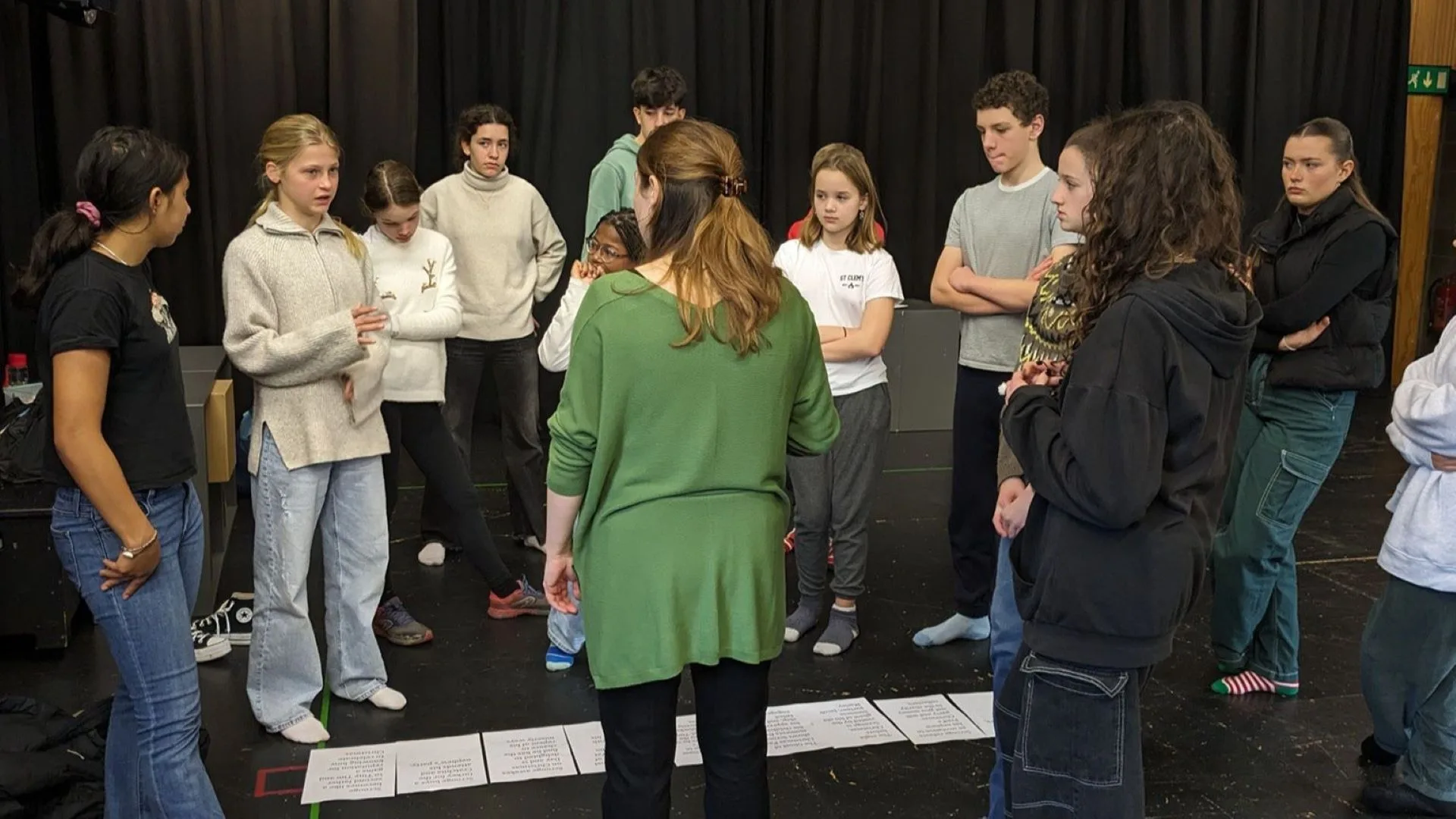
The North Wall Arts Centre
Curious about what it takes to direct a play? Young people aged 12–17 can explore the role of a theatre director in this practical and creative YouthLab workshop. Learn how to approach a script, run a rehearsal room and collaborate with actors, with plenty of opportunities to try acting and directing.
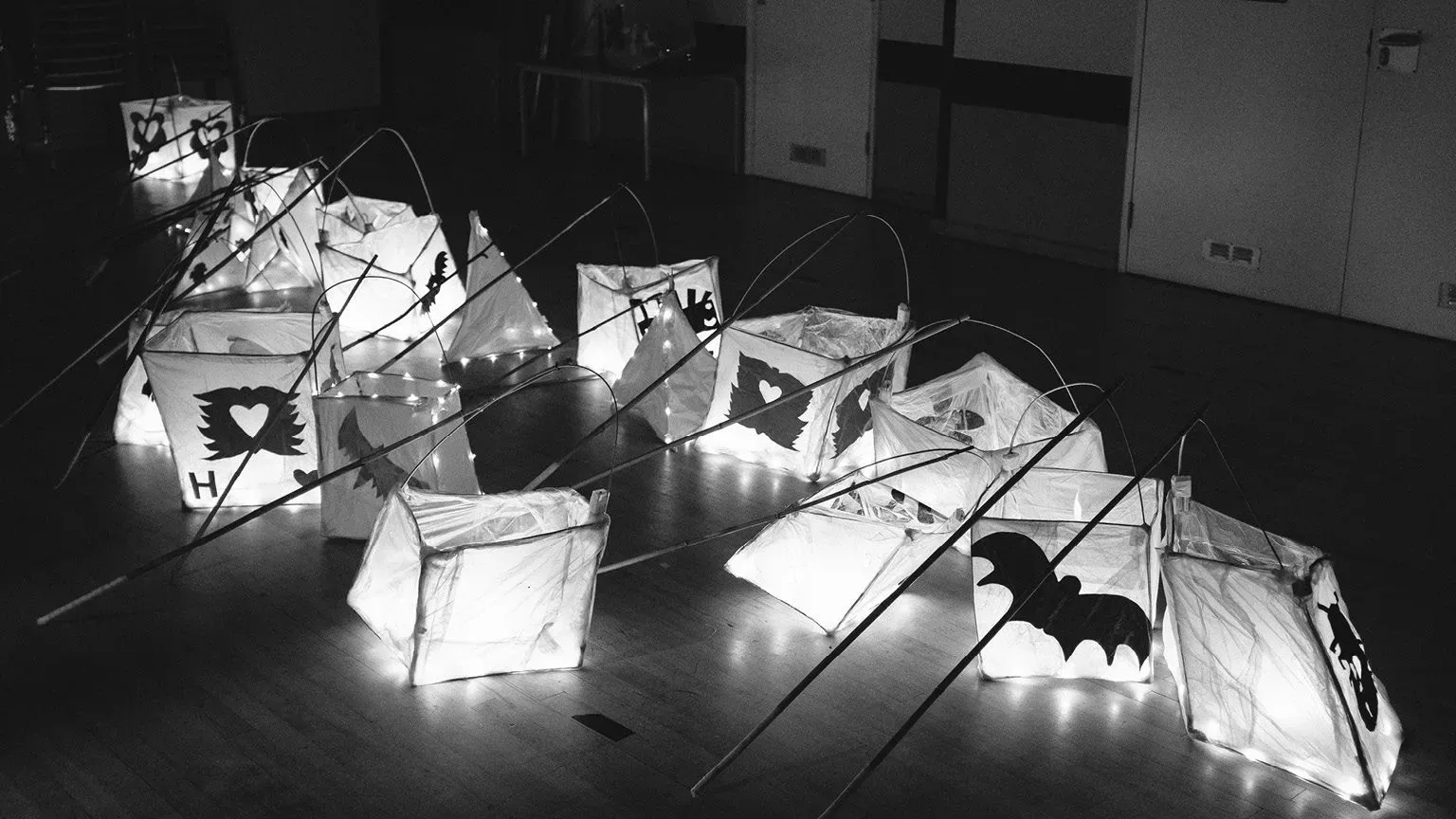
The North Wall Arts Centre
Young creatives aged 8 to 11 can get into the festive spirit with this two-day YouthLab workshop at The North Wall. Participants will make their own willow lanterns, with all materials and lights provided, and enjoy a performance of Creation Theatre’s Alice in Winter Wonderland.
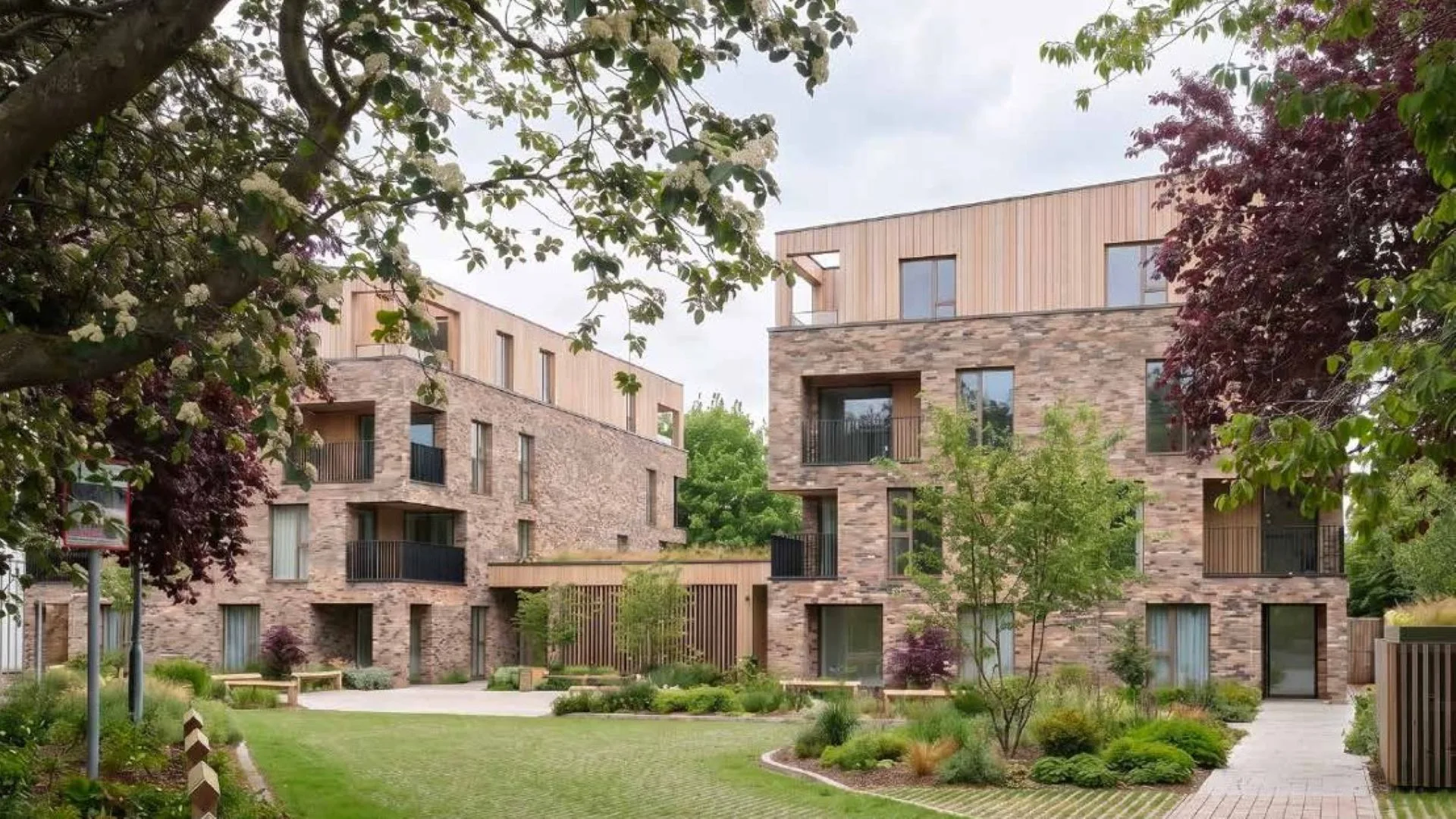
Oxford is one of the UK’s most successful centres for education, research and innovation, but its growing economy is creating new demands for housing in a historic city with limited space. As affordability worsens, development accelerates and the surrounding Green Belt comes under pressure, is Oxford building a future that its own workforce can afford to be part of?
Oxford has an enviable reputation. Its universities attract students and academics from around the world. Its hospitals provide specialist healthcare. Its research institutions and growing life sciences sector are helping to shape industries that could define the next generation of scientific and technological innovation. Its historic architecture, cultural life and international standing make it one of Britain’s most recognisable cities.
It is also a city in which finding somewhere affordable to live has become an increasingly difficult proposition.
For those who grew up in Oxford, are starting a career here or want to raise a family, the housing market can feel increasingly disconnected from the reality of local earnings. For people moving to the city to work, the cost of renting or buying can be a significant barrier. And for those on lower incomes, the choices are more limited still.
This is not simply a question of whether Oxford has enough houses. It is a question of whether it has the right homes, in the right places, at prices that the people who make the city work can afford.
There is a wider economic dimension, too. Oxford’s success depends on attracting talent, supporting its institutions and providing the workforce needed to sustain its businesses and public services. Yet the expansion of its economy creates additional demand for accommodation in a city where land is scarce and development is constrained by its administrative boundaries, historic environment, flood risk and surrounding Green Belt.
The challenge is becoming harder to ignore. Oxford City Council’s housing evidence identifies capacity for approximately 9,041 homes between 2025 and 2045, against a calculated housing need of 21,560 over the same period. That is a substantial gap between the number of homes the city could accommodate within its boundaries and the number it is estimated to need.
The debate about Oxford’s future is therefore about much more than planning applications and housing targets. It reaches into questions about economic growth, education, transport, the environment and the future shape of communities across Oxfordshire.
Ultimately, it raises a deceptively simple question: who gets to live in Oxford?
The people who keep the city running
Consider the people who make an ordinary day in Oxford possible. The hospital support worker arriving before the morning rush, the teaching assistant helping children in a local primary school, the care worker visiting older residents, the cleaner preparing an office or hotel for the working day, and the hospitality staff serving visitors in the city’s restaurants and cafés are all part of the workforce that keeps the city functioning.
These jobs are essential, but they are not necessarily accompanied by salaries that make living in Oxford affordable. The problem is not confined to those on the lowest incomes. Teachers, junior healthcare professionals, early-career researchers, public-sector employees and people working in retail and hospitality can all find themselves competing for accommodation in a market where property prices and rents have become detached from ordinary earnings.
The figures illustrate the scale of the problem. Centre for Cities’ Cities Outlook 2026 placed Oxford at the top of its ranking of the UK’s least affordable cities, with an affordability ratio of 12.5. The report put the average house price at £549,600 in 2025, against annual wages of £44,000. Meanwhile, Office for National Statistics figures cited by Oxford City Council show average private rents reaching £1,963 a month in August 2026.
For a household on a modest income, renting can consume a disproportionate share of take-home pay. Saving for a deposit while paying high monthly rent becomes particularly difficult, while home ownership can seem an increasingly distant prospect. Even households with two people in employment may find that the combination of rent, childcare, transport and other living costs leaves little room to save.
The consequences extend beyond individual financial circumstances. When workers cannot afford to live close to their place of employment, they may look elsewhere. Some move to surrounding towns and villages, others commute from further afield, while some may decide that Oxford is simply too expensive a place to build a life.
For employers, this can translate into recruitment difficulties, higher staff turnover and a more limited pool of potential employees. In sectors such as healthcare, education, social care and hospitality, where physical presence is essential, the ability to recruit and retain staff is particularly important. A hospital cannot relocate its support services, and a care provider cannot deliver home visits remotely simply because its employees have been priced out of the local housing market.
There is also a question about the kind of communities Oxford is becoming. If those on lower and middle incomes are increasingly unable to remain in the city, neighbourhoods risk becoming less socially and economically diverse. The people who provide essential services may increasingly live elsewhere, with the city becoming a place they travel into for work rather than somewhere in which they can establish a home.
The pressure is particularly visible in demand for social housing. Oxford City Council reports that 4,068 applicants are registered for social housing, with around half requiring a one-bedroom property. The council receives an average of 160 new applications each month, while overcrowding is also a significant concern, with 996 households receiving additional preference on the register.
These figures describe a much wider problem than the shortage of housing available to people on the lowest incomes. Many households experiencing affordability pressures will not qualify for social housing, but will equally struggle to secure suitable accommodation in the private market. Oxford needs a functioning supply of genuinely affordable rented and owner-occupied housing for people whose incomes place them above the threshold for social housing but well below what the open market demands.
A city cannot rely indefinitely on its workforce living somewhere else.
Making better use of the land Oxford already has
With limited opportunities for expansion, one of the most immediate questions is how much more housing Oxford can accommodate within its existing urban area. Brownfield development, underused commercial premises, redundant buildings and vacant sites all deserve careful consideration, particularly where they can be brought back into productive use without sacrificing valuable employment space or the character of established neighbourhoods.
There are already practical examples of this approach. Oxford City Council’s Cabinet has approved plans for three developments in Cowley, East Oxford and Wood Farm which together propose to deliver 78 affordable homes. The schemes make use of council-owned land, underused garages and a vacant former timber yard, demonstrating how relatively small sites can contribute to the city’s housing supply.
At Kersington Crescent, 58 underused council garages are proposed to be replaced by 28 flats, comprising 20 homes for social rent and eight for affordable rent. Two of the flats are intended to be suitable for wheelchair users. The development will be managed by OX Place, the council’s wholly owned housing company, with the council intending to seek grant funding from Homes England.
The former Powells timber yard on Cowley Road offers a different opportunity. The site is intended to accommodate 47 one-bedroom flats alongside an existing house, which will be refurbished, providing a total of 48 homes for social rent. These will be used as temporary accommodation for single adults experiencing homelessness, with additional support intended to help residents move towards permanent, settled housing. The council plans to purchase the completed development from the developer and is also seeking Homes England grant funding.
At Stubbs Avenue in Wood Farm, a council property destroyed by fire in March 2025 is to be replaced with two new semi-detached homes for social rent: one with four bedrooms and another with two. The schemes are designed to meet modern energy-efficiency standards, including the use of air-source heat pumps and solar panels.
Taken together, the proposals illustrate the importance of looking beyond large development sites when considering how Oxford can increase its housing supply. A disused garage site, a former timber yard and a damaged residential property may not individually transform the city’s housing position, but bringing such land back into use can make a meaningful contribution, particularly when the resulting homes are directed towards clearly identified local needs.
The council’s Cabinet Member for Housing and Communities, Councillor Linda Smith, described the approach as making use of suitable land across the city, adding that the three schemes demonstrate opportunities to provide homes for people who need them at a time of exceptionally high demand. Her description of delivery as happening “brick by brick, site by site” captures an important part of the challenge: increasing supply requires sustained work across many different types of site, not simply waiting for a handful of major developments.
The schemes also highlight a distinction that is sometimes lost in wider discussions about housing numbers. The 48 homes on Cowley Road are intended as temporary accommodation, not general-purpose affordable housing for households seeking a permanent home. Their value lies in providing an alternative to expensive hotel accommodation for people experiencing homelessness, while offering additional support to help them move towards more settled housing. The social-rent homes at Kersington Crescent and Stubbs Avenue address different needs.
Oxford City Council’s four-year Affordable Housing Supply Programme aims to deliver more than 1,600 affordable homes, including at least 850 for social rent. These three schemes form part of that wider ambition, but their approval should not be confused with completed delivery. Planning permission, funding, construction and acquisition all remain important stages in turning proposals into homes.
The more interesting question is whether this kind of approach can be scaled up. Oxford has a finite supply of council-owned land, and not every vacant or underused site will be suitable for residential development. Some employment land is important to the city’s economy, while other sites may have environmental, access or infrastructure constraints.
The emerging Local Plan 2045 considers greater flexibility for residential development on some land currently used for employment, including offices and business areas. This creates opportunities for mixed-use redevelopment, but it also requires careful judgement. Oxford needs land for laboratories, research facilities, manufacturing and commercial activity as well as housing. Replacing employment sites indiscriminately with residential development could undermine the economic activity that generates jobs and supports the city’s prosperity.
The more sustainable opportunity may lie in making better use of land through imaginative mixed-use development, combining homes, workplaces, services and public spaces rather than treating each use as an entirely separate proposition.
Higher-density development also deserves greater consideration where the location and infrastructure can support it. Oxford does not need to reproduce the character of its historic centre everywhere, but it could make more imaginative use of appropriate sites through well-designed apartments, family-sized homes within higher-density developments and neighbourhoods built around accessible public transport. The objective should be to accommodate more people without compromising the quality of the places they live in. Adequate space, daylight, green areas, community facilities and access to everyday services are not optional extras if new developments are to become successful neighbourhoods.
A university city with a growing appetite for space
Oxford’s universities are among its greatest assets. They attract international talent, support research and innovation, generate employment and contribute enormously to the city’s cultural and economic life. But a successful university city also needs to accommodate its students, and the scale of that requirement has become an increasingly important part of the housing debate.
The University of Oxford had 26,800 students in December 2025, according to its published statistics. More than half were postgraduate students, and 43 per cent of the student body came from outside the UK. The city’s other higher education institutions add further demand for accommodation, creating a substantial market for student housing.
Purpose-built student accommodation has an obvious attraction. Providing dedicated homes for students can reduce their reliance on shared houses and rooms in the private rental market, potentially releasing existing properties for other households. It can also allow universities to accommodate more students without adding equivalent pressure to the established residential housing stock.
There is, however, a more complicated question about where that accommodation should be built, who should provide it and how much additional development the city should accommodate. Student housing competes for land, construction resources and investment. Some schemes occupy sites that might otherwise accommodate conventional housing or mixed-use developments, while others make productive use of commercial or previously developed land that could be difficult to bring forward for family housing. The distinction matters because not every student accommodation development is a lost opportunity to build family homes, and not every site is suitable for general residential use.
The University of Oxford’s accommodation position offers an interesting insight. Oxford City Council’s 2024/25 Authority Monitoring Report recorded 14,959 full-time University of Oxford students with accommodation requirements, alongside 14,407 university-provided accommodation places. On the council’s planning-policy calculation, 552 students were living outside university-provided accommodation. This is a relatively small shortfall in the context of the university’s overall student population, although it relates to a defined group under the Local Plan’s monitoring rules rather than every student attending the university.
It also demonstrates that the university’s responsibility for accommodation is not merely theoretical. Providing student housing can make a measurable difference to pressure elsewhere in the city, and the challenge is to ensure that provision keeps pace with future growth. Both universities need to take a sufficiently long-term view of their accommodation requirements, rather than assuming that the private rental market can absorb any additional demand.
There is a wider question about the balance between Oxford as an international education destination and Oxford as a place where people establish permanent homes, raise families and build careers beyond their university years. The city should not have to choose between being a great place to study and a great place to live, but achieving both requires a more deliberate approach to the relationship between university expansion and housing provision.
The Green Belt: where can Oxford grow?
Oxford’s geography is both part of its appeal and one of its greatest planning challenges. The historic centre, river corridors, surrounding countryside and Green Belt all contribute to the city’s distinctive character. Much of its built-up area is already developed, while flood risk and heritage constraints limit the opportunities for further expansion.
Oxford is also unusual in having a relatively tightly drawn administrative boundary. Its urban area does not stop neatly where the city council’s jurisdiction ends. Communities immediately beyond the boundary are physically and economically connected to Oxford, even though they fall under neighbouring local authorities. This creates a fundamental problem: the demand for housing is generated by the wider Oxford economy, but the responsibility for planning and delivering new homes is divided between different councils.
For many people, Oxford’s surrounding landscape is inseparable from its identity. The Green Belt protects the setting of the historic city, helps prevent neighbouring settlements merging into one another and preserves areas of open countryside. It is not difficult to understand why proposals to build on it generate strong feelings, particularly where the landscape is valued for its environmental, recreational and historic significance.
But the debate should not be reduced to a choice between protecting every acre of Green Belt and allowing unrestricted development. The purposes of the Green Belt, the environmental value of individual sites and the wider housing needs of the city are different considerations that need to be examined together.
Some land may be particularly environmentally sensitive or important to the setting of Oxford, while other areas may offer opportunities for carefully planned development alongside improvements to green infrastructure and connections between existing communities. A more detailed examination of individual sites could help distinguish between land that should be protected and locations where development might be possible without undermining the wider purposes of the Green Belt.
The question is whether a carefully planned review of land around Oxford could provide a more sustainable outcome than continuing to place almost all the pressure on the existing urban area. This does not mean treating the Green Belt as an available reserve of development land, but recognising that a long-term housing strategy needs to examine all realistic options and explain the consequences of ruling them out.
This is where the argument for a wider Greater Oxford approach becomes particularly relevant.
Greater Oxford: a city that extends beyond its boundaries
Oxford’s housing challenges cannot be resolved entirely within the city council’s administrative boundary. For years, neighbouring authorities have been expected to help accommodate housing that Oxford cannot provide within its own area. Under previous strategic planning arrangements, approximately 15,000 homes were identified as a working assumption for Oxford’s unmet housing need, with provision distributed across Cherwell, South Oxfordshire, the Vale of White Horse and West Oxfordshire.
That arrangement recognised something fundamental: Oxford’s housing market and economy do not stop at the city boundary. But planning for development across several separate authorities is not the same as planning for a coherent urban area. A development on the edge of Oxford may be located within one district, but its residents may work, study, shop and use public services in the city. The infrastructure required to support it may cross several administrative boundaries, making decisions about housing, roads, public transport, schools and healthcare difficult to coordinate.
The Greater Oxford debate is, in part, about addressing this disconnect. A more integrated approach could allow decisions about housing and infrastructure to be made in the context of the wider urban area rather than through a series of separate local plans. It could also provide a more considered basis for examining where growth should take place, what land should be protected and how new communities should connect with Oxford.
This does not automatically mean that every surrounding village should become an urban extension, nor that the Green Belt should be treated as an available reserve of development land. It means that the geographical scale of the planning conversation needs to reflect the geographical scale of the problem.
Oxford City Council’s Local Plan 2045 was submitted for examination in July 2026. Its evidence base illustrates the scale of the challenge, with the council estimating capacity for 9,041 homes between 2025 and 2045 against a calculated need of 21,560. The plan seeks to maximise opportunities within the city while working with neighbouring authorities on the wider requirement.
The question for the future is whether the existing arrangements can deliver the scale, location and quality of development required, or whether a more integrated form of strategic planning is needed. Greater Oxford should be about more than drawing a larger boundary around the city. It should be about creating a connected place in which housing, employment, transport and public services are planned together.
Transport: connecting homes with opportunity
One argument frequently made in the housing debate is that not everyone who works in Oxford needs to live in Oxford. There is some merit in this. The surrounding towns and villages have their own housing markets, communities and employment opportunities, and with the right infrastructure they could play a greater role in accommodating people who work in the city.
Witney, Abingdon, Kidlington and other nearby communities are already connected to Oxford through established commuting patterns. But the quality and reliability of those connections are crucial. A home outside Oxford may be more affordable, but that advantage can quickly diminish if commuting requires a car, involves unpredictable journey times or adds substantial costs to an already stretched household budget.
Oxford’s roads are already under pressure. Encouraging additional housing in surrounding areas without providing realistic alternatives to car travel risks transferring the housing problem into a transport problem. The answer has to be better connectivity, not simply more commuting.
That means reliable, frequent bus services, better integration between different transport modes, safe cycling routes, accessible park-and-ride facilities and improved rail connections where they are viable. There are encouraging signs of longer-term thinking, including Oxfordshire County Council’s feasibility work on high-capacity public transport connections between Carterton, Witney, Eynsham and Oxford. Such projects recognise that transport infrastructure and development cannot be considered independently.
The same principle should apply to any substantial housing growth around Oxford. New communities need to be connected to jobs, education, healthcare and services from the outset, rather than relying on infrastructure improvements that may or may not arrive later. There is also an important question about the relationship between housing and employment locations. If Oxford continues to attract significant numbers of workers into its hospitals, universities, science parks and commercial centres, transport planning needs to reflect those patterns.
A regional network should make it possible to travel between residential areas and employment centres without every journey depending on a car or passing through the city centre. A more connected Oxfordshire could offer a genuine alternative to concentrating all housing within the city itself, but this requires sustained investment and coordination. It is not reasonable to expect people to accept longer commutes as the price of living somewhere affordable if the transport infrastructure is inadequate.
The economic success that creates its own housing problem
Oxford’s economic ambitions are substantial. The city’s science and innovation economy has grown around its universities, hospitals, research institutions and specialist businesses. Life sciences, medical research, technology and advanced engineering are all important parts of its future. Developments such as Oxford North and the wider growth of the city’s innovation districts reflect an ambition to attract investment, create high-value employment and strengthen Oxford’s international economic position.
That is broadly positive. A successful economy generates employment, supports public services, attracts investment and creates opportunities for businesses and residents. But economic growth also creates demand for housing. New research facilities, laboratories, offices and innovation campuses bring additional workers into the area. Some will be recruited locally, while others will move to Oxford from elsewhere in the UK or overseas. If the housing supply does not respond, additional demand can intensify competition for existing homes, placing further pressure on rents and prices.
This raises an important question about the relationship between commercial development and housing provision. Should the planning obligations associated with major employment developments take greater account of the housing demand they generate?
There is already a precedent in Oxford’s planning approach. The city has used policies requiring certain commercial developments to contribute towards affordable housing in recognition of the additional residential demand created by new employment floorspace. The principle deserves renewed attention as the city’s economic ambitions evolve.
Major developments could be assessed not only in terms of the jobs, investment and economic value they promise, but also in terms of their wider impact on the local housing market and infrastructure. That does not necessarily mean every new laboratory or commercial building should include residential accommodation. Some uses are difficult to combine, and the most appropriate housing sites may be elsewhere. But it does mean that the consequences of economic growth should be considered from the beginning, rather than treated as a separate problem for housing authorities to address afterwards.
There is also a question about the type of jobs being created. Oxford’s innovation economy may generate high salaries for some employees, but it also creates demand for a much wider range of support roles. Buildings need to be maintained, facilities managed, food provided, services delivered and people supported. A research campus cannot function through scientists and entrepreneurs alone.
The benefits of economic development should therefore be considered alongside the housing and infrastructure needed by the entire workforce, not just the people employed in its highest-paid roles. If Oxford wants to remain a competitive international centre for research and innovation, providing an affordable place to live is part of its economic infrastructure.
More homes, or the right homes?
There is another dimension to Oxford’s housing challenge that receives less attention: whether the existing housing stock is meeting the needs of the people who live here. The debate often focuses on the total number of homes required, but the composition of that housing stock matters just as much.
A young professional looking to buy a first home has different requirements from a family with two children. An older resident wishing to downsize may be looking for a smaller, accessible property close to local shops and services. A key worker may need an affordable rented home within a reasonable distance of their workplace. If the market does not provide sufficient choice at each stage, movement through the housing stock becomes more difficult.
Consider a younger family trying to find a home in Oxford. A flat may be affordable initially, but as the family grows, a larger property becomes necessary. If suitable family homes are scarce or prohibitively expensive, the family may have to move outside the city. At the other end of the market, older homeowners may remain in larger properties because there are few attractive alternatives that meet their needs.
This is sometimes described as under-occupation, but it is important not to turn it into a question of blame. People should not be expected to leave homes in which they are comfortable simply because somebody else needs more space. A family house is not an empty resource waiting to be redistributed. The more constructive question is whether Oxford offers enough suitable alternatives for people who might choose to move.
Summertown provides an interesting illustration. Its established residential streets, larger family houses and proximity to local amenities make it an attractive place to live, but property prices place much of its housing beyond the reach of younger families and first-time buyers. Could a greater choice of high-quality apartments, smaller houses and accessible retirement accommodation help create more opportunities for people at different stages of life?
Could better-designed downsizing options allow older residents to remain within their communities while making larger homes available to families who need them? And could new developments incorporate a more balanced mix of housing rather than concentrating on one particular market segment?
These are important questions because a housing market needs to function as a system. People should have realistic opportunities to move as their circumstances change, without being forced to leave the communities in which they have built their lives.
The same principle applies to affordable housing. Oxford needs more than a headline percentage of affordable homes. It needs a range of tenures and property sizes, including social rent, genuinely affordable rented accommodation, shared ownership and homes available at prices that local households can realistically afford.
The council’s proposed Local Plan 2045 includes a requirement for 40 per cent affordable housing on developments of ten or more homes, with priority given to social rent. That is an important ambition, but its success will depend on delivery. Affordable housing targets only make a difference if developments are viable, homes are actually built and the resulting properties meet the needs of local households.
The distinction between housing that is technically classified as affordable and housing that is genuinely affordable to the people who need it is particularly important in a city with Oxford’s property values.
A city at a crossroads
Oxford does not have the luxury of treating its housing problem as an issue that can be postponed indefinitely. The pressures are already visible in the private rental market, in the growing demand for social housing, in the difficulty of attracting and retaining workers and in the increasingly complicated choices facing families who want to remain in the city.
The decisions made over the next decade will influence not only where new homes are built, but also the character of Oxford and the communities that will call it home. There are competing priorities. Protecting the historic environment and surrounding countryside matters, as does providing enough homes for a growing population. Preserving employment land is important, but so is recognising that economic development generates housing demand. Higher-density development can make better use of scarce land, but it must create places people genuinely want to live.
There is no simple solution, and no single authority can deliver it alone. Oxford needs to make the best possible use of its existing urban area while being honest about its capacity limitations. It needs a more strategic relationship with neighbouring communities, with housing and infrastructure planned across a wider geographical area. It needs transport investment that makes living outside the city a practical choice rather than a necessity accompanied by a daily struggle to commute.
Its universities need to continue taking responsibility for student accommodation. Major employers and developers should recognise the wider housing implications of their expansion. The city also needs a more diverse housing supply, providing realistic options for people at every stage of life, while ensuring that social housing and temporary accommodation are not overlooked in favour of more commercially attractive development.
The council’s latest proposals at Kersington Crescent, Cowley Road and Stubbs Avenue show that progress does not always depend on finding enormous new development sites. Making better use of land already within public ownership, bringing vacant sites back into use and building homes that respond to specific local needs are all part of the answer. But 78 proposed homes, however valuable to the people who will benefit, need to be understood in the context of a city facing a much larger and more persistent shortfall.
Above all, Oxford needs to think about housing as part of the infrastructure that supports its success, rather than as a separate challenge to be addressed after economic growth has taken place.
A city is not defined solely by its universities, laboratories, historic buildings or commercial achievements. It is also defined by the people who live there, the communities they create and the opportunities available to the next generation.
Oxford’s international reputation may be built on centuries of learning and discovery, but its future will depend on whether it can remain a place where people can afford to make a life.The question is not simply how many homes Oxford can build, or how far its boundaries should extend. It is whether the city can grow without losing the people and communities that make it work.
Who gets to live in Oxford? And, perhaps more importantly, who will still be able to live here in twenty years’ time?

Stage Watch brings together a curated selection of upcoming theatre, musicals and live performances from London and across the Oxfordshire region – from established West End favourites and celebrated musical productions to imaginative new writing and family entertainment.
This selection moves between theatrical traditions and contemporary storytelling. Bill Bailey revisits the exuberance of vaudeville, Wicked continues its extraordinary West End run, and a new adaptation of Matt Haig’s The Humans brings an intriguing exploration of humanity to the London stage.
Closer to home, Oxford welcomes the return of two much-loved musical and theatrical traditions, with the 20th-anniversary tour of Jersey Boys and a festive reimagining of Snow White at Oxford Playhouse.

Panto 2026: Snow White
Oxford Playhouse, Oxford.
20 Nov 2026 to 03 Jan 2027.
Oxford Playhouse puts a contemporary spin on a familiar fairy tale with its 2026 pantomime, Snow White. Written by Sarah Henley and directed by artistic director Mike Tweddle, this festive production transports audiences into the enchanted West Oxford Wood, where ancient forest magic meets the modern world of image-enhancing technology.
At the heart of the adventure is Snow, whose path is blocked by Queen Narcissa and her all-knowing mirror, MiRi. When the queen discovers a magical resource capable of preserving her beauty, her ambition threatens to destroy the natural world around her. Snow and a collection of unlikely friends must find a way to outwit her and restore the balance.
Promising spectacular songs, dazzling dance numbers and plenty of comic moments, the production combines traditional pantomime ingredients with a more contemporary environmental theme. It is designed to bring generations together for a festive theatrical outing, with all the familiar opportunities for audience participation.
Best for: Families looking for a festive outing, traditional pantomime entertainment and a familiar fairy tale with a contemporary twist.
Good to know: Written by Sarah Henley and directed by Mike Tweddle. Suitable for all ages, with the traditional pantomime combination of boos, cheers, comedy and spectacle.
Bill Bailey: Vaudevillean
Theatre Royal Haymarket, London.
16 Dec 2026 to 06 Feb 2027.
Before television, cinema and radio, vaudeville brought comedy, music and an extraordinary variety of performance together under one roof. Bill Bailey returns to the stage with Vaudevillean, a celebration of this exuberant tradition and its particular ability to entertain, surprise and transport an audience.
Drawing on his considerable musical and comic talents, Bailey explores the world of the traditional entertainer, bringing together stories of showbusiness and city life with the strange, unusual and unexpected. A multi-instrumentalist and accomplished performer, he is particularly well suited to a format that places versatility and theatrical invention at its centre.
Rather than following the conventions of a conventional stand-up show, Vaudevillean promises a broader evening of performance, moving between comedy, music and storytelling. It is an opportunity to see one of Britain’s most distinctive comic entertainers revisit a theatrical tradition that prized ingenuity, variety and the ability to hold an audience’s attention.
Best for: Bill Bailey fans, lovers of musical comedy and audiences who enjoy theatrical performance that moves beyond conventional stand-up.
Good to know: A celebration of vaudeville, featuring comedy, music and storytelling. Bill Bailey performs at the Theatre Royal Haymarket.
Wicked the Musical
Apollo Victoria Theatre, London.
Booking until 03 Jan 2027.
Now in its landmark 20th year in London, Wicked remains one of the West End’s defining musical productions. Based on Gregory Maguire’s novel, the award-winning show revisits the familiar world of Oz to tell the untold story of two women whose unlikely friendship will ultimately shape their destinies: Glinda the Good and the Wicked Witch of the West.
The story begins long before Dorothy arrives in Oz, following Elphaba and Glinda from their university days through a relationship shaped by rivalry, affection and profoundly different ideas about power, acceptance and what it means to be good or wicked. As their paths diverge, the familiar characters of L. Frank Baum’s The Wonderful Wizard of Oz take on new dimensions.
With music and lyrics by Stephen Schwartz, the production combines an emotionally driven story with spectacular staging, elaborate costumes and some of musical theatre’s best-known songs, including Defying Gravity, Popular and For Good. The current London cast features Emma Kingston as Elphaba and Zizi Strallen as Glinda, with Jordan Litz joining as Fiyero from 19 May. More than 13 million people have seen the London production, which continues to demonstrate the enduring appeal of this alternative perspective on a much-loved story.
Best for: Musical theatre enthusiasts, fans of the original Oz story and audiences looking for a spectacular West End production with a strong emotional narrative.
Good to know: Running time approximately 2 hours 45 minutes, including interval. Recommended for ages seven and over. The production has won more than 100 awards worldwide, including Tony, Olivier and Grammy Awards.
Jersey Boys
New Theatre Oxford, Oxford.
26 to 30 Jan 2027.
The music and story of Frankie Valli and The Four Seasons return to Oxford as Jersey Boys embarks on its 20th-anniversary tour. The Tony Award-winning musical traces the remarkable journey of four young men from New Jersey who developed a distinctive sound, rose to international fame and became one of the most successful groups of their era.
Told through the perspectives of the band members, the production looks beyond the familiar harmonies to explore the ambition, personal rivalries and difficult relationships behind their success. From their early days on the streets of New Jersey to their arrival in the Rock and Roll Hall of Fame, it is a story of friendship, fame and the often complicated reality of life behind the music.
The soundtrack is central to the show’s appeal, bringing together a succession of enduring hits including Sherry, Big Girls Don’t Cry, Walk Like a Man, Beggin’, Can’t Take My Eyes Off You and December, 1963 (Oh, What a Night). With 65 major awards and more than 27 million people having seen the production worldwide, this anniversary tour offers an opportunity to experience the music and the story behind it once again.
Best for: Fans of 1960s pop, classic vocal harmonies and jukebox musicals, as well as audiences who enjoy music-led biographical storytelling.
Good to know: The original Tony Award-winning production returns for its 20th-anniversary tour. At New Theatre Oxford for a strictly limited five-day run.

The Humans
Theatre Royal Haymarket, London.
30 Oct 2027 to 29 Jan 2028.
Matt Haig’s bestselling novel The Humans comes to the West End in a new theatrical adaptation by Jack Thorne, with Matt Smith taking the leading role. Directed by Jeremy Herrin, this 13-week engagement brings together an acclaimed creative team for a story that uses an extraordinary premise to examine some very familiar questions about human nature.
When mathematics professor Andrew Martin makes a significant breakthrough, an outsider from another world arrives to prevent the discovery from having potentially catastrophic consequences. Infiltrating Andrew’s domestic life alongside his wife and teenage son, this mysterious visitor finds himself confronted by the contradictions, complications and unexpected tenderness of human existence.
The novel’s distinctive combination of science fiction, comedy and philosophical reflection gives the stage adaptation considerable scope. Beneath its unusual premise lies an exploration of love, belonging, family and the peculiarities of being alive. With Thorne’s experience in contemporary theatre and television, Haig’s original storytelling and Herrin’s direction, the production promises a thoughtful and entertaining interpretation of a much-loved work.
Best for: Readers of Matt Haig, audiences drawn to intelligent contemporary drama and anyone interested in theatre that explores the big questions through an unconventional story.
Good to know: Matt Smith stars as Andrew Martin. Adapted by Jack Thorne from Matt Haig’s novel and directed by Jeremy Herrin. Age guidance 12+. The production contains themes around mental health, suicidal intention and death that some audience members may find distressing.



-

 Student Life4 weeks ago
The Vinted paradox: Consuming our way out of overconsumption
-

 Oxford united FC4 weeks ago
Oxford United striker ‘not affected’ by missed League One chances
-

 Oxford Events4 weeks ago
Events in Oxford & Oxfordshire this November
-

 Oxford united FC3 weeks ago
Dogs, drones and extra police powers for Oxford United game
-

 Oxford united FC4 weeks ago
Oxford United beat Stockport 1-0 in statement victory
-

 Oxford united FC4 weeks ago
Oxford United battle for 0-0 draw against Bradford in League One
-

 Oxford united FC3 weeks ago
LIVE: Barnsley 1-0 Oxford United – Yoganathan puts 10-man Tykes ahead
-

 Oxford united FC4 weeks ago
Oxford United leaders criticised as results hide concerns