
Student Life
‘You Can See Everything’ with a blind eye

If it won’t completely discredit me as a reviewer, I would like to start this by making an unqualified comparison to disgraced YouTuber Cody Ko. Before Tana Mongeau came forward with allegations that Ko assaulted her when she was 17, there was one instalment of his and Noel Miller’s ‘That’s Cringe’ series that, at 13, I thought was the height of humour. In it, they react to a video entitled ‘you.’, which is essentially a VSCO-colour-graded montage of a couple living together in LA, overlaid with an awkwardly unscripted conversation about love, art, and entrepreneurship (by which they mean finger-painting and making smoothie bowls). The couple recount how they met: a month ago at Whole Foods, when she was buying celery, and he was buying rosé. “I always knew I would meet my soulmate at Whole Foods”, she rasps, completely serious. They seem utterly high and deluded about their love for each other, convinced that they see the world differently than everyone else, and that their ‘work’ has the capacity to change everything. At one juncture, there is an extended shot of the shadow of a hose dripping water, the phallic nature of which prompts Ko and Miller to joke that they get it now.
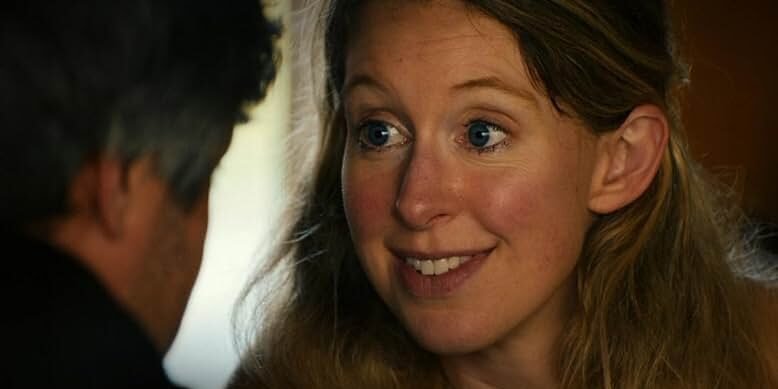
Early in Nathan Fielder’s You Can See Everything, we watch Elizabeth Holmes’ romantic and business partner Billy Evans in the shower while Fielder stands outside with headphones on. He doesn’t seem to know where to look, or what to do with his hands. The audience doesn’t fare much better, as the wide shot of Evans’ naked body occupies the screen for an oppressive amount of time. This is when the uncanny feeling that I had seen this film before finally realised itself. What Fielder captures throughout the first half of the documentary is that when Holmes and Evans talk to one another, no actual constructive dialogue ever happens. Instead, they stare unblinkingly into each other’s beady, blue eyes and rattle off these therapy-speak neologisms that seem to put up more barriers than they take down, all under the guise of compassion. “I know exactly how you feel,” Evans tells Fielder repeatedly, as he near-literally pulls it out and slams it on the table. Later, it becomes clear that he would also purport to know exactly how Holmes feels. About everything. To the point that she doesn’t need to be around, and if she were, it would only decrease the efficiency of their product – sorry, relationship.
What I mean to say is, much of You Can See Everything feels like a mockumentary. Some viewers, whose eyes are more trained to Fielder’s quirks than mine, claim that it actually is, and that many of the interactions are scripted to max out on absurdity. Perhaps because it was a midnight showing, perhaps because I had just had two cocktails, or perhaps because I was sitting in the fourth row on a friend’s recommendation, so the possibility of Holmes and Evans crawling out of the screen The Ring-style felt low but not zero; that was not the impression I got. The absurdity felt eerily real. Parts of the three-hour-long footage are plain, laugh-out-loud ridiculous: Evans tells Fielder he did not recognise Holmes upon their first meeting because she was wearing a hat and a bandaid, Holmes claims not to understand the gag in Abbott and Costello’s “Who’s on first?” routine, which somehow proves her innocence, and the couple spend pretty much their entire screen-time with dry lips and red-rimmed eyes, sniffling between every word they speak (one X post about the film reads, “You Can See Everything more like Me and My Gay Cocaine Husband Need Some Lip Balm”). Other parts, however, are akin to something from A24’s horror catalogue.
The question the film asks (and fails to answer) is whether Elizabeth Holmes is innocent. What it proves is that anyone can become a conspiratorial maniac under the right circumstances. Holmes and Evans are convinced that the world is out to get them, and they feign a failure to understand how they ever got into this situation in the first place. As a result of this self-victimisation, Evans begins to lash out – he eventually reveals that Holmes has granted him power of attorney, which he has been using to post deranged political takes on X under her name and make an AI bot of her likeness. He shrugs when Fielder asks how he would feel if someone used it to create a pornographic video. “If anything happens to me, this needs to be out there,” he says, pupils blown wide. He declares that this is what Holmes would want; if she were free, she would spend all her time building “monuments of love” for him. So what’s the difference if he exploits her will when she is unable to speak for herself?
Fielder’s position remains unclear for most of the film, but by the end he has obviously developed a fondness for Holmes that is clouding his judgment. He wants the truth, but he also wants to avoid making Holmes look like a villain. The most interesting position is that of (spoiler alert) Amanda Seyfried, who Fielder consults on the project after Holmes begins serving her sentence. Arguably the most well-adjusted of the whole lot, even Seyfried seems stir-crazy at times. She expresses some guilt over her portrayal of Holmes in the 2022 Hulu show The Dropout, but she continues to assist Fielder in ‘re-enactments’ of his interactions with Holmes that he could not get on camera. One particularly poignant re-enactment is of Fielder’s visit to the prison – we watch Seyfried-as-Holmes lament Seyfried’s depiction of her, and (irony of all ironies) say that she never wants to be portrayed that way again. The re-enactment is cut with a scene where she and Fielder read the ‘script’ together, and she appears frustrated at Holmes’ gripe with her. “I was playing a character!” she exclaims. Seconds later, she walks it back: “But she did do that.” She, like Holmes, doesn’t want to be the villain of the story.
Of course, we aren’t exempt from the cabin fever either. At about the halfway point, Fielder reveals to Seyfried that before they began filming, Evans struck a deal with the A24 executives so that he and Holmes would receive a portion of the profits that the documentary made upon its commercial release. Fielder argued that on top of being uncustomary for documentary subjects, this deal would look uniquely terrible for Holmes and Evans, as it would put into question the objectivity of the narrative. Evans threatened to pull out of the project, so the filmmakers were forced to agree. This puts the audience in a position where, for the next hour and a half, we are forced to reckon with the fact that we’ve made a transaction not with an independent film studio but with a money-laundering fascist. We are only released from this moral anxiety at the very end, where some postscript tells us that Evans decided to cancel the deal right before the film’s official US release. The relief of this reveal is so immense that for a moment we sympathise with those that are actually complicit.
In the prison visit re-enactment, Fielder asks whether Holmes knew about Evans’ deal, or about anything else he has been doing under her name since her imprisonment. Seyfried-as-Holmes tells him that she doesn’t know, and doesn’t care. She has never felt closer to Evans; they are constantly “building monuments of love” for each other. Fielder never points out this verbal parallel – in fact, he is convinced of her sincerity. The only thing that is clarified by the time the screen fades to black is that Holmes and Evans certainly were, are, building monuments. Towards what, it remains to be seen.
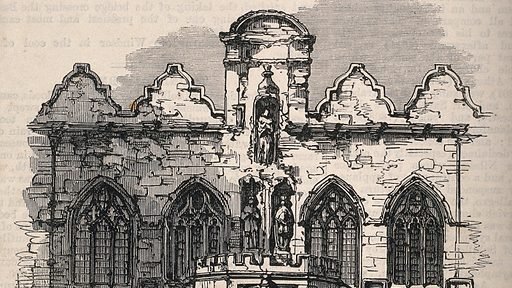
Sitting across from the short, bespectacled man in the tight suit, it was hard to believe he had been the focus of the past weeks’ controversy. Beyond Cofnas’s anxious window-glancing and uninspiring public speaking, the library felt like a poorly attended late-night JCR meeting. The only things reminding us of the external onslaught were the unwavering chants of “is your mother proud of you?” and “your views are pseudoscience” echoing from the quad below, and the journalists glancing at their watches.
I’d started my evening by interviewing Oriel friends as they gathered in solidarity in Oriel’s second quad to protest against the talk. Everyone was outraged that the Oxon Universities’ Reform Society had invited such a person to express his views in their college. Oriel students’ home was being dragged through the dirt, and as the protesters outside chanted “Oriel we know you like some old eugenics”, I felt almost embarrassed walking into the talk under their gaze. Once inside, my job was simple: to report the goings-on of the talk to the Cherwell journalists outside so that they could publish live updates.
I decided to try my hand at getting to know the audience. “No comment” was the first response I received. One stern-looking American defiantly said this before I barely had the chance to open my mouth. I moved on to the jovial middle-aged man putting on a larger-than-life appearance. He argued for the importance of listening to “new ideas” which will always threaten “those committed to the old”. He brought up philosophers of science (who I thought would only ever be mentioned in my tutorials) to defend the importance of attending Cofnas’s talk. It was Edward Dutton, I later found out, the far-right influencer and race pseudo-scientist. A skittish local writer, Joshua Webster, in tapered red chinos who claimed to be “undecided on the topic”, convinced me that I had observed a complete cross-section of the audience, so I resigned myself to networking with the other journalists while we waited.
The Oxon Universities’ Reform Society President, Vittorio Cuneo-Flood, reassured us that the talk was going ahead. The ongoing siege was merely a delay. Another 15 minutes passed. Inside, the hushed chatter of those labelled as racists. Outside, the cacophony of the protest. And then he arrived. Vittorio read a pre-written statement on behalf of the Proctors outlining that we were not to interrupt the talk. Then, an introduction by an Oxon Universities’ Reform Society moderator outlining Cofnas’s troubled history with academic institutions.
Cofnas was met by loud applause from a small group sitting at the front. The rest of us sat at the back awkwardly engaged in sporadic note-taking. His argument was divided into two parts: a condemnation of the “equality principle” underwriting DEI, followed by a history of how his own view had become marginalised and discredited. An incoherent, rambling style made Cofnas’s lecture appear like the words of a man desperate to share the thoughts ruminating in his head.
The noise of the protest outside was unrelenting. It would undulate, an endless backdrop to Cofnas’s inflammatory and provocative comments, turning the heads of the audience and speaker alike with every spike in intensity. Meanwhile, Cofnas droned on, constantly citing studies by forgotten and disproven academics. It was an hour of listening to a host of outrageous claims concerning the “substantial differences in overall brain size of different races” and insensitive comments alleging that Jason Arday was the author of plagiarised articles. The trouble was that I was neither interested in what he had to say, nor able to at that moment call out his lies – for I could never be as well-read on “racial realism” as any of the extremists in the room.
So I sat, and I waited. The talk continued mostly uninterrupted, except for a moment when the doors behind us were closed. Only later did I find out that my editor had considered telling me to leave for my own safety. Cofnas was given a microphone to help him speak over the chants booming from beyond the windows. Soon enough, Vittorio hurried him along to the end of his talk. A quick Q&A followed, where a Guardian journalist asked Cofnas whether he would “apologise to Jason Arday’s family”, to which Cofnas unremorsefully snarked that “the implication is that I’ve done something wrong by pointing out corruption by a powerful public figure… is that it?” and that others should be the ones to “receive these pointed questions”. It was a nice contrast to the other questions, which seemed designed to appease Cofnas and treat him as a legitimate academic. Afterwards, Cofnas slithered away through a back door into the night, escorted by proctors and security.
Then limbo: I found myself stuck in a room with unsavoury characters with whom I shared the common project of survival. Unsure how I would be received outside, I texted “don’t shoot” to my friends in the protest and was able to confidently walk out the front door and return to the embrace of familiar arms in the quad below. Luckily, I had made my status as a reporter known before, so I was greeted with smiles rather than boos.
I’ve since wondered who the real winners and losers of the situation have been. Despite the strength of the public outcry, Cofnas and his supporters have never had a bigger platform. It is true that fewer than 30 of the 110 seats were filled in the hall, but there is not a student in Oxford who doesn’t know Nathan Cofnas’s name or views now. All this for an uncharismatic and tainted man. It seems that Oxon Universities’ Reform Society, and in particular Vittorio, have succeeded in making themselves known. When otherwise they should have been just a footnote in Oxford’s long history of controversial speakers, their cause is now championed by right-wing news outlets such as GB News – with Free Speech Union external affairs officer Connie Shaw reporting on the talk.
My college has been shaken. Not just by the experience of the night, which involved students being locked out of their home and being intimidated by protesters, but also by the hostile coverage of their college. Oriel’s JCR Vice-President Gabriela Panova lamented that “comments online have substantially misrepresented both the role of Oriel College and the actions undertaken by the JCR”, which attempted to “provide students with meaningful opportunities to express their concerns”. Indeed, Oriel’s Provost reiterated in his address the morning after the event: “We [Oriel] did not ask for this event at our college.” One need look no further than the JCR’s statement condemning the event (which received 135 out of 149 votes) alongside similar MCR and SCR statements to understand how the student and governing body feel. Watching a man whose stated views actively target members of our community being hosted in our home to spread his hate speech has been nothing short of nightmarish.
So an event held under false pretences with a dull speaker and a small, discredited audience has spread racist thought and ideology. Even the instigators, Oxon Universities’ Reform Society, can’t be said to have benefitted. They find themselves officially distanced from Reform UK and rightfully ostracised. Perhaps this was a success of the protest. An added consequence has been the besmirching of the name of a community which did its best to cope under the circumstances, as well as the direct harm caused to the members of that community – most notably to the beloved head porter who was stampeded while protecting students. We must reflect on how things reached such a tragic state, and how our supposedly inclusive learning space was invaded by a man such as Nathan Cofnas.
Civil wars rarely have winners, and this was certainly no different.
In response, Nathan Cofnas told Cherwell: “Brain size is moderately correlated with intelligence. On average, Africans have smaller brains than Europeans, who have smaller brains than East Asians. These facts are not disputed in the scientific literature. Any informed person who says otherwise is lying.
“An argument is considered “outrageous and insensitive” if it poses a serious threat to wokism. My view is that we should be allowed to challenge that false ideology.”
In response, Oriel College also told Cherwell: “Oriel College did not choose to bring this event to our community but acted correctly to ensure the safety of our students while securing lawful freedom of speech for all. Thames Valley Police are responsible for managing public protests.”
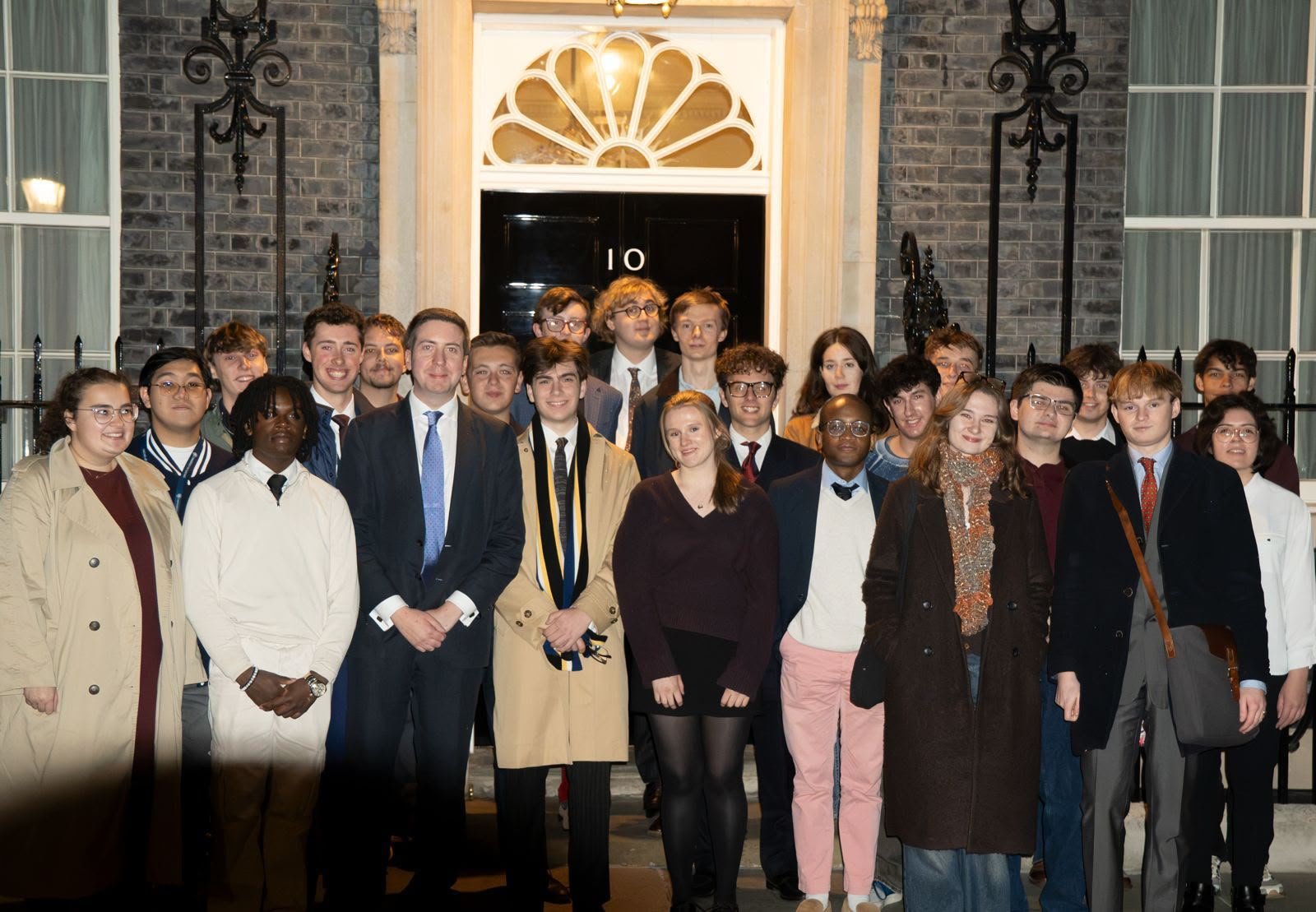
This academic year, two new societies have entered Oxford University’s political scene: Oxford Student Greens and Oxon Universities’ Reform Society. Despite their diametrically opposed politics, both represent a growing appetite among students for alternatives to the established political parties.
I have spoken to a number of students involved in societies across Oxford’s political spectrum. What has emerged from my conversations is a generation widely dissatisfied with the political status quo. But that dissatisfaction is producing radically different, sometimes diametrically opposed, visions of what Britain should become.
The national picture reflects this fragmentation. At the 2024 General Election, Labour won 40% of the vote amongst young voters, defined as 18-24-year-olds, but the Green Party secured 18% – a 14% increase on the previous election. On the right, Reform got 9% of the youth vote, narrowly ahead of the Conservatives on 8%.
One thing is undeniable: student politics is a world away from national politics. Recent YouGov polling shows the Greens are supported by 36% of 18-24-year-old voters, four times their support among the electorate as a whole. Reform, meanwhile, attracts just 8% of young voters, against 21% across all age groups.
Oxford’s student politics offer a glimpse of this changing landscape.
The Oxford Student Greens are one of the newest additions to the University’s political scene. Nathan Cohen, their political education officer, tells me that when the committee assembled over the summer to discuss establishing the society, two competing visions emerged. One was centred on bringing more students into the local Green Party, the other on creating a forum for political discussion and debate. The committee ultimately opted for the latter.
For many of the students now gravitating towards the Greens, their political journey began elsewhere. Some students who once aligned with Labour became disillusioned with the party under the former Prime Minister Sir Keir Starmer. “When Starmer shifted more rightward and abandoned a lot of the left-wing policy turn that Corbyn brought, I felt quite alienated,” Cohen explains. “Labour as a party, historically, has had times when it is a part of the establishment, and times when it is willing to take it on and actually adopt radical change. And I think that what we saw from [former Labour leader Jeremy] Corbyn to Starmer was a transition from one of those to the other.” Alfie Davis, an Oxford graduate who is now a Green councillor for the Holywell ward, tells a similar story of disillusionment. “I was a Labour Party member in my teenage years under Corbyn. I left sometime during the Starmer years,” he says. Davis says he did so after Labour took “this hard turn towards neoliberalism” and did not take a clear enough stance on “trans rights and Palestine”. Starmer, he felt, was “so focused on purging the Corbynite left”. Davis then joined the Green Party in order to vote for Zack Polanski in the leadership election.
Many young people joined the Green Party after Polanski’s election as leader in September 2025. The party’s membership rose by 50% in the month following his election, surpassing 100,000 members for the first time. Nidal Shah, president of the Oxford Student Greens, tells me that “a lot of people just want a home on the left” and found it in the Greens, both nationally and at Oxford.
Under Polanski, the Green Party’s willingness to challenge “the establishment” proved a potent source of appeal to students. “Under Carla Denyer and Adrian Ramsey, certainly we were considered a more likeable party by sort of the average voter”, Cohen acknowledges. Now Polanski has brought a change in style and substance. “Polanski has definitely brought a wave of energy to the party”, Cohen tells me, adding that he has made the Greens “a lot more willing to take on the Establishment in a bold way”.
The party’s readiness to advocate radical change to the status quo is a key element of its appeal to Oxford students who vote Green. “You have to target the root of these problems rather than sort of like doing small tinkering around the edges,” Davis tells me, adding: “There’s the same sort of level of anger by our generation that we’re going to inherit very little, right? We’re going to inherit nothing but problems made by decades of status quo politics.” To Davis, members of the Green Party are united by the conviction that “the fundamental system that we’ve got isn’t working” and that “we need foundational economic, environmental, social change”.
The issues attracting these students to the Greens are not always those traditionally associated with the environmental movement. Palestine, in particular, has become an important point of identification. Cohen tells me that the party’s “firmer stance against Israel” was a significant drawing point. He also points to its position on trans rights, arguing that “a lot of students feel that Labour has taken quite a cowardly stance”. The climate crisis has, however, “become a bit more secondary in the minds of people”. Cohen considers that it is the role of the Greens to “amplify that and bring it back into the national conversation”.
Yet the Greens’ increasingly assertive political identity is not without its complications. At the party’s recent conference, members voted to adopt a motion declaring that “Zionism is Racism”, a decision that exposed differences of opinion within the party. What do Green supporters at Oxford think of this policy? Views are mixed. Shah thinks “this is a popular policy”. He thinks that Palestine has receded from public debate, and that the motion therefore “refocuses us on a really important point that we may have been losing focus on”. Davis, who voted for the motion at the Green Party conference, says it was “shifting the Overton window and what’s acceptable when it comes to talking about Zionism, talking about Palestine”. Cohen, however, said he opposed the motion. “I am anti-Zionist, but I don’t think that that’s the same thing as saying that Zionism is racist,” he tells me. He says he is glad that the Green Party has distinguished itself by “standing up for Palestine”, but does not believe the motion was the right way of going about it
After ceding ground to the Greens in the first months of 2026, Labour seems to be gaining momentum amongst students again, recovering some of the political energy it lost under Starmer’s premiership. The Greens’ ‘Zionism is Racism’ motion has played a part in this. “A lot of people have come up to me really concerned with what the Greens are introducing, particularly the Zionism is Racism motion”, Awab Kennedy, Co-Chair Elect of the Oxford Labour Club (OLC), says. “People that I spoke to were horrified by it. These are Greens that have left and are finding themselves politically homeless.” He explains that people were most concerned that Amendment Three, which provided the motion would not be used to ‘pressure, proscribe or discipline members based on affiliation with Jewish community institutions’, was voted down.
Andy Burnham’s arrival at Number 10 has also helped Labour reclaim the support of young people who turned away from it. OLC Co-Chairs Catherine Harrison and Tom Haydon tell me that “the change in leadership has brought real energy to [the OLC]. A lot of students find Burnham’s focus on fairness and opportunity for young people easy to connect with.” Kennedy agrees, saying that Burnham has “hit the ground running”. One difference he sees between Starmer and Burnham is that the latter’s “messaging is more optimistic”. Whereas Starmer frontloaded his messages with the challenges the country was facing and the tough decisions that needed to be made, Burnham often “prioritises the solution”.
The Greens’ appeal is partly a story of disillusionment: students who feel Labour has abandoned the politics that once attracted them are looking elsewhere. But this desire to break with the political status quo is not confined to the left. On the other side of Oxford’s political spectrum, students are also dissatisfied with the party that has for so long been the home of the right.
For some young right-wing students, fourteen years of Conservative government did not deliver. Leyton Styles, a right-leaning student involved in both the Conservative Party and Reform UK, describes his disappointment with the Conservatives. “They did not do a good job for 14 years”, he says. “They promised in every single election cycle to lower immigration. They said they would control the borders, and they didn’t.” He adds that the problem current Conservative leader Kemi Badenoch faces in winning back young voters is that “every leader before her has said the same thing, but none of them succeeded”. David Balbus, a right-leaning student, points out that “most young people now grew up nearly entirely under a Tory government”. Consequently, “that has coloured the idea of what the right is for many young people in this country”.
Yet other students are not just disappointed with the Conservatives: they feel positively betrayed. I spoke to a right-wing student, who leans towards supporting Restore Britain. “I think the Conservative Party have lost a lot of trust with voters,” he told me, asking to remain anonymous. He said that there is an emergent view within Restore that “the Conservative Party needs to be completely destroyed, not even be on the political scene anymore”. To him, the 2024 General Election was the catalyst for the Conservatives being eclipsed on the right. He voted for Reform UK in 2024, and said he “wanted to see the Conservative Party crushed”.
For right-leaning students, a significant part of Reform’s appeal lies in its promise to break with what they see as a discredited political establishment. Among the students I spoke to, there was a recurring sense that the Conservatives are “the Establishment” and had become delegitimised as a result. Some Reform supporters are “saying to hell with this two-party politics, to hell with the political consensus we’ve had,” Styles tells me. “They realise that, given the scale of the challenge we face in this country, radical things have to be done, and that’s what Reform is promising.” He thinks that “Reform are addressing issues more bluntly and directly than any other political party has done in recent memory”.
But Reform is not necessarily the final destination for students disillusioned with the Conservatives. For some, Reform is not radical enough. Restore Britain is an attractive option. It may be a small party nationally, but it is “surprisingly big among the student hard right”, the Restore student tells me. Restore is “a Gen Z expression of Reform”, according to the student. Its social media presence is a key reason for this. X is the focal point of the online right – and its leader Rupert Lowe’s posts reach three times as many people as Reform leader Nigel Farage’s. The online space is dominated by reposting, content clipping, and resharing by anonymous accounts and activists within the Restore space – “it’s a constant content machine”. But the differences extend beyond communication. “Restore is just the more honest representation of what Reform voters really want”. The party provides a clearer stance on issues like immigration, but also on issues such as demographic change, identity and religion – territory Reform is reluctant to encroach on.
Part of Restore’s appeal to young men lies in its idealism. Most people involved in Restore are young Christian men; the gender skew is noticeable. Amongst its young supporters, there is a shared desire to “construct an idealistic view of the world according to a shared vision,” the Restore student explains. Balbus offers a similar distinction. He explains that some feel that “at best, Reform will do what the Tories wanted to do but more properly”. In contrast, “they see Restore as a proper, more radical social plan to restore the country the way it was”. It is, he suggests, “a bit like the right-wing equivalent of the left, which is a more idealistic view of the world”.
For many Tory students, therefore, there is a growing sense that the Conservative Party is no longer the home of the right. But how will the party respond to their rising right-wing challengers? How will it win back young people? Ben Ashworth, a member of Oxford University Conservatives Association (OUCA), tells me he thinks OUCA and the OLC are “far too complacent about the position of their own parties relative to Reform and the Greens”. “Often when the conversation has been brought up of whether Labour or the Conservatives are dead, there is a sense that they will simply survive because they have done so before”, Ashworth adds. He argues that parties need “an effort to be sustained” and that “with regard to the Conservative Party, I can see that there is a sustained effort taking place”.
Harriet Dolby, former President of OUCA, suggests that the Conservatives’ problem is partly generational. “Normally, you turn Conservative when you’re 31. In the last General Election it was 64,” she tells me. She attributes this shift to younger people struggling to reach the traditional milestones of adulthood, like securing a job, buying a home and having children. As a member of Next Gen Tories, a pressure group advocating policies to help people reach those milestones, she wants to make the party more electorally attractive to her generation.
The clearest ideological dividing line between the Conservatives and Reform, meanwhile, remains immigration. “Among the Tory types, they see immigration as an issue, but they don’t see it as the issue. They are more focused on the economy,” Balbus says. Alongside the importance placed on the issue, another difference is how each party makes the immigration argument. “We are not interested in the ethno-nationalist side,” Dolby says of the Conservatives. “We can beat that argument. We can contribute to the immigration debate with more rational and reasoned arguments.”
The differences between these parties extend beyond their competing policy proposals. They reflect fundamentally different understandings of what has gone wrong with Britain, and what needs to change.
After countless conversations, one thing is clear to me: politically engaged students are united by a sense of disappointment with the political order they have inherited, even if they disagree profoundly on its causes. For some, the object of their ire is fourteen years of Conservative government; for others, Starmer’s Labour. For still others, it is the political establishment more broadly. On the left and right, the party options are more diverse – and fragmented – than they have been in the past. The ascendant party challengers are challenging the political establishment from different directions, propagating not only different policies but also, at a more fundamental level, divergent narratives of the country and visions for renewal. As these visions become increasingly disparate, finding common ground is becoming harder than ever. But this has never been more important.
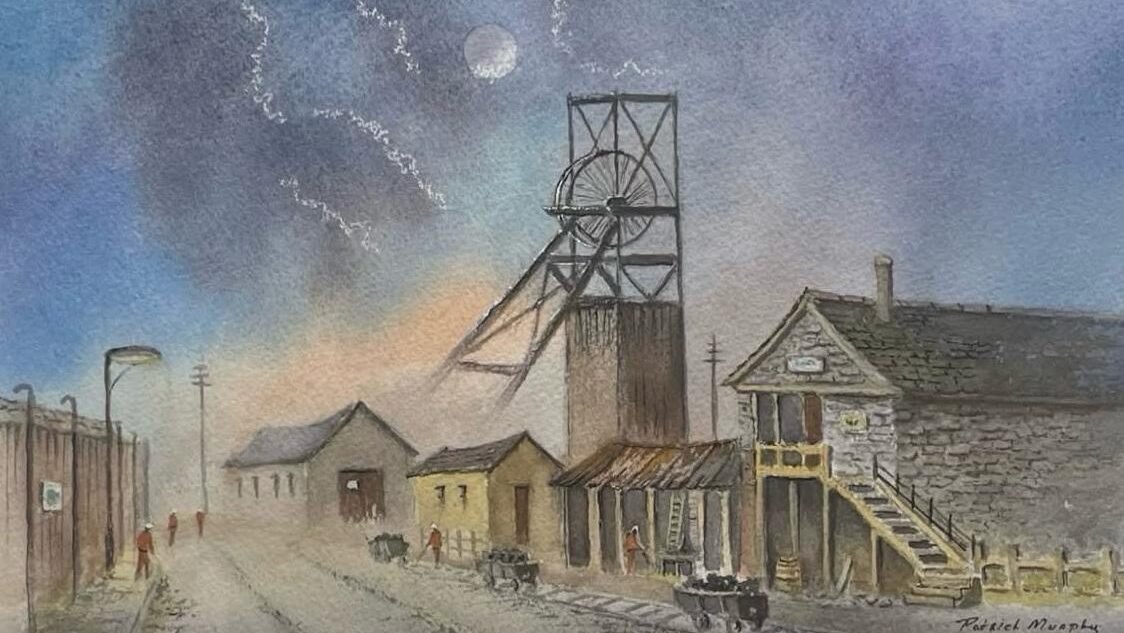
Sleepovers at my grandmother’s always had a common thread: Mam Betws would make me a hot chocolate to take to bed as I listened to stories about our family. Wrapped in the cotton-wool duvet of childhood, we would explore the branches of our family tree; from tales of relatives hiding money in their gardens to vampires and flour-covered dogs, I developed a quiet fascination with the past. As I questioned and probed, layers unfurled, and my understanding of our identities expanded. More complex themes crept in: hunger, strikes, and lost ambitions – our bottomless seam of history that we would excavate before bed. Years later, these stories still play on my mind, especially as I settle in at Oxford, a world I could scarcely imagine from my hometown in rural Wales.
A palimpsest is a surface written upon repeatedly, each new inscription obscuring but never quite erasing what came before. My home, to me, is something of a palimpsest. Beneath its rugged landscape and seemingly unambitious exterior lie extraordinary lives. In Betws, my village, the 1984-85 Miners’ Strike remains one of those inscriptions. Its legacy was not simply one of solidarity and strength, but of division. Families were fractured, and picket lines became both political and personal battlefields as communities confronted competing loyalties. My own family was deeply affected. My grandfather, the captain of four coal faces at Betws Colliery, travelled to London to campaign for the miners and, according to family accounts, became one of the most frequently arrested miners in the region for refusing to leave picket lines. My grandmother was a steadfast supporter, going without meals so my dad could eat, saving up any and every penny. Through their stories, history became something more immediate: neither something to romanticise nor ignore, but something that embeds itself in the contours of our everyday lives.
Perhaps the most important part of this palimpsest was the woman who taught me to read it. My grandmother wrote her way through life in a small Welsh town, tracing our family history back to Cornish pirates. However, in the most ordinary family anecdotes, she found the remnants of something much larger. Her work made me realise that family history is not simply tracing names and dates backwards. It is an attempt to understand the people behind the names, and to discover how their lives have quietly found their way into those that have come after them. I realise now that my values, my aspirations, and even my traits are not entirely my own, but rather are infused with the experiences of my ancestors.
Coming to Oxford has made me more conscious of the many ways history can be understood. Here, the past refuses to remain in the past. It clings to the stonework, stares back at us from portraits lining college walls, and gathers in the dust of rooms that have witnessed centuries of conversations. It lives on in the names above doorways and the ceremonies carried forward, unbroken, unchanged and unyielding. On my second night here, I sat in an Elizabethan hall as Latin was read before our meal, and past and present seemed to collapse into one another. Yet sitting there, I found myself thinking about the histories that rarely have buildings or portraits to preserve them. They survive in family photographs, stories, old letters, and conversations repeated at family gatherings. These are not competing versions of history, just different ways of understanding it.
Family history offers a perspective that broader historical narratives cannot always provide. We might know the dates of a war, the outcome of an election, or the significance of an industrial dispute, but family stories tell us how these events found their way into people’s homes and their outlooks on life. They remind us that history is experienced by countless people whose contributions may never be formally recognised. There is something reassuring in discovering that the lives we consider ordinary are often anything but. It encourages a curiosity that extends beyond our immediate relatives, making us more attentive to the experiences of people whose circumstances, beliefs, and opportunities differ from our own. It can also challenge the temptation to judge simplistically. The Miners’ Strike, for example, is not merely a story of one side against another, but of people making impossible choices under extraordinary pressure. However, in a place like Oxford you can feel a disconnect between the way you have been shaped and the grand historical narrative of academia.
Although Mam Betws’ stories were, in the beginning, little more than a means of appeasing a child who could never quite bring herself to sleep, they gave me something far less fleeting: an understanding that none of us arrives in the present unaccompanied. In our village, to tell someone they are “gwerth y byd a’r Betws” is to tell them they are worth the world and Betws alike – a reminder that there is as much worth discovering in where we come from as in where we are going. We inherit more than names and stories. We inherit the consequences of lives lived before our own, the circumstances they left behind, and the histories that continue to make themselves felt in ways we do not always recognise.
To learn those histories is not to dress the past in nostalgia, nor to mistake the stories of our own inheritance for something more deserving of attention than anyone else’s. It is to look more carefully at the world we have been given, and to read, feel, and unearth the inscriptions beneath its surface. Perhaps that begins with something as ordinary as asking a grandparent another question, or taking the time to write down a story before it is lost. It is telling others about the stories that made us. It is to take what might otherwise remain a private inheritance and integrate it into a wider story. In a world so preoccupied with making history, there is something equally consequential in taking the time to remember it.



-

 Student Life4 weeks ago
The Vinted paradox: Consuming our way out of overconsumption
-
 Oxford Events4 weeks ago
Events in Oxford & Oxfordshire this November
-

 Oxford united FC4 weeks ago
Oxford United striker ‘not affected’ by missed League One chances
-

 Oxford united FC3 weeks ago
Dogs, drones and extra police powers for Oxford United game
-

 Oxford united FC4 weeks ago
Oxford United beat Stockport 1-0 in statement victory
-

 Oxford united FC3 weeks ago
LIVE: Barnsley 1-0 Oxford United – Yoganathan puts 10-man Tykes ahead
-

 Oxford united FC4 weeks ago
Oxford United leaders criticised as results hide concerns
-
 Student Life4 weeks ago
Oxford University wins at local climate awards