
Student Life
Why ‘No Bad Memories’ is my album of the year

Why ‘No Bad Memories’ is my album of the year
After a lovely evening celebrating one of my best friends’ birthdays on 15th October, I returned to my room filled with a sense of hope for the future that I hadn’t felt in quite some time. It had been around a week since I’d returned to Oxford for my final year, but the dread that once accompanied this change had slowly given way to an understanding that this would be a particularly beautiful period of my life. I knew I was living through a moment I would look back on fondly, and, perhaps due to my drunken state, I found myself completely in love with my surroundings and the people in my life. As I sat on my windowsill, I received a notification about the release of an album that I had been excited for for the past few months – The Avalanches’ No Bad Memories. Listening to it, it felt as though every feeling I was experiencing – nostalgia, a childlike joy – had been meticulously assembled into one album, and I fell for it instantly. I didn’t expect how perfectly my personal happiness would fit an album so preoccupied with the sounds of old advertisements and obsolete electronics, filled with the relentless optimism of a world that believed the future could only get better.
How do you describe The Avalanches to somebody who has never listened to them before? They are an Australian ‘electronic’ group (I use inverted commas because the term feels inadequate in this instance), somewhere between Daft Punk, Nujabes, MGMT, and DJ Shadow, yet vastly different from each. Their music comes from exploring what happens when disparate, unrelated sounds are placed alongside one another. Since the release of their beloved 2000 debut album, Since I Left You, they have been making infectious and danceable tunes by compiling countless samples, sound effects, and audio clips, and have garnered a passionate fanbase, myself included.
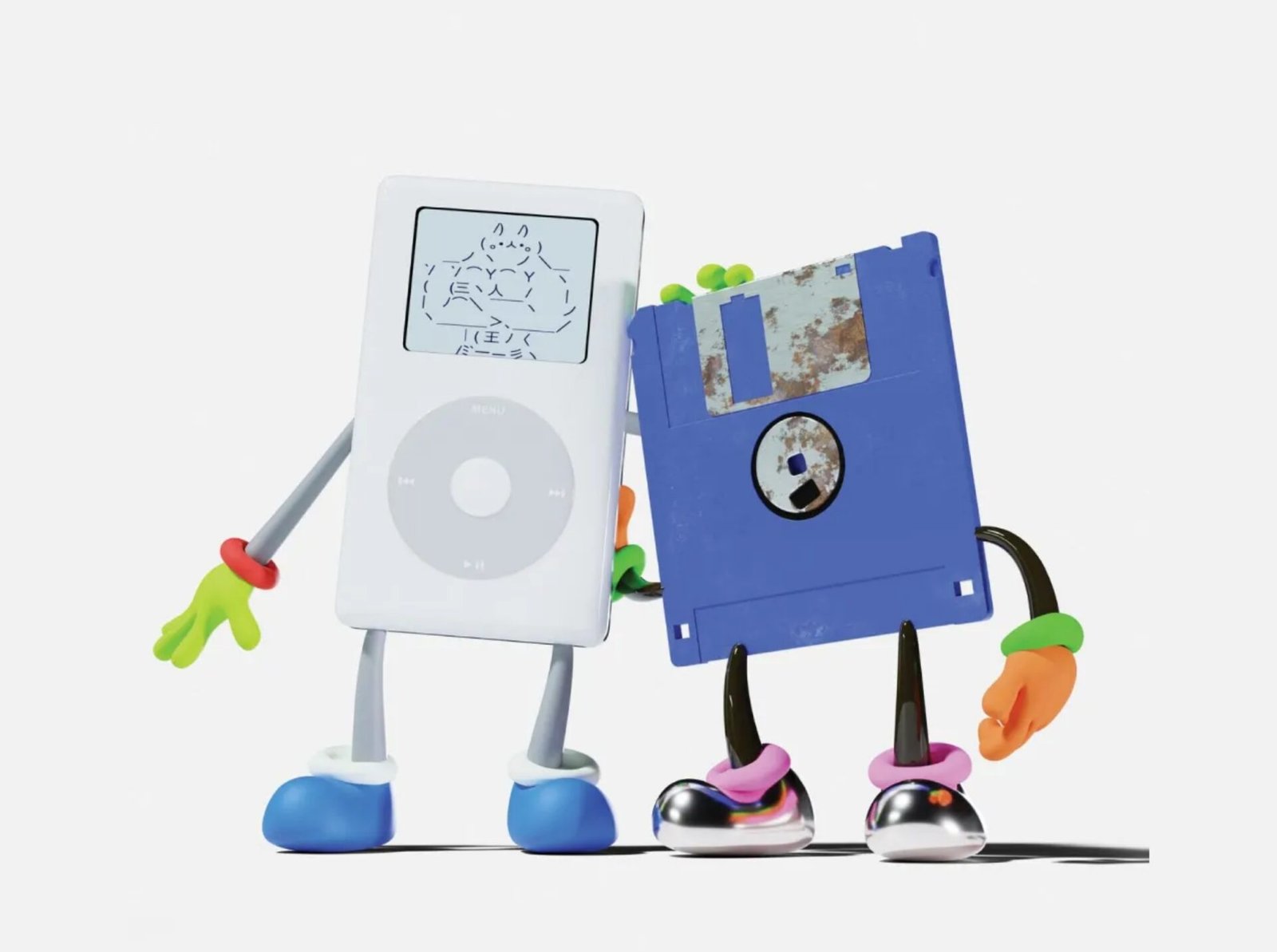
No Bad Memories, their fourth album in their 32 years together as a group, is no different. Like its predecessor, 2020’s We Will Always Love You, it is, at its core, a concept album. But while their previous album looked to space and the future, No Bad Memories looks to the familiar, preceding each track with distorted jingles or glitchy ads for a myriad of fake products, each with its own aesthetic, making the album experience feel like flicking through vintage radio stations or Saturday morning TV. Its sounds sometimes overwhelm or outright sabotage one another, but somehow this makes the album feel even more alive. The ‘core’ tracks themselves are bouncy, fun, and make use of Mort Garson-esque synths, colourful guitar, pulsing bass, and glittery pads. The myriad of features are a testament to the friends The Avalanches have made across their career, with frequent collaborators like Jamie XX, Panda Bear, and Rivers Cuomo alongside newer voices like Portraits of Tracy. The feeling of friendship that is so integral to the album is part of what makes it so enjoyable for me. The lyrics talk about being together forever, having all the time in the world, and giving everything you have to those you love, creating a joy and sense of fun that felt genuinely refreshing to hear. Contemporary music is often expected to justify itself through the seriousness of its themes, but No Bad Memories doesn’t need to offer a manifesto. It knows it can be excessively cheerful and still be worth taking seriously. Its nostalgia is an attempt to recover the pleasures that remain buried within the discarded sounds of the past.
The role of advertising in No Bad Memories, the language that permeates it like a computer virus, is part of what elevates the album above an average dance album. TV and radio commercials are obnoxious; every product wants to occupy as much of your attention as quickly and efficiently as possible. On No Bad Memories, as strangely comforting as they sound, adverts bombard you, constantly interrupting each other with promises of making you better, faster, more beautiful. Advertising is always in love with the future. Every product promises a better life just around the corner. The strange thing about hearing these sounds now is that so many of the futures they once promised have become obsolete. The phones, software, and products may be gone, but their jingles remain, still insisting that tomorrow will be better. The album is fascinated by the commercial machinery that shapes our desires, but it is also fascinated by its sounds. It is at times dizzying and confusing, but in the age of AI, data scraping, commodification of social media interaction, and marketing from big companies trying to come off as humane, No Bad Memories is imagining techno-optimism.
Artist Richard Hamilton famously described Pop Art as “popular”, “transient”, “expendable”, “mass produced” and, ultimately, “big business”. These are precisely the qualities No Bad Memories celebrates and subverts at once. Like British Pop Art of the 1950s and 60s, The Avalanches assemble music using the most recognisable sounds of the modern world – the language of advertising – turning them into something both hopeful for the future and nostalgic for the past (or as my mother put it when she listened, “a collage of joyful loveliness”).
This is why No Bad Memories has stayed with me: it has taken the disposable sounds of a bygone, more optimistic age, and turned them from music intended to sell into music which makes us feel something. I don’t necessarily think the album is arguing that the past was a better time, or that the future will be. It is simply finding beauty in the sounds that were once left behind. The future may not be as bright as those old adverts promised, but while listening to No Bad Memories, at least, the music makes it feel that way.
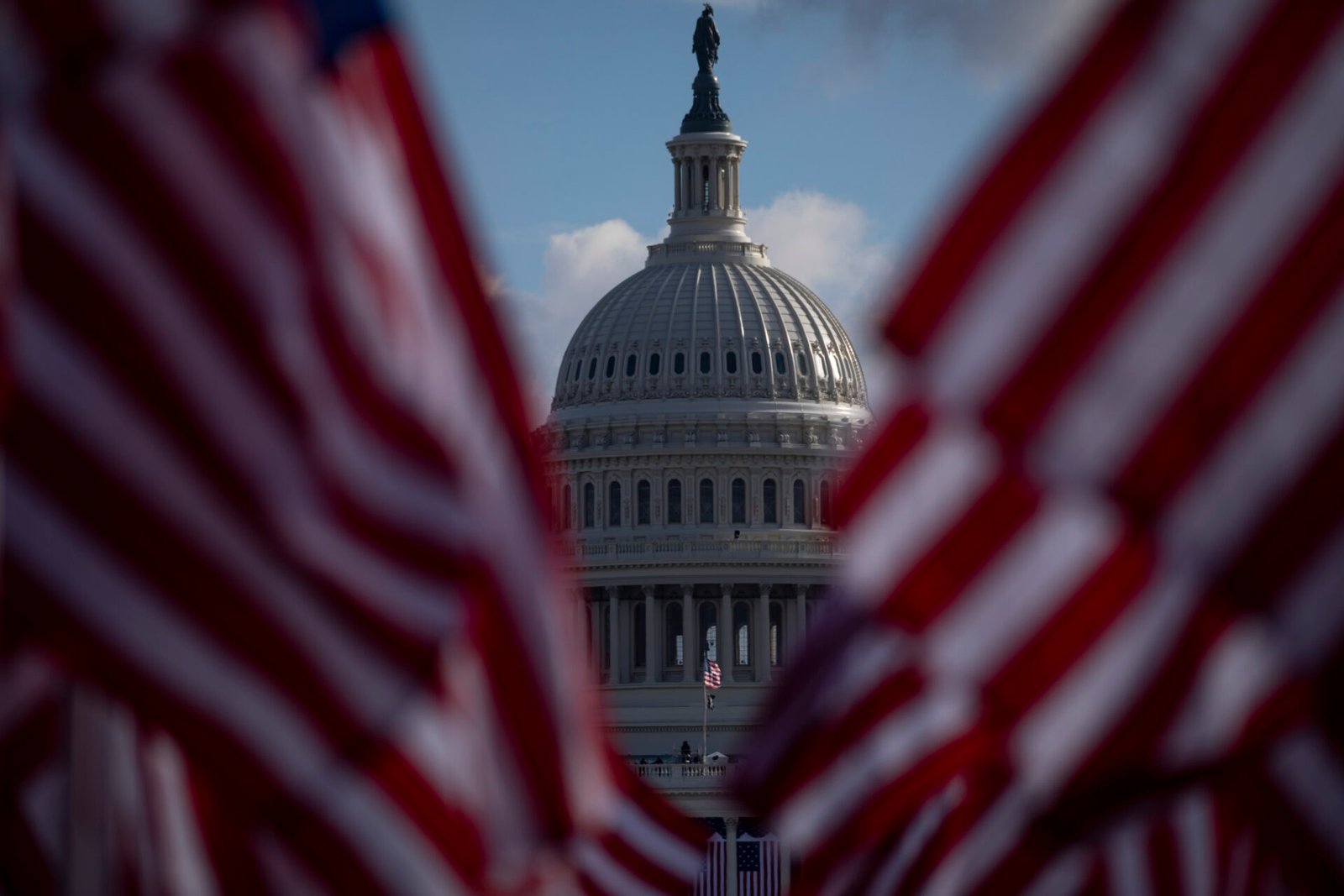
Given its intense media coverage and everything that seems to be on the line, I feel as though I have been anxiously awaiting the results of the 2026 US midterm elections for weeks, months – maybe years. Having lived in Central America in the lead-up to the 2024 presidential elections, I had become utterly disillusioned with the idea that shared identity could ever guarantee political solidarity. I had watched people around me sport MAGA hats and post AI-enhanced pictures of Donald Trump as Jesus on their Instagram stories; people with skin like mine, who spoke English with an accent (or not at all), people who joined me in holding up the passport queue at the Houston border. It made my stomach turn to think that the win had been secured with the help of people I considered my kin and, no matter what they had been led to believe, people I knew would be quickly alienated by Washington if they were to ever step out of line. The horrific acceleration of ICE activities across the country, but particularly around the Mexican border, had been a predictable, but nonetheless more upsetting development under the current administration, knowing what I knew. So, despite Zohran Mamdani’s landmark win in New York (which I saw announced in an A&E waiting room in Oxford at 2 am, heart beating out of my chest unrelated to any medical issues), I did not have high hopes coming into the midterms.
My political pessimism, however, has not extended to my taste in literature. I don’t know how many of my coursemates would admit this, but my decision to study English was partly propelled by my love of Young Adult literature. If I ever find the time in between reading lists, I am most likely to be found with my nose buried in some trashy Harry Potter fanfiction with the names changed for copyright purposes. I enjoy unadulterated fluff. I yearn for inconceivable happy endings. I don’t want realism in my YA – I want happiness against all odds, and refractory periods that bend the rules of biology. As such, Casey McQuiston’s 2019 novel Red, White & Royal Blue, with its queer romance and almost aggressively optimistic vision of American politics, has been my comfort read for many years.
For the uninitiated, RW&RB tells the story of Alex Claremont-Diaz, son of the US President, and Prince Henry George Edward James Fox-Mountchristen-Windsor (average Oxonian number of middle names), fourth in line to the British throne. Despite long-standing animosity, after an incident that could threaten the president’s re-election campaign, Alex and Henry are forced into a PR friendship that soon unravels into something more. The enemies-to-lovers façade is shattered, as the two come to realise they have loved each other all along. The fictitious stakes for their relationship are very high – Alex doesn’t want to put his mother’s career at risk, and Henry fears being estranged from his family. However, the story is sold on its lack of realism: though it’s impossible not to invest in Alex and Henry’s relationship, just a quick scan of the list of characters tells you that something like this could never happen, so it’s easy to infer that everything will work out in the end. Alex is half-Latino, and his mother Ellen is the first female President in US history. She is a divorced, middle-aged woman, and the Democratic candidate from Texas. She has one trans and one pansexual Secret Service agent on her security detail. One of her closest allies is Rafael Luna, an openly gay, Latino senator from Colorado. Henry’s older sister is a recovering cocaine addict. McQuiston imagines a true woke-gone-wild, blue-hair-and-pronouns takeover. In the final chapter of the book, Ellen wins her re-election. Her home state, Texas, is the last to be called: “Texas is gray for five more seconds, before flooding beautiful, beautiful, unmistakable, Lake LBJ blue.” It is utter nonsense, and the only conceivable end to a narrative filled with things going right at the last second for the most unexpected people.
The Venn diagram for literary scholars and queer activists overlaps when it comes to tangible prejudice against gay pop-lit. It’s not entirely uncalled for; there is a concern that people are writing about a community they aren’t a part of, in a manner that doesn’t provide an adequate depiction of queer lived experiences or isn’t conducive to relatability for those peering in from outside the bubble. The medium seems too flat to convey the varied lives of people within the community without making caricatures out of them. I sympathise – it is difficult not to perceive stories like RW&RB as indulgent and mocking, particularly at a time when it feels like stereotypes are being used to demonise and legislate against us. But I also think there is value in shameless positivity and, much like mainstream music, I charge the elites to approach the corny YA novel poptimistically. To turn a blind eye to the suffering we have long endured would be a disservice to the progress we have made in being unashamed of who we are and of the people we love, but part of that progress is also learning to be comfortable in the idea that we can be happy, in the same cheesy, tooth-rotting way as anyone else. We are not doing ourselves any favours by self-flagellating, and in the same way that we shouldn’t be expected to justify our identities to anyone else, we also shouldn’t have to justify any fantastical romances we revel in to ourselves.
The Democratic platform for the midterms was built almost entirely in reaction to the decreasing quality of life under the Republican administration. Candidates emphasised the cost of living and claimed unaffordability to be a direct result of corruption in the White House. For once, it was almost impossible to claim what the right always does, which is that liberal candidates sideline economic issues in favour of trivial social problems that affect only a small minority of people. Despite this, the character list for Democratic wins in the midterms rivals the diversity of RW&RB. Chris Pappas became the first openly gay man elected to the US Senate in New Hampshire; Abdul El-Sayed is the first Muslim man to win a seat in the US Senate in Michigan; Keisha Bottoms, in Georgia, is the first Black female governor of any US state. Hakeem Jeffries remains the frontrunner for Speaker of the House of Representatives, a position that is second in the presidential line of succession. And of course, as the prophecy of RW&RB foretold, James Talarico won the Senate seat in Texas, flipping the state blue for the first time since 1988. We now live in a world where deep-South, Bible-belt Texas is being led by a man who five years ago claimed that God is nonbinary. “The Lometa Longshot and a long-awaited blue Texas.” Who would’ve thunk it.
So, despite her cartoonish faith that the good guys will always win, Casey McQuiston has won this particular battle in the culture war this time. The ideological optimism that Red, White & Royal Blue upholds has been reaffirmed by real changes in the American political climate, and though there is still a long way to go and now is certainly not the time to relax our hold, I think that we have at least reminded ourselves that hope and solidarity go a long way. I’m embarrassed to say that I had forgotten. And if the next time you see me I’m reading a book with a bright pink cover, maybe you’ll hold off the ridicule for a couple of seconds longer.
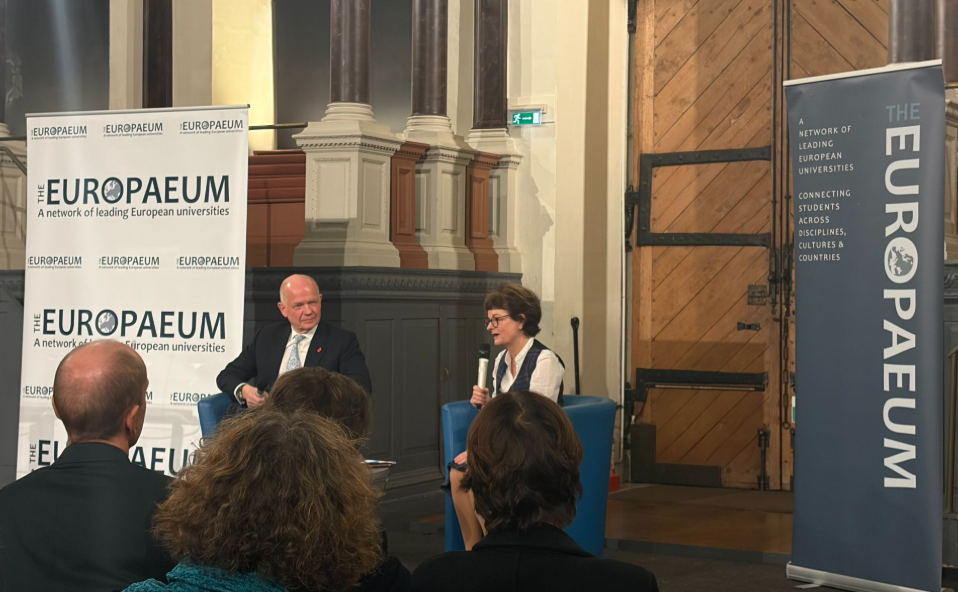
Chancellor of the University of Oxford, Lord William Hague, delivered the 2026 Europaeum Annual Lecture at the Sheldonian Theatre on 4th November. Hague called for closer UK-EU ties as a matter of urgency, including strengthening cooperation on technology, defense, and climate change, whilst upholding democracy and doubling down on multilateralism.
Hague’s wide-ranging speech is the second ever Europaeum Lecture. The series brings together high-profile speakers from top European universities to discuss Europe’s challenges. Describing the current era as “the most dangerous period since 1945”, Hague outlined his vision for Europe to escape decline by rebuilding through renewal and resilience. In response to Prime Minister Andy Burnham’s call for the UK to eventually rejoin the EU, Hague expressed scepticism about the move’s feasibility, but declared that “our fate is as entangled with the fate of the continent as it has ever been”.
On technology and the rise of artificial intelligence, Hague warned that Europe risks becoming either a “digital colony of the US or a tech dependency of Beijing”. He urged the continent to “take back control”, including by ensuring the “free cross-border flow” of global talent. The Chancellor portrayed universities as “engines of ideas” crucial to spurring innovation. Oxford ranks as Europe’s leading university for spinout value creation, accounting for 20% of all investment into spin-outs across Europe.
Noting Britain’s record summer temperatures, the Chancellor called for new measures to adapt to the effects of climate change and greater investment into “novel technologies”. These included carbon capture, geoengineering, and genetic engineering. Citing Greece’s recent launch of a satellite system for wildfire prevention, Hague urged the UK and EU to work together on a similar scaled-up Europe-wide solution. He also encouraged both sides to unify carbon markets and simplify trading of electricity.
Cherwell asked the Chancellor about possible reductions in tuition fees for EU students at UK universities, currently under consideration as part of UK-EU negotiations. In his reply, Hague told Cherwell: “We’d love to see it easier for EU students to come to our universities, but it does require governments to reach agreement.” He expressed support for a youth mobility scheme enabling young British and EU citizens to live and work in each other’s countries. However, Hague also referred to negotiating conflicts over equalising tuition fees for EU nationals with British citizens to pour cold water over a deeper UK rapprochement with the EU.
In exchange for a youth mobility scheme, the Chancellor encouraged the EU to involve Britain in its “Made in Europe” industrial policy. He also endorsed closer defense cooperation through the EU’s €150 billion Security Action for Europe (SAFE) loan scheme, as well as joint UK-EU leadership on international governance of new technologies, including creating guardrails against artificial intelligence.
Founded in 1992 by former Oxford Chancellor and the only-ever British President of the European Commission, Roy Jenkins, Europaeum offers postgraduate programmes to students across 17 European universities. The network describes itself as “an alliance of pre-eminent universities” focused on interdisciplinary learning to tackle Europe’s major issues. The University of St Andrews is the only other UK member of the organisation, which continues to be headquartered at St Antony’s College, Oxford.
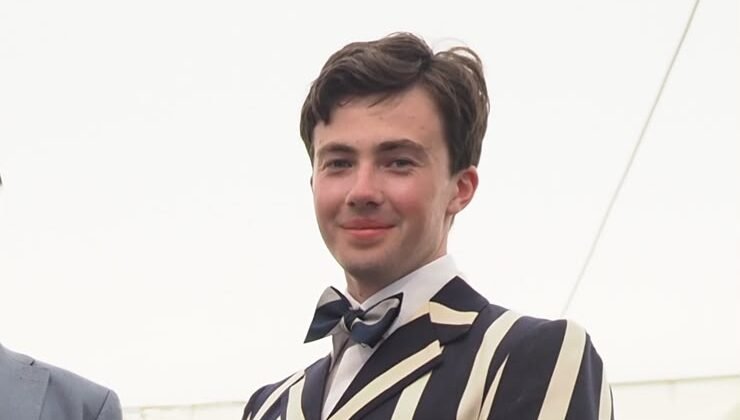
When I sit down to interview second-year Ancient and Modern History student Robin Munday, he happens to be wearing his Swiss Glacier Pistol Club fleece. The Oxford University Pistol Club (OUPC) captain is right to sport his discipline with pride. In his first year at the club, the team beat Cambridge twice: in an official varsity match in Hilary, and an unofficial competition in Switzerland during the long vacation. A few further victories against other university teams in the summer also contributed to OUPC’s “moderate success” last year, he tells me.
This year does not look set to disappoint either. Competition has not started yet, but since an appearance at Freshers’ Fair, the club’s weekly training sessions at Iffley Road Sports Centre are fully booked, and its group chat has over 200 members. “There are some very talented freshers,” Munday tells me. “By and large most have never touched a gun before, but some of them have and are very promising shots.” Munday mentions how some of the new members are getting to grips with trickier techniques, like aiming at targets that collapse when the bullet hits.
The incoming pistol shooters could not be in safer hands. “I’d always grown up around shooting,” Munday says. “The first time I was on a shooting range I was a few weeks old, and I started shooting aged five, with an air pistol I got for Christmas. When I was six, I was on centre-fire, more powerful revolvers.” Munday started competitive shooting at the 2015 Swiss Federal Shooting Festival aged ten, the youngest of around 35,000 competitors. He went on to win the under-21 division of the Swiss Feldstich contest in 2024, and a year later placed third.
His affiliation with OUPC, though, started well before its recent successes. Munday’s parents met at OUPC as undergraduates. His father served as “one of the early captains” after the club broke off from the Rifle Club in 1976, and his mother became captain a few “generations” later. He still owns and occasionally wears a size XS OUPC polo shirt which the club gave his parents as a gift for him.
“For a very long time, I’ve wanted to become captain of the OUPC – I’m proud partly because I’m following in my parents’ footsteps,” Munday tells me. The club’s events lined up for this year will certainly make his tenure an exciting one. “In a couple of weeks there’s the Oxfordshire Rifle Association Gallery Rifle Championships, and, like every year, there’s the Faded Blues.” In part of the latter event, Munday tells me, OUPC alumni compete against current members, who, he adds, “are almost always defeated”. Whatever the case, there cannot be anyone better placed than Munday, with his unique overview of OUPC’s history, to take part.



-

 Student Life4 weeks ago
From Oxford to Cambridge: The 204-mile punt for Alzheimer’s
-

 Oxford united FC4 weeks ago
Oxford United win 2-1 at Notts County in League One return
-
 Student Life3 weeks ago
Hidden in plain sight: the bakery behind Oxford’s café counters
-

 Property & Housing4 weeks ago
Plans developed for 12 affordable Blackbird Leys homes
-

 Property & Housing4 weeks ago
Blenheim displays new Oxfordshire scheme with show home
-

 Traffic & Transport3 weeks ago
Uber begins self-driving robotaxi trial in Manchester | Uber
-

 Oxford united FC4 weeks ago
Oxford United boss Aaron Ramsey opens up on Jamie McDonnell injury
-
 Student Life4 weeks ago
Botley Road reopens after three and a half years