
Student Life
No Greek life doesn’t mean no rape culture

CW: sexual assault, sexual harassment, drugging
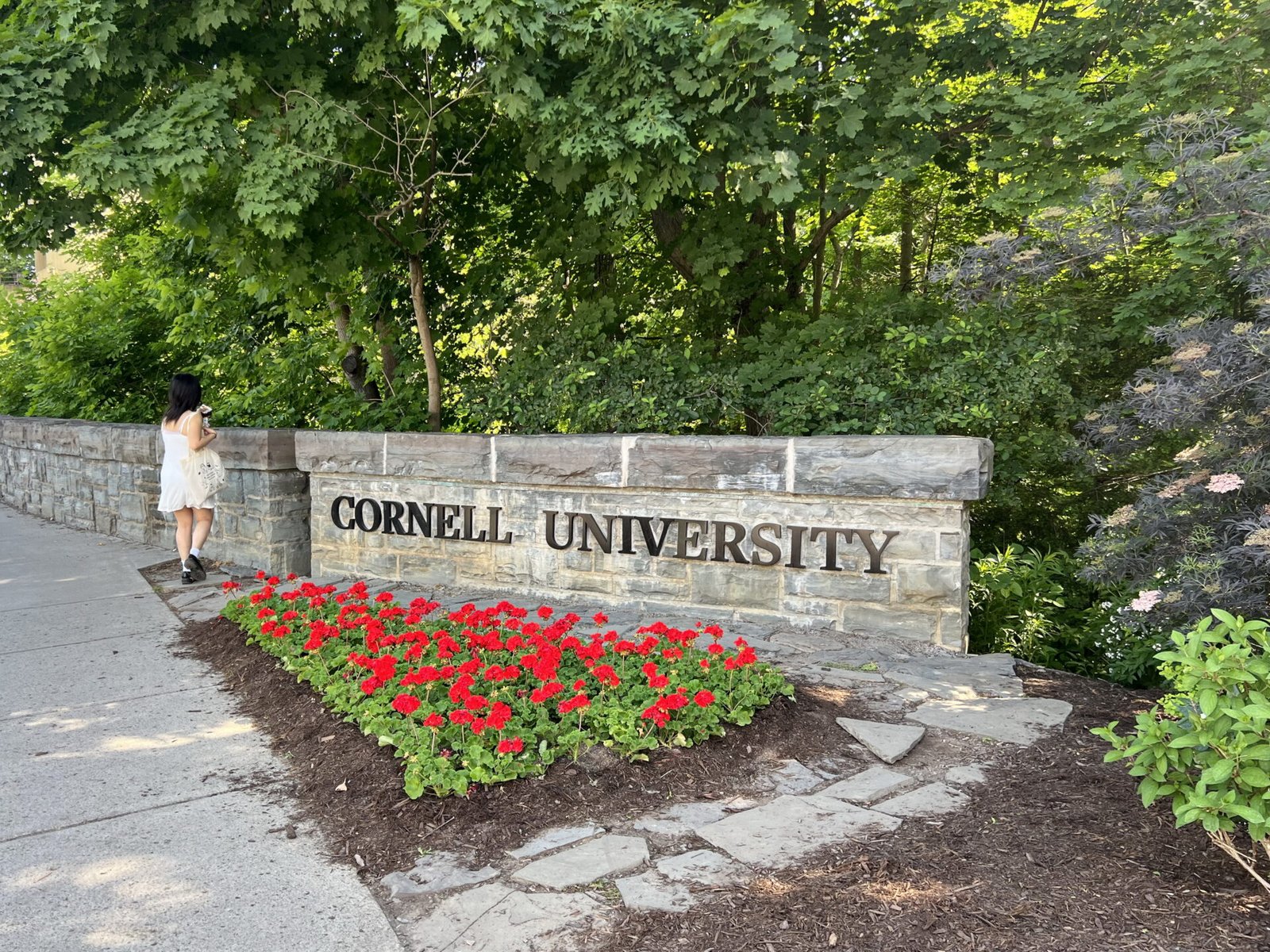
In November 2024, The Cornell Daily Sun broke the news of a sexual assault reported to the Cornell University Police Department, alleged to have taken place at the university’s Chi Phi fraternity house. The case was brought up again in the student publication on 18th September 2026, after the victim, identified as ‘Jane Doe’, filed a civil complaint against the university, the fraternity chapter, seven current and former students, and related organisations including a campus bar and several university sororities. She claimed to have been gang-raped by several men belonging to the fraternity, who knew she was too intoxicated to consent and further coerced her into taking ketamine and other drugs. Part of the evidence cited in the complaint is an image taken from a Snapchat group chat, wherein one of the defendants encourages other fraternity brothers to join in the assault by directing them towards “free pussy” on the premises. None of the 57 members of said group chat have yet come forward or claimed to have intervened.
According to the lawsuit, after an initial suspension of the fraternity chapter’s activities, the university’s investigation resulted in two of the accused being expelled, while the rest were “offered a chance to mitigate conduct by submitting essays”. The Tompkins County District Attorney’s Office has since reopened a criminal investigation into the case, though District Attorney Matthew Van Houten claims the victim’s initial report contained no accusations of non-consensual behaviour. Doe will be allowed to present her case before a grand jury, two years after she was allegedly forced to leave the university following the university and local police department’s inaction. Cornell allegedly refused to refund her tuition payments, though she reportedly felt she would never feel safe enough to return to the university. At the time of writing, the five students who remain at Cornell are on track to graduate in the next year. Many have high-profile jobs lined up.
Every news and social media platform I have browsed in the last week has been flooded with further details and reactions to this story. Some respond in anger, some in disbelief. Some have found the strength to share their own experiences with collegiate rape culture. None of the stories ends happily, and with the horrifying rollback of protections under Title IX under the current US administration, it’s hard to believe that this or any subsequent ones will.
There is no doubt in my mind that there are men I know, men I share social and academic spaces with, who are reading about this story and pompously thinking to themselves: “Well, that’s the kind of thing that would only happen in America”. While it is undeniable that Greek life has fostered a particularly vicious culture that permits, if not glorifies, gender-based violence (as well as elitism and racial discrimination – whether Greek life should be allowed to retain its current standing without serious reform, or whether total dissolution is called for, is a separate yet increasingly urgent conversation), the building blocks that create this toxicity are plainly reflected in many prestigious UK universities, including Oxford.
A 2025 Office for Students sexual misconduct survey found that nearly twice as many students reported sexual harassment at selective universities compared to ‘low tariff’ universities. In recent years, Oxford in particular has faced backlash for the mishandling of sexual misconduct cases involving students and staff associated with the university. Though institutional malpractice certainly both emboldens perpetrators and weakens victims, it’s easy to look at official statistics and famous faces and forget that unhealthy sexual attitudes often emerge casually, unremarkably, and without any big names to blame.
When I was in high school, I knew this guy – let’s call him John Smith – whom everybody in my year affectionately called ‘Consent Smith’. The nickname emerged from an instance where he had engaged in some consensually dubious sexual acts with a girl whose identity is unknown to me, but was very public information for most of my classmates. Strangely, though, none of them seemed to recall the origin story when they referred to him this way. It was always said with a laugh and a playful punch on the shoulder, and received with a smirk and eye-roll. I’m ashamed to admit it, but the normalcy lulled me into silence, as I imagine was the case for many of my peers. None of the hush-hush behaviour that typically surrounded criminal conduct, behaviour that suggested people knew what was happening was wrong, was present here – it was completely out in the open. It was funny.
Since starting at Oxford, I have borne witness to countless cases nearly identical to that of John Smith. Variations of ‘rapist’, ‘molestor’, ‘nonce’, and ‘paedophile’ are shouted across hallways, in tones anything other than accusatory. The addressees may be completely innocent, or they may be people publicly known to have displayed sexually inappropriate behaviour. Those that claim to have been sexually harassed at the hands of these friendly ‘molestors’ are told not to flatter themselves. He does this to everyone, they say. Don’t go thinking you’re special now. The plausible deniability is strengthened by the implication that his friends wouldn’t be joking about it if it were serious. Of course, what these people consider ‘serious’ is anybody’s guess.
As women, we are conditioned to think about sex as private, if not illicit and shameful. The casual violations we face every day that we are told to shrug off – but often end up internalising instead – only exacerbate these negative associations. This is part of the reason why, according to a 2021 investigation, 83% of the 3.4 million acts of sexual violence committed every year in the UK go unreported. ‘Locker room talk’ is so clichéd it almost feels removed from reality, but the Chi Phi text chain proves that, amongst men, sex is talked about as a winning game where the opposing side never stood a chance. Fraternities, as well as, say, rugby and football clubs, are able to reinforce this model of thinking through ritualistic synchrony and cyclical violence. As long as hazing is a requirement for men to join masculine social spheres, they will view casual acts of violence as social rather than violatory. As long as other men continue to reaffirm this behaviour as unserious, funny, something to bond over, 2.8 million Jane Does who are never heard from will continue to emerge.
Perhaps the most effective tool we have at our disposal against casual sexism is casual feminism. Whilst it is our hard-earned prerogative to call for radical change, calling out misogynistic and sexually inappropriate behaviour we perceive in our day-to-day interactions is equally important to driving institutional change. One of the greatest resources that Oxford has available to promote casual feminism is collegiate feminist societies. Despite its century-long history as a women’s college, St Hugh’s has only had an active Feminist Society for just over a year. Co-founders Eleanor Suh and Alex Cutmore say carrying the legacy of the college’s history was part of their reason for setting up the society. “It’s important to honour our history,” Alex tells me. “Keeping alive what notable alumni, like Emily Wilding Davison, fought for is one of the central aims of the society.” Eleanor agrees, contending that “Oxford has a very male history in a lot of ways – FemSoc is one way of counteracting that.”
However, it is important to both the founders that FemSoc is a space that allows for communication between students of all genders. “In our experience, the men who attend FemSoc meetings tend to have the right attitude. We are yet to have anyone in attendance who only showed up to make a joke out of everything,” Alex says. “It’s up to the individual space to decide their own guidelines regarding who can attend, but I believe that FemSoc is first and foremost a political space, rather than a representative or social one. The primary factor that should draw people to the society is that they are feminists, not that they are women. To me, it is imperative that all people are welcome – we should be united by our politics, rather than our identities.” I ask them whether they think a tangible stigma inhibits men from contributing meaningfully to feminist discussions.
“I have had conversations with some men who believe they cannot come to FemSoc, even though they identify as feminists, because of a belief that the space isn’t for them. They don’t want to ‘speak over women’.” Eleanor thinks this is a weak excuse. “You can come and just listen! I’ve found that many men intellectually present as feminists, but don’t apply the principles of feminism to their own lives. Part of our objective as a society is to make feminism practical and visible, and not have it sidelined as an abstract, academic ideal. Having a male attendance at meetings where we explicitly discuss topics like sexual assault is necessary. I find it very upsetting when people think they are not allowed to participate in feminist spaces, because having people voice their varied perspectives is what leads to tangible progress.”
I wonder what their experience with rape culture has been, and what role they think the society plays in combating unhealthy sexual attitudes. “Rape culture in university spaces is mostly upheld through humour,” Alex asserts. “What makes hazing in social spaces centred around drinking and sports so powerful is that nobody takes it very seriously. They are means of socialising that are well-integrated into college life. Greek life has an added element of having to pay to become a member, which compounds the corrupted power dynamics, but in order to participate in many collegiate societies here at Oxford, you have to implicitly agree to not interfere with the rituals of that particular social sphere.” FemSoc is both a foil and an accessible alternative to these social spaces. “I believe that FemSoc is a passive threat to rape culture. It’s not just a deterrent, but a way of acknowledging that there isn’t a monoculture at our college.” People who condemn these male-dominated rituals do exist and, using the society as a vehicle, are less afraid to make themselves known, she says. This is a remarkable advantage for all the female members of the college. “Even if you don’t come to meetings, just knowing that FemSoc exists, that there are like-minded people around you, can be comforting.”
Alex and Eleanor agree that despite the positive impact that FemSoc has had on their lives, as well as those of all its members, it is difficult to quantify whether there has been a tangible decrease in sexism in college spaces. As hard as we fight back, we cannot be responsible for the bulk of the necessary changes – that must come from men themselves. What the Cornell case reveals is not that there are some deranged men, or that educational institutions are ill-equipped to respond to reports of sexual violence, or even that the justice system frequently fails victims of sexual violence. All this, we have long known. What it has successfully, awfully brought to light is that for every seven men who commit unimaginable acts of sexual violence, there are 50 men who watch silently. There are 50 men who will later joke about it. I want to be ambitious – I want to say I hope this is where the cycle breaks, and men start speaking out against each other. But let’s start with immediately achievable goals: I hope this will urge the men I know to have the decency not to laugh.

Oxford City Council has approved plans to transform Oxford’s Clarendon Centre into a new public square, with trees, seating, and a water feature.
The redevelopment, proposed by the site’s owner Goldmoney Properties, will involve removing the shopping centre’s roof to create an open-air square measuring approximately 41 by 42 metres. The pedestrianised space is intended to host events including Christmas markets, ice skating, and outdoor concerts.
Council planning officers concluded that “the proposal would make best and most efficient use of the existing site” and that “economic benefits would be derived from the provision of high-quality retail, food and beverage and office uses”.
Plans for Clarendon Square were first submitted earlier this year. On 24th February, Goldmoney Properties Ltd submitted an application for planning permission, proposing the demolition of over 8,000 square metres of existing floorspace and the removal of the centre’s roof to create a large public square open to the sky.
The 3.5-acre site, located on the corner of Cornmarket Street and Queen Street, was conceived by Roy Sebag and designed by Quinlan Terry CBE. Terry’s design features classical stone facades along both streets.
Goldmoney Properties acquired the site in a £30 million deal after its previous owner, Lothbury Property Trust, entered liquidation. Sebag, the investor behind the redevelopment, outbid a joint venture involving the Crown Estate, Pioneer Group and Oxford Science Enterprises.
The Council accepted a previous application, submitted in July 2024. It also aimed to remove the roof of the Clarendon Centre and create a new public space, but included plans for student accommodation that are not in the current proposal.
The approval marks a significant step toward the redevelopment of one of Oxford’s central shopping sites. Sebag told Cherwell: “I am delighted that Clarendon has received planning approval and grateful to everyone who has helped us reach this point. My intention is to create a beautiful public square in the heart of Oxford: somewhere people can meet, sit and enjoy the city.”
A spokesperson for Goldmoney Properties Clarendon Square Ltd told Cherwell: “At Clarendon, we have made a deliberate and quite radical choice: to reduce the amount of built space and open the estate to the sky, creating a substantial outdoor square and open-air streets.”
They added: “We believe the relative scarcity of this kind of setting in central Oxford, together with the quality of the architecture and the interest we are seeing from prospective occupiers, gives the scheme a strong commercial foundation.”
Councillor Susanna Pressel, who previously welcomed the plans, told Cherwell: “I’m glad this planning application got permission – with some sensible conditions. I think the new Clarendon Centre will be a great asset to the city.
“Students are lucky to have access to dozens of college quads, but most townspeople would never think of going through those private-looking doors, so a new green space will be very welcome.”
Pressel added: “The developers have promised to seek out lots of independent stores and cafes, and not charge ridiculously high rents, so let’s hope for some interesting new places to go to.”
The redeveloped Clarendon Centre is set to open in 2028.

Pro-Palestine protesters marched from Cowley to the Weston Library on Saturday 31st October, demanding Oxford University’s divestment from Israel.
Around 120 people attended the protest, including groups such as Oxford Students for Palestine (formerly Oxford Schools for Palestine), Oxford Action for Palestine, Oxford City Green Party and Health Workers & Allies for Palestine.
The protest started with a speech about Oxford-educated administrators’ role in the creation of Israel, notably through the Balfour Declaration.
Green councillor Ahalya Bala also commented on the current situation in Palestine: “This is not a war. This is annihilation… The atrocities are still happening. It is just the pace that changes.”
“In the West Bank, forced displacement, seizures, neighbourhoods levelled to the ground, military raids, arbitrary detentions, torture, rape, executions, and land theft for Israeli expansionism and the cruel racial segregation and domination of Palestinians.”
A large banner at the centre of the gathering read: “Israel bombed 36 hospitals in Gaza and murdered more than 1700 healthcare workers. Targeting healthcare is a war crime. Arms embargo & Sanctions now!”
As protesters moved through Oxford, they chanted “blood money on your hands, show us your divestment plans”, “arms embargo right now”, and “Oxford University pick a side, justice or genocide”.
Two march attendees, Lisa and John, have been protesting for Palestine daily outside Carfax Tower. They spoke to Cherwell about the current state of the student movement for Palestine. Lisa, a current graduate student said that: “For students the consciousness is there and the willingness is there but people are afraid.” John added that Oxford’s prestige meant “there is a lot of power and opportunities to speak up concentrated here”.
Outside the Weston Library, protesters heard speeches from Nick Maynard, an Oxford alumnus and surgeon who has worked extensively in Gaza, and Haya Adams, an activist from the SOAS-liberated zone. Maynard, who went to Exeter College, said in his speech: “There are moments in history when silence becomes a form of complicity… More than 22,000 children have been killed in Gaza in the last three years.” He told the audience about individual patients he had seen in hospitals in Gaza, explaining that, on one occasion, his colleagues were stripped of critical supplies of baby formula by the Israeli military upon entering the strip.
Regarding the international treatment of Palestine, Maynard later told Cherwell: “We know it’s been failed by our governments, we know it’s been failed by our media, but it’s also being failed by our academic institutions… They have not given students a sufficient platform to talk about the genocide. Students have been fantastic. The university needs to give a much bigger platform to its students.”
Oxford Students for Palestine, one of the groups organising the protest, told Cherwell: “We wish to remind the University and others that Oxford city is extremely pro-Palestine, that we call for the end of the genocide and apartheid, and we call for every Palestinian to be liberated and have the right to return. We are twinned with Ramallah for a reason.”
The group added that “we’re calling on Oxford University and its colleges to disclose and fully divest from any Israeli investments, products, or banks like Barclays”. They also criticised the Oxford University Endowment Fund (OUEM) as “fundamentally resistant to disclosure and divestment”.
Adams, from the SOAS-liberated zone, told Cherwell: “The most basic and bare minimum thing that Oxford University can do is cut ties with genocide through their investments, through their partnerships. There really are ethical alternatives… Oxford University can also protect the right to free speech by allowing students to speak up for Palestine with no disciplinary action. They need to be held accountable for the arrests that happened during the time of the encampments.”
In response to a right of reply, Oxford University said: “Oxford is steadfast in its commitment to freedom of expression and to the right to peaceful protest within the law. At the same time, we have a legal and moral duty to uphold the rights, dignity and safety of every member of our community. When behaviour, including protest, causes serious disruption, harassment or safeguarding concerns, we will act in accordance with the law and our own established procedures.”
OUEM did not respond to our request for comment.
As the march ended, Oxford Students for Palestine reflected on how it fit with the global student movement. They told Cherwell: “The last thing we will say is that the students united will never be defeated, as we’ve seen across the world.”
Additional reporting by Stanley Arlidge and Freya Robson.
How could the outcome of the US midterm elections ever affect an Oxford student? Well, the elections might affect the cost of your next Tesco or Sainsbury’s visit. This month, diesel prices surpassed £2 per litre. British grocery inflation also just ticked up to 2.5% from 2.3%. The two are not unrelated. Many attribute Britain’s inflation to the ongoing conflict between Iran and the United States in the Middle East. On top of this, the Trump administration has threatened a 100% tariff on UK goods if the country does not abandon its digital services tax.
For better or worse, US government policy can affect the world, and with President Trump’s party holding slim majorities in both legislative chambers, current US policy may be challenged or forced to change. While, strictly speaking, the midterm elections only involve voting for representatives and senators, many view them as a vote of confidence in the president. Historically, the election has generally reflected a lack of confidence in the president, at least within the House of Representatives. Since 1946, regardless of party, the incumbent president’s party has gained seats in just two midterm elections: 1998 and 2002. These elections stand out because 1998 was the year President Clinton was impeached and 2002 was the election following 9/11.
Making sense of the midterms
Let’s say you agree with the notion that the outcome of the midterms may affect your grocery spend or your travel spend between or after term time; how on Earth do you make sense of the US election? Why do some politicians appear up for election and others do not? How do you know if power has shifted and a debate will occur on issues that affect an Oxford student?
In the US, Congress consists of two elected legislative bodies: the House and the Senate. Every two years, the entire House and one-third of the Senate stand for election.
A representative serves a two-year term in the House. This means the entire House stands for election on a two-year cycle, which includes the presidential election and the midterms in between. Currently, the Republican Party holds a slim majority in the House, and the Democratic Party would need a net gain of 3 seats to take control.
A senator, on the other hand, serves a six-year term, and there are 100 Senators. Further, the Senate is divided into three classes, with about 33 Senators per class. Senate elections are staggered so that one-third of the Senate stands for election every two years. Like in the House, the Republicans hold a majority in the Senate, and the Democrats would need a net gain of 4 seats to take control.
What Congress can do
Now that we understand how the election works, how would a change of power in Congress affect an Oxford student’s daily life?
Congress was designed as a restraint on the presidency. Congress possesses extensive power in budgeting, defence, foreign policy, trade, and other matters which can be used to counter the president. If the opposition party, the Democrats, wins control of either or both chambers, then expect attempts to foil President Trump. This matters to students from the UK and abroad. As mentioned before, US global policy might increase our food bill, but even more, as petrol prices rise, so will prices for all travel and, in particular, air travel back home for international students.
The Iran war
So, what can Congress do? Congress has a variety of options to influence the Iran war, one of which is the War Powers Resolution. Under this law, Congress could force an end to hostilities by voting to instruct the president to begin withdrawing the US military from hostilities within 60 days. However, this would require a supermajority of Congress because the president would likely veto a War Powers Resolution on the Iran war.
Alternatively, Congress can take other steps to impede the war. This includes restricting the military’s budget, rejecting or not voting on nominees, holding hearings, forcing Department of Defense officials to testify, and more. If the Senate doesn’t confirm a nominee, the president is limited in whom he may select, and the ‘acting’ official tends to hold little political power. All of this pressure would go a distance in bringing an end to a conflict that has increased petrol in the UK by 16-30% on average and increased airline jet fuel globally by 20%.
Tariffs and the power of the purse
On tariffs, Congress could pass legislation to terminate specific tariffs or rescind the president’s authority more broadly. Much of the same congressional options that applied to the Iran war also apply to tariffs. The key difference is that if both chambers of Congress switch to the Democrats, there is a good chance legislation curtailing the President’s tariffs could override a presidential veto.
The congressional power of the purse should also not be underestimated. In 2019, former Speaker of the House Nancy Pelosi refused to allow appropriations legislation to pass over a dispute to fund a border wall on the US-Mexico border, leading to a government shutdown. This can hurt the American public, as the lack of funding ceases or slows essential operations and functions like airports, issuance of small business loans, court proceedings, and heavily used public venues like national parks. Traditionally, this stalemate places great pressure on the party that appears unwilling to compromise and in 2019, President Trump found himself in that position. All of this puts the President’s 10% tariff on UK goods in jeopardy and diminishes the risks of new tariff threats.
The bottom line
So, today, take note of these facts if you attend a University of Oxford watch party. The election taking place 3,000 miles away may affect you more than you imagine, as it may affect the cost of what you eat, the cost of travel around Oxford, the cost of a flight home following term time, or even more; it may affect the global economy every Oxford student wishes to work in. Don’t stay up too late, but hopefully, if you watch the election, you will appreciate its significance, and it will also provide some entertainment.



-

 Student Life4 weeks ago
From Oxford to Cambridge: The 204-mile punt for Alzheimer’s
-

 Oxford united FC4 weeks ago
Oxford United youngster opens up on ‘surreal’ Aaron Ramsey influence
-

 Oxford united FC4 weeks ago
Oxford United win 2-1 at Notts County in League One return
-

 Student Life4 weeks ago
Exeter College to fund data centre in Oxford
-

 Student Life3 weeks ago
Hidden in plain sight: the bakery behind Oxford’s café counters
-

 Property & Housing4 weeks ago
Plans developed for 12 affordable Blackbird Leys homes
-

 Property & Housing4 weeks ago
Blenheim displays new Oxfordshire scheme with show home
-

 Traffic & Transport3 weeks ago
Uber begins self-driving robotaxi trial in Manchester | Uber