
Student Life
We should hate more – Cherwell

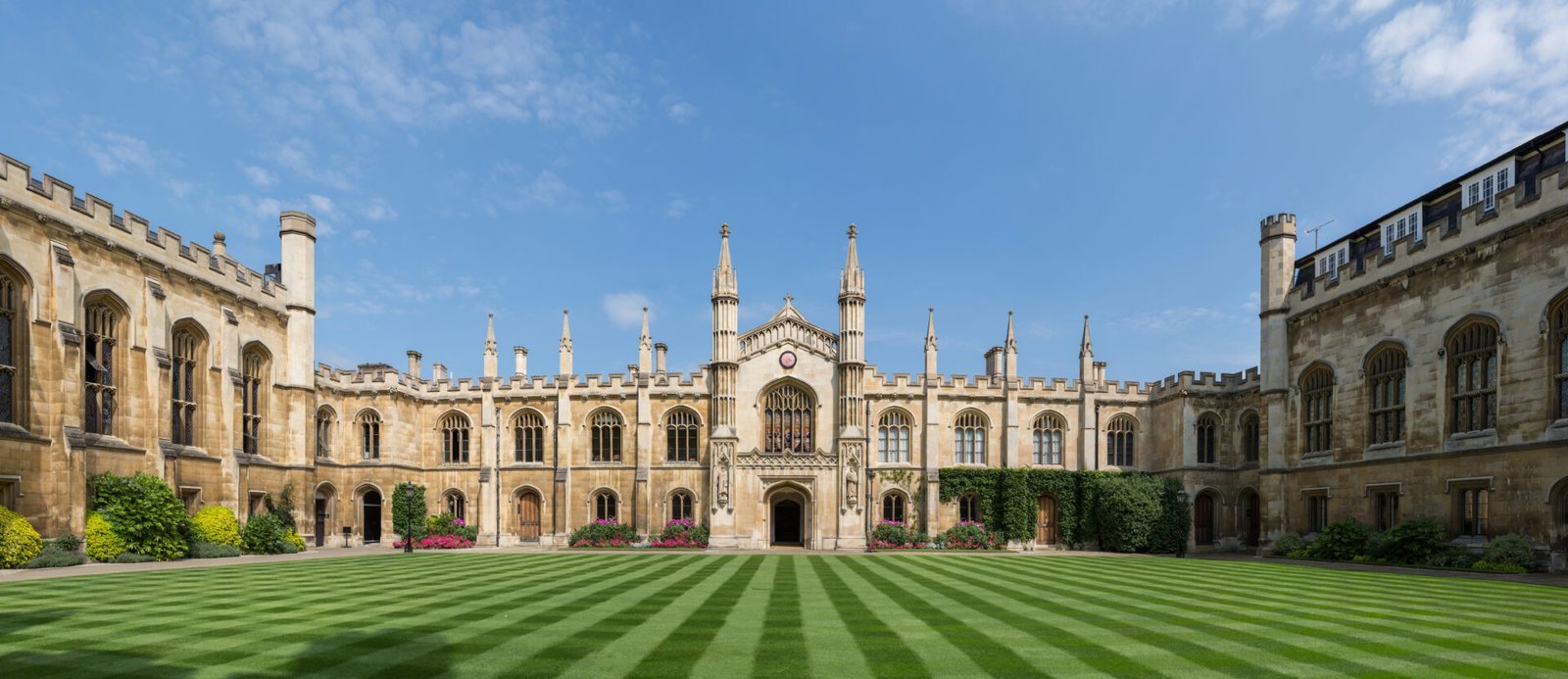
Oxford students hate C*mbridge. Or at least, we’re supposed to. We call them Tabs, occasionally ‘shoe’ them, and inherit a rivalry as soon as we matriculate. There’s only one problem: most of the time, nobody seems particularly bothered.
The Varsity matches between Oxford and C*mbridge began with men’s cricket in 1827, followed by the first men’s Boat Race in 1829. Today, Varsity takes place across 50 sports and involves thousands of students.
And yet, 200 years later, the rivalry rarely escapes the sporting world. Sure, we shout “shoe the Tabs” during the Boat Race and teams feel similar disdain when facing ‘the other place’ on the water, pitch, court, or track. But, aside from particular Varsity matches, the so-called hate seems a bit…lacklustre.
Oxford beat C*mbridge 110 times last year and has recorded more wins than the Tabs in Varsity competitions for the past six years. Did you know? More importantly, did you care? We have two centuries of competition and two institutions obsessed with tradition. It should be impossible to manufacture a better rivalry.
And yet much of it happens unnoticed.
Contrast this with American university rivalries. Harvard and Yale are perhaps the closest equivalents. Their American football match is simply “The Game”, and the rivalry stays with students throughout their lives.
And of course, that rivalry is tame compared to the heavy hitters.
Duke students tent (camp outside the stadium) for weeks to win tickets to the game against the University of North Carolina at Chapel Hill. And it’s not just for the ultra sports fans; some years “more than 2/5 of the student body [have] attempt[ed] to earn a spot” tenting at the most difficult level. The Michigan – Ohio State rivalry presents another classic rivalry, where, during “hate week”, the Ohio State community crosses out every single “M” on campus with red tape.
Of course, these rivalries are a peculiarly American phenomenon and would feel forced here. But Britons do not lack tribal thinking.
Think about football derbies. North London. Merseyside. Manchester. Fans invest emotional significance in beating one particular club that massively exceeds the objective significance of the result. There are uglier manifestations, but there is also wonderfully pointless taunting.
Rivalry operates through agreed irrationality. In 2024, some Tottenham fans even hoped they would lose to Manchester City to prevent Arsenal from winning the league. We don’t need to import the American capacity for hatred. Britons have perfectly good hatred at home.
This is especially crucial at Oxford. For much of everyday life, Oxford isn’t one community. It’s dozens of colleges. We eat separately, live separately, and often socialise separately. It begs the question: what exactly is an Oxford student?
The collegiate structure is wonderful at producing college identity. It is considerably less good at producing Oxford identity. What exactly defines us? The University administration? The Rad Cam? A seal containing a Latin motto?
It can be difficult to work out what a PPEist at Somerville, a Philosophy and French student at Hertford, and a Classicist at Merton have in common. Fortunately, C*mbridge provides an answer: none of them are Tabs.
Oxford does not necessarily need more spirit. It needs something around which spirit can crystallise. That’s where C*mbridge comes in.
An ‘us’ becomes much easier to define once there is a ‘them’, and C*mbridge makes an unusually convenient ‘them’. It’s a collegiate university built around small-group teaching, formals, gowns, eight-week terms, and an impenetrable vocabulary – only with supervisions instead of tutorials, Easter instead of Trinity, and enough minor alterations to maintain the pretence of originality. A good rival, after all, must be similar enough that beating them matters and different enough that you can pretend it proves something. C*mbridge fills this role perfectly.
More importantly, there is a liberation in caring so much about something that matters so little. Oxford life offers no shortage of consequential competition: exams, internships, jobs. Hating C*mbridge offers the opposite. There is no rational reason why any of us should care. That’s exactly why we should.
Of course, the rivalry plainly isn’t dead. Rugby matches feature heckling, chants, and a crowd united around shoeing the Tabs. The Boat Race turns London into a sea of dark blue and light blue shirts. The rivalry, however, should not require a fixture.
We should hate C*mbridge more comprehensively. Stop calling it C*mbridge: it is ‘the other place’. Call its students Tabs without really knowing why. Their shade is not light blue; it is an unfortunate failure to commit to a proper colour. Treat every league table on which Oxford finishes higher as vindication and the rest as methodologically suspect. When a friend announces that they are visiting, offer your condolences. In short, be petty.
Perhaps, then, we should be grateful for C*mbridge. Every good protagonist needs an antagonist. They give our insults somewhere to land, and dozens of colleges something to agree upon. They can even make Oxford feel like one university.
That is a valuable public service. Obviously, we should never tell them. Instead, regard light blue with suspicion. Be partisan. Whenever you compare us to them, come to the completely dispassionate conclusion that Oxford is better. And if you happen to meet a Tab, be perfectly pleasant. They made a rough decision when they were 18. We’ve all been there.
C*mbridge has spent eight centuries giving Oxford somebody to hate. It would be rude not to take them up on their offer.

“GIRLS INVENTED PUNK ROCK, NOT ENGLAND”: so reads the iconic green T-shirt of Sonic Youth legend Kim Gordon. The slogan stands in defiance of an unfortunate truth in the music industry: femininity and credibility often exist in contention with one another. Patti Smith, discussing her impact as a woman in the male-dominated 1970s punk scene, has expressed her resentment of the term ‘female artist’: “To me, I was an artist. We don’t use the expression ‘male artist’”. I share Smith’s reservations about the term ‘pop girlie’. The now well-established term, born from the boom in popularity of young female pop artists, feels to me somewhat belittling of women’s artistry. But my own gripes with the term aside, it’s worth exploring what it means for women in music, and for pop culture more broadly.
It’s not unusual for glamorous women and their young, largely female audiences to dominate the charts: Madonna, for instance, is listed as the fourth best-selling artist of all time. The pop girlie explosion, though, has captured the zeitgeist with an era-defining ferocity previously reserved for men. The music we historically afford this label of ‘era-defining’ to is overwhelmingly male: The Beatles as the faces of peace, love, and LSD; the Sex Pistols as the ugly (and co-opted) face of punk; Nirvana as the begrudging kings of grunge; and so on. The year 2024, however, was to the pop girlies what 1976 was to punk. With the Eras Tour in full swing, the year was marked by several huge releases by female artists, notably Sabrina Carpenter’s Short n’ Sweet, Gracie Abrams’ The Secret of Us and, of course, Charli XCX’s cultural behemoth, Brat. Admittedly, Brat aside, these releases are not to my personal taste, but my self-indulgent distrust of the mainstream doesn’t blind me to the significance of women becoming front and centre in an industry so historically hostile to us.
The trend kept its momentum in 2025, diversifying as Olivia Dean’s R&B-infused The Art of Loving became a global phenomenon, and Slayyyter’s Crank introduced a hedonistic edge. Songs are becoming shorter and snappier, with the influence of alt-pop icon PinkPantheress evident in the increasing rarity of albums exceeding 30 minutes. Brevity, though, can entail a lack of depth. Internet music critic and self-important bald man Anthony Fantano said of Addison Rae’s debut Addison, for example, that beyond “its pleasant, gently danceable beats, and moody ennui… this record really contains no thrills or appeal or depth or excitement or substance”. Fantano speaks to a shallowness that is the product of a need for songs to be clippable and suitable as potentially viral soundbites for TikTok – a trade-off of artistry for marketability. Young female artists like Rae face ridicule for supposedly ruining music for everyone, whilst the profit-driven record executives who are actually to blame largely escape backlash.
Dismissing music made by young, attractive women as unserious and shallow, though, isn’t a new phenomenon; it is a long-established tradition. Courtney Love once remarked that “proletariat male rock critics” had “a real problem… with denim boomer issues” when it came to accepting the credibility of glamorous women. The cultural ecosystem of which she spoke has since all but disappeared: music magazines which could once make or break careers are now reduced to niche online publications, unimportant to all but a particular group of vinyl-collecting, band-tee-adorning nostalgists. Her point stands, though: people who care about music can’t seem to help but revel in tearing apart the artistry of successful women.
This is not to dismiss criticisms about the quality of music coming from the current pop girlie boom. To be honest, I find some of it to be absolute drivel (see Taylor Swift’s laughable latest single, ‘Cleveland!’). But I wouldn’t dare equate my own boredom with a lack of artistry. The three-minute pop song, for all its clichéd lyricism and its intro-verse-chorus-verse-chorus unoriginality, is a sacred thing. The nature of pop music is that it is formulated to be popular. Not everything needs to be ‘boundary-breaking’, ‘ethereal’, or whichever other buzzwords Rolling Stone likes to throw around. Simplicity isn’t a crime; it’s the backbone of the music industry.
I do wonder, though, whether a label such as pop girlie can be reductive. The tendency of audiences to place the artists we adore into neatly labelled boxes can be detrimental, as Charli XCX expresses in ‘Camera’, the fourth track on her newest album, Music, Fashion, Film: “Am I being fuckin’ stupid if I try to be a girl on the screen when I’m turning thirty-four?”
Reaching new levels of fame with Brat seemingly came at a cost for the singer, who, after spending her career developing a complex, varied sound, suddenly found herself the caricatured face of a cultural movement beyond her control. Artists are fragile beings: if we try to reduce them to a two-dimensional label, they will retaliate with a mediocre swerve to grunge-pop.
Some, though, have embraced grouping female artists. Olivia Rodrigo’s recent Daisy Chain Fields festival, which raised $20 million for organisations supporting women and girls, is a testament to this. The festival boasted a stacked line-up, bringing together some of the biggest female pop acts in recent years, including Chappell Roan, Mitski, and, of course, Rodrigo herself. A range of alternative acts also performed, including alt-rock veterans The Breeders and riot grrrls Bikini Kill. The festival’s marketing, shrouded in flowers and pastel tones, did not shy away from girlish motifs. Such a wholehearted embrace of the feminine aesthetics that our misogynistic popular culture has traditionally mocked creates the impression of a group of artists carving out a safe space for themselves in an industry that has long abused, mocked, and ignored them.
With this sentiment in mind, I can see why the pop girlie phenomenon could be important for women’s place in our culture. Perhaps its flippancy is the whole point: embracing the artistry found in simple pop melodies and fun, girly aesthetics and demanding they be taken seriously. For all it may be a marketing ploy in plain sight, there is something to be said for the proliferation of music made by women and the wider impact it could have on the industry. If today our biggest pop stars are mostly young women, perhaps in ten years’ time indie and alternative scenes that currently struggle with seemingly constant scandals involving male musicians’ predatory behaviour will also become more welcoming spaces for women. Even if I were to be cynical and refuse to see this pop girlie influx as anything but a marketing ploy, this fact remains: anything Noah Kahan, Sombr, or Harry Styles can do, the pop girlies can do backwards and in heels.

On the face of it, the term ‘world music’ is perhaps one of the most unhelpful terms for any genre of music. While there is stylistic, lineage-based, and thematic common ground that connects the music we categorise as ‘rock’, ‘jazz’, ‘hip-hop’, or even ‘pop’ music together, there is not very much that connects ‘world’ music.
If we go by the most liberal definition of world music, it’s simply any music released in a non-English language, or made outside the West (which is itself a very subjective geographic boundary). I like to narrow the term down to music that’s made outside the West, but heavily marketed to, if not self-consciously produced for, a Western audience. It’s still very much a ‘vibes-based’ descriptor, and I tend to associate it more with a certain language of exoticised marketing, typical of 1980s-2000s world music labels like Peter Gabriel’s Real World Records or David Byrne’s Luaka Bop.
Byrne – formerly the frontman of the band Talking Heads – has incidentally written before about his distaste for the term world music in a 1992 article, where he called it “a label for anything at all that is not sung in English or anything that doesn’t fit into the Anglo-Western pop universe this year”. Byrne was, in my opinion, correct, and it seems like his advice has at least been somewhat heeded – even the organisers of the WOMAD festival, a yearly celebration of the genre founded by Peter Gabriel, have moved away from this term. But from an epistemological standpoint, the term has some utility – at least in the context of the late 20th century. Fela Kuti, Nusrat Fateh Ali Khan, and Youssou N’Dour – all artists who were marketed as making world music at some point or the other – may have very little in common musically, but they shared one common trait for the (Western) listener: their foreignness. In an era when music from outside the Western world was a novelty, this was enough to set them apart into a category of their own.
Much like the generic term ‘Latin music’, which could apply to everything from Andean huayño rhythms to Nuyorican salsa and modern electro-reggaetón, ‘world music’ is essentially an etic descriptor. Interestingly, ‘Latin’ music seldom is categorised as world music, perhaps because it was more familiar to American audiences, and often catered to Latino audiences in the US as much as it did to curious white Americans.
But does the term have any utility at all today? It seems like the world is – if not politically, then at least culturally – more globalised than ever. It’s no longer odd for Westerners or (more specifically) first worlders to listen to music from other parts of the globe. These artists – BTS, Burna Boy, Anitta, Bad Bunny, and many more – are not exactly comparable to the ‘world music’ of the past. This is not only because they tend to be as popular in their home countries as abroad (which was rare among world music artists with some exceptions) but also because their music isn’t treated as a novelty, or ‘exotic’; rather, it’s treated as simply another part of the globalised pop-music ecosystem.
At the same time, demand for ‘obscure’ music from outside the West has not disappeared – as the popularity of labels like Awesome Tapes from Africa, Sublime Frequencies, Sahel Sounds, and Habibi Funk among music aficionados can attest. Artists like Omar Souleyman, Ata Kak, and Mdou Moctar seem to fit the mould of ‘world music’ from the 1980s much more than the more well-known non-English or non-Western artists one might spot on the Billboard charts. They have reached a position of modest success, but mostly through Western audiences and labels, and have remained only somewhat known at home.
The most tangible legacy of world music is perhaps ‘worldbeat’, a genre that refers in broad strokes to Western pop or rock music infused with various ‘exotic’ stylings from ‘world music’ (think Paul Simon’s Graceland); a genre that is much more ‘real’ and definable than ‘world music’, and also has a much clearer lineage dating back all the way to the ‘exotica’ of the 1950s. This genre isn’t the most popular today, but it’s not dead, as recent (and rather popular) releases by Gorillaz and Ed Sheeran would suggest.
In the era of globalisation, ‘world music’ is something of an anomaly. On one hand, we are more culturally connected than ever; the internet has created opportunities for people across the world to communicate with each other.
However, globalisation is asymmetric: because Western (and particularly, Anglo-American) culture is globally hegemonic, globalisation reinforces that dominance and rarely lets artists from the Global South speak for themselves without Western interference. Moreover, even popular artists from outside the Anglo-American world have faced backlash when entering the mainstream – one needs only to look at the negative reactions from the American right-wing mediasphere to the recent Super Bowl performance by Bad Bunny. But even withholding parochialism, the view of the Global North and the West as the ‘default’ is still prevalent even among those not defined by ideological fervour. Perhaps, if we want to get rid of the ‘exoticism’ regarding music from around the world, it might be best not simply to preach about it when it relates to music, but rather to push for cultural exchange to be the norm, and not to be an oddity.
Student Life
The elusive career paths of humanities students: Does the ‘Oxford bubble’ breed employment anxiety?

Strong-minded and academically driven undergraduates are certainly not something found lacking at the University of Oxford. The thousands who swarm the streets of this beautiful city of ‘dreaming spires’ bustle about the centre, emitting a hum of excited determination. What exactly these ‘buzzing’ students are determined to achieve can vary. For freshers, it might be making their time here rich with new experiences and people, or maybe it’s the aspiration to achieve a distinction in their Preliminary Examinations. However, for those of us approaching our final year, career-led ambitions have, to a certain degree, overtaken academic concerns at the forefront of our minds.
Although the word ‘finals’ is enough to generate anxiety in even the most level-headed among us – a feeling my flatmate and I commonly refer to as ‘the pit’ – it is also the worry of what lies beyond these fated examinations that can daily plague both our conscious and subconscious minds. The pressure to know where our careers are headed is often amplified by our parents (or grandmothers, in my case!), some of whom might have a more definitive idea about where our degrees will take us. It is true that some come to Oxford with a clear picture of where they would like to be in ten years’ time; however, amid the masses of budding professionals, there are those of us who feel lost regarding what we truly desire to do with the rest of our lives. If you share similar anxieties, it is not inconceivable to perceive yourself ‘falling behind’ in an imagined race set along a preordained linear trajectory.
Surrounded by peers who have already secured placements or appear to know exactly the career path they are about to embark on, it is easy to develop a sense that you are running out of time. This is only amplified by the frequent stories of the dire state of the graduate job market, passed through the grapevine of the recently (and not-so-recently) graduated. We undergraduates often hear horror stories about how long it can take after graduating to find a company willing to interview you, let alone hire you, despite potentially having received a first-class degree from one of the finest universities across the globe. Unfortunately, there does not seem to exist an easily deducible ‘correct’ path one ought to take; one that might prove all the time spent studying intensely, coming home early from a night out to cram, and the sleepless nights spent completing essays has been worthwhile.
I believe a feeling many undergraduates here will resonate with is academic perfectionism that is almost never satiated, at least in the long term. After achieving one goal, the next takes over, and the drive to succeed and prove oneself can become overwhelming, without one really being aware of what it is that matters so greatly about being ‘the best’. It is this compulsion that has troubled me recently. While I am not sure I would go as far as to say that Oxford breeds specific expectations of ‘right’ career progressions for its graduating students, I would be lying if I claimed I didn’t believe a competitive environment such as this can encourage the feeling commonly labelled ‘impostor syndrome’, convincing you that there are such expectations to which one must live up in order to ‘fit in’.
Furthermore, this unsettling feeling can pose an issue for humanities students such as myself. Many humanities degrees do not lead directly into a specific professional field. As someone who studies Theology and Religion, I have often been asked if I intend to pursue a career in the Church but, as an atheist, this path is not one I have been especially tempted by, or would be particularly appropriate for me. The response that follows this answer is usually a variation of: “Well, what else can you do with your degree?” The answer, luckily (or unluckily – depending on how you look at it), for me is “quite a lot actually”. But this also poses a significant problem. Without my degree leading me to a specific career, my choices are rather expansive, which can be quite daunting if you, like myself, chose your subject out of passion, rather than practical use. Thus, the seemingly ‘elusive’ career path of humanities students is one that can provoke an ever-resurfacing anxiety when it becomes the topic of conversation.
Now, as I enter my final year, I am still none the wiser regarding my career aspirations beyond those which most primary school children could identify: reasonably high-paying, relatively enjoyable, and somewhat related to my degree. These criteria would then, hopefully, make my degree, and the approximately £60,000 worth of debt I will have accumulated in my studies, worthwhile (though most ten-year-olds might not include the latter). Perhaps this seems juvenile and obvious, and it is certainly not at all helpful in narrowing down what I want to do. Nevertheless, in writing this, I am aware that, when one doesn’t know exactly where to begin in the search for job prospects, this is not necessarily the worst place to start! After all, in a pool of fresh graduates eager to find employment, I would wager that being open to anything while I find my feet is no bad thing.
I have been working on the assumption that the path I need to take to achieve my ‘dream’ career (whatever that might be) is linear and flat – something that any path towards something worth having rarely is. If my slightly vague, short-term and more generic aspirations have gotten me this far, then I am sure that, in time, they will get me to where I eventually decide I want to be.
I have spent the last year preaching that finally letting go of internal pressure to ‘be the best’ is what actually got me to where I am now, rather than overloading myself with the expectation that I need to meet a certain goal in order to make my degree ‘worthwhile’. It is perhaps time I began to heed my own advice: to let myself enjoy my final year here for the wonderful experience it is, and realise that I have the privilege of time to discover what I would like to pursue a career in, and change my mind again, and again, before I get it right.



-

 Oxford united FC2 weeks ago
Chris Gunter steps away Wales role to focus on Oxford United
-

 Oxford united FC3 weeks ago
Oxford United transfer chief explains EFL embargo and contract dilemma
-

 Oxford united FC4 weeks ago
Former Oxford United boss Matt Bloomfield drops Wycombe manager hint
-

 Student Life3 weeks ago
Oxford falls to lowest ever spot in The Times UK University Guide 2027
-

 Oxford united FC3 weeks ago
Aaron Ramsey gives Luka Lynch update after Oxford United absence
-

 Oxford University2 weeks ago
New to the Oxford English Dictionary this September
-

 Student Life3 weeks ago
Protest held outside Town Hall over sale of Council-owned building to St Peter’s
-

 Oxford Events3 weeks ago
Stage Watch: Pinocchio, Peppa Pig, Affluenza, Dirty Dancing, & Ballet Shoes