
Student Life
NAZA: The most important film of the year

It was my final day at what had been a simultaneously controversial and underwhelming Venice Film Festival – controversial because of the lack of major Hollywood releases and the scarcity of female directors among the lineup, and underwhelming because the films which remained were boring, pretentious, or a combination of the two. The festival had a promising start, opening with the adrenaline-filled Ink, directed by Danny Boyle, and the crowd-favourite Wild Horse Nine, directed by Martin McDonagh, a couple of days later. However, there was a run of complete filler throughout the middle portion of the festival. The lack of female voices in the lineup was noticeable in the films themselves, with one film after another about a man struggling with his conscience while also cheating on his wife. Needless to say, I was feeling the fatigue.
However, upon the release of the festival lineup, there was one that I just knew was going to be good. That film was NAZA, a documentary produced by The Guardian and directed by Yuval Abraham and Rachel Szor. The title refers to “collateral damage”, according to one of the Israeli officers interviewed – the number of civilians who are killed in a targeted strike, in this case the drone strikes which Israel can use to kill any person they want, at any time. Both directors made the incredible No Other Land in 2024, and the premise of this film – interviews with Israeli intelligence officers about the systems used to remotely kill Palestinians essentially at will – was too good to fail. Going into my 28th film screening of the festival, I was proven right, with the film prompting the longest standing ovation in the festival’s history – 25 minutes. While watching it, I knew I had to write about it, especially while details of its wider release are still emerging.
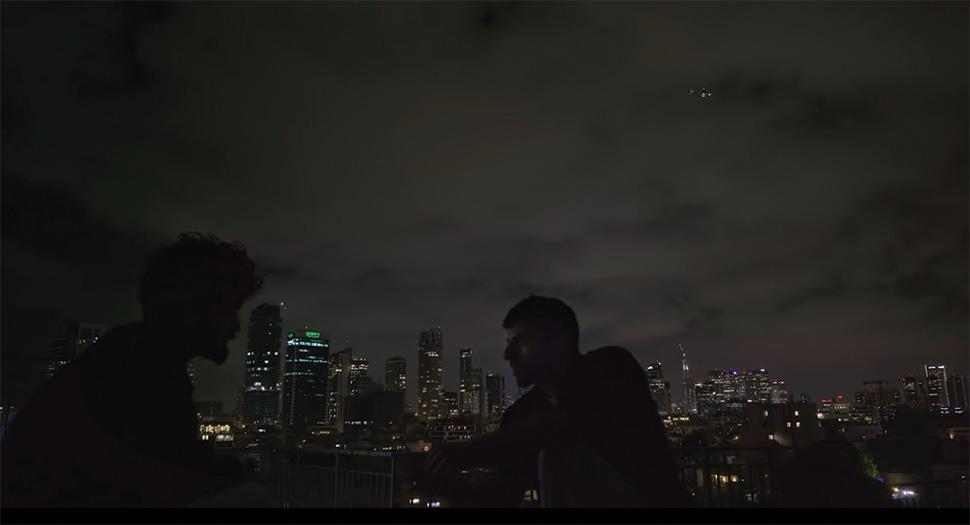
The death and destruction feel remote and are not shown to the audience until the film’s very last moments, in an emotional gut-punch. This is fitting, as the interviews focus specifically on remote killing. The filmmakers interview 24 Israeli operatives on the rooftops of Tel Aviv – only 60km away from a site of extreme devastation. Tel Aviv, however, is unsettlingly quiet. We see people in high-rises doing yoga, washing up, watching television, leading normal and uninterrupted lives. The interviewees, silhouetted and with digitally altered voices, talk matter-of-factly about the methods of remote massacre which they helped to create and execute. NAZA creates geographical, moral, and cinematic distance from the destruction in Gaza, withholding what many other filmmakers would want to confront their audience with. I am reminded of The Zone of Interest, in which violence is kept just out of frame, and the film’s normality is made unsettling by what it chooses not to acknowledge. The filmmakers of NAZA clearly know that beyond physical distance, emotional distance is what allows the violence in Gaza to continue, and show us just how easy it is to ignore what is going on right under our noses.
In case the film does not get a wider release, I will take some time to describe some of the topics discussed by the Israeli officers. We begin by being told that every phone in Gaza is being tracked and constantly surveilled by the Israeli government, which is how the following technologies can function. Firstly, ‘Lavender’, an AI program that tries to evaluate whether a potential target’s phone ‘behaves like’ a Hamas phone by comparing your activity to that of a confirmed Hamas member. It is a program which, despite creating thousands of targets to be bombed, is often incorrect – at least 15% of the ‘targets’ are incorrect, according to one of the tech officers who helped make it. The idea that the decision of whether a person should live or die is decided by artificial intelligence is harrowing, and yet is described as safer than being in the hands of a person who has a personal vendetta against Arabs.
We then learn of ‘Daddy’s Home’, which spies on family members’ phones to see or hear when a target returns home, so that they can be killed in their house. We are told that the preference is to strike Palestinians in their homes, often at night, when they are least expecting it. Again, it is a system which often makes mistakes, as we are told of a case where the potential target simply left their phone at home, and only the man’s family was home, including his daughters of ages 3 and 6. We learn that the computer program used to analyse homes (every home in Gaza has a ‘serial number’) informs you of the expected NAZA, including whether they are children.
The IDF has rejected the film’s central allegations, but NAZA’s emotional force comes from the accumulation of testimony, and the calm, technical language of those who say they participated in the system. The Israeli officers being interviewed don’t care about who they are killing, and this is clearest through their damning language. Here are a few quotes given by interviewees about the murder of Palestinians:
“It’s like a video game.”
“Quantity not quality.”
“The goal is to destroy.”
“Destroy everything as quickly as possible.”
“We expect them to learn it through blood.”
“If they want him dead, he dies.”
“We erased history.”
While some interviewees express guilt for what they have done to the Palestinian people, the overwhelming sense created by the language of the officers is that of pride. Some describe it as fun, an exhilarating, mission-driven sense of accomplishment. Of course, the people involved have been brainwashed to an extent into this way of thinking. In one clip, Benjamin Netanyahu is shown saying that he believes that all Palestinians knew about the 7th October attack before it happened, and that they are all implicated in the attacks. Another shows him advertising a book he edited in 1986 – Terrorism: How the West Can Win – in which he ironically describes terrorism as the targeted murder of civilians for political reasons.
I gained no comfort in watching NAZA, no cathartic ending, and no sense that anything will change because of it. It plainly describes a machinery of violence operating at this very moment. After the screening, the audience leaves in a sombre silence, like a funeral procession. It is a strange feeling to leave a film about mass death by walking over a red carpet, above which the Israeli flag flies. I leave on a vaporetto and say goodbye to this year’s festival.
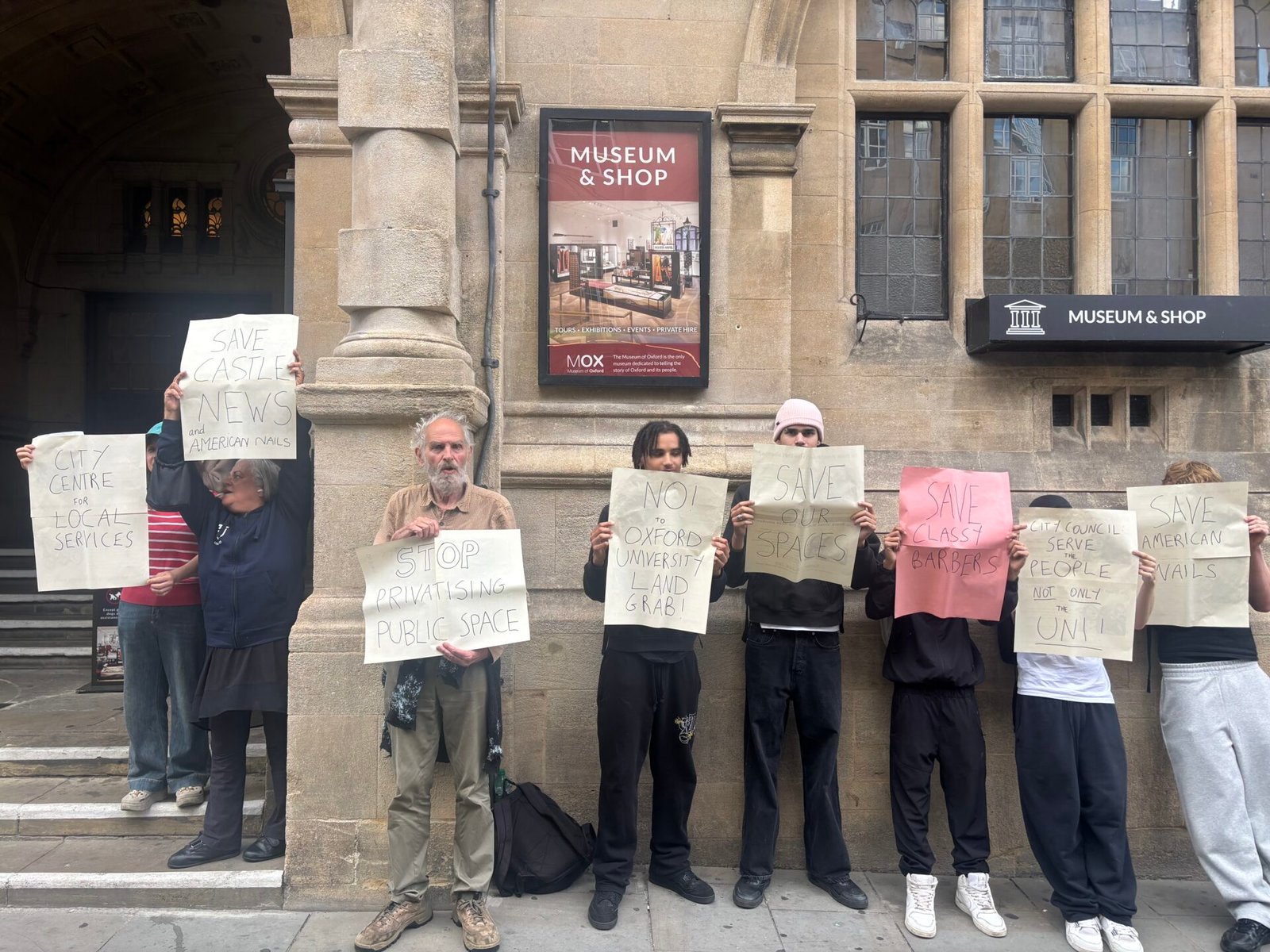
A protest took place today outside Oxford Town Hall against Oxford City Council’s plan to sell 11 New Road to St Peter’s College, which would convert most of the building into student housing. The protest, organised by the campaign group Save Our Spaces, was held at 5.30pm, ahead of the Council’s Cabinet vote on the sale of the building.
The Council-owned building, a mixed-use property on the edge of St Peter’s estate, houses a six-bedroom flat leased to the College and three other businesses: Castle News, Classy Barbers, and American Nails. Under the College’s plan, it would convert all but the ground floor into 24 student rooms and add an extra floor. The proposal is subject to planning permission.
A petition opposing the sale of the building, launched on 11th September by the campaign group Save Our Spaces, has gathered over 400 signatures by the time of publication. A spokesperson for Save Our Spaces told Cherwell: “Once again, the City Council is selling off community space to serve the University’s land grab. These three businesses serve thousands of local people and are much loved by the local community. But they have been treated with total contempt by the Council and St Peter’s College, who have been drawing up plans behind their backs to kick them out.”
The spokesperson added that selling a publicly owned building that brings in “well over £100,000 per year in rent” is “an incredibly short-sighted strategy”.
The Council told Cherwell: “St Peter’s College… approached the Council with a proposal to acquire the property, and terms have subsequently been negotiated. The decision to dispose of the freehold title will generate a capital receipt that can be used to support the provision of investment in and services for communities in Oxford which otherwise would not be affordable.”
They added that the sale would “remove future liabilities associated with the property”, as a “significant future expenditure would be required” if it kept the property.
In their statement to Cherwell, the Council disputed “misinformation” and claims that have “circulated online about the loss of community space as a result of the sale”, as the building is part of its commercial portfolio and has only commercial tenants.
The proposal would also see two of the three businesses continuing to operate, as St Peter’s is “proposing modifications to the upper floors and basement, not the retail on the ground floor”, according to the Council. St Peter’s similarly told Cherwell that it “plans to retain the business tenants, Castle News and Classy Barbers, occupying the ground floor of the building”. However, the floor occupied by the third tenant, American Nails, would be converted into student accommodation.
St Peter’s added that “this project is in line with the College’s strategic commitment to increase the amount of College accommodation available to students who would otherwise be out on Oxford’s private rental market”. The intended purchase follows St Peter’s recent expansion on New Road, including Castle Bailey Quad, a 54 en-suite room Passivhaus development, which the College opened in 2024.
The College’s plan is the latest in a series of disputes over college and University developments in Oxford. In February, residents objected to Oxford University Development’s plans for redeveloping 25 Wellington Square, which houses several independent businesses. In April, the Council rejected Regent Park’s plans to convert the Oxfam Bookshop on St Giles’ Street into its Middle Common Room.
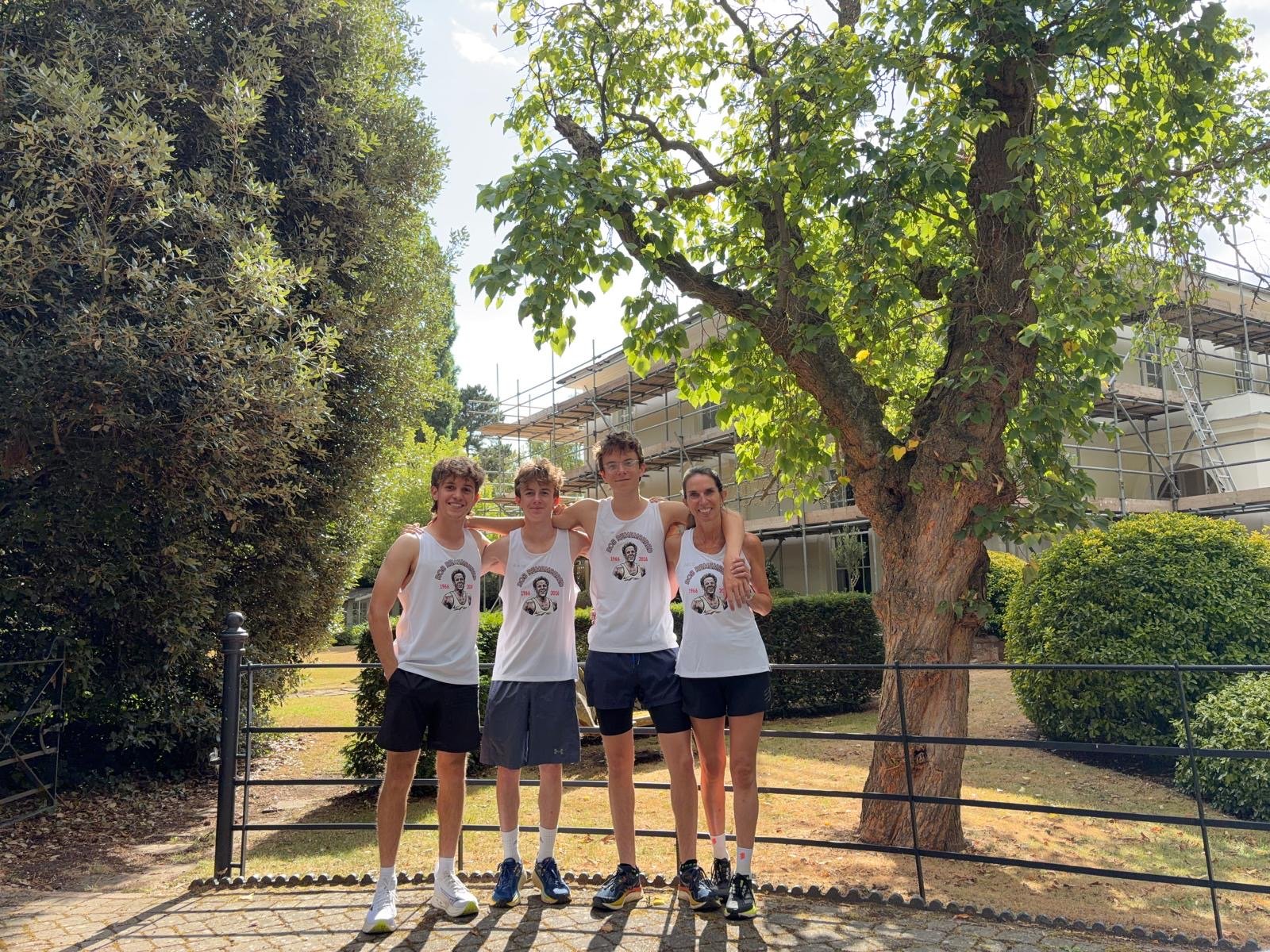
Oxford History graduate Archie Johnston and his family have attempted to break the Guinness World Record for “fastest half marathon by a mother and three children” at the Worcester Half Marathon. Johnston, his mother and two brothers ran the race on September 13th in memory of Johnston’s father, Rob, who died ten years ago.
The previous record was set by a Swansea family in 2024, with a combined time of 8 hours and 8 minutes.
The Johnstons’ combined time of 6 hours and 27 minutes beats the previous record by more than an hour and a half, subject to Guinness World Records verification.
Johnston told Cherwell that running has always been a family pastime. Rob was a keen runner, completing nine marathons across four countries during his life. Yet the training for the Worcester half marathon was especially difficult in the summer heat.
“The grief that comes with losing a parent is unspeakable, but our record attempt is a testament to the way it has drawn us together,” Johnston told Cherwell. “This race is a celebration of my dad’s memory and an effort to further the values he inspired in us.”
The Johnstons set up a JustGiving page on 22nd July to raise money for Medical Aid for Palestinians. The charity provides critical health and humanitarian support to Palestinians in Gaza and the West Bank, working with local partners to provide access to essential health services and build local knowledge. The family hoped to raise £5,000 – £100 for every year of Rob’s life – but have already raised more than £10,000.
After the race, Johnston told Cherwell: “The run was tough, as expected, but having the fire of what we were running for made it all the easier. I’m enormously proud of the four of us, and especially my younger brothers, who were racing across this distance for the first time.”
It feels like only days ago that I was walking through the University Parks, ringed by waves of the greenest grass, the shiniest puddles, and the healthiest plants. Despite the occasional shower or muddy shoe, everything in the world seemed in order. That oh-so-familiar smell of dampened greenery was always a comfort to a countryside girl like me. The knowledge that all growing things could thrive was something that, only now, in hindsight, I feel unbelievably nostalgic for. The early spring sun marked a warm greeting to what I thought would be another hot but usual year in the UK.
Oh, how wrong I was.
The summer of 2026 was set to be, according to the Met Office, the hottest since records began, primed to beat the already record-breaking heat of 2025. That statement feels like gospel truth. Sticky, sweaty, endless nights of useless fans, gaping windows, and ice-cold flannels are just a small testament to the intense annoyance of what is likely to become an everyday occurrence in summers to come.
There has always been a national obsession with the weather for us Brits, as it does make a fantastic icebreaker for small talk. But like the Old Man in Aesop’s Fables, in our constant wishes for a hotter and less rainy climate, we’ve been lumped with the very extreme of our desires. Air-con-less buildings, hosepipe bans, and unprepared UK infrastructure have proven, this year much more than others, that we are currently unequipped to handle this rapidly changing climate.
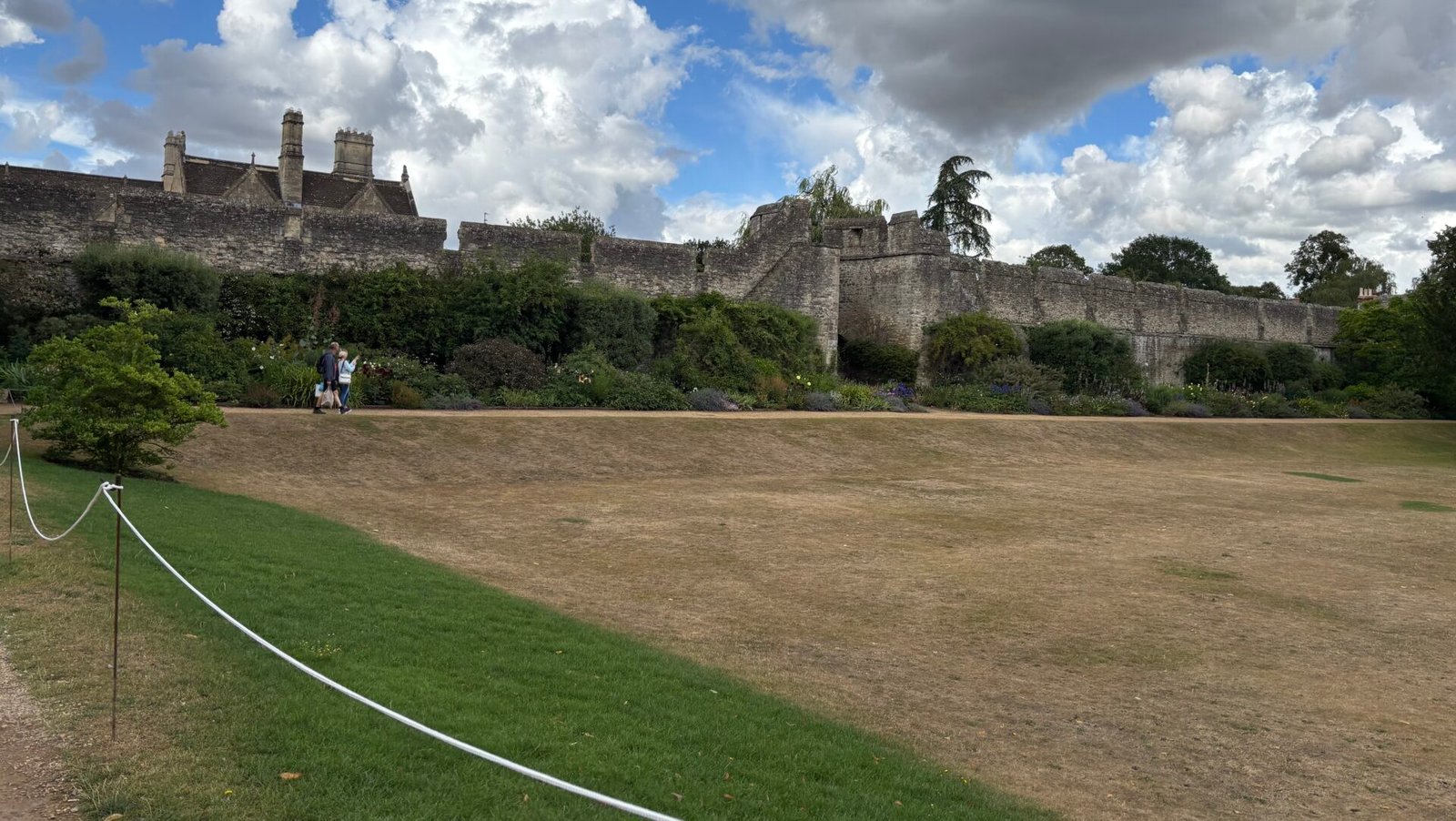
Those daily walks through the parks, meticulously cared for by the University’s groundskeepers, became, over July and August, a stark warning of a bleak and barren world, dulled by crusted, broken ground. I keep being reminded of the 2008 Pixar film WALL-E, which so brilliantly depicts a future devoid of the very things we are losing in this daily heat. It has never been clearer that the climate crisis is a very real and very present threat to the structure and upkeep of our lives.
But not all is doom and gloom. Just like WALL-E, there is a silver lining to be found within the lack of clouds. No year has been more powerful in showing individuals how a changing climate affects us daily. Our farming industry has taken a huge beating, visible in the rising prices of supermarket essentials such as meat, grains, and produce. Our transport industry has been thrown into disarray, with the growing heat torching rail tracks and softening road surfaces. Even our retail industry has been hit, as higher temperatures deter the ‘mooch’ culture we, as Brits, so love. As these changes become non-negotiable and so clear to the pedestrian eye, a new wave of discussion and fresh ideas for change are inevitable. A drive from individuals and local councils that filters all the way up to government and global schemes is a clear necessity now in our fight for a safe and sustainable climate.
Bicycle rides down Broad Street, afternoons in the Radcliffe Camera, and punting trips down the Cherwell have never felt quite so anxiety-inducing. At the student level, these changes are already altering daily life. I have never experienced heat like this. While trying to get my hard-earned beauty sleep, I found myself constantly between my bed and the sofa in the living area. Although the rest of my house felt very much the same, the sauna upstairs proved to be beyond taxing. It was the most surreal and clammy game of musical chairs I’ve ever played. Top-floor rooms in student accommodation or houses bake like ovens long past midnight; our moods begin to drop, our energy drains and our bills rise. It shapes how we study, how we sleep, and how we move through the term. Eco-stress is far less a twee turn of phrase than an imminent reality. Fearmongering is not my game, but when your senses are this attuned to the problem, you feel compelled to act.
At Oxford University, we are surrounded by the smartest minds from across the globe. There is no better place to experience and take part in the momentum of grassroots campaigns and student-run organisations. The Oxford Climate Society, led by students sitting next to you in lectures or halls, is the central hub for making real and lasting change at personal and systemic scales. One of my oldest friends is a key committee member, focusing her time on the education section. It was through her passion for the society and her captivating debates that I knew I wanted to get involved. Through campaigns, events, workshops, and courses, the society offers an inclusive and student-led space ready to challenge, educate, and inspire. Not only that, but they are also warm, kind friends to make whilst at Oxford, who, unlike our current climate, are always steady.
Small, seemingly trivial choices can absolutely build into lasting differences. We can demand smarter and more environmentally conscious food options in college dining halls. We can push for green initiatives, better energy investments, and stronger funding opportunities in JCR and MCR meetings. We can build our moods back up, recharge our energy supplies, and get those bills back to a level of mutual comfort. Despite feeling like a needle in a haystack, a student amongst many, we truly do have the power to create enduring effects. And we can hold institutions accountable and make a real difference within our university walls.
WALL-E was ultimately a love story, not just between two robots, but between humanity and the earth. The course of true love never did run smooth. But with education, understanding, and active engagement with our changing environment, there is always hope. We don’t have to settle for enduring the summer heat; together, we can build a future where we don’t just survive, but we live.


NAZA: The most important film of the year

Driving that’s too fast, too dangerous and utterly lawless: why do we tolerate this petro-masculinity? | George Monbiot

Protest held outside Town Hall over sale of Council-owned building to St Peter’s
-

 Oxford News3 weeks ago
Richard Hammond takes control of classic car company
-
 Oxford Events3 weeks ago
Stage Watch: Now You See Me, Comedy About Spies, Standard Of Living, Every Woman & Silence of Lambs
-

 Oxford Events3 weeks ago
What’s on in Oxfordshire this September
-

 Oxford News3 weeks ago
King Charles applauded as Dragons’ Den star among 26 to lose MBE
-
 Oxford News4 weeks ago
Costs incurred as Travellers ‘forced entry’ to Abingdon park
-

 Oxford Events3 weeks ago
Supercar invasion: Salon Privé 2026 to bring a slew of UK automotive debuts
-

 Oxford News2 weeks ago
UK private school’s ‘outstanding’ headteacher is to retire
-

 Oxford Events3 weeks ago
13 remarkable cars to look out for at this year’s Salon Privé Concours