
Traffic & Transport
Driving that’s too fast, too dangerous and utterly lawless: why do we tolerate this petro-masculinity? | George Monbiot

Where is lawbreaking not just visible, but designed to be seen? Where is antisocial behaviour worn as a badge of honour? Where is pleasure gained directly from causing distress? And where is reckless endangerment often ignored by the police or treated with the mildest of punishments? The answer is on the roads.
Last month, three men in the West Midlands were convicted of street racing. Two were driving at over 80mph in a 40mph zone. The third clocked over 90mph in a 30mph zone. The West Midlands has long been blighted by organised racing, sometimes involving 200 cars or more and hundreds of spectators. The result is a long catalogue of deaths and life-changing injuries, including some caused when racers have left the road and ploughed into onlookers or pedestrians. And there are plenty more accidents where the police have little idea whether racing is to blame, for as soon as they happen, the drivers disperse.
The West Midlands is one of the few places in the UK where the police are actively trying to stop antisocial driving. An injunction bans street racing and dangerous tricks such as “drifting” (long sideways skids) and “doughnutting” (making the car spin on the spot). The local police commissioner has warned that reckless drivers “will face the full force of the law … including seizure of your vehicle and imprisonment”. But are the courts listening?
Of the three men convicted at Birmingham magistrates court, one received a suspended sentence, a £272 fine, 150 hours of community work and a two-year driving ban. Another was handed a £1,275 fine and seven penalty points: in other words, he could step out of the court and back into his car. The man who did over 90mph in a 30mph zone got a £253 fine and a 56-day driving ban. He’ll be back on the roads in November. All appear to have kept their cars.
If these men had caused the same level of endangerment by any other means, it’s hard to believe they would have got off so lightly. But in dozens of ways, driving gets special treatment.
There’s a similar racing culture in mid-Wales, where I lived until 2012. Night after night, a convoy of cars with exhausts modified to be as loud as possible would race past, at 50mph or more in a 30mph zone. They would start at around 10pm and continue some nights until 2am, going round the nearby roads in a loop. As soon as I’d got my infant daughter to sleep, they’d roar past and wake her up again.
Calls to the police were useless: they told me to take down the number plates and “report the incident”. When I did so, they explained, in effect, that I was wasting my time, as I couldn’t prove the drivers were breaking the speed limit. In fact, their advice was counterproductive: when I went outside to take down the number plates, the young men jeered, gave me the finger and accelerated. It seemed that shock and disgust was what they craved. And this was before TikTok, where drivers can achieve much wider notoriety.
The first young man to “do a ton” (100mph) down my high street in Wales on his motorbike became a local hero. Soon afterwards, he rode into a wall and died. Other drivers killed their passengers, hit pedestrians or forced other cars off the road. When people were killed or injured, the drivers were prosecuted and lightly punished, but there was little effort to address the underlying culture. Some men went straight back into the convoys when they regained their licences. I’m told that nothing has changed, despite the default 20mph speed limit now applied to residential areas across Wales, and that every year a new cohort of young men joins the local urban racetrack.
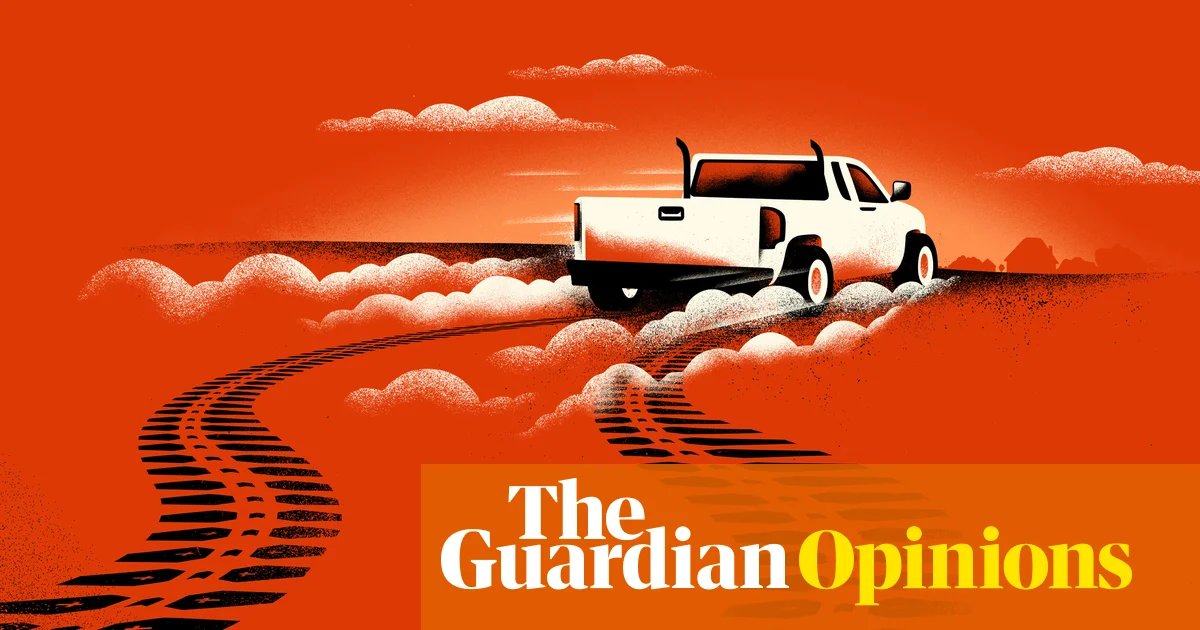
Now I live in Devon, where there’s a different culture of antisocial driving. Here it’s mostly middle-aged men in “lifted” pickup trucks, which have been modified to be as loud and smoky as possible. Two local SUVs have been refitted to “roll coal” from twin exhaust towers mounted behind the cab, releasing a dense black cloud of soot when the driver hits the “smoke switch”. Adapting your truck for this purpose means buying a “delete kit” to bypass the vehicle’s emissions control system, retuning the engine and fitting bigger injectors. The practice emerged in the US, both as an anti-environmental protest and as a form of amusement. It is largely deployed against cyclists, pedestrians and electric vehicles. I’ve seen these two trucks doing it, blinding the drivers behind and choking everyone around. Of course it’s illegal. But it doesn’t seem to be a priority for the police in my area.
What we see here are manifestations of petro-masculinity: a violent, misogynistic, climate-denying version of manhood, expressed through an antisocial driving culture. Some of the modified trucks have decals saying “Stop the Boats” or “Save Our Children” (who are apparently being brainwashed by LGBTQ+ cultural Marxists). This is the Magafication of transport – a vehicle that carries some of the worst aspects of US culture and politics into the UK.
It’s the extreme end of a much wider trend. In the UK last year, 52% of the new cars on sale were SUVs. Not only do the ever-rising bonnets of these trucks make it harder for drivers to see pedestrians and cyclists, especially children, but higher and heavier cars are also more likely to cause deaths or serious injuries when they hit people: children under nine are three times more likely to be killed if they’re hit by an SUV than by a regular car.
after newsletter promotion
And what are they for? On narrow country lanes round here, tourists in these “off-road” vehicles won’t back up if it means touching a hedge, in case the high-gloss finish on their Wankpanzer Childkiller SUV gets scratched. In one of the poshest parts of London, the Chelsea Truck Company advertises “iconic urban 4x4s”. “Iconic” appears to mean huge. But what the hell is an “urban 4×4”? And why is it legal?
Isn’t it obvious that selfishness on the road changes us as a society? The belief that a driver should be allowed to do whatever they please, regardless of the impact on others, mounts the pavement and travels deep into our lives. If this is to be a decent, inclusive country that values human life, then the law and its enforcement should match that aspiration. But when the roads are used to amplify and celebrate a dangerous, antisocial culture, we are driven towards a very dark place.
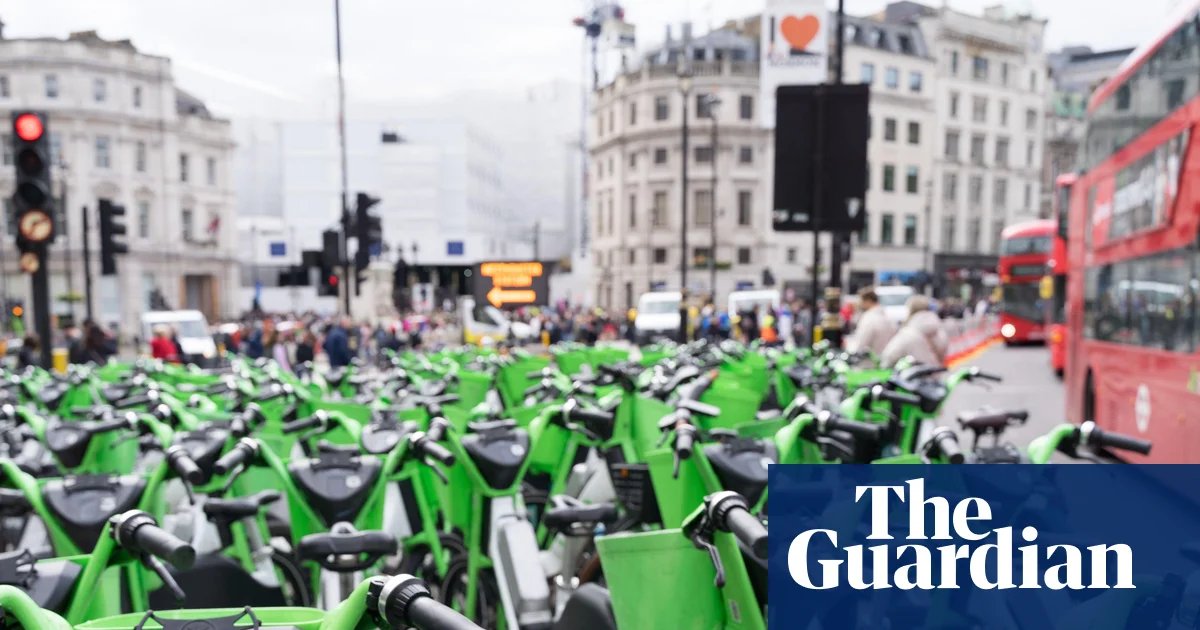
Ministers are seeking to end the “wild west” of parked e-bikes blocking pavements, as they attempt to crack down on antisocial behaviour such as cyclists jumping red lights.
The consultation, led by the Department for Transport, will aim to establish national standards on issues including parking, ending the current patchwork of agreements between individual bike companies and councils.
While some areas enforce rules that mean shared bikes – such as those operated by Lime, Forest and Voi – can only be left in designated parking bays, elsewhere the rules are looser, prompting complaints about bikes blocking pavements, particularly for wheelchair users, people with pushchairs and those with impaired vision.
It will also look at antisocial and illegal riding, for example, people jumping lights or the use of bikes by those who are underage or drunk.
The plans will also examine guidelines for fleet sizes to ensure certain areas are not overcrowded and possible requirements for operators to have insurance, so someone hit by a rider on a hired e-bike can claim compensation.
Another part of the consultation will look at whether councils and mayors should be given powers over the fees charged to rent bikes, and whether companies should share data to improve enforcement and transport planning.
Since arriving in the UK in 2018, shared e-bike systems, of which Lime is by some way the biggest, have expanded rapidly, especially in London. More than 2.6 million Britons used an e-bike share scheme in the year to September 2025, according to one estimate.
There is evidence that shared e-bikes are used by a broader demographic range of riders than traditional bikes, in part because of the electric assistance, but also because they do not require somewhere secure to park.
The DfT argues that the bikes are growing in importance for urban transport, but that the lack of any central oversight has created difficulties, noting that the companies themselves have called for more regulation.
The proposed changes would be “a small but important everyday fix to make our streets safer”, Andy Burnham said. The prime minister added: “E-bikes can make getting around that bit easier, but when they block pavements or are used irresponsibly they can be a real frustration.
“I want to sort that by giving communities more control over where they are parked and making sure companies and riders play by the rules.”
Heidi Alexander, the transport secretary, said: “Shared e-bike schemes have revolutionised the way people travel around our towns and cities. They are easy to use, get us active and help reduce emissions, but we need to make sure they work with the communities where they operate.
“That’s why we are taking decisive action to give local leaders the power to stop nuisance parking, tackle antisocial behaviour and make journeys safer.”
There are parallel efforts in London under which the DfT would devolve power to the mayor, Sadiq Khan, and Transport for London to unify e-bike regulations, which are currently the responsibility of individual boroughs and vary significantly.
Khan said: “The ‘wild west’ approach to dockless e-bikes cannot continue. While these services are helping thousands more Londoners to cycle, their rapid growth has also brought challenges around safety, inconsiderate parking and the lack of data needed to properly manage them.
“I’ve been calling for powers to better manage dockless e-bike schemes since 2017, when the first schemes arrived in London, so I welcome the government’s plans to give cities the powers they need to do this.”
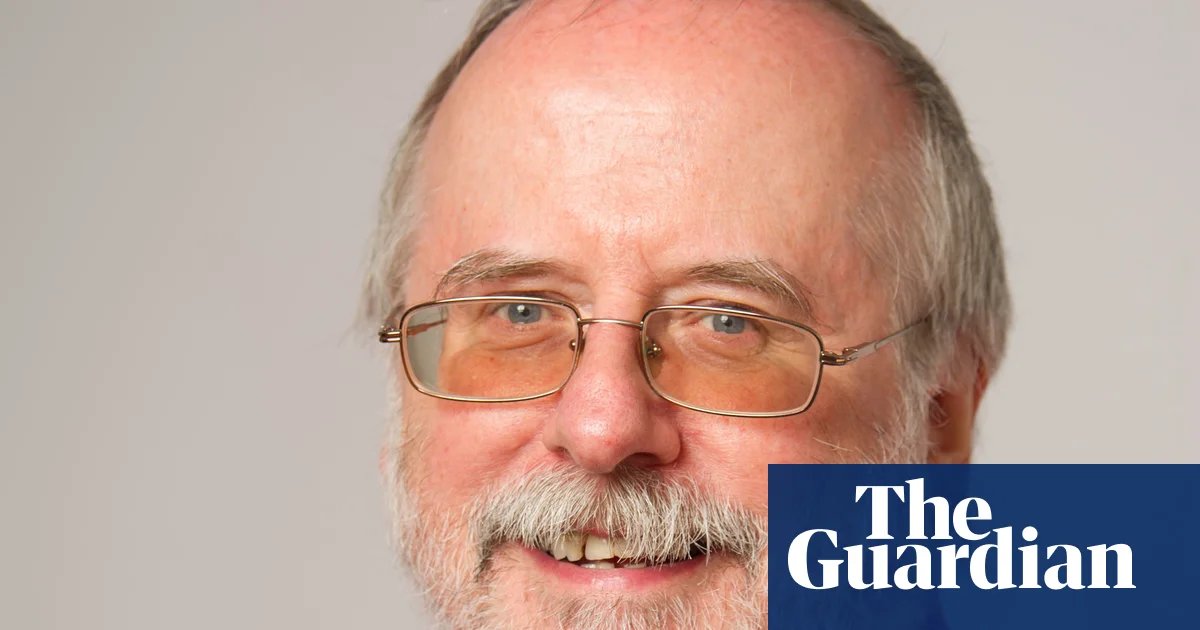
My partner, John Taylor, who has died from cancer aged 74, was a leading figure in the field of community, rural and accessible transport. He made practical improvements in the lives of many people affected by privatisation, poor planning and reduced public funding of transport services.
While volunteering in Manchester in the 1970s John found minimal resources available for those who needed help to access his community buses – makeshift steps and ramps of milk crates and wooden planks were the norm. Plugging this gap became the foundation of his work.
He co-founded Manchester Community Transport (MCT) and in 1984 was founding director of Community Transport Services, later Community Transport Association UK (CTA), the national advisory body for transport-related charities. In the 90s he was instrumental in devising MiDAS (the Minibus Driver Awareness Scheme). In 1994 MiDAS was adopted nationally as a training scheme for volunteer minibus drivers; 30 years later, CTA UK issued its one millionth driver assessment certificate.
Born in Cambridge, John was the youngest of three children of Reginald Taylor, a civil servant, and his wife, Winifred (nee Stamford). The family moved to south London when John was a few weeks old. He was a gifted student at Whitgift school, Croydon, where his love of a challenge and wide open spaces led him to embrace mountaineering and climbing. He subsequently climbed in the UK, the Alps, Pyrenees and Himalayas; his final “big” expedition was an ascent of Ama Dablam, in Nepal, in 2007.
In 1971 he went to New College, Oxford, to study philosophy, politics and economics, followed by a year as an articled clerk in London, with the intention of pursuing a legal career. He then moved to Manchester to do postgraduate study in the sociology of law at Manchester University and stayed in the north for the rest of his life. Voluntary jobs led him into the transport sector, first with MCT and later as a freelance transport consultant, which is when I first met him, working together in Levenshulme.
We moved to Lancaster in 1995, and around this time John became co-director of the TAS (Transport Advisory Service) Partnership. He would often take on far too much and his reports were invariably delivered at the last minute. But once finished, he loved to communicate his ideas; his colourful shirt and tie combos gave him a standout presence during presentations.
Outside work, he enjoyed his vast music collection, which covered classical, jazz, blues and his beloved Grateful Dead. When the children expressed interest in Meccano, he drove to Hampshire to collect a huge quantity bought on eBay.
A loyal fan of Morecambe FC, he was active in the Shrimps Trust supporters’ society, leading the post-match litter-picking team and helping them acquire MiDAS certification for their away travel.
He is survived by me, our sons, Robin and Jonathan, his stepson, Ashley, and his sister, Fran, and brother, Francis.
Traffic & Transport
No 10 defends flight to Caribbean going via Manchester to pick up Burnham | Andy Burnham
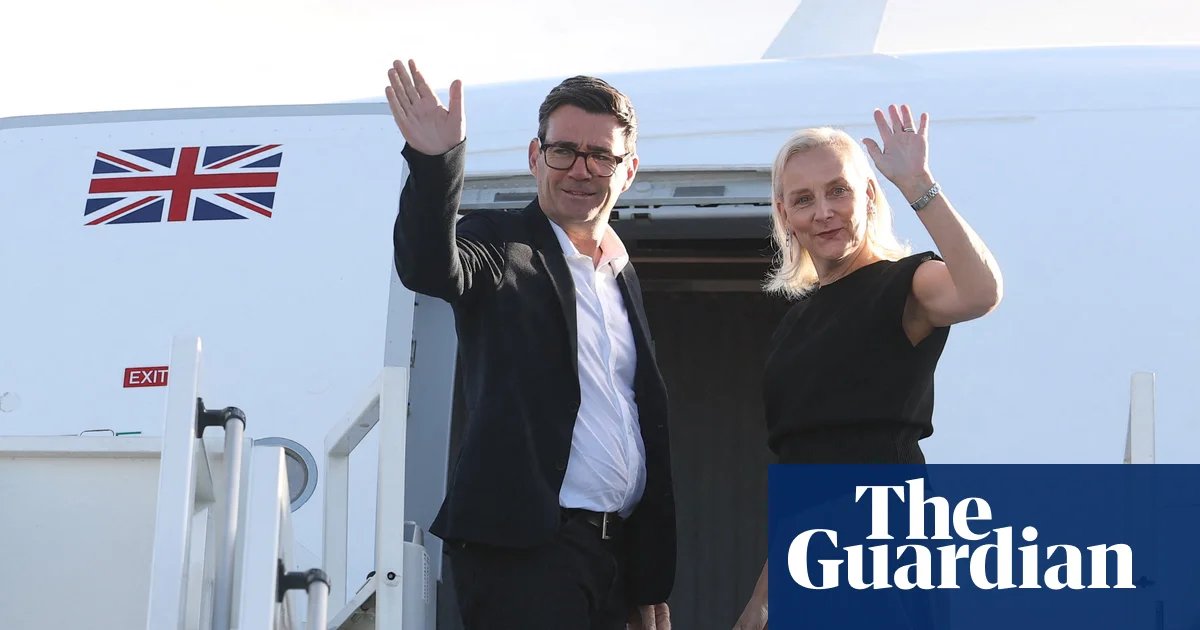
A government-chartered plane taking Andy Burnham to a Commonwealth summit in the Caribbean made a stop-off in Manchester to collect him, Downing Street has said.
The decision, which will have been more financially and environmentally costly than if the prime minister had travelled to London, leaves him open to accusations of hypocrisy after Labour repeatedly criticised Rishi Sunak for his use of private planes and helicopters for domestic travel when he was the prime minister.
The plane, which the government leases for prime ministerial travel, left Stansted airport outside London at about 6am on Monday en route to Antigua and Barbuda, where the Commonwealth heads of government summit begins on Tuesday.
It carried officials and a handful of pool media reporters, but not Burnham. He and his wife were picked up at Manchester about 30 minutes later. The plane stayed on the ground for an hour before setting off via Canada for a refuelling stop.
Asked why the travel logistics had worked this way, and how much it had cost to add an extra leg to the trip, Burnham’s official spokesperson said: “Decisions related to travel are made on security and operational grounds, neither of which we comment on. We are transparent about travel costs. They will be published in the usual way.”
Burnham had been in Scotland on Friday, before going to Manchester to work from No 10 North that evening, the spokesperson said. Burnham, whose family home is in Greater Manchester, routinely works in the city on Fridays and spends the weekend there.
Asked if this represented value for money, the spokesperson said: “I’ve just set out our position, and I’ll just refer you back to that.” Asked if Burnham simply did not want the effort of returning to London, he replied: “I don’t accept that.”
Prime ministerial flights usually leave from Stansted, where there is a section of the airport for private flights that allows for extra security.
As prime minister, Sunak regularly used helicopters to travel to events in places for which rail travel would have been almost as quick, including Southampton, Dover, the West Midlands and Essex.
When Labour took office it cancelled the £40m helicopter contract used for the travel as part of what Keir Starmer’s government said was an effort to undo “14 years of rot” under the Conservatives.
after newsletter promotion
Labour also questioned why Sunak used an RAF jet to fly to Scotland when scheduled flights were available, given the ministerial code says private planes should only be used when there is no alternative.
The shadow Cabinet Office minister, Mike Wood, said on Monday: “Labour promised a crackdown on private jet use. Yet when it comes to Air Miles Andy, it seems to be one rule for him and another for everyone else.”



-

 Oxford united FC4 weeks ago
LIVE: Exeter City vs Oxford United – Jersey Mike's Trophy group stage
-

 Oxford united FC4 weeks ago
Oxford United lose to Exeter City on penalties in Jersey Mike’s Trophy
-

 Student Life4 weeks ago
Rhodes scholarships cut amid financial difficulties
-
 Student Life3 weeks ago
From Oxford to Cambridge: The 204-mile punt for Alzheimer’s
-

 Oxford united FC4 weeks ago
Chris Gunter details Oxford United tactical adjustments
-

 Oxford united FC4 weeks ago
Oxford United youngster opens up on ‘surreal’ Aaron Ramsey influence
-

 Oxford united FC4 weeks ago
Oxford United win 2-1 at Notts County in League One return
-

 Oxford united FC4 weeks ago
LIVE: Exeter City 2-1 Oxford United – Grecians lead after Bradney debut goal