
Traffic & Transport
Driving that’s too fast, too dangerous and utterly lawless: why do we tolerate this petro-masculinity? | George Monbiot

Where is lawbreaking not just visible, but designed to be seen? Where is antisocial behaviour worn as a badge of honour? Where is pleasure gained directly from causing distress? And where is reckless endangerment often ignored by the police or treated with the mildest of punishments? The answer is on the roads.
Last month, three men in the West Midlands were convicted of street racing. Two were driving at over 80mph in a 40mph zone. The third clocked over 90mph in a 30mph zone. The West Midlands has long been blighted by organised racing, sometimes involving 200 cars or more and hundreds of spectators. The result is a long catalogue of deaths and life-changing injuries, including some caused when racers have left the road and ploughed into onlookers or pedestrians. And there are plenty more accidents where the police have little idea whether racing is to blame, for as soon as they happen, the drivers disperse.
The West Midlands is one of the few places in the UK where the police are actively trying to stop antisocial driving. An injunction bans street racing and dangerous tricks such as “drifting” (long sideways skids) and “doughnutting” (making the car spin on the spot). The local police commissioner has warned that reckless drivers “will face the full force of the law … including seizure of your vehicle and imprisonment”. But are the courts listening?
Of the three men convicted at Birmingham magistrates court, one received a suspended sentence, a £272 fine, 150 hours of community work and a two-year driving ban. Another was handed a £1,275 fine and seven penalty points: in other words, he could step out of the court and back into his car. The man who did over 90mph in a 30mph zone got a £253 fine and a 56-day driving ban. He’ll be back on the roads in November. All appear to have kept their cars.
If these men had caused the same level of endangerment by any other means, it’s hard to believe they would have got off so lightly. But in dozens of ways, driving gets special treatment.
There’s a similar racing culture in mid-Wales, where I lived until 2012. Night after night, a convoy of cars with exhausts modified to be as loud as possible would race past, at 50mph or more in a 30mph zone. They would start at around 10pm and continue some nights until 2am, going round the nearby roads in a loop. As soon as I’d got my infant daughter to sleep, they’d roar past and wake her up again.
Calls to the police were useless: they told me to take down the number plates and “report the incident”. When I did so, they explained, in effect, that I was wasting my time, as I couldn’t prove the drivers were breaking the speed limit. In fact, their advice was counterproductive: when I went outside to take down the number plates, the young men jeered, gave me the finger and accelerated. It seemed that shock and disgust was what they craved. And this was before TikTok, where drivers can achieve much wider notoriety.
The first young man to “do a ton” (100mph) down my high street in Wales on his motorbike became a local hero. Soon afterwards, he rode into a wall and died. Other drivers killed their passengers, hit pedestrians or forced other cars off the road. When people were killed or injured, the drivers were prosecuted and lightly punished, but there was little effort to address the underlying culture. Some men went straight back into the convoys when they regained their licences. I’m told that nothing has changed, despite the default 20mph speed limit now applied to residential areas across Wales, and that every year a new cohort of young men joins the local urban racetrack.
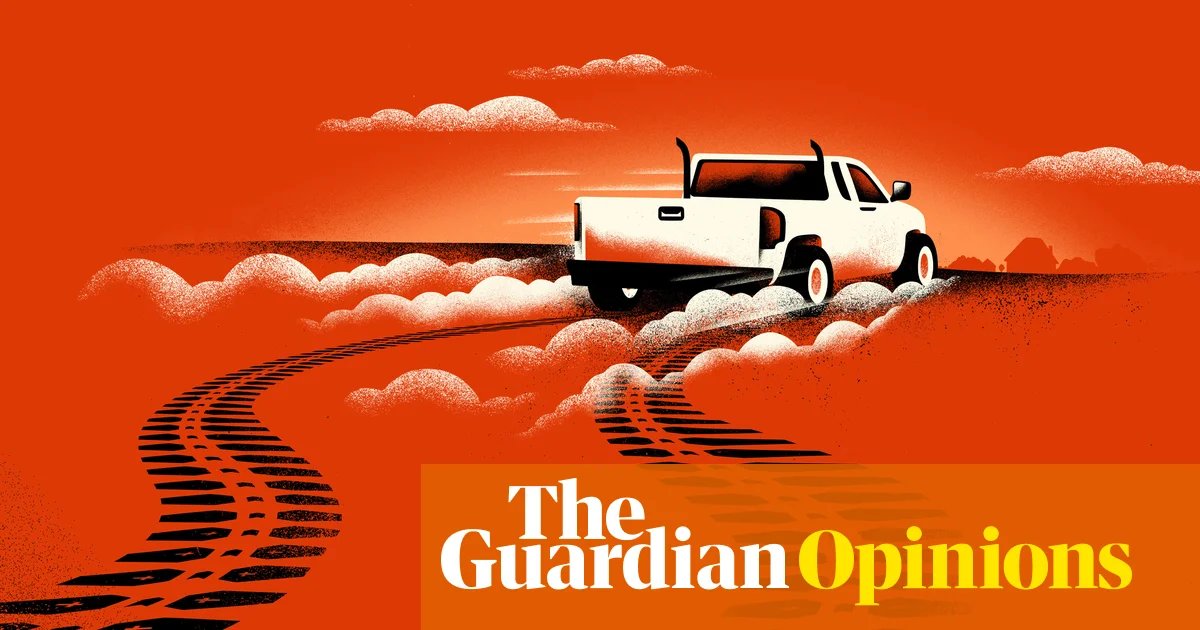
Now I live in Devon, where there’s a different culture of antisocial driving. Here it’s mostly middle-aged men in “lifted” pickup trucks, which have been modified to be as loud and smoky as possible. Two local SUVs have been refitted to “roll coal” from twin exhaust towers mounted behind the cab, releasing a dense black cloud of soot when the driver hits the “smoke switch”. Adapting your truck for this purpose means buying a “delete kit” to bypass the vehicle’s emissions control system, retuning the engine and fitting bigger injectors. The practice emerged in the US, both as an anti-environmental protest and as a form of amusement. It is largely deployed against cyclists, pedestrians and electric vehicles. I’ve seen these two trucks doing it, blinding the drivers behind and choking everyone around. Of course it’s illegal. But it doesn’t seem to be a priority for the police in my area.
What we see here are manifestations of petro-masculinity: a violent, misogynistic, climate-denying version of manhood, expressed through an antisocial driving culture. Some of the modified trucks have decals saying “Stop the Boats” or “Save Our Children” (who are apparently being brainwashed by LGBTQ+ cultural Marxists). This is the Magafication of transport – a vehicle that carries some of the worst aspects of US culture and politics into the UK.
It’s the extreme end of a much wider trend. In the UK last year, 52% of the new cars on sale were SUVs. Not only do the ever-rising bonnets of these trucks make it harder for drivers to see pedestrians and cyclists, especially children, but higher and heavier cars are also more likely to cause deaths or serious injuries when they hit people: children under nine are three times more likely to be killed if they’re hit by an SUV than by a regular car.
after newsletter promotion
And what are they for? On narrow country lanes round here, tourists in these “off-road” vehicles won’t back up if it means touching a hedge, in case the high-gloss finish on their Wankpanzer Childkiller SUV gets scratched. In one of the poshest parts of London, the Chelsea Truck Company advertises “iconic urban 4x4s”. “Iconic” appears to mean huge. But what the hell is an “urban 4×4”? And why is it legal?
Isn’t it obvious that selfishness on the road changes us as a society? The belief that a driver should be allowed to do whatever they please, regardless of the impact on others, mounts the pavement and travels deep into our lives. If this is to be a decent, inclusive country that values human life, then the law and its enforcement should match that aspiration. But when the roads are used to amplify and celebrate a dangerous, antisocial culture, we are driven towards a very dark place.
Traffic & Transport
Expect even more potholes on UK roads after summer heatwaves, says RAC | Potholes
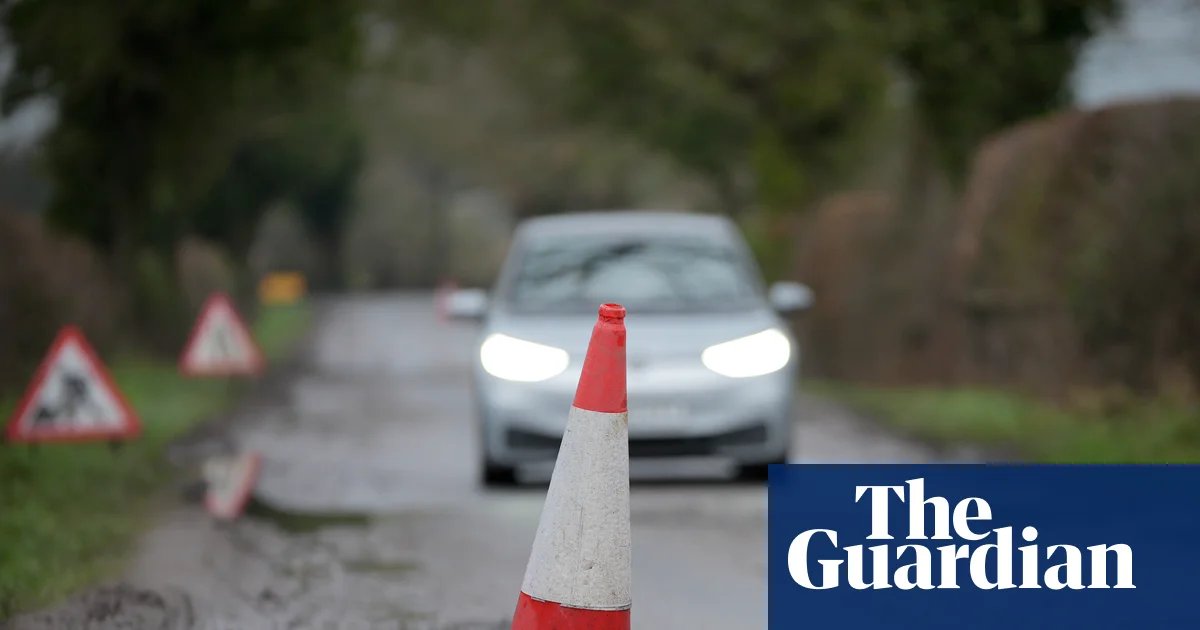
The UK’s dilapidated roads are expected to get even worse, with motorists warned to expect a jump in the number of potholes as result of the country’s hottest summer on record.
Potholes are commonly assumed to be caused by cold or wet weather, but long periods of heat can also create long-lasting damage on the roads, according to the RAC.
“Intense UV exposure and heat gradually oxidise the bitumen that binds asphalt together, making surfaces more brittle and prone to cracking. Once cracks develop, traffic and later rainfall can quickly turn them into serious defects,” said the company’s head of policy, Simon Williams.
The roads were already in a terrible state after last winter, with only half the network in England and Wales in a good condition after months of rain, the Asphalt Industry Alliance reported earlier this year.
They have been further damaged by the summer’s run of back-to-back heatwaves, with temperatures rising above 38C in some parts of the country.
Mike Hansford, the chief executive of the Road Surface Treatments Association, said: “Extremes in the UK’s weather, including increased summer UV radiation, combined with colder, wetter winter conditions, can accelerate deterioration.”
The extreme heat has been attributed to the climate crisis, with scientists from the Met Office finding that the high temperatures experienced in the UK were 130 times more likely to occur owing to human-induced climate change. An increase in the number of potholes is just one of several ways in which climate chaos is putting the UK’s infrastructure under strain.
Hot, dry weather shrank soil in railway embankments, forcing timetable changes and slower services on some routes. High temperatures even risk making rails buckle, something being looked at as a possible cause for two derailments last month.
UK insurance companies have reported an increase in the number of subsidence claims over July and August as a result of the abnormally hot weather, with the insurer Hastings Direct saying it expects claim volumes “to remain higher than normal through to around October unless sustained rainfall helps restore soil moisture levels”.
after newsletter promotion
According to an RAC report earlier this year, 51% of motorists describe the sorry state of Britain’s roads as their biggest anxiety related to driving, with 83% saying they encounter potholes on most car trips.
Williams said these fears were “a reflection both of a long-term lack of investment in road maintenance and repair by local authorities, and of the road surface issues exacerbated by a particularly wet winter, and now an extremely hot summer”.
However, he also expressed optimism about the government’s newly increased response to the pothole problem. He said: “Council highway budgets in England have been increased to a record £1.6bn for 2025-26, and in November’s budget, £7.3bn was allocated for road improvement works between now and the end of the decade, which will allow councils to make long-term maintenance plans.”
The Department for Transport has also released new requirements for English councils in June that will push them to prove they are doing more to find long-term solutions to fixing potholes and roads. Under the requirements, local authorities could lose up to a third of their road maintenance funding if they fail to demonstrate they are working to build these solutions.
Traffic & Transport
When is an ebike not an ebike? When it has a powerful, illegal engine. Get this menace off our roads | Peter Walker
One of the curiosities of debates about cycling in the UK is that almost all of them centre on the place with the greatest concentration of not only bikes but also politicians and journalists: inner London. Inevitably this is just a small part of the story.
Much of the current focus is on so-called share bikes operated by companies such as Lime and Forest – nippy electric-assist machines that can be picked up and left on pavements. On Saturday, a Guardian investigation revealed that councils in the capital have so far this year seized 3,393 dangerously parked or abandoned ebikes, a number 23% higher than the total for the whole of last year.
Depending on your view, ebikes are either a gamechanging boon to short-distance urban transport or, if we heed the testimonies of those who have been menaced or injured, a dangerous and lawless scourge.
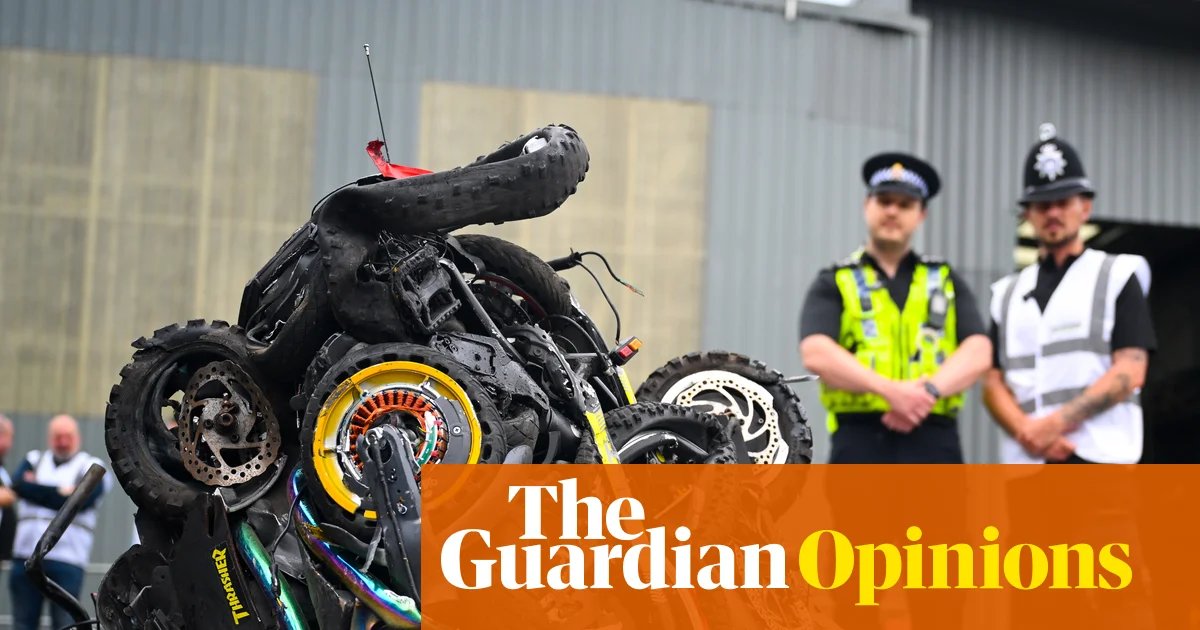
But even this misses the point. Outside the handful of urban areas where Lime and their competitors operate, the ebikes that exist are privately owned. And many of these are not, at least under the law, ebikes at all.
This can sound complex, but bear with me. To be classed as an ebike, a machine must have a powered speed limit of 15.5mph and a motor that only kicks in when you pedal, not via a throttle.
Wander around pretty much any UK town or city for long enough and you will see contraptions that very much do not meet these criteria. They might look broadly like a bike, with pedals and a chain. But they are often throttle-powered and can travel much, much faster than 15mph.
These are not ebikes. They are illegal electric motorbikes. This is a vital distinction to make before you start discussing ebikes, and whether they are, indeed, a brand new peril on our streets.
Now that we know where we are, how much, if at all, of the media scare stories about ebikes or their illegal cousins have a basis in fact? Again, it’s slightly more complex than it might seem.
If you hang around central London, it won’t take too long to see someone on a Lime bike sail serenely through a red light, sometimes weaving awkwardly through gaggles of pedestrians.
This is, of course, illegal, and for all that some cyclists try to justify such behaviour on self-preservation grounds, I’d also argue that it is selfish and intimidating. People should be able to cross the road at a green pedestrian signal without having to first scan the horizon for a beefy twentysomething called Josh on a Lime bike who is running late for his post-work five-a-side game.
But is there any need to panic? Not really. Cyclists are no different from drivers in that quite a few break the law if they think they can get away with it. One issue for cycling PR is that two-wheeled offences are often just more visible.
Government statistics show that when the traffic is flowing freely, fully three-quarters of drivers speed in 20mph zones. This is harder to spot, but the difference is that this sort of behaviour has a realistic chance of killing someone.
Very serious or fatal pedestrian casualties with legal bikes and ebikes do happen, but they are vanishingly rare, unlike incidents with motor vehicles. This is not a matter of morals, just physics – more specifically the way kinetic energy increases so rapidly as the inputs of mass and velocity change.
Some argue that riders of Lime-type bikes are disproportionately likely to flout the rules, in part because they are paying for the transport by the minute. I’m not sure that’s the case.
after newsletter promotion
Either way, it’s undeniable that, overall, share ebikes – in fact all legal ebikes – are a good thing. They make cycling available to demographics that would not normally consider using a bike, especially people without anywhere safe to store their own machine. Despite the occasional annoyance of the Josh contingent, I welcome them to the bike lanes.
It is a very different case for the illegal variants. These are often heavier – some are designed to look like motorbikes – and can go at significant speed. It’s not uncommon for me to be overtaken by a silent, moped-weight gizmo doing 30mph or more. I am, it is fair to say, not a fan of this.
This is, however, not a cycling problem. It’s a law-enforcement problem. It’s therefore also a political problem, not least whether or not any ministers are willing to crack down on a food-delivery industry heavily reliant on riders using illegal bikes.
But the repeated conflation of these two issues has ramifications for cycling. In part it is a call for restrictions on cycling because of offences by those speeding on illegal machines. And because illegal bikes often have vast, poorly made batteries with a tendency to catch fire, some rail companies are pondering bans on all ebikes.
The cycling world is changing quickly. And it is perfectly OK to be annoyed with the Lime bike buffoons. But do remember – they’re not the problem here.
Traffic & Transport
Rail passengers get automatic right to switch operators for free when trains are cancelled | Rail industry
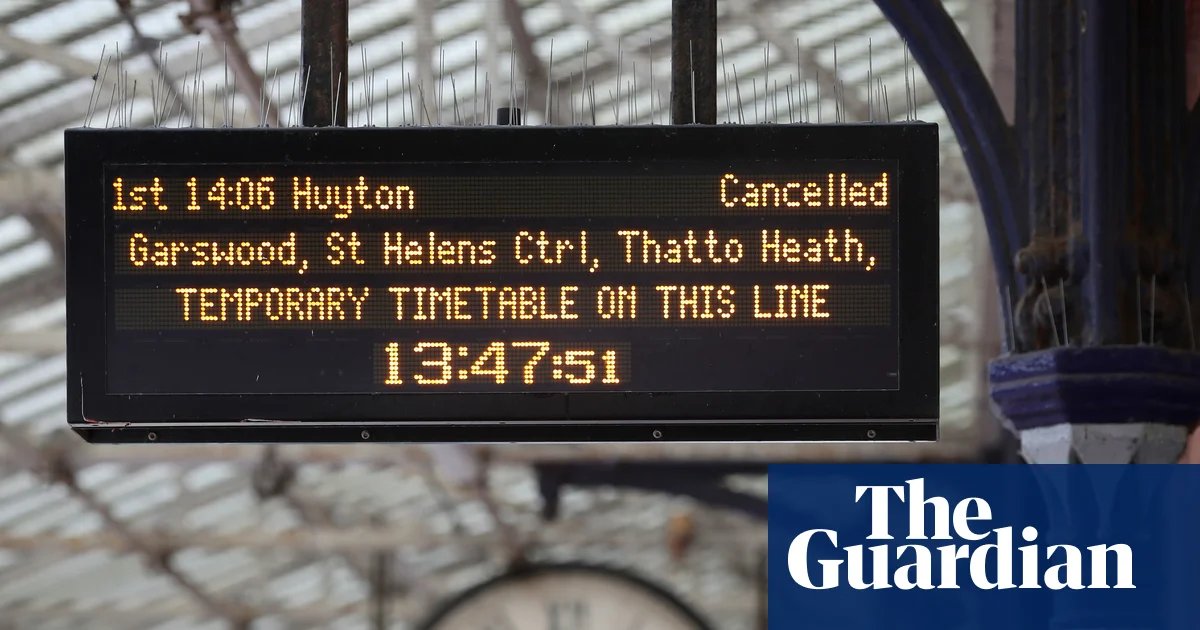
Rail passengers whose trains are cancelled will have the immediate right to travel on other operators’ services to finish their journey without further charge, ministers have announced.
The “commonsense change” will take effect from Sunday 20 September, ending the confusion in Britain where many pre-booked tickets are not valid on other firms’ trains.
While passengers are frequently allowed to travel with different operators in times of severe disruption, travellers can be left to wait for a formal agreement that another firm’s tickets can be accepted, or sometimes buy an expensive new ticket and apply for a refund for the first.
The Department for Transport said passengers had until now been “paying the price for a system which prioritises shareholders when trains are cancelled”.
From 20 September, customers holding a valid ticket will be able to travel on another operator’s train two hours before or after the original cancelled service, on a reasonable alternative route.
The rail minister, Lord Hendy, said: “This is a simple, commonsense change that puts passengers first. No one should be left stranded because of a fragmented railway when their journey is disrupted. From this weekend, if your train is cancelled, you can get on another operator’s service and carry on your journey without paying again.”
He said the government was making the railway “simpler, fairer and easier to use, as we move towards Great British Railways and put public service back at the heart of our railways”.
Automatic cross-operator ticket acceptance has been brought in already across firms returned to public ownership, but now CrossCountry, GWR, Avanti West Coast and Chiltern Railways, running important intercity routes, will be included.
The remaining passenger train operations are scheduled to come into public ownership next year under a Great British Railways banner, bar a handful of open-access services, which will remain separate.
after newsletter promotion
East Midlands Railway, which has been beset with problems while introducing malfunctioning Hitachi bi-mode trains, will also not be immediately included due to its ongoing mass cancellations and shortages of seats.
Alex Robertson, the chief executive of the independent watchdog Transport Focus said it was “a welcome change that we have long called for”, adding: “The key now is making sure passengers get clear information about their options whenever disruption occurs.”


Driving that’s too fast, too dangerous and utterly lawless: why do we tolerate this petro-masculinity? | George Monbiot

Protest held outside Town Hall over sale of Council-owned building to St Peter’s

Louie Sibley reaps reward in Oxford United breakthrough
-

 Oxford News3 weeks ago
Richard Hammond takes control of classic car company
-

 Oxford Events3 weeks ago
Stage Watch: Now You See Me, Comedy About Spies, Standard Of Living, Every Woman & Silence of Lambs
-

 Oxford Events3 weeks ago
What’s on in Oxfordshire this September
-

 Oxford News3 weeks ago
King Charles applauded as Dragons’ Den star among 26 to lose MBE
-

 Oxford News4 weeks ago
Costs incurred as Travellers ‘forced entry’ to Abingdon park
-
 Oxford Events3 weeks ago
Supercar invasion: Salon Privé 2026 to bring a slew of UK automotive debuts
-
 Oxford Events3 weeks ago
13 remarkable cars to look out for at this year’s Salon Privé Concours
-

 Oxford News2 weeks ago
UK private school’s ‘outstanding’ headteacher is to retire