
Student Life
From Oxbridge to Silicon Valley


90% of startups fail – but some young people aren’t deterred by this infamous statistic. Between 2014-15 and 2022-23, there was a 70% increase in the number of UK university startups, with these being led by some of Britain’s brightest young minds. But as the graduate job market continues to suffer, these founders often look abroad to scale their businesses. The pattern is a familiar one, and one characteristic of an ‘incubator economy’, in which startups move to London or overseas due to a lack of funding. Does a university education remain valuable for these young entrepreneurs, or can entrepreneurship serve as an increasingly popular alternative to traditional routes to success?
Social media and startups
For content creator and Cambridge student Erin McGurk, entrepreneurship was the natural outcome of her social media experience. Beyond the hard-earned skills that come with a combined following of over 1 million on multiple social media platforms – such as negotiating contracts, having her voice heard in sales meetings, and creating engaging videos – Erin told Cherwell that documenting her university experience was the main factor motivating her to launch her business. Egoist Machines allows users to create an ‘AI passport’, in which their personal information can be transported across AI platforms. The startup is backed by Y Combinator, arguably the most prestigious startup accelerator in the world – but, speaking to Cherwell from San Francisco, she still sees the immense value of a university degree.
Erin’s appreciation for her Cambridge experience derives primarily from the opportunity to connect with like-minded people: “Without Cambridge, I wouldn’t have met my co-founder, Daniel. There’s also a sort of availability bias, as I have the privilege of meeting experts in their fields.” Erin also shared on her TikTok page that she had switched courses in her first year, shifting from economics to land economy, stating that she wanted to study “the practical applications of economics”, a choice that seems to align with her ambitions in the business world. Nevertheless, Erin doesn’t entirely reject a traditionally successful career path, such as law or finance: “These industries make the world work!” For her, the risk of founding a business was something she was prepared for, because she had her social media career as a backup and was still young enough to lack significant financial responsibilities. If anything, one of the hardest adjustments has been to American hustle culture: “The UK has a disproportionate amount of talent, but ‘San Francisco optimism’ is abundant, and quite un-British.”
For some young entrepreneurs, however, university is off the table. Ishaan Bhimjiyani, better known online as Revishaan, shocked his ‘studytok’ audience in 2023 by abandoning his Oxbridge aspirations for an entrepreneurial path in Dubai. Speaking to Cherwell, he lists a number of factors that influenced his decision, the greatest of which was his social media success. With just over 400,000 TikTok followers as of 2026, Ishaan has been creating content since before he even sat his GCSE exams. He first gained attention for his study-focused videos, from livestreaming his revision to hosting study meet-ups in London. Speaking to Cherwell, he noted that developing his image and working with brands gave him the skills he needed to start his own business. He told Cherwell: “Content creation starts as a fun hobby and slowly becomes a side hustle. I had to file my own taxes, negotiate my worth, and learn how to be brand safe.”
This business acumen, acquired from a relatively young age, was bolstered by him having the right characteristics for entrepreneurship. “You can’t get anywhere without taking risks”, he said. “Being a good entrepreneur is about what you do with your opportunities, how you communicate, whether you know your worth, and whether you can solve problems.” For Ishaan, these characteristics are enough. “People think I come from a wealthy background, but I had no family connections in this industry. A full-time job isn’t enough anymore, and the pressure on young people to earn is enormous, so side hustles often end up performing better than a main career.” This precarious situation in the UK led Ishaan to relocate to Dubai, where he enjoys lower taxes and better support for his entrepreneurial vision. “The UK really punishes business owners,” he said. “You pay so much in tax, and you don’t see where it goes, whereas countries like Norway and Finland have high taxes but plenty of support for businesses. Silicon Valley and Dubai are the best places for an entrepreneur to be.”
Ishaan doesn’t regret his choice to forgo a university degree: “Gap years exist for a reason. You can always go back to education.” He is currently the CEO of TapLab, a talent management agency representing over 100 ‘study influencers’. With an impressive display of brand partners, from Apple to Samsung and Beats, his ed-tech company reflects the very beginning of his career – in his room, livestreaming his GCSE revision. When asked about the future of his business, Ishaan firmly states that he is aiming to eventually exit and sell the company. Investing is his main passion, and has been the focus of his content since deciding not to attend university. Speaking to Cherwell, he revealed that this pivot in itself was incredibly difficult, as it struggled to resonate with his study-oriented audience. But Ishaan believed first and foremost in pursuing his passions, whether that meant revision or entrepreneurship.
Being your own boss
For Erin, Ishaan, and other content creators, taking responsibility for their online presence made the foray into entrepreneurship natural. But there are other factors at play that make the world of startups, pitching, and incubators appealing.
The barrier to entry is lower than ever, with AI tools accelerating the process of building a business. From maximising the productivity of a small team to allowing for cost-free testing, what once may have required a dedicated marketing team or extensive market research can now be done in a matter of hours with Claude or ChatGPT, the latter of which is at many students’ fingertips. Similarly important is the widespread availability of open-source AI models like Llama, Qwen, and Mistral, which can be easily adapted and redistributed with little knowledge of the technical ins and outs – a practice known as ‘vibe coding’, and heavily criticised within the industry.
Much like the iconic, rose-tinted representation of Hollywood, San Francisco and its entrepreneurial culture are increasingly common symbols in popular imagination. TV shows such as Silicon Valley, Shark Tank, and even The Apprentice hold significant cultural weight as representatives of capitalist optimism – particularly for Big Tech – that has grown in recent decades in the UK. This has occurred to such an extent that the Oxford-Cambridge Growth Corridor has been dubbed ‘Europe’s Silicon Valley’ in government communications. Yet, the lifestyle and status of being a ‘founder’ is also increasingly glamourised. For instance, Steven Bartlett’s massively popular The Diary of a CEO podcast makes use of the jargon and self-help sheen of the Silicon Valley mindset, with The Times columnist James Marriott describing the show in 2023 as “encouraging, motivational, [and] vaguely businessy”. It raises the question of whether entrepreneurship is truly motivated by passion for a product or company, or is in large part a vanity project in tandem with content creation and personal branding. However, while there may be aesthetic motivations in getting stuck into ‘founder’ terminology and vying for a lucrative exit, much of the same could be said for traditional law or finance, in which industry rankings and generous perks are part and parcel of the profession.
But entrepreneurship is not accessible to everyone. Some of the most touching – and viral – stories are about entrepreneurs who come from nothing and have no connections, but this is very much the exception that proves the rule. Having access to wealth and connections through nepotism is often what allows individuals to take the risks necessary in business since they possess a safety net to fall back on. Even in the competitive race to attract investment, socioeconomic inequality runs rife: Y Combinator’s prestigious funding scheme includes a compulsory 3-month residential in San Francisco, in which accommodation and flights are not covered. These inequalities exist in almost every industry, but we should perhaps feel greater concern when these persist in a line of work so heavily entrenched in ‘meritocratic’ ideology.
The value of university
In many ways, student entrepreneurship also speaks to the real concerns young people have about higher education. Rising tuition fees, extortionate interest rates, and a precarious job market have markedly devalued a university degree, and the unattractive prospect of being saddled with lifelong debt makes for a poor return on investment. In January, Labour MP for York Outer, Luke Charters, described England and Wales’ student loans system to Parliament as a “mis-selling scandal waiting to unfold”. A scandal, it is. After years of paying their debts, graduates often find themselves left with higher remaining balances than when they took out these loans, a particularly concerning result when the terms of such loans were rarely advertised as being subject to change. Home ownership, children, and retirement are becoming unrealistic financial investments as a result.
More and more often, a university degree does not translate into a job at all, let alone a high-paying, high-status role. This month, a record 262,820 students were accepted onto an undergraduate course, with roughly 17,000 graduate jobs available. According to the What Do Graduates Do? 2025-26 survey, only 56.4% of first-degree graduates were in full-time employment 15 months after graduating. Of those working in either full-time or part-time employment, 10.2% worked as retail, catering, waiting, and bar staff, the second-most popular category. Statistic after statistic reveals a hostile environment for young people, but there are few alternatives, with places for degree apprenticeships being similarly competitive.
But university is not always doom and gloom. Particularly for those at Oxford and Cambridge, the institutional prestige and potential to form high-profile connections are unrivalled. In addition, Oxford and Cambridge both aim to promote entrepreneurship in their students. The OX1 Incubator, for example, has provided over £120,000 worth of equity-free funding to over 800 student founders. Cambridge’s entrepreneurial culture is perhaps even more impressive, with the city being a British biotech hub. Alongside the Cambridge University Entrepreneurs, a society which has awarded over £750,000 in funding, several colleges host their own incubator programmes, from the King’s Entrepreneurship Lab to the Trinity Hall Entrepreneurs’ Network. However, few universities can match the resources and funding of Oxbridge, and as the industrialised world’s most regionally unequal nation, the UK may be home to only a tiny minority of students who can take advantage of these programmes.
Anya Trofimova, a recent graduate from St John’s College and former Oxford BNOC, was offered a training contract in her final year. She turned it down to build her own AI startup, PRINCEPS, which aims to reshape how data centres are insured – PRINCEPS is backed by Y Combinator and recently won a £1.7 million prize at London Tech Week. While reminiscing positively on her Oxford experience, she felt that a life in corporate law was not for her. “It’s a huge privilege to have my first proper job be one in which I’m self-employed, and I certainly wouldn’t have had that opportunity had I not gone to Oxford. But in terms of making a meaningful impact, I couldn’t do that in law or policy without a good decade of experience.” Anya felt that the corporate environment was ultimately too far removed from the interesting, and often hugely consequential, cases which she got a taste of. Entrepreneurship, on the other hand, allows her to build her vision here and now. “The Oxford process facilitates this – you realise just how much you can achieve if you apply yourself.”
What’s the point?
Though it is one of the most popular industries for student startups, AI is a particularly contentious field to venture into – most AI is accessed in the cloud, hosted in large data centres which consume huge amounts of water and electricity. There are eight data centres in Oxfordshire alone, seven of which are situated in Didcot, while plans for a ninth near Bicester have recently been approved by Cherwell District Council. In a country significantly impacted by drought, and in which water bans are being introduced, reconsidering our distribution of these limited resources may be long overdue. Or, perhaps, as Erin tells Cherwell, it may be a mistake to ignore the inevitable: “There are good things happening with AI, especially in the medical field. After a rocky transition we’ll hopefully be left with these, but for now the environmental impact is disastrous.” For her, optimising data centres to be as environmentally efficient as possible is how we mitigate what is already well underway.
No one can know what the future has in store for these young entrepreneurs, but on paper, they have everything needed to succeed: a world-class education, substantial funding, and the audacity to aim high. An Oxbridge education, once a direct pipeline into law and finance, is changing, with students increasingly pursuing other ventures while still enrolled in undergraduate study. Perhaps our brightest minds could be put to better use, or perhaps they will continue to solve complex problems – even if they tend to be the problems of Big Tech’s wealthiest. In the meantime, these entrepreneurs will no doubt continue to build ferociously enviable CVs.

Pro-Palestine protesters marched from Cowley to the Weston Library on Saturday 31st October, demanding Oxford University’s divestment from Israel.
Around 120 people attended the protest, including groups such as Oxford Students for Palestine (formerly Oxford Schools for Palestine), Oxford Action for Palestine, Oxford City Green Party and Health Workers & Allies for Palestine.
The protest started with a speech about Oxford-educated administrators’ role in the creation of Israel, notably through the Balfour Declaration.
Green councillor Ahalya Bala also commented on the current situation in Palestine: “This is not a war. This is annihilation… The atrocities are still happening. It is just the pace that changes.”
“In the West Bank, forced displacement, seizures, neighbourhoods levelled to the ground, military raids, arbitrary detentions, torture, rape, executions, and land theft for Israeli expansionism and the cruel racial segregation and domination of Palestinians.”
A large banner at the centre of the gathering read: “Israel bombed 36 hospitals in Gaza and murdered more than 1700 healthcare workers. Targeting healthcare is a war crime. Arms embargo & Sanctions now!”
As protesters moved through Oxford, they chanted “blood money on your hands, show us your divestment plans”, “arms embargo right now”, and “Oxford University pick a side, justice or genocide”.
Two march attendees, Lisa and John, have been protesting for Palestine daily outside Carfax Tower. They spoke to Cherwell about the current state of the student movement for Palestine. Lisa, a current graduate student said that: “For students the consciousness is there and the willingness is there but people are afraid.” John added that Oxford’s prestige meant “there is a lot of power and opportunities to speak up concentrated here”.
Outside the Weston Library, protesters heard speeches from Nick Maynard, an Oxford alumnus and surgeon who has worked extensively in Gaza, and Haya Adams, an activist from the SOAS-liberated zone. Maynard, who went to Exeter College, said in his speech: “There are moments in history when silence becomes a form of complicity… More than 22,000 children have been killed in Gaza in the last three years.” He told the audience about individual patients he had seen in hospitals in Gaza, explaining that, on one occasion, his colleagues were stripped of critical supplies of baby formula by the Israeli military upon entering the strip.
Regarding the international treatment of Palestine, Maynard later told Cherwell: “We know it’s been failed by our governments, we know it’s been failed by our media, but it’s also being failed by our academic institutions… They have not given students a sufficient platform to talk about the genocide. Students have been fantastic. The university needs to give a much bigger platform to its students.”
Oxford Students for Palestine, one of the groups organising the protest, told Cherwell: “We wish to remind the University and others that Oxford city is extremely pro-Palestine, that we call for the end of the genocide and apartheid, and we call for every Palestinian to be liberated and have the right to return. We are twinned with Ramallah for a reason.”
The group added that “we’re calling on Oxford University and its colleges to disclose and fully divest from any Israeli investments, products, or banks like Barclays”. They also criticised the Oxford University Endowment Fund (OUEM) as “fundamentally resistant to disclosure and divestment”.
Adams, from the SOAS-liberated zone, told Cherwell: “The most basic and bare minimum thing that Oxford University can do is cut ties with genocide through their investments, through their partnerships. There really are ethical alternatives… Oxford University can also protect the right to free speech by allowing students to speak up for Palestine with no disciplinary action. They need to be held accountable for the arrests that happened during the time of the encampments.”
In response to a right of reply, Oxford University said: “Oxford is steadfast in its commitment to freedom of expression and to the right to peaceful protest within the law. At the same time, we have a legal and moral duty to uphold the rights, dignity and safety of every member of our community. When behaviour, including protest, causes serious disruption, harassment or safeguarding concerns, we will act in accordance with the law and our own established procedures.”
OUEM did not respond to our request for comment.
As the march ended, Oxford Students for Palestine reflected on how it fit with the global student movement. They told Cherwell: “The last thing we will say is that the students united will never be defeated, as we’ve seen across the world.”
Additional reporting by Stanley Arlidge and Freya Robson.
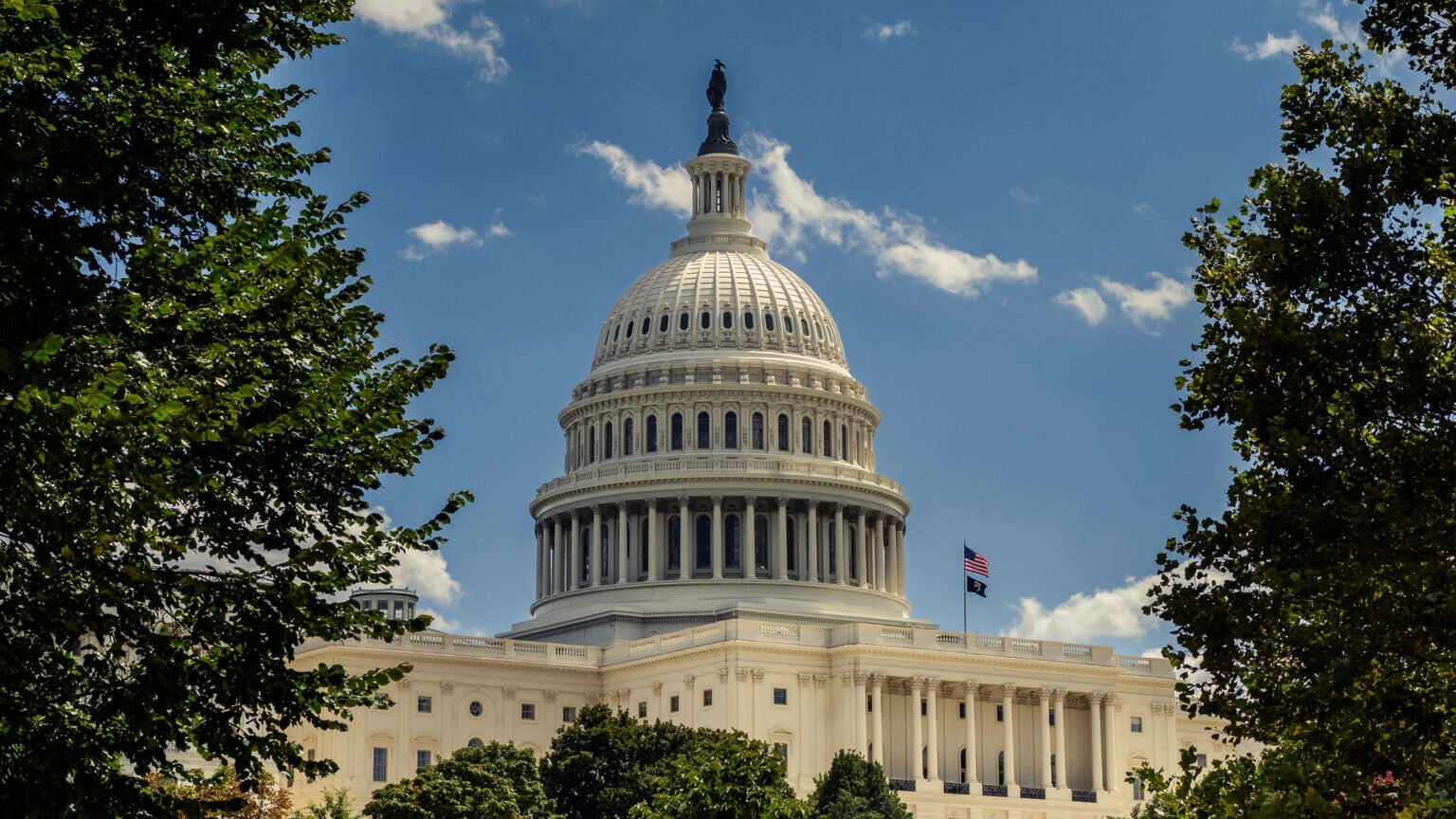
How could the outcome of the US midterm elections ever affect an Oxford student? Well, the elections might affect the cost of your next Tesco or Sainsbury’s visit. This month, diesel prices surpassed £2 per litre. British grocery inflation also just ticked up to 2.5% from 2.3%. The two are not unrelated. Many attribute Britain’s inflation to the ongoing conflict between Iran and the United States in the Middle East. On top of this, the Trump administration has threatened a 100% tariff on UK goods if the country does not abandon its digital services tax.
For better or worse, US government policy can affect the world, and with President Trump’s party holding slim majorities in both legislative chambers, current US policy may be challenged or forced to change. While, strictly speaking, the midterm elections only involve voting for representatives and senators, many view them as a vote of confidence in the president. Historically, the election has generally reflected a lack of confidence in the president, at least within the House of Representatives. Since 1946, regardless of party, the incumbent president’s party has gained seats in just two midterm elections: 1998 and 2002. These elections stand out because 1998 was the year President Clinton was impeached and 2002 was the election following 9/11.
Making sense of the midterms
Let’s say you agree with the notion that the outcome of the midterms may affect your grocery spend or your travel spend between or after term time; how on Earth do you make sense of the US election? Why do some politicians appear up for election and others do not? How do you know if power has shifted and a debate will occur on issues that affect an Oxford student?
In the US, Congress consists of two elected legislative bodies: the House and the Senate. Every two years, the entire House and one-third of the Senate stand for election.
A representative serves a two-year term in the House. This means the entire House stands for election on a two-year cycle, which includes the presidential election and the midterms in between. Currently, the Republican Party holds a slim majority in the House, and the Democratic Party would need a net gain of 3 seats to take control.
A senator, on the other hand, serves a six-year term, and there are 100 Senators. Further, the Senate is divided into three classes, with about 33 Senators per class. Senate elections are staggered so that one-third of the Senate stands for election every two years. Like in the House, the Republicans hold a majority in the Senate, and the Democrats would need a net gain of 4 seats to take control.
What Congress can do
Now that we understand how the election works, how would a change of power in Congress affect an Oxford student’s daily life?
Congress was designed as a restraint on the presidency. Congress possesses extensive power in budgeting, defence, foreign policy, trade, and other matters which can be used to counter the president. If the opposition party, the Democrats, wins control of either or both chambers, then expect attempts to foil President Trump. This matters to students from the UK and abroad. As mentioned before, US global policy might increase our food bill, but even more, as petrol prices rise, so will prices for all travel and, in particular, air travel back home for international students.
The Iran war
So, what can Congress do? Congress has a variety of options to influence the Iran war, one of which is the War Powers Resolution. Under this law, Congress could force an end to hostilities by voting to instruct the president to begin withdrawing the US military from hostilities within 60 days. However, this would require a supermajority of Congress because the president would likely veto a War Powers Resolution on the Iran war.
Alternatively, Congress can take other steps to impede the war. This includes restricting the military’s budget, rejecting or not voting on nominees, holding hearings, forcing Department of Defense officials to testify, and more. If the Senate doesn’t confirm a nominee, the president is limited in whom he may select, and the ‘acting’ official tends to hold little political power. All of this pressure would go a distance in bringing an end to a conflict that has increased petrol in the UK by 16-30% on average and increased airline jet fuel globally by 20%.
Tariffs and the power of the purse
On tariffs, Congress could pass legislation to terminate specific tariffs or rescind the president’s authority more broadly. Much of the same congressional options that applied to the Iran war also apply to tariffs. The key difference is that if both chambers of Congress switch to the Democrats, there is a good chance legislation curtailing the President’s tariffs could override a presidential veto.
The congressional power of the purse should also not be underestimated. In 2019, former Speaker of the House Nancy Pelosi refused to allow appropriations legislation to pass over a dispute to fund a border wall on the US-Mexico border, leading to a government shutdown. This can hurt the American public, as the lack of funding ceases or slows essential operations and functions like airports, issuance of small business loans, court proceedings, and heavily used public venues like national parks. Traditionally, this stalemate places great pressure on the party that appears unwilling to compromise and in 2019, President Trump found himself in that position. All of this puts the President’s 10% tariff on UK goods in jeopardy and diminishes the risks of new tariff threats.
The bottom line
So, today, take note of these facts if you attend a University of Oxford watch party. The election taking place 3,000 miles away may affect you more than you imagine, as it may affect the cost of what you eat, the cost of travel around Oxford, the cost of a flight home following term time, or even more; it may affect the global economy every Oxford student wishes to work in. Don’t stay up too late, but hopefully, if you watch the election, you will appreciate its significance, and it will also provide some entertainment.
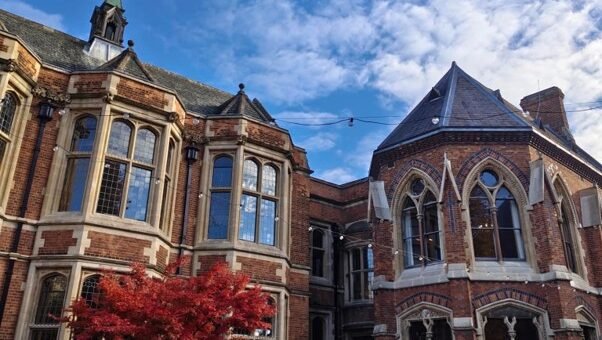
Two forms of identification will be required to vote at the Oxford Union following consecutive instances of electoral fraud involving impersonation. Voters will now need to provide their membership card and one additional form of identification, after the Standing Committee accepted a rule change earlier this week.
Union President Gareth Lim told Cherwell that the change aims to protect the accuracy and integrity of the electoral process, especially to avoid the impact of counterfeit and illicitly obtained membership cards. The proposal to the Standing Committee described the previous system as “open to abuse” and added that the new rules are written under the principle that “the election system should be fully defensible against attempted fraud”.
Impersonation and false membership cards disrupted the two most recent Union elections.
In Trinity Term 2026, the election count was suspended after a Returning Officer identified evidence of substantial interference before boxes were opened. CCTV showed individuals attempting to cast votes using membership cards which were not their own.
Similar electoral fraud occurred during elections in Hilary, as President-Elect Catherine Xu was removed after a separate Tribunal found she had distributed membership cards belonging to other people for voting.
After both elections, membership cards were seized, and those found guilty have been suspended from the Union.
Lim proposed the new double-identification system over the summer. The Standing Committee recommended the changes, and they were affirmed by the Union’s ‘house’ on Thursday.
When asked why these measures have only come under consideration after the second instance of attempted fraud, the President told Cherwell the rules follow suspected large-scale counterfeit voting in June, whereas the Hilary election was suspected to be the scheme of one individual at the time.
Guidance on what will be accepted as secondary identification has not yet been confirmed. Cherwell understands that student identification, including Bodleian cards, will be sufficient.
In addition to the changes to voter identification, the Union is also changing the process through which candidates are selected for standing committee. Starting from the elections in Hilary term 2027, candidates for Secretary’s Committee will require three unique nominators who are not candidates themselves to stand. The change is being introduced to “help reduce the unfair and unnecessary burden placed on electoral officials by the frivolous nomination of candidates with no interest or support in winning”.
A mock election to trial the new system will be conducted by the Returning Officers during the Union’s US Midterm Election event this evening. Attendees have been directed to bring both their government ID and Union card. The new rules will take effect for the next election on 27th November.



-

 Oxford united FC4 weeks ago
LIVE: Exeter City vs Oxford United – Jersey Mike's Trophy group stage
-

 Oxford united FC4 weeks ago
Oxford United lose to Exeter City on penalties in Jersey Mike’s Trophy
-

 Student Life4 weeks ago
Rhodes scholarships cut amid financial difficulties
-

 Student Life3 weeks ago
From Oxford to Cambridge: The 204-mile punt for Alzheimer’s
-

 Oxford united FC4 weeks ago
Chris Gunter details Oxford United tactical adjustments
-

 Oxford united FC4 weeks ago
Oxford United youngster opens up on ‘surreal’ Aaron Ramsey influence
-

 Oxford united FC4 weeks ago
Oxford United win 2-1 at Notts County in League One return
-

 Oxford united FC4 weeks ago
LIVE: Exeter City 2-1 Oxford United – Grecians lead after Bradney debut goal