
Oxford University
Celebrating one year of Oxford Intersections


Oxford Intersections is our online interdisciplinary research resource, inviting academics and global experts to investigate the world’s most urgent and challenging subjects from all angles.
As we mark one year since the programme launched, we reflect on the over 300 articles we’ve published since then, covering over 250 subject areas from authors all over the world.
Intersections are organized by topic, inviting ideas from different disciplines to clash, complement, and counterpoint, prompting new viewpoints and questions. Explore some of the original content published so far in our first four topics:
AI in Society
Philipp Hacker, General Editor of AI in Society, and Chair for Law and Ethics of the Digital Society at European University Viadrina:
“AI in Society investigates AI’s pervasive influence on our economic, legal, personal, and cultural spheres. It takes a unique format, in which contributors from various disciplines collaborate to chart both the promises and societal challenges of AI, with particular attention to generative AI models and their global impact. From my perspective as its General Editor, AI in Society aims to serve as a reliable reference point for ongoing debates on how to align technological innovation with fundamental rights and societal values.”
Read Philipp’s full article

Read some of the published research
Borders
Alexander Diener, Professor of Geography at the University of Kansas, and Joshua Hagen, Dean of the College of Letters and Science, University of Wisconsin-Stevens Point, General Editors of Borders:
“We hope readers will engage Oxford Intersections: Borders to encounter new perspectives on a topics that is elemental to human experience and foundational to the form and function of power.”

Read some of the published research
Beyond Oral Tradition: Digitalizing Indigenous Environmental Knowledge for Climate Resilience in Africa
Dorcas Stella Shumba
Reconfiguring Borders: The Role of Conspiracy Theories in Shaping Knowledge and Information Flows in Online Discourse
Massimiliano Demata
Concepts from the Margins: Reimagining Governance and Belonging Through Border Children’s Lived Experiences
Ana Isabel Sandoval
Racism by Context
Meena Dhanda, General Editor of Racism by Context and Professor of Philosophy and Cultural Politics at the University of Wolverhampton:
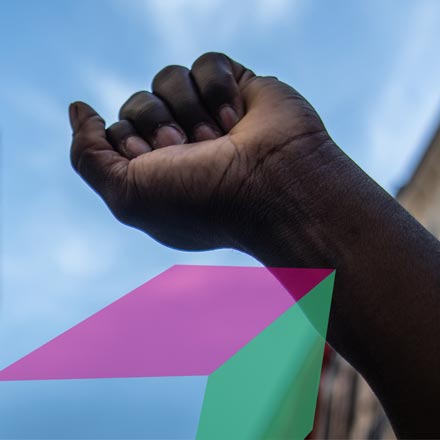
“Combatting racism requires an unflinchingly analytical understanding of the roots, the history, the manifestation, the mechanisms, the proliferation, and the entanglement of its many forms within institutions and practices across all spheres of human interaction. Racism by Context has undertaken this enormous challenge by bringing into conversation cutting-edge research from different global locations.”
Read some of the published research
Hair Discrimination and the Racialization of Black Young People’s Bodies: A Critical Analysis of Racism in U.K. School Settings
Siobhan O’Neill, Karis Campion, Sweta Rajan-Rankin
Soul Circuitry: Chronicles of Cyborgian Intelligence in Afrofuturism
Nettrice Gaskins
‘You are Nathan F*cking Shelley!’: Orientalism, White Saviourism, and the Radicalization of Nate in Ted Lasso
Adam Ehsan Ali, Matt Ventresca
Social Media in Society and Culture
Laeeq Khan, General Editor of Social Media in Society and Culture and Associate Professor in the School of Media Arts & Studies at Ohio University:
“Addressing today’s most pressing challenges requires a new approach to thinking. An interdisciplinary transformative approach can advance knowledge by exploiting and harmonizing the strengths of various disciplines within a unified framework. This approach deepens our collective understanding by bringing together the disparate and sometimes contradictory perspectives of many disciplines, all of which offer valuable insights.”

Read some of the published research
Sharenting on Instagram: A Study of Emotional Well-Being and Child Safety
P V Chandana, Velayutham Chandrasekharan, Tamilselvi Natarajan
Gaming on Social Media: An X- and YouTube-Driven Social Network Analysis of Minecraft Conversations
Mohd Ali Samsudin, Goh Kok Ming
Functional Aspects of Ritual in Digital Religion
Antonio Salvati
What’s coming next
In addition to continually developing our published topics, in the next year we’ll be launched intersections for Environmental Change and Human Experience, Gender Justice, Climate Adaptation, and Cultures of Waste, with many more to come in the following years.
Discover the full collection here.
The post Celebrating one year of Oxford Intersections appeared first on Oxford University Press.

Chair of the Global Prize Committee and Professor of International History and Politics at the Geneva Graduate Institute
“This year’s pool of submissions was remarkably strong. A large number of manuscripts made genuine contributions to their respective fields and were worthy of serious consideration. The judging process was accordingly tough and energizing. I, for one, learned an enormous deal about themes as diverse as Caribbean environments, Vietnamese cities, and Latin American rivers.
“The ECR First Book Prize is invaluable. It doesn’t just recognize excellent books, but helps launch them.”
Rhea Realo, Head of Digital Product at OUP ANZ, said:
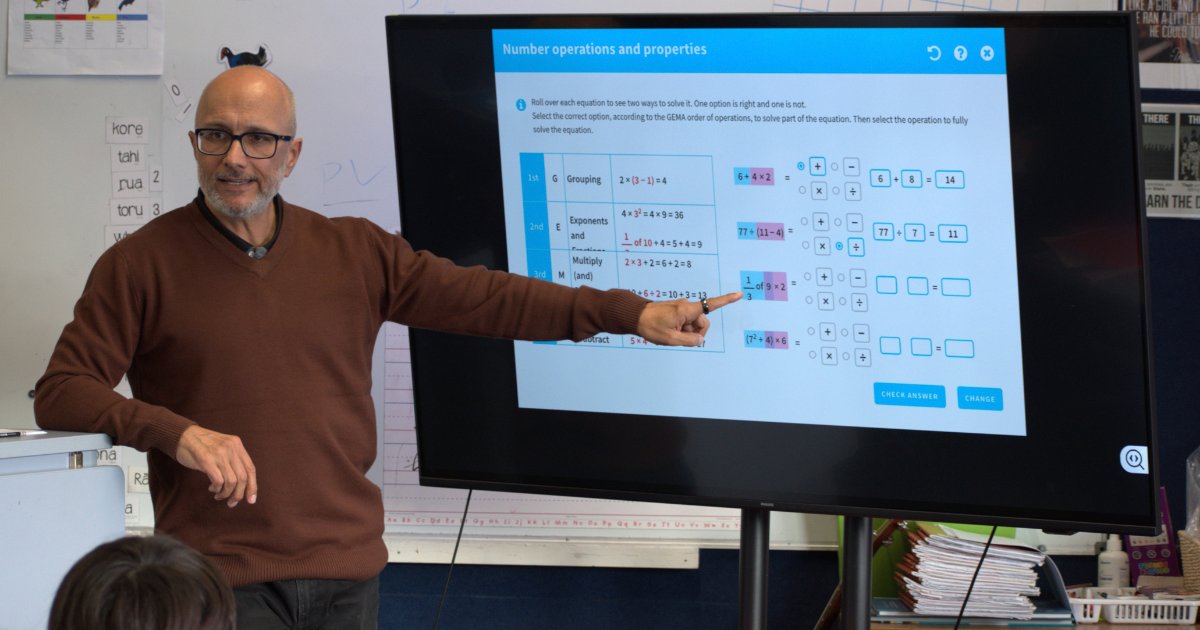
“Oxford Digital brings together proven education research, recognized accessibility standards, and ongoing feedback from teachers. Being named a finalist on the global stage is a strong endorsement of the practical, inclusive learning experience we’ve worked with educators to create.”
The Oxford English Dictionary (OED) is a historical dictionary, containing over 500,000 entries and 3.5 million quotations to capture over 1,000 years of English.
Every quarter, we update the OED by revising versions of existing entries as well as defining new words and senses. These updates subtly broaden our understanding of the English language and its use around the world.
10 highlights from this quarter’s update
1. We added more than 400 new words, phrases, and senses to the OED this quarter, including hot yoga, fantabulosa, will-they-won’t-they, and auto-reply.
2. By happy coincidence this update lands just before International Coffee Day (1 October). Coffee drinks new to the OED include Café Cubano, café con leche, cafezinho, and cold brew.
3. This release sees additions from across the world, including contributions from East Africa, Caribbean, Bermuda, New Zealand, Wales, and the Isle of Man. Learn more from Executive Editor, Danica Salazar.
4. From shadeesh to hamma, we welcome several Bermudian English additions, as part of a valuable new collaboration with the Bermuda Spelling Bee. This is an annual spelling competition for 9- to 13-year-olds designed to foster a love of language and learning among young Bermudians.
5. Several new words for supernatural creatures appear in this update. From Welsh folklore we have a bwbach, from Caribbean folklore a jablesse, and we also have the Trinbagonian addition of douen.
6. An important feature of the OED’s New Words team’s work is its Monitor Lexicography (MonLex) programme. This is our way of monitoring, collecting, and prioritizing contemporary language for inclusion in the OED, looking at sources including trending words on language corpora, social media, material generated by our reading programmes, and suggestions made by colleagues on our own internal database. Every other quarter we gather the items collected and assess them for inclusion, prioritizing so that we include the most relevant and important.
Some new words added this quarter from our MonLex programme include: the social media sense of timeline, the sense of slammed meaning very busy or overcome with work, the chiefly North American English word bothsidesism, and lastly, overnight oats.
7. Craig Leyland, Executive Editor, notes the welcome of two reference related words – thesaural and mountweazel. The latter is defined as ‘an invented or fake entry in a reference work (esp. a dictionary or an encyclopedia), a database, etc., typically used by the publisher to identify plagiarism that constitutes an infringement of copyright’. Does the OED contain any mountweazels? We can’t say, of course. You can read more from Craig about both here.
8. More than 700 entries have been revised as part of this update, including ‘gym’ and ‘kanaka’ words. Read more in this commentary from Andrew Ball, OED Editor.
9. The words newly revised this quarter show an especially rich variety of etymologies. In the month that the Bayeux Tapestry goes on view in London, it is fitting that we have a healthy crop of Middle English borrowings from French, or more specifically Anglo-Norman (i.e. French as used in medieval Britain), including doubt, equity, fantasy, and garner. Read more from Philip Durkin, OED Deputy Chief Editor.
10. And finally, being asked about ‘scone’ usually raises a groan for pronunciation editors, but it was good to have the opportunity to provide the ‘skoon’ pronunciation appropriate for the Stone of Scone in this update. Hear more from Catherine Sangster, OED Pronunciation Editor.
Explore the update in more depth here.


Oxford United player ratings in bizarre Mansfield Town draw

Number of cloned number plates on UK roads at record high, data shows | Transport

LIVE: Mansfield Town 1-1 Oxford United – Two red cards as U's down to nine men
-

 Oxford united FC4 weeks ago
Chris Gunter steps away Wales role to focus on Oxford United
-

 Oxford University3 weeks ago
New to the Oxford English Dictionary this September
-

 Oxford united FC1 week ago
LIVE: Exeter City vs Oxford United – Jersey Mike's Trophy group stage
-

 Traffic & Transport2 weeks ago
How poor public transport policy is putting the brake on cities | Road transport
-

 Student Life3 weeks ago
Oxford partnership allows OpenAI to use rare Bodleian texts to train ChatGPT
-

 Traffic & Transport2 weeks ago
Why should I have to pay more for buses if I don’t use a smartphone? | Bus fares
-

 Oxford united FC2 weeks ago
Northern Ireland fans laud Oxford United defender Ciaron Brown
-

 Oxford Events4 weeks ago
Four days of equestrian spectacle at 2026 Blenheim Palace International Horse Trials