
Oxford University
New research shows teenagers are divided over AI use for schoolwork


According to findings in our new research exploring pupils’ perspectives on the role of AI in classrooms, teenagers are unclear over appropriate use of AI in their schoolwork.
We conducted research with almost 4,000 13-18-year-olds across the UK, revealing the different approaches that young people take to using AI in their schoolwork, and what roles they see AI playing education—both for them and their teachers.
The report follows on from research we published in 2025, which was one of the first pieces of UK research to hear directly from young people regarding their views on AI in education.
Some of our key findings:
Appropriate use of AI is a grey area
While only four in 10 (44%) think it is cheating to use AI to complete all of their homework, almost one in five also think it is cheating to simply ask any AI tool to give them homework tips.
Students are calling for more support from schools
Just 15% of students stated they have been given enough guidance.
77% would like to see their teachers use AI to support their class in lessons
Key areas include using AI to make complex work easier to understand and lesson planning.
Pupils emphasize their teacher’s unique value
73% pointed to a skill their teacher has which AI can never replace, such as personability, empathy, and human understanding.
Using AI in written tasks
In our qualitative studies, students were asked to complete a simple written exercise and offered the choice of using a generative AI tool if they wished. Of those who had access to AI, almost three quarters (72%) decided not to use it. Of those who didn’t have access, less than a quarter (23%) said they would have liked to have used an AI tool if they had been able to do so.
Young people do not use AI as a default for homework
The qualitative studies mirror survey findings, which highlight that young people do not use AI as a default for their homework, with only one in four (24%) regularly seeking out AI tools. Furthermore, one in three (34%) only use AI tools to help with their homework if suggested by their teachers compared to just 13% who are influenced by their friends.
Students are more excited than worried over impact of AI on their education
Four in 10 students (39%) are more excited than worried about the impact of AI on their education, compared to 16% who said they were more concerned and less than one in three (30%) who felt neither way.
What helps students learn more effectively when using AI?
When asked what helps them learn more effectively when using AI, the majority expressed preferences for AI tools that suggested tasks they can do to help them understand the subject better (44%) or asked them questions to help them reach the answer on their own (41%), compared to just one in five wanting an AI tool to give them the answer straight away.

Dr Alexandra Tomescu
Head of Product AI
“Whilst the research highlights that the appropriate use of AI is still a grey area for students, it’s reassuring to see young people’s sophisticated attitude towards AI. Both the research and qualitative studies show AI is not necessarily a default for all students, and despite being excited about its impact on their education they still inherently value the role of their teachers and look to their school for guidance. It’s vital therefore that we support teachers with the resources and tools they need to responsibly guide their pupils and harness AI’s potential in the classroom.”
Read the full report on Navigating AI in Education here, and find out more about our updated AI resources and guidance here.
The post New research shows teenagers are divided over AI use for schoolwork appeared first on Oxford University Press.

Chair of the Global Prize Committee and Professor of International History and Politics at the Geneva Graduate Institute
“This year’s pool of submissions was remarkably strong. A large number of manuscripts made genuine contributions to their respective fields and were worthy of serious consideration. The judging process was accordingly tough and energizing. I, for one, learned an enormous deal about themes as diverse as Caribbean environments, Vietnamese cities, and Latin American rivers.
“The ECR First Book Prize is invaluable. It doesn’t just recognize excellent books, but helps launch them.”
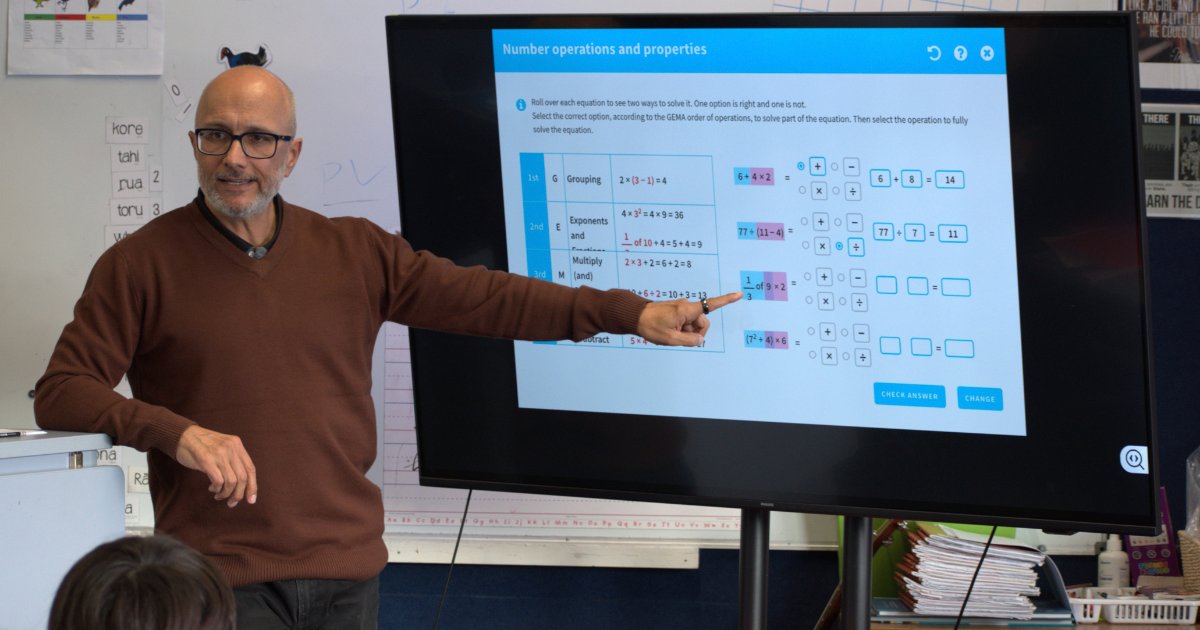
Rhea Realo, Head of Digital Product at OUP ANZ, said:
“Oxford Digital brings together proven education research, recognized accessibility standards, and ongoing feedback from teachers. Being named a finalist on the global stage is a strong endorsement of the practical, inclusive learning experience we’ve worked with educators to create.”

The Oxford English Dictionary (OED) is a historical dictionary, containing over 500,000 entries and 3.5 million quotations to capture over 1,000 years of English.
Every quarter, we update the OED by revising versions of existing entries as well as defining new words and senses. These updates subtly broaden our understanding of the English language and its use around the world.
10 highlights from this quarter’s update
1. We added more than 400 new words, phrases, and senses to the OED this quarter, including hot yoga, fantabulosa, will-they-won’t-they, and auto-reply.
2. By happy coincidence this update lands just before International Coffee Day (1 October). Coffee drinks new to the OED include Café Cubano, café con leche, cafezinho, and cold brew.
3. This release sees additions from across the world, including contributions from East Africa, Caribbean, Bermuda, New Zealand, Wales, and the Isle of Man. Learn more from Executive Editor, Danica Salazar.
4. From shadeesh to hamma, we welcome several Bermudian English additions, as part of a valuable new collaboration with the Bermuda Spelling Bee. This is an annual spelling competition for 9- to 13-year-olds designed to foster a love of language and learning among young Bermudians.
5. Several new words for supernatural creatures appear in this update. From Welsh folklore we have a bwbach, from Caribbean folklore a jablesse, and we also have the Trinbagonian addition of douen.
6. An important feature of the OED’s New Words team’s work is its Monitor Lexicography (MonLex) programme. This is our way of monitoring, collecting, and prioritizing contemporary language for inclusion in the OED, looking at sources including trending words on language corpora, social media, material generated by our reading programmes, and suggestions made by colleagues on our own internal database. Every other quarter we gather the items collected and assess them for inclusion, prioritizing so that we include the most relevant and important.
Some new words added this quarter from our MonLex programme include: the social media sense of timeline, the sense of slammed meaning very busy or overcome with work, the chiefly North American English word bothsidesism, and lastly, overnight oats.
7. Craig Leyland, Executive Editor, notes the welcome of two reference related words – thesaural and mountweazel. The latter is defined as ‘an invented or fake entry in a reference work (esp. a dictionary or an encyclopedia), a database, etc., typically used by the publisher to identify plagiarism that constitutes an infringement of copyright’. Does the OED contain any mountweazels? We can’t say, of course. You can read more from Craig about both here.
8. More than 700 entries have been revised as part of this update, including ‘gym’ and ‘kanaka’ words. Read more in this commentary from Andrew Ball, OED Editor.
9. The words newly revised this quarter show an especially rich variety of etymologies. In the month that the Bayeux Tapestry goes on view in London, it is fitting that we have a healthy crop of Middle English borrowings from French, or more specifically Anglo-Norman (i.e. French as used in medieval Britain), including doubt, equity, fantasy, and garner. Read more from Philip Durkin, OED Deputy Chief Editor.
10. And finally, being asked about ‘scone’ usually raises a groan for pronunciation editors, but it was good to have the opportunity to provide the ‘skoon’ pronunciation appropriate for the Stone of Scone in this update. Hear more from Catherine Sangster, OED Pronunciation Editor.
Explore the update in more depth here.


Number of cloned number plates on UK roads at record high, data shows | Transport

LIVE: Mansfield Town 1-1 Oxford United – Two red cards as U's down to nine men

Nine-man Oxford United secure 1-1 draw at Mansfield Town
-

 Oxford united FC4 weeks ago
Chris Gunter steps away Wales role to focus on Oxford United
-

 Oxford University3 weeks ago
New to the Oxford English Dictionary this September
-

 Traffic & Transport2 weeks ago
How poor public transport policy is putting the brake on cities | Road transport
-

 Student Life3 weeks ago
Oxford partnership allows OpenAI to use rare Bodleian texts to train ChatGPT
-

 Oxford united FC1 week ago
LIVE: Exeter City vs Oxford United – Jersey Mike's Trophy group stage
-

 Traffic & Transport2 weeks ago
Why should I have to pay more for buses if I don’t use a smartphone? | Bus fares
-

 Oxford united FC2 weeks ago
Northern Ireland fans laud Oxford United defender Ciaron Brown
-

 Oxford Events3 weeks ago
Four days of equestrian spectacle at 2026 Blenheim Palace International Horse Trials