
Oxford University
Oxford Test of English recognized across Vietnam


The Oxford Test of English has been officially recognized by Vietnam’s Ministry of Education and Training (MOET) for use across the country’s education system—marking a major milestone for learners, educators, and institutions nationwide.
Following Decision No. 1429/QĐ-BGDĐT, the test is now formally aligned with Vietnam’s National 6-level Foreign Language Proficiency Framework and can be used for university admissions and training.
This nationwide recognition reflects Vietnam’s growing focus on international standards in education and increasing demand for practical English skills.
By adding the Oxford Test of English to its approved qualifications, Vietnam is giving learners greater flexibility and choice, which will enable them to demonstrate their English proficiency through a globally trusted assessment.
Sara Pierson, Managing Director, Oxford English Assessment, said: “We are delighted that the Oxford Test of English has been recognized across Vietnam. This milestone reflects our commitment to providing accessible, flexible, and reliable assessment that helps learners demonstrate the real-world English skills they need to succeed in study and work.”
A practical test for real‑world communication
Developed by Oxford University Press and certified by the University of Oxford, the Oxford Test of English is designed to assess how well learners can use English in everyday academic and professional contexts.
The test covers all four key skills: Listening; Speaking; Reading; and Writing.
Aligned to the Common European Framework of Reference (CEFR), it goes beyond theory—focusing on real-life communication such as presenting ideas, understanding specialized content, and writing emails and reports.
The Oxford Test of English is built for convenience and flexibility:
- 100% online delivery at approved test centres
- Modular format: take all four skills or individual modules
- Adaptive testing: questions adjust to each learner’s level
- Fast results: same day for Listening and Reading; within five days for Speaking and Writing.
This approach allows learners to tailor their test experience, save time and cost, and focus on the skills that matter most to them.
Delivered in Vietnam with trusted local expertise
In Vietnam, the Oxford Test of English is delivered in partnership with UKTA International Education Joint Stock Company (UKTA), the exclusive distributor of the test in the country.
UKTA works closely with local education partners to develop and manage a nationwide network of approved test centres, ensuring that every test is delivered in line with our standards.
Beyond expanding access, UKTA also plays a key role in quality assurance, helping to provide a secure, consistent, and reliable testing experience for candidates across Vietnam.
With a growing network of approved test centres across the country, students can now access the Oxford Test of English easily, with flexible test dates available year-round.
The test’s recognition within Vietnam’s national framework provides a clear pathway for learners to meet academic requirements, support graduation, and strengthen their career prospects in an increasingly global environment.
Discover how the Oxford Test of English can support your goals here.

Chair of the Global Prize Committee and Professor of International History and Politics at the Geneva Graduate Institute
“This year’s pool of submissions was remarkably strong. A large number of manuscripts made genuine contributions to their respective fields and were worthy of serious consideration. The judging process was accordingly tough and energizing. I, for one, learned an enormous deal about themes as diverse as Caribbean environments, Vietnamese cities, and Latin American rivers.
“The ECR First Book Prize is invaluable. It doesn’t just recognize excellent books, but helps launch them.”
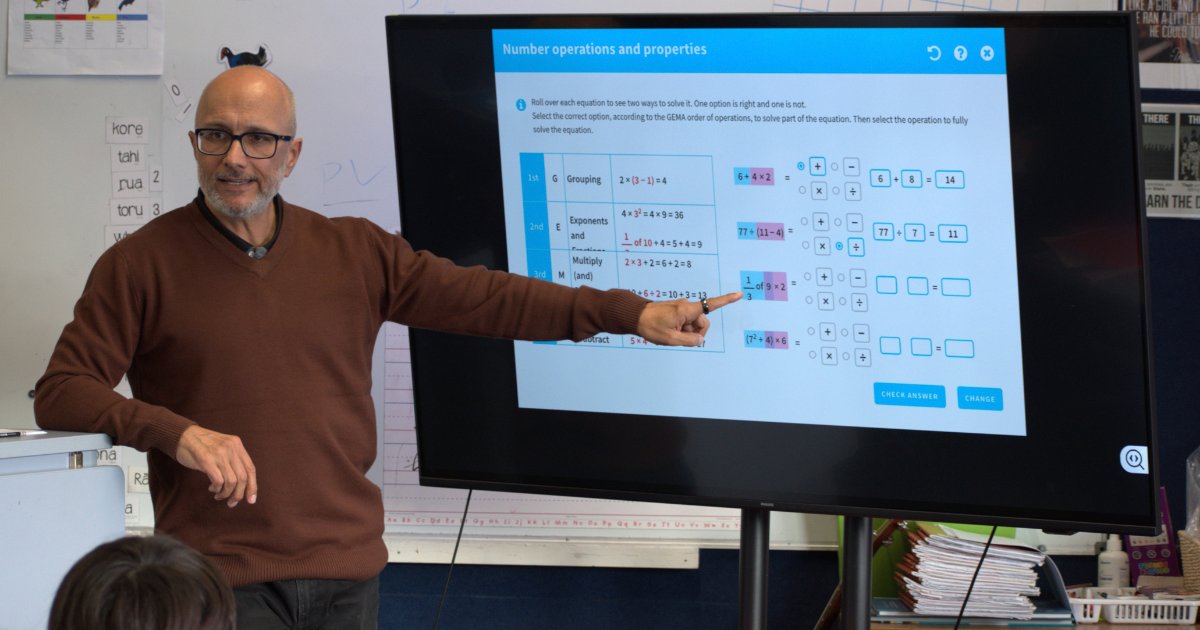
Rhea Realo, Head of Digital Product at OUP ANZ, said:
“Oxford Digital brings together proven education research, recognized accessibility standards, and ongoing feedback from teachers. Being named a finalist on the global stage is a strong endorsement of the practical, inclusive learning experience we’ve worked with educators to create.”

The Oxford English Dictionary (OED) is a historical dictionary, containing over 500,000 entries and 3.5 million quotations to capture over 1,000 years of English.
Every quarter, we update the OED by revising versions of existing entries as well as defining new words and senses. These updates subtly broaden our understanding of the English language and its use around the world.
10 highlights from this quarter’s update
1. We added more than 400 new words, phrases, and senses to the OED this quarter, including hot yoga, fantabulosa, will-they-won’t-they, and auto-reply.
2. By happy coincidence this update lands just before International Coffee Day (1 October). Coffee drinks new to the OED include Café Cubano, café con leche, cafezinho, and cold brew.
3. This release sees additions from across the world, including contributions from East Africa, Caribbean, Bermuda, New Zealand, Wales, and the Isle of Man. Learn more from Executive Editor, Danica Salazar.
4. From shadeesh to hamma, we welcome several Bermudian English additions, as part of a valuable new collaboration with the Bermuda Spelling Bee. This is an annual spelling competition for 9- to 13-year-olds designed to foster a love of language and learning among young Bermudians.
5. Several new words for supernatural creatures appear in this update. From Welsh folklore we have a bwbach, from Caribbean folklore a jablesse, and we also have the Trinbagonian addition of douen.
6. An important feature of the OED’s New Words team’s work is its Monitor Lexicography (MonLex) programme. This is our way of monitoring, collecting, and prioritizing contemporary language for inclusion in the OED, looking at sources including trending words on language corpora, social media, material generated by our reading programmes, and suggestions made by colleagues on our own internal database. Every other quarter we gather the items collected and assess them for inclusion, prioritizing so that we include the most relevant and important.
Some new words added this quarter from our MonLex programme include: the social media sense of timeline, the sense of slammed meaning very busy or overcome with work, the chiefly North American English word bothsidesism, and lastly, overnight oats.
7. Craig Leyland, Executive Editor, notes the welcome of two reference related words – thesaural and mountweazel. The latter is defined as ‘an invented or fake entry in a reference work (esp. a dictionary or an encyclopedia), a database, etc., typically used by the publisher to identify plagiarism that constitutes an infringement of copyright’. Does the OED contain any mountweazels? We can’t say, of course. You can read more from Craig about both here.
8. More than 700 entries have been revised as part of this update, including ‘gym’ and ‘kanaka’ words. Read more in this commentary from Andrew Ball, OED Editor.
9. The words newly revised this quarter show an especially rich variety of etymologies. In the month that the Bayeux Tapestry goes on view in London, it is fitting that we have a healthy crop of Middle English borrowings from French, or more specifically Anglo-Norman (i.e. French as used in medieval Britain), including doubt, equity, fantasy, and garner. Read more from Philip Durkin, OED Deputy Chief Editor.
10. And finally, being asked about ‘scone’ usually raises a groan for pronunciation editors, but it was good to have the opportunity to provide the ‘skoon’ pronunciation appropriate for the Stone of Scone in this update. Hear more from Catherine Sangster, OED Pronunciation Editor.
Explore the update in more depth here.


Number of cloned number plates on UK roads at record high, data shows | Transport

LIVE: Mansfield Town 1-1 Oxford United – Two red cards as U's down to nine men

Nine-man Oxford United secure 1-1 draw at Mansfield Town
-

 Oxford united FC4 weeks ago
Chris Gunter steps away Wales role to focus on Oxford United
-

 Oxford University3 weeks ago
New to the Oxford English Dictionary this September
-

 Traffic & Transport2 weeks ago
How poor public transport policy is putting the brake on cities | Road transport
-

 Student Life3 weeks ago
Oxford partnership allows OpenAI to use rare Bodleian texts to train ChatGPT
-

 Oxford united FC1 week ago
LIVE: Exeter City vs Oxford United – Jersey Mike's Trophy group stage
-

 Traffic & Transport2 weeks ago
Why should I have to pay more for buses if I don’t use a smartphone? | Bus fares
-

 Oxford united FC2 weeks ago
Northern Ireland fans laud Oxford United defender Ciaron Brown
-

 Oxford Events3 weeks ago
Four days of equestrian spectacle at 2026 Blenheim Palace International Horse Trials