
Student Life
Hasan Piker and Cenk Uygur denied entry to UK days before Oxford Union and Oxford Speaks events

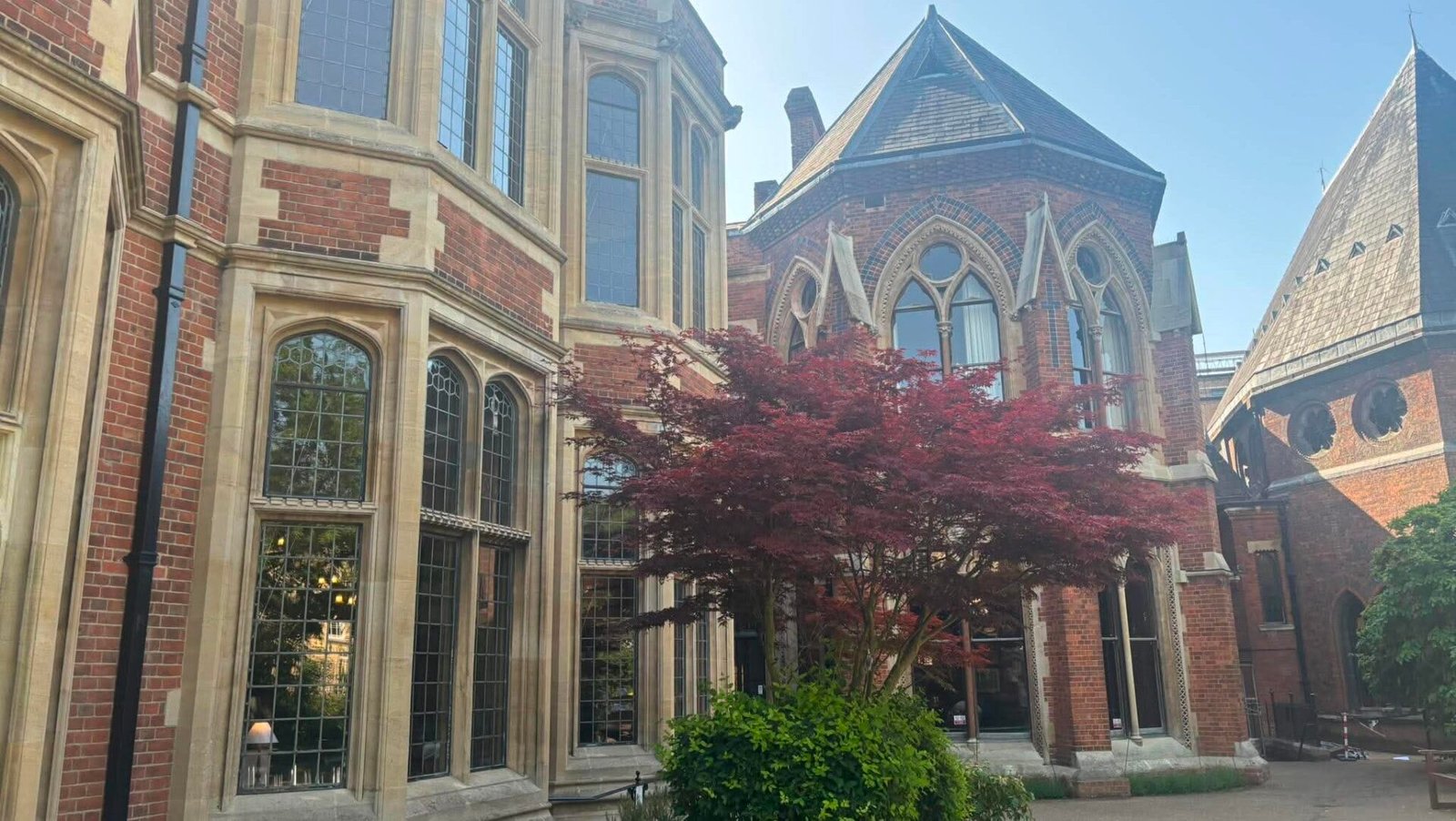
Cenk Uygur and Hasan Piker, both due to speak at the Oxford Union later this week, have been barred from entering the UK after the Home Office revoked their Electronic Travel Authorisations (ETAs).
Uygur and Piker had been scheduled to appear for an event advertised as “Joint Event & Student Head-to-Head” at the Union on 6th June. Both were also due to take part in events at South by Southwest London (SXSW), a music, film, and technology festival. Uygur was additionally expected to speak this term at an event hosted by Oxford Speaks.
Uygur is the founder and host of The Young Turks, an online news and politics talk show. Piker, Uygur’s nephew, is one of the most followed political livestreamers worldwide, with millions of followers across Twitch, YouTube, and X. Both are prominent figures in online left-wing commentary, particularly through their criticism of Israel’s actions in Gaza.
Ugyur announced the decision on social media on X last night, writing: “I’ve been banned from the UK. I tried to get on a flight to London to attend SXSW London and give a speech at Oxford. I’ve been banned for criticising Israel. Are we free anymore? This is oppression of Western citizens by our own governments on behalf of a different country!”
In a video published on The Young Turks channel this morning, Uygur added that he currently holds a two-year visa, which he understands to have been revoked, and described the decision as “a bit of a gut punch”.
Responding to Uygur’s tweet, Piker said that his authorisation had also been revoked, writing: “The UK has revoked my visa as well. all at the behest of Israel.” He also claimed that the decision reflected a broader abandonment of “liberal values” by Western governments.
A Home Office spokesperson told The Guardian that the pair’s ETAs had been cancelled because their presence in the UK “may not be conducive to the public good”. The spokesperson added that such decisions are based on assessments of the risk an individual may pose to society.
According to The Times, concerns were raised by the Home Office about Uygur’s previous comments on Israel. The newspaper reported that the Home Office decision is understood to have been based on concerns that his presence could exacerbate antisemitism. The Times coverage also cited concerns regarding comments Uygur had made about grooming gang scandals in the UK.
Oxford Union President Arwa Elrayess told Cherwell that the Union was “deeply concerned” by the revocation of the speakers’ ETAs. She described the timing of the decision as “troubling” given that the event had been “publicly announced for months”. Elrayess added that the Union was founded on the principle that “ideas should be challenged through debate, not ignored or silenced”, and argued that invited speakers should be able to express their views and be challenged by members “irrespective of political viewpoint”.
Elrayess also told Cherwell that the Union would “not allow this event to be shut down”, and is exploring alternative options for the event, including hosting it online, and said the society remains “steadfast in its commitment to open debate”.
The decision follows criticism of both speakers from politicians and campaign groups. Last week, Labour MP David Taylor called for Piker to be prevented from speaking in the UK, and added in a tweet shared this morning: “Thank you Home Secretary for revoking Hasan Piker’s visa. There’s no reason to open our doors to those who seek to spread hate and division, especially to those who’ve supported a proscribed terror group.”
The Community Security Trust (CST), a charity which provides physical security, training, and advice to protect British Jews, also urged organisers of SXSW London not to provide Piker with a platform. CST accused him of “promoting rhetoric that includes antisemitic themes, denial of well-documented atrocities and apparent support for extremist groups”.
Piker has also faced criticism for a number of previous remarks. In 2019, he apologised after saying that “America deserved 9/11”, later describing the comments as inappropriate. He has also been criticised for comments about Hamas and Israel, including saying that he “would vote for Hamas over Israel every single time” on an episode of Pod Save America. Piker has repeatedly denied accusations of antisemitism, describing himself as anti-Israel rather than antisemitic.
The decision also comes amid ongoing controversy over speakers invited to the Oxford Union. Earlier this term, Carl Benjamin was disinvited from a Union debate following objections from student groups. Far-right figures such as Tommy Robinson and Laurence Fox are also due to speak at an event later in the term, which has incurred significant backlash from across the University and the Oxford community.
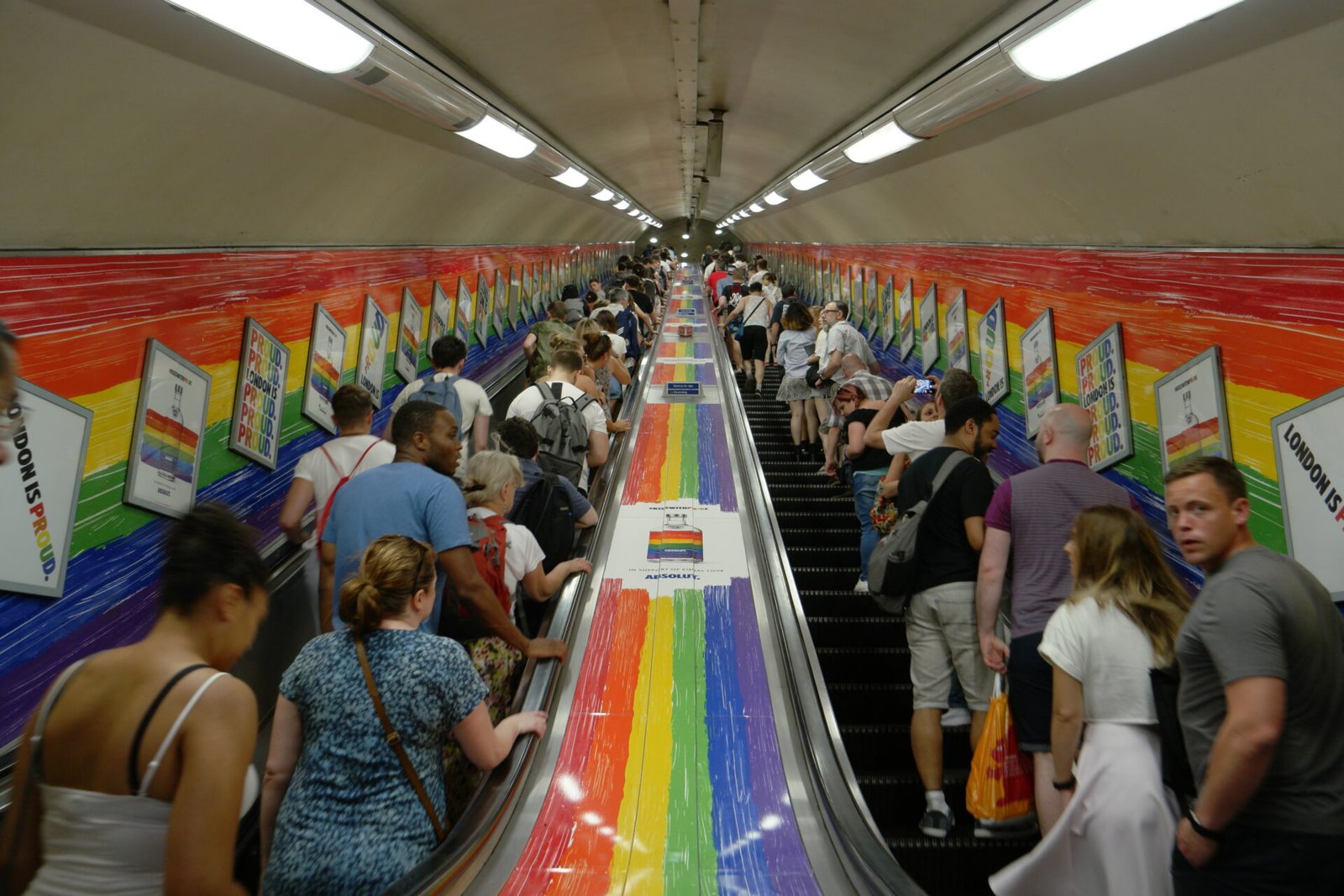
The Oxford Union recently hosted a divisive debate featuring Tommy Robinson, Laurence Fox, and other controversial figures. The city centre turned into an epicentre of polarisation, hatred and anger, with outraged protesters and counter-protesters creating sites of tension in our public spaces. Yet less than two weeks before these same streets were the centre stage of a celebration of love, connection, and humanity.
It was the first Pride Parade I had ever attended, and I was pleasantly surprised when offered to carry the Oxford University LGBTQ+ Society’s banner. I was so excited to connect with the rest of the group through our shared enthusiasm and experiences. Eagerly, I contacted many other queer friends to join. Their responses would soon shock me.
No one in my friend group and broader network actively despised this event. Yet a plethora had emphatically rejected my invitation to march, and not for the commonly cited reason of scheduling, essay deadlines, or fearing that they would run into their ex-Hinge or Grindr date. Responses described either a general anxiety that the celebration had lost its purpose (‘it’s never really about Pride anymore’), or a feeling that one’s identity could not be adequately described by the labels.
Admittedly, my initial reaction was one of surprise, with a mild hint of disdain. Why in a world where anti-LGBTQ+ rhetoric is on the rise in many supposedly accepting countries, such as the US or the UK, were we not eager to stand together? Yet my arrogant ignorance quickly turned into realisations of biases caused by my own experience.
As a queer Hungarian, Pride is not just a celebration; it is a protest, a rallying cry, and a force of nature. When the Parade was banned in 2025 through the far-right Orbán regime, it still took place in Budapest, and attendance was so overwhelming (numbering up to 200,000 in a country of less than 10 million) that police refused to proceed with investigations into participants. I grew up watching the degradation of my rights, and it filled me with motivation to never surrender to the prejudices of others.
This same passion created revolutionary changes in our society. Earlier this year, Orbán’s government was ousted, and Hungary transitioned from a far-right autocracy to a centre-right administration, a seemingly minor change that will nonetheless carry significant implications. The events of Budapest Pride 2025 likely played a role in motivating anti-government action. We fought for our rights despite the odds. Why does this impassioned mindset fail to manifest in those who refused to march with me?
For me, there appear to be two problems that mirror the responses I received from my friends: these are the complacency of those in Western Europe, and our imposition of identity on queer individuals in other cultures.
Firstly, in Western Europe and North America, there appears to be a sense of indifference to the whole event, as if our rights are already won, and there is nothing further to be done. I find this perspective rather problematic.
What does it mean to have rights? In a superficial sense, we have achieved equality with regard to marriage, adoption, and dignity in healthcare. However, have we obtained a fundamental queering of societies? Reflecting on when I had to hide the pride outfit I bought in my bag at Westgate for fear of abuse, or when I was harassed by a straight man who thought my gay identity made me his property, it is clear that there is still work to be done.
Rights are never fixed; they are broken down and reconstructed according to the demands and opinions of society. Already, support for same-sex marriage has fallen 6% in the US since 2023. Companies have dramatically downscaled their support during June, with Target in the US being a noteworthy example. Pride reminds us that the rights we have won are not inalienable. Mass apathy promotes societal woes.
Whilst I could effectively counter this critique, the feeling that some experienced about not being adequately represented at the Parade stumped me. I soon realised the problem; many of my friends do not come from a European or American background, yet the origins of modern LGBTQ+ rights originated in Stonewall in 1969. Imposing our Western European and North American queer identities on the rest of the world, letting ourselves speak for them, mirrors neo-colonial sentiments.
I realised that questions of representation were not unique to conversations in Oxford. A prominent issue in North America concerns Native American two-spirit individuals. One carries both male and female spirits regardless of their gender, affecting how they present and the relationships they form. Pride events such as those in Toronto failed to provide communities for these identities, leaving them subject to harassment and discrimination.
These discussions reveal that our views on Pride are shaped by both personal experience and societal labels. While these can foster belonging, they have also excluded and ‘othered’ many people. This does not mean abandoning Pride. Instead, we must not be complacent and ensure the event gives a voice to those whose identities do not fit European or American labels.
Next year, I will fly the flag above my head proudly. It is not the symbol of a country, but a community, one that has no borders. And as I walked through the street, I felt at home in my heart. I hope that one day everyone can share this feeling.

I distinctly remember turning to my friend upon reading the 2024 Cherwell article on rustication and proudly claiming: “You know, I have never seriously considered rustication.” Lo and behold, my mental health had other plans. Thus, after a Trinity filled with multiple ‘Fitness to Study’ meetings – and much delusion on my side about my ability to continue my degree – I made the decision in the summer following my second year to take a year out of university. That decision happened almost a year ago. So as I now begin to prepare for my return to the gowns, essays, and bops that make up Oxford student life, I can’t help but look back. In doing so, I noticed that, before it concerned me, I never actually knew much about rustication. Of course, I knew of it – rustication is commonly joked about by students, for instance, when the thought of spending one more hour in the Glink becomes unbearable. But I never really knew the details. For me, rustication has always been something shrouded in mystery, with even the name itself being more intriguing than the reality of ‘taking a year out of university’. As a currently rusticated, soon to be returning student, this is my experience on what it is like to rusticate, and how to navigate the year ahead.
The first thing people might not know is how genuinely unspectacular the rustication process is. In my case, the build-up towards the decision, which involved multiple meetings with my Director of Studies (DoS) and college welfare staff, was much more complex than the actual step of rustication. In order to rusticate, I merely had to put a few lines together in an email stating that I would not be returning in Michaelmas. That’s all it took to suspend my studies. Once you have rusticated, there are certain rules you must follow. For instance, whilst you have access to Oxford’s libraries and SOLO, you are not allowed to be taught. The exact definition of what “being taught” actually entails is rather hazy, but it essentially meant that all preparation and revision I did was done by myself, and any essays I wrote were not allowed to be corrected. Yet this didn’t mean that my college left me out in the cold. My DoS was a godsend, and we had regular catch-ups to see how I was doing. My college, too, was very forthcoming and answered any practical questions I had. So, on the academic side, things went more or less as I expected.
What came as more of a shock to me, however, was the social aspect – or lack thereof – of rustication. Of course, I was aware that while I was away, the world would keep spinning and my friends would go on with their lives and graduate, but nobody can quite prepare you for what that actually feels like. Such an inexplicable feeling can only be explained metaphorically: I imagine myself and my friends on a train, one so fast moving that once I get off, everyone else keeps moving forward, and I can never quite catch them up. Although I anticipated the stationary, static nature of my year of rustication, I could not have foreseen the intensity of this. Rationally, you know that everyone’s lives move at different paces, but try watching everyone’s end-of-term photo ‘dumps’ whilst you are thousands of miles away without experiencing that nagging feeling of “I should be there with them.” One way I dealt with this aspect of rustication was by distancing myself. For me, this was simple, as I live abroad, so actually visiting Oxford was rather difficult anyway. However, in the age of Instagram highlights, physical distance does not necessarily mean that you will know less about what your friends are doing, without you, while you are away. So once everyone began studying for finals, I actively avoided social media, because I could not cope with seeing my friends graduate while I was still ‘stuck’ at home. To me, opening social media felt like the reality of rustication was being shoved down my throat: I am missing key moments with my friends.
That said, in hindsight, I do not believe that you should completely distance yourself from Oxford life during rustication. Even though they may be having a different experience to you, thousands of miles away, your friends at university are still your friends, and staying in contact is crucial. Ideals do not always translate into reality, though: staying in touch is tough. But even as an extreme extrovert, I found it incredibly difficult to reach out to my Oxford friends and, to be honest, I have a hard time explaining why. In rationalising my feelings, I think I was scared of being confronted with the fact I was not there. I was scared that phone calls with updates of college life would only increase my “I should be there with them” mentality. So I didn’t reach out. In retrospect, I think this was a big mistake.
When reaching out becomes a daunting task, it is incredibly beneficial to have friends who make that step for you and are the first to send the text or make the call. In this respect, my college wife proved to be amazing and I fully credit her for keeping our marriage alive this past year. It was she who made sure we kept in touch by actively scheduling weekly or bi-weekly calls. But what I am most grateful for is that she never spoke about university-related topics unprompted. It was only when I asked that she gave me details about her coursework, thesis research, and finals. It is difficult to articulate how these small acts ended up meaning so much to me. It meant I was able to chat about everything going on in our lives – dates, travels, drama – but I never had that “I should be there” feeling. University was not a taboo subject, but it was never the main topic. This, more than anything, helped me process the fact that my life was simply on a different timeline to hers, and to accept that there are now memories we do not share with each other. I guess, in a sense, this way of talking to my college wife gave me the closure I needed to start again next Michaelmas, without mourning the year I could have had.
This was one of the hardest parts about rustication and why it took me the entire summer to make my decision. I have always had a plan for my life and the fact that I was forced to take a step back from this was incredibly hard to deal with. More so, I mourned what I thought I had lost: my third year in Oxford, the times I could have spent with my friends, and the experiences we would have shared. The first loss is easier to overcome. While my year involved more therapy sessions and quiet dinners in front of the TV than tutorials and formals, I knew that I would be able to experience these upon my return. The fact that my group of friends would no longer be there to experience my final year with me was the real loss. A part of me thought that this lack of sharing milestones, like graduation, together would mean our bond would loosen and eventually break. But it was here that the calls with my college wife helped prove the opposite. By talking to her, I realised that the friendships you make at university are more than just experiencing the cult-like Oxford life together, and that they will last longer than it takes you to complete your degree – even if this is one year longer than planned.
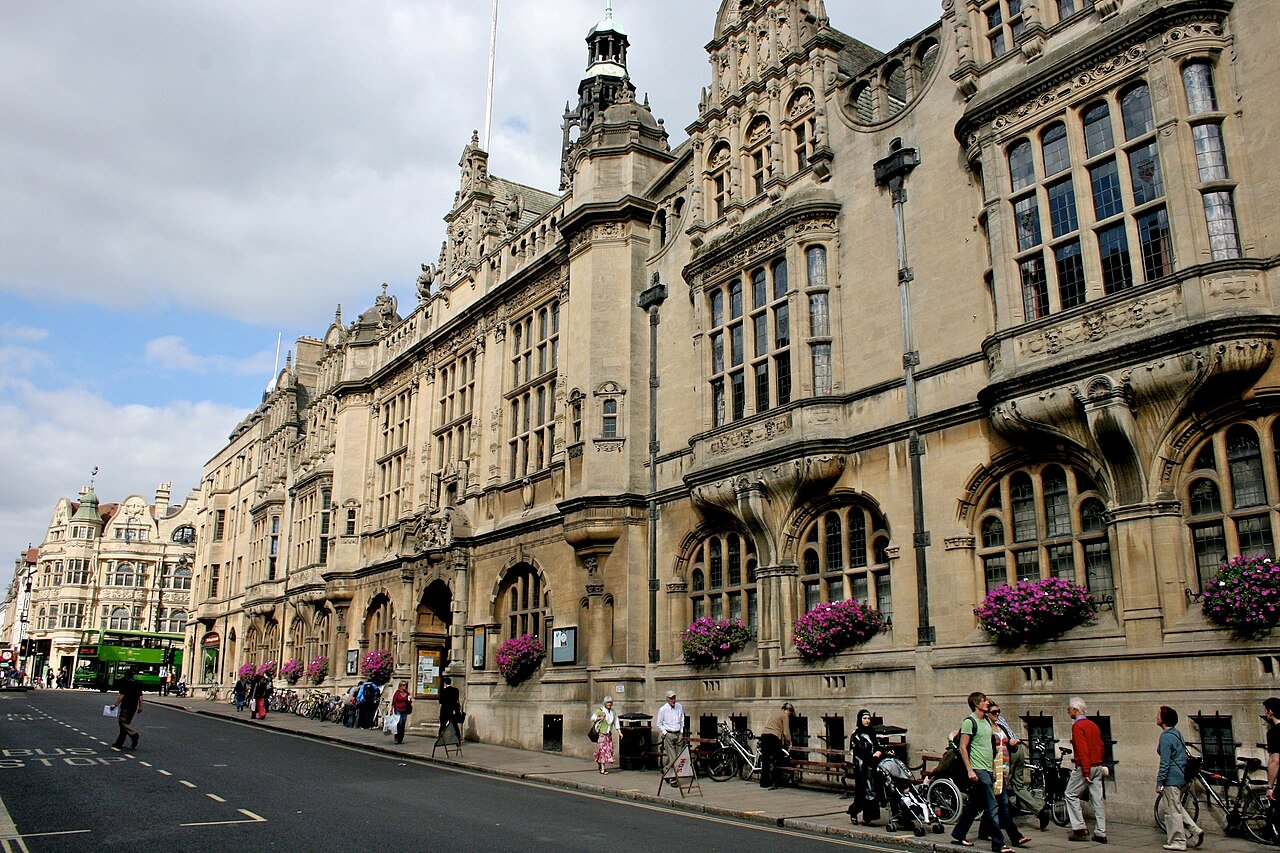
“Join us for a study holiday in Oxford” invites Oxford Lifelong Learning. As anyone who has remained in Oxford over the long vacation knows, thousands take up the offer of a “study holiday” either at one of the University-run summer schools or with a private provider. Lanyards replace puffer jackets as these summer schools make use of university infrastructure to give guests a taste of the Oxford lifestyle. This academic tourism industry has a symbiotic relationship with the University, generating huge amounts of money for the institution and providing hundreds of temporary summer jobs. According to a freedom of information (FOI) request by Cherwell, Lifelong Learning’s three main summer schools had a total income of over £3.1 million last year.
The central question here concerns the University’s access aims. In its Access and Participation Plan, it acknowledges that “our main challenges are that many applicants from disadvantaged backgrounds are unable to achieve the school grades to make a competitive application, and that many perceive Oxford as a remote, very traditional university that is ‘not for them’”. These summer schools are only accessible to the very few. However, the jobs and income they generate for colleges and departments might help fund these access aims.
There is a varied scene. Private summer schools tend to operate along similar models. Hiring different venues from colleges and university departments, they construct a temporary ‘campus’ for the duration of the summer. Students might, for example, be housed in a Corpus Christi annexe before being taken to the Blavatnik School of Government for a class.
Most of the staff are temporary, but there is usually a full-time skeleton team conducting sales and planning for the following year. The temporary staff are often bod-card holders on their long vacation. Graduate students are handsomely rewarded for working as tutors on these summer schools, and undergraduates are employed to entertain and look after the children outside of their lessons. At Oxford Summer Courses, you can earn £577.16 per week as an ‘activity leader’, or if you are on or have finished a Master’s, up to £55 per hour as a ‘subject tutor’.
The names begin to sound slightly familiar: Oxford Summer Courses, Oxford Royale Academy, Oxford Scholastica Academy, Oxford Horizon Academy, Oxbridge Academic Programs, Oxford Scholars, The Oxford Institute, and Campus Oxford to name a handful. These courses are largely aimed at children. Prices at Oxford Summer Courses are typical, ranging from £5,495–£9,995 for two weeks in Oxford. The most expensive fee costs more than a year of home undergraduate tuition.
In the year to September 2024, Oxford Summer Courses had a total profit after taxation of £1,410,570. Oxford Summer Courses is a private company, so the University does not see this profit.
Andy Palmer, CEO of Oxford Royale, was keen to stress the value of private summer schools for the Oxford community. He told Cherwell: “We are a significant seasonal employer, taking on several hundred staff each summer, and over the years we have tried to put something back into Oxford and Oxfordshire.”
On the question of financial inaccessibility, he says that “since we founded in 2004 we have also funded scholarship and bursary places, many for students who could not otherwise have taken part — including free places for children affected by the war in Ukraine”. It is not clear how much these “scholarships and bursaries” are worth but 266 young people have been awarded them between 2008 and 2025. But this is still a tiny minority of their “50,000+ successful alumni” since the summer school began in 2004.
Oxford Scholastica Academy has a similar scheme that it calls OxBright Scholars. It described this to Cherwell as “an ongoing programme of support, which gives Scholars access to an expert subject Mentor, live weekly seminars, ongoing subject-specific mentoring and support, and cutting-edge content. It’s a long-term programme, designed specifically for the needs of students from less advantaged backgrounds in collaboration with our partner access charities like IntoUniversity and The Access Project who select the students. We currently have around 200 scholars on our programme”.
While the private market is huge, some university departments have joined in, running their own summer schools. The Saïd Business School youth programmes are the most striking example. They are explicitly advertised as “Oxford University youth programmes: Official summer schools for high school students (aged 15-18) run by Oxford University”. One of these programmes, The Future of Business Summer School, is two weeks long, and costs £8,995. As a department of the University, the business school can promise that “when you finish the programme, you will receive certification from the University of Oxford, a testament to your learning and achievements”.
Oxford Lifelong Learning (formerly the Department for Continuing Education) is another department of the University. This department’s mission is to “inspire people locally, nationally and globally by extending access to Oxford’s world-class teaching and resources through flexible and inclusive opportunities for study and research”. They claim their summer schools are part of this mission.
It sells two introductory-level summer schools: Inspiring Oxford (starting price over £1,800) and The Oxford Experience (starting price over £1,600). It also runs the undergraduate-level Oxford University Summer School for Adults (starting price over £1,300). These summer schools offer 1-week courses and accept only guests over 18.
For catering, accommodation, and teaching venues, Lifelong Learning hires Brasenose for Inspiring Oxford and Christ Church for The Oxford Experience. They use Rewley House, the department’s home on Wellington Square, as the venue for Oxford University Summer School for Adults.
The fact that all of Lifelong Learning’s summer schools are adult-only sets them apart from most other summer schools. This is, of course, much less problematic when it comes to the University’s access goals, as it is highly unlikely that adults on these courses will be prospective undergraduate applicants.
Dr Charles Boyle, Director for Professional and Open Access Courses, told Cherwell that profits from these summer schools “are regularly drawn upon to fund concessionary fees on hundreds of our open access and award-bearing courses and events”. In its 2023-24 Financial Statement, the University reported that “the Department’s turnover in 2023/24 was £25.5m, an increase of £4.2m compared to the previous year. This growth reflects continued expansion of Open Access courses, including summer schools”.
This industry is also exceptionally lucrative for colleges who house private or university summer schools. In 2024-25, Balliol’s total income from its conference business (“which welcomes summer schools and conferences”) was £2.9 million. This accounted for 6.6% of its income that year. Similarly, Lady Margaret Hall’s Conference and Short Academic Programmes had a turnover of £2.93m, 6.9% of its total income.
These summer schools also provide many current students with temporary summer jobs that conveniently coincide with vacation dates. According to a FOI request, Oxford Lifelong Learning employed 15 temporary staff members to work on its introductory and undergraduate-level summer schools. Each private summer school will likely be employing at least the same number.
When approached for comment, Oxford Scholastica Academy told Cherwell: “We hire undergraduates and graduates to help run our programme and to teach our students each summer, including a number from Oxford and Oxford Brookes. We also hire facilities like colleges for accommodation and classrooms, and work with lots of local suppliers, so most of our expenditure each summer goes back into the local community.”
However, the relationship between the summer schools and the University is not necessarily an easy one. In 2023, the University filed a case against Oxford Royale for trademark infringement, unhappy with the way the company was making money from the Oxford name. Surely, the fact that Oxford Royale is competing with the University’s own summer schools must play a part in this concern.
A more pressing question follows: are these summer schools falsely selling an ‘Oxford experience’? The University’s reputation is, of course, central to the success of these companies. Visit any of their websites, and you will be greeted with sun-soaked pictures of the Radcliffe Camera, and book-laden students having fun against college backdrops.
Similarly, the logos of Campus Oxford, Oxford Royale, Oxford Horizon Academy, and The Oxford Institute all include the Radcliffe Camera as the central image. The latter three also use a colour very close to Oxford blue, and Oxford Royale’s even features a scroll at the centre with a motto (they have at least saved us the job of Google translating back from Latin): “Learn to Travel: Travel to Learn”. Perhaps it is no wonder the University filed for trademark infringement.
Most of these summer schools feel like strange, distorted echoes of Oxford life. Depending on the company, students might enjoy classes in an Oxford faculty building or an Oxford college, with teachers given the title ‘tutor’. At weekends, activities might range from a dress-up ‘ball’ on a Salter Steamers to a Ceilidh in a city venue; from strictly supervised punting to brunch in an Oxford college. Many summer schools then hold a ‘graduation’ and some, including Oxford Summer Courses, Oxford Scholastica Academy, and Oxford Horizon Academy, give students a ‘letter of recommendation’.
These letters of recommendation raise difficult ethical questions. If the summer schools do help students gain admissions into the University, they would sit uncomfortably with Oxford’s aims of widening socio-economic access. If they do not, then do these families truly understand what they are paying for?
The private summer schools cater to an exceptionally wealthy, often international market, and some, including Oxford Horizon Academy and Oxford Scholastica Academy, run university admissions talks to help their customers make strong university applications.
Oxford Scholastica Academy told Cherwell: “We are independent of Oxford University … From the start, we’ve always been keen that no student could think we are affiliated with the university.” A disclaimer on their website clarifies that “Oxford Scholastica is not formally connected with or endorsed by the University, and it’s important to understand that we don’t offer university preparation courses”.
Similarly, Oxford Horizon Academy published an article on Saturday 3rd April, ‘Does a Summer School Help Your University Application?’. They are honest with the issue: “A summer school on its own is not a magic credential.” But they continue that “a well-chosen summer school gives you material. If you spend two weeks studying law at Oxford, engaging with real cases, arguing in moot courts, and grappling with questions about justice and rights, you have something specific to write about”. While the promise of “studying law at Oxford” is technically true, that little preposition is undeniably cheeky. In Oxford would surely be more apt for this situation; “at Oxford” certainly seems to imply the University.
But perhaps the content is more alarming. If you attend this summer school, they seem to say, you will have the material to make a stronger Oxford application. I am sure this is true. Surely, a student who has been given access to Oxford students, which the summer schools are employing, and access to valuable, well-curated information and advice will find it significantly easier to make a competitive application.
The article goes on: “The letter of recommendation matters too. At Oxford Horizon Academy, students receive a letter of recommendation from their academic instructor. A letter from someone who taught you in a rigorous academic setting, who can speak specifically to your intellectual curiosity and potential, carries genuine value.”
Who does this matter to? One would hope that a reference from an actual schoolteacher who has known you for more than two weeks would carry more weight. Yet this suggests it is the Oxford Horizon Academy name which is carrying the real weight. As wonderful as the latter two words sound individually, it does seem that “Oxford” is doing the heavy lifting. Is it more problematic to think that families at this summer school are being mis-sold an experience or that they are genuinely managing to buy access – access either to the use of the Oxford name, or into the University itself? Indeed, there is also a concern that some prospective applicants who cannot afford to attend a summer school might, from a cursory glance at advertising like this, get the sense that experience like this is necessary to make a competitive application.
Certainly, scholarships like those run by Oxford Royale and Oxford Scholastica widen this opportunity to a lucky few who could not otherwise afford it. Indeed, some would argue that with private schools and private admissions tutoring, there is plenty of opportunity for those who can pay to get a leg up. But unlike private schools or private tutoring, these summer schools could not run without the cooperation of Oxford colleges and departments.
While in the case of private summer schools the line is blurry, with the Saïd Business School youth programmes it is made starkly clear. The business school promises young people aged 15-18 certification from the university if they pay to attend. It is unclear what the status of this certification is, but what is undeniable is that the University of Oxford name is being used to give young children who can pay for it a step up. It could be argued that if all of the private summer schools are profiting off the University’s reputation, departments might as well engage in the industry directly. But it is rather remarkable that it is a University department that is the most explicit in selling young students – potential applicants – certification from the University.
This hugely profitable industry is a crucial part of many colleges’ funding models. But the access and participation aims of the University seem to run counter to an education industry where access can be bought. But at the same time, this academic tourism industry might help fund these very access aims. As the students move out, and customers move in this summer, we need an honest conversation about how this academic tourism industry underpins and affects the University’s aims.
When approached for comment, a spokesperson for the University told Cherwell: “Oxford is committed to widening access and attracting and admitting students with the highest academic potential from all backgrounds to undergraduate and graduate study. The University invests significantly in outreach and access initiatives for students from backgrounds that are under-represented at Oxford. Our Access and Participation Plan, approved by the Office for Students, sets out how we will build on this work at undergraduate level, and last year Oxford approved its first University-wide Graduate Student Access Strategy. A core part of this commitment is UNIQ, the University’s flagship undergraduate outreach programme. Since 2010, UNIQ has provided an opportunity for UK state-school students with high academic potential to explore higher education and learn more about studying at Oxford. The free programme prioritises students from under-represented educational and socioeconomic backgrounds and includes a subject-specific residential experience. Around 3,300 students take part in UNIQ each year. Oxford admissions are based on academic merit and potential; summer programmes are entirely separate to the University’s undergraduate and graduate admissions processes.”
A representative of Oxford Scholastica, when asked about affiliation to the University, told Cherwell: “We make it clear we’re not affiliated with Oxford University, our mission (to help students seize the future) is distinct from the city and our brand is independent from the university. My co-founder and I set up OSA in Oxford because it’s been our home for most of our lives, having lived and attended school in the city.”
Regarding letters of recommendation, they told Cherwell: “Our pupils are typically international teenagers who go on to attend universities outside the UK. Unlike British universities, universities abroad tend to ask for multiple ‘letters of recommendation’ from a range of sources. Our teachers write such letters for students who impress us, which they can upload to, for example, the Common App application process for US universities (the USA is the most common university destination for our students).”
Oxford Horizon Academy, Oxford Summer Courses, and Oxford Royale were also contacted for comment



-

 Business & Technology3 weeks ago
HSBC UK & Visa test AI shopping with live payments
-

 Business & Technology4 weeks ago
Mouser warns against viral hacks to cool overheating phones
-

 Business & Technology3 weeks ago
Valarian lands USD $50 million backing for sovereign AI
-

 Oxford News4 weeks ago
DWP now checking bank accounts for Universal Credit and Pension Credit
-

 Oxford Events4 weeks ago
Henley Festival 2026 highlights: Five nights of unforgettable performances and festival moments
-

 Oxford united FC3 weeks ago
Oxford United three players who be kept after transfer ban
-

 Business & Technology4 weeks ago
Ode launches free AI voice service for poem recommendations
-

 Business & Technology4 weeks ago
ZYMIX uses Henley event to pitch social app to Gen Z