
Oxford University
Peace named Oxford Children’s Word of the Year for 2025

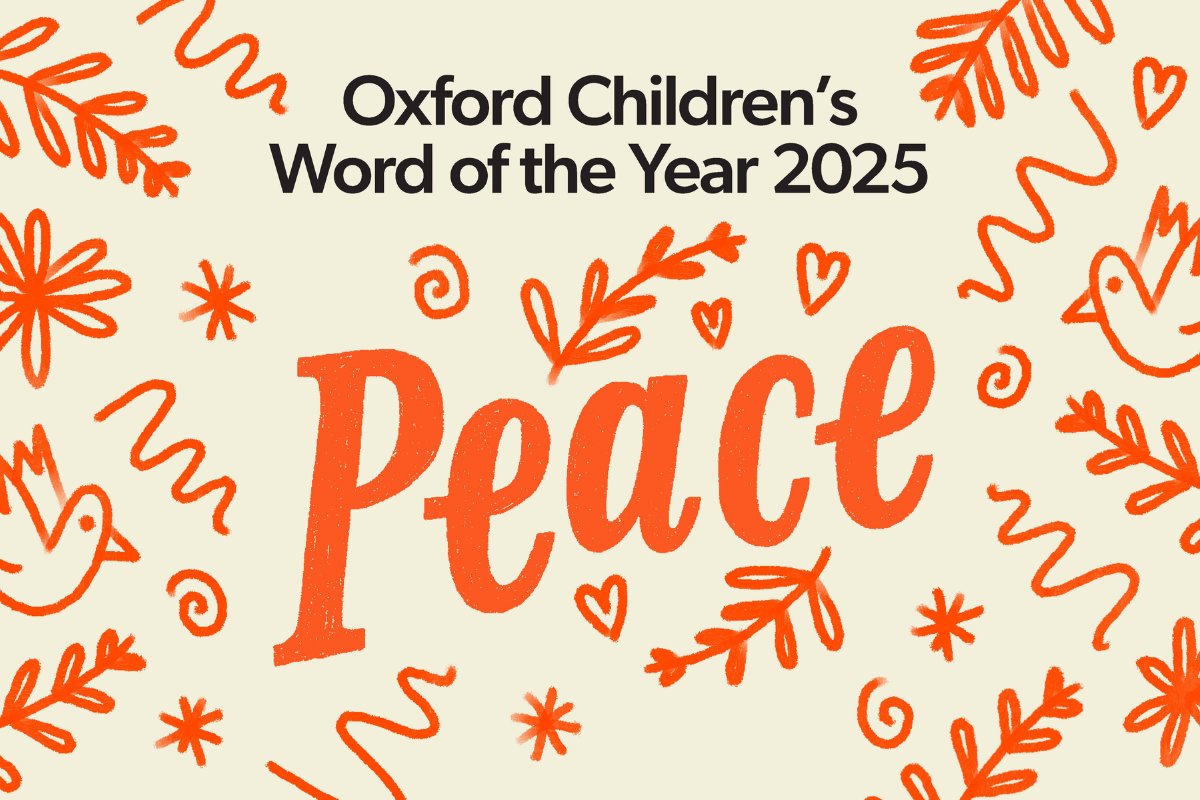
Young people from across the UK have voted for peace as the Oxford Children’s Word of the Year for 2025.
For more than a decade, our experts and academic researchers have tracked and analysed the evolution of children’s language and how it is used to reflect their emotions and experiences each year.
In 2025, we surveyed opinions from almost 5,000 children across the UK aged 6-14 years old. Based on the most common responses and themes, we shortlisted three words—peace, AI, and resilience—and asked young people to vote for their preferred winning word.
In the final results, peace came out on top with 35% of the vote, narrowly followed by AI (33%), whilst 21% opted for resilience.
Peace chosen in response to global conflicts
Our research highlighted children’s awareness of current affairs. When asked why they chose peace, one in ten children mentioned ‘war’, whilst some highlighted specific conflicts such as ‘Ukraine’ or ‘Gaza’. Words such as ‘need’, ‘want’, and ‘should’ were frequently mentioned in their answers when calling for peace across the world.
A study of the Oxford Children’s Corpus—the world’s largest database of writing by and for children in the English language containing over half a billion words—reveals mentions of peace in children’s stories submitted to the BBC 500 Words competition has increased by 60% since 2015.
AI selected as runner-up for the second year in a row
For the second year running, children selected AI as the runner-up. When asked why they chose the word, a fifth of children (20%) mentioned ‘hearing’ and ‘talking’ about AI, highlighting its ubiquitousness in daily life.
Similar to last year, when asked how the word made them feel, children gave positive responses, with more than one in ten using the adjective ‘excited’ or ‘exciting’. More than a quarter of six-to-eight-year-olds (29%) chose AI as their word of the year, demonstrating how even very young children are aware of the everyday role AI plays.
Six-seven gives children social currency
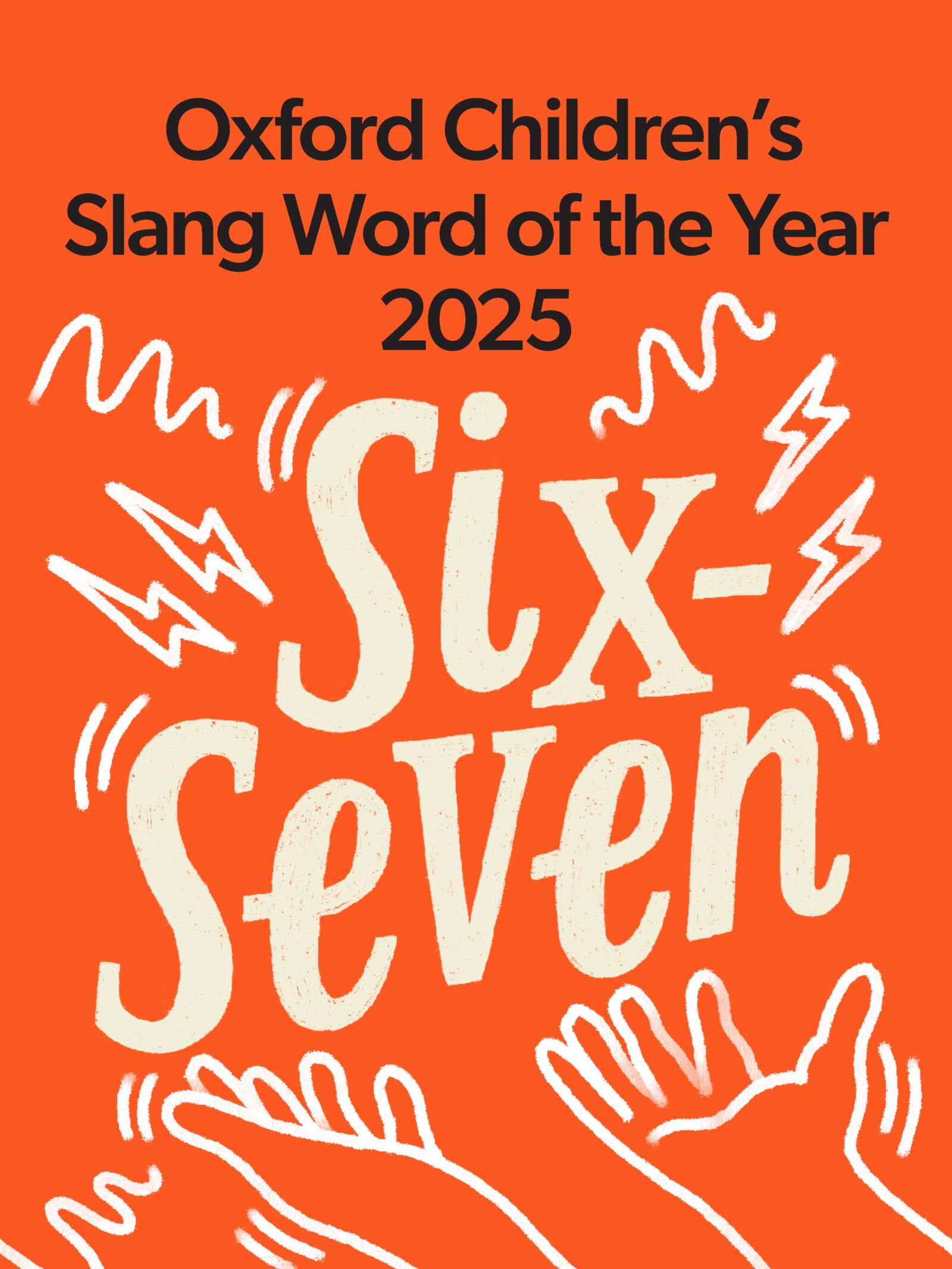
We also asked young people to choose their slang word of the year. Almost half (47%) of children chose six-seven as their slang word of the year, followed by aura (24%) and delulu (7%).
Our research revealed that the use of six-seven among children fosters inclusivity and social currency, with almost one in ten mentioning ‘friends’ when asked how they use the term, with more than a quarter (28%) citing ‘fun’ and ‘laugh’ when asked what six-seven meant to them.
While 12% of children admitted six-seven had no meaning, most children highlighted the value of such words, with 72% of children stating it was important to have words they only use with friends.

Andrea Quincey
Director of Early Years and Primary Publishing
“A key theme we see from our Oxford Children’s Word of the Year research is just how attuned children are to current affairs. This year is no different; whether that’s calling for peace in response to current conflicts or highlighting how AI has permeated daily life. Perhaps it’s no surprise that six-seven is voted, overwhelmingly, as their slang word of the year. A word which brings them laughter and joy and connection with friends. We see how important it is for children to have agency over their language away from the grown-up world and share words that adults can’t understand.”
Supporting the National Year of Reading by fostering a love of words
We are calling for schools in the UK to participate in the next Oxford Children’s Word of the Year to further support children’s reading, vocabulary development, and oracy skills. We have developed an activity pack with tips and resources for schools that want to take part, including how ‘word of the year’ conversation sessions can encourage book talk and language development. More details on how schools can get involved can be found here.
To mark the announcement, and to support the National Year of Reading 2026, we are collaborating with the National Literacy Trust on school events across the UK. The author-led events will encourage children to engage with different forms of reading and reflect on the words they read, speak, and learn about.
Jonathan Douglas CBE, Chief Executive of the National Literacy Trust, said: “Language plays a profound role in shaping our society, culture and identity. Understanding how children and young people make sense of the words they encounter in their daily lives, take ownership of them and play with their meaning, demonstrates the power of language for helping us comprehend the world around us and our place in it.
“The National Year of Reading will enable us to give more children and young people new opportunities to experience language in ways that are fun, relevant and help them connect with others. Throughout the year, we will work with Oxford University Press and a number of incredible authors to bring the magic of reading and words to life for children and young people across the UK.”
You can read the full details of our research in the Oxford Children’s Word of the Year 2025 report here.
Oxford University
Celebrating highlights in literacy, digital learning and assessment, and research publishing

Our Annual Report for 2025/26 is now available
The report shares a number of publishing highlights in research and education, as well as our continued commitment to our global communities and to operating sustainably.

Professor Irene Tracey
“I am so incredibly proud of what OUP contributes to Oxford and the world. The dedication of the leadership and staff, board members, and academic delegates is evident in their service to the Press.
“As we collectively balance the human need to create, tell, and share stories as the world around us changes at pace, I am confident that my colleagues at OUP will continue to uphold our long-held traditions while shaping the new.”
Nigel Portwood
“This has been a year of investment, innovation, and growth for OUP. Against a changing backdrop in some of our markets, we remained focused on fulfilling our mission by expanding our publishing portfolio, embracing new technologies, and developing tools and services to support learning and research across the world.”

Highlights from 2025/26
We acquired
Karger Publishers, a highly regarded medicine and health sciences publisher based in Switzerland.

1.3 million people
visited the Oxford English Hub, the home of our digital content for teaching and learning English.

We launched
Green Sparks, a strand of the Oxford Reading Tree which comprises 42 books that provide age-appropriate environmental education linked to the UN Sustainable Development Goals.

We met
our target of 100% certified sustainable paper for our print publications.

We donated
more than 154,000 books to readers worldwide.

The post Celebrating highlights in literacy, digital learning and assessment, and research publishing appeared first on Oxford University Press.
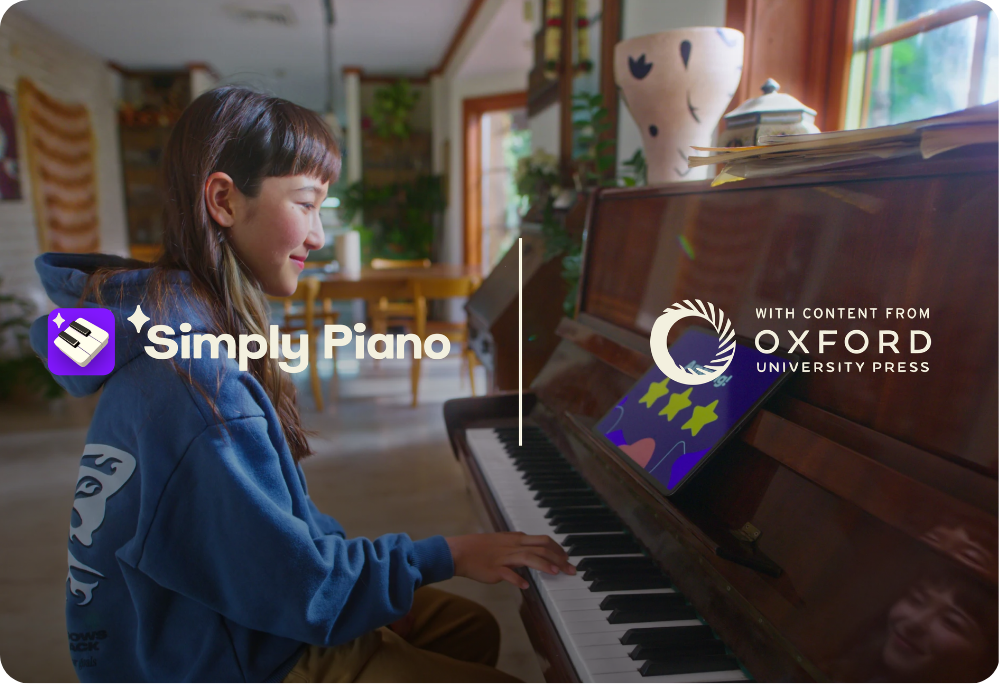
We’ve signed an agreement with Simply, the leading digital platform for creative hobbies, bringing select content from our acclaimed piano method to millions of Simply Piano learners worldwide.
What OUP content is available in Simply Piano?
Simply Piano users now have access to an expanded library of high-quality, curated sheet music spanning our works including Piano Time and Tunes for Ten Fingers, all within the app’s interactive learning environment.
Piano Time is one of our well-established beginner piano methods, widely appreciated for its natural progression and musical, engaging pieces. It helps students build reading, rhythm, coordination, and technique in a way that feels enjoyable rather than mechanical—which is why it has remained a trusted teaching resource for years.
Tunes for Ten Fingers is an introductory book for absolute beginners, encouraging security at every step and making learning fun.
These titles form part of our wider music publishing programme. We have long been a leader in classical music publishing, with a catalogue spanning centuries of repertoire and serving musicians from beginners to professionals. Through this collaboration, our music will now reach millions of Simply Piano hobbyists and lifelong learners worldwide.
OUP bringing sheet music content to Simply
Robin Barry, Director of Music at OUP, shared: “We are delighted to bring content from OUP’s piano method—trusted by teachers for generations—to the Simply Piano community, a platform that shares our commitment to quality and progression for aspiring musicians around the world.”
“Access to songs people love is one of the strongest drivers of learning,” said Yuval Kaminka, CEO and co-founder of Simply. “Working with OUP allows us to bring our learners and casual players sheet music of the highest editorial standard. It’s an important step in building a platform that supports learners at every stage and a proud moment for Simply.”
“What stands out in OUP’s early piano materials is the pedagogical clarity of the arrangements and pieces,” added Danny Fine, Simply Piano’s Music Pedagogy Lead. “They introduce new skills in a very structured and approachable way, which makes them especially effective for helping learners build confidence and gradually master core musical skills.”
As interest in creative hobbies grows globally, the addition of OUP’s portfolio strengthens Simply Piano’s library, giving users access to music they can both learn and enjoy.
Find out more about OUP’s sheet music here.
Oxford University
New research from Oxford University Press shows how children take life lessons from books

The findings of a new report from Oxford University Press, More than words: the real-life impact of reading, reveal how the majority of children believe that reading shapes how they treat others and helps them to navigate real-life situations.
The new research shows that three in five children (59%) believe what they have read in a book has helped them in a certain situation—such as being bullied, losing a family member, overcoming social anxiety, or starting a new school—highlighting that the benefits of reading go further than just understanding and comprehension. Other findings include:
- Seven in ten children (70%) said that reading helps them understand why people act the way they do
- More than two-thirds (68%) said it helps them think about how they treat other people
- While more than half (57%) of 12-14-year-olds continue to see the value of reading, both enjoyment and frequency of reading declines; 27% of 12-14-year-olds question its value in day-to-day life, with 17% undecided.
The report is based on a survey of 3,000 children aged 7-14 years old and 200 teachers across the UK, and with insights from the Oxford Children’s Corpus—the largest living database of children’s reading and writing in English in the world, containing over 500 million words.
Reading has an impact in real-life situations
82% of children agreed that stories remind them of things that happen in real life, showing the strong connection children make between what they read and their own experiences.
Our research also highlights the important role reading plays in helping children to understand and talk about their emotions. More than four in five children (84%) said reading helps them learn new words for feelings.
Teachers are seeing these benefits first-hand. Almost all teachers surveyed (95%) agreed that reading helps children develop their vocabulary, while three in five said they had witnessed a pupil gain a better understanding of an emotion through reading. More than nine in ten teachers (91%) identified empathy and perspective-taking as key benefits of reading.
Emotional themes are not confined to particular genres
Our research suggests that children do not necessarily seek out books about emotions directly but instead gravitate towards more entertaining books which can present real-life issues and emotions in accessible ways through humour or action.
When asked what genres they prefer to read, children said they were most drawn to funny stories (49%), adventure stories (40%), and fantasy stories (30%). However, many of the books cited alongside these genres—for example, Diary of a Wimpy Kid, Lottie Brooks, and Harry Potter—explored serious topics like conflict with friends, bullying, or bereavement.
A challenge with older readers
While children of all ages can gain emotional insights from a wide range of books and genres, the findings suggest that, as they get older, many need help maintaining their connection with reading.
Nearly three-quarters (72%) of children aged 7-10 said they liked reading, however, this fell to 59% among 11-14-year-olds. Reading frequency also dropped, with 79% of 7-10yr olds who said they read at least once a week, compared with just 61% of those aged 11-14.
One possible reason for this decline is that some older children do not see books as relevant to their daily lives. While 57% of 12-14-year-olds recognize the value of reading, one in four (27% of 12-year-olds; 25% of 13-year-olds; and 29% of 14-year-olds) disagreed that books had helped them navigate situations they have faced. A further 17% are neutral on the topic.
This presents an opportunity to provide more support to help older readers discover books that reflect their experiences and interests so that they feel reading is more meaningful and engaging.
Elizabeth Munn, Managing Director of OUP’s Education division, said: “This research shows how deeply children are engaging with the books they read and using them to make sense of the world around them. It’s incredible to see how children are actively applying what they read on a page to real life—whether that’s understanding the perspective of somebody else, navigating a situation in their own life, or reflecting on their own behaviour towards others.
“Children are growing up in an increasingly complex world. Our research reaffirms that reading remains one of the most powerful ways to help them develop empathy, confidence, and emotional understanding—skills that are just as important as academic success in equipping them for the future.”
The report also includes contributions from leading literacy and education organizations, including Book Aid International, EmpathyLab, and the National Literacy Trust.
Read the full report here.


Real reason for Beckham family fallout with Brooklyn revealed

The ultimate guide to travel etiquette: how to handle 36 tricky situations, from manspreaders to smelly armpits | Social etiquette

£7 billion East West Rail Oxford to Milton Keynes row solved
-

 Business & Technology3 weeks ago
HSBC UK & Visa test AI shopping with live payments
-

 Business & Technology3 weeks ago
Valarian lands USD $50 million backing for sovereign AI
-
 Oxford News4 weeks ago
New romantasy bookshop attracts queues of customers
-

 Business & Technology4 weeks ago
Mouser warns against viral hacks to cool overheating phones
-

 Business & Technology4 weeks ago
SNP & Palantir launch AI tools for SAP transformations
-

 Business & Technology4 weeks ago
Kane tops England influencer rankings after Mexico win
-
 Traffic & Transport4 weeks ago
‘I felt my spine and body split’: the woman who was hit by a child on a Lime bike – and denied compensation | Ebikes
-

 Oxford News4 weeks ago
DWP now checking bank accounts for Universal Credit and Pension Credit