
UK News
‘Women want to experience pleasure’: how the female gaze caught the attention of film, TV and fiction | Culture

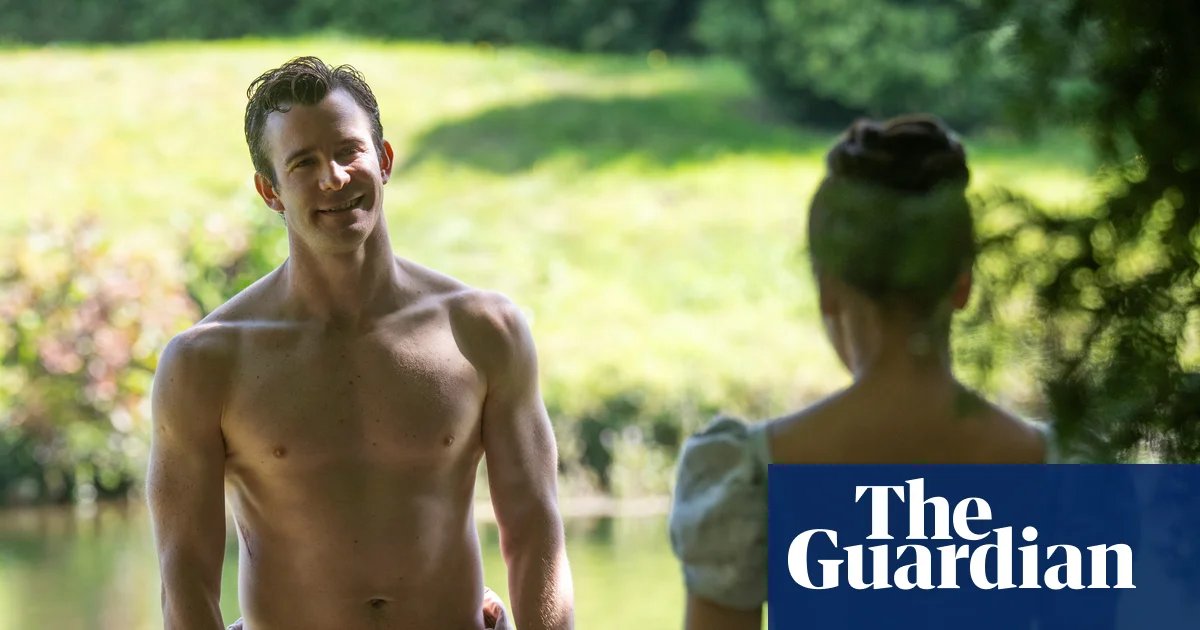
Do you voraciously read the pages of steamy romantasy bestsellers by Sarah J Maas or Rebecca Yarros? Or flood your group chat with breathless recaps of the latest goings-on in TV series such as Heated Rivalry or Bridgerton? Or even immerse yourself in the divisive and challenging cinematic worlds of Emerald Fennell? If so, you surely can’t have failed to notice that in pop culture, the female gaze – storytelling that highlights the meandering, textured, sublimely messy inner worlds and wants of women – is enjoying an explosion.
On TV, you can see it everywhere, in the interior lives and desires taken up by Big Little Lies, Sirens or Reese Witherspoon and Kerry Washington’s Little Fires Everywhere. Romantasy harbours it in the shape of powerful maidens and sex in fae (fairy) realms, while Fennell’s Wuthering Heights and Promising Young Woman are marketed with the promise of converting women’s experiences into dark beauty on the big screen.
A shift, a moment or a commercial juggernaut? That depends how deeply you look. But the portrayal of internalised female perspectives – and, crucially, desires – has gone from guilty pleasure to middle of the zeitgeist. Today, the idea of centring the subjectivity, rather than objectivity, of women’s experiences, agency and emotion is as visible as it has ever been across the cultural canon.
This emergent body of pop culture takes on society’s conditioning to experience women’s lives through the lens of male storytellers – or the male gaze. Coined in 1973 by film theorist Laura Mulvey, the theory is used to explain how women on screen, in art and literature have long been reduced to objects of desire as viewed by heterosexual men. Subversion of this male gaze, rejecting voyeurism to portray women’s bodies as lived-in, is not new – at least in arthouse cinema. Jane Campion’s 1993 The Piano is a defining example that gained mainstream crossover, winning Oscars and the Palme d’Or; so too, Andrea Arnold’s Fish Tank, an Essex housing estate coming-of-age tale that won the Prix du Jury at Cannes in 2009; and Céline Sciamma’s 2019 Portrait of a Lady on Fire, a slow-burn romance between a French aristocrat and the woman commissioned to paint her.
But in the mainstream the female gaze has taken decades to cut through in any measure. Today though, finally, it is making bank. See Fennell’s box office-topping adaptation of Wuthering Heights, which retains the puristically male trope of Emily Brontë’s heroine seeking male affection, but filters it through Margot Robbie’s female-centric psychological and erotic lens. Meanwhile, romantasy has buoyed publishers to the tune of $610m in annual sales in 2024, while generating billions of TikTok views on captivated BookTok, where romance, story-building and sex – or “spice” – draw in emotionally invested users.
So how do you world-build what women feel, and desire, in 2026? One of the best examples of the burgeoning female gaze on screen is last year’s nine-time Emmy-nominated Dying for Sex. It centres on Molly Kochan (Michelle Williams), who is dying of metastatic breast cancer and enjoying an end-of-life sexual awakening, trying bondage, dominance and role-play, and even a golden shower moment with her lover (and neighbour), while he is dressed as a cartoon dog. Iris Brey, author of The Female Gaze: A Revolution on Screen, heralds the show as “super important”, explaining: “It teaches things that are extremely taboo – women being sick and wanting to experience pleasure. We feel seen.”
The show was directed and executive produced by Shannon Murphy, who also worked on such female-focused dramas as Killing Eve, The Power and Dope Girls. “I’m drawn to projects that are less A+B=C. I like something more meandering, holistic, which I do think goes with the feminine brain,” says Murphy of the usual mainstream depictions of female interiority, including sexuality and desire. She also notes a grey “and in some ways less judgmental” area in female storytelling compared with more “obvious” male depiction. “I think if we start telling more stories like that it will, culturally, help us to not see things in such a black-and-white way,” Murphy adds. She remembers receiving the script for Dying for Sex: “It was tonally very delicate and quite confronting. I loved that it was playing in this place of sublime tension between raw emotion and brutal comedy.”
This unvarnished reflection of how women process their worlds nails “a delicate balance”, says Murphy. In episode six, for example, Williams’s character, having revealed on the cancer ward her plans to orgasm by Christmas, discloses her sexual abuse to her best friend on the bathroom floor before unintentionally farting, prompting the pair to laugh and cry together. Their friendship is central; the moment works because it feels real. “All of us have encountered trauma and it’s very hard to recount without that distance because you’ll fall apart,” Murphy says.
Murphy’s own cultural upbringing was against a backdrop of 90s female-fronted stories such as Ally McBeal. “On screen, when I think about shows that really grabbed me, that was a huge one,” she says. “I’d never seen this powerhouse lawyer with this wild feminist imagination.” Operating in the same era was Sex and the City’s Samantha Jones, whose sexual confidence was critiqued as scandalous before ultimately being considered empowered – “I will not be judged by you or society. I will wear whatever and blow whomever I want as long as I can breathe … and kneel,” goes one of the character’s most famous lines.
Its successors went further: “The first time I saw Lena Dunham’s Girls, something in me just blew apart and was so elated that I’d seen my sensibilities of what female creativity could be,” Murphy remembers. “Girls was, for me, the first time that the wildness, messiness, real bodies and brains and comedy was put on screen.” From Dunham’s first emotionally distant sex scene onwards, the bodies and sex in the series are unglamorised, unstylised and unapologetic about the fact.
Like Girls, Michaela Coel’s I May Destroy You illustrated the kind of yearned-for female agency on TV that set group chats alight, alongside Phoebe Waller-Bridge’s Fleabag and Killing Eve. Meanwhile, the success of female-focused stories in Shonda Rhimes’s Grey’s Anatomy and then, lustfully, her later series Bridgerton – among Netflix’s most-watched shows ever – have made the case for greater commercial buy-in for the female perspective. It’s a baton intriguingly taken up by Heated Rivalry, this year’s raunchy, gay ice-hockey drama, which framed slow-burn intimacy in a way that garnered a massive female fan following. Straight women found themselves enjoying the sex and Adonis-like naked bodies while celebrating the show’s emotional depth and its male leads enjoying love and sex as equals.
These mainstream successes serve the point that “women can bring money to the industry; they’re telling studios we can have bigger budgets and ambition”, Brey says. “I want to see the money going to female characters where men are not looking at them. Most subversive are those works that don’t need to ask the question of whether he loves me or not. To show women who talk to each other about anything other than men.”
Indeed, Murphy argues that another relationship – female friendship – might be the most important in this ascendant era for the female gaze. “We’ve got so many films which are almost all male cast, male friendships, male stories but we still really don’t have many that authentically portray that female connection. As a result, for a long time people didn’t really understand the potency of it and just how deep a love affair it can be.”
Brey tracks the prevalence of female gaze in pop culture alongside other societal movements: “What has happened is the same as feminism – we’re going through waves. I think after #MeToo a lot of people in power positions were like: ‘Let’s give this another try.’ The industry goes where they think they can generate money.”
Still, those waves render investment fragile and inconsistent and Brey warns of a “receding moment” on the horizon. She points to this year’s The Chronology of Water, a turbulent, Kristen Stewart-directed arthouse coming-of-age drama based on Lidia Yuknavitch’s 2011 memoir of the same name. The film takes on rape, incest and the reclamation of desire, both affronting and invigorating in its aim to return women’s confessionals to the canon. As such, Stewart has described the “tough sell” to get it funded; it spent eight years in development before being shot outside the US, in Latvia and Malta.
When it comes to distribution, films that capture the most complex aspects of the female gaze, are at a premium. “There are movies but they’re not circulating,” says Brey. “We haven’t had the multiplicity of what it can be to experience menopause or not, motherhood or not. I want to know what a lesbian character is going through or a Black woman.” Representation of pleasure can remain “limited”: “My take is that desire can do a lot more things.”
Less subversive in Brey’s estimation, but wildly successful, is romantasy. It is female desire that has part-driven the genre’s phenomenal appeal, delivering readers fantastical worlds, female protagonists and explicit sex, while delivering publishers seductive profits. (Bloomsbury added £70m to its market value when it announced two new books for Sarah J Maas’s top-selling A Court of Thorns and Roses series last month.) Rachel Reid’s Game Changers, the book series adapted for TV as Heated Rivalry, hit 650,000 sales for HarperCollins after the show aired, with a seventh instalment due next June – and a second season for TV instantly commissioned, too. It follows in the footsteps of Outlander, another smash romantic novel saga turned TV success, now airing its final series on Prime Video.
Jennifer L Armentrout, author of the internationally bestselling romantasy series From Blood and Ash, explains how the genre has altered the way female worlds are received. “I wasn’t the only one who thought that if you were female in the fantasy world it wasn’t going to end well: if you fall in love it’s going to be used against you, if you have any sort of power you’re going to die or become the mad queen,” she says. “You never really saw female characters represented in any way where you felt safe, thinking they’re going to be here in the end and not have to give up their sense of identity to do so. People, almost, have been waiting for these books to come.”
Reminiscent of the hushed way EL James’s Fifty Shades of Grey was talked about 15 years ago, romantasy novels are often downplayed – and reclaimed – as “fairy porn” or “smut”. “I hate the word smut,” says Armentrout. “You label things smutty for the general readership, they’re automatically thinking: ‘This is something wrong.’ Any time something is dominated by women, in the sense of being written or consumed by them, it’s always seen as less than.”
Armentrout credits BookTok with “removing the guilty pleasure”, leaving readers free to immerse in textured worlds navigated by complex heroines. “You will see main characters with mental illnesses, disabilities, not stereotypically super-thin,” she says. “These books address some serious, real-life issues from handling depression to assault. They become so easily relatable. Even though you’re dealing with dragons or vampires in a world that doesn’t look like ours, they’re going through the same things that many readers are.”
Romantic set-ups vary (female-male, female-female, male-male) yet, says Armentrout, “they’re almost always, by the end of the series, on equal footing so you don’t see one person’s growth overshadowing the other’s”. It goes some way to reframing the male conquest trope. “Women don’t want to see the significant other being steamrollered over.”
The progress has been dramatic, but Brey says that there are still many stories to be told for this female gaze explosion to become a sustainable shift. “I think we are deprived of representation and narratives that could really change the way we view relationships and love.”
Murphy has found herself on panels where “male directors get to talk about the work and creative process and here we are talking about being women”. Progress would be reaching a point where the female gaze simply is.
“I’m never making work for women more than men,” says Murphy. “But, of course, as a woman, I’m very proud that the work is accessing feelings and thoughts for women that they haven’t seen as much of. I do think that’s something that just has to keep happening.”
The family of Shaun Burton, say they are “devastated” by the loss.
Source link

Key events
In the opening half an hour against Cape Verde, Mikel Oyarzabal, the centre-forward, did not get a single touch.
Kyle Green gets in touch: “Your highlighting of Lalas and his absurdity is something that has prevented me from wanting to watch the coverage on Fox. While every channel has its pros and cons I just can’t.
“I’m 45 and probably the youngest of anyone who remembers him as a player instead of an opinionated insert insult here. As for the match this could be more competitive than it looks on paper Spain need a win the pressure is on them. Saudi Arabia could hold out for a draw and see what happens in their last match. “
News from the England camp, and it seems to be good news on Declan Rice.
“I’m ready and fit, raring to go. I was feeling a little bit of neural pain in my hamstring, which I was managing from after Christmas with Arsenal for a very long time. Obviously, not a lot of people would have known that. It was all behind-the-scenes stuff but it was a smart decision.
“In the end, that last 20 minutes is probably where you pick up the most, and it’s where you play a 70-minute match. But that last 20 is where you really feel your body going for it. And I think it was a smart decision because the last few days I felt really, really good.”
Alex Reid has penned today’s weekend special Football Daily.
Portugal v Uzbekistan on Tuesday enticingly pits the incredibly nice, incredibly 41-year-old-superstar-tolerant Roberto Martínez against Fabio Cannavaro, who’s won a Ballon d’Or as a player and the Chinese Super League as a coach. While the fixture following that game really does see the dream of Thomas Tuchel – in his first international job with England – taking on Queiroz, who is in charge of his ninth national side with Ghana.
The expected formations are 4-2-3-1 for Spain, and 5-3-2 for the Saudi Arabians.
The Saudi team features two Donis changes: Ali Lajami, a defender, and Nasser Al Dawsari, a midfielder, are preferred to Mohammed Abu Al Shamat and Mohamed Kanno. You may recall Salem Al Dawsari, the Saudi captain, as the man who scored the winner against Argentina.
An entertaining read, even for those of us who have just seen the clips.
In a conversation where his co-panelist is casually reminiscing about his days playing alongside Messi or exchanging shirts with Ronaldo Nazário at the World Cup, what exactly is Lalas going to talk about – coming on as a second-half substitute for Earnie Stewart in a friendly against Scotland in 1998? Helping the Kansas City Wizards finish last in the 1999 MLS Western Conference? Did Lalas enjoy an elite playing career? No. But does he do the background reading that could compensate for his relative lack of standing in a conversation with titans like Henry and Zlatan? Also no. But is he charming or funny or charismatic or otherwise magnetic on screen? Eh, no.
For the record, I once interviewed Alexi Lalas on the challenge of playing against Romario in the 1994 World Cup. He had this to say:
“He could kill you in so many different ways. If you remember from that World Cup, he scored so many types of goals. That ranged from solo adventures to an outside-of-the-right-foot half-volley off a corner kick. Romario was both the most difficult to play against and the best that I have faced.
“Roberto Baggio was doing his thing, but in terms of consistency and living up to the hype, he [Romario] was the best. As with all stars, there was a moment when the fans sit up in their seats, and that was a feeling I got with Romario. When it got close to him and the potential for his involvement in a play was there, everybody sat up in their seat. They knew that something spectacular would be happening.”
Saturday’s match reports here.
The Saudi Arabia coach, and Blackburn legend, Georgios Donis, spoke about the challenges facing his team: “Spain is not the same team when Yamal or Williams are on the bench.
“While they still have plenty of possession, they lack the individual one-on-one penetration when these two are missing. I’m not saying it’s a problem for Spain, but when those players are missing, they play in a different way. We saw this very clearly against Cape Verde.
“We are playing against one of the best teams in the world, and it’s very important that when you play against these kinds of teams, you should enjoy the experience and respect the opponent, but not too much.
“It is very hard for any team playing against Spain to have any time in possession. So what we must do is to be more in control of our movement and compact, and when the ball goes through the lines, be able to defend dynamically.
“It’s nice to see miracles in football, and we’ve seen favourites losing against underdogs. Of course, it’s great for Saudi football to have a great memory of the result against Argentina, but we aren’t drawing anything from that.
“I think we’ll feel more pressure in that [Cape Verde] game than we will against Spain.”
The Spain coach, Luis De La Fuente had this to say in his Saturday press conference: “This generation of footballers is highly competitive and really fired up… It’s going to be a completely different story,” he said at his pre-match press conference on Saturday. There is no drama or crisis. The bottom line is simply that we need to win tomorrow.”
Four changes for Spain: Lamine Yamal, Pedro Porro, Dani Olmo and Alex Baena also come into the side with Marcos Llorente, Fabian Ruiz, Ferran Torres and Gavi dropping out.
The teams – Lamine Yamal starts
Spain: Simon, Porro, Cubarsi, Laporte, Cucurella, Gonzalez, Rodri, Yamal, Olmo, Baena, Oyarzabal. Subs: Raya, Joan Garcia, Pubill, Grimaldo, Eric Garcia, Llorente, Merino, Torres, Fabian, Gavi, Pino, Williams, Zubimendi, Munoz, Iglesias.
Saudi Arabia: Al Owais, Abdulhamid, Tambakti, Lajami, Al Amri, Al Harbi, Nasser Al Dawsari, Al Khaibari, Al Juwayr, Al Buraikan, Salem Al Dawsari. Subs: Al Aqidi, Al Kassar, Majrashi, Yahya, Al Shehri, Al Boushal, Kadesh, Al Johani, Al Ghannam, Al Hajji, Al Hamdan, Mandash, Kanno, Thakri, Abu Al Shamat.
Referee: Raphael Claus (Brazil)
Perhaps one of the Saudi -players can write themselves into this high-grade selection?
Perhaps it can be their goalkeeper.
Madrid screening of Spain v Saudi Arabia cancelled due to heat
The public screening of Spain’s World Cup match against Saudi Arabia in Madrid on Sunday has been cancelled because of extreme heat forecast for the Spanish capital, officials said.
The match, due to kick off at 6pm local time on Sunday, had been scheduled to be shown on a giant screen installed by the Spanish football federation (RFEF) at a fan zone in Plaza de Colón in central Madrid.
Madrid city council and the federation decided to cancel the screening after national weather agency AEMET issued an orange heat warning – the second-highest level – for the Madrid region, with temperatures forecast to reach 40C.
“The decision has been taken with the aim of protecting the health of attendees, event staff and support services involved in the event,” Madrid city hall said in a statement, apologising for any inconvenience.
Officials urged supporters to watch the match indoors in air-conditioned spaces and avoid prolonged exposure to the heat.
Large parts of Spain are experiencing unusually high temperatures for June as a mass of hot air from North Africa moves across the Iberian Peninsula.
A total of 13 of Spain’s 17 regions are on orange alert for heat on Sunday, while the northern Basque Country bordering France is on red alert, the highest level.
Authorities advised residents and visitors to take precautions during the heatwave, including drinking water regularly, staying in cool environments, limiting outdoor physical activity during the hottest hours of the day and taking extra care of vulnerable people. AFP
Can Saudi Arabia repeat the magic of 2022?
Argentina arrived in Qatar on a 36-game unbeaten run. When Lionel Messi opened the scoring from the penalty spot after 10 minutes, a comfortable afternoon seemed in the offing. Saleh al-Shehri and Salem al-Dawsari had other ideas, Argentina had three goals disallowed for offside in the space of 13 minutes and the greatest comeback in Saudi Arabia football history was made. Argentina went on to lift the trophy, while defeats to Poland and Mexico meant the Saudis did not reach the knock-out stage.
Unai Simon over David Raya is a controversial choice for De la Fuentes. The Arsenal keeper could lay claim to being Europe’s best this season.
“Those at the Champions League final had a few more days, so I got there on the Wednesday night,” Raya says. “I arrived a bit before Fabián [Ruiz]. I was saying hello to some of the others in reception when he arrived. I went to say congratulations; that was almost the first thing I did. I couldn’t really talk [to him] after the final; I just didn’t have it in me. The next day we talked about the game properly. Just two mates chatting … I was happy for him that he could lift the trophy for a second time.”
A high pressure game for the European champions, as Sid Lowe reports.
“If we had scored one, the game would have changed,” Martín Zubimendi said. Immediately after the game, De la Fuente had offered a simple analysis: when the ball doesn’t want to go in it doesn’t want to go in, he insisted. Spain had racked up 27 shots, after all. Ferran Torres had hit the bar and seen another clear opportunity saved. Vozinha, the 40-year-old goalkeeper who stopped that, saved six more and was named the man of the match. “There’s nothing to reproach the team for,” Rodri said. “We generated chances but couldn’t put it away; the good thing is they created almost nothing.”
We wait to see what role Lamine Yamal will play today. His coach would surely like to be able to use him.
The worst mistake we could make would be to compare him to anyone. He is the midst of a process. He has exceptional footballing maturity and lives it all with total naturalness. He has great serenity and strength. We have to let him follow his path but those players who have something different are ready for that. They’re geniuses, like Dalí [who] can paint a picture, or Michelangelo. They’re different. What is exceptional to us, isn’t to them. In those extremes, they feel comfortable. Why? Because they are different. What we think is exceptional, they consider normal.
Preamble
Spain’s campaign did not get off to a flying start, and Luis de la Fuentes may wake up in the night to visions of Cape Verde’s Vozinha. He will have Georgia on his mind ever since Monday. Saudi Arabia are no pushovers and gave Uruguay a scare in their opening match. Memories of downing Argentina four years ago still abound, and so Spain might beware. They can ill afford to go into the final game with Uruguay at a disadvantage. All eyes on Lamine Yamal, whose fitness situation remains opaque, though Spain need their other forwards to come to the party.
Kick-off 5pm UK, 1pm ET, 2am AEST. Join me.

A topless man can be seen driving erratically in Edinburgh before abandoning his car and attacking a black man and a delivery rider.
Source link


Andy Burnham launches campaign against ‘headphone dodgers’ on public transport | Transport policy

Students join march against the far right at matriculation

Oxford’s traffic measures: how can a historic city manage traffic and congestion?
-

 Oxford University4 weeks ago
New to the Oxford English Dictionary this September
-

 Oxford united FC4 weeks ago
Chris Gunter steps away Wales role to focus on Oxford United
-

 Oxford united FC2 weeks ago
LIVE: Exeter City vs Oxford United – Jersey Mike's Trophy group stage
-

 Student Life3 weeks ago
Oxford partnership allows OpenAI to use rare Bodleian texts to train ChatGPT
-

 Traffic & Transport2 weeks ago
Why should I have to pay more for buses if I don’t use a smartphone? | Bus fares
-

 Traffic & Transport3 weeks ago
How poor public transport policy is putting the brake on cities | Road transport
-

 Oxford united FC3 weeks ago
Northern Ireland fans laud Oxford United defender Ciaron Brown
-

 Oxford united FC2 weeks ago
Oxford United lose to Exeter City on penalties in Jersey Mike’s Trophy