
Business & Technology
UK jobseekers use AI in applications, but trust humans


Nearly half of UK jobseekers are using artificial intelligence tools in job applications, according to a survey by Omni RMS. But many candidates still place more trust in human-led hiring.
The study of 739 UK candidates found that 47% had used AI to support applications, mainly to improve CVs, tailor submissions to job descriptions and prepare for interviews. At the same time, 42% said they trusted human-led recruitment more than AI-supported processes, underscoring unease about how employers use automation in hiring.
Employer adoption is also rising. Omni cited industry data showing that 31% of organisations now use AI or machine learning in hiring, up from 16% in 2022, while 78% increased their use of recruitment and onboarding technology in 2023.
That shift appears to be creating tension on both sides of the labour market. More than a third of jobseekers, 34%, said they had already encountered AI being used by employers during a hiring process. Nearly a quarter of organisations, 23%, are trying to monitor or limit applicants’ use of generative AI tools.
Candidate friction
The findings suggest candidates are willing to use AI as a personal aid but remain wary when it becomes a visible part of employer decision-making. Across all age groups, the most important step for improving trust in AI-assisted hiring was human oversight alongside AI decision-making, cited by 33% of respondents. Clear explanations of how AI is used came next at 26%, followed by greater transparency around candidate data at 17%.
Traditional concerns still carry more weight in a job search. Salary and benefits were named by 49% of respondents as a key factor when seeking a new role, while 41% pointed to flexible working and 29% to working from home or hybrid options. Career development opportunities were cited by 28%.
The survey also highlighted long-standing frustrations with recruitment processes. Long applications were identified by 49% of candidates as a major deterrent, while 46% pointed to poor communication. More than a third, 34%, said they struggle to find roles that match their skills and career goals.
Generational split
Younger candidates appeared to be the most conflicted. Among people aged 17 to 25, 57% said they use AI tools during applications, yet 36% said they would consider withdrawing from a process if they felt an employer relied too heavily on AI. That was the highest proportion of any age group.
Older candidates were more likely to say their reaction would depend on the role or organisation. This view was held by 35% of those aged 46 to 55 and 52% of those aged 56 to 65.
Louise Shaw, Managing Director of Omni RMS, said reactions to AI varied by age and job type. “The study shows that candidate reactions to the use of AI is influenced by the role or the organisation. This suggests that if a candidate wants to work in a certain company or is very invested in a role, they may be more tolerant of the perceived overuse of AI. This was particularly true for older generations. Gen X (35%) and Baby Boomers (52%) all agreed that their perception of the overuse of AI in the recruitment process would depend on the role or organisation. Further to this, around 10% from both 46-55 year olds and 56-65 year old felt unsure on whether AI overuse by an employer would encourage them to withdraw from a job application process.”
Hiring pressure
The backdrop is a labour market in which employers are still struggling to fill vacancies. Omni cited data showing that 84% of organisations tried to fill roles in 2023 and 64% reported difficulties attracting suitable candidates. For employers facing large applicant volumes, AI tools offer a way to sort and screen applications more quickly, but the survey suggests this approach may carry reputational risks if candidates feel shut out of the process.
Shaw said the findings reflect what recruiters are seeing across the market. “The findings from the 2026 study reflects what we’re seeing across the recruitment market: the use of AI is being considered by both organisations looking for candidates and candidates when applying. Whilst technology is helping to improve efficiency and streamline processes, it is also changing candidate expectations.”
Nearly half of respondents, 46%, said they believe AI will improve the recruitment experience over the next few years. Yet 56% said they would be more likely to trust employers that provide honest job descriptions, including clear salary information and realistic expectations of the role.
For recruiters, that leaves a narrow path between efficiency and confidence. Human oversight, clear communication and shorter application processes were among the strongest factors candidates identified as reasons to trust an employer.
Long application forms remain one of the biggest complaints, with 49% of candidates citing them as a source of frustration.

The Original Factory Shop which sells discounted homewares, furniture, electrical goods and toys, shut its store in Carterton yesterday (Saturday, March 28).
On the business’ Facebook page, last-minute discounts were being offered with clothing down to £2 an item.
READ MORE: Store closure fears as UK discount brand in administration
On Thursday, March 26, a spokesperson for the store said: “Everything in store is now up to 85 per cent off as we prepare to close our doors this weekend.
“This is your last chance to grab a bargain – once it’s gone, it’s gone.”

Following that announcement, prices were subsequently lowered and lowered.
Other branches around the UK also shut yesterday including in Cromer, Gorleston and Bungay in Norfolk and Suffolk with major sales also being implemented at other locations.
This comes after the business fell into administration in January, with further closures also expected imminently in Snettisham, according to The Sun, and around the country.
READ MORE: Geri Halliwell and Christian Horner score planning victory over neighbours
Administrators said The Original Factory Shop’s troubles have been driven by challenging trading conditions, linked to high-cost inflation, fragile consumer confidence and rising labour costs caused by government policies.
Problems were then exacerbated by issues linked to its third-party warehouse and logistics operator, weakening sales further.
It only has one store in Oxfordshire, its Carterton shop, although Claire’s – which is also owned by investment firm Modella Capital and is in administration – has one in the Oxford Westgate shopping centre.
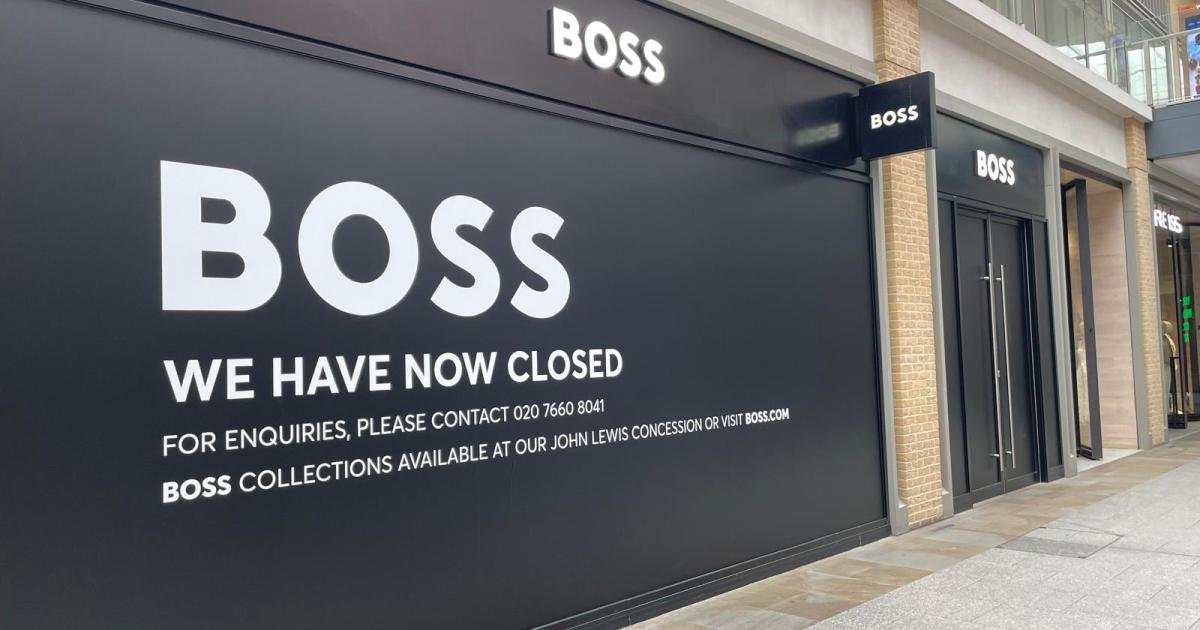
The fashion retailer this month closed down its store in the Oxford city centre shopping centre having opened in October 2017 as part of the £440m revamp.
It was one of the original retailers as part of the shopping centre’s new phase of life, along with John Lewis, Primark and Next.
A spokeswoman from Hugo Boss said: “Hugo Boss optimises its global store portfolio as part of its long-term strategy, which also affects the Boss Oxford Westgate Centre store.
“Hugo Boss will maintain a strong presence in the UK, and we will also continue to serve our customers via our online flagship store at hugoboss.com.”
READ MORE: Red Arrows will break record when it takes to skies over England
The company did not say whether any redundancies had been made from closing the store.
The spokeswoman said: “Wherever possible, we reallocate employees through transfers or other internal opportunities.”
There are indeed other branches not too far, including at Bicester Village, Swindon and Reading.
A spokeswoman for the Westgate said: “We remain committed to making Westgate Oxford a vibrant and varied retail destination for our guests, welcoming exciting new arrivals such as Sephora, The Beefy Boys, and the opening of Lego later this spring, as well as recently upsized stores for Oliver Bonas, Goldsmiths, and Superdrug.
“We look forward to sharing more details about new brands joining the centre soon.”
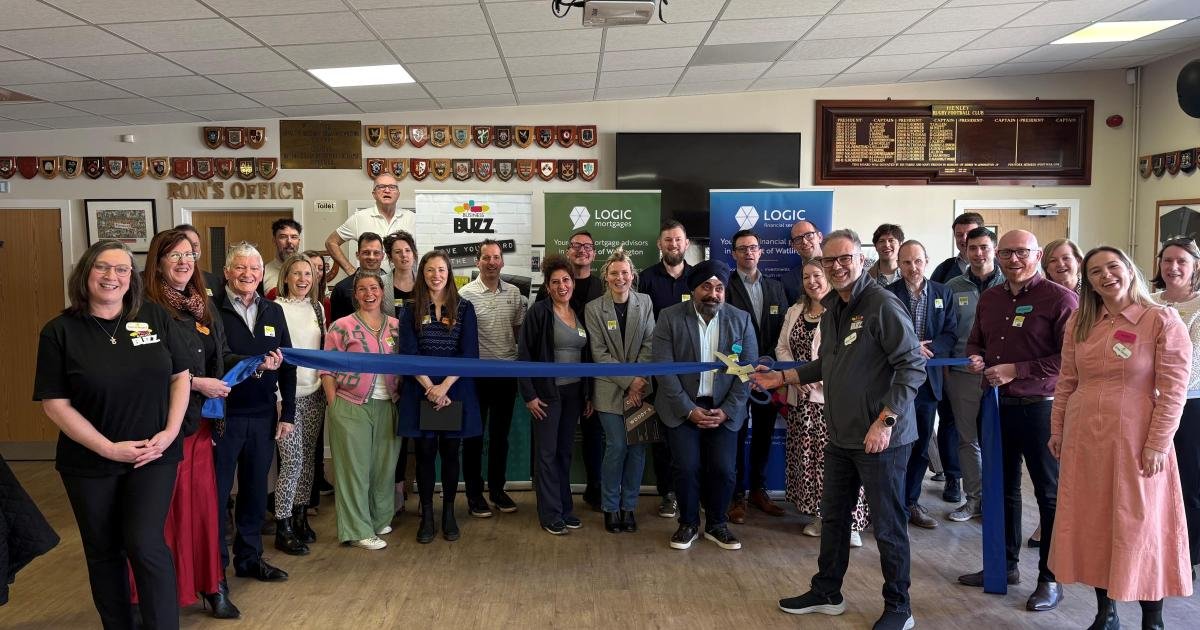
Henley Business Buzz hosted its first event at Henley Rugby Club, drawing more than 30 businesses and decision-makers from the local area.
The group is part of the wider Business Buzz network, offering informal, no-membership, pay-as-you-go networking that focuses on building professional relationships in a relaxed setting.
Orinta Gaucyte, host of Henley Business Buzz, said: “It was fantastic to see so many local businesses come together for our first Henley Buzz.
“There’s something really special about building a supportive community where people feel comfortable, included and able to make genuine connections.
“A huge thank you to everyone who came along and helped make the launch such a success.”
The launch was attended by Business Buzz co-founders Katrina Sargent and Simon George, who officially opened the event.
The Henley meetings are supported by sponsors Logic Financial Services and Logic Mortgages.
Lee Humphrey, of Logic Financial Services, said: “It’s brilliant to see an event like Business Buzz arrive in Henley.
“Creating opportunities for local businesses to connect in a relaxed and approachable way is incredibly valuable for the town, and we’re proud to support something that brings the business community closer together.”
Henley Business Buzz will take place on the fourth Thursday of each month, with the next event scheduled for Thursday, April 23.
All businesses, entrepreneurs, and professionals in the area are welcome to attend.



-

 Crime & Safety2 weeks ago
Oxford: ‘Next generation’ LimeBikes in city from today
-

 Jobs & Careers2 weeks ago
Explore our Careers
-

 Oxford Events2 weeks ago
Michelin Guide Oxfordshire Restaurants – The Oxford Magazine
-

 Jobs & Careers2 weeks ago
Why Join Oxford | Oxford University Jobs
-

 Jobs & Careers2 weeks ago
Internal Job Board for University vacancies
-

 Crime & Safety2 weeks ago
Crash partially blocks A40 and causes severe Oxfordshire traffic
-

 Student Life2 weeks ago
The independent cinema battling Oriel College to stay open
-

 Oxford Events2 weeks ago
Oxford News and Events, What’s on in Oxford, Exhibitions