
Business & Technology
UK crêpe firm’s Oxford branch shut after £3m administration


Crepe Affaire, in Banbury Road, Summertown, closed on Wednesday, May 27 although founder of the business Daniel Spinath said that it may return.
He said the closure was because the store’s five-year franchise agreement had ended and that the company is weighing up its options before taking the next step.
READ MORE: Leading UK charity in liquidation with £430,000 owed and jobs lost
Reacting to the news, a now redundant worker said: “It is sad but we are closing. It is a big space and too big for the number of customers.”
Offering a range of sweet and savoury crêpes for its customers, it opened in 2021 with some fanfare as part of the £15 million, 180-bedroom easyHotel development in the area.
However, since then the wider business – which has branches across the world including in Kuwait, Saudi Arabia, and the Netherlands – has struggled and was placed into administration in early 2025.

Crepe Affaire Limited posted creditors falling within a year of £1,333,673 in its latest accounts to December 31, 2023 and has been in administration since early 2025.
In the administrators (Quantuma Advisory Limited) report, it was revealed the long-term creditor rise had risen to £3 million as the company struggled in the wake of the Covid pandemic.
It said: “The Covid-19 pandemic on top of the inflation and interest rate hikes, led to the company’s trading results being severely below pre-Covid levels.”

Following its administration, nine company-owned retail sites were sold to newly set-up company Crepe Trading, reportedly saving over 60 jobs.
This was in a pre-pack sale which occurs when a company enters administration and is immediately sold by the administrator, with the deal typically being negotiated before the formal appointment of insolvency practitioners.
This did not include the Oxford branch with the franchise business being sold separately to another new business Crepe Union.

The directors of Crepe Affaire Limited, the company £3 million in debt, Allen Kerslake and Daniel Spinath, are now respectively the directors of Crepe Union and Crepe Trading.
Mr Spinath has said that, after its troubles, which he linked to the pandemic, the company is going strong internationally, and is even looking to expand into the US.
“The business is in good health despite it being a tough retail environment,” he said.
“The UK side is up and the international side is also doing really well.
“We’re here to stay.”
READ MORE: Fears of rural fuel shortage as farmers warn of upcoming UK food crisis
At the time of the branch’s opening in 2021, Daniel Spinath, founder and CEO of Crepe Affaire, said: “We’ve got something for everyone with our vegan crepes, gluten-free galettes, dairy-free cheese, meat-free chick’n.
“We want to be as inclusive as possible. That’s why our menu has a large range of free-from and dietary options. Vegan? Dairy free? Gluten free? Vegetarian? Pescatarian? Lower calories? We’ve got your back.”
It had a 76 per cent ‘recommended’ score on Facebook based on more than 250 reviews.

Celebrating both GCSE and A-Level Results Days, the chain will offer the popular dish to students who buy one of its bubble teas.
The free offer is available at all 42 Rosa’s Thai restaurants across England and Wales.
To avail of the free noodles, students need to register on Rosa’s Thai website for a unique code, which they should present at the restaurant together with a copy of their results.
Rosa’s Thai has a new range of bubble tea flavours, including Ube-Taro, Matcha-Coconut, Mango Sticky Rice, and Milo Chocolate Milk, as well as favourites like Home-brewed Thai Tea with Tapioca, and Lychee Mango with mango boba.
Students can sign up for their free Pad Thai at rosasthai.com/result-day-free-pad-thai and find their nearest restaurant at rosasthai.com/locations.

The London Mint Office, which distributes commemorative coins and medals, appointed administrators on July 31 after 20 years in business.
The company’s website now displays a message confirming the appointment of Michael Magnay and Jonny Marston of Alvarez & Marsal Europe LLP as joint administrators.
A spokesman for Alvarez and Marsal said: “On July 31 2026, Michael Magnay and Jonny Marston of Alvarez & Marsal Europe LLP were appointed as Joint Administrators of The London Mint Office Limited in administration (the “Company”).
“Regrettably, the Company’s liquidity challenges have led to a number of immediate redundancies. We are supporting the affected employees through the redundancy process.
What Happens When a Company Goes Into Administration?
“The affairs, business and property of the Company are being managed by the Joint Administrators who act as agents of the Company and without personal liability.”
The announcement confirms that it is no longer possible to purchase coins or medals through the company’s website.
The London Mint Office operates a distribution centre in Tonypandy, Rhondda Cynon Taf, where it employs a significant number of people.
Administration is a formal insolvency process triggered when a business cannot meet its financial obligations.
An insolvency practitioner is appointed to manage the company’s affairs and may attempt to restructure the business or sell off assets to repay creditors.
What happens when a company goes into Liquidation?
Founded in 2006, The London Mint Office describes itself as “one of the UK’s most trusted suppliers of historic, commemorative, and collector coins.”
It is part of Samlerhuset AS, a Norwegian company based near Oslo and one of Europe’s largest distributors of commemorative coins and medals.
Samlerhuset’s website states that it offers “provide a wide range of coins from ancient to modern, originating from virtually every country in the world.”
The London Mint Office has advised anyone with an interest in the company’s assets to contact the administrators at INS_THLMOL@alvarezandmarsal.com.
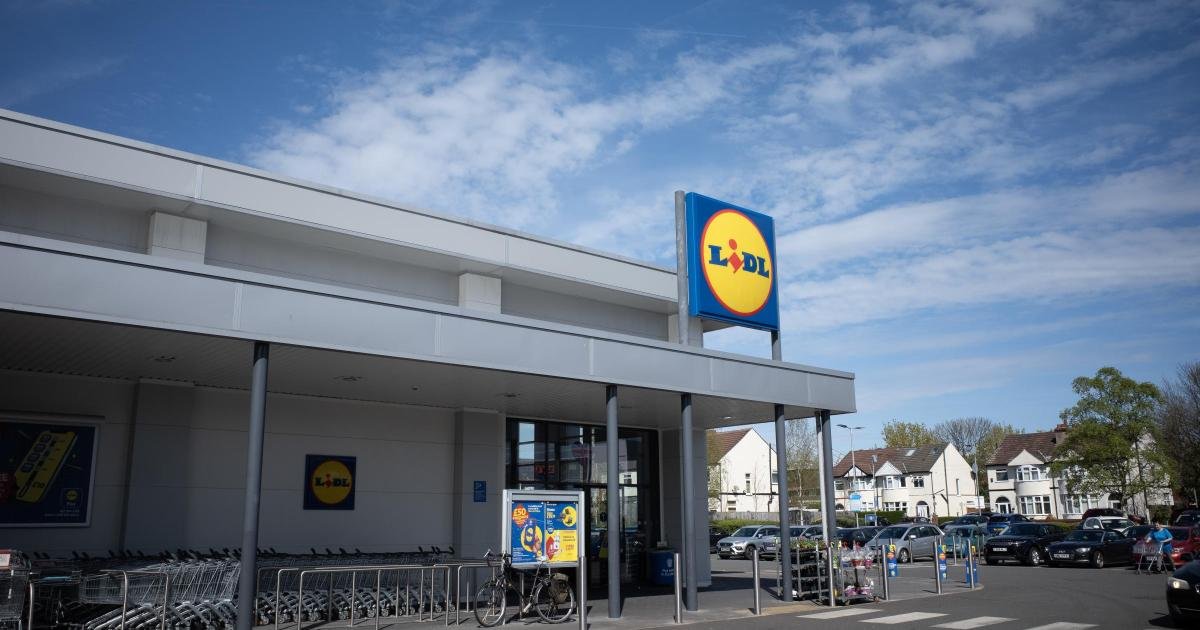
The Competition and Markets Authority (CMA) has provisionally decided that both discounters should be added to the Groceries Market Investigation (Controlled Land) Order 2010, which currently applies to Asda, Co-op, Marks and Spencer, Morrisons, Sainsbury’s, Tesco, and Waitrose.
This order is designed to prevent large grocery retailers from using land agreements to block competitors from opening nearby stores, often through restrictive covenants or exclusivity terms.
Juliette Enser, executive director of competition enforcement and markets at the CMA, said: “We want everyone to have the best choice of supermarket and range of prices when buying their groceries.
“To ensure this happens, we put rules in place to prevent big supermarket chains blocking rival stores from opening nearby – and now we propose applying those rules to Aldi and Lidl too.
“This is about allowing shoppers to choose where they spend their money and levelling the playing field for all major supermarkets.
“Today’s proposals are provisional and we welcome views before deciding the best way forward.”
The CMA’s review found that Aldi, Lidl GB, and Lidl NI now meet the criteria of ‘Large Grocery Retailers’ (LGRs) due to their store footprint, nationwide presence, procurement model, and the breadth of their grocery range.
Aldi and Lidl were originally excluded from the 2010 order as ‘limited assortment discounters’, offering a smaller selection of products compared to traditional supermarkets.
However, the CMA’s provisional findings indicate that this is no longer the case.
All three now operate large grocery stores, each with more than 1,000 square metres of shop floor space, and offer a full range of products, though with less category choice than some competitors.
They also purchase goods directly from suppliers through integrated wholesaling.
With the UK grocery market estimated to be worth £215 billion, Aldi and Lidl are now ranked among the top five retailers by market share.
The CMA is seeking feedback from stakeholders before reaching a final decision.
Aldi and Lidl could join the other supermarket chains later this year.
The CMA is inviting views until 5pm on Monday, September 7, 2026, and will issue its final decision in the autumn after reviewing responses.
If the discounters are included under the order, they will be prevented from using land agreements to limit competition from other supermarket chains.
The CMA aims to ensure competition across the grocery sector to give shoppers more choice and competitive pricing by removing obstacles to new store openings.



-

 Business & Technology3 weeks ago
HSBC UK & Visa test AI shopping with live payments
-

 Business & Technology3 weeks ago
Valarian lands USD $50 million backing for sovereign AI
-

 Oxford Events4 weeks ago
Henley Festival 2026 highlights: Five nights of unforgettable performances and festival moments
-

 Oxford united FC3 weeks ago
Oxford United three players who be kept after transfer ban
-
 Business & Technology2 weeks ago
Slice golf bar swings to new heights after successful launch
-

 Business & Technology4 weeks ago
ZYMIX uses Henley event to pitch social app to Gen Z
-

 Business & Technology4 weeks ago
Ode launches free AI voice service for poem recommendations
-

 Business & Technology3 weeks ago
UK AI firms raise record GBP £4.56bn in Q2 funding