
UK News
The Papers: 'I'm not Epstein's victim' and 'We see you, Vlad'

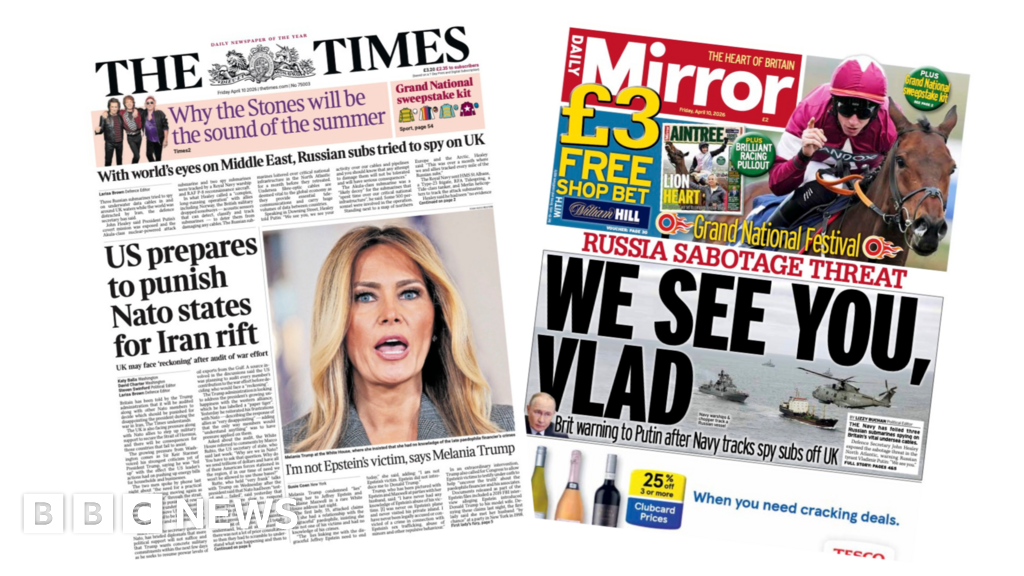
US First Lady Melania Trump is splashed across several of the papers, after she made a surprise White House address on Thursday.
Source link
Official rating
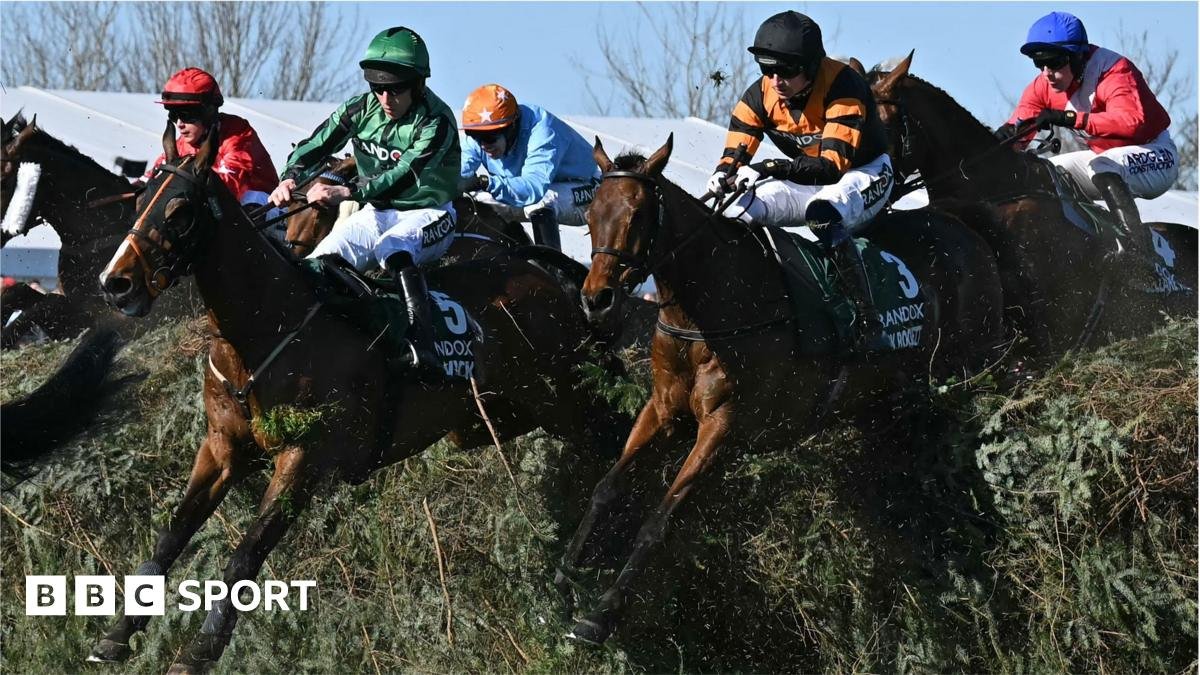
Every horse in training is giving an official rating by the handicapper based on the level that they run to. Fourteen of the past 16 winners have been rated 146+, with 13 of those between 146 and 160. I Am Maximus and Nick Rockett were rated 159 and 163 going into the past two editions so a higher mark may be a positive.
Runs since September
In the first seven runnings this decade, five winners had run six times since September, with the others having five and three outings.
That trend has settled down in the past 10 years, with the average being four runs. Noble Yeats had seven before his 2022 run, while five had been in three races.
No winner in the past 25 editions has run fewer than three times that season.
Trainer location
An English trainer last won the race in 2015, with an Irish trainer winning seven of the nine since. Scot Lucinda Russell has had two winners, though she has no runners this year.
Breeding
Of the 24 hours to win the race this century, 18 were Irish-bred, four were French-bred and two British-bred.
Finish last time out
Of the past 25 winners, 11 have finished in the top two of their previous run.
Six of the past eight winners also won their previous race, though Noble Yeats was ninth and Minella Times pulled up.
Four of the six winners before that had finished in the top four too, so the trends suggest form is a factor.
Career falls
Every winner this century except Auroras Encore had two or fewer falls in their career prior to the race.
In the past decade, Minella Times is the only horse to have fallen in their career and won the Grand National.
Won over three miles or more
Twenty one of the 24 different horses to have won this century have all registered at least one career win over three or more miles before winning the National.
Eighteen of them have won more than two races over that trip, though two of the past five aren’t included in that group.
Days since last run
The average break between runs for the past 10 winners is just over 41 days, with a range of 24-84 days.
If you take out the two highest and lowest, you’re left with a gap of 36 days.

What would Marcus Aurelius have made of the Kardashians? Would Seneca have been amused by mindfulness apps? These were questions I had never consciously pondered before reading Maria Semple’s new novel. Neither, in my irrational and unvirtuous state, had I spent much time considering the application of Stoic philosophy to any other key aspects of modern life.
Semple, best known for her exuberant, ingenious bestseller Where’d You Go, Bernadette?, here presents us with Adora Hazzard, Stoic philosopher and divorcee. Adora lives a contented life on New York City’s Upper West Side, spending her days tutoring the twin sons of an old-money family in philosophy and seeking to live according to Stoic virtues, without recourse to destabilising “externals”. But her settled life is soon disrupted by that most classic of externals, the handsome stranger. “Curse these alluring men who throw us off our game!” (Marcus Aurelius, paraphrased.)
What follows is tricky to categorise. Is it a knockabout comedy about the collective power of midlife women? (No, it isn’t, though it seems to gesture in that direction at the start.) An art heist caper? (Sort of.) A thriller? (A bit.) A romcom? (Sort of, I guess?) A cry of female rage? (Briefly.) A paean to the virtuous joys of Stoic philosophy? (100% yes!) Ultimately Semple seems to have resolved not to agonise over genre for too long. We could look at this as a gift: several books for the price of one.
Stoicism is not traditionally – I know this won’t hurt Marcus Aurelius’s feelings – very sexy, but Semple makes it feel fresh and exciting. Reflecting on a conversation with another character, Adora says, “I was all over the place. Which is what happens when I get started on Stoicism. Fuelled by enthusiasm, I talk faster and faster, bouncing between subjects, repeating myself. It’s like running downhill. … All I can do is keep going and pray I’ve got a shred of dignity left when I reach the bottom.” Adora’s enthusiasm is contagious. For some time after finishing the book, I found myself murmuring, when encountering a mishap, “The cucumber is bitter. Throw it away.” (Marcus Aurelius again.)
And Semple writes with immense charm. The book fizzes with funny lines, as when Adora remarks of one incidental character, with startling specificity, “His face looked weirdly polished, like a Polly Pocket doll that had been licked.” The madcap energy works well for long stretches of the book. Characters come and go. We get to know some of them. Plotlines come and go. We’re able to follow some of them. It’s buoyant and fun.
But at times this merry chaos tips over into a less satisfying disjointedness. There is a clunky section in which the deterioration of Adora’s marriage is charted through time-stamped nuggets, anchored to a whistlestop tour of the big hits from the recent political landscape: “Spring of 2016: I got swept up in Bernie mania”; “September of 2018: #MeToo erupts”, and so on through Brett Kavanaugh, Trump, George Floyd, the riots, some of these elements thematically pertinent but none given enough space in the narrative to feel properly relevant. Meanwhile, Adora’s ex-husband Hal is not fleshed out enough for us to care much about either the beginning or end of the marriage.
Elsewhere, Semple’s energy and economy with backstory are brilliantly deployed, as in the fast and harrowing account of Adora’s ill-fated career as a comedy writer. This compelling section is, in some ways, the centre of the novel (I’m hedging here because Adora’s embrace of Stoicism leads her to reframe how she views this episode), and its strongest element.
The book is a zany high-wire act and the main plot, which at times seemed like a shaggy dog story, is ingeniously wrapped up at the end. For me, the whole doesn’t really cohere, but as Marcus Aurelius said, everything is perspective, not truth. I felt both cleverer and sillier after finishing this book, which is a lovely way to be left.
UK News
Middle East crisis live: Trump casts doubt on Iran war ceasefire over continued closure of strait of Hormuz | US-Israel war on Iran
Summary
Welcome to the Guardian’s continuing coverage of the crisis in the Middle East.
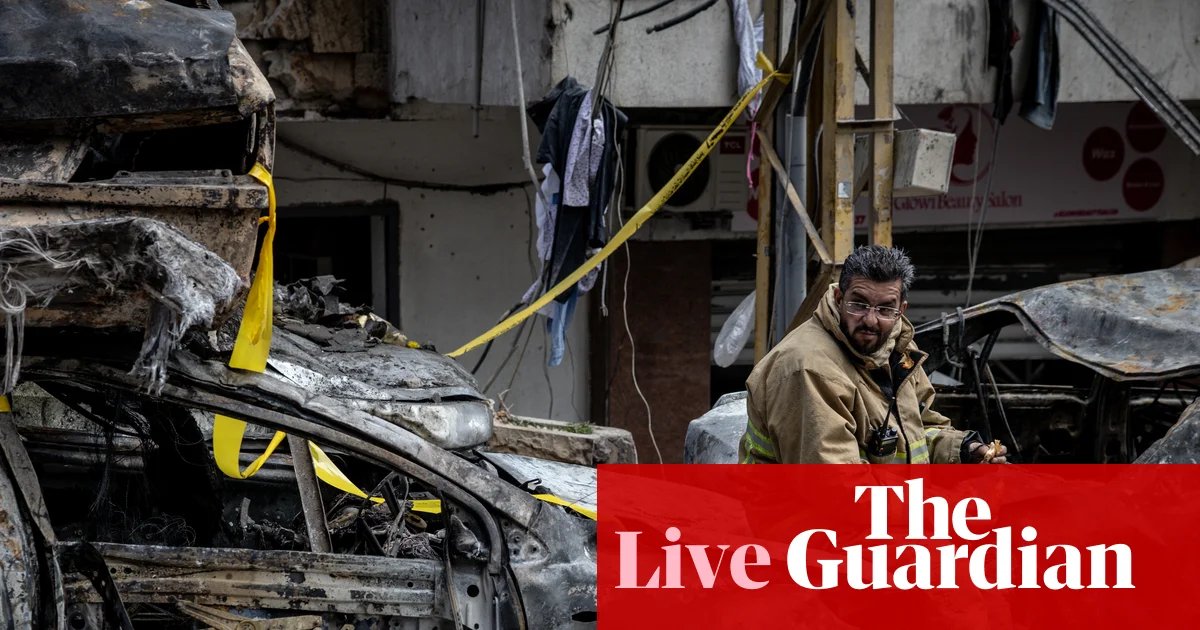
The fragile ceasefire between the US and Iran showed further strain on Friday, a day before delegations from both countries are due to meet in Pakistan, as Donald Trump accused Tehran of breaching promises on the strait of Hormuz and Israel struck Lebanon with attacks that Iran claims violate the truce.
Trump said in a social media post late Thursday that Iran was doing a “very poor job” of allowing oil to go through the strait. “That is not the agreement we have!“
There is no sign Iran is lifting its near-total blockade of the strait, which has caused the worst-ever disruption to global energy supplies. Tehran cited Israel’s ongoing attacks on Lebanon, which included the heaviest strikes of the war on Wednesday, as a key sticking point.

In the first 24 hours of the ceasefire, which Trump announced on Tuesday, just a single oil products tanker and five dry bulk carriers sailed through the strait, which typically carries a fifth of the world’s oil and liquefied natural gas flows and 140 ships a day before the war.
-
Donald Trump has said he is “very optimistic” a peace deal with Iran was within reach as a diplomatic delegation led by his vice-president JD Vance prepared to head to Pakistan for high-stakes talks aimed at ending the war this weekend. Iran’s leaders “talk much differently when you’re at a meeting than they do to the press. They’re much more reasonable,” the US president said, in line with his administration’s narrative that there’s a disconnect between what Tehran says publicly and privately.
-
Trump also confirmed that he had asked Benjamin Netanyahu on Wednesday to be “more low-key” in Lebanon to help ensure the success of the upcoming US-Iran negotiations in Islamabad. “I spoke with Bibi and he’s going to low-key it. I just think we have to be sort of a little more low-key,” Trump told NBC News, adding that he believed Israel was “scaling back” its operations in Lebanon.
-
Netanyahu said he had instructed his cabinet to begin direct negotiations with Lebanon aimed at disarming Hezbollah – all the while insisting that “there is no ceasefire” in Lebanon and that Israel will “continue to strike Hezbollah with force”.
-
Israel has since launched a fresh wave of strikes against what it called “Hezbollah launch sites” in Lebanon, after the IDF earlier ordered people to flee Beirut’s densely populated southern suburbs. Later in the day, Hezbollah said it had fired a rocket salvo towards northern Israeli settlements.
-
While Israel continues to insist that the war will go on and “talks will be held under fire”, Lebanon is demanding a ceasefire before direct negotiations can begin. Joseph Aoun, the Lebanese president, said this was “the only solution”. Lebanon is also insisting that it needs the US as a mediator and guarantor of any agreement. Those talks will take place next week, hosted by the US state department in Washington.
-
Iran’s president Masoud Pezeshkian said Israeli strikes on Lebanon violate the ceasefire agreement and would render negotiations meaningless, adding that Iran would not abandon the Lebanese people.
-
The speaker of the Iranian parliament, Mohammad Bagher Ghalibaf, said Lebanon forms “an inseparable part of the ceasefire” deal. In a post on X, he said “there is no room for denial and backtracking”.
-
Keir Starmer also said that Israel’s continued attacks on Lebanon “shouldn’t be happening”. The British prime minister also dismissed an argument put forward by US vice-president JD Vance on Wednesday that there had been “a legitimate misunderstanding”, saying the issue “isn’t a technical one of whether it’s a breach of the agreement or not”. It is “a matter of principles as far as I’m concerned”, Starmer said.
-
A statement attributed to Mojtaba Khamenei, Iran’s supreme leader, said Iran will take management of the strait of Hormuz into a new phase, but did not elaborate on what that would be. In the statement, read out on state tv, he also said Iran remains determined to “take revenge” for his father, who was assassinated on the first day of the war, and all those killed in the war. “We will certainly demand compensation for each and every damage inflicted, and the blood price of the martyrs and the compensation for the wounded of this war,” he said.
Key events
Donald Trump has said that right wing influencers Tucker Carlson, Megyn Kelly, Candace Owens, and Alex Jones are “not ‘MAGA,’ they’re losers”.
The four had been reliable supporters of Trump for most of his presidency, but in recent weeks have spoken out over their opposition to the war in Iran.
In a long post on his Truth Social platform, the president launched highly personal attacks on the four, who are among the most influential voices in the right wing media ecosystem.
As President, I could get them on my side anytime I want to, but when they call, I don’t return their calls because I’m too busy on World and Country Affairs and, after a few times, they go ‘nasty’.”
The war on Iran has widened the cracks in Trump’s already shaky Maga movement, with many commentators and supporters saying that such an operation is a betrayal of Trump’s promise to put America First and extradite the US from messy foreign conflicts.
Carlson on Monday called the president’s rhetoric toward Iran, including an expletive-filled threat on Easter, “vile” on “every level.” Conspiracy theorist Alex Jones asked on his Info Wars show: “How do we 25th Amendment his ass?” Former Fox News host and popular conservative media personality Megyn Kelly said the recent ceasefire with Iran “sounds very much like surrender,” but conceded that she supported it.
South Korea says senior diplomat Chung Byung-ha will soon depart for Iran as a special envoy to discuss the safety of its citizens and Iran’s chokehold on the strait of Hormuz.
South Korea’s foreign ministry said Friday that Chung plans to push for the freedom of navigation for all vessels, including South Korean.
The ministry earlier said Iranian foreign minister Abbas Araghchi welcomed Seoul’s plan to send a special envoy during a phone call with South Korean foreign minister Cho Hyun on Thursday.
Continued attacks reported in Kuwait
Kuwait has accused Iran and its proxies of launching drone attacks targeting it on Thursday, despite the two-week ceasefire in the Iran war.
Kuwait’s foreign ministry said drone attacks “targeted some vital Kuwaiti facilities” on Thursday night.
Iran’s Revolutionary Guard (IRGC) has however denied launching new attacks on Gulf states.
In a statement carried on Iran’s state-run IRNA news agency the IRGC said “if these reports published by the media are true, without a doubt it is the work of the Zionist enemy or America.”
Stocks rise and oil price nudges higher ahead of US-Iran talks
Stocks rose on Friday with investors still optimistic about the shaky US-Iran ceasefire ahead of planned weekend talks, but the price of oil nudged slightly higher.
Equity markets extended the week’s gains in early trading on Friday: Tokyo, Hong Kong, Seoul, Shanghai and Taipei all rose at least 1%, while Singapore and Manila were also well up, though Sydney slipped.
The gains in Asia followed a second healthy run-up on Wall Street, with the S+P 500 on Thursday rising 0.6%
Brent crude climbed 1% to $96.83 a barrel as trading resumed in Asia.
Underlining Iran’s continued control of the Strait of Hormuz, a Botswana-flagged liquified natural gas tanker called the Nidi attempted to travel out of the Persian Gulf via a route ordered by the Revolutionary Guard but suddenly turned around and headed back early Friday, ship-tracking data has shown.
On Thursday, four tankers and three bulk carriers crossed through the Strait of Hormuz, bringing the total number of ships passing through since the ceasefire to at least 12, according to the data firm Kpler.
However, other ships not transmitting their locations may have passed through as well. The strait typically carries a fifth of the world’s oil and liquefied natural gas flows and sees around 140 ships a day pass through it during peace time.
Japan plans to release 20 days’ worth of oil reserves from May, prime minister Sanae Takaichi told a cabinet meeting on Friday, to ensure stable domestic supply as conflict in the region continues disrupts global supply.
Japan is dependent on the Middle East for around 95% of its oil. It began releasing reserves on March 16 unilaterally and in coordination with other nations under a plan to make available enough oil to last 50 days. The new release of 20 days worth is additional.
As of 6 April, Japan had enough oil for 230 days in its reserves, including 143 days worth in its public stockpile.
By May, Japan should be able to secure more than a half of oil imports via routes that do not include the strait of Hormuz, Takaichi said, without naming the sources.
Japan has also contacted suppliers in the US, Malaysia, central Asia – such as in Azerbaijan and Kazakhstan – Latin America – including Brazil, Argentina, Ecuador, Colombia and Mexico – and Africa such as in Nigeria and Angola.
The government has asked suppliers to sell fuel directly to sectors such as healthcare, transportation and agriculture, including green tea producers, livestock and fisheries, Takaichi said.
Summary
Welcome to the Guardian’s continuing coverage of the crisis in the Middle East.
The fragile ceasefire between the US and Iran showed further strain on Friday, a day before delegations from both countries are due to meet in Pakistan, as Donald Trump accused Tehran of breaching promises on the strait of Hormuz and Israel struck Lebanon with attacks that Iran claims violate the truce.
Trump said in a social media post late Thursday that Iran was doing a “very poor job” of allowing oil to go through the strait. “That is not the agreement we have!“
There is no sign Iran is lifting its near-total blockade of the strait, which has caused the worst-ever disruption to global energy supplies. Tehran cited Israel’s ongoing attacks on Lebanon, which included the heaviest strikes of the war on Wednesday, as a key sticking point.
In the first 24 hours of the ceasefire, which Trump announced on Tuesday, just a single oil products tanker and five dry bulk carriers sailed through the strait, which typically carries a fifth of the world’s oil and liquefied natural gas flows and 140 ships a day before the war.
-
Donald Trump has said he is “very optimistic” a peace deal with Iran was within reach as a diplomatic delegation led by his vice-president JD Vance prepared to head to Pakistan for high-stakes talks aimed at ending the war this weekend. Iran’s leaders “talk much differently when you’re at a meeting than they do to the press. They’re much more reasonable,” the US president said, in line with his administration’s narrative that there’s a disconnect between what Tehran says publicly and privately.
-
Trump also confirmed that he had asked Benjamin Netanyahu on Wednesday to be “more low-key” in Lebanon to help ensure the success of the upcoming US-Iran negotiations in Islamabad. “I spoke with Bibi and he’s going to low-key it. I just think we have to be sort of a little more low-key,” Trump told NBC News, adding that he believed Israel was “scaling back” its operations in Lebanon.
-
Netanyahu said he had instructed his cabinet to begin direct negotiations with Lebanon aimed at disarming Hezbollah – all the while insisting that “there is no ceasefire” in Lebanon and that Israel will “continue to strike Hezbollah with force”.
-
Israel has since launched a fresh wave of strikes against what it called “Hezbollah launch sites” in Lebanon, after the IDF earlier ordered people to flee Beirut’s densely populated southern suburbs. Later in the day, Hezbollah said it had fired a rocket salvo towards northern Israeli settlements.
-
While Israel continues to insist that the war will go on and “talks will be held under fire”, Lebanon is demanding a ceasefire before direct negotiations can begin. Joseph Aoun, the Lebanese president, said this was “the only solution”. Lebanon is also insisting that it needs the US as a mediator and guarantor of any agreement. Those talks will take place next week, hosted by the US state department in Washington.
-
Iran’s president Masoud Pezeshkian said Israeli strikes on Lebanon violate the ceasefire agreement and would render negotiations meaningless, adding that Iran would not abandon the Lebanese people.
-
The speaker of the Iranian parliament, Mohammad Bagher Ghalibaf, said Lebanon forms “an inseparable part of the ceasefire” deal. In a post on X, he said “there is no room for denial and backtracking”.
-
Keir Starmer also said that Israel’s continued attacks on Lebanon “shouldn’t be happening”. The British prime minister also dismissed an argument put forward by US vice-president JD Vance on Wednesday that there had been “a legitimate misunderstanding”, saying the issue “isn’t a technical one of whether it’s a breach of the agreement or not”. It is “a matter of principles as far as I’m concerned”, Starmer said.
-
A statement attributed to Mojtaba Khamenei, Iran’s supreme leader, said Iran will take management of the strait of Hormuz into a new phase, but did not elaborate on what that would be. In the statement, read out on state tv, he also said Iran remains determined to “take revenge” for his father, who was assassinated on the first day of the war, and all those killed in the war. “We will certainly demand compensation for each and every damage inflicted, and the blood price of the martyrs and the compensation for the wounded of this war,” he said.



-
 Oxford Events4 weeks ago
Michelin Guide Oxfordshire Restaurants – The Oxford Magazine
-

 Oxford News3 weeks ago
Gary Lineker’s nephew-in-law death inquest to be next week
-

 Oxford News4 weeks ago
Schwarzman Centre to open doors to public with major celebration
-

 Crime & Safety3 weeks ago
Oxford: ‘Next generation’ LimeBikes in city from today
-

 Jobs & Careers3 weeks ago
Explore our Careers
-

 Student Life3 weeks ago
The Art of Personalised Jewellery: Why Engraved Bracelets Are the Ultimate Keepsake
-

 Crime & Safety3 weeks ago
Wiltshire 12-year-old girl with Oxfordshire links missing
-

 Jobs & Careers3 weeks ago
Why Join Oxford | Oxford University Jobs