
Student Life
The Oxford students Britain turned away


When you matriculate at Oxford University, the Vice-Chancellor asks that the attending students be accepted. Under Christopher Wren’s painted ceiling, after copious submissions, emails, and acceptances, the University still has one fleeting chance to turn around and say ‘no’.
There is a sense of just reward for the chosen in this ritual. As the Vice-Chancellor herself says in the ceremony: “It is not easy to earn a place at Oxford – we are the number one University in the world, after all.” While many students recognise the role of luck in getting to this moment, few are aware of just how lucky they are.
Over the past seven months, some of Oxford’s offer holders have been hoping for their luck to change. They met the academic requirements and demonstrated sufficient intellectual rigour. What led them to fail the test was, instead, the passports they held.
They are the victims of a visa brake introduced by the Home Office, which blocks students from Afghanistan, Myanmar, Sudan, and Cameroon from obtaining UK visas. Caught in the politics of immigration enforcement, these students felt the elation of an Oxford offer, followed by the cruelty of being told “no”.
Seven months on, some still hold out hope of making it to Oxford.
The visa brake was part of a wide-ranging immigration reform package that has driven anger at the Home Secretary in the Labour government. To justify the claims, Mahmood cited a 470% increase in those on student visas from the four countries claiming asylum.
Over the phone, Yama jests that, as a scientist, he can recognise “when evidence is selectively deployed”. He is an Afghan British researcher who has worked at the Oxford Vaccine Group since 2013, and he believes that the countries were chosen for political reasons. “They are not a priority for our politicians,” he scoffs. Their lack of representation means those in power question, “‘Is it really worth fighting for?’ Morally, absolutely. But economically or publicity-wise, ‘it’s just 10 students’”.
Earlier this year, Yama wrote to then-Prime Minister Keir Starmer, met with MPs, and has led a UK parliamentary petition against the brake signed by nearly 40,000 people. He hopes that “next time someone thinks about Sudanese or Afghans or whatever other country,” this campaign would mean that “they might spend one minute to pause and say, ‘I’m going to do this, and this is very unfair’”.
Filings from a court case challenging the policy serve Yama’s point. The Home Office’s own metric for the visa brake shows that, were all countries being treated equally, other countries, including Bangladesh, would have been included in the brake. The country was excluded, not because of its role in visa abuse, but because of deeper bilateral ties, such that “any action on Bangladesh would likely incur a far more pronounced impact upon relations”.
Ask any of the Oxford offer holders what they hoped to achieve with a British education, and they do not ask for asylum. When a coup in Myanmar turned into civil war, Eaint watched her home country fall apart from her student accommodation at King’s College London. Even knowing that, at home, conflict had “erased life as people knew it”, she never considered asylum. “For asylum to be framed as the easy way out,” she says, “is a very disingenuous justification”. She had an offer to begin a Master’s in Health Service Improvement and Evaluation in Oxford this October.
Studying abroad is not just about attending a particular university. For affected students, it is one of the few ladders out of the devastation caused by decades of civil unrest. Afghanistan has not recovered from the Soviet invasion in 1979 and, since the Taliban returned to power, women and girls have been systematically excluded from education past primary school. For them, universities abroad can represent one of the few remaining routes to continue their education.
Education is foundational to recovery, reinvigorating people and countries. Alongside her studies, Aisha has piloted an e-learning programme providing university-level education to women in six Afghan provinces. “It is a process that needs building, but we should not be waiting for the moment the Taliban are no longer in power to start working on the workforce.” She had hoped to use her time in Britain to expand the programme through the University’s networks.
Back in Oxford, Yama runs a similar programme offering education for Afghan women and girls; he’s seen the impact of education through his sister, now a doctor in Denmark. Had his father not been so desperate for her to get an education, fleeing the Taliban in the process, “we would have a woman with no knowledge. We would have one less doctor.”
Eaint’s grief is twofold: the visa brake does not just represent the loss of her own offer, but the knowledge of “what doors this was closing for people who just wanted a better future and education”. “I had already gotten a bachelor’s degree in the UK,” she says. “I was so acutely aware that studying in the UK had changed my life in every sense possible.”
Taking away the opportunity is equally life changing. One Afghan student told Yama: “What I’m going to do is this: I’m going to go into those boats. I’m going to cross the channel. I’m going to come into this country, and I am going to study. Because I already have an offer. I have done everything in the past four or five years to qualify and get a scholarship from the UK, and now I’m being stopped not because I don’t meet their standard, but because I’m Afghan.” When Yama tried to dissuade the student, he was reminded that “you are in Oxford. That’s why you are saying, and you are advising me, ‘don’t do that’. Please, before going to sleep tonight, spend ten minutes putting yourself in my place and think about what you would have done.” They have not been in contact since.
Underpinning the Home Office’s policy is a sense of why international students come to Britain. But these students saw their Oxford offers not as a way out, but as an opportunity to help their home countries. They are the students who fell through the cracks created by a blanket ban.
Ibrahim was on a rare break from his internship when we called. For the first few minutes of the call, he recounts in detail the potential changes to Sudan’s health referral system he has identified. Working in hospitals in Sudan during the ongoing war, he witnesses daily the challenges of a health system under stress – just three months into his placement, the hospital he worked at was filled with victims of a drone strike in a nearby town. “There was just so much pressure to take care of all these patients,” he says. Still, you have to be “vigilant” to survive in an active war zone. At Oxford, Ibrahim wanted to focus on how to implement his changes in a “volatile” environment as part of his Master’s in Health Service Improvement and Evaluation.
Eaint calls from the Thailand-Myanmar border, where she is working on a project helping those fleeing her native Myanmar with medical and humanitarian aid. Ironically, she laughs, the project is funded by an Oxford research institute.
For everyone, the Oxford offer symbolised that people cared. Ibrahim recalls coworkers and friends asking him why he was smiling so much after receiving his offer. To him, it validated that he had “ the potential to contribute” to the field. Having spent her interview talking about their plans to improve the health system back home, Eaint tells us her offer “felt like a validation of the fact that these issues mattered”. Safar, an Afghan student due to study an MPhil in international relations, told us that his offer “represented a possibility: the belief that, if people with the fewest resources are given an opportunity, they can become catalysts for change within societies that have endured decades of war and violence.”
What does it mean, then, that these offers are taken away? Yama describes himself as proudly Afghan British; he was a key part of the team that led the development of the Oxford-AstraZeneca COVID vaccine and is currently working on the world’s first Ebola vaccine. His expertise means he could easily move to the US, should he choose, but he wants to stay: “This country has given me another home.” The current policy, he says, “is against British values”.
For Safar, the policy has shaken his faith in what Britain and Europe stand for. Having faced discrimination growing up as a refugee in Pakistan, he always thought that “progressive” Europe was different. “One of the reasons I had always wanted to study in Europe was my belief that Europe was built on the idea of human equality. I never imagined that I would encounter discrimination embedded in government policy in a liberal, so-called first-world country.”
The Home Office itself recognised the dangers of the blanket ban – officials considered targeted interventions, including by course. Their own analysis noted that “the blanket ‘brake’ model offered speed and simplicity but raised proportionality and litigation risks”. The office intends the measure to be temporary and precede more “nuanced” interventions targeting the root of abuse.
What the Home Office failed to consider was the human cost. By implementing the brake in March, when most offers for UK universities come out, many students felt both the elation of Oxford saying “yes”, before the “numbness” of it being taken away. Having gone through the rigorous application process, Ibrahim assumed he would be exempt when he first heard of the brake.
The Home Office did not respond to Cherwell’s request for comment.
As the case has developed, Oxford has issued many statements. Each notes that the University receives “a significant number of applications from talented students affected by war and persecution” and reaffirms the University’s commitment as a University of Sanctuary. A blanket script is the only way to answer a blanket policy – this national policy effectively ties the University’s hands from abiding by its promise to students.
Students, like Ibrahim or Eaint, who had the UK as their only option for 2026-2027 study were left with no options. If they were to look abroad, as many are now doing, they would have to sit out a whole academic year.
Oxford has stated that it had “offered the same options to the same offer holders”. Whatever the University has offered, the consequences for students are scattered. For some students, holding out hope is painful and unrealistic. The blanket change resulted from the efforts of students, like Ibrahim, to fight for their offers.
Though these students are not in the Sheldonian Theatre, they are waiting one last time to see whether the answer to their place at Oxford might be “no”. This summer they launched a legal challenge to the visa brake. While the initial case failed at the High Court this summer, Cherwell can confirm that they have applied for permission to appeal.
Hope remains for those who have not withdrawn their applications. Students with unconditional offers, including Ibrahim, have been given the chance to defer to allow for the result of appeal. Even for the Afghans we spoke to who lost their offers, Yama is optimistic that the overturning of the brake would allow them to say “This student was successfully selected for last semester, but they couldn’t get a visa. Could we renegotiate their position for next year?”
Should the appeal fail, the Home Secretary also retains the power to grant entry clearance to students outside immigration rules – the circumstances in which she would do so “are likely to be rare, and will be informed by the nature and purpose of the Student Visa Brake”. To be an exception to a government immigration policy might be rare, but to get into Oxford has always involved some degree of luck and a willingness to test the odds.
Reflecting on the fact his future rests with a British judge, Ibrahim takes “satisfaction” from “deciding to persevere” till the very end. It has, he admits, been “a very long and very exhausting process”, but the thought of making it to Oxford still excites him. “I think Oxford is worth it. I think it’s really worth the wait. I hope it’s a wait.”
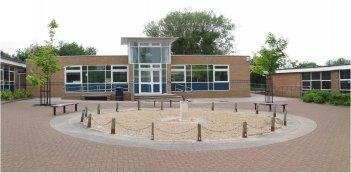
The University of Oxford has produced a guide to strengthen the link between the academic institution and local schools.
This resource, Opening Oxford, focuses on what the University can give to local communities, and how the University itself can benefit from interacting with the wider region. In the foreword, Vice-Chancellor Irene Tracey described the University’s commitment to “strengthening the University’s links with our local communities” and “ensuring young people across Oxfordshire can see opportunities in the University, whether that is study, employment, or interest in our cultural assets”. She added that universities “thrive when they are part of the life of their region”.
Within the guide, curriculum-linked workshops, enrichment opportunities, and lectures are recommended to realise the University’s vision. The activities featured are available for primary school students through to those navigating higher education and career choices.
It also emphasises helping educators through teacher development opportunities and classroom resources. Specific programmes and resources, such as a two-week research programme at Oxford University Museum of Natural History for sixth-formers and St Anne’s Super-Curricular club which offers online classes, are recommended for those considering applying to universities, including Oxford. It highlights post-school opportunities at the University, such as work experience, careers, and apprenticeships.
This guide contributes to the University’s 2025-2030 Strategic Plan, which outlines how the University will partner with the local community to “sustain excellence in education and research, extend our impact through innovation, and exercise leadership…for the benefit of society”.
The project also builds on the academic outreach that the University has previously developed. Similar to The Oxford College Twinning Project, it attempts to develop a reciprocal relationship between town and gown in the city.
Pro-Vice Chancellor for External Engagement, Sport, and Community, Professor Alex Betts, acknowledges that available initiatives and outreach are “not always visible or transparent to teachers across Oxfordshire”. In his introduction to the guide, he hopes it will help close the educational attainment gap and ensure Oxford is not viewed by young people as “distant and unrelated to their lives”.
The programme’s aim overall is to make the University “relevant and inspiring to all”, not only to its students.
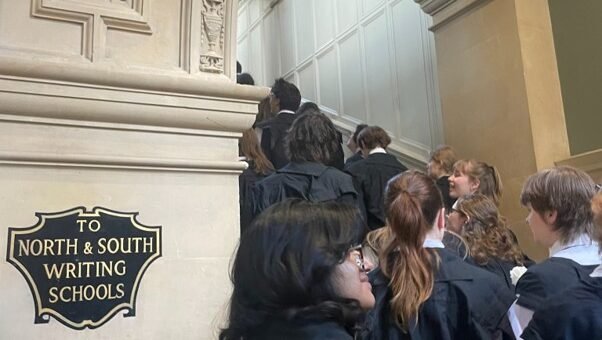
Oxford University’s BA Jurisprudence (Law) degree is under faculty review following concerns raised by external examiners and echoed by students, about teaching disparities between colleges.
In a 2026 report seen by Cherwell, both examiners outlined concerns about teaching disparities between Oxford colleges that could affect law students in Final Honour School (FHS) examinations. They questioned whether coordination between colleges was adequate and critiqued a “lack of process” in ensuring students are taught in a “roughly consistent way”.
“There seems to me to be a real possibility of unfairness depending on the topics chosen by the individual tutor in the College and the difficulty of individual questions on the paper,” the report said. One examiner suggested that these issues might not be resolved through simply broadening questions on the paper, while another questioned whether action was needed “to ensure a level playing field across the students in the University”.
Speaking to Cherwell, a final year law student described the situation as “problematic” for students. They said: “The faculty just don’t have enough control over what tutors put on their reading list.”
They told Cherwell that there is no set order for law tutors to teach topics. With the faculty reading list sometimes containing 10-12 weeks of content, this forces some students to teach themselves, especially if the topics not chosen by tutors are easier to score highly on in exams.
They also claimed that in rare instances, some tutors will not include mandatory cases on their reading lists. While these are available to find on the faculty reading list, “it’s on you to make sure you’ve been taught correctly”, according to the student.
Another student claimed that, in last year’s Administrative Law exam, finalists at their college were significantly disadvantaged because they were only taught the first eight weeks of content. They told Cherwell that at colleges where tutors were more versed in administrative law, students were taught more content which was less complex and more likely to come up in exams.
Another law student who graduated in 2025 told Cherwell that they found the tailoring of teaching to exams and the quality of essay feedback varied greatly between colleges.
A University spokesperson told Cherwell: “Undergraduate law teaching combines lectures and classes provided by the Faculty with tutorials arranged by individual colleges. While colleges are responsible for their own tutorial provision, we recognise the importance of ensuring that students are appropriately prepared for their examinations, regardless of their college.”
Cherwell understands that the Faculty of Law is currently reviewing the course and its teaching provision in a working group.

A collaboration between scientists at the University of Oxford and Wuhan University has made a major breakthrough in solar energy efficiency.
Researchers found that bismuth sulphide can absorb light strongly without losing the electrical charge it produces, making it a promising material for semiconductors, the part of a solar cell which converts sunlight into energy.
When a semiconductor absorbs sunlight, it uses its energy to free electrons and leaves tiny, positively charged ‘holes’ in their place. To produce electricity, these positive and negative charges must be rapidly harvested before they meet and cancel each other out. However, laws of physics state that a good absorber of light must also be a good emitter, and therefore the semiconductors that absorb light most strongly are also the ones that lose their charges most quickly.
Solar energy research has long been slowed by the difficulty of finding materials that balance semiconductor absorbency and efficiency.
The discovery of bismuth sulphide, published in Nature in October, unlocks a solution. The researchers discovered it has a rare quantum arrangement that allows it to absorb light efficiently while also making it harder for excited electrons and holes to recombine.
Solar energy constitutes only 6% of Britain’s electricity. Primarily because of Chinese investment, 91% of new global solar and wind facilities are cheaper than the cheapest available fossil-fuel power. However, weather, grid infrastructure, and technological limitations have created a firm ceiling on the UK’s solar energy harvesting. This comes as Prime Minister Andy Burnham has announced the launch of a new government body to invest in the national electricity grid, as concerns mount over the durability and capacity of the UK’s energy infrastructure.
The government projects that the solar sector will support 35,000 jobs by 2030. This includes roles within the solar technology company Oxford Photovoltaics, which contributed to the study. The company was founded in 2010 as a spin-out from the University and now claims to be “commercialising the world’s most efficient solar technology to power the next generation of clean energy”.
Solar energy is also expected to play a major role in the government’s plans for an Oxford-Cambridge ‘growth corridor’. A recent report suggests the UK’s premier innovation zone is falling behind its global rivals, as China continues to build as much as 74% of all solar and wind projects worldwide.
This discovery of the bismuth sulphide semiconductor may trigger changes in the renewable energy sector. To do so, however, requires rapid commercial implementation of the technology. Researchers have yet to establish whether the increased energy savings of bismuth sulphide are enough for it to turn a profit.



-

 Oxford united FC4 weeks ago
Oxford United beat Wigan Athletic 2-1 in League One victory
-

 Oxford united FC4 weeks ago
Ramsey on Oxford United’s Arsenal-inspired set-piece threat
-

 Oxford united FC4 weeks ago
Leicester City hit with same transfer embargo as Oxford United
-
 Traffic & Transport4 weeks ago
Andy Burnham launches campaign against ‘headphone dodgers’ on public transport | Transport policy
-
 Student Life3 weeks ago
“I am proud of being a Jew, and equally proud of being an Arab”: Professor Avi Shlaim on Iraq, Zionism and belonging
-

 Student Life4 weeks ago
I no longer want to be an astronaut
-

 Student Life3 weeks ago
The Vinted paradox: Consuming our way out of overconsumption
-
 Property & Housing4 weeks ago
Oxfordshire’s Equinox 2035 strategy launched at House of Commons