
Student Life
‘Studentification’ is hollowing out Oxford

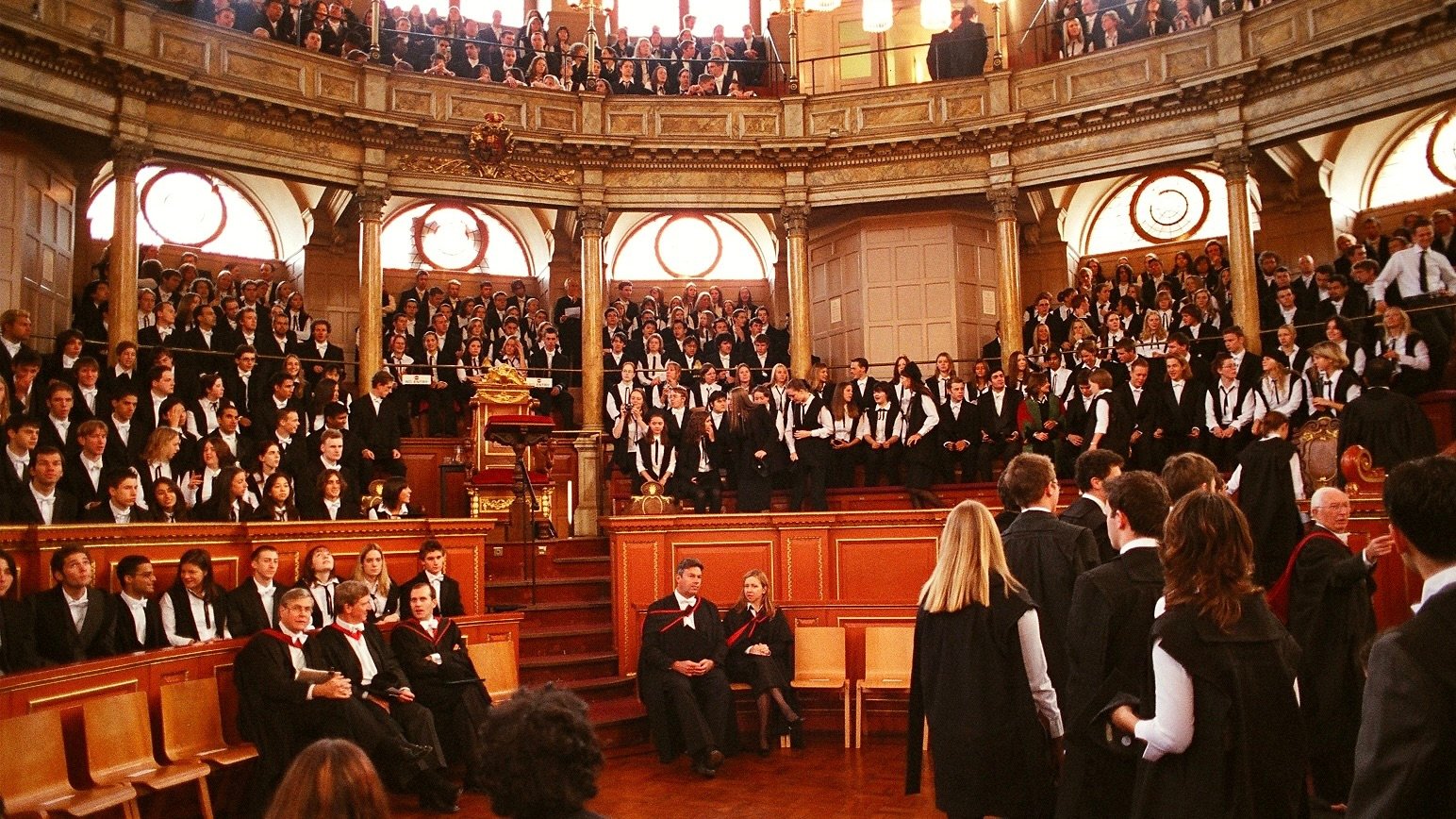
Walking back into town from the Schwarzman Centre, I pass all kinds of places that make Oxford feel lived in rather than merely studied. A restaurant preparing for the evening’s bookings. A pub garden where conversations spill into the cold air. A community noticeboard layered with ads for yoga classes, lost cats, and open mics. The spire of a University building rises just beyond a row of independent cafes. This stretch of road is not spectacular in the same way as the Rad Cam or Bodleian; it’s not curated for prospectuses or postcards. But it is the palimpsestic fabric of the city – the in-between space where town and gown brush against each other. It is also a space that feels increasingly fragile.
The glass, light, and grandeur of Oxford’s many faculties and study spaces are a gleaming symbol of the University’s cultural ambition. And yet, walking amongst them, I am reminded that the future is being built quite literally on the footprint of existing communities. Every new development has had a previous tenant, a former use, a set of memories that rarely make it into planning documents.
That reminder was particularly harrowing when I stopped for a coffee in one of my favourite spots in Oxford: Common Ground Cafe. Situated on the bustling Little Clarendon Street, it is an independent space that prides itself on community arts and co-working, hosting spoken word nights, gigs, vintage clothes and record sales, and more. On any given day you might find students editing essays beside local artists planning exhibitions, while freelancers hunch over their laptops to the muffled sound of old friends catching up. It is a porous space, one where the categories of “student” and “resident” feel entirely irrelevant.
It was an unremarkable Tuesday. I ordered a croissant, opened my laptop, and glanced up at the noticeboard – usually a collage of DJ nights, book clubs, and invitations to group discussions about activism and advocacy. But this time, it was the bold lettering of a different poster that dominated my view. “OXFORD UNIVERSITY DEVELOPMENT”, it read, underlined. Beneath it was a planning notice for the demolition and redevelopment of Wellington Square.
The language of planning documents was plastered so awkwardly amongst those chatting, typing, and queueing for coffee. Life carried on. But here in front of me was notice of a ticking time bomb, as all this was doomed to be replaced by something new.
‘Perhaps change is good?’, I thought to myself. It was natural, after all, as buildings, businesses, and initiatives come and go all the time. It was likely going to be replaced by an academic space, for the benefit of Oxford University’s students. What was wrong with that?
But Common Ground is no relic, nor a romanticised holdout against progress. It is contemporary, adaptive, responsive. Living and breathing. Why was that any less important? Any less deserving of a place in modern Oxford?
The cafe’s Instagram had more information about how they hoped to continue despite the redevelopment plans made by the University. And after seeing wide-spread discussion about how the future of Common Ground may look, I began to feel slightly better.
But as I walked down St Giles last week, unthinking, I was struck once again by these same feelings and questions. That same day, I had just discovered that the Oxfam on the corner of Pusey Street was set to be closed.
While not the only second-hand book shop in Oxford, it was certainly a favourite amongst many of my fellow humanities students. The reason for its closing simply did not sit right with me. A charitable organisation, selling often hard-to-come-by books at an affordable price, was set to be demolished for the sake of Regent’s Park College’s desire for a Middle Common Room. This was no upgrade in the name of public benefit, it was an act of private enclosure.
Oxford is a constantly evolving institution, and its buildings inevitably reflect changing academic needs. But when redevelopment becomes synonymous with displacement, we must ask what kind of city is being constructed alongside the University’s future. As more and more city spaces are erased to make way for University spaces, we need to be thinking about the long-term consequences of this ‘studentification’.
Because what is lost is not simply square footage. It is inclusivity. It is the accidental conversations between people who would otherwise never share a table. It is the charity bookshop where a first-year can buy a dog-eared copy of a theorist they cannot quite afford new, and the cafe where a local band plays to a room that contains as many residents as undergraduates. These places are not peripheral to Oxford’s identity; they are what make it breathable.
The slow consolidation of Oxford City into an ever-more enclosed, University-owned space risks narrowing the surroundings that we claim to value. A Middle Common Room may enrich student life for some, but what of the wider world beyond college walls?
This is not an argument against growth, nor against the University meeting genuine academic needs. It is an argument for proportion, imagination, and responsibility. For asking whether expansion must always mean acquisition. For recognising that “public benefit” cannot be measured solely in seminar rooms and study spaces. For acknowledging that a city in which independent, charitable, and community-led spaces are permanently precarious is a threat to Oxford’s culture.
The clash of town and gown is age-old, yet the two are undoubtedly mutually shaping. If one side absorbs the physical ground of the other, that balance begins to falter. The risk is not dramatic decline, but gradual homogenisation – a city that feels increasingly curated, wholly institutional, closed off from ‘real life’.
If we want Oxford to remain more than a collection of lecture halls and libraries – if we want it to remain lived in rather than merely studied in – then we must be willing to defend the fragile, ordinary places where its shared life unfolds.

A new predictive tool has been developed by a team of researchers to help clinicians identify which stroke patients are most likely to experience long-term cognitive difficulties. The ‘Cognition Calculator’, introduced in a study published in The Lancet: Healthy Longevity, uses information routinely recorded during hospital care to estimate the likelihood of problems with thinking, memory and communication six months after a stroke.
The study, conducted by researchers at the University of Oxford and the University of Birmingham, developed and tested a statistical model using clinical data collected from stroke patients during the early stages of hospital care. The model draws on data, including results from cognitive screening tests alongside information such as age and stroke severity. Researchers found that early cognitive performance was one of the strongest indicators of longer-term outcomes.
Cognitive impairment is common following a stroke, but can be difficult to anticipate. Whilst post-stroke care has traditionally focused on physical recovery and preventing future strokes, researchers say thinking and communication difficulties are a major factor in patients’ long-term quality of life.
Professor Nele Demeyere, who led the research team, told Cherwell: “Many colleagues recognise the challenge of discussing cognitive outcomes with patients when there is so much uncertainty, so there is interest in tools that could help structure those conversations more clearly.”
Demeyere emphasised to Cherwell that the calculator is not yet intended to be used as a finished clinical product. Instead, she described the research as providing “rigorous groundwork” for future research to refine and test the model in wider clinical settings.
The research comes as the NHS is increasingly using digital tools and artificial intelligence to improve stroke care, including software now deployed across stroke centres in England to help clinicians analyse brain scans and make faster treatment decisions. Updated national stroke guidelines have also placed greater emphasis on early cognitive screening and long-term rehabilitation.
Dr Andrea Kusec, another Oxford researcher involved in the project, told Cherwell: “The response has been very positive, with many recognising the value of developing tools that can support conversations about what ‘life after stroke’ will be like.”
She added: “Clinicians often are key in providing messages of hope and allay some of this uncertainty – this tool can become a way to support those tough conversations.”
The study also highlights the wide range of cognitive recovery after stroke. According to Kusec, one of the most surprising findings was how differently prediction models performed depending on the type of cognitive impairment involved, such as language, memory, or executive function. “This really speaks to the individual nature of post-stroke cognitive outcomes”, she said.
Researchers hope the model will now be tested in larger patient groups and across different healthcare settings. If validated further, it could help clinicians identify patients who may benefit from closer monitoring, targeted rehabilitation, or additional support.
Demeyere told Cherwell that the broader aim is to ensure cognitive health is recognised as a central part of stroke recovery. “Post-stroke care has historically focused, understandably, on survival and preventing recurrent strokes. Increasingly, we recognise that cognitive and communication difficulties are central to long-term quality of life… This study represents one step in that direction. It reflects a broader shift towards viewing cognitive health as a core component of stroke care.”

Councillor Chewe Munkonge has been announced as Oxford’s next Lord Mayor, becoming the first Black person to hold the city’s highest civic office. The nomination was confirmed at a meeting of Oxford City Council on 23rd March by council leader Sudan Brown. Mukonge is expected to take up the largely ceremonial role for the 2026/2027 civic year, subject to his re-election in May.
Munkonge, who represents Quarry and Risinghurst ward, was first elected to the council in 2014 and currently serves as Cabinet Member for a Healthy, Fairer Oxford, as well as the council’s Small Business Champion. He also serves as the Central Administration Officer of the Oxford Trust, where he supports “all the operations of The Oxford Trust and Science Oxford’s events and education activities”. Outside politics, Munkonge works as a Central Admin Officer for a local charity and previously served as a governor at The Swan School between 2019 and 2025.
The Lord Mayor of Oxford typically undertakes over 300 engagements annually, including leading the city’s Remembrance Sunday service and attending royal visits, and supporting organisations. During his term, Munkonge has chosen Sobell House and St Theresa as his official charities. Sobell House Hospice is a local charity that provides specialist support for people with life-limiting illnesses and their families.
The Lord Mayor role is a politically neutral position appointed annually by Oxford City Council, typically at its Annual Meeting in May. By convention, it is offered to the longest-serving councillor who has not previously held the office.
Alongside Munkonge’s appointment, Councillor Louise Upton, the outgoing Lord Mayor, has been named Deputy Lord Mayor, while Councillor Linda Smith will serve as Sheriff of Oxford.
In a press release statement, Munkonge said: “I am deeply humbled and truly honoured to be chosen as the next Lord Mayor of Oxford… As the first Black Lord Mayor of our city, I stand on the shoulders of those who paved the way, and I hope to be a source of inspiration for future generations.”

Sperm tagged with green fluorescent protein in the sperm storage organ of a female Drosophila fruit fly. Credit: Krish Sanghvi.
The findings are based on a major, cross-species analysis which revealed a shared pattern across many animals, from insects to mammals. Sperm that is stored (whether in males or females) deteriorates rapidly – resulting in reduced sperm performance, fertilisation success, and embryo quality. Crucially, the new study also offers insights into why this happens.
The researchers carried out a meta-analysis of 115 human studies (involving 54,889 men) and 56 studies across 30 non-human species. This confirmed that mature sperm in storage generally deteriorates in quality independently of the age of the male – a process called post-meiotic sperm senescence.
In humans, longer periods of sexual abstinence were associated with increased sperm DNA damage and oxidative stress, along with reduced sperm motility and viability.
Co-lead author Dr Rebecca Dean (Department of Biology, University of Oxford) said: ‘Because sperm are highly mobile and have minimal cytoplasm, they quickly exhaust their stored energy reserves and have limited capacity for repair. This makes storage particularly damaging compared to other types of cells. Our study highlights how regular ejaculation can provide a small but meaningful boost to male fertility.’
Differences between males and females
Sperm quickly exhaust their stored energy reserves and have limited capacity for repair. Our study highlights how regular ejaculation can provide a small but meaningful boost to male fertility.
Co-lead author Dr Rebecca Dean (Department of Biology)
Both male and female animals can store sperm as a reproductive strategy (in humans, sperm can last for several days in females but the effects of such storage are unknown). In males this ensures enough sperm are present for mating, and in females this can enable reproduction even when males are scarce. However, the study found a striking difference in the rate of sperm deterioration in males versus females. In the species studied, females are generally better than males at preserving sperm quality long-term.
‘This likely reflects the evolution of female-specific adaptations, such as specialised storage organs that provide antioxidants to extend sperm viability’, explained senior author Dr Irem Sepil (Department of Biology, University of Oxford). ‘These organs often secrete reproductive fluids to nourish sperm and could provide unexplored avenues for biomimicking technology to improve artificial sperm storage in the future.’
Lead author Dr Krish Sanghvi (Department of Biology, University of Oxford) added: ‘Ejaculates should be viewed as populations of individual sperm which undergo birth, death, ageing and selective mortality. The rates of these demographic processes can differ in males and females, mediating the “demographic” structure of sperm populations and sex-specific differences in sperm storage effects.’
Implications for human fertility
 Sperm in the testes and sperm storage organs of a male Drosophila fruit fly. Credit: Krish Sanghvi.
That sperm can age in both sexes independently of the organism’s age has been largely ignored in reproductive medicine. The findings therefore have immediate implications for clinical practice. For instance, the results suggest that the upper limit of seven days in the WHO guidelines may be too long. This aligns with recent evidence suggesting that ejaculating within 48 hours of providing a sample can significantly improve IVF outcomes.
By breaking down the barriers between biomedical and zoological research, this study provides a new lens for understanding reproduction. Besides influencing protocols in fertility clinics and assisted reproduction, the findings could also benefit captive breeding programmes for endangered species – as well as deepening our understanding of how species evolved mechanisms to reduce sperm damage during storage.
The study ‘Sperm storage causes sperm senescence in human and non-human animals’ has been published in Proceedings of the Royal Society B.
For more information about this story or republishing this content, please contact [email protected]



-

 Crime & Safety2 weeks ago
Oxford: ‘Next generation’ LimeBikes in city from today
-

 Jobs & Careers2 weeks ago
Why Join Oxford | Oxford University Jobs
-
 Jobs & Careers2 weeks ago
Explore our Careers
-

 Student Life2 weeks ago
The independent cinema battling Oriel College to stay open
-

 Oxford Events2 weeks ago
Michelin Guide Oxfordshire Restaurants – The Oxford Magazine
-
 Oxford Events2 weeks ago
Oxford News and Events, What’s on in Oxford, Exhibitions
-

 Jobs & Careers2 weeks ago
Internal Job Board for University vacancies
-

 Crime & Safety2 weeks ago
Crash partially blocks A40 and causes severe Oxfordshire traffic